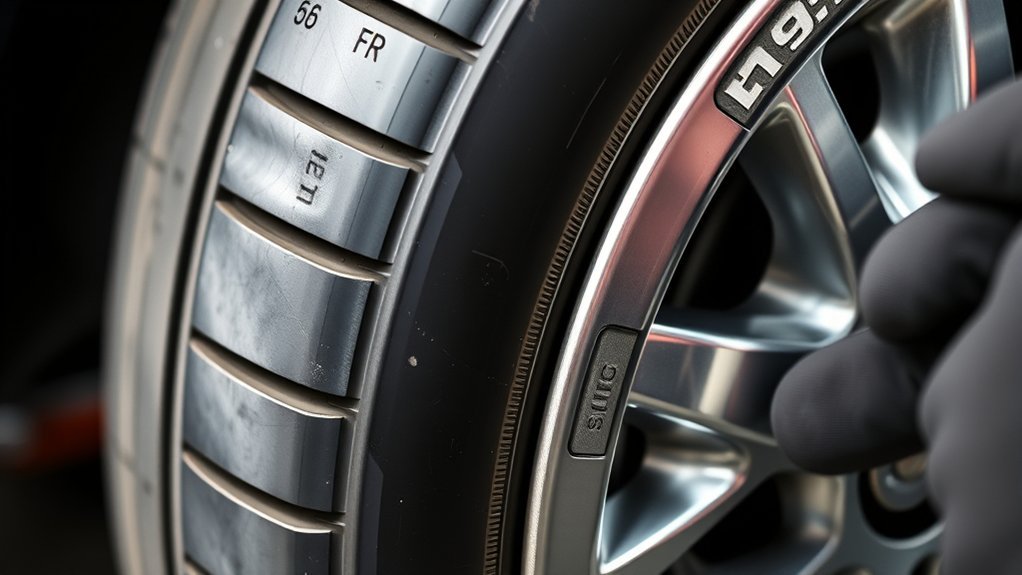
A tire marked 265 is about 265 millimeters wide from sidewall to sidewall, or roughly 10.4 inches. In a full size code like 265/70R17 114T, the 265 is only the tire’s section width. The rest of the code tells you the sidewall height, construction type, wheel diameter, load index, and speed rating. To choose safely, match the full tire size and service description to your vehicle’s door placard, owner’s manual, wheel specs, and driving needs.
Quick Answer
On a tire size such as 265/70R17, 265 means the tire’s section width is 265 millimeters, measured from sidewall to sidewall. It does not tell you the full tire height, load capacity, or safe speed. You still need the aspect ratio, wheel diameter, load index, and speed rating.
Key Takeaways
- 265 is the tire’s section width in millimeters, about 10.4 inches.
- In 265/70R17, 70 is the sidewall height as a percentage of width, R means radial construction, and 17 is the wheel diameter in inches.
- A size code alone is not enough. You also need the correct load index, speed rating, and tire type.
- A wider tire can affect clearance, steering feel, fuel economy, road noise, and speedometer accuracy.
- Always compare the full tire code with the vehicle’s door placard, owner’s manual, wheel specs, and tire manufacturer data.
What Does 265 Mean on a Tire?

The number 265 in a tire size code such as 265/70R17 means the tire has a nominal section width of 265 millimeters. Section width is measured across the tire from sidewall to sidewall when the tire is mounted on its approved measuring rim and inflated. It is not the same as tread width, which is the part of the tire pattern that contacts the road.
Converted to inches, 265 mm is about 10.4 inches. That width helps describe the tire’s footprint, but it does not tell the whole story. Two tires can both be 265 wide and still have different sidewall heights, wheel diameters, load ratings, tread designs, and real-world fitment.
For a deeper sidewall-code reference, Tire Rack explains that the three-digit number after the service type is the tire’s section width in millimeters.
Note: “265” does not mean the tire is 265 inches wide, 26.5 inches tall, or rated to carry 265 pounds. It is only the section width in millimeters.
How to Read a Size Like 265/70R17 114T
A complete tire code gives you several pieces of information. Here is how a common example breaks down:
| 265 | Section width in millimeters, measured sidewall to sidewall. |
| 70 | Aspect ratio. The sidewall height is 70% of the 265 mm width. |
| R | Radial construction, the common construction type for modern passenger and light-truck tires. |
| 17 | Wheel diameter in inches. This tire fits a 17-inch wheel. |
| 114 | Load index. In this example, 114 equals 2,601 pounds per tire when properly inflated. |
| T | Speed rating. T is rated up to 118 mph under proper load, inflation, and tire condition. |
The 265/70R17 part tells you the tire’s size. The 114T part tells you the service description: load index and speed rating. Some light-truck tires may show two load indexes, such as 121/118S, because the tire has different ratings for single-wheel and dual-wheel service.
What 265/70R17 Means in Inches
You can estimate the height of a 265/70R17 tire with simple math:
- Section width: 265 mm, or about 10.4 inches.
- Sidewall height: 265 × 0.70 = 185.5 mm, or about 7.3 inches.
- Wheel diameter: 17 inches.
- Approximate overall diameter: 17 + 7.3 + 7.3 = about 31.6 inches.
This is why many people compare some 265 tires to a 31-inch tire. Still, do not assume every 265 tire is a 31-inch tire. A 265/50R20, 265/65R18, and 265/75R16 all have the same width, but their overall diameters differ because the aspect ratio and wheel diameter are different.
Pro Tip: When comparing sizes, check both width and overall diameter. A tire that is wider, taller, or both can rub the fender liner, change speedometer readings, and affect transmission or traction-control behavior.
Where to Find Tire Size Numbers
You can usually find the tire size molded into the tire sidewall in raised or recessed lettering. Look for a code such as P265/70R17 114T, 265/65R18 112H, or LT265/70R17 121/118S. The code may appear on both sidewalls, but some details can appear more clearly on one side than the other.
You should also check the Tire and Loading Information Label on the driver’s side door edge, door post, or B-pillar. NHTSA advises drivers to use the owner’s manual or the Tire and Loading Information Label to find the correct tire size for the vehicle. The same label also lists the correct cold tire pressure, which is more important than the maximum pressure stamped on the tire sidewall.
| Tire sidewall | Shows the actual tire size, load index, speed rating, DOT/TIN code, tire type, and other markings. |
| Door placard | Shows the vehicle manufacturer’s recommended tire size and cold inflation pressure. |
| Owner’s manual | Lists approved sizes, pressure guidance, spare tire details, and rotation limits. |
| DOT/TIN code | Identifies the tire and includes the manufacture date code, usually the last four digits for week and year. |
How 265 Width Affects Fit
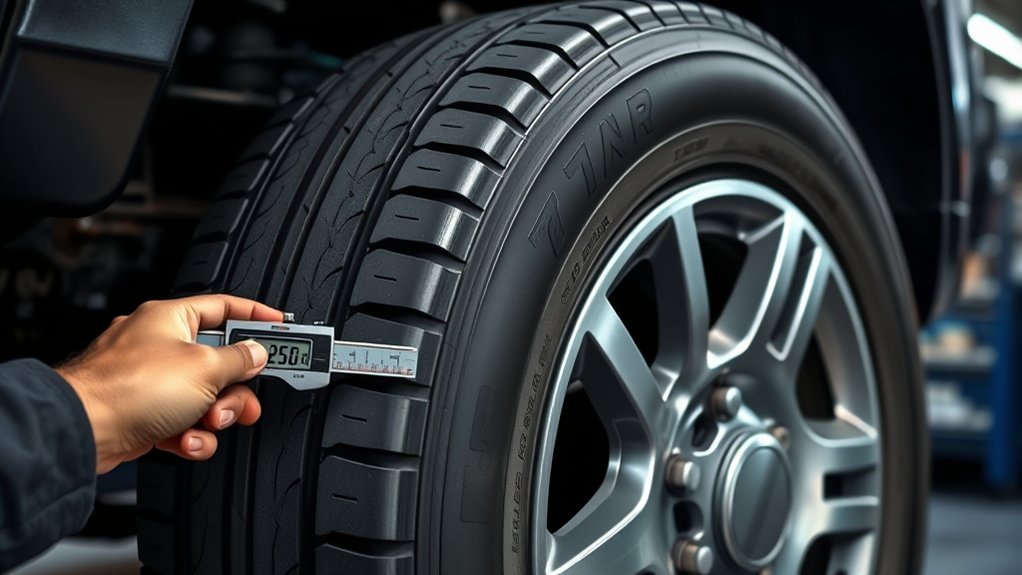
A 265 section width gives the tire a wider casing than a 245 or 255 tire, but fitment depends on more than width. You need enough clearance at the fenders, inner liners, struts, control arms, brake components, and frame points. Clearance also changes when the suspension compresses or when the steering wheel is turned fully left or right.
A wider tire can change the way the vehicle feels. In some setups, it can improve dry grip and cornering stability. It can also add road noise, increase rolling resistance, reduce fuel economy, or make steering feel heavier. On wet, snowy, or rutted roads, tread design and tire compound often matter more than width alone.
Wheel width matters too. A 265 tire must be mounted on a wheel width approved by the tire manufacturer. If the rim is too narrow or too wide, the tire shape can distort, causing uneven wear, poor handling, and reduced stability.
Warning: Do not choose a wider tire just because it fits the wheel. The full size, load index, speed rating, outside diameter, rim-width range, and vehicle clearance all need to work together.
[Products Worth Considering]

Keep your tires properly inflated with this analog VONDIOR tire pressure gauge, designed for fast, easy readings without batteries. The swiveling, two-axis hose and large glow dial help you measure at any tire angle with instant visibility. Built with a protective rubber shield, it supports durable, low-maintenance use for cars and trucks.

Measure tire tread depth quickly and accurately with this LUMITECO dial gauge that reads in 1/32" increments up to 14/32". The color-coded green/yellow/red zones make it easy to judge tire wear and know when replacement is needed. A rugged, compact design with a protective pouch helps keep the gauge ready for use on cars, trucks, motorcycles, and more.

The SAFELIFE dial tire tread depth gauge measures tread depth in 1/32 inch increments with clear, easy-to-read 2-inch dial face. Color zones using a traffic light system help you quickly judge whether tread is low, marginal, or ample for safer driving. Built with a durable zinc cast body and a metal detect probe for precise, comfortable use across cars, motorcycles, trucks, and buses.
What Tire Load Index Means
The load index is a number that shows how much weight one tire can carry when it is properly inflated. It is separate from the 265 width. On a tire marked 265/70R17 114T, the load index is 114, not 265.
Tire Rack’s load index chart lists common passenger and light-truck load indexes from 70 to 126. For example, index 114 equals 2,601 pounds per tire, while index 121 equals 3,197 pounds per tire.
| Load Index | Maximum Load Per Tire | Common Use |
| 112 | 2,469 lb | Some SUVs and crossovers |
| 114 | 2,601 lb | Common in some 265/70R17 examples |
| 115 | 2,679 lb | Some SUV and light-truck tires |
| 121 | 3,197 lb | Often seen on heavier-duty LT examples |
Choose a load index that meets or exceeds the vehicle manufacturer’s requirement. Do not downrate the tire to save money or improve ride comfort. If you tow, haul, or drive a truck that uses LT tires, pay close attention to load range, inflation pressure, and single-versus-dual load indexes.
What Tire Speed Ratings Mean
The speed rating is the letter after the load index. It shows the maximum speed a tire is designed to sustain under controlled conditions when the tire is in good condition, correctly loaded, and properly inflated. It is not a guarantee that you can safely drive that speed on public roads.
| Speed Rating | Rated Speed | What It Means |
| S | 112 mph | Common on some standard tires |
| T | 118 mph | Common on many touring and SUV tires |
| H | 130 mph | Often used on performance touring tires |
| V | 149 mph | Used on higher-performance tires |
For normal replacement, match or exceed the speed rating listed for your vehicle’s original tires unless the tire manufacturer, vehicle manufacturer, or a qualified tire professional confirms another rating is appropriate.
How to Match Tires to Your Vehicle
To match tires correctly, start with the vehicle, not the tire you happen to like. NHTSA recommends checking the owner’s manual or the Tire and Loading Information Label on the driver’s side door edge or post for the correct tire size. This label is also where you find the recommended cold tire pressure.
Use this checklist before installing a different 265 tire:
- Size: Confirm the full size, such as 265/70R17, not just the 265 width.
- Load index: Meet or exceed the manufacturer’s required load rating.
- Speed rating: Match or exceed the original rating unless a qualified source approves a change.
- Wheel diameter: A 17-inch tire must go on a 17-inch wheel.
- Rim width: Confirm the tire manufacturer’s approved wheel-width range.
- Overall diameter: Avoid large changes that affect speedometer, ABS, traction control, gearing, or clearance.
- Clearance: Check fenders, liners, suspension, and steering at full lock and under compression.
- Tire type: Do not mix passenger, LT, trailer, winter, and temporary-spare tire types incorrectly.
If your vehicle came with a different size, moving to a 265 tire may still be possible, but it needs proper verification. A tire that is only slightly wider can still rub, overload the wheel, change handling, or create a speedometer error if the overall diameter is different.
[Products Worth Considering]

This metal-free wheel and tire cleaning brush uses dense, fluffy synthetic wool to safely clean rims, spokes, fenders, and engine areas without worrying about damaging surfaces. Its flexible, comfortable design helps you reach detailed areas while maintaining durability, and the extra absorbent fibers work well with wheel spray cleaners for faster cleanup. Reusable and washable performance helps prevent grime and build-up for cleaner vehicles and easier maintenance at home.

Protect your spare wheel with a waterproof, dustproof tire cover made to resist sun and harsh weather. The elastic band design makes it easy to install and remove without tools, while reinforced stitching helps it keep its shape. Available in multiple sizes, it fits common RV, trailer, Jeep, SUV, and truck spare tires.

Monitor tire tread wear with a smart, color-coded depth gauge that shows clear condition ranges at a glance. The bar is range marked for fast, easy readings, helping you maintain safer traction and performance. Each gauge is portable with a pocket clip, and the set includes 20 units for daily use and sharing.
Tire Age, DOT Code, Pressure, and Tread Matter Too
The size code tells you fitment, but it does not tell you whether the tire is still safe. Check the DOT Tire Identification Number on the sidewall. The final four digits usually show the week and year of manufacture. For example, 2424 means the tire was made in the 24th week of 2024.
You should also check tread and pressure regularly. NHTSA says proper tire pressure affects safety, tire durability, and fuel consumption. It also advises checking tire pressure at least once a month when the tires are cold. Tires should be replaced when tread depth reaches 2/32 inch.
Some tires also carry UTQG ratings for treadwear, traction, and temperature resistance. These ratings can help compare passenger tires, but they do not replace the tire size, load index, speed rating, or the vehicle manufacturer’s specifications.
Note: The pressure printed on the tire sidewall is usually the tire’s maximum pressure, not the vehicle’s recommended cold pressure. Use the door placard or owner’s manual for normal inflation guidance.
Common 265 Tire Comparisons
Many shoppers compare 265 tires with 225, 275, 285, or 31-inch sizes. These comparisons can help you understand width, but they are not enough for safe fitment.
- 265 vs 225: A 225 tire is much narrower. It may reduce grip and load capacity, and it may not fit the same wheel correctly.
- 265 vs 275: A 275 is 10 mm wider, or about 0.4 inch wider. It may need more clearance and a suitable rim width.
- 265 vs 285: A 285 is 20 mm wider, or about 0.8 inch wider. It is more likely to rub if the vehicle was not designed for it.
- 265 vs 31-inch: 265 is a width measurement. A 31-inch tire describes overall diameter. Some 265 sizes are close to 31 inches, but not all of them are.
The safest approach is to compare the full size, not one number. A 265/70R17 and 265/75R16 can both be close to 31.6 inches tall, while a 265/50R20 is a different shape entirely.
[Products Worth Considering]
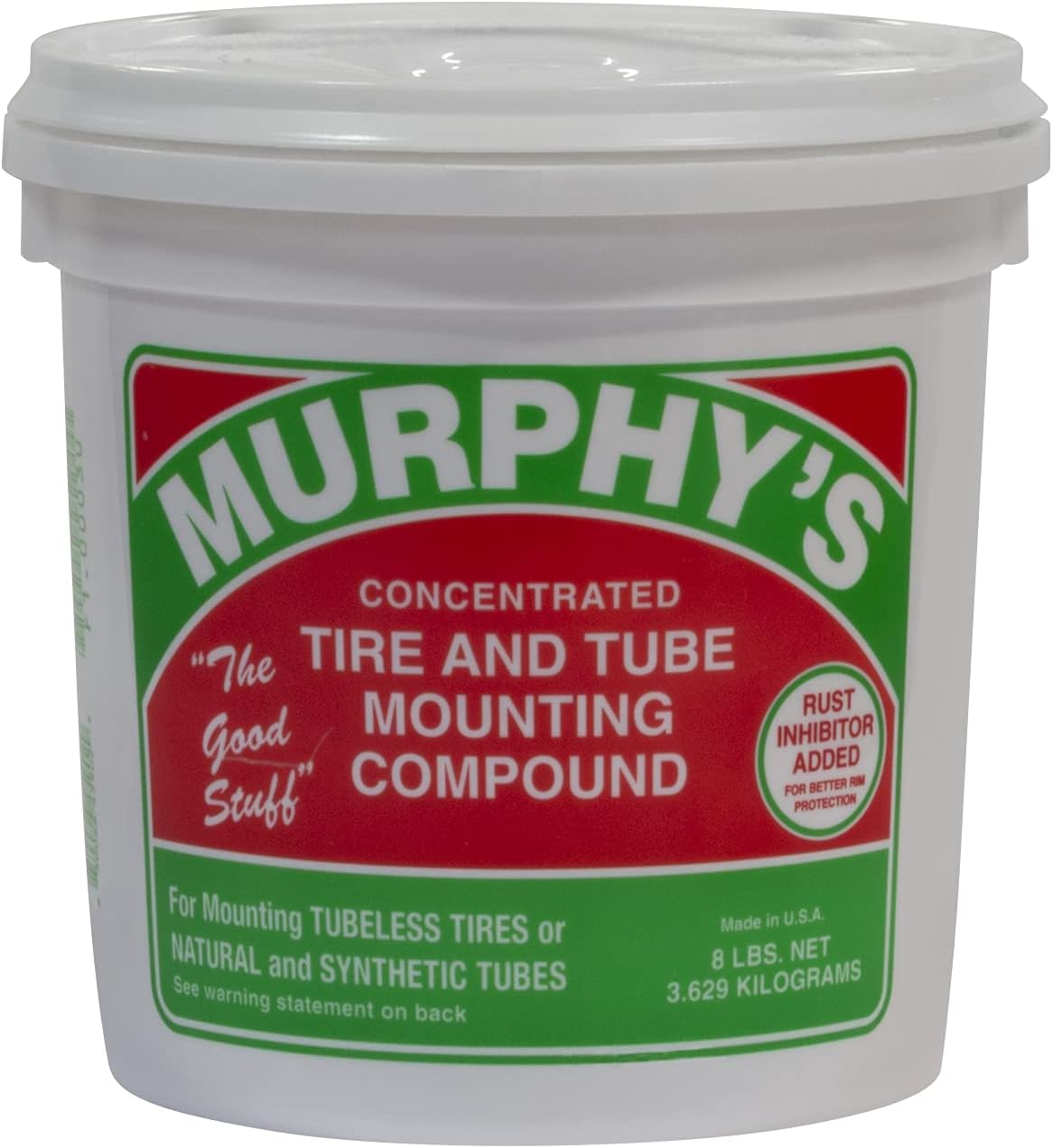
A concentrated tire and tube mounting compound designed to help simplify mounting rubber tires and tubes on passenger, semi truck, construction, and OTR applications. Its ultra-thick formula packs beads effectively and includes rust inhibitors to help protect against corrosion during use.

This manual duck head tire changer kit makes tire installation and removal simpler by letting you embed the duck head into the tire with applied pressure. The integrated design and durable steel construction help reduce friction and improve efficiency and safety during use. Suitable for 16–21 inch wheels, it’s convenient for cars, trucks, SUVs, and ATV tires, with 24-hour after-sales support.

This professional wheel and rim cleaning brush set lifts brake dust, grime, and dirt with soft, scratch-free microfiber and synthetic wool fibers. The rim brush bends up to 360 degrees for easy access to hard-to-reach areas around spokes, lips, and faces. Ideal for thorough cleaning of car, truck, motorcycle, bicycle, RV, and more wheel and tire surfaces.
Frequently Asked Questions
Is a 265 or 275 tire better?
Neither size is automatically better. A 275 tire is 10 mm wider than a 265, so it may add dry grip or a wider stance in some setups. It may also add weight, road noise, rubbing risk, and fuel-use penalties. Choose the size that matches your vehicle’s placard, wheel width, load requirement, clearance, and driving conditions.
Is a 265 tire the same as a 31?
Not always. The 265 number is tire width in millimeters, while 31 inches usually refers to overall tire diameter. A 265/70R17 is about 31.6 inches tall, and a 265/75R16 is also about 31.6 inches tall, but other 265 sizes can be shorter or taller.
Can I use a 225 tire instead of a 265?
Only if the vehicle manufacturer, wheel specs, load index, diameter, and clearance allow it. A 225 tire is 40 mm narrower than a 265, so it can change handling, load capacity, rim fit, braking feel, and speedometer accuracy. Do not make that swap without checking approved fitment data.
Are 285 tires better than 265?
A 285 tire is wider than a 265, but wider is not always better. It may help with appearance or certain traction goals, but it can also rub, weigh more, reduce fuel economy, and require a wider wheel. The better tire is the one that fits safely and meets the required load and speed ratings.
Does 265 mean tire height?
No. The 265 number means section width in millimeters. Tire height comes from the aspect ratio and wheel diameter. For example, in 265/70R17, the 70 means the sidewall height is 70% of 265 mm, and the 17 means the tire fits a 17-inch wheel.
What does LT265/70R17 mean?
LT means Light Truck. An LT265/70R17 tire has a 265 mm section width, a sidewall height equal to 70% of that width, radial construction, and a 17-inch wheel diameter. LT tires are built for heavier service, but they must still match the vehicle’s load, pressure, and fitment requirements.
Conclusion
When you see 265 on a tire, you are looking at the tire’s section width in millimeters. It is a useful number, but it is only one part of the full tire code. To choose the right tire, read the complete size, then confirm the load index, speed rating, wheel diameter, rim-width range, overall diameter, pressure label, and vehicle manufacturer recommendations. Getting the full code right helps protect handling, braking, clearance, tire life, and safety.
Sources
- Tire Rack: How Do I Read My Tire Size On My Sidewall? — backs up section width, aspect ratio, radial construction, wheel diameter, and service description.
- Tire Rack: What Is Load Index? — backs up load index meaning and load index values such as 114 and 121.
- NHTSA TireWise — backs up door placard, owner’s manual, tire pressure, tread depth, and tire safety guidance.
- Bridgestone: How to Read Tire Size — backs up tire-size code interpretation from a tire manufacturer.
- Tire Code Reference — backs up common speed-rating values and tire-code terminology.