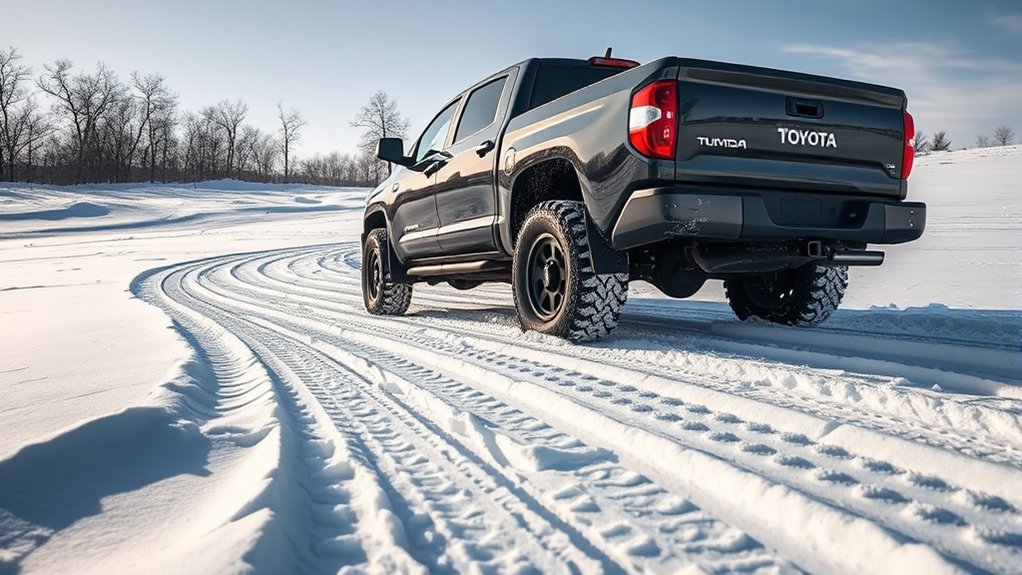
Running all-terrain tires year-round on your Tundra can be a smart choice if you split your driving between pavement, gravel, job sites, forest roads, snow, and weekend trails. It is not the best setup for every driver, though. Compared with highway or all-season tires, all-terrain tires can add road noise, reduce ride comfort, lower fuel economy, and wear faster if most of your miles are on smooth pavement.
Quick Answer
Yes, you can run all-terrain tires year-round on a Tundra if you need mixed-surface traction and do not mind extra noise, weight, and possible MPG loss. Choose highway tires for mostly paved commuting, all-weather tires for year-round road use with snow capability, and dedicated winter tires for severe ice or snow.
Key Takeaways
- All-terrain tires are best for Tundra owners who drive on pavement and rougher surfaces often enough to use the added traction.
- They usually trade some highway comfort, quietness, fuel economy, and tread life for stronger mixed-surface performance.
- A 3PMSF marking helps in snow, but it does not make every all-terrain tire equal to a dedicated winter tire on ice or packed winter roads.
- Before buying, match the tire size, load index, speed rating, and inflation pressure to your Tundra’s door placard, owner’s manual, and towing needs.
Understanding All-Terrain Tires: What You Need to Know
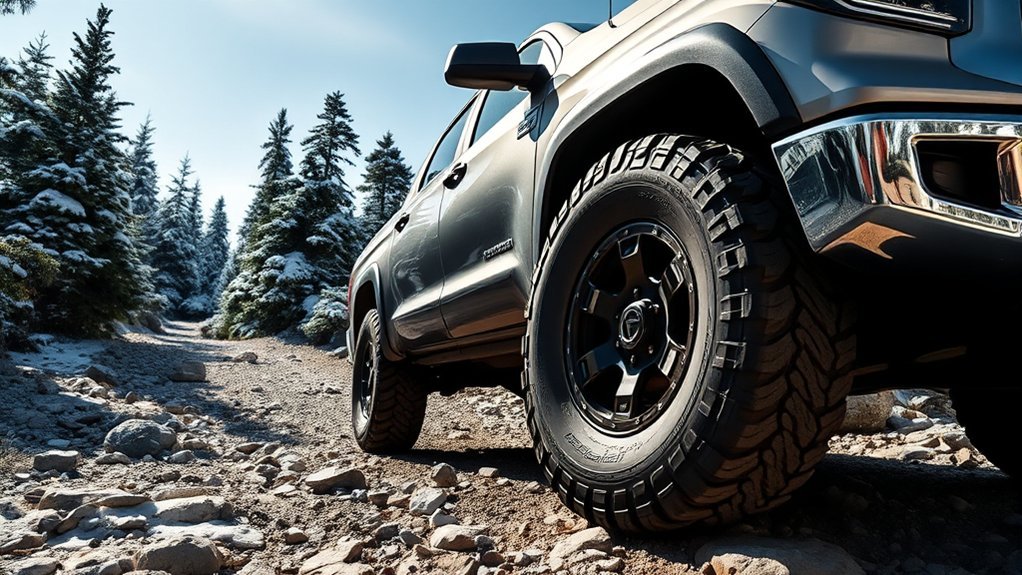
All-terrain tires, often called A/T tires, are built as a compromise between highway tires and off-road tires. The National Highway Traffic Safety Administration describes all-terrain tires as a common choice for four-wheel-drive vehicles because they balance on-road driving with off-road capability.
On a Tundra, that balance can be useful. You get deeper tread blocks, wider voids, tougher shoulders, and stronger sidewall construction than many highway tires. Those features help on gravel roads, muddy access roads, hunting trails, snowy driveways, and construction sites. The trade-off is that the same features can make the tire heavier, louder, and less efficient on long highway drives.
| Tire Type | Best For | Main Trade-Off |
|---|---|---|
| Highway all-season | Mostly paved roads, commuting, towing on pavement | Less bite on loose dirt, mud, and rough trails |
| All-weather | Pavement-focused year-round use with better snow ability | Less sidewall toughness and off-road grip than many A/T tires |
| All-terrain | Mixed pavement, gravel, job sites, trails, light mud, and light snow | More noise, weight, rolling resistance, and possible ride harshness |
| Dedicated winter | Severe winter, frequent ice, packed snow, and cold-weather braking | Seasonal swap needed; faster wear in warm weather |
Should You Run All-Terrain Tires Year-Round on a Tundra?
You should run all-terrain tires year-round on your Tundra if you actually use the truck like a truck. They make the most sense when your week includes gravel roads, uneven worksites, snow-covered rural roads, boat ramps, camping roads, or light trails. In those conditions, the extra tread depth and stronger construction can be worth the comfort and MPG trade-offs.
You may not need all-terrain tires if your Tundra spends almost all its time on highways, city streets, and smooth suburban roads. A highway all-season tire will usually ride quieter, feel smoother, and return better fuel economy. If your main concern is year-round pavement use with winter confidence, a 3PMSF-rated all-weather tire may be a better match than a rugged A/T.
Note: Before changing tire type or size, check the Tire and Loading Information Label on the driver’s doorjamb and your Toyota owner’s manual. Tire size, load index, speed rating, and cold inflation pressure matter for towing, payload, braking, handling, and TPMS accuracy.
Major Disadvantages of All-Terrain Tires for Everyday Driving
The biggest downsides of year-round all-terrain tires are not about whether they work. They do work. The issue is whether you want to live with their trade-offs every day.
Increased Road Noise
All-terrain tires usually have larger tread blocks and wider voids than highway tires. On pavement, that can create more hum, tread slap, and vibration, especially as speed rises or as the tread wears unevenly. Some modern A/T tires are much quieter than older designs, but a highway tire is still the better choice if cabin quietness is your top priority.
Noise also depends on tire model, tread depth, wheel alignment, inflation pressure, road surface, and the Tundra’s cab insulation. If your truck already has a lift, aggressive tread, roof rack, or heavy accessories, the extra tire noise may be more noticeable on long highway trips.
Reduced Fuel Efficiency
All-terrain tires can reduce fuel economy because they may add weight, increase rolling resistance, and create more tread movement than highway tires. The exact MPG change is not the same for every Tundra. A mild on-road A/T in the stock size may have a small effect, while an oversized LT tire with a heavier load range can be more noticeable.
For maintenance-related MPG, FuelEconomy.gov says proper tire inflation can improve gas mileage by 0.6% on average, up to 3% in some cases, and underinflated tires can lower fuel economy by about 0.2% for every 1 psi drop in the average pressure of all tires. That means pressure checks matter even more when you run heavier all-terrain tires.
| Factor | How It Can Affect a Tundra | What to Check |
|---|---|---|
| Aggressive tread | More rolling resistance and more road noise | Choose an A/T designed for on-road comfort if you commute often |
| LT construction | More strength, but often more weight and a firmer ride | Confirm load range and inflation needs before towing or hauling |
| Oversizing | Can affect gearing feel, MPG, speedometer accuracy, and rubbing clearance | Verify fitment, clearance, spare size, and TPMS behavior |
| Low pressure | Worse MPG, heat buildup, uneven wear, and reduced tire life | Check cold pressure at least monthly |
Benefits of Year-Round All-Terrain Tire Use
The main benefit is convenience. You can keep one tire set on your Tundra and be ready for a wider range of surfaces. That is helpful if your driving is unpredictable or if you regularly move between paved roads and loose surfaces.
Versatility Across Conditions
All-terrain tires give your Tundra more bite on gravel, dirt, light mud, grass, and uneven access roads than a standard highway tire. They also tend to have stronger shoulders and sidewalls, which helps when the truck sees rocks, ruts, construction debris, and rough shoulders.
For a daily driver that also works on weekends, that versatility can be the biggest reason to choose A/T tires. You do not have to swap tires before a camping trip, a muddy job site, or a snowy back road.
Enhanced Off-Road Performance
All-terrain tires improve off-road confidence without going as extreme as mud-terrain tires. On a Tundra, that can help with:
- Gravel roads where highway tires feel loose or skittish.
- Light mud where extra void space helps clear the tread.
- Rocky trails where stronger shoulders help resist cuts.
- Snowy driveways and rural roads when the tire is properly rated and has enough tread depth.
The key is choosing the right level of aggressiveness. A mild all-terrain tire is better for a daily-driven Tundra. A more aggressive LT all-terrain may be better for towing, hauling, rough terrain, and work use, but it will usually feel heavier and firmer.
3-Peak Mountain Snowflake Rating: What It Does and Does Not Mean
Some all-terrain tires carry the 3-Peak Mountain Snowflake, or 3PMSF, symbol. This marking means the tire meets a minimum snow-traction performance threshold. It is more meaningful than an M+S marking, which is based mainly on tread geometry.
However, 3PMSF does not mean the tire is equal to a dedicated winter tire. Tire Rack’s 3PMSF guide explains that the test focuses on acceleration traction in medium-packed snow. It does not test snow braking, snow cornering, or ice traction. That matters if your Tundra sees steep roads, freezing rain, black ice, or long winter highway trips.
Warning: Do not treat every all-terrain tire as a winter tire. If you drive often on ice, packed snow, mountain passes, or roads where winter tires are required by law, use a true winter tire or confirm that your selected tire meets local winter requirements.
Fuel Efficiency: Do All-Terrain Tires Hurt Your Wallet at the Pump?
All-terrain tires can cost you fuel, but the amount depends on the tire. A stock-size, passenger-rated A/T with a road-friendly tread may have a small effect. A heavier LT tire, wider tire, or taller tire can make the truck work harder, especially in city driving, towing, and stop-and-go traffic.
The easiest way to estimate your own cost is to compare your before-and-after MPG:
- Step 1: Track your current MPG for two or three tanks before changing tires.
- Step 2: Track MPG again after the new tires are broken in and pressure is set correctly.
- Step 3: Use this formula: annual miles ÷ MPG × fuel price.
- Step 4: Compare the old tire cost with the new tire cost.
For example, if your Tundra travels 12,000 miles per year, a drop from 18 MPG to 17 MPG at $4.00 per gallon would cost about $157 more per year. Your result may be higher or lower, but this method is more reliable than assuming one fixed MPG penalty for every all-terrain tire.
All-Terrain Tire Noise Levels: What to Expect on the Highway
On the highway, expect more tread noise from an aggressive all-terrain tire than from a highway tire. The sound may be a low hum, a patterned whir, or a rougher texture through the floor and steering wheel. It often becomes more obvious above neighborhood speeds and during long drives on smooth pavement.
Highway Noise Levels Explained
All-terrain tire noise comes from the tread pattern contacting the road, air moving through the tread voids, and vibration through the tire structure. The more open and blocky the tread, the more likely you are to hear it. Uneven wear, poor alignment, worn shocks, or low pressure can make the noise worse.
If quiet highway driving matters, look for an on-road all-terrain tire rather than a rugged off-road-focused A/T. Reviews and manufacturer treadwear warranties can help, but the best clue is the tread itself: tighter, more continuous center blocks usually ride quieter than large, widely spaced lugs.
Impact on Driving Comfort
Comfort depends on tire construction as much as tread design. Passenger-rated A/T tires tend to ride softer. LT-rated A/T tires can carry heavier loads and handle rougher use, but they often have stiffer sidewalls. On a half-ton Tundra that is driven empty most of the time, that stiffness can make bumps and expansion joints feel sharper.
Comparison With All-Season Tires
A highway all-season tire usually wins for quietness, smoothness, and fuel economy. An all-terrain tire wins when you need more grip off pavement and more sidewall toughness. The better choice depends on where your Tundra spends most of its miles, not just how rugged the tire looks.
Tread Wear: Longevity of All-Terrain Tires vs. Highway Tires
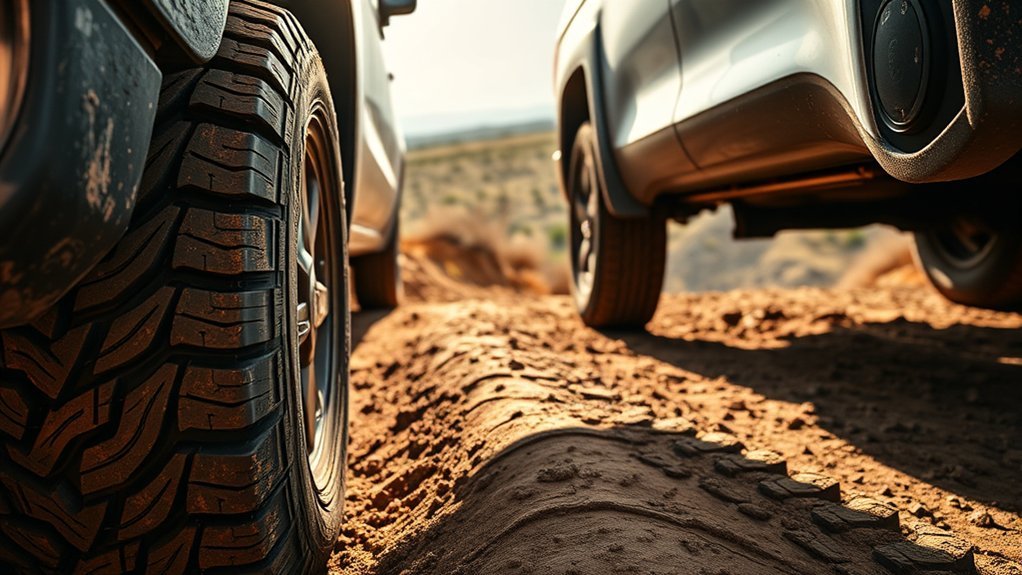
All-terrain tread life varies widely. Some mild A/T tires have long treadwear warranties and do well on pavement. More aggressive all-terrain tires may wear faster if they spend most of their life on hot highways, heavy loads, or city stop-and-go driving.
The biggest wear problems are usually preventable. Low tire pressure, poor alignment, missed rotations, and unbalanced wheels can create cupping, feathering, shoulder wear, and extra noise. NHTSA TireWise recommends checking tire pressure monthly when tires are cold, checking tread regularly, and rotating tires every 5,000 to 8,000 miles if recommended by the vehicle manufacturer.
NHTSA also says tires are not safe and should be replaced when tread is worn down to 2/32 of an inch. For wet roads, snow, towing, and off-road use, do not wait until the tire is nearly bald. All-terrain tires lose much of their bite as tread depth drops.
All-Terrain vs. All-Weather Tires: Key Differences and Considerations
All-terrain and all-weather tires are not the same thing. All-terrain tires focus on mixed-surface use. All-weather tires focus on paved-road year-round use, often with 3PMSF snow capability. If your Tundra rarely leaves pavement but you want better winter confidence than a normal all-season tire, all-weather tires may be the cleaner choice.
If you drive on gravel, dirt, trails, muddy work areas, or rocky access roads, all-terrain tires make more sense. They usually have more open tread and tougher construction than all-weather tires, but they also tend to be louder and less refined on pavement.
[Products Worth Considering]

This manual duck head tire changer kit makes tire installation and removal simpler by letting you embed the duck head into the tire with applied pressure. The integrated design and durable steel construction help reduce friction and improve efficiency and safety during use. Suitable for 16–21 inch wheels, it’s convenient for cars, trucks, SUVs, and ATV tires, with 24-hour after-sales support.

These universal tire valve stem caps help protect valve cores from dust, debris, and moisture while helping maintain stable tire pressure. The corrosion-resistant metal construction and sealed design provide reliable protection in road grime, mud, and winter conditions. Twist-on installation makes them quick to fit on cars, SUVs, trucks, and motorcycles.

Keep your tires properly inflated with this analog VONDIOR tire pressure gauge, designed for fast, easy readings without batteries. The swiveling, two-axis hose and large glow dial help you measure at any tire angle with instant visibility. Built with a protective rubber shield, it supports durable, low-maintenance use for cars and trucks.
How All-Terrain Tires Perform in Various Weather Conditions
In dry weather, all-terrain tires are stable and predictable when they are properly sized and inflated. In rain, performance depends heavily on tread design, rubber compound, and tread depth. A good A/T tire can clear water well, but a worn or over-wide tire can hydroplane more easily.
In light snow, a 3PMSF-rated all-terrain tire can be helpful. In deep snow, slush, and freezing conditions, a dedicated winter tire still has the advantage because it is built for cold-weather grip, braking, and control. On ice, be especially careful. Even a strong all-terrain tire can slide if the compound and tread are not designed for icy braking.
Heat also matters. Heavy trucks, towing, highway speeds, and low pressure build tire heat. Always use a tire with the correct load rating and keep it at the recommended cold inflation pressure for your Tundra and load.
How Tire Size, Load Range, and Fitment Affect Your Tundra
Choosing the wrong all-terrain tire can create more problems than choosing the wrong tread style. Start with the factory tire size on your door placard and owner’s manual. Then compare any replacement tire for size, load index, speed rating, load range, and overall diameter.
[Products Worth Considering]

The Big Rig Defense Tire Thumper is a truck tire pressure checker that lets you quickly check multiple tires by giving them a firm whack. Listen for a reassuring thump and feel the stick bounce when a tire is fully inflated, helping you get back on the road safely. It features a comfortable, glove-friendly handle and a secure wrist strap for confident use on busy routes.

Monitor tire tread wear with a smart, color-coded depth gauge that shows clear condition ranges at a glance. The bar is range marked for fast, easy readings, helping you maintain safer traction and performance. Each gauge is portable with a pocket clip, and the set includes 20 units for daily use and sharing.

The 22800 wheel stud installer makes replacing wheel studs quick and secure, saving time and effort during tire service. It uses a ratchet or impact wrench to pull new studs firmly into place, helping when existing studs are too long. Compatible with most automotive wheels and light-duty truck wheel studs, it’s designed for easy, tool-assisted installation.
P-Metric vs. LT All-Terrain Tires
Many Tundra owners consider LT tires because they look tougher and can handle heavier use. LT tires can be a good choice for towing, hauling, sharp rocks, and rough job sites. The downside is that they often weigh more and have stiffer sidewalls, which can reduce ride comfort and fuel economy when the truck is empty.
If your Tundra is mostly a daily driver, a passenger-rated or lighter-duty all-terrain tire in the correct size may be more comfortable. If you tow often, carry tools, or drive rough terrain, LT construction may be worth it.
Upsizing and Towing Concerns
Going taller or wider can change the way your Tundra feels. Bigger tires can affect acceleration, braking feel, speedometer accuracy, spare-tire matching, rubbing clearance, and fuel use. They can also make the truck feel heavier during towing.
For towing or payload work, do not choose a tire based only on looks. Match or exceed the required load index, use the correct pressure, and make sure the wheel is also rated for the load. If you are unsure, have a qualified tire shop verify the full setup before installation.
Ideal Use Cases: When to Choose All-Terrain Tires
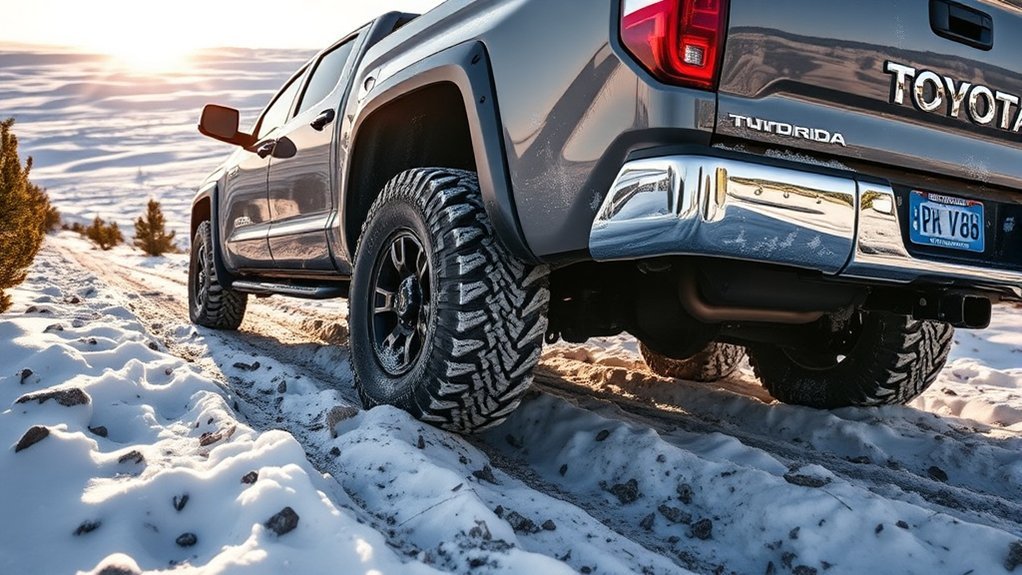
All-terrain tires are a strong fit when your Tundra does more than commute. They are especially useful for:
- Rural driving: gravel, dirt, snow-covered lanes, and uneven shoulders.
- Work use: construction sites, farms, landscaping routes, and job sites with debris.
- Outdoor trips: camping, hunting, fishing, fire roads, and trailhead access.
- Light snow regions: especially when the tire is 3PMSF-rated and local laws allow it.
- Mixed towing: boat ramps, gravel lots, and uneven campground roads.
The best year-round tire for your Tundra is not the most aggressive tire. It is the tire that matches where you drive 80% of the time while still covering the roughest 20% safely.
Tips for Maintaining All-Terrain Tires for Optimal Performance
All-terrain tires need consistent maintenance if you want them to stay quiet, balanced, and useful year-round. Their deeper tread and heavier construction can hide wear problems until they become expensive.
- Check cold pressure monthly: Use the pressure on your Tundra’s door placard or owner’s manual, not the maximum pressure printed on the tire sidewall.
- Rotate on schedule: Follow Toyota’s maintenance schedule or NHTSA’s general 5,000 to 8,000-mile guidance when rotation is recommended.
- Inspect tread depth: Replace tires by 2/32 inch at the latest, and consider replacing earlier for snow, rain, towing, or trail use.
- Watch for uneven wear: Cupping, feathering, or shoulder wear can point to alignment, balance, suspension, or pressure problems.
- Clean the tread after off-road driving: Rocks packed in the tread can cause vibration, noise, and damage.
- Check the spare: If you upsize, make sure your spare strategy still works. A much smaller spare can stress driveline components on a 4WD truck.
- Recheck after installation: After mounting new tires, verify torque, pressure, TPMS function, rubbing clearance, and highway vibration.
Pro Tip: If you want the all-terrain look but drive mostly on pavement, choose an on-road all-terrain tire in the stock size before jumping to a heavy LT tire or oversized setup. It usually gives the best balance of appearance, traction, comfort, and MPG.
[Products Worth Considering]

The Trivd Frol 1/2" air impact wrench delivers high performance torque up to 1500 ft-lbs with a twin hammer impact mechanism for strong, balanced blows. It features an ergonomic grip, compact lightweight design, and quick-stop control with 3 forward speeds up to 8000 RPM plus a reverse speed. Built for demanding automotive repair and tire shop work, the rear exhaust helps keep debris away from the surface.
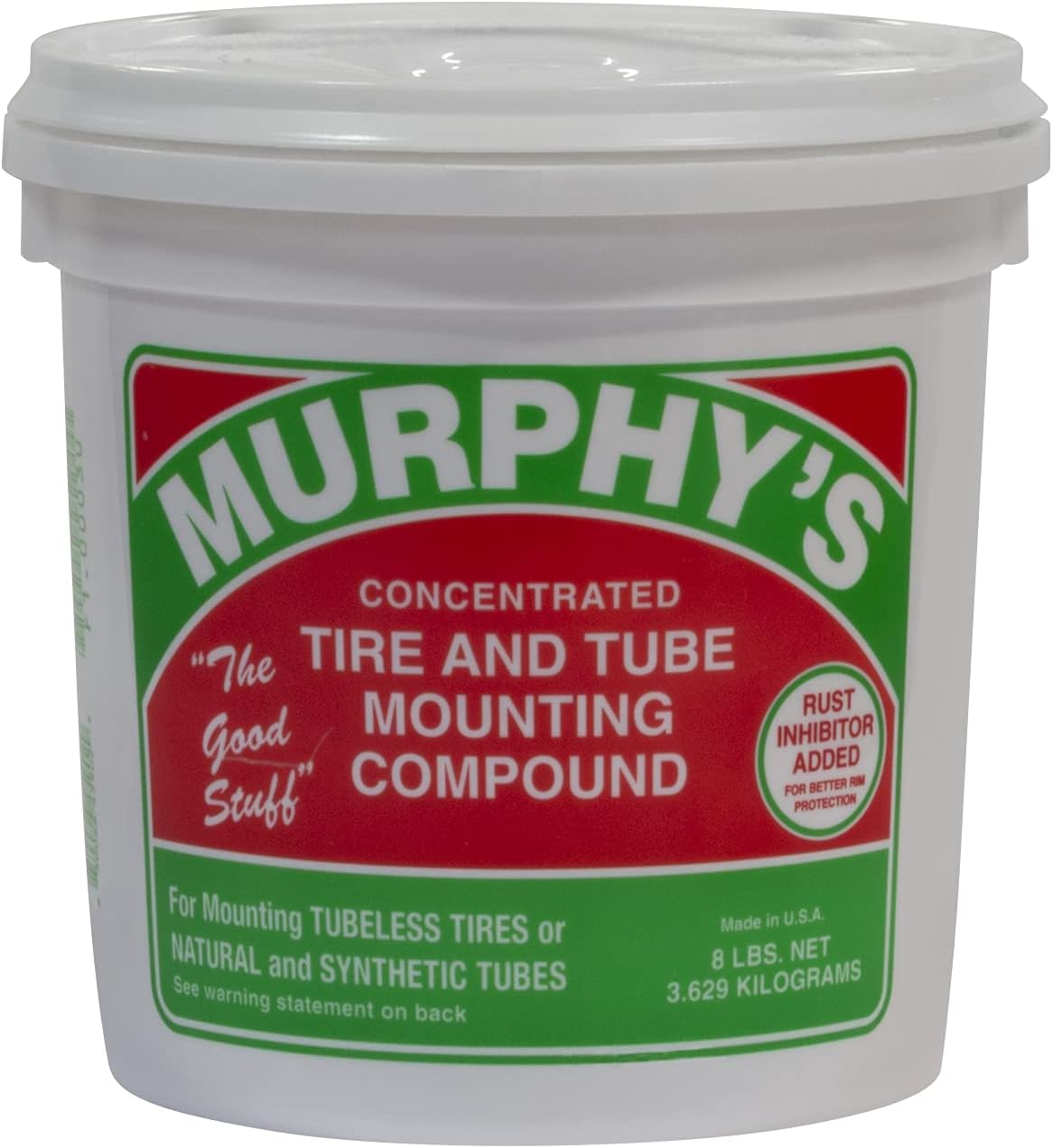
A concentrated tire and tube mounting compound designed to help simplify mounting rubber tires and tubes on passenger, semi truck, construction, and OTR applications. Its ultra-thick formula packs beads effectively and includes rust inhibitors to help protect against corrosion during use.

Accurately measure tire tread depth with a calibrated gauge marked from 0 to 1 inch in 1/32 inch increments. The color-coded bar helps you quickly identify tread condition ranges, supporting safe driving for trucks, motorcycles, automobiles, and passenger vehicles.
Frequently Asked Questions
Is there a downside to all-terrain tires on a Tundra?
Yes. The main downsides are more road noise, a firmer ride, possible MPG loss, and faster wear if most of your miles are on smooth pavement. These trade-offs are usually worth it only if you use the extra grip and toughness regularly.
Are all-terrain tires good in snow?
Some are good in light to moderate snow, especially if they carry the 3PMSF symbol and have plenty of tread depth. They are not automatically equal to dedicated winter tires, especially on ice, packed snow, and steep winter roads.
Do all-terrain tires reduce Tundra MPG?
They can. Heavier construction, wider sizing, taller diameter, and more aggressive tread can increase rolling resistance. The real change depends on the specific tire and your driving. Track your MPG before and after the tire change for the most accurate answer.
Should I choose LT all-terrain tires for my Tundra?
Choose LT all-terrain tires if you tow, haul, drive rough terrain, or need stronger sidewalls. If your Tundra is mostly a daily driver, a passenger-rated or lighter-duty all-terrain tire may ride better and use less fuel.
How often should I rotate all-terrain tires on a Tundra?
Follow your Toyota maintenance schedule first. As a general tire-care rule, NHTSA recommends rotating tires every 5,000 to 8,000 miles if the vehicle manufacturer recommends rotation, or sooner if uneven wear appears.
Conclusion
Running all-terrain tires year-round on your Tundra is worth it if you regularly need more traction, stronger construction, and better mixed-surface confidence than a highway tire can provide. It is less ideal if your driving is mostly paved, quiet, fuel-conscious, and comfort-focused. For the best result, choose the least aggressive tire that still fits your real driving needs, confirm the correct size and load rating, and maintain pressure, rotation, alignment, and tread depth carefully.
Sources
- NHTSA TireWise — tire types, tire pressure, tread depth, rotation, tire size, and safety guidance.
- FuelEconomy.gov: Keeping Your Vehicle in Shape — tire inflation and fuel-economy impact.
- Toyota Owners Manuals and Warranties — official source for Toyota owner’s manuals and maintenance information.
- Tire Rack: Three-Peak Mountain Snowflake Symbol — 3PMSF meaning, limits, and winter-tire comparison.