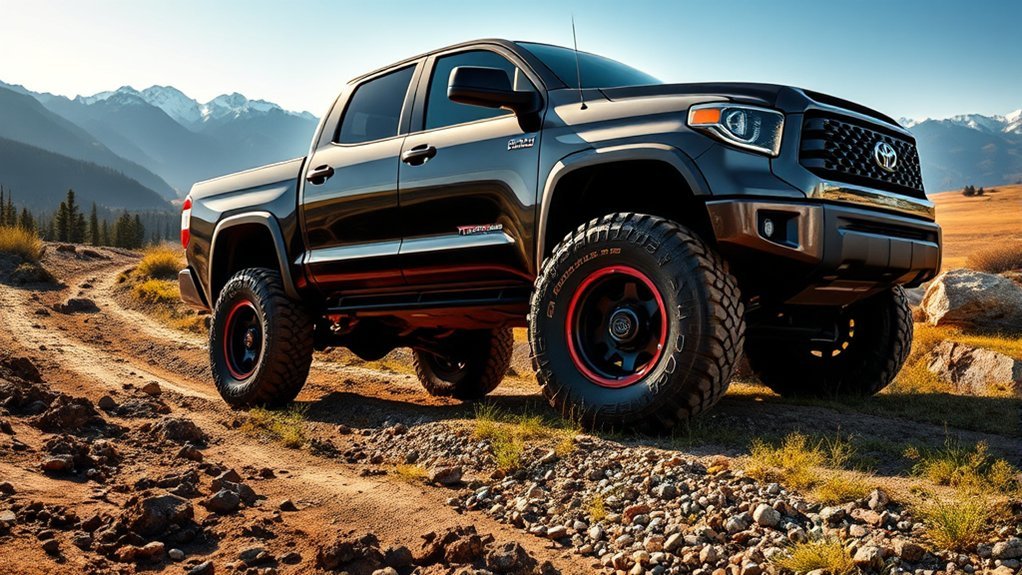
Choosing between mud-terrain and all-terrain tires for your Toyota Tundra comes down to how you actually use the truck. If most of your miles are on pavement with weekend trails, a quality all-terrain tire is usually the smarter fit. If you spend serious time in mud, ruts, rocks, or off-road recovery situations, a mud-terrain tire can give you the extra bite you need, but it comes with more noise, faster wear, and weaker road manners.
Quick Answer
For most Tundra owners, all-terrain tires are the best choice because they balance highway comfort, trail grip, tread life, and winter usability. Choose mud-terrain tires only if your truck regularly sees deep mud, rocky trails, soft dirt, or off-road work where maximum self-cleaning traction matters more than road noise and tread life.
Key Takeaways
- Choose all-terrain tires if your Tundra is a daily driver, tow vehicle, highway commuter, or light-trail truck.
- Choose mud-terrain tires if you regularly drive in deep mud, ruts, loose dirt, rocky trails, or off-road recovery conditions.
- For snow, look for a Three-Peak Mountain Snowflake rating, but remember that 3PMSF does not make a tire equal to a dedicated winter tire on ice.
- Always match the tire size, load index, load range, and cold tire pressure to your Tundra’s door placard, owner’s manual, and actual towing or hauling needs.
Understanding Mud-Terrain vs All-Terrain Tires
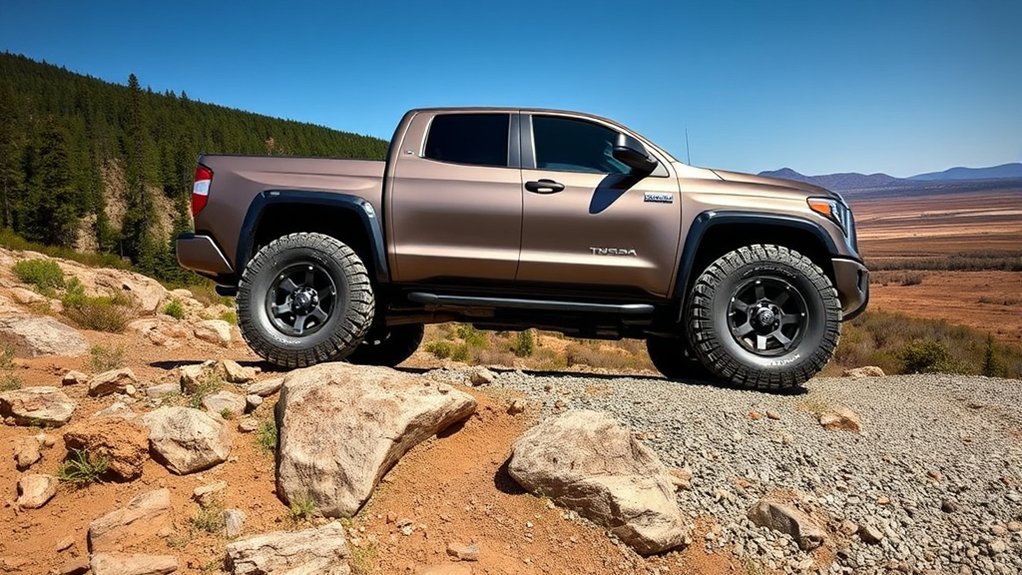
Mud-terrain (M/T) and all-terrain (A/T) tires are both built for trucks and SUVs, but they solve different problems. Mud-terrain tires use large tread blocks, wide voids, and aggressive shoulders to dig into mud, soft dirt, and loose trail surfaces. Those wide gaps also help the tire clear mud from the tread instead of packing it full.
All-terrain tires use a tighter tread pattern with more road-friendly spacing. They still provide extra grip on gravel, dirt, light mud, and mild trails, but they usually ride quieter and wear more evenly on pavement. The National Highway Traffic Safety Administration describes all-terrain tires as a compromise between on-road driving and off-road capability, which is exactly why they suit many Tundra owners.
| Category | All-Terrain Tires | Mud-Terrain Tires |
| Best For | Daily driving, towing, gravel, light trails, mixed weather | Deep mud, ruts, rocks, off-road recovery, soft terrain |
| Road Noise | Usually moderate to low | Usually louder, especially as the tread wears |
| Winter Use | Good if the tire is 3PMSF-rated, but still not a dedicated ice tire | Can help in loose snow, but often weaker on packed snow and ice |
| Tread Life | Often longer in mixed use | Often shorter if used heavily on pavement |
Performance Differences: On-Road vs Off-Road
On pavement, all-terrain tires usually feel more stable, quieter, and easier to live with. Their tread blocks are closer together, so there is more rubber working on the road. That helps with steering feel, braking stability, wet-road confidence, and tread wear. If your Tundra sees long highway trips, school runs, towing, commuting, or work-site driving, this matters every day.
Mud-terrain tires trade that road comfort for off-road bite. Their open tread pattern gives mud, clay, and loose soil somewhere to go, which helps the lugs keep grabbing instead of turning into a smooth, packed surface. On wet pavement, packed snow, or ice, those same large gaps can reduce contact and make the tire feel less predictable.
Warning: Do not choose a tire by tread pattern alone. For a Toyota Tundra, the tire also needs the correct size, load index, load range, speed rating, and cold inflation pressure for your truck and how you use it.
Top Reasons to Choose All-Terrain Tires for Your Tundra
All-terrain tires are the best fit for most Tundra owners because they handle the widest mix of real driving. A good A/T tire can manage highway miles, gravel roads, light mud, campsites, boat ramps, snow-covered streets, and moderate trails without making the truck feel too harsh or loud.
They also make sense if you tow or haul. Compared with a very aggressive mud-terrain tire, an all-terrain tire often has better road stability, more even wear, and less rolling noise. Many premium A/T models also offer limited mileage warranties. For example, the BFGoodrich All-Terrain T/A KO2 is listed by the manufacturer with a 3PMSF snow-traction mark and a 50,000-mile mileage warranty, though actual tread life still depends on alignment, rotation, load, pressure, and driving style.
Look for these features when shopping for all-terrain tires:
- 3PMSF rating if you drive in snow-prone areas.
- Correct load index for towing, hauling, passengers, and gear.
- LT construction if you need stronger sidewalls for towing or rocky trails.
- Wet-road reviews, because some aggressive A/T tires perform better than others in rain.
- Reasonable weight, since heavy tires can affect acceleration, braking feel, and fuel economy.
[Products Worth Considering]

These aluminum alloy tire valve stem caps with an O-ring seal help protect valve stems from corrosion while adding a clean, stylish look to your vehicle. The universal fit works across cars, trucks, motorcycles, bicycles, and more, making them an easy upgrade for everyday driving and off-road use. Installation is quick, and the included four-pack keeps all your tires dressed and protected.

These universal tire valve stem caps help protect valve cores from dust, debris, and moisture while helping maintain stable tire pressure. The corrosion-resistant metal construction and sealed design provide reliable protection in road grime, mud, and winter conditions. Twist-on installation makes them quick to fit on cars, SUVs, trucks, and motorcycles.

Measure tire tread depth quickly and accurately with this LUMITECO dial gauge that reads in 1/32" increments up to 14/32". The color-coded green/yellow/red zones make it easy to judge tire wear and know when replacement is needed. A rugged, compact design with a protective pouch helps keep the gauge ready for use on cars, trucks, motorcycles, and more.
Why Choose Mud-Terrain Tires?
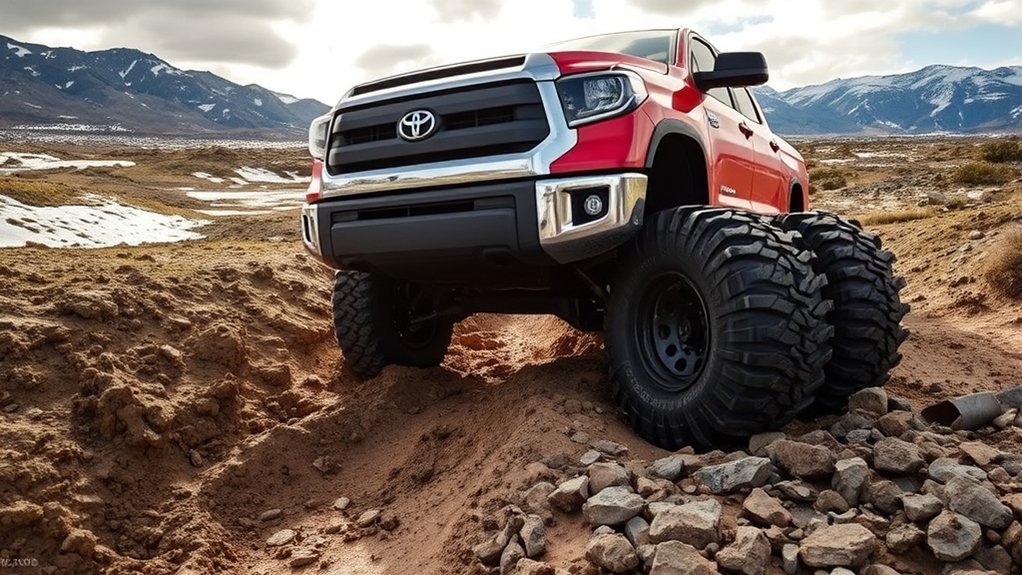
Mud-terrain tires make sense when your Tundra is built for serious off-road use. If you regularly drive through deep mud, clay, ruts, loose dirt, rocky two-track roads, or off-road work sites, the aggressive tread can help the truck keep moving where a milder all-terrain tire may clog or spin.
The trade-offs are real. Mud-terrain tires are usually louder on the highway, often heavier, and commonly wear faster when most of their miles are on pavement. They can also feel less secure in heavy rain, packed snow, or icy conditions, especially if the tire has limited siping. They are not automatically the best winter tire just because the tread looks aggressive.
Pro Tip: If your Tundra is both a daily driver and a trail truck, consider a hybrid rugged-terrain or aggressive all-terrain tire before jumping straight to a full mud-terrain. You may get enough trail grip with much better road comfort.
[Products Worth Considering]

Monitor tire tread wear with a smart, color-coded depth gauge that shows clear condition ranges at a glance. The bar is range marked for fast, easy readings, helping you maintain safer traction and performance. Each gauge is portable with a pocket clip, and the set includes 20 units for daily use and sharing.

The SAFELIFE dial tire tread depth gauge measures tread depth in 1/32 inch increments with clear, easy-to-read 2-inch dial face. Color zones using a traffic light system help you quickly judge whether tread is low, marginal, or ample for safer driving. Built with a durable zinc cast body and a metal detect probe for precise, comfortable use across cars, motorcycles, trucks, and buses.
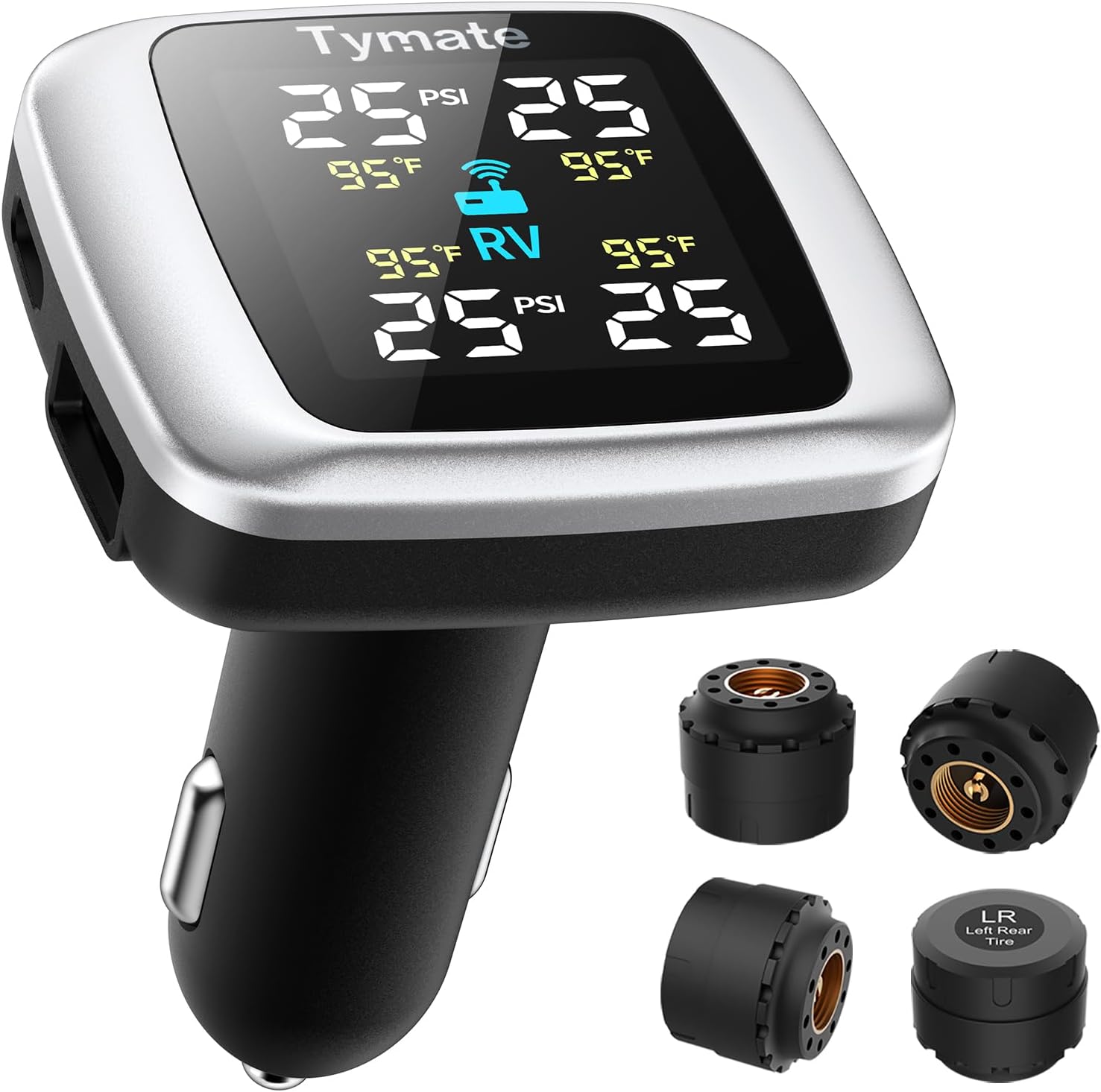
Tymate TM7 is a wireless tire pressure monitoring system that delivers real-time pressure and temperature readings for safer driving. It includes four external sensors, a bright color LCD display with adjustable backlight, and six alarm modes for high/low pressure, fast leakage, high temperature, and sensor signal or battery issues. The system covers a wide 0–144 PSI range and plugs into your vehicle’s cigarette lighter socket for quick DIY setup.
Understanding Tire Wear and Longevity
Tire life depends on more than the tire category. Alignment, rotation, air pressure, road surface, towing weight, driving speed, climate, and tread compound all affect how long a tire lasts. In general, mud-terrain tires tend to wear faster on pavement because their large tread blocks move more and generate more heat. All-terrain tires usually last longer in mixed use because the tread is more road-focused.
Tire maintenance is not optional. NHTSA reports that tire pressure, tread depth, balance, alignment, and rotation all affect tire safety, durability, and fuel use.
To get the most life from either tire type:
- Check pressure cold once a month. Use the pressure listed on your Tundra’s tire and loading placard or owner’s manual, not the maximum pressure printed on the tire sidewall.
- Rotate on schedule. Follow your owner’s manual. If Toyota recommends rotation for your setup, a common service range is every 5,000 to 8,000 miles.
- Watch tread depth. Tires should be replaced when tread reaches 2/32 inch, but wet and winter performance can decline before that point.
- Align after tire changes. Larger tires, lift kits, and worn suspension parts can create uneven wear fast.
- Rebalance when needed. Vibration, cupping, or steering shake should be checked early.
Winter Performance: How Tires Fare in Snow and Ice
Winter tire performance is often misunderstood. A tire with large tread blocks may look ready for snow, but packed snow and ice need biting edges, siping, cold-weather rubber, and tested snow traction. That is why many Tundra owners who drive in winter prefer a 3PMSF-rated all-terrain tire over a mud-terrain tire for mixed winter roads.
The Three-Peak Mountain Snowflake symbol means the tire has been tested and meets a defined snow-traction standard. It is helpful for snowy roads, but it does not mean the tire will brake like a dedicated winter tire on ice. If you drive often on icy roads, mountain passes, or severe winter highways, a dedicated winter tire is still the safest option.
Note: In winter climates, check local tire laws and traction-device rules. Some areas require winter-rated tires, chains, or other traction equipment during specific dates or conditions.
Making the Right Tire Choice Based on Driving Habits
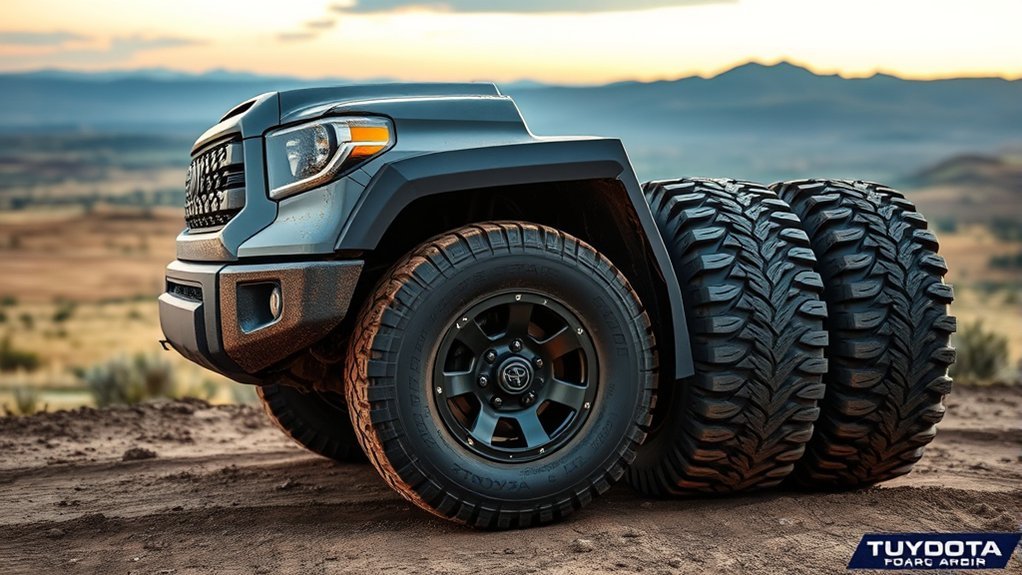
The best tire for your Tundra is the one that matches your real driving, not the most aggressive-looking tire in the shop. Use this simple guide:
- Mostly highway, towing, family use, and light trails: Choose a highway all-terrain or mild all-terrain tire.
- Daily driving plus gravel, snow, campsites, and weekend trails: Choose a 3PMSF-rated all-terrain tire with the right load rating.
- Frequent mud, ruts, rocks, and off-road recovery: Choose a mud-terrain or rugged-terrain tire, but accept more road noise and wear.
- Heavy towing or hauling: Prioritize load index, load range, heat resistance, and stability before tread style.
- Deep winter and ice: Use dedicated winter tires if conditions demand it, especially if braking on ice matters more than trail traction.
Load Rating and Tundra Tire Size Basics
A Toyota Tundra is a full-size pickup, so tire strength matters. Do not assume that a tire is suitable just because it fits the wheel or looks aggressive. The tire must carry the truck, passengers, cargo, hitch weight, and any towing load within the vehicle’s limits.
Start with the tire and loading information label on the driver’s door jamb and your owner’s manual. That information tells you the original size, recommended cold pressure, and load details for your truck. If you change tire size, wheel size, or tire type, have a tire professional confirm the correct load index and inflation pressure.
Here is what the key terms mean:
- P-metric tires: Often lighter and smoother on the road, but may not be the best choice for heavy towing, hauling, or sharp-rock trails.
- LT tires: Built for light trucks. They often have stronger construction and higher load capacity, but can ride firmer and weigh more.
- Load range: A letter rating such as C, D, or E that reflects the tire’s strength and pressure capability.
- Load index: A number that shows how much weight each tire can carry at its rated pressure.
- Speed rating: The maximum rated speed for the tire. Do not ignore this if your Tundra spends long hours on highways.
Common Modifications for Tire Fitment on Tundras
Many Tundra owners install larger tires for ground clearance, stance, and off-road grip. Common upgrades include 33-inch, 34-inch, and 35-inch tires, but fitment depends on the Tundra generation, trim, wheel width, wheel offset, suspension height, tire brand, and actual tire measurements. Two tires with the same listed size can measure differently once mounted.
Common fitment changes may include:
- Leveling kit or suspension lift to create more vertical clearance.
- Different wheel offset or backspacing to move the tire away from suspension parts.
- Mudflap adjustment or removal if the tire rubs behind the front wheel.
- Minor liner trimming when larger tires touch plastic liners at full lock.
- Alignment adjustment to improve clearance and reduce uneven tread wear.
Do a full clearance check after installation. Turn the steering wheel fully left and right, check forward and reverse movement, inspect at ride height, and check again after suspension compression. Make sure the tire does not contact the body, fender liner, bumper, suspension, brake lines, or wiring.
Warning: Oversized tires can change braking feel, speedometer accuracy, gearing, fuel economy, stability-control behavior, and spare-tire fitment. If you tow or carry heavy loads, confirm the setup with a qualified tire or suspension shop.
Tire Upgrade Costs: What to Expect
Tundra tire upgrade costs vary widely by size, load range, wheel diameter, brand, retailer, rebates, and installation needs. A common all-terrain or mud-terrain upgrade can be a simple tire swap, but the cost rises quickly if you also need wheels, a leveling kit, a lift kit, trimming, alignment, recalibration, or suspension parts.
Installation and Labor Costs
When budgeting, include more than the tire price:
- Mounting and balancing: Often charged per tire and may cost more for large LT tires.
- Valve stems or TPMS service: Sensors may need service kits or replacement if old or damaged.
- Wheel alignment: Strongly recommended after larger tires, lift kits, or suspension work.
- Disposal fees: Many shops charge a small fee per old tire.
- Fitment labor: Trimming, mudflap changes, or suspension adjustment can add cost.
If you are moving from a stock-size A/T tire to a larger LT mud-terrain tire, expect the full project cost to be much higher than a basic replacement set. Get quotes using the exact tire size and load range you plan to buy.
Tire Brand Price Variability
Tire prices change often, so treat any fixed number online as a snapshot. Premium all-terrain tires, rugged-terrain tires, and mud-terrain tires can cost much more in larger LT sizes than in smaller passenger sizes. The same model may also cost more in Load Range E than in a lighter-duty version.
| Budget Factor | Why It Changes the Price |
| Tire Size | Larger 18-inch, 20-inch, and 35-inch tires usually cost more than smaller sizes. |
| Load Range | Heavier-duty LT tires may cost more and may require higher inflation pressures. |
| Tread Type | Mud-terrain and rugged-terrain tires often cost more than mild all-terrain options. |
| Vehicle Modifications | Lift kits, wheels, trimming, and alignment can add hundreds or thousands to the final project. |
Best Tire Choice by Tundra Use Case
Here is the simplest way to decide:
- Best for daily driving: A mild or medium all-terrain tire with good wet-road performance.
- Best for snow-prone mixed driving: A 3PMSF-rated all-terrain tire, or dedicated winter tires for frequent ice.
- Best for towing: A properly load-rated all-terrain or highway-terrain tire with stable sidewalls and the correct pressure.
- Best for trail weekends: A durable all-terrain or rugged-terrain tire with reinforced sidewalls.
- Best for mud and ruts: A mud-terrain tire with open voids, strong sidewalls, and enough clearance.
- Best for overlanding: A load-appropriate all-terrain or rugged-terrain tire that balances puncture resistance, repairability, road comfort, and tread life.
If you are unsure, start with an all-terrain tire. It is easier to live with every day, and it gives most Tundra owners enough off-road grip without the harshest mud-terrain compromises.
[Products Worth Considering]

Keep your tires properly inflated with this analog VONDIOR tire pressure gauge, designed for fast, easy readings without batteries. The swiveling, two-axis hose and large glow dial help you measure at any tire angle with instant visibility. Built with a protective rubber shield, it supports durable, low-maintenance use for cars and trucks.

Upgrade your Toyota’s wheels with durable aluminum alloy valve stem caps that help protect valve cores from corrosion and direct exposure to road grime, clay, water, and snow. Rubber rings improve sealing to help prevent air leakage and maintain stable tire pressure for safer driving. These caps are easy to install or remove without tools and add a unique, stylish look to your car.

Vigorder rubber cement glue delivers superior adhesion and cures quickly within about 30 seconds for seamless rubber bonding. Once cured, it helps provide a strong, durable, waterproof seal that holds up to vehicle weight, pressure, and heat. Suitable for cars, motorcycles, trucks, bicycles, and off-road tires, it’s designed for emergency patch and maintenance repairs.
Frequently Asked Questions
What are the best tires to put on a Toyota Tundra?
For most Toyota Tundra owners, the best choice is a properly load-rated all-terrain tire. Look at options such as BFGoodrich All-Terrain T/A KO2 or KO3, Falken Wildpeak A/T4W, Toyo Open Country A/T III, or Goodyear Wrangler DuraTrac RT, then match the exact size, load index, and winter rating to your truck and driving conditions.
Are mud-terrain tires good for everyday driving?
Mud-terrain tires can be used every day if they are DOT-approved and correctly sized, but they are not ideal for most daily drivers. They are usually louder, heavier, less efficient, and faster-wearing than all-terrain tires. They may also feel less confident on wet pavement, packed snow, and ice.
Can I put 35-inch tires on a Toyota Tundra?
Many Tundra owners run 35-inch tires, but fitment depends on generation, trim, wheel offset, suspension height, and the tire’s actual measured size. You may need a leveling kit or lift, alignment changes, liner trimming, mudflap changes, or different wheels. Always check clearance at full steering lock and under suspension compression.
Are all-terrain tires good in snow?
Some all-terrain tires are good in snow, especially if they carry the Three-Peak Mountain Snowflake symbol. However, a 3PMSF-rated all-terrain tire is not the same as a dedicated winter tire on ice. If you drive often on icy roads, a true winter tire is still the safer choice.
Do bigger tires affect towing with a Tundra?
Yes. Bigger and heavier tires can affect acceleration, braking feel, gear ratio, speedometer accuracy, fuel economy, and transmission workload. If you tow often, choose a tire with the correct load rating and have the full setup checked before towing heavy loads.
Conclusion
If your Tundra spends most of its time on pavement, gravel, job sites, and weekend trails, all-terrain tires are the best overall choice. They offer the right balance of comfort, tread life, winter options, and light off-road grip. If your truck regularly works through mud, ruts, rocks, and deep off-road terrain, mud-terrain tires can be worth the extra noise and wear. Whichever route you choose, match the tire to your Tundra’s load needs, correct size, pressure, clearance, and real driving conditions.
Sources
- NHTSA TireWise — tire types, tire pressure, tread depth, rotation, balance, alignment, and tire safety guidance.
- BFGoodrich All-Terrain T/A KO2 — manufacturer information on 3PMSF rating, severe snow rating, and mileage warranty.
- Toyota Owners Manuals and Warranty Resources — owner’s manual reference for tire size, placard information, maintenance, and vehicle-specific guidance.