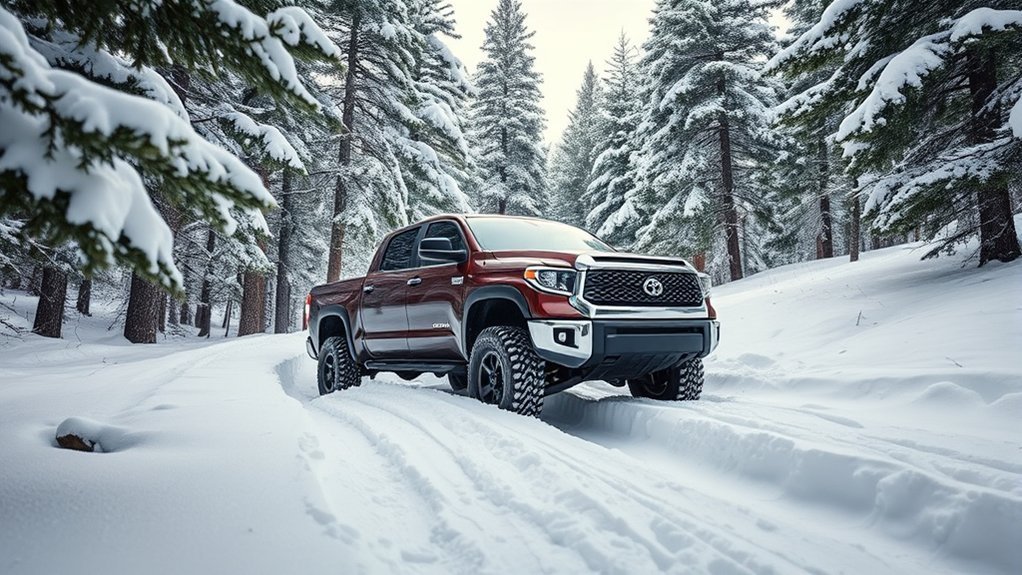
Using 4WD with snow tires on your Tundra helps most when the road is covered with packed snow, slush, ice, or several inches of loose snow. It improves traction when you start moving, climb hills, or push through deeper snow. It does not make the truck stop faster, so your speed, tire condition, and following distance still matter most.
Quick Answer
Use 4WD on your Tundra when snow or ice reduces traction, especially on packed snow, unplowed roads, steep driveways, and low-speed deep snow. Keep it in 2WD on dry pavement unless your owner’s manual says your specific mode is safe for that surface.
Key Takeaways
- Use 4H for most snowy roads, packed snow, slush, and icy hills where extra traction is needed.
- Use 4L only at low speed when you are stuck, crawling through deep snow, or moving slowly off-road.
- Snow tires matter more than 4WD for stopping because 4WD helps you move, but your tires and road friction control braking.
- Shift back to 2WD on dry pavement unless your model-year manual confirms that the selected mode is safe for high-traction surfaces.
At a Glance
| Time Required | 5 minutes to choose the right mode; 10–15 minutes for a full winter pre-drive check |
| Difficulty | Easy, but conditions can become dangerous quickly |
| Tools Needed | Owner’s manual, tire pressure gauge, tread depth gauge or coin, snow brush, ice scraper, emergency kit |
| Cost | $0 if your Tundra already has winter tires and basic gear; higher if you need snow tires, ballast, or winter supplies |
Understanding the Benefits of 4WD for Your Tundra
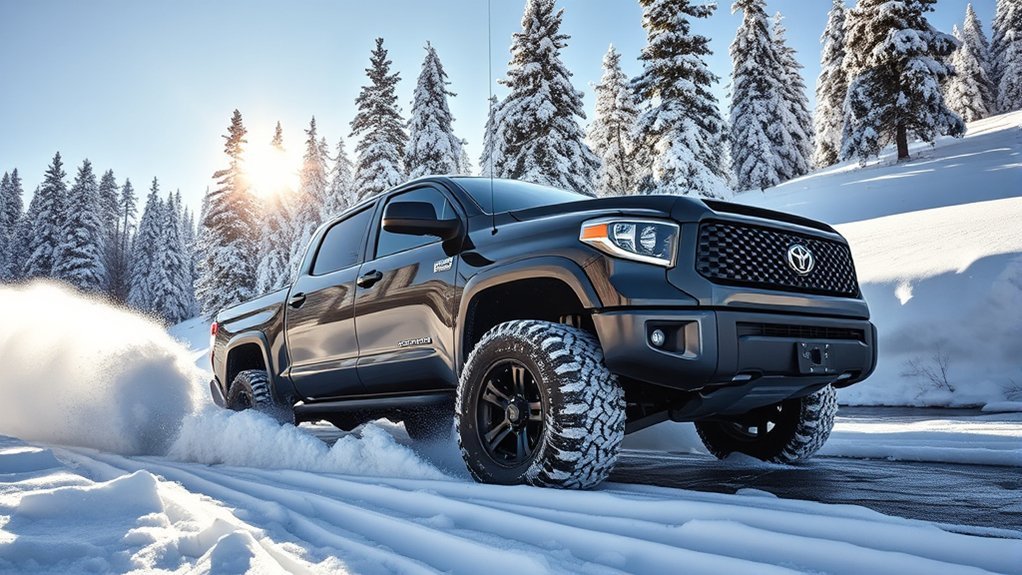
4WD helps your Tundra by sending engine power to the front and rear axles instead of relying only on the rear wheels. That extra drive traction can help when you are starting from a stop, climbing a snowy hill, crossing packed snow, or moving through a few inches of loose snow.
The key limit is braking. Your brakes already act on all four wheels, so engaging 4WD does not magically shorten stopping distance. Snow tires, tread depth, road speed, and following distance have a bigger effect when you need to stop or steer on ice.
For model-specific shifting steps, speed limits, and mode restrictions, check your Tundra’s Toyota owner’s manual. Toyota has changed features and controls across model years, so do not assume every Tundra uses the same 4WD system or shift procedure.
Warning: 4WD helps your Tundra move, but it does not let you brake like the road is dry. Slow down, leave extra space, and avoid sudden steering, braking, or throttle inputs on snow and ice.
When to Use 4WD in Snowy Conditions
Use 4WD when the road surface is slippery enough that your rear tires may spin or the truck feels unstable in 2WD. In most winter driving, that means using 4H for packed snow, slush, icy side streets, snowy hills, and unplowed roads.
Quick 4WD Decision Table
| Condition | Best Choice | Why |
| Dry pavement | 2WD, unless your manual says otherwise | High traction can cause binding in part-time 4WD systems. |
| Light snow with clear tire tracks | 2WD or 4H as needed | Use 4H if the rear tires spin, hills are slick, or the road is patchy. |
| Packed snow, slush, or icy hills | 4H | Adds drive traction and helps the truck stay composed under gentle throttle. |
| Deep unplowed snow | 4H first; 4L only if crawling | 4H keeps momentum. 4L is for slow, controlled movement when stuck or off-road. |
| Glare ice | 4H if you must drive, but slow down sharply | 4WD may help you move, but ice still gives very little braking and cornering grip. |
Situations Requiring 4WD
Engage 4WD when your Tundra needs extra traction to keep moving without wheelspin. Good examples include packed snow, icy neighborhood roads, slushy intersections, unplowed driveways, snowy job sites, and steep grades where the rear tires struggle in 2WD.
If snow is deeper than a few inches, shift into 4H before you lose momentum. Waiting until you are already buried makes recovery harder. Use smooth throttle and keep your steering gentle so the tires can keep biting instead of digging.
Benefits of Engaging 4WD
- Improved drive traction: Power goes to more tires, which helps reduce rear-wheel spin.
- Better low-speed control: The truck is less likely to fishtail when you apply light throttle on slick roads.
- More confidence on hills: 4H helps on snowy climbs and slippery driveways.
- Better recovery ability: 4L can help when you are stuck and need slow, controlled torque.
2H vs. 4H vs. 4L on a Tundra
Most Tundra winter driving comes down to choosing the right mode before the truck struggles. Always follow your model-year manual, but the general idea is simple.
- 2H: Use for normal dry or mostly clear roads. This is the default for everyday driving.
- 4H: Use for snowy, icy, muddy, or loose surfaces where traction is reduced. This is the main winter mode for most road use.
- 4L: Use only for low-speed crawling, deep snow recovery, steep off-road sections, or getting unstuck. It is not for normal road speed.
If your Tundra has extra drive modes, traction settings, Multi-Terrain Select, or crawl features, treat them as helpers rather than substitutes for good tires and careful driving.
[Products Worth Considering]

Accurately measure tire tread depth with a calibrated gauge marked from 0 to 1 inch in 1/32 inch increments. The color-coded bar helps you quickly identify tread condition ranges, supporting safe driving for trucks, motorcycles, automobiles, and passenger vehicles.

Monitor tire tread wear with a smart, color-coded depth gauge that shows clear condition ranges at a glance. The bar is range marked for fast, easy readings, helping you maintain safer traction and performance. Each gauge is portable with a pocket clip, and the set includes 20 units for daily use and sharing.

The SAFELIFE dial tire tread depth gauge measures tread depth in 1/32 inch increments with clear, easy-to-read 2-inch dial face. Color zones using a traffic light system help you quickly judge whether tread is low, marginal, or ample for safer driving. Built with a durable zinc cast body and a metal detect probe for precise, comfortable use across cars, motorcycles, trucks, and buses.
Why Snow Tires Are Essential for Winter Driving
Snow tires are essential because they are built for cold roads, snow, slush, and ice. Four-wheel drive helps you accelerate, but your tires provide the grip for braking and cornering. A Tundra in 4WD on worn all-season tires can still slide through a stop or understeer in a turn.
Look for winter tires with the mountain snowflake pictogram, often called the Three-Peak Mountain Snowflake symbol. In Québec, for example, winter tires are mandatory from December 1 to March 15 for most registered vehicles, and the official winter tire pictogram or approved studded tires are required under the rule. The SAAQ winter preparation guide also notes that winter tire grip becomes important when temperatures drop below 7°C or when snow and ice are on the road.
Enhanced Traction in Snow
Winter tires use tread patterns and rubber compounds designed to stay flexible in cold weather. That helps the tread grip packed snow and shed slush better than a typical all-season tire. Popular winter tire lines such as Bridgestone Blizzak and Nokian Hakkapeliitta are common choices, but the right size, load rating, and condition matter more than the name on the sidewall.
Improved Stopping Distance
Winter tires can shorten stopping distance on snow and ice compared with all-season tires, but exact results depend on temperature, road surface, tire model, tread depth, and speed. Do not rely on a fixed percentage. Instead, treat winter tires as a safety margin and still drive as if the truck needs extra room to stop.
According to NHTSA winter driving guidance, it is harder to control or stop a vehicle on slick or snow-covered surfaces, so drivers should slow down and increase following distance.
Better Handling on Ice
On ice, even excellent snow tires have limits. They can improve grip, but they cannot create dry-road traction. Use slow steering, gradual braking, and gentle throttle. If the road looks shiny, shaded, or wet at freezing temperatures, assume black ice is possible.
Strategies for Using 4WD in Deep Snow vs. Icy Conditions
Deep snow and ice need different driving habits. In deep snow, momentum helps. In ice, momentum can work against you. The right 4WD mode depends on whether you need to keep moving through resistance or reduce speed on a slick surface.
For deep snow, use 4H before you enter the drift or unplowed section. Keep steady throttle and avoid spinning the tires. If the truck starts digging down, stop early, back up gently if safe, and try again with less throttle.
For ice, use 4H only to improve drive traction. Keep your speed low, leave a long gap, and brake earlier than usual. If the surface is glare ice, the safest choice may be to delay the trip.
Pro Tip: If you know a hill, driveway, or side road is snowy, shift into 4H before the tires spin. Engaging it early is smoother than trying to recover after losing traction.
How to Maintain Control With 4WD on Slippery Roads
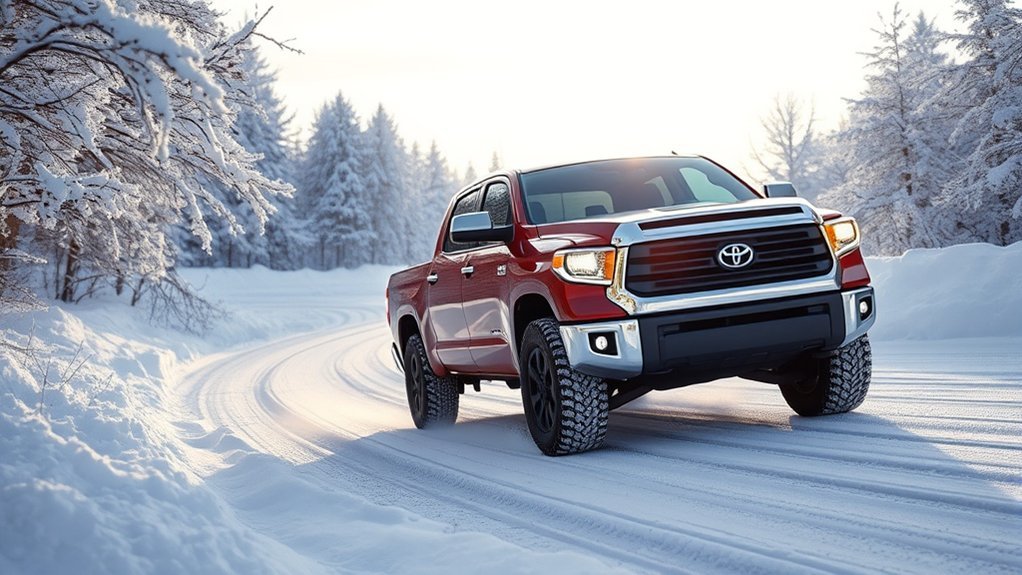
To maintain control with 4WD on slippery roads, drive smoothly and give the tires time to grip. Sudden throttle, sudden braking, and sharp steering can break traction even when all four wheels are driven.
- Use 4H when traction is reduced: It helps on packed snow, icy hills, and slushy roads.
- Slow down before turns: Brake in a straight line, then steer gently through the corner.
- Leave extra room: Give yourself more distance than normal because slick roads increase stopping distance.
- Use steady throttle: Spinning the tires polishes snow and ice, making traction worse.
- Watch bridges and shaded roads: These areas can freeze before the rest of the road.
Common Missteps: Misusing 4WD and Their Consequences
Many winter driving problems come from treating 4WD like a safety shield. It is not. It helps with traction under power, but it does not remove the risk of sliding, understeer, long stops, or loss of control.
- Using 4WD on dry pavement: Part-time 4WD can bind on high-traction surfaces. Shift back to 2WD when the road clears, unless your manual says the selected mode is safe for that surface.
- Driving faster because 4WD feels stable: This is one of the biggest winter mistakes. Stability under throttle does not mean short braking distance.
- Using 4L at road speed: 4L is for slow crawling and recovery, not normal snowy-road driving.
- Relying on all-terrain tires on ice: Some all-terrain tires do well in snow, but dedicated winter tires usually perform better on ice and cold pavement.
- Ignoring tire pressure: Tire pressure drops in cold weather, and underinflation can hurt handling, tread wear, and durability.
The Impact of Weight on Traction and Stability
A pickup with an empty bed can feel light over the rear axle, so some drivers add ballast for winter traction. This can help the rear tires bite, but only when done safely.
If you add weight, use sealed sandbags or purpose-made traction bags, place them near or slightly ahead of the rear axle, and secure them so they cannot slide. Do not exceed your Tundra’s payload rating, and remember that extra weight can also affect braking distance and emergency handling.
Note: Ballast is not a replacement for winter tires. If your tires are worn, underinflated, or not suited for winter, extra bed weight will not fix the main traction problem.
Choosing the Right Tires for Optimal 4WD Performance
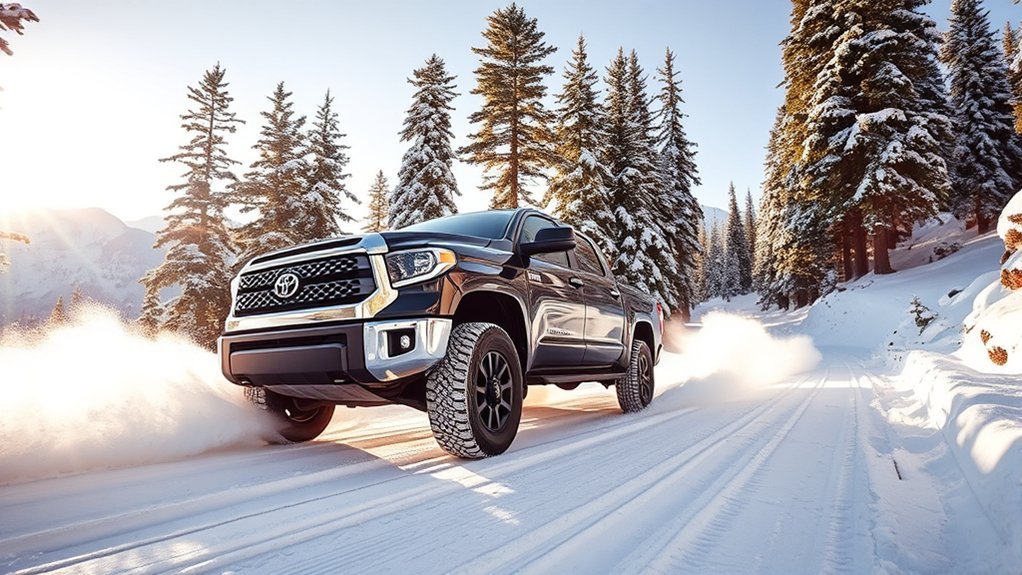
The right tires help your Tundra’s 4WD system work as intended. Choose tires that match your wheel size, load rating, and winter conditions. For frequent snow and ice, a dedicated winter tire is usually the safest choice. For mixed climates, an all-weather tire with a mountain snowflake rating may be a practical compromise.
Check tread depth before winter. NHTSA says tires are not safe and should be replaced when tread is worn to 2/32 inch. For winter use, aim higher. The SAAQ recommends used winter tires have at least 4.8 mm, or 6/32 inch, of tread across the tire when installed for better traction.
Also check tire pressure when the tires are cold. NHTSA TireWise advises checking all tires, including the spare, at least once a month and using the vehicle manufacturer’s recommended cold pressure from the door label or owner’s manual, not the maximum number printed on the tire sidewall.
[Products Worth Considering]

This car emergency kit keeps essential roadside tools organized in a durable, portable bag so you can respond quickly during common driving emergencies. It includes battery jumper cables, a bright LED headlight, first aid supplies, a tire pressure gauge, and safety essentials like gloves and an emergency poncho. Designed for trunk or storage use, it helps you be prepared for dead batteries, minor malfunctions, and unexpected roadside issues.

Measure tire tread depth quickly and accurately with this LUMITECO dial gauge that reads in 1/32" increments up to 14/32". The color-coded green/yellow/red zones make it easy to judge tire wear and know when replacement is needed. A rugged, compact design with a protective pouch helps keep the gauge ready for use on cars, trucks, motorcycles, and more.

Milton S-921 pencil tire pressure gauge helps you maintain optimal tire pressure for passenger cars with accurate readings in PSI and kPa. It features a built-in deflator valve for convenient pressure adjustments, plus a single chuck head and nylon indicator bar for easy use on the go. Built from durable plated brass and designed for reliable performance, it’s a practical road trip and cold-weather maintenance tool.
4WD Tips for Safe Driving in Heavy Snow
Heavy snow requires planning, patience, and smooth inputs. If road crews have not cleared the route, consider whether the trip is necessary. If you must drive, prepare the truck before you leave and use 4WD before traction becomes a problem.
Key Driving Techniques
- Shift into 4H early when roads are snow-covered or slushy.
- Keep momentum steady in deep snow, but do not spin the tires.
- Brake gently and early before intersections, curves, and downhill sections.
- Use 4L only for recovery or very slow off-road crawling.
- Clear the whole truck before driving, including roof, hood, lights, mirrors, and sensors.
Tire Performance Importance
Tire performance controls how well your Tundra starts, turns, and stops. Even with 4WD engaged, worn tires can slide on hard-packed snow or ice. Good winter tires with proper pressure and tread depth give the 4WD system something to work with.
Inspect your tires at least monthly during winter. Look for cracks, bulges, uneven wear, embedded objects, and low tread. If your TPMS light comes on during a cold morning, check tire pressure with a gauge rather than assuming the light will clear as the tires warm up.
Preparing Your Tundra for Winter: Must-Do Checks and Modifications
Before winter weather arrives, prepare the truck as a full system. Tires and 4WD are only part of the setup.
- Read the owner’s manual: Confirm the correct 4WD shifting steps and mode limits for your model year.
- Install winter-ready tires: Use properly sized tires with the correct load rating and enough tread depth.
- Check cold tire pressure: Use the door label or manual pressure, not the tire sidewall maximum.
- Test the battery: Cold weather lowers battery power, so have the battery and charging system checked before winter.
- Fill winter washer fluid: Use fluid rated for freezing temperatures and keep extra in the truck.
- Check wipers, lights, and defrosters: Visibility matters as much as traction.
- Carry winter gear: Keep a shovel, brush, scraper, blanket, phone charger, water, snacks, jumper cables, flashlight, and traction material such as sand or kitty litter.
[Products Worth Considering]

Measure tyre tread depth precisely with a digital gauge that reads in both MM and inches, helping you monitor safe driving conditions. The large LCD screen is easy to operate, and the compact tool fits for cars, trucks, and motorcycles. It provides high accuracy with a 0-25.4mm range and includes a 1-year warranty for added peace of mind.

This roadside assistance kit helps drivers and passengers in urgent situations after an accident or breakdown, providing practical support while waiting for help. It includes a lightweight, compact tire inflator for fast inflation of standard vehicle tires, plus reinforced jumper cable protection for safer handling. Ideal for winter weather, road trips, camping, and travel, with everything stowed neatly in a trunk bag.
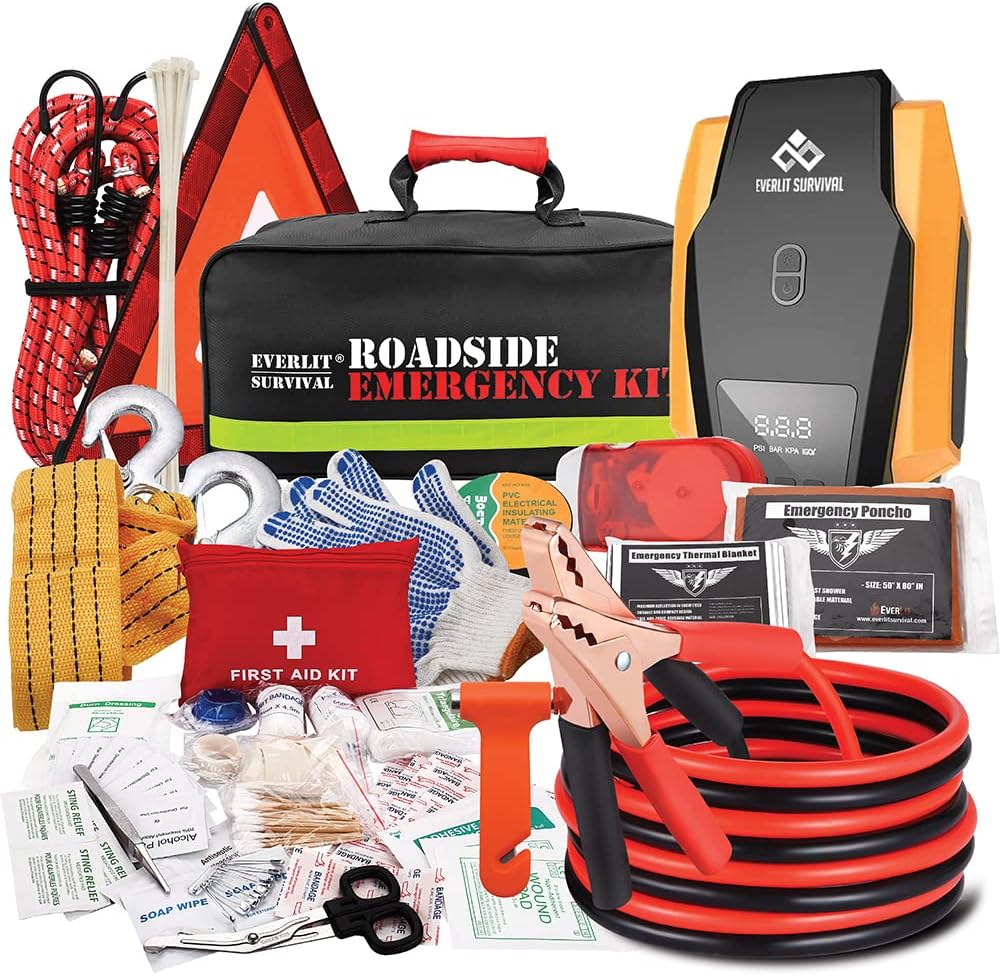
The Everlit Road Guardian emergency kit is designed for roadside breakdowns, combining essential safety gear and roadside tools in one compact bag. It includes a digital 12V auto tire inflator with preset and auto shutoff, plus 12-foot 8-gauge jumper cables to get you moving again. You also get a full 108-piece first aid kit, reflective warning tools, safety gloves, and emergency convenience items for safer travel.
What to Do if Your Tundra Gets Stuck in Snow
If the truck gets stuck, stop spinning the tires. Spinning digs holes and turns snow into slick packed ice. Clear snow from around the tires, shift to 4H or 4L as appropriate, straighten the wheels, and use gentle throttle.
If safe, rock the truck lightly by easing forward and backward, but do not slam between gears. Use traction boards, sand, or kitty litter under the drive tires. If the truck is high-centered on packed snow, remove snow from under the frame before trying again.
Warning: If you are stuck or stopped after heavy snowfall, clear snow from the exhaust pipe before running the engine. A blocked exhaust can allow carbon monoxide to enter the cabin.
Frequently Asked Questions
Should I turn my 4WD on when driving on snow?
Yes, use 4WD when snow reduces traction, especially on packed snow, slushy roads, icy hills, or unplowed streets. Use 2WD again when the road is dry unless your owner’s manual says your selected mode can be used on dry pavement.
Is October too early for winter tires?
October is not too early if temperatures are regularly near or below 7°C, if snow can arrive early, or if tire shops book up before winter. In Québec, winter tires are mandatory from December 1 to March 15 for most vehicles, but installing them earlier can make sense when cold weather arrives before the deadline.
Can I drive my Tundra in 4H in the snow?
Yes. 4H is the normal 4WD choice for snowy roads, packed snow, slush, and icy hills. Keep your speed reasonable, avoid sudden inputs, and shift back to 2WD when the road is dry if your Tundra uses a part-time 4WD system.
Should I use 4L in deep snow?
Use 4L only for low-speed crawling, recovery, steep off-road sections, or when you are stuck and need controlled torque. For normal snowy-road driving, 4H is usually the better choice.
Do I still need snow tires if my Tundra has 4WD?
Yes. 4WD helps your Tundra move, but snow tires help with braking, steering, and grip in cold weather. A 4WD truck on worn or unsuitable tires can still slide on snow and ice.
Conclusion
Use 4WD with snow tires on your Tundra when traction is limited by packed snow, slush, ice, hills, or deep unplowed snow. Use 4H for most winter roads and save 4L for low-speed recovery or crawling. The safest setup is not just 4WD. It is winter tires with good tread, correct cold pressure, smooth driving, extra following distance, and a clear plan for changing road conditions.
Sources
- Toyota Owner’s Manuals and Warranties — model-year-specific Tundra owner’s manual guidance
- NHTSA Winter Weather Driving Tips — winter driving, following distance, tire pressure, battery, wipers, coolant, and emergency kit guidance
- NHTSA TireWise — tire pressure, tire tread, tire maintenance, tire ratings, and replacement guidance
- SAAQ Winter Preparation — winter tire dates, winter tire pictogram, cold-weather grip, and winter tread-depth guidance
- SAAQ Winter Driving — safe winter driving habits, black ice caution, trip planning, and carbon monoxide warning