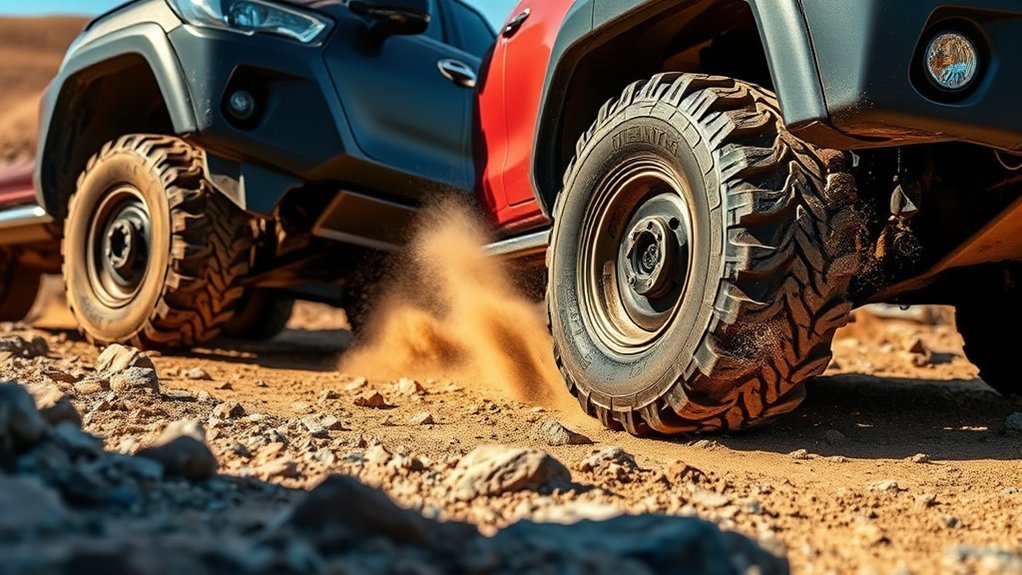
The drivetrain badge on your Toyota Hilux does not choose the tires for you. The right set depends on your exact model year, market, trim, wheel size, load rating, climate, cargo or towing needs, and how much time you spend on pavement, gravel, mud, sand, snow, or rock. A 4WD used mainly on highways may be best served by road-focused tires, while a 2WD work truck that visits rough job sites may need all-terrain tires.
Quick Answer
Choose Hilux tires by exact model year, market, trim, wheel size, load rating, climate, and terrain—not by 2WD or 4WD alone. A road-focused 4WD can use highway-terrain tires, while a 2WD work truck may need all-terrain tires. Match the door placard and owner’s manual before buying.
Key Takeaways
- Start with the tire size, load rating, speed rating, and cold pressure listed for your exact Hilux—not a generic online size or PSI range.
- Highway-terrain tires suit mostly paved driving; all-terrain tires balance road use and trails; mud-terrain tires trade noise and road manners for stronger soft-terrain traction.
- For 4WD models, keep all four tires closely matched in size, construction, tread pattern, and rolling circumference.
- Four-wheel drive helps you get moving, but it does not replace winter tires or shorten braking distance on snow and ice.
- Recheck pressure monthly, inspect damage and tread, rotate according to the service schedule, and account for cargo, towing, and off-road use.
Understanding 2WD and 4WD: What Actually Changes
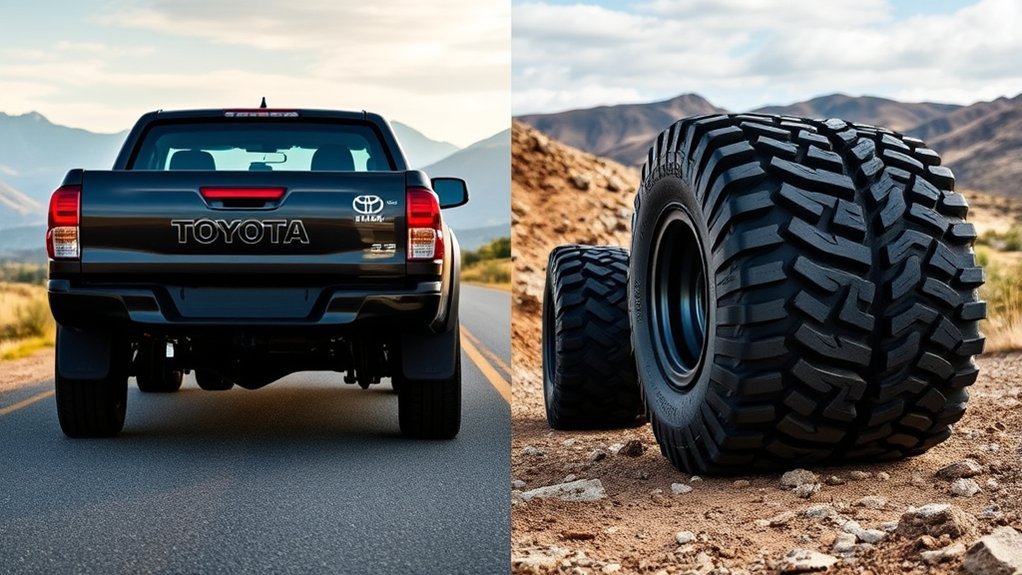
A 2WD Hilux sends engine power to one axle, while a selectable 4WD Hilux can send power to both axles when four-wheel drive is engaged. That difference affects where drive torque is applied, but it does not create a separate class of “2WD tires” or “4WD tires.” Tire choice still starts with approved fitment and intended use.
Toyota sells Hilux variants with different drivetrains, body styles, weights, wheel packages, and towing capacities. The current Toyota Australia Hilux range, for example, includes both 4×2 and 4×4 configurations. This is why advice based only on the drivetrain can be misleading.
| Factor | 2WD Hilux | 4WD Hilux |
|---|---|---|
| Drive traction | Power reaches one axle, so tire grip on the driven axle is especially noticeable during acceleration. | Power can reach both axles when 4WD is engaged, improving launch traction on loose or slippery ground. |
| Best tire category | Depends on use: highway-terrain, all-terrain, or winter tires can all be appropriate. | Also depends on use; 4WD does not automatically require aggressive off-road tread. |
| Replacement matching | Match tires across each axle and follow Toyota and tire-maker guidance. | Closely match all four tires to avoid rolling-circumference differences in the driveline. |
| Pressure | Use the vehicle placard or owner’s manual for the fitted size and load. | Use the same sources; 4WD does not automatically mean higher pressure. |
Verify Your Exact Hilux Fitment Before Shopping
Hilux tire sizes vary by country, model year, trim, cab style, ride height, wheel package, and commercial or passenger construction. Do not assume that a size listed for another Hilux will fit yours correctly.
- Read the tire placard on the door opening or pillar. Record the front and rear size and recommended cold pressure.
- Check the owner’s manual for approved alternatives, rotation instructions, spare-tire information, and special load guidance.
- Read the full sidewall code, including tire width, aspect ratio, rim diameter, load index or load range, speed rating, and any commercial marking such as “C” or “LT.”
- Confirm wheel specifications if changing rims. Diameter, width, offset, brake clearance, load capacity, and stud pattern all matter.
- Use a qualified tire shop to verify that any non-original size keeps adequate clearance and load capacity and does not upset speedometer, braking, stability-control, or driveline operation.
Toyota’s owner support guidance directs owners to the tire placard or owner’s manual and warns that wheel changes can affect handling, bearing life, brake cooling, headlight aim, and speedometer calibration. Michelin also recommends using the vehicle-maker’s approved size and not reducing load-carrying capacity in its tire-size replacement guidance.
Warning: Never choose a replacement tire only because the diameter looks close. A tire with an inadequate load rating, incompatible construction, or incorrect rolling circumference can affect handling, braking, tire temperature, and driveline operation.
What Tire Type Is Best for a 2WD Hilux?
The best tire for a 2WD Hilux depends on where the truck works. Most 2WD owners do not need the noise, weight, and rolling resistance of a mud-terrain tire, but some 2WD trucks still travel on gravel, construction sites, farms, or sandy tracks.
[Products Worth Considering]

Measure tire tread depth quickly and accurately with this LUMITECO dial gauge that reads in 1/32" increments up to 14/32". The color-coded green/yellow/red zones make it easy to judge tire wear and know when replacement is needed. A rugged, compact design with a protective pouch helps keep the gauge ready for use on cars, trucks, motorcycles, and more.

These aluminum alloy tire valve stem caps with an O-ring seal help protect valve stems from corrosion while adding a clean, stylish look to your vehicle. The universal fit works across cars, trucks, motorcycles, bicycles, and more, making them an easy upgrade for everyday driving and off-road use. Installation is quick, and the included four-pack keeps all your tires dressed and protected.

The Topeak SmartGauge D2 delivers precise digital tire pressure readings for bikes, motorcycles, and sports equipment up to 250 psi (17 bar). Its rotating SmartHead works with both Presta and Schrader valves, so you can check pressure quickly without adapters. The LCD display makes it easy to read results in psi, bar, or kg/cm² with an included CR2032 battery for immediate use.
Mostly Highway and City Driving
Choose a highway-terrain or road-focused light-truck tire that meets the required size and load rating. Look for predictable wet braking, low road noise, stable steering, and suitable tread-life coverage. A lower-rolling-resistance design may help efficiency, but never trade away load capacity or correct fitment.
Mixed Pavement, Gravel, and Job-Site Use
A mild all-terrain tire can add cut resistance and loose-surface traction without the harshness of a mud-terrain design. This is often the best compromise for a 2WD Hilux that spends most of its time on roads but regularly encounters dirt, gravel, grass, or rutted access tracks.
Sand, Mud, or Frequent Rough Access
Tread design can help, but a 2WD truck still has fewer driven wheels. Favor an all-terrain or terrain-specific tire with enough load capacity, and be realistic about traction limits. Recovery boards, a rated recovery point, and careful route choice may matter more than moving to an extremely aggressive tire.
Pro Tip: For a daily-driven 2WD Hilux, buy the least aggressive tread that reliably handles your worst regular surface. That usually gives better noise, comfort, wet-road behavior, and fuel use than choosing tread for rare extreme trips.
Essential Features for 4WD Hilux Tires
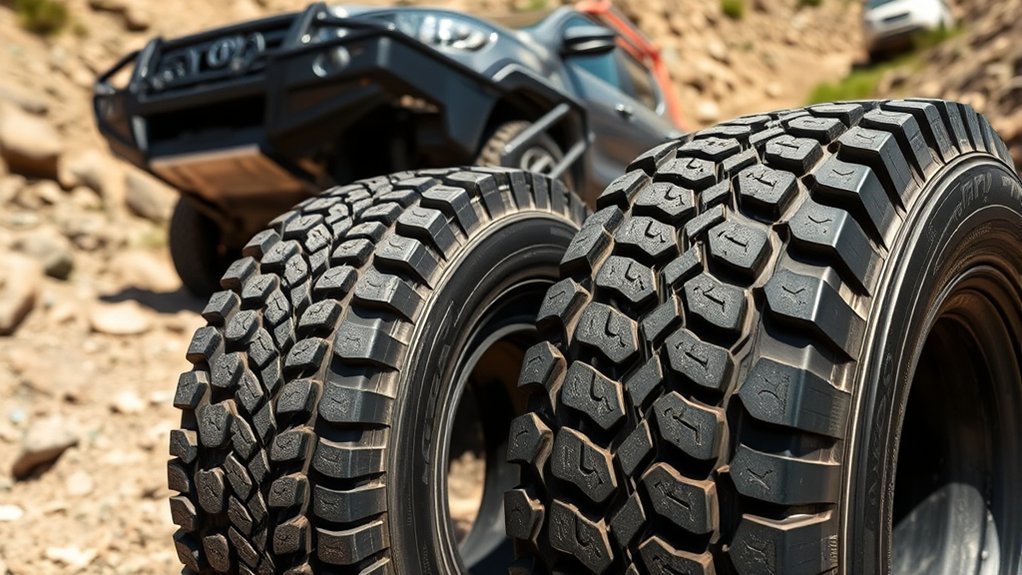
A 4WD Hilux does not always need an aggressive tire. Start with the percentage of road and off-road driving, then choose the tread category that covers your normal use.
- Highway-terrain: Best for mostly paved travel, towing on sealed roads, lower noise, and stable road manners.
- All-terrain: A balanced choice for pavement, gravel, dirt, and moderate trails. Look for durable shoulders and useful void space without excessive tread noise.
- Mud-terrain: Intended for frequent deep mud, loose surfaces, and rugged tracks. Expect more noise, greater rolling resistance, and less refined wet-road behavior than a road-focused tire.
- Dedicated winter: The correct choice for sustained cold, snow, and ice, regardless of whether the Hilux is 2WD or 4WD.
Off-road tires commonly use wider tread voids and stronger sidewall construction to resist punctures and clear loose material. However, those same features can reduce refinement on pavement. Continental’s off-road tire guide explains the trade-off between all-terrain, mud-terrain, and road performance.
Note: On a 4WD Hilux, use four closely matched tires. If one tire is damaged, ask Toyota or a tire professional whether a single replacement is acceptable based on the remaining tread depth and rolling circumference.
[Products Worth Considering]

The Trivd Frol 1/2" air impact wrench delivers high performance torque up to 1500 ft-lbs with a twin hammer impact mechanism for strong, balanced blows. It features an ergonomic grip, compact lightweight design, and quick-stop control with 3 forward speeds up to 8000 RPM plus a reverse speed. Built for demanding automotive repair and tire shop work, the rear exhaust helps keep debris away from the surface.

Black Magic Tire Wet delivers a deep wet-look shine that makes tires appear dark, rich, and freshly detailed. Its long-lasting formula helps resist rain, dust, and road grime for weeks of glossy protection, not days. Apply by spraying onto clean, dry tires—no buffing or wiping required—with a low-sling design to reduce splatter on paint and wheels.

This tire inflator with pressure gauge delivers long-lasting performance with a durable rubber-protected gauge and sturdy build. The longer hose and 360 swivel air chuck help you seal the valve securely and keep your hands free while measuring, inflating, or deflating. It’s battery-free for reliable use and provides ±2 PSI accuracy in the mid-range for most typical tires, with universal compatibility for 1/4 NPT compressor outputs.
How Terrain Affects Hilux Tire Selection
Choose for the hardest surface you drive on regularly, not the most dramatic surface you may encounter once a year. The table below shows the usual priorities.
| Terrain | Useful Tire Traits | Main Trade-Off |
|---|---|---|
| Paved roads | Strong wet braking, stable center ribs, low noise, and suitable load rating | Less bite in deep mud or loose soil |
| Gravel and corrugations | Cut- and chip-resistant compound, stable tread blocks, durable casing | May be firmer or noisier on pavement |
| Mud | Large voids, self-cleaning tread, strong sidewalls | Noise, wear, and weaker road refinement |
| Sand | Adequate flotation, flexible casing, and a tread that does not dig aggressively | Pressure management and driver technique become critical |
| Rock and sharp trails | Strong sidewalls, puncture resistance, protected shoulders | Heavier construction may reduce comfort and efficiency |
| Snow and ice | Four dedicated winter tires with the three-peak mountain snowflake symbol | Seasonal changeover and storage |
Off-Road Pressure Adjustments
Some experienced off-road drivers temporarily reduce pressure to improve flotation or help the tread conform to loose and uneven ground. There is no universal safe “air-down” number. Vehicle weight, tire construction, wheel size, speed, temperature, and terrain all matter.
Warning: Reduced off-road pressure increases heat, sidewall flex, rim-contact risk, and the chance of unseating a bead. Drive slowly, avoid sharp steering, and reinflate to the placard or approved road pressure before returning to normal-speed pavement.
Load, Towing, and Tire Ratings Matter More Than Drivetrain
A tire that fits the wheel can still be wrong for the truck. Hilux models may carry passengers, tools, trays, canopies, bull bars, recovery gear, rooftop equipment, or trailer tongue load. These additions can place much more weight on the tires than an empty-truck comparison suggests.
- Load index or load range: Must meet the vehicle and axle requirements. Never downgrade below an approved capacity.
- Commercial construction: A “C” or “LT” marking may indicate a tire built for commercial or light-truck loads, but the full service description still needs to match.
- Speed rating: Use a rating permitted by Toyota and local law. A more aggressive tire may have a lower speed rating than a road tire.
- Axle limits: Do not exceed the vehicle’s gross axle or gross vehicle ratings, even when the tires have a higher individual capacity.
- Accessories and towing: Weigh the loaded vehicle by axle when the setup is close to its limits, then use Toyota’s approved pressure guidance for that configuration.
The safest Hilux tire is not the one with the most aggressive tread. It is the tire that fits the vehicle, carries the real load, suits the climate, and performs well on the surfaces you actually drive.
[Products Worth Considering]

Cool Coolers by Fit & Fresh provides reusable XL slim ice blocks designed for strong, long-lasting cooling in coolers and cooler bags. The break-resistant, BPA-free packs are leak-proof and easy to clean, helping keep food and beverages cold without a messy melt. A space-saving slim shape fits top or side placements, and the tire-pattern design boosts cooling surface area for next-day use.

This ALL-TOP auto-stop tire deflator valve kit lets you air down off-road tires quickly without watching pressure, automatically stopping when your preset PSI is reached. Each valve is individually calibrated for reliable performance with an acceptable +/- 2 PSI tolerance. The adjustable deflator range covers 10 to 30 PSI and includes four valves plus valve caps and a zipper pouch for easy setup on trucks, SUVs, RVs, UTVs, and powersports.

The Kurgo Seasonal Tire Tote helps protect your car interior, clothes, and garage from tire grime, brake dust, and residue during seasonal tire changes. Its universal design fits most passenger tires between 22" and 31" in diameter, making storage and transport simpler with less mess. Built for rugged, repeated use, it’s machine washable for easy care and comes with a lifetime warranty.
How Tire Pressure Differs Between 2WD and 4WD
It often does not differ simply because of drivetrain. The correct road pressure is set for the vehicle, approved tire size, axle load, and operating condition. A 2WD Hilux may require more pressure than a 4WD in some configurations, or the front and rear values may differ.
The NHTSA TireWise guidance says to use the vehicle manufacturer’s recommended cold pressure from the placard or owner’s manual—not the maximum pressure molded on the tire sidewall. Check pressure when the tires are cold, including the spare where applicable.
- Check pressure at least monthly and before long trips, towing, or carrying a heavy load.
- Use a reliable gauge and compare the reading with the placard value for cold tires.
- Do not bleed air from a warm tire simply because the reading has risen during driving.
- Investigate repeated pressure loss, visible damage, vibration, or a pull to one side.
- After off-road pressure changes, reinflate before sustained road speed.
Seasonal Considerations for Hilux Tires
Season and temperature affect both 2WD and 4WD models. Four-wheel drive can improve acceleration traction, but braking and cornering still depend on the tire’s grip.
For regular driving in cold, snowy, or icy conditions, use four matching winter tires. Transport Canada’s winter tire guidance recommends winter tires on all wheel positions and explains the three-peak mountain snowflake symbol.
- Winter: Use dedicated winter tires when climate and local rules call for them. Check pressure more often as temperatures change.
- Heavy rain: Prioritize adequate tread depth, water evacuation, and stable wet braking. Replace damaged or badly worn tires before the wet season.
- Hot weather: Check cold pressure and load before long highway trips. Heat, speed, underinflation, and heavy loads can combine to raise tire stress.
- Seasonal storage: Clean removed tires, mark their positions, and store them in a cool, dry place away from sunlight, heat, fuel, and ozone-producing equipment.
How to Maintain Tire Performance on 2WD and 4WD Hilux Models
- Check pressure monthly. Include the spare and use the cold values specified for your vehicle.
- Inspect tread and sidewalls. Look for cuts, cracks, bulges, exposed cords, embedded objects, stone drilling, and uneven wear.
- Rotate on schedule. Follow the Hilux service book and tire warranty. Directional tires, staggered sizes, or special-use setups may limit the normal pattern.
- Check alignment after impacts. A pothole, curb strike, or rough trail can change alignment and cause rapid shoulder wear.
- Balance when needed. Vibration at road speed can indicate imbalance, damage, mud packed inside a wheel, or another mechanical problem.
- Keep four 4WD tires matched. Compare size, model, construction, tread depth, and circumference before replacing only one tire.
- Inspect after off-road use. Remove stones or packed mud, examine the inner sidewalls, and check for rim damage and slow leaks.
Signs It Is Time to Replace Your Hilux Tires
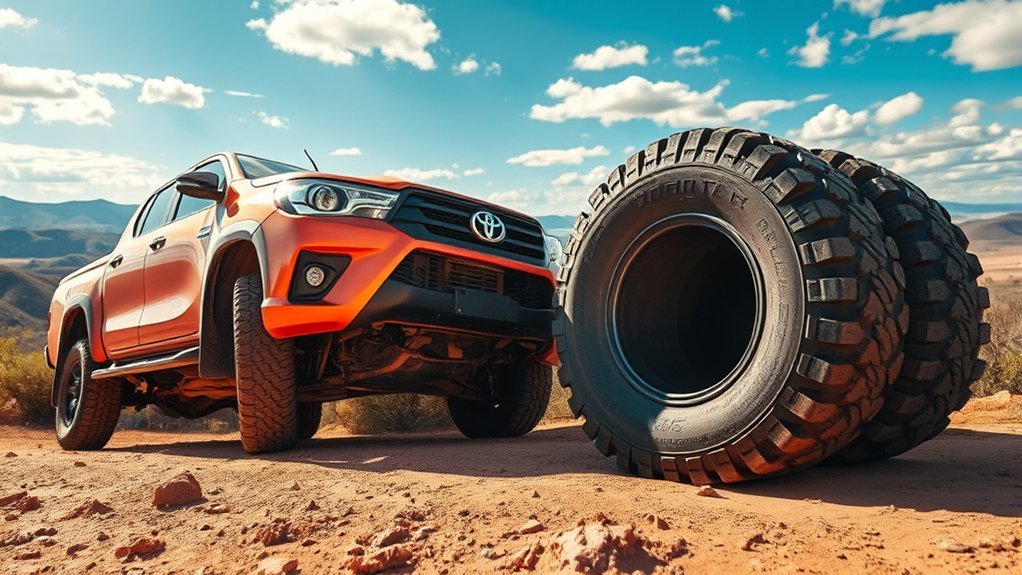
Replace or professionally inspect a tire when you find any of the following:
- Tread at the legal or manufacturer limit: In the United States, NHTSA identifies 2/32 inch as the point where treadwear indicators are flush. Wet, snow, and off-road performance can become unacceptable before that minimum.
- Bulges, exposed cords, deep cracks, or severe cuts: These can indicate structural damage and should not be ignored.
- Repeated air loss: A slow leak may come from a puncture, valve, bead, wheel, or hidden damage.
- Uneven or rapid wear: Feathering, cupping, center wear, or one-sided wear can point to pressure, alignment, balance, suspension, or loading problems.
- New vibration, noise, or poor handling: Stop and inspect the vehicle if the change is sudden or severe.
- Age concerns: Read the tire date code and follow Toyota and tire-manufacturer inspection or replacement guidance. Age matters even when tread remains.
Tips for Proper Tire Care and Longer Life
Good tire life comes from consistent care rather than one perfect rotation interval or pressure number.
- Record pressure, tread depth, and mileage at each service so changes are easy to spot.
- Rotate early if uneven wear appears instead of waiting for the next scheduled service.
- Keep loads within vehicle limits and distribute cargo so one axle is not overloaded.
- Avoid sustained high speed when heavily loaded, underinflated, or using reduced off-road pressure.
- Rinse away mud, salt, and chemicals, then inspect the inner sidewalls and wheels.
- Use valve caps and replace damaged valve stems or tire-pressure sensors during service when needed.
- Have punctures assessed from inside the tire by a trained professional; sidewall damage is generally not a routine plug repair.
Frequently Asked Questions
Can I use all-terrain tires on a 2WD Hilux?
Yes, provided the size, load rating, speed rating, construction, and wheel fitment are approved. All-terrain tires can help a 2WD Hilux on gravel and job sites, but they may add noise, weight, and rolling resistance compared with highway-terrain tires.
Does a 4WD Hilux need mud-terrain tires?
No. A 4WD used mainly on pavement may perform better with highway-terrain or mild all-terrain tires. Mud-terrain tires make sense when deep mud and severe off-road use are frequent enough to justify their extra noise and road-performance trade-offs.
How do tire pressures differ between 2WD and 4WD Hilux models?
There is no universal 2WD-versus-4WD rule. Use the cold pressures on the tire placard or in the owner’s manual for your exact model, tire size, and load. Front and rear pressures may differ, and loaded or towing conditions may have separate guidance.
Can I replace only one tire on a 4WD Hilux?
Sometimes, but only when Toyota and the tire manufacturer allow it and the replacement closely matches the other three tires in size, model, construction, tread depth, and rolling circumference. Ask a qualified tire professional to measure the remaining set before deciding.
Are winter tires necessary if my Hilux has 4WD?
In sustained cold, snow, or ice, four dedicated winter tires are still the safer choice. Four-wheel drive helps acceleration traction, but the tires provide the grip used for braking and cornering.
What happens if I install larger tires?
Larger tires can change clearance, gearing, acceleration, braking, speedometer accuracy, steering effort, fuel use, wheel-bearing load, and stability-control behavior. Confirm wheel and tire compatibility, load capacity, and legal requirements before changing size.
Can tire rotation patterns differ between 2WD and 4WD?
Yes, but drivetrain is only one factor. Tire direction, front and rear sizes, wheel offsets, spare-tire matching, and Toyota’s service instructions can change the permitted pattern. Follow the owner’s manual and tire warranty rather than using one pattern for every Hilux.
Conclusion
Choose Toyota Hilux tires by fitment, load, climate, and real driving conditions—not by a simple 2WD-versus-4WD label. A road-focused tire may be right for either drivetrain, while all-terrain, mud-terrain, or winter tires should be selected only when their strengths match your regular use. Verify the placard and owner’s manual, keep 4WD tires closely matched, maintain cold pressure, and inspect the set often.
Sources
- Toyota Australia: Hilux Range — current drivetrain, body, weight, and towing variations across Hilux grades.
- Toyota Australia: Owner Support FAQs — tire placard, wheel replacement, and fitment guidance.
- NHTSA TireWise — cold inflation pressure, tread, damage, age, and inspection guidance.
- Michelin: Changing Tire Size or Specifications — approved sizing, load capacity, mixing, and 4WD matching guidance.
- Continental: Off-Road Tires — all-terrain, mud-terrain, tread, sidewall, and road-use trade-offs.
- Transport Canada: Using Winter Tires — winter tire markings, cold-weather grip, and four-tire installation.