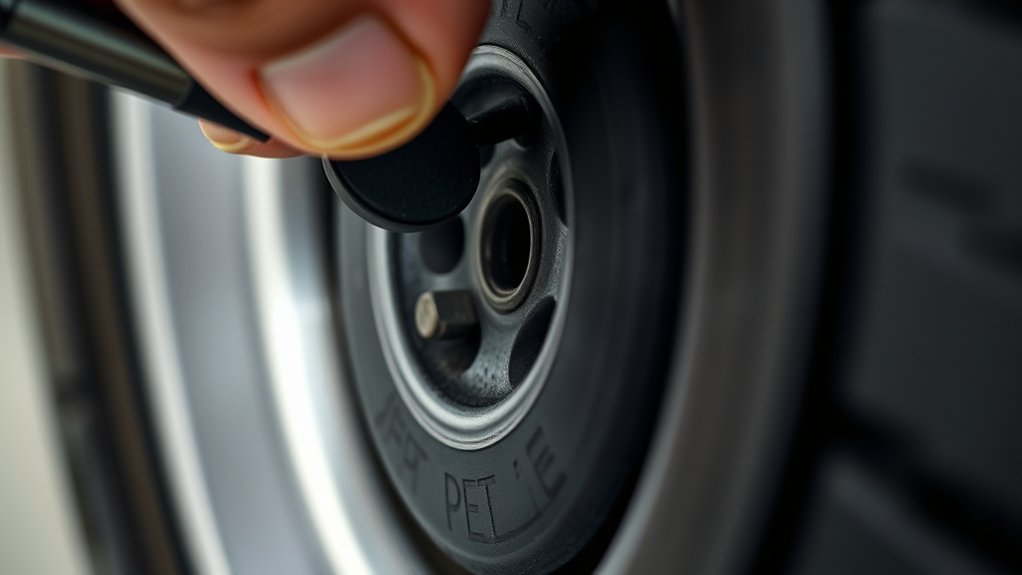
To let air out of a tire safely, park on level ground, set the parking brake, remove the valve cap, and press the small pin inside the valve stem in short bursts. Check the pressure with a gauge every few seconds and stop at the pressure listed on your vehicle’s tire placard or owner’s manual for normal road driving. If you are airing down for off-road traction, use a planned low-speed trail pressure only when your tire, wheel, load, and terrain support it, then reinflate before returning to pavement.
Quick Answer
To release air from a car tire, remove the valve cap and press the center pin inside the valve stem with a tire gauge, valve tool, or small screwdriver. Bleed air in short bursts, check PSI often, and stop at the correct pressure shown on the driver’s door label or owner’s manual.
Key Takeaways
- Use the vehicle placard or owner’s manual for normal road PSI, not a guessed number from the tire sidewall.
- Release air in short bursts and check with a reliable gauge every 5 to 10 seconds.
- Removing the valve core deflates a tire very fast, so use that method only when you are ready to control and reinflate the tire.
- Lower off-road PSI should be used only at low speed and only when your tire and wheel setup can handle it.
- Reinflate before highway driving because underinflated tires can overheat, handle poorly, and fail.
At a Glance
| Time Required | 1 to 5 minutes per tire for small adjustments; faster if using a tire deflator or valve core tool |
| Difficulty | Easy, as long as you check pressure often and avoid over-deflating |
| Tools Needed | Tire pressure gauge, valve cap, tire deflator or valve core tool, and an air compressor for reinflation |
| Cost | Free if you already have a gauge; about $5 to $30 for basic tire pressure tools |
What You Need to Deflate a Tire
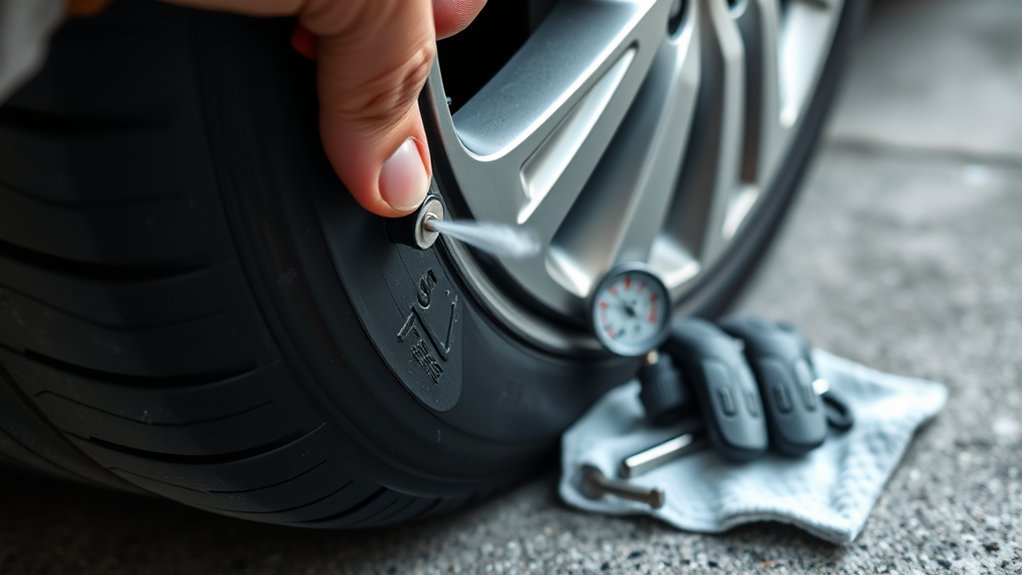
Before you start, gather a tire pressure gauge, a valve core removal tool or small flathead screwdriver, and a working way to add air back, such as a portable compressor or gas station air pump. The gauge matters most because guessing by tire shape is not reliable.
Park on a flat surface, shift into Park or gear, and set the parking brake. If you are correcting overinflation after checking your tires, use the pressure listed on the Tire and Loading Information Label or owner’s manual for your vehicle. That placard pressure is the right target for normal street driving.
Keep the valve cap nearby. It helps protect the valve stem from dirt, water, and road grit after you finish. If the cap is missing, replace it soon, especially before driving through mud, salt, or heavy rain.
Warning: Do not drive at highway speed on an intentionally underinflated tire. Low pressure can increase sidewall flex, heat buildup, poor handling, uneven wear, rim damage, and tire failure.
[Products Worth Considering]

The JACO FlowPro Tire Inflator measures, inflates, and airs down tires up to 100 PSI with battery-free operation and ±2% accuracy after calibration. It features a glowing pressure dial for night visibility, a heavy-duty steel build with a hybrid hose, and a precision push-to-inflate thumb trigger. The patented Lightning Air Chuck locks on for a secure seal, and the kit includes quick-connect hardware for easy inline use with your air compressor.

This tire inflator with pressure gauge delivers long-lasting performance with a durable rubber-protected gauge and sturdy build. The longer hose and 360 swivel air chuck help you seal the valve securely and keep your hands free while measuring, inflating, or deflating. It’s battery-free for reliable use and provides ±2 PSI accuracy in the mid-range for most typical tires, with universal compatibility for 1/4 NPT compressor outputs.
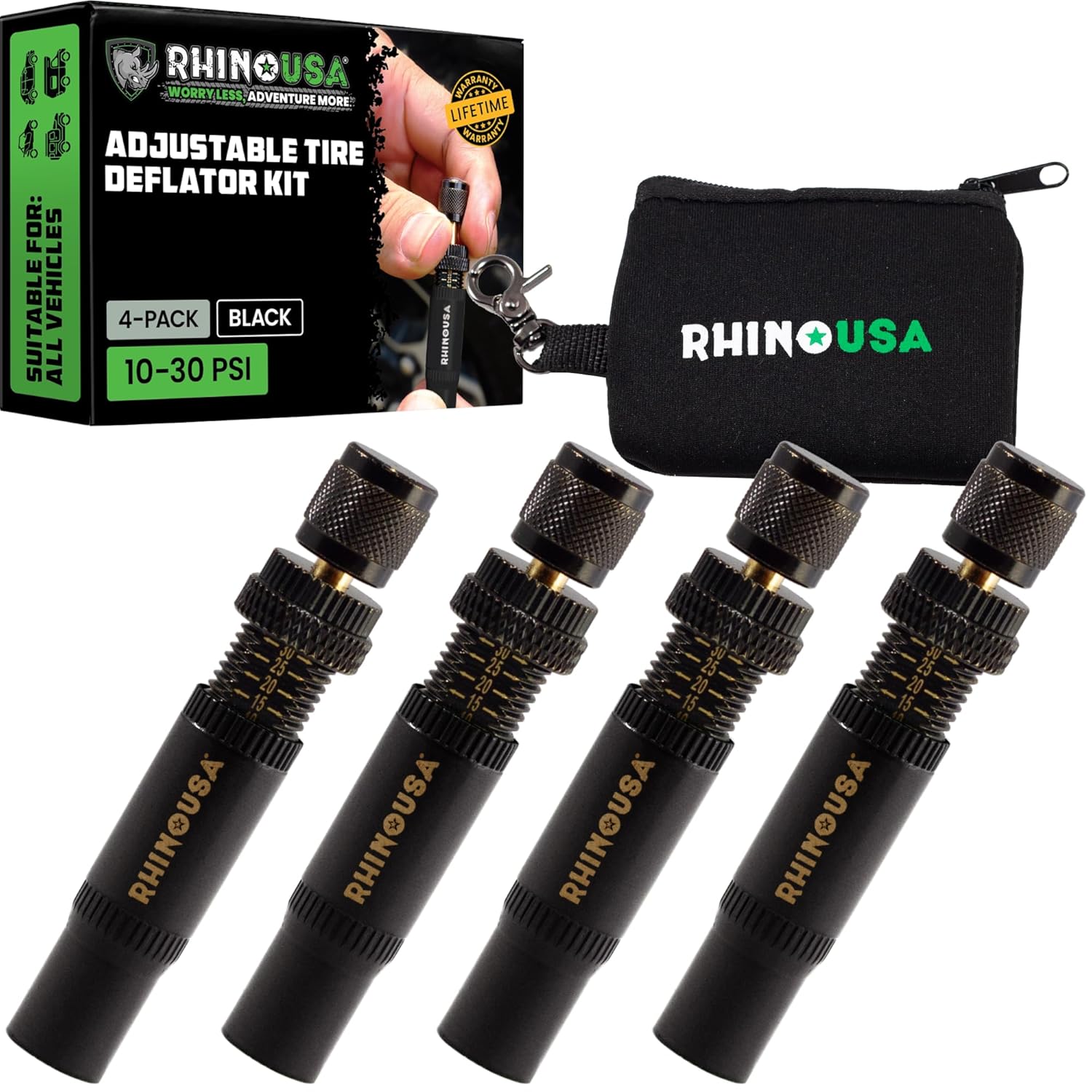
Use the Rhino USA adjustable tire deflators to air down all four tires at once by screwing one deflator onto each valve stem, letting you step away while the tires reach your preset pressure. Each deflator independently adjusts across a 10–30 PSI range with laser-etched indicators for quick setup and verification, making it ideal for beach, sand, and rocky off-road trails.
How to Let Air Out of a Tire Manually
To let air out manually, work slowly and measure often. A few seconds can remove more pressure than you expect, especially on smaller tires.
- Find the valve stem. It is the short rubber or metal stem sticking through the wheel.
- Remove the valve cap. Put it in your pocket or on a clean surface so it does not roll away.
- Press the valve pin. Use the nub on a tire gauge, a valve tool, a small screwdriver, or a sturdy key. Press straight inward until you hear air hiss.
- Bleed in short bursts. Release air for 2 to 5 seconds at a time if you only need a small pressure drop.
- Check PSI often. Put the gauge on the valve stem and read the pressure every 5 to 10 seconds.
- Stop at your target. For road use, stop at the vehicle placard pressure. For low-speed off-road use, stop at your planned trail pressure.
- Reinstall the valve cap. Tighten it by hand until snug.
Pro Tip: If you only need to lower pressure by 1 or 2 PSI, use the bleed button on a quality tire gauge. It gives better control than pressing the valve pin with a screwdriver.
How to Use a Tire Deflator
A tire deflator is useful when you want repeatable pressure drops, such as airing down all four tires for low-speed trail driving. Some deflators are preset to stop near a chosen PSI, while others simply release air faster than manual pin pressing.
- Set or confirm the target PSI before attaching the tool.
- Thread the deflator onto the valve stem carefully so you do not cross-thread it.
- Let air flow, then check with a separate gauge unless your deflator has a reliable built-in gauge.
- Stop before the tire looks overly soft or the sidewall folds heavily.
- Reinflate to road pressure before driving at normal speeds again.
If you use a valve core removal tool, be ready for fast air loss. The valve core can come out suddenly, and the tire can deflate in seconds. Keep the core clean and reinstall it firmly before adding air back.
Note: Tire Pressure Monitoring Systems help warn you about significant underinflation, but they do not replace a gauge. Federal TPMS rules are built around significant pressure loss, so small changes may not trigger a dashboard light.
[Products Worth Considering]

Milton S-921 pencil tire pressure gauge helps you maintain optimal tire pressure for passenger cars with accurate readings in PSI and kPa. It features a built-in deflator valve for convenient pressure adjustments, plus a single chuck head and nylon indicator bar for easy use on the go. Built from durable plated brass and designed for reliable performance, it’s a practical road trip and cold-weather maintenance tool.

This ALL-TOP auto-stop tire deflator valve kit lets you air down off-road tires quickly without watching pressure, automatically stopping when your preset PSI is reached. Each valve is individually calibrated for reliable performance with an acceptable +/- 2 PSI tolerance. The adjustable deflator range covers 10 to 30 PSI and includes four valves plus valve caps and a zipper pouch for easy setup on trucks, SUVs, RVs, UTVs, and powersports.
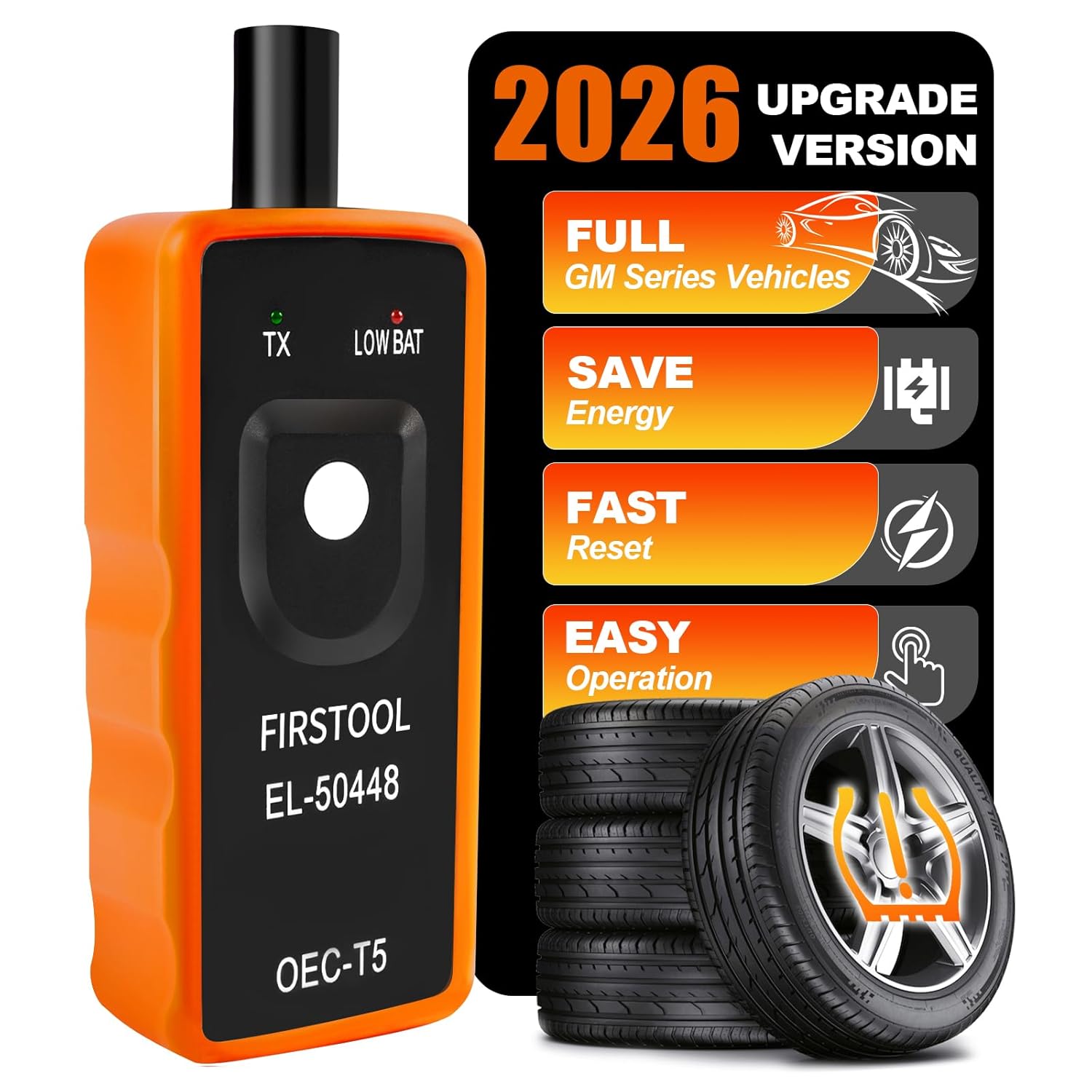
This TPMS relearn tool helps you quickly activate, match, and reset GM tire pressure sensors to keep the vehicle monitoring system working properly. It clears tire pressure alarms and dashboard warning lights after sensor replacement or tire rotation, and supports learning for common 315/433 MHz TPMS sensors. Designed for simple one-button operation, it can help you avoid unnecessary trips to repair shops.
How to Check Tire Pressure While Deflating
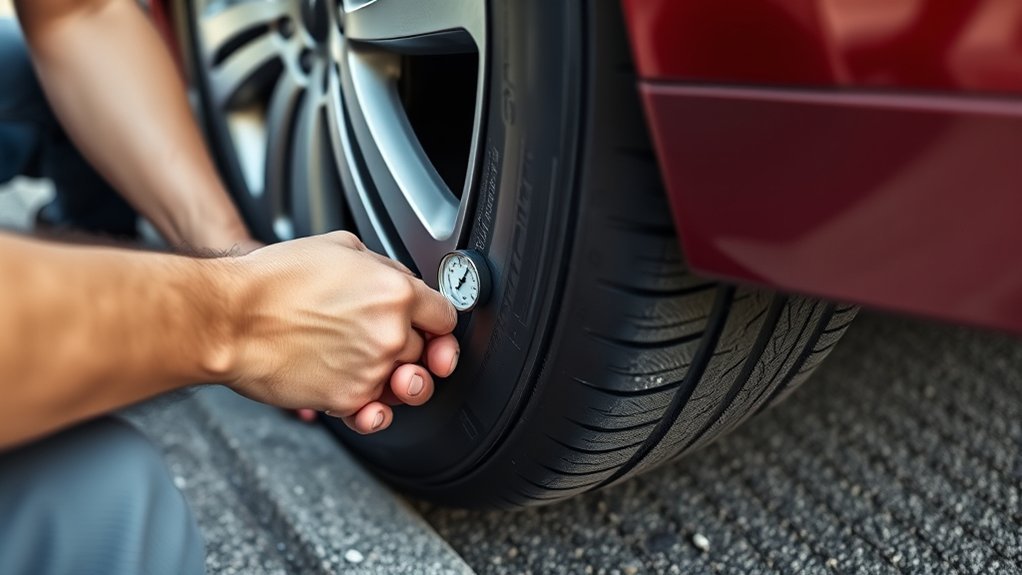
Check pressure with a digital, dial, or pencil-style tire gauge as you release air. Push the gauge straight onto the valve stem so air does not leak around the fitting. If you hear hissing while measuring, reseat the gauge and take the reading again.
Gauge Checks During Deflation
Pause every 5 to 10 seconds and read the gauge before releasing more air. If you are close to the target, switch to shorter bursts. This helps you avoid overshooting and needing to reinflate.
- Use one reliable gauge for all four tires.
- Check front and rear specs separately if your vehicle lists different pressures.
- Measure all tires while they are in similar temperature conditions.
- Do not rely on tire appearance alone.
- Recheck after driving if you changed pressure for off-road use.
Cold vs. Hot Tire Readings
Vehicle manufacturers list recommended tire pressure as cold tire pressure. NHTSA says cold means the tire has not been driven on for at least three hours, and Bridgestone gives the same practical rule, with an allowance for very short low-speed movement. If you recently drove, the reading may be higher because heat raises pressure.
If you must adjust a warm tire, avoid making a large pressure drop based only on a hot reading. Recheck when the tire is cold and fine-tune it to the placard pressure.
Safe PSI Targets
The safest target depends on why you are lowering pressure. For normal road driving, the target is the vehicle manufacturer’s cold PSI on the driver’s door label or in the owner’s manual. Lower PSI is mainly for slow off-road use, not daily highway driving.
| Situation | Best PSI Target | Action |
|---|---|---|
| Normal street driving | Vehicle placard or owner’s manual | Use the factory cold PSI |
| Correcting overinflation | Back down to placard PSI | Bleed slowly and recheck |
| Low-speed off-road traction | Only the pressure your tire, wheel, load, and terrain support | Air down carefully and reinflate before pavement |
| TPMS warning light | Return to recommended pressure | Check all tires with a gauge |
How Much Air to Let Out of a Tire?
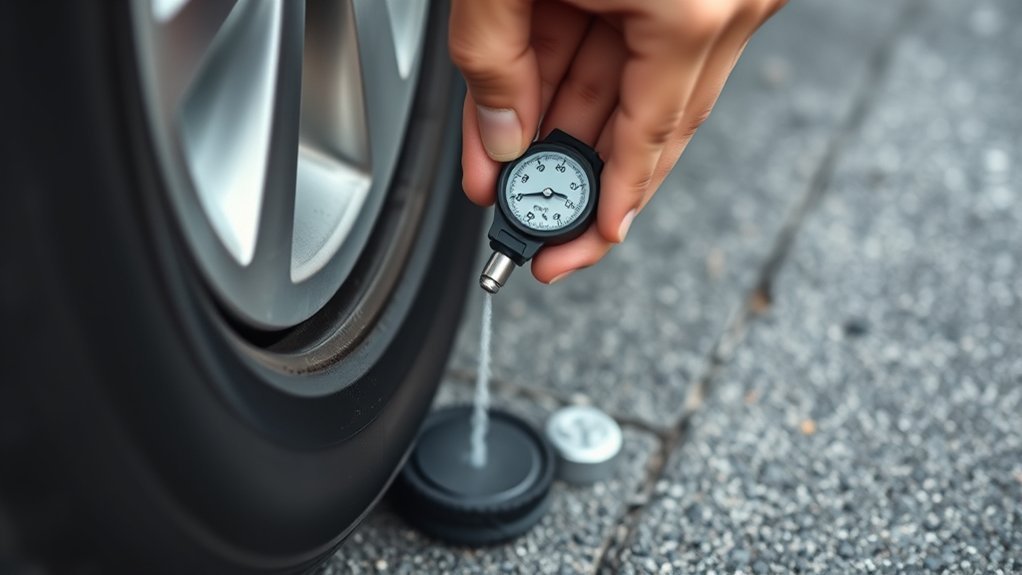
Let out only enough air to reach a known target. If the tire is overinflated, that target is the cold PSI on your vehicle placard. If you are preparing for low-speed off-road driving, the target should come from your tire setup, vehicle load, terrain, and recovery plan.
Target PSI Levels
Do not use one universal PSI number for every vehicle. A compact car, SUV, pickup, trailer, all-terrain tire, and low-profile performance tire can all need different pressures. The tire sidewall usually shows size, load, speed rating, and maximum pressure information, but your vehicle placard is the main reference for road driving.
- For daily driving: use the driver’s door label or owner’s manual.
- For a tire that is too high: lower it to the recommended cold pressure.
- For low-speed sand, mud, or rocks: air down only if your setup supports it.
- For snow or ice on public roads: keep placard pressure unless your owner’s manual or tire maker gives a different instruction.
- For trailers or heavy loads: follow the load and tire guidance for that specific setup.
Check Pressure Often
Use short air-release bursts, then pause. The valve pin opens quickly, and removing the valve core opens it even faster. If you overshoot your target, use a compressor to bring the tire back up instead of driving on a low tire.
| If This Happens | What To Do |
|---|---|
| You are 1 to 2 PSI high | Bleed for 1 to 2 seconds and recheck |
| You are far above target | Use longer bursts, but keep checking often |
| You drop below target | Add air back before driving |
| You aired down for a trail | Reinflate before highway speed |
When to Deflate Tires for Better Traction
Deflating tires can help in specific low-speed off-road conditions because a softer tire can create a wider footprint and conform better to loose ground. That does not mean you should lower pressure for everyday driving.
- Useful situations: slow sand driving, soft dirt, mud, rocks, and trail sections where extra tire flex helps traction.
- Not a normal road fix: do not lower tires below placard pressure for highway snow, rain, or daily commuting unless your vehicle or tire manufacturer says to.
- Speed matters: the lower the pressure, the slower you should drive.
- Wheel setup matters: very low pressure can increase the chance of bead separation, rim damage, or sidewall damage.
- Reinflation matters: carry a compressor if you air down away from a gas station.
What Happens If You Let Out Too Much Air?
If you let out too much air, the tire becomes underinflated. The sidewall flexes more, the tread may wear unevenly, steering can feel vague, braking can suffer, and the tire can build heat. Severe underinflation can damage the tire or wheel and raise the risk of tire failure.
| Problem | Why It Matters |
|---|---|
| Poor handling | The tire may feel soft or unstable during turning and braking. |
| Heat buildup | Excess sidewall flex can overheat the tire at speed. |
| Uneven wear | Low pressure can wear the tire shoulders faster. |
| Rim or bead damage | Very low pressure can let the wheel hit obstacles harder or unseat the tire bead. |
If you accidentally go too low, do not guess and drive away. Add air back, measure again, and bring the tire to a safe pressure first.
How to Reinflate a Tire After Deflating It
To reinflate a tire, attach a compressor hose or air pump chuck firmly to the valve stem. Add air in short cycles, then check pressure with your gauge. Stop at the recommended cold pressure for road use or the planned pressure for the next terrain.
Add air in short bursts, check PSI often, and stop at the pressure listed for your vehicle.
- Find the factory PSI label on the driver’s door edge or door jamb.
- Remove the valve cap and attach the air chuck squarely.
- Add air in short cycles.
- Remove the chuck and check pressure with your own gauge.
- Repeat until the tire reaches the correct PSI.
- Reinstall the valve cap by hand.
If the TPMS light stays on after reinflation, check all four tires cold. Some systems also need a short drive or a reset procedure from the owner’s manual.
Tire Deflation Tools That Save Time
The right tool depends on whether you want precision, speed, or trail convenience. A simple tire gauge with a bleed button is best for small corrections. A tire deflator is better for repeat off-road adjustments. A valve core tool is fastest, but it gives you the least margin for error.
| Tool | Best Use | Caution |
|---|---|---|
| Tire gauge with bleed button | Small PSI corrections | Check the reading twice near target pressure |
| Tire deflator | Controlled off-road airing down | Verify with a separate gauge |
| Valve core removal tool | Fast deflation | Can drop pressure very quickly |
| Flathead screwdriver or key | Emergency manual pin pressing | Press straight to avoid damaging the valve stem |
| Portable compressor | Restoring road pressure | Do not exceed the recommended PSI |
[Products Worth Considering]

ETENWOLF’s tire pressure gauge helps you quickly and accurately check tire PSI across cars, trucks, motorcycles, bikes, and more. It’s manually calibrated to ANSI B40.1 Grade A for reliable readings, includes a large glow dial for easy nighttime viewing, and features a 360-degree swivel chuck for use at any valve angle. The gauge also works consistently in extreme hot or cold weather.

AUXITO’s portable tire inflator delivers up to 150PSI with fast 26L/min airflow to inflate car, motorcycle, bike, and ball tires quickly. Set your target pressure, and the auto-shutoff stops inflation when you reach the preset value. A dual-screen display shows real-time and preset pressure with ±1 PSI accuracy, while an LED flashlight and USB port add emergency and everyday utility.

This tire air chuck with clip adapter helps you connect a vehicle inflator nozzle securely for faster, easier tire inflation. The brass locking design aims to prevent leaks and keeps the connection stable while you fill tires. Ideal for use with compatible air compressors and pumps with an 8mm connection.
Troubleshooting Tire Deflation Problems
If the tire will not deflate, the valve pin may not be pressed far enough, the tool may not be centered, or dirt may be blocking the valve. Try pressing straight inward with the end of a tire gauge. If the valve stem is cracked, corroded, or leaking, stop and have it inspected.
- No air comes out: reseat the tool and press the center pin straight in.
- Air leaks after you stop: press the pin briefly, release it, and recheck. If it still leaks, the valve core may need replacement.
- Valve cap is missing: replace it soon to help keep dirt and moisture out.
- You removed too much air: inflate the tire before driving.
- TPMS light appears: check all tires with a gauge and return them to the recommended pressure.
Safety Mistakes to Avoid
- Do not deflate a tire while the vehicle is moving.
- Do not crawl under a vehicle supported only by tire pressure or a jack.
- Do not remove the valve core unless you can control the core and reinflate the tire.
- Do not drive fast on low off-road pressure.
- Do not use the tire sidewall maximum pressure as your normal road target.
- Do not ignore cuts, bulges, exposed cords, or repeated pressure loss.
Frequently Asked Questions
How do you let air out of a tire quickly?
The fastest way is to remove the valve cap and press the valve stem pin, or use a valve core tool to remove the core. Removing the core deflates the tire very fast, so use a gauge often and be ready to reinstall the core and reinflate if needed.
What should I do if tire PSI is too high?
Check the recommended cold PSI on the driver’s door label or in the owner’s manual. Press the valve stem pin in short bursts, then recheck with a gauge. Stop when the tire reaches the vehicle’s recommended pressure.
How do you take air out of a tire without a special tool at home?
Use the edge of a tire gauge, a small screwdriver, a sturdy key, or a pen tip to press the center pin inside the valve stem. Release air in short bursts and check pressure often. A pressure gauge is still strongly recommended.
How long does it take to let air out of a tire?
Small pressure corrections may take less than a minute. Full deflation can take several minutes with manual pin pressing or much less time if the valve core is removed. For safety, short bursts with frequent gauge checks are better than rushing.
Should I use the pressure number on the tire sidewall?
For normal driving, use the pressure listed on the vehicle’s tire placard or in the owner’s manual. The tire sidewall is not the normal daily PSI target for your vehicle.
Can I drive after airing down for off-road use?
You can drive slowly off-road if your tire and wheel setup supports the lower pressure, but you should reinflate before returning to pavement or highway speed. Low pressure at speed can overheat and damage the tire.
Conclusion
Letting air out of a tire is simple, but it should never be guesswork. Use the valve stem, release air in short bursts, and keep checking PSI with a gauge until you reach the right target. For street driving, that target comes from the vehicle placard or owner’s manual. For trail use, lower pressure should stay slow, controlled, and temporary. When you are done, reinstall the valve cap and reinflate before normal driving.
Sources
- NHTSA TireWise: Tire Safety Ratings and Awareness – supports vehicle placard PSI, cold tire checks, monthly pressure checks, TPMS limitations, and tire safety guidance.
- 49 CFR 571.138: Tire Pressure Monitoring Systems – supports TPMS warning requirements and underinflation risk language.
- Bridgestone: How to Check Tire Pressure with a Tire Pressure Gauge – supports cold tire readings, gauge use, and checking manufacturer-recommended PSI.