
How to Release Air From a Tire: Safe Methods in Seconds
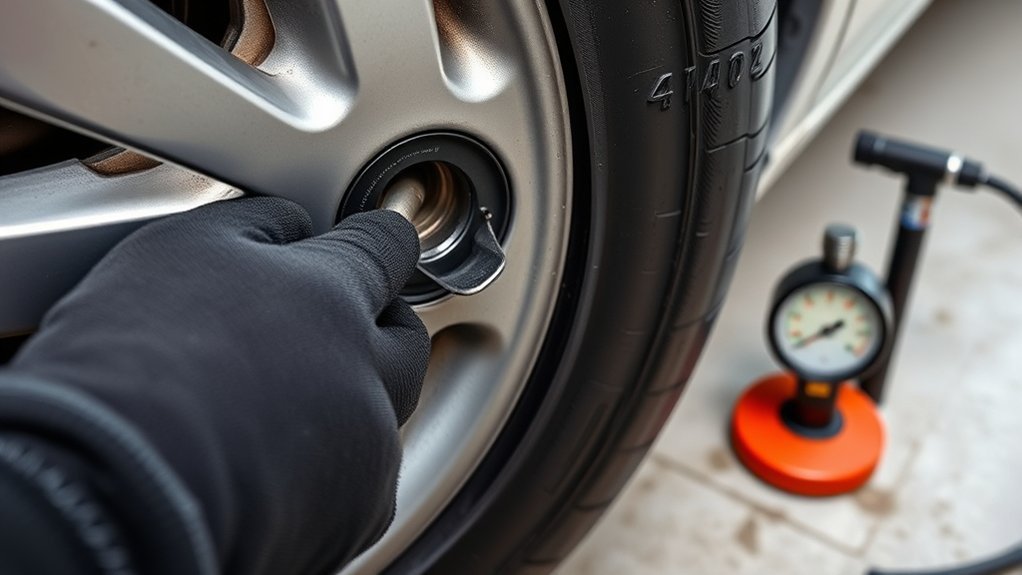
Letting air out of a tire is simple, but the safe method depends on why you are doing it. If the tire is overinflated for normal road driving, lower it only to the cold PSI listed on your vehicle’s tire placard or owner’s manual. If you are airing down for off-road traction, use lower pressure only at low speeds and reinflate before returning to pavement.
Quick Answer
To let air out of a tire, remove the valve cap, press the small pin inside the valve stem with a tire gauge tip, key, or small screwdriver, and release air in short bursts. Check the PSI often with a gauge, then stop at the correct pressure and replace the valve cap.
Key Takeaways
- Use the vehicle tire placard or owner’s manual for normal road-driving PSI, not the number molded on the tire sidewall.
- Release air in short bursts and check pressure often with a reliable tire gauge.
- A valve core tool is faster, but it can dump air quickly, so use it only when you can control and recheck the pressure.
- Off-road airing down can improve traction, but the right PSI depends on tire type, vehicle weight, terrain, and wheel setup.
- Reinflate to road pressure before driving at highway speed or for sustained pavement use.
At a Glance
| Time Required | 1–5 minutes per tire by hand; faster with preset tire deflators or a valve core tool |
| Difficulty | Easy, as long as you use a gauge and release air slowly |
| Tools Needed | Tire pressure gauge, valve cap, small tool for the valve pin, optional valve core tool or tire deflators, and an air compressor for reinflation |
| Cost | Free if you already have a gauge; usually low cost for a basic gauge or deflator tool |
What You Need Before Deflating Tires
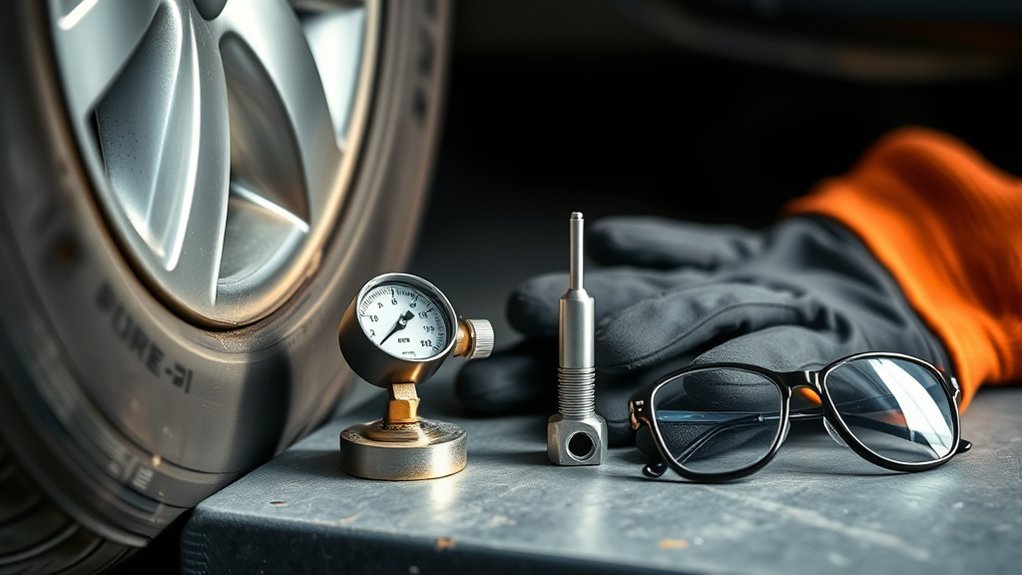
Before you release air, park on level ground, set the parking brake, and keep the vehicle still. A flat, stable surface helps you read the gauge accurately and prevents the vehicle from shifting while you work.
Gather a tire pressure gauge, a small tool that can press the valve pin, the valve cap, and an air compressor or pump in case you let out too much air. A valve core removal tool or preset tire deflator can help for off-road use, but they are not required for a normal pressure correction.
For regular road driving, find the correct cold tire pressure on the vehicle tire placard, usually on the driver-side door jamb, or in the owner’s manual. The Tire Industry Association recommends checking tires when they are cold and comparing the reading with the PSI required for your vehicle.
Warning: Do not use the tire sidewall’s maximum pressure as your normal driving target. The sidewall number is a limit for the tire, not necessarily the correct PSI for your vehicle.
[Products Worth Considering]

EVOULTES heavy duty tire inflator with an integrated gauge delivers accurate pressure readings from 10–120 PSI, helping you inflate, deflate, and check tires in one tool. The 16.5-inch extended dual-head air chuck with swivel base reaches hard-to-access dual wheel valves on trucks and RVs. A brass trigger core and side-mounted air release valve make operation smooth, with standard 1/4" NPT threading and quick-connect compatibility for easy setup.

This multi-function tire valve stem removal tool set makes it fast to remove, install, bleed, and clean valve cores for easier tire maintenance. It includes valve core removers, a 4-way spool tool, replacement valve caps, and spare cores to handle replacements and repairs with confidence. Universal compatibility suits cars, trucks, motorcycles, bicycles, and more for roadside convenience.

This 4-in-1 tire valve core removal tool helps you deflate, unblock, and remove or install valve cores quickly for easier tire repair. The multifunction design also supports re-taping damaged threads and reaming inside the valve stem for smoother service. Included as a 2-pack, it’s compact for convenient carry and works for cars, bicycles, and motorcycles.
Set the Right Target PSI First
Do not let air out by feel or by looking at the tire. Tire pressure cannot be judged accurately by appearance, especially on modern radial tires. Start with a gauge reading, choose your target PSI, then deflate in small steps.
For Normal Road Driving
If the tire is overinflated for everyday driving, lower it to the cold PSI listed on the vehicle placard or owner’s manual. The National Highway Traffic Safety Administration points drivers to tire-maintenance information because tires are the only part of the vehicle touching the road, and proper maintenance supports safe driving.
Many passenger vehicles list recommended cold pressures around the low-to-mid 30s PSI, but your vehicle may be different. Front and rear tires may also have different recommended pressures.
For Off-Road Airing Down
For off-road driving, lower pressure can enlarge the tire footprint and help the tread conform to sand, dirt, mud, rocks, or snow. Treat any off-road PSI chart as a starting point, not a rule. Tire construction, load, rim size, bead retention, speed, and terrain all matter.
- Hard-packed dirt or mild gravel: start with a small drop, often 5–10 PSI below street pressure.
- Loose gravel or moderate trails: many drivers start around 18–25 PSI, then adjust carefully.
- Sand or soft surfaces: lower pressures may help flotation, but going too low can unseat the tire bead.
- Rocks or mud: use enough sidewall flex for traction while keeping enough pressure to protect the tire, wheel, and bead.
BFGoodrich’s off-road guidance says there is no universal air-down number and warns that too little pressure can unseat the tire from the rim. If you are new to off-roading, stay conservative and ask an experienced driver or tire professional about your exact tire and wheel setup.
Note: If your tires are hot from driving, the gauge reading may be higher than the cold pressure. For road-pressure correction, use the cold-pressure target and avoid bleeding hot tires down to the placard number unless your owner’s manual tells you to.
Release Air From a Tire by Hand
The easiest way to let air out of a tire is to press the valve pin inside the valve stem. Work slowly so you can stop before you overshoot your target PSI.
- Remove the valve cap and place it somewhere clean so it does not pick up dirt.
- Press your tire gauge onto the valve stem and record the current PSI.
- Use the gauge tip, a key, or a small flat tool to press the center valve pin gently.
- Let air escape for one or two seconds at a time.
- Recheck the pressure with the gauge after each short release.
- Stop at the target PSI, then reinstall the valve cap snugly by hand.
A small hiss is normal when you press the valve pin. A strong, uncontrolled blast means you are pressing too hard or using the wrong tool angle.
Pro Tip: Write down each tire’s starting PSI and final PSI. It helps you keep all four tires even and makes it easier to repeat a useful off-road setting later.
Use a Valve Core Tool for Faster Deflation
A valve core tool can release air much faster than pressing the pin by hand because it loosens or removes the valve core. This is useful when airing down several tires for off-road driving, but it requires more care.
To use one, seat the tool on the valve core, turn slowly, and be ready for air to escape quickly. If your tool captures the valve core, keep it attached so the tiny core is not lost in dirt or gravel. Check PSI often and reinstall the core firmly once the tire reaches your target.
Do not remove the valve core completely if you do not have a pressure gauge, a way to reinstall the core, and a way to reinflate the tire. A missing or loose valve core can leave you with a flat tire.
How Tire Deflators Help Air Down
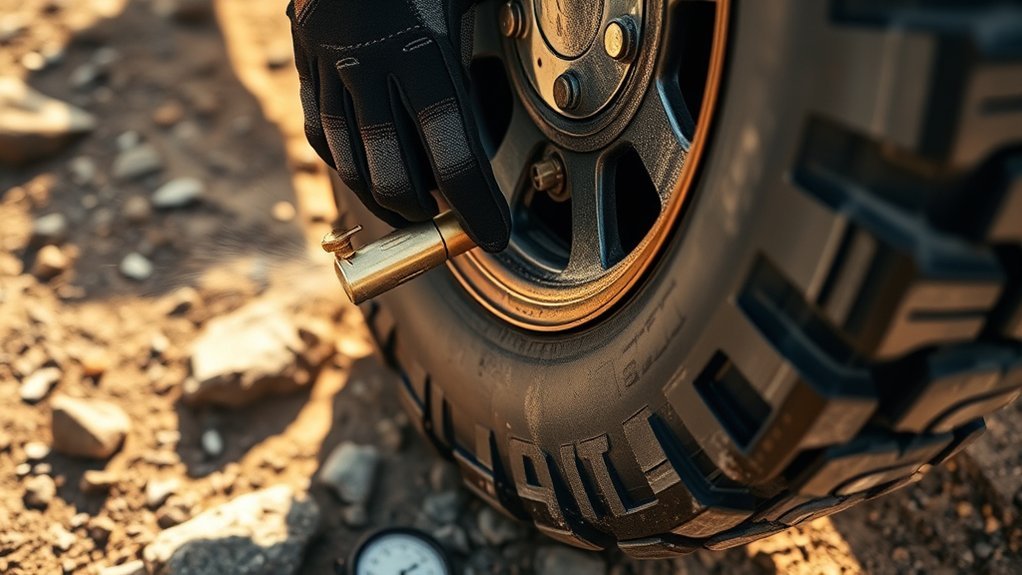
Tire deflators are small tools that make airing down faster and more consistent. Some attach to the valve stem and release air until you stop them manually. Others are preset or adjustable, so they aim for a chosen PSI.
Even with automatic deflators, verify the final reading with a separate tire pressure gauge. Deflators can drift out of calibration, and tire pressure changes with temperature and load.
Deflators are best for planned off-road use. For correcting a slightly overinflated tire in your driveway, a basic tire gauge and short valve-pin presses are usually enough.
Check Tire Pressure Without Guesswork
Use a reliable gauge before, during, and after deflation. A digital gauge is easy to read, while a quality analog gauge also works well. What matters most is using the same accurate gauge consistently.
For normal driving, check pressure when the tires are cold. The Toyo Tires maintenance guide recommends checking inflation pressure at least once a month and before long road trips, including the spare.
Use a gauge, not a guess. The correct road pressure is the vehicle manufacturer’s cold PSI, and off-road pressure should be adjusted carefully for the tire, wheel, load, and terrain.
[Products Worth Considering]
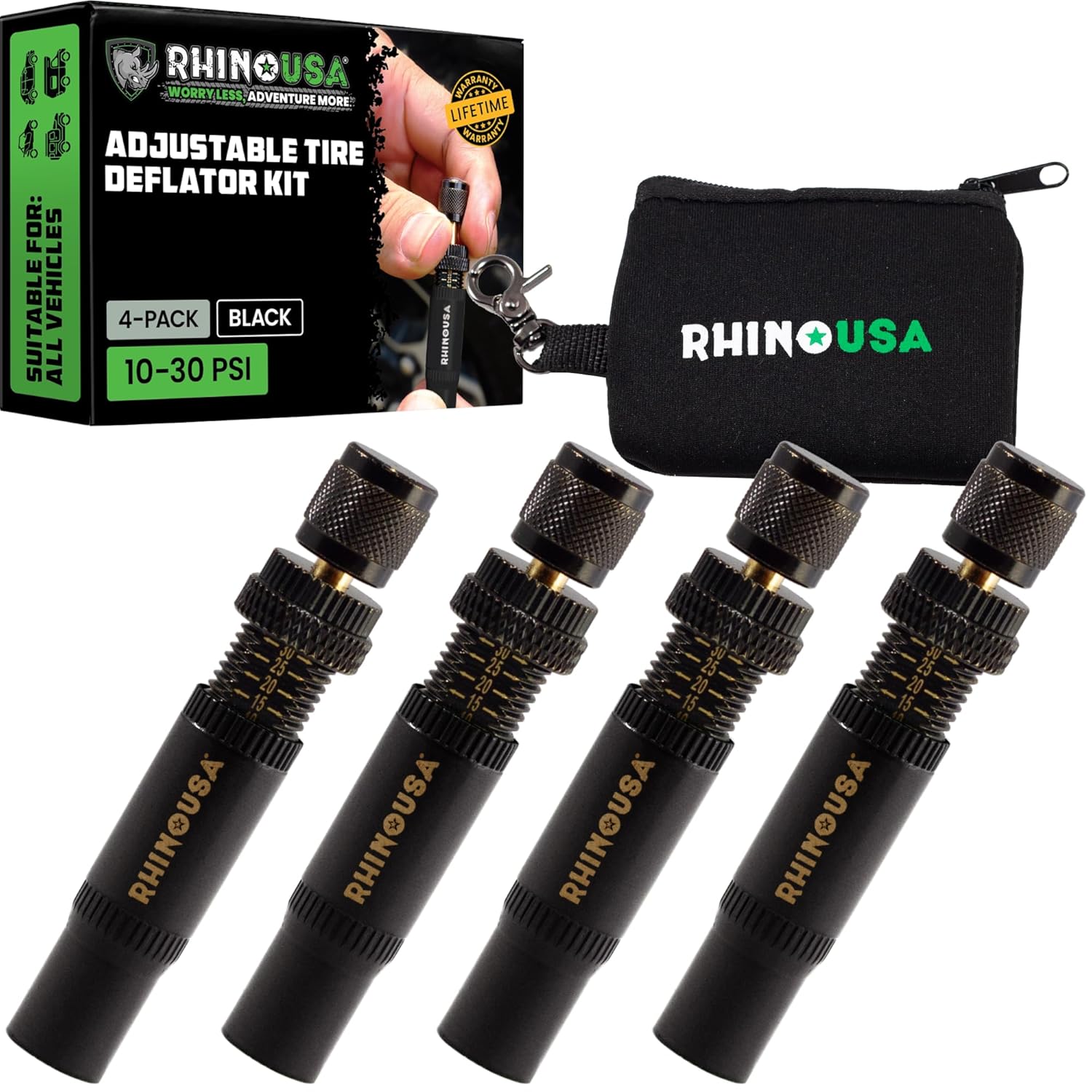
Use the Rhino USA adjustable tire deflators to air down all four tires at once by screwing one deflator onto each valve stem, letting you step away while the tires reach your preset pressure. Each deflator independently adjusts across a 10–30 PSI range with laser-etched indicators for quick setup and verification, making it ideal for beach, sand, and rocky off-road trails.

This portable cordless tire inflator delivers fast, efficient inflation for cars, motorcycles, bikes, and sports balls with a digital pressure gauge. Use the one-click PSI preset with auto shut-off for accurate, hands-free topping to your target pressure up to 150 PSI. It’s compact and rechargeable with a built-in emergency LED light plus valve adapters and accessories for quick, ready-to-go use.
How to Avoid Over-Deflating a Tire
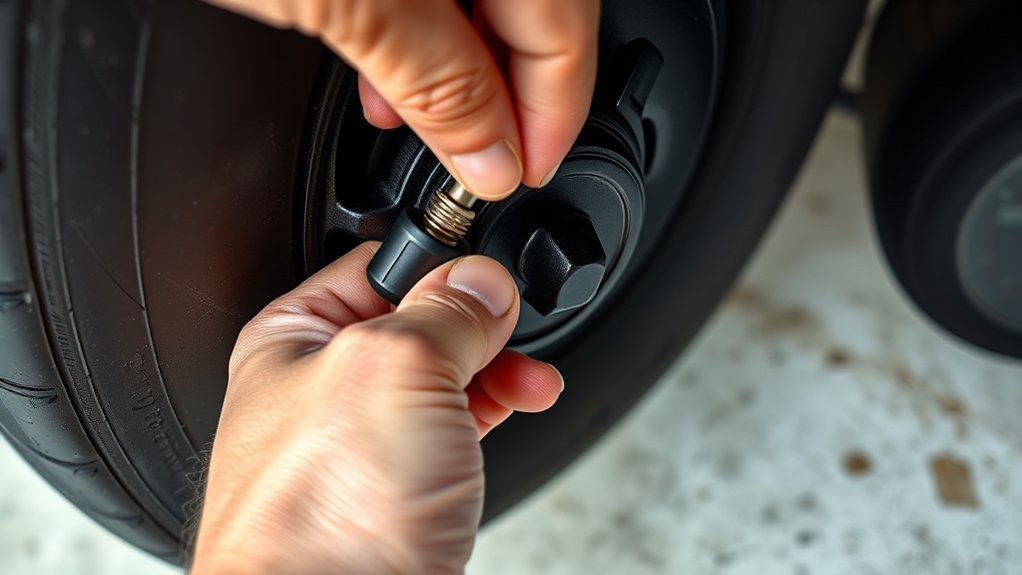
Over-deflating is easy when you hold the valve pin down too long or remove the valve core without checking the gauge. The safest approach is to release air in short bursts and measure often.
- For road use: stop at the cold PSI listed on the vehicle placard or owner’s manual.
- For off-road use: lower pressure gradually and keep speeds low.
- If the tire looks severely flat or the sidewall folds sharply: stop and reinflate before driving.
- If one tire loses air faster than the others: check for valve, rim, or puncture damage.
The U.S. Tire Manufacturers Association tire care guide warns that underinflation and overloading can create excessive heat buildup and internal structural damage. That is why aired-down tires should not be used for fast or sustained pavement driving.
Reinflate After Deflating
Once you reach the desired pressure, replace the valve cap and check all tires for consistency. If you lowered pressure for normal road correction, the job is done when the tire matches the placard PSI.
If you aired down for off-road traction, reinflate before driving at highway speeds or for sustained paved-road use. A portable compressor, service-station air pump, onboard air system, or CO2 tank can bring the tires back to road pressure.
When reinflating, add air in short bursts, check with your gauge, and stop at the cold road-pressure target. If you must inflate warm tires after trail driving, recheck the next morning when the tires are cold and adjust as needed.
Warning: Do not drive highway speeds on tires that are still aired down for off-road use. Low pressure can reduce handling, increase heat, accelerate wear, and raise the risk of tire failure.
When to Stop and Get Help
Stop deflating and inspect the tire if you notice a torn valve stem, cracked sidewall, bulge, exposed cord, puncture, or air leaking after the valve cap is back on. A valve cap helps keep dirt out, but it is not a repair for a leaking valve core or damaged tire.
Get professional help if the tire will not hold pressure, the valve core will not tighten, the wheel is bent, the tire has been driven while very low, or the vehicle feels unstable after reinflation.
Frequently Asked Questions
How do you let air out of a tire quickly?
The quickest controlled method is to use a tire deflator or a valve core tool, but you still need a pressure gauge. For small adjustments, remove the valve cap and press the valve pin for one or two seconds at a time, then recheck PSI.
How many seconds does it take to release 1 PSI?
There is no exact seconds-per-PSI rule. Tire size, current pressure, valve condition, tool type, and how firmly you press the valve pin all affect the rate. Release air in short bursts and use the gauge reading as your guide.
Is 42 PSI too high to drive?
It may be too high if it is above the cold PSI listed on your vehicle placard, but it is not possible to judge safely by the number alone. Check the placard or owner’s manual, compare the cold pressure, and never exceed the tire or wheel maximum limits.
Can I let air out of a tire without a tool?
You can press the valve pin with a key, pen tip, or fingernail in a pinch, but you still need a tire pressure gauge to know when to stop. Without a gauge, it is easy to over-deflate the tire.
Should I remove the valve core to let air out?
Only remove or loosen the valve core if you have a valve core tool, a gauge, and a way to reinflate the tire. Removing the core releases air very fast and can leave you stranded if the core is lost or damaged.
How low should I air down for off-roading?
Start conservatively. Mild trails may need only a small drop, while sand or rocks may call for lower pressure. The right PSI depends on tire type, wheel setup, vehicle weight, load, terrain, and speed. Reinflate before returning to paved-road speeds.
Conclusion
To let air out of a tire safely, remove the valve cap, release air in short bursts at the valve pin, and check the pressure often with a gauge. For everyday road driving, stop at the vehicle’s recommended cold PSI. For off-road use, air down cautiously, drive slowly, and reinflate before highway travel.
Sources
- NHTSA TireWise — tire safety and maintenance guidance.
- Tire Industry Association: Tire Inflation Pressure — cold-pressure checks, gauge use, and matching vehicle PSI.
- Tire Rack: Checking Tire Inflation Pressure — why vehicle placard PSI is the correct road-driving target.
- BFGoodrich Off-Road Guide — off-road tire pressure depends on tire type, terrain, and vehicle weight; reinflate before paved-road driving.
- U.S. Tire Manufacturers Association: Care and Service of Passenger and Light Truck Tires — underinflation, overloading, heat buildup, and tire-failure risks.

Related Articles

How to Book a Costco Tire Center Appointment
Tired of guesswork? Learn how to book a Costco Tire Center appointment and avoid surprises before your next visit.
Read More
How to Use Costco Tire Inflation: Step-by-Step
Never overinflate at Costco—learn the exact steps, tools, and tips to fill your tires safely and leave with confidence.
Read More
How to Book a Tire Appointment at Walmart
Mysterious steps make booking a Walmart tire appointment simpler than you think, but one crucial detail could save you time and money.
Read More