
How to Take Air Out of a Tire: Simple Step-by-Step Guide
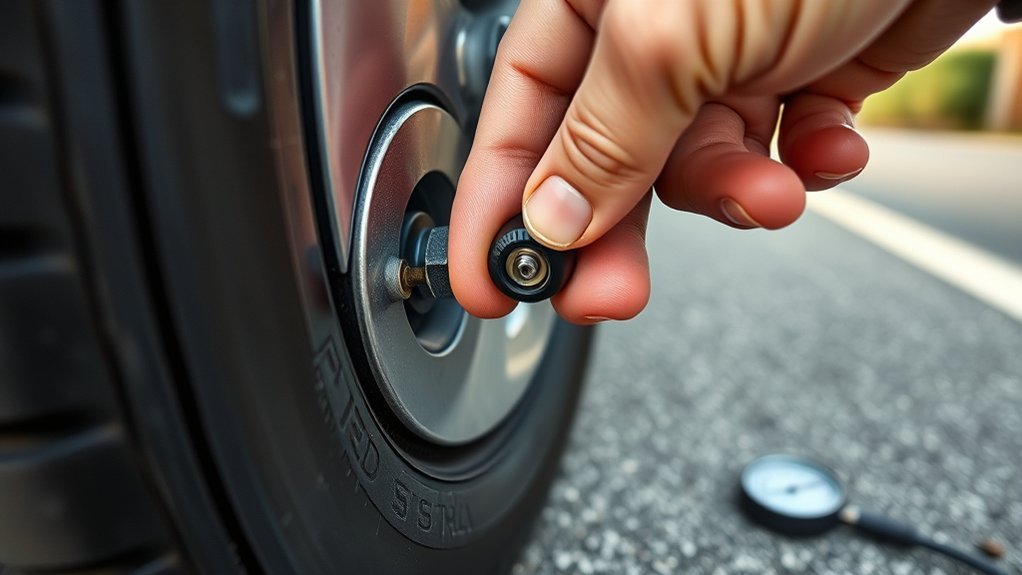
Letting air out of a tire is simple, but the safe target is not a guess. Park on level ground, set the parking brake, check the tire with a pressure gauge, then release air in short bursts until the tire reaches the vehicle manufacturer’s recommended cold tire pressure on the driver’s door-jamb label or in the owner’s manual.
Quick Answer
To let air out of a tire, remove the valve cap, check the PSI with a tire pressure gauge, then press the valve stem pin gently with the gauge edge, a valve tool, or a small flathead screwdriver. Release air in 1–2 second bursts, recheck often, and stop at the vehicle’s recommended cold PSI.
Key Takeaways
- Use the tire pressure listed on the driver’s door-jamb label or owner’s manual, not the maximum PSI printed on the tire sidewall.
- Check pressure when the tires are cold whenever possible, because driving heats the tire and raises the reading.
- Press the valve stem pin in short bursts and recheck with a gauge after each release.
- Do not intentionally underinflate a tire for normal road driving, snow, or ice unless your vehicle manual or a tire professional gives specific instructions.
- Replace the valve cap when finished to help keep dirt and moisture out of the valve.
At a Glance
| Time Required | 5–10 minutes for all four tires |
| Difficulty | Easy, as long as you use a gauge and work slowly |
| Tools Needed | Tire pressure gauge, valve stem tool or small flathead screwdriver, and an air compressor or pump in case you release too much air |
| Cost | Usually free if you already own a gauge; otherwise the cost of a basic tire gauge or compressor access |
NHTSA reports that 511 people died in tire-related crashes in 2024, so tire pressure is not just a comfort issue. Correct inflation helps protect handling, durability, fuel use, and overall safety.
What You Need to Let Air Out
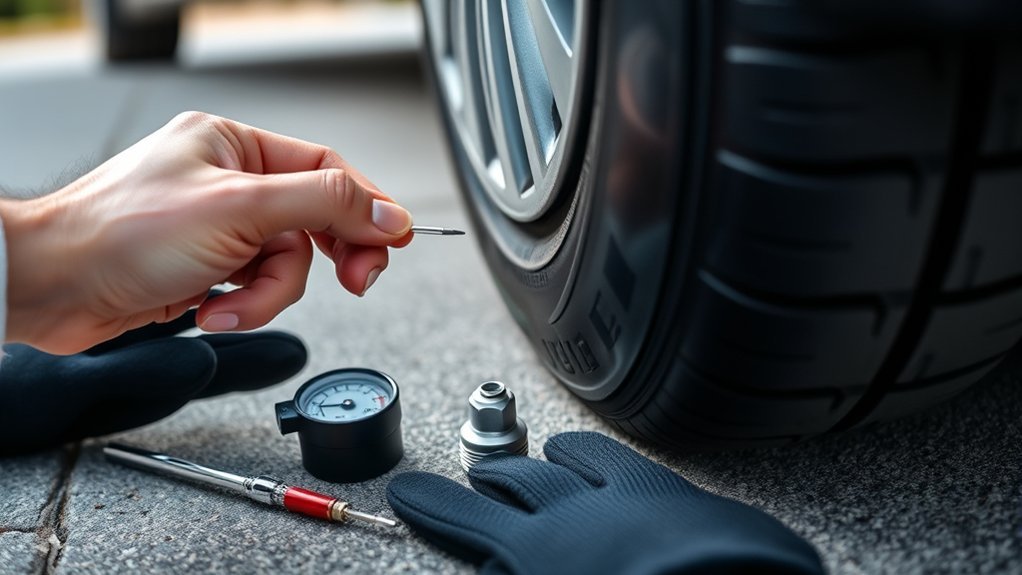
To let air out of a tire safely and accurately, you need a tire pressure gauge, a valve stem tool or small flathead screwdriver, and a flat, stable place to park. Set the parking brake before you start so the vehicle stays still while you work.
Keep the valve cap nearby after you remove it. That small cap helps protect the valve from dirt and moisture, and it should go back on as soon as the pressure is correct. A tire pressure gauge is the most important tool here because it tells you when to stop. If you release too much air, an air compressor, tire inflator, or hand pump lets you bring the tire back to the recommended pressure.
Warning: Do not drive on a tire that is visibly flat, cracked, bulging, leaking, or damaged. Inflate it to the correct pressure if it is safe to do so, install the spare if your vehicle has one, or call roadside assistance.
[Products Worth Considering]

EVOULTES heavy duty tire inflator with an integrated gauge delivers accurate pressure readings from 10–120 PSI, helping you inflate, deflate, and check tires in one tool. The 16.5-inch extended dual-head air chuck with swivel base reaches hard-to-access dual wheel valves on trucks and RVs. A brass trigger core and side-mounted air release valve make operation smooth, with standard 1/4" NPT threading and quick-connect compatibility for easy setup.

The AstroAI 2 pack air chucks provide a heavy-duty, closed-flow locking design that helps keep air flowing during inflation while securely attaching to the valve stem. Built with 250 PSI rated brass components and compatible with Schrader valves, they feature 1/4" female NPT threads for a wide fit with common inflators. The straight tip and locking clip make filling tires and monitoring pressure more convenient.
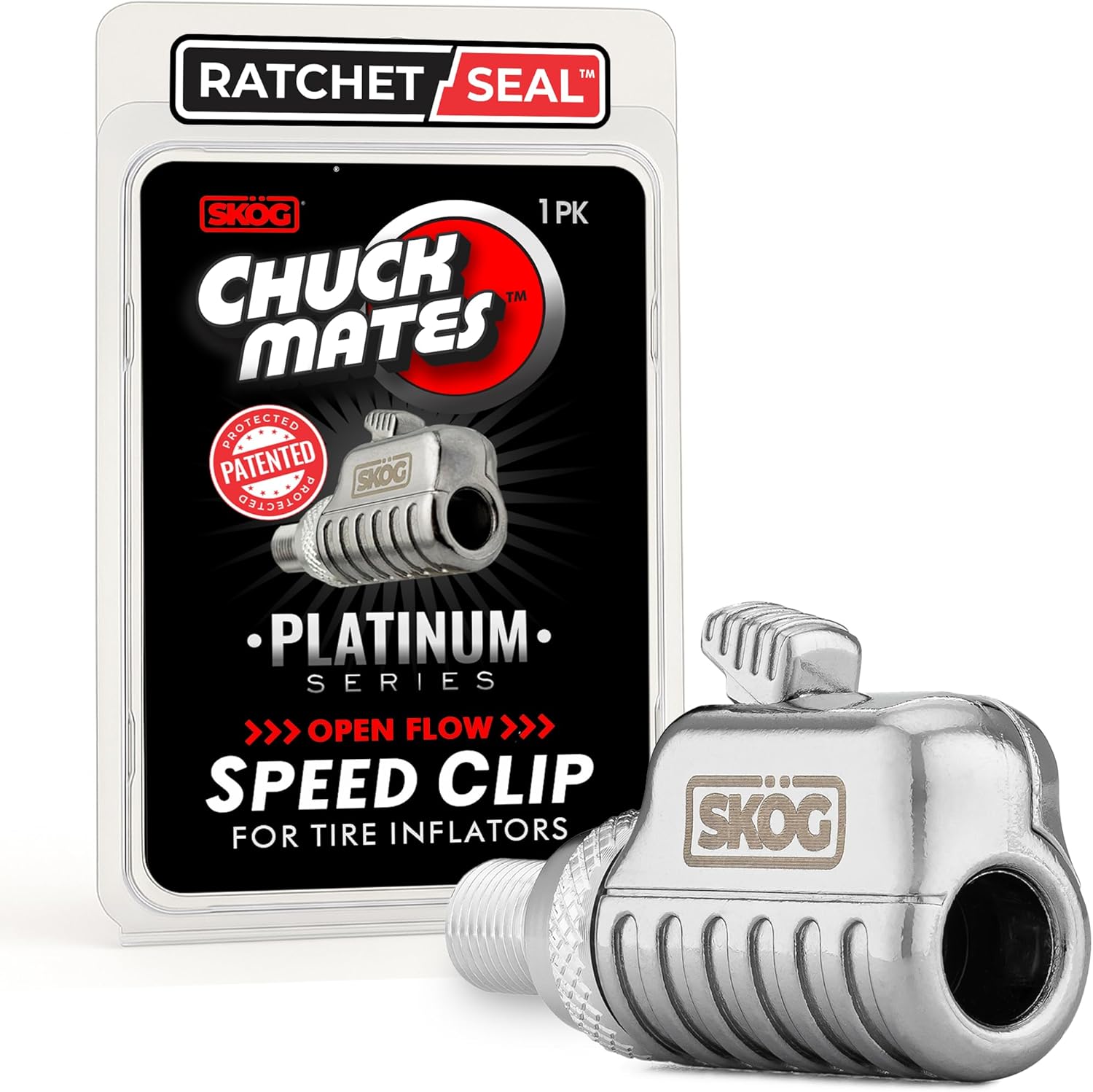
The SKÖG Chuck Mates Platinum uses a patented RatchetSeal push-to-connect system for instant, secure, air-tight attachment to standard tire valve stems. It features an easy push-button release for quick disconnects, plus 360° swivel open-flow airflow to keep operation smooth and kink-free. Universal Schrader compatibility makes it ideal for cars, bikes, motorcycles, RVs, trucks, and more.
Find the Valve Stem and Check PSI
First, find the valve stem on the wheel. It is the small rubber or metal stem with a cap on it. Unscrew the cap by hand and place it in your pocket or somewhere clean so it does not roll away.
Next, press your tire pressure gauge straight onto the valve stem. A firm, straight seal prevents air from leaking around the gauge and gives you a more accurate reading. Write down the current PSI if you are adjusting several tires.
Compare the reading with the recommended cold tire pressure on the Tire and Loading Information Label, usually located on the driver’s door jamb, or in the owner’s manual. That number is your target. The PSI molded into the tire sidewall is usually the tire’s maximum pressure, not the recommended pressure for your vehicle.
Note: Tire pressure should be checked when tires are cold whenever possible. NHTSA defines cold tires as tires that have not been driven on for at least three hours. If you just drove, the PSI may read higher because heat raises pressure.
How to Let Air Out Safely
If the tire pressure is higher than the recommended cold PSI, release air slowly. The goal is controlled adjustment, not a long blast of air.
- Park on a flat surface. Set the parking brake and make sure the vehicle is stable.
- Check the current PSI. Use a tire pressure gauge before releasing any air.
- Remove the valve cap. Keep it clean so it can go back on when you are done.
- Press the valve stem pin. Use the edge of the gauge, a valve tool, or a small flathead screwdriver to press the center pin inside the valve stem.
- Release air in short bursts. Press for 1–2 seconds, then stop.
- Recheck the pressure. Put the gauge back on the valve stem and compare the PSI with your target.
- Repeat only if needed. Continue in short bursts until the tire reaches the recommended pressure.
- Replace the valve cap. Tighten it by hand, then check the other tires too.
Pro Tip: If you are adjusting all four tires, check them in the same order every time: front driver, front passenger, rear passenger, rear driver. This keeps you from missing one.
How Much Air to Release
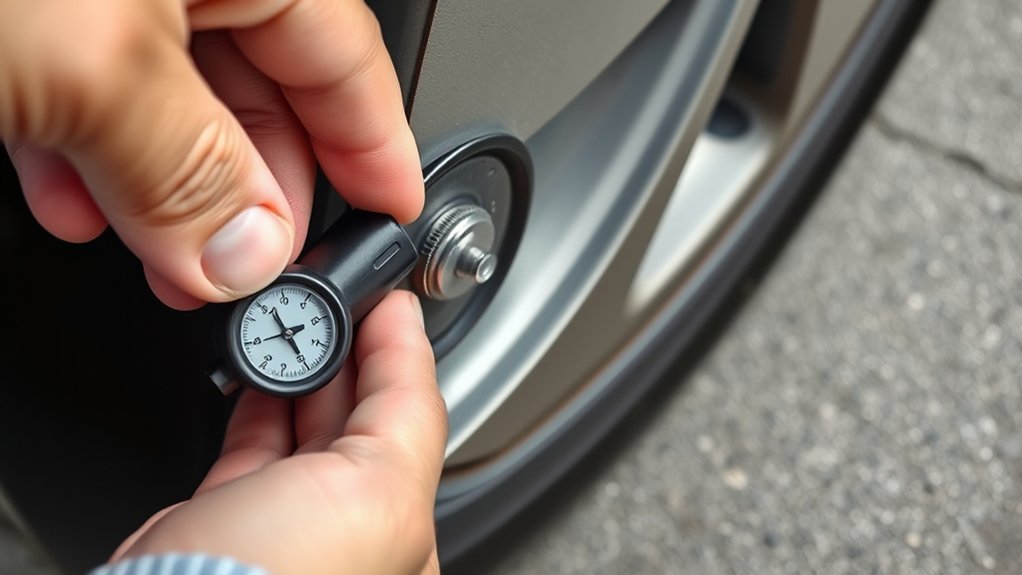
Release only enough air to reach the vehicle’s recommended cold PSI. A simple way to think about it is:
Current PSI − recommended PSI = amount of air to release.
For example, if the tire reads 39 PSI cold and your door-jamb label says 35 PSI, release about 4 PSI. Do it gradually, because a few extra seconds of pressing the valve pin can drop the pressure more than you expect.
Many passenger vehicles use pressures somewhere in the low-to-mid 30 PSI range, but that is only a broad reference. Your exact number may be different based on vehicle model, trim, tire size, load, and front/rear axle requirements.
Should You Let Air Out When Tires Are Hot?
Do not bleed a tire down to the cold PSI just because it reads a little high after driving. Heat from driving can raise tire pressure temporarily. If the tire is not dangerously overinflated, wait until it cools and check again. If you must adjust a warm tire, recheck it later when the tire is cold.
Should You Lower Pressure for Snow or Ice?
For normal road driving in snow or ice, keep the tire at the manufacturer’s recommended pressure. Cold weather already lowers air pressure, and underinflating a tire can hurt handling, wear, and fuel economy. If you need better winter traction, the safer upgrade is usually proper winter tires, good tread depth, and careful driving, not guessing at a lower PSI.
What About Off-Road Driving?
Some off-road drivers air down for low-speed driving on sand, rocks, or trails, but that is not a universal road-driving rule. Safe off-road pressure depends on the tire, wheel, vehicle weight, terrain, speed, and whether the tire can stay seated on the rim. Reinflate before returning to pavement, and do not use a generic 15–20 PSI target unless your vehicle, tire, and wheel setup support it.
What to Do If You Let Out Too Much Air
If the tire drops below the recommended PSI, stop releasing air and add air back in with a compressor or pump. Add a little at a time, then recheck with your gauge. Do not drive normally on a tire that is below the recommended pressure, especially if it looks low or the TPMS light is on.
If you are at a gas station, set the inflator to the target PSI if the machine has that feature. Still verify the final reading with your own gauge, because public inflators and built-in gauges can be inaccurate or worn.
[Products Worth Considering]
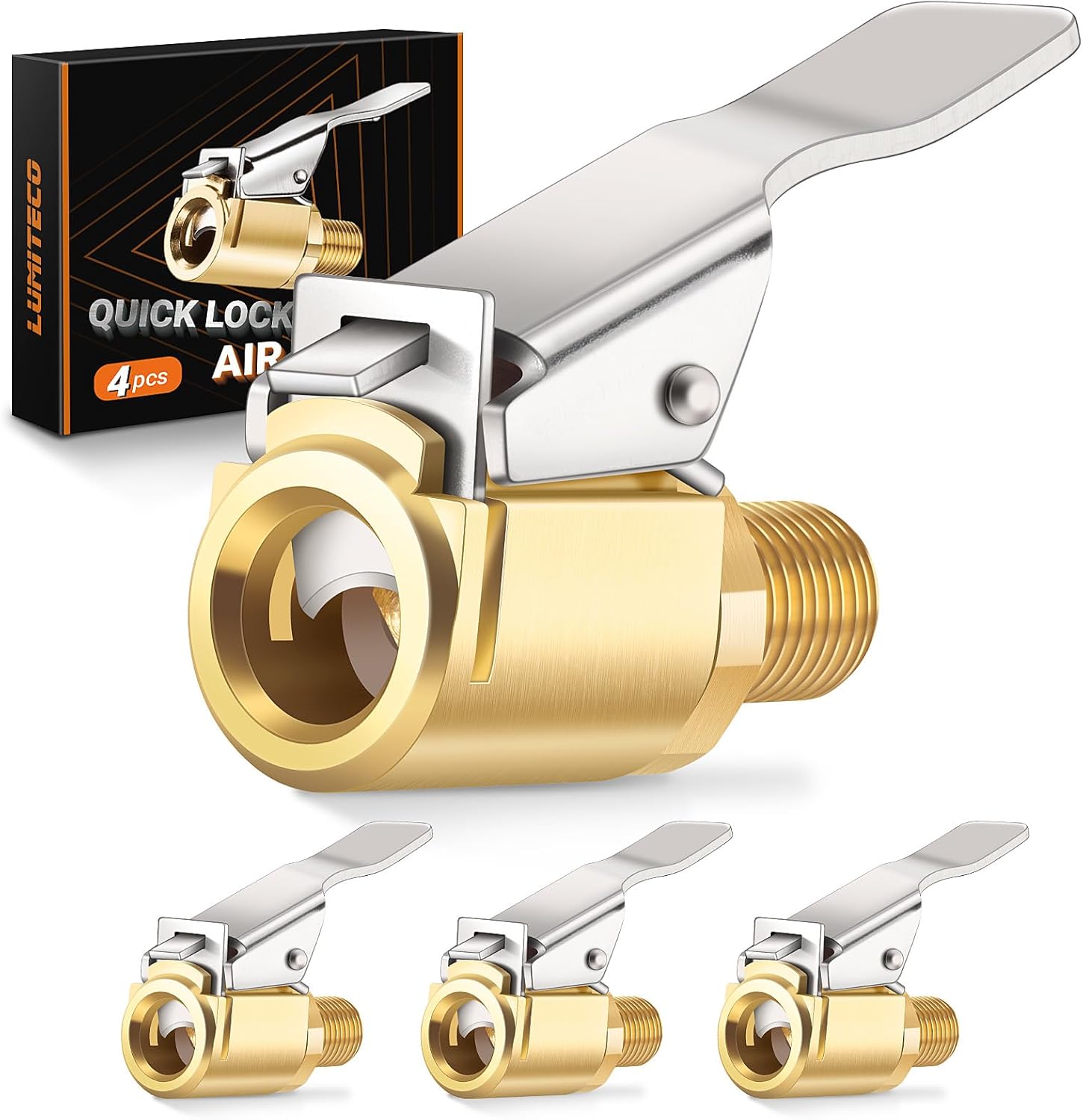
This brass air chuck adapter converts a screw-on inflator connection into a lock-on quick connect for hands-free, no-leak tire inflation. Clip the chuck onto Schrader valve stems and lock it in place to simplify inflating car, bike, and motorcycle tires. Built for durability with a corrosion-resistant brass body and strong quick operation.

Upgrade your tires with a set of four aluminum valve stem covers designed to protect the valve from wear and help keep out moisture and debris. The hermetically sealed, screw-in caps are corrosion resistant and provide an attractive, long-lasting anodized finish. Suitable for many vehicle types and installs quickly for everyday convenience.
Avoid Common Deflation Mistakes
Most tire-deflation mistakes come from rushing. Use the gauge often, release air in short bursts, and stop at the recommended pressure. Avoid these common problems:
- Using the tire sidewall number as the target. The sidewall usually shows maximum pressure, not the vehicle’s recommended pressure.
- Releasing air from a hot tire without rechecking later. Warm tires read higher after driving.
- Letting out too much air for traction. Underinflation can reduce control, increase heat, and cause uneven wear.
- Forgetting the valve cap. Dirt and moisture can get into the valve and may contribute to slow leaks.
- Ignoring the other tires. If one tire is high or low, check all four and the spare if your vehicle has one.
- Relying only on TPMS. Tire Pressure Monitoring Systems are helpful, but they are not a replacement for regular gauge checks.
Frequently Asked Questions
How do you quickly remove air from a tire?
The fastest safe method is to remove the valve cap, press the center pin inside the valve stem, and release air in short bursts. Use a tire pressure gauge after each burst. Do not remove the valve core unless you know what you are doing, because the tire can deflate very quickly.
Can I let air out with a flathead screwdriver?
Yes, a small flathead screwdriver can press the valve stem pin, but use light pressure and short bursts. A tire pressure gauge or valve tool is better because it gives you more control and lets you check the PSI immediately.
Should tires be cold before I release air?
Yes, check and adjust tire pressure when the tires are cold whenever possible. Driving heats the tire and temporarily raises pressure, so a hot reading may make the tire look overinflated when it is actually correct once cooled.
How much air should I let out of a tire?
Let out only enough air to reach the recommended cold PSI on the driver’s door-jamb label or in the owner’s manual. For example, if the tire is 3 PSI above the recommended pressure when cold, release about 3 PSI and recheck often.
What tire pressure should my Kia Carnival be at?
Use the cold PSI printed on your Kia Carnival’s driver-side door-jamb Tire and Loading Information Label. The correct pressure can vary by model year, tire size, trim, and load, so the door label and owner’s manual are more reliable than a generic PSI range.
What PSI should RAV4 tires be?
Check the driver’s door-jamb label or the Toyota owner’s manual for your exact RAV4 model year, tire size, and load condition. Many RAV4s use pressures in the low-to-mid 30s, but the label on your vehicle is the number to follow.
What should my tire pressure be for a Subaru Outback?
Use the cold PSI listed on your Subaru Outback’s driver-side door-jamb label. Some vehicles use different front and rear pressures, so do not assume all four tires need the same number unless the label says so.
What if the TPMS light stays on after I adjust the pressure?
Recheck all four tires with a gauge, including any tire you did not adjust. Some vehicles need a short drive for the system to update, while others may require a reset procedure. If the light flashes or keeps coming back, inspect for a leak or sensor issue.
Conclusion
Letting air out of a tire is safe when you work slowly and use the right target PSI. Check the pressure with a gauge, compare it with the cold PSI on the door-jamb label or owner’s manual, press the valve stem pin in short bursts, and recheck often. When the tire reaches the correct pressure, replace the valve cap and check the rest of the tires. A few careful minutes can help protect handling, tire life, fuel economy, and road safety.
Sources
- NHTSA TireWise — recommended cold tire pressure, door-jamb label guidance, monthly checks, TPMS limitations, and safe pressure adjustment.
- AAA: How to Check and Correct Tire Pressure — cold tire readings, pressure-gauge use, and replacing the valve cap.
- AAA: Understanding Tire Pressure and Temperature Change — how temperature affects PSI and why cold readings matter.
- Continental: Tire Pressure in Winter — winter pressure changes and manufacturer-recommended inflation guidance.
- Michelin: Car Tire Pressure Guide — how incorrect pressure affects safety, wear, braking, and fuel use.

Related Articles

How to Book a Costco Tire Center Appointment
Tired of guesswork? Learn how to book a Costco Tire Center appointment and avoid surprises before your next visit.
Read More
How to Use Costco Tire Inflation: Step-by-Step
Never overinflate at Costco—learn the exact steps, tools, and tips to fill your tires safely and leave with confidence.
Read More
How to Book a Tire Appointment at Walmart
Mysterious steps make booking a Walmart tire appointment simpler than you think, but one crucial detail could save you time and money.
Read More