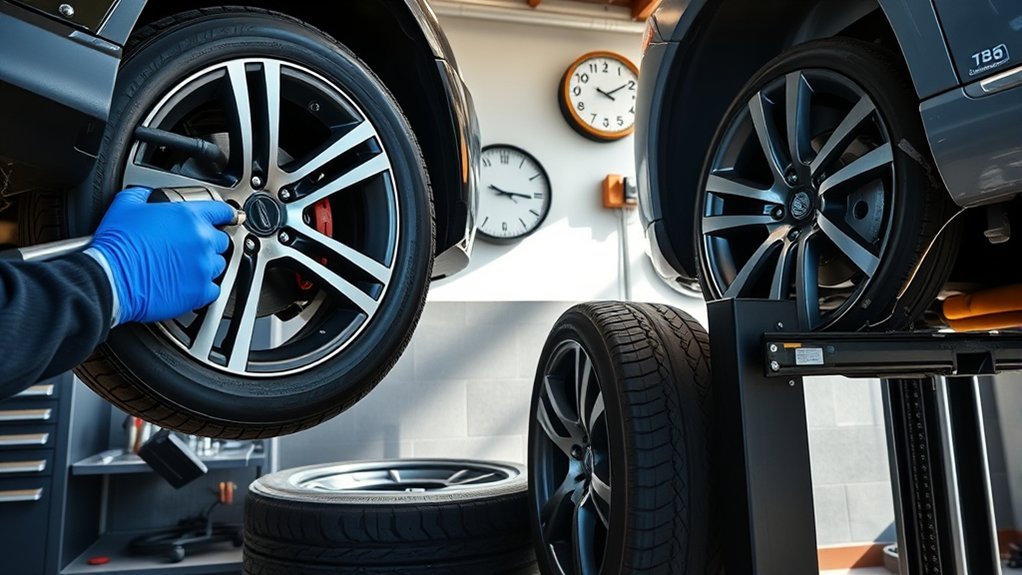
Tire replacement usually takes about 45 to 90 minutes for four tires once a shop starts the work. A single mounted-wheel or spare-tire swap may take about 15 to 30 minutes. Your total visit can take longer if the shop adds alignment, TPMS service, wheel repair, or has a queue. Use these estimates as practical planning ranges, not guaranteed appointment times.
Last updated: August 18, 2026
Quick Answer
Tire replacement usually takes about 45 to 90 minutes for four tires at a shop once the vehicle is being serviced. A single tire or spare-tire swap may take 15 to 30 minutes. Add more time for alignment, TPMS work, seized lug nuts, wheel locks, large vehicles, wheel problems, or a busy shop schedule.
Key Takeaways
- A full four-tire replacement with mounting and balancing commonly takes about 45 to 90 minutes once the work begins.
- A basic roadside spare-tire change is usually faster, but safety conditions and stuck lug nuts can slow it down.
- Alignment checks, TPMS service, wheel locks, corrosion, and oversized wheels can add time.
- DIY tire work usually means swapping a wheel/tire assembly; mounting a new tire on a rim should be done with professional equipment.
- Always tighten lug nuts to the vehicle manufacturer’s torque specification and recheck the tire pressure after installation.
At a Glance
| Time Required | 15–30 minutes for one wheel/spare swap; about 45–90 minutes for four tires mounted and balanced once service begins. |
| Difficulty | Easy to moderate for a safe wheel swap; professional-level for mounting and balancing a tire on a rim. |
| Tools Needed | Jack, lug wrench, wheel chocks, torque wrench, correct spare or replacement wheel, wheel-lock key if equipped, and tire pressure gauge. |
| Cost | Varies by tire size, brand, vehicle, shop labor, balancing, valve stems, TPMS service, disposal fees, and alignment. |
How Long Does Tire Replacement Take?

For most drivers, a professional four-tire replacement takes about 45 to 90 minutes once the vehicle is in the bay. That estimate usually includes removing the wheels, demounting the old tires, mounting the new tires, balancing each wheel, reinstalling the wheels, setting tire pressure, and torquing the lug nuts.
If the shop is only swapping a flat tire for a spare or replacing one already-mounted wheel and tire, the work may take 15 to 30 minutes. If the visit includes a wheel alignment, TPMS sensor service, wheel repair, or a busy check-in line, the total appointment can run longer than the actual tire work.
Planning rule: Treat the 45–90 minute estimate as hands-on service time, not guaranteed door-to-door appointment time. If you plan to wait at the shop, ask for its estimated check-in-to-completion time.
The clock changes depending on what you mean by “replacement.” A roadside spare swap, a shop-mounted tire, and a full four-tire service are three different jobs.
Tire Replacement vs. Tire Change vs. Mounting and Balancing
These terms often get mixed together, but they do not always mean the same thing:
- Tire change: Often means removing a wheel with a flat tire and installing a spare or another mounted wheel/tire assembly.
- Tire replacement: Usually means replacing an old, worn, damaged, or mismatched tire with a new tire.
- Mounting: Means removing the old tire from the wheel and installing the new tire on that wheel.
- Balancing: Means using a balancing machine and wheel weights to reduce vibration after the tire is mounted.
- Alignment: Means adjusting suspension angles so the tires contact the road correctly. It is separate from tire mounting and balancing.
DIY work is usually limited to changing a mounted wheel/tire assembly. Mounting and balancing a tire on a rim requires special equipment, training, and care, so it is best handled by a tire shop. If you are trying to determine whether a punctured tire needs replacement at all, see how long tire repair takes and have the damage inspected by a qualified tire professional.
Typical Tire Replacement Time by Service Type
| Service | Typical Work Time | What Can Add Time |
| One spare-tire swap | 15–30 minutes | Unsafe roadside location, missing jack, seized lug nuts, low spare pressure, wheel lock key missing |
| One tire mounted and balanced | About 15–30 minutes once in the bay | TPMS sensor issue, bead damage, bent wheel, corrosion, tire availability |
| Four tires mounted and balanced | 45–90 minutes once in the bay | Large wheels, low-profile tires, trucks/SUVs, corrosion, shop workload |
| Four tires plus alignment | About 1.5–2 hours in routine cases | Suspension wear, seized adjustment bolts, steering pull, corrosion, accident damage |
What Happens During Professional Tire Replacement?
A shop is faster because it has lifts, mounting machines, balancers, torque tools, trained technicians, and safe work areas. A typical tire replacement visit includes these steps:
- Check-in and inspection: The shop confirms tire size, tire condition, wheel locks, TPMS concerns, and whether alignment is needed.
- Lift the vehicle: The vehicle is raised at approved lift points so the wheels can be removed safely.
- Remove the wheels: Lug nuts or bolts are loosened, and the wheel assemblies come off the vehicle.
- Demount old tires: The old tires are removed from the wheels on a tire machine.
- Mount new tires: New tires are installed on the wheels with proper lubrication and bead seating.
- Balance the wheels: Each wheel/tire assembly is spun on a balancing machine, and weights are added as needed.
- Inspect and reinstall: The technician checks for visible wheel damage, sets pressure, reinstalls the wheels, and torques the lug nuts.
- Final check: The shop may check TPMS lights, road-force concerns, alignment symptoms, or vibration issues before handing the car back.
That process is why a shop can often finish faster than a DIYer while also doing work that cannot be done correctly with only a roadside jack and lug wrench.
What Affects Tire Replacement Time?
Several variables change tire replacement time, starting with the type of vehicle and the condition of the wheel hardware. Compact cars with standard wheels usually move faster through the bay. Heavy pickups, large SUVs, aftermarket wheels, low-profile tires, and oversized wheels may require more care.
Rust and corrosion are common delays. A wheel can stick to the hub, lug nuts can seize, and valve stems or TPMS sensors may need attention. If the shop discovers a bent wheel, uneven tire wear, or alignment-related damage, the job can turn into more than a simple tire replacement.
- Vehicle size: Larger vehicles and heavier wheels take more effort to lift, remove, and reinstall.
- Wheel condition: Corrosion, bent rims, and stuck-on wheels slow the job down.
- Hardware condition: Damaged studs, swollen lug nuts, wheel locks, or missing keys can cause delays.
- Tire type: Low-profile, run-flat, performance, and oversized tires may need extra care.
- Extra services: Alignment, TPMS sensors, valve stems, rotations, and inspections add time.
- Shop workload: Your appointment time and the actual bay time are not always the same.
Pro Tip: Before your appointment, confirm the shop has your tire size in stock and bring the wheel-lock key if your vehicle uses locking lug nuts. That small step can prevent a long delay.
How Long Does Each Tire Change Take?
A mounted-wheel or spare swap usually takes about 15 to 30 minutes under safe conditions. An experienced person with good access and cooperative hardware may finish faster. A first-time DIY tire change can take much longer because setup, jack placement, stuck lug nuts, and safety checks matter more than speed.
Per-Tire Change Time
For a shop, per-tire time is often short because the technician can work with a lift, air tools, mounting machine, and balancer. For DIY work, the time depends on whether you are replacing a wheel/tire assembly or trying to mount a tire. You should not try to mount and balance a tire on a rim with basic hand tools.
- Experienced shop technician: Fastest once the vehicle is in the bay.
- Roadside spare swap: Usually manageable if the surface is flat, traffic is safe, tools are present, and lug nuts are not stuck.
- Beginner DIY: Plan extra time and prioritize safety over speed.
Factors That Affect Speed
The biggest speed factors are safe setup, correct tools, and hardware condition. A torque wrench, wheel chocks, a working jack, and the correct spare or replacement wheel make the job smoother. A missing wheel-lock key, flat spare, rusted wheel, or damaged lug nut can stop the job entirely.
Warning: Do not change a tire in an unsafe traffic lane, on soft ground, on a steep slope, or under a vehicle supported only by a jack. Move as far from traffic as possible, turn on hazard lights, set the parking brake, use wheel chocks, and call roadside assistance if the location is not safe. AAA also advises using the vehicle’s approved jack point and never putting your body under the vehicle while it is supported by the jack.
Is DIY Tire Replacement Worth It?
DIY tire work is worth it when you are safely swapping a mounted wheel/tire assembly and you have the right equipment. It is not the best choice for mounting a new tire on a rim, balancing a wheel, dealing with TPMS sensors, or working in dangerous roadside conditions.
If you are changing a flat tire, your goal is not to win a race. Your goal is to get the vehicle stable, install the spare correctly, tighten the lug nuts in the proper pattern, and drive carefully to a repair shop. If the lug nuts are stuck, the spare is flat, the jack is unstable, or traffic is too close, stop and get help.
- DIY can save time if you are prepared and the situation is safe.
- DIY can become risky if you lack a torque wrench, stable jack point, or safe work area.
- A shop is usually better for mounting, balancing, alignment, TPMS work, and torque accuracy.
[Products Worth Considering]

Monitor tire tread wear with a smart, color-coded depth gauge that shows clear condition ranges at a glance. The bar is range marked for fast, easy readings, helping you maintain safer traction and performance. Each gauge is portable with a pocket clip, and the set includes 20 units for daily use and sharing.

These M14x1.5 closed-end chrome lug nuts are a one-piece replacement designed for secure fitment on compatible GM, Ford, and select Chrysler/Dodge models. Featuring a 60-degree conical seat and anti-rust chrome plating, they help resist corrosion and maintain a bright look for everyday driving. Built for long-term durability, they include OEM-style part references and are backed by 12 months of support.

Malco tire mounting and demounting lubricant is a ready-to-use tire lube formulated to reduce friction during tire installation for passenger cars, light trucks, farm tires, and heavy-duty equipment. It provides rust-inhibiting protection to help reduce corrosion on rims and wheels, and helps support proper tire bead seating during inflation to reduce air leakage. The silicone-free, soap-free formula is whitewall safe to help prevent discoloration on whitewall tires and sensitive sidewall markings.
Why Tire Tools Speed Up the Job
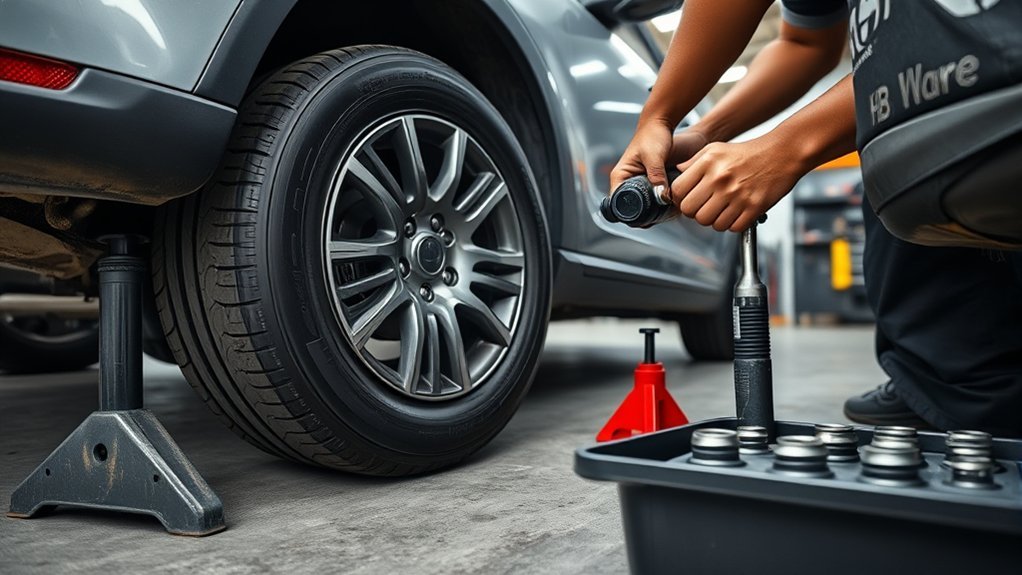
The right tools save time because they reduce setup work and help technicians work safely. A hydraulic lift raises the vehicle quickly and gives access to all four wheels. A tire machine removes and installs tires without damaging the wheel. A balancer helps prevent vibration at road speed.
[Products Worth Considering]

This 1/2-inch drive breaker bar delivers powerful leverage for loosening and tightening stubborn lug nuts and automotive fasteners. The 180-degree flex head helps you reach tight spaces at the angle you need, making tire and brake jobs easier. A spring-loaded ball detent design holds 1/2-inch sockets securely while the chrome-moly head provides durable strength for everyday use.

This car D-wheel lock nut key provides an anti-theft solution for D-shaped wheel lock bolts, helping keep your wheels secure. It features a flower-shaped internal pattern that resists micro-adjustment theft while allowing removal and mounting of compatible locking nuts. Made for reliable performance under high torque, it’s easy to use with standard socket wrench turning for quick tire maintenance and emergency repairs.

The Trivd Frol 1/2" air impact wrench delivers high performance torque up to 1500 ft-lbs with a twin hammer impact mechanism for strong, balanced blows. It features an ergonomic grip, compact lightweight design, and quick-stop control with 3 forward speeds up to 8000 RPM plus a reverse speed. Built for demanding automotive repair and tire shop work, the rear exhaust helps keep debris away from the surface.
Hydraulic Lifts Save Time
A hydraulic lift lets a shop raise the vehicle at proper lift points and work on all four wheels without repeatedly repositioning a jack. That is one reason professional service is usually faster than a driveway tire change.
- All four wheels are accessible at the same time.
- The vehicle is supported more securely than with a roadside jack.
- The technician can inspect tires, wheels, brakes, and suspension areas more efficiently.
Impact Wrenches Speed Removal
Impact wrenches can remove lug nuts quickly, especially when hardware is tight. However, final tightening should not be guessed by feel. Tire Rack recommends starting wheel hardware by hand, snugging it in the proper pattern, and applying final torque with an accurate torque wrench set to the vehicle manufacturer’s specification.
| Tool | Time Effect | Best Use |
|---|---|---|
| Impact wrench | Fast | Removing lug nuts quickly |
| Manual lug wrench | Slower | Roadside wheel changes |
| Torque wrench | Safety-critical | Final tightening to the correct specification |
What Usually Delays Tire Replacement?

The most common delays are not the new tires themselves. They are the problems found while removing, mounting, balancing, or reinstalling the wheel assemblies.
- Rusted or seized lug nuts: Extra care is needed to avoid broken studs or damaged hardware.
- Wheel stuck to the hub: Corrosion can make removal harder.
- Missing wheel-lock key: The shop may not be able to remove the wheels without special tools.
- TPMS sensor problems: A dead or damaged sensor may need replacement or relearning.
- Bent or cracked wheel: The shop may recommend repair or replacement before mounting a new tire.
- Alignment problems: Uneven wear, steering pull, or suspension damage can add inspection and adjustment time.
- Seasonal demand: Winter tire season and holiday travel periods can create long wait times.
How Long Does Installation and Balancing Take?
Installation and balancing for four tires commonly takes about 45 to 90 minutes once the vehicle is in the service bay. The technician removes the wheels, demounts old tires, installs the new tires, inflates them, balances each wheel/tire assembly, reinstalls the wheels, sets pressure, and torques the lug nuts.
Balancing is important because even a new tire and wheel can have small weight differences. NHTSA advises having new tires balanced at installation because imbalance can cause shaking or vibration.
If the shop also performs an alignment, plan for extra time. Alignment is not the same as balancing. Balancing corrects weight distribution in the wheel/tire assembly; alignment measures and, when needed, adjusts suspension angles that affect tracking, steering, and tire wear.
When to Let a Tire Shop Handle It
Let a tire shop handle the job when you need mounting, balancing, TPMS service, alignment, bead inspection, valve-stem replacement, or accurate torque verification. A shop is also the safer choice if your vehicle is heavy, the wheel is stuck, the lug nuts are damaged, or you cannot work on a flat and stable surface.
NHTSA says tires should be replaced when tread is worn to 2/32 inch. Tires may also need professional inspection or replacement for sidewall damage, age-related deterioration, or uneven wear. You can use this tire tread-depth guide to check several grooves before deciding what to do next.
[Products Worth Considering]

Measure tire tread depth quickly and accurately with this LUMITECO dial gauge that reads in 1/32" increments up to 14/32". The color-coded green/yellow/red zones make it easy to judge tire wear and know when replacement is needed. A rugged, compact design with a protective pouch helps keep the gauge ready for use on cars, trucks, motorcycles, and more.

This 15-inch tire spoons kit makes tire removal and installation easier with added leverage, reducing time and effort for everyday repairs. It includes tire spoons, rim protectors, a valve tool, and valve cores/caps, helping protect rims and streamline deflation and re-sealing. Built with durable hardened steel and a non-slip ergonomic grip for confident use on motorcycles, dirt bikes, ATVs, and lawn equipment.

Upgrade your wheels with MIKKUPPA closed-end lug nuts designed for reliable fit and corrosion resistance. The one-piece, cold-forged and heat-treated steel construction helps resist rust and stripping, while the integrated finish delivers a durable black appearance. Built to OEM standards with a conical 60-degree seat, these nuts provide a secure solution for compatible Ford, Honda, Jeep, and Chevrolet models.
How to Make Tire Replacement Go Faster
You can shorten the process by preparing before the appointment or roadside change. Do not skip safety steps to save a few minutes.
- Schedule ahead: Tire shops move faster when the tire size is in stock and your appointment is confirmed.
- Bring the wheel-lock key: If your vehicle has wheel locks, keep the key where the technician can find it.
- Know your tire size: Check the driver-door placard, owner’s manual, or tire sidewall.
- Clear the trunk: If the spare, jack, or wheel-lock key is under the cargo floor, make it easy to reach.
- Ask what is included: Confirm whether the quoted time includes balancing, valve stems, TPMS service, disposal, and alignment.
- Ask which clock the estimate uses: Find out whether the quoted time begins at check-in or when the vehicle enters the service bay.
- Check the spare: A flat spare can turn a quick tire change into a tow.
Note: Tire pressure should be checked when tires are cold, and the correct pressure is usually listed on the driver-door placard or in the owner’s manual. Do not use the maximum PSI printed on the tire sidewall as your normal inflation target.
What to Check After Tire Replacement
After new tires are installed, take a few minutes to confirm the basics before you drive far:
- Pressure: Check that all tires are set to the vehicle manufacturer’s recommended cold pressure.
- Lug torque: Lug nuts or bolts should be tightened to the vehicle manufacturer’s torque specification.
- TPMS light: If the tire pressure warning light stays on, ask whether the system needs relearning or a sensor check.
- Vibration: A shake at speed may point to a balance issue, bent wheel, or tire defect.
- Steering pull: If the vehicle pulls left or right, ask for an alignment inspection.
- AWD/4WD matching: If you replaced only one or two tires, confirm your vehicle allows the tread-depth and rolling-circumference difference.
What If You Replace Only One or Two Tires?
Matching requirements depend on the vehicle. If only two tires are replaced, Michelin advises installing the tires with deeper tread on the rear axle to support stability and wet traction. Significant tread-depth differences can affect handling, and AWD or 4WD vehicles may have tighter matching requirements, so the vehicle manufacturer’s instructions take priority.
Frequently Asked Questions
How long does a tire change usually take?
A basic tire change can take 15 to 30 minutes if you are swapping one mounted wheel for a spare and the conditions are safe. A professional four-tire replacement with mounting and balancing usually takes about 45 to 90 minutes once the vehicle is being serviced.
How fast can I go on a replacement tire?
If the replacement is a full-size tire that correctly matches your vehicle’s requirements, normal driving may be permitted. A compact temporary spare has stricter limits. Follow the speed and distance limits printed on the spare and listed in the owner’s manual; Michelin currently advises not exceeding 50 mph on a compact spare.
What is the 3% tire rule?
The “3% tire rule” is a general aftermarket sizing guideline, not a universal manufacturer specification. It usually means keeping an alternate tire’s overall diameter within about 3% of the original size. Always use vehicle-manufacturer-approved tire sizes and fitment requirements first. AWD and 4WD vehicles may also require closely matched tread depth and rolling circumference.
Is $600 for four tires good?
It can be reasonable, but there is no universal good price because tire size, brand, load rating, speed rating, vehicle type, warranty, and local labor costs vary widely. Compare the out-the-door total and confirm whether mounting, balancing, valve stems, disposal fees, taxes, TPMS service, and alignment are included.
Do I need balancing when replacing tires?
Yes. NHTSA advises having new tires balanced at installation. Balancing helps reduce vibration caused by uneven weight distribution in the wheel/tire assembly. If you feel shaking after new tires are installed, return to the shop and ask them to recheck the balance, wheel condition, and installation.
Do I need an alignment after replacing tires?
Not automatically. Alignment is separate from mounting and balancing. An alignment check is especially useful if the vehicle pulls to one side, the steering wheel is off-center, the old tires wore unevenly, or steering or suspension work was performed. If measurements are within the vehicle manufacturer’s specifications, an adjustment may not be needed.
Should I replace all four tires at once?
Replacing all four tires is often best for consistent grip, handling, and tread depth, especially when the vehicle manufacturer requires close tire matching. Some AWD and 4WD vehicles have strict limits on tread-depth or rolling-circumference differences. If only two tires are replaced, install the deeper-tread pair on the rear unless your vehicle manufacturer specifies otherwise.
Conclusion
Tire replacement usually takes less than two hours for a standard four-tire shop visit, with about 45 to 90 minutes of hands-on bay time being a practical range for routine mounting and balancing. A simple spare swap may take 15 to 30 minutes, while TPMS work, alignment, rusted hardware, wheel damage, or a busy shop can stretch the visit. Schedule ahead, bring the wheel-lock key, confirm what the service includes, and if you are waiting onsite, ask whether the shop’s estimate means bay time or check-in-to-completion time.
Sources
- NHTSA TireWise — tire safety, tire pressure, tread depth, balancing, and consumer tire information.
- U.S. Tire Manufacturers Association Tire Care Essentials — tire pressure, tread depth, rotation, alignment, and maintenance basics.
- Bridgestone Tire Replacement Guidance — tire inspection and replacement guidance.
- AAA How to Change a Tire — roadside flat-tire safety, jack placement, and tire-changing precautions.
- Tire Rack Lug Nut Torque Guide — proper wheel torque, torque wrench use, and manufacturer torque specifications.
- Michelin Driving on a Spare Tire — compact spare speed limits and temporary-use guidance.
- Michelin Mixing Tires Guidance — matching tires, tread-depth differences, and placement when replacing two tires.
- Super Tire & Muffler Tire Installation Timing — current shop estimate for routine four-tire installation and alignment time.