
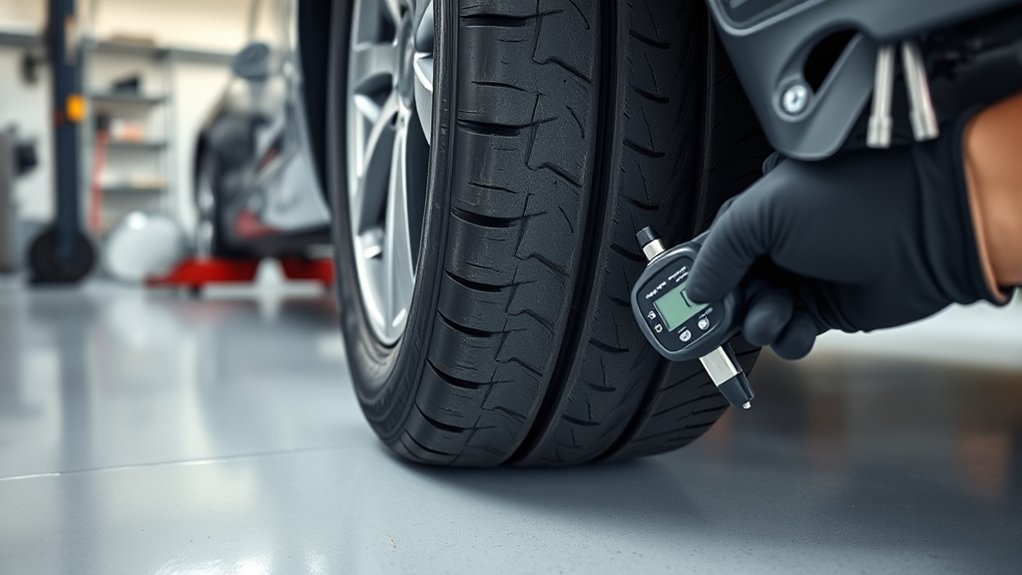
Most tires last somewhere around 30,000 to 80,000 miles, but mileage is only a planning range. Your real replacement point depends on tread depth, tire age, visible damage, pressure, alignment, rotation, road conditions, and how you drive. You should replace a tire sooner if the tread reaches 2/32 inch, the sidewall shows cracks or bulges, the tire keeps losing air, or the tire maker’s age limit has passed.
Quick Answer
Most everyday tires last about 30,000 to 80,000 miles, but you should replace them based on condition, not mileage alone. Replace tires at 2/32 inch tread depth, after serious damage, when they show unsafe vibration or air loss, or when the tire or vehicle maker’s age guidance says they are too old.
Key Takeaways
- Mileage helps you plan, but tread depth, age, damage, and performance decide when tires need replacement.
- The legal minimum replacement point in many U.S. states is 2/32 inch of tread, which you can check with the penny test.
- Start planning sooner at 4/32 inch if you drive often in rain, because wet stopping and hydroplaning risk become bigger concerns.
- Check tire pressure at least monthly when tires are cold, and use the PSI listed on the driver-side door label or owner’s manual.
- Rotate, balance, align, and inspect tires regularly so you catch uneven wear before it ruins a set early.
At a Glance
| Time Required | 5 to 10 minutes for a basic tire inspection |
| Difficulty | Easy for tread and pressure checks; professional help needed for alignment, internal damage, or persistent vibration |
| Tools Needed | Penny, quarter, tire-pressure gauge, tread-depth gauge, flashlight, and your owner’s manual |
| Cost | Free for a basic visual check; low cost for a pressure gauge or tread-depth gauge |
How Long Do Tires Really Last?
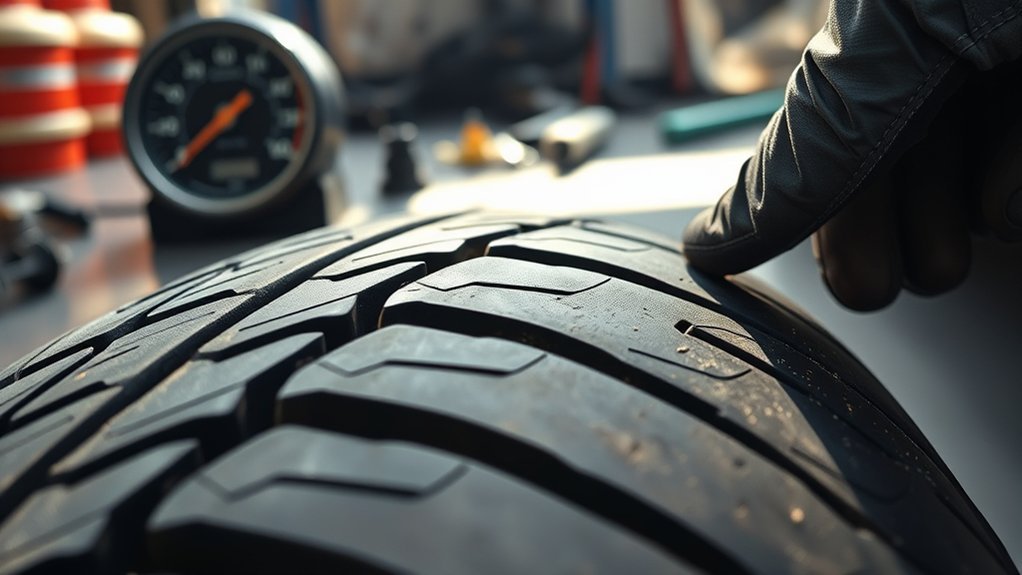
Most tires land in a broad 30,000 to 80,000-mile planning range, but some wear out earlier and some last longer. Touring and highway tires often focus on long tread life. Performance tires may trade some tread life for grip. Winter tires can wear faster if you use them in warm weather.
The safest way to judge tire life is to inspect the tire, not just the odometer. The National Highway Traffic Safety Administration says tires should be replaced when tread reaches 2/32 inch. You should also replace tires with cuts, cracks, bulges, irregular wear, air-loss problems, or performance changes such as noise and vibration.
Age also matters. Rubber changes over time because of heat, sunlight, storage, climate, use, and maintenance. Some vehicle and tire manufacturers recommend replacing tires after six to 10 years, even when tread remains. Check your tire warranty booklet, vehicle owner’s manual, and DOT date code before assuming an older tire is still safe.
Tire mileage is an estimate. Tread depth, visible damage, age, air loss, and how the tire feels on the road should make the final replacement decision.
When Should You Replace Tires?
Use this table as a practical replacement guide. If more than one warning sign appears, treat the tire as urgent and have it inspected by a qualified tire technician.
| Tire condition | What it means | What to do |
| 2/32 inch tread depth | The tire has reached the common U.S. minimum replacement point. | Replace the tire now. |
| 4/32 inch tread depth | Wet-weather traction and stopping confidence can drop before the legal limit. | Plan replacement soon, especially before rainy or winter driving. |
| Cracks, bulges, cuts, or exposed cords | The tire may have structural damage. | Stop using the tire until a professional inspects it. |
| Uneven wear | Pressure, alignment, suspension, or rotation issues may be wearing one area faster. | Measure tread across the tire and schedule service. |
| Six to 10 years old | Some manufacturers recommend replacement by age, even with tread left. | Check the DOT date code and manufacturer guidance. |
Warning: Do not keep driving on a tire with a bulge, deep cut, exposed cord, sudden vibration, or repeated air loss. These signs can point to internal or sidewall damage, even when tread depth looks acceptable.
What Shortens Tire Life?
Tire life drops quickly when stress and poor maintenance stack together. Hard acceleration, sharp cornering, heavy braking, potholes, gravel, heat, overloading, and poor storage can all speed up wear. Even a good tire can wear early if it runs underinflated or out of alignment.
- Improper inflation: Low pressure can cause heat buildup, shoulder wear, lower fuel economy, and poorer handling. Overinflation can wear the center of the tread faster.
- Skipped rotations: Front and rear tires often carry different loads and steering forces, so skipped rotations can create uneven wear.
- Poor alignment: If the vehicle pulls to one side or the steering wheel sits off-center, the tires may scrub instead of rolling straight.
- Worn suspension parts: Bad shocks, struts, bushings, or wheel bearings can create cupping, vibration, and patchy tread wear.
- Road hazards: Potholes, curbs, nails, debris, and rough roads can damage the tread, sidewall, belt package, or wheel.
Small maintenance habits make a major difference. Check pressure monthly, rotate on schedule, and inspect tread at more than one spot. These steps help you catch early wear before one tire forces you to replace a full set sooner than expected.
How Do You Know Tires Need Replacing?
You know tires need replacing when tread is too low, the tire is too old, the tire shows physical damage, or the tire no longer performs normally. Start with tread depth, then inspect the sidewall, tread surface, valve area, and tire age.
- Replace now: Tread reaches 2/32 inch, tread wear bars sit flush, cords show, or the tire has a bulge.
- Replace soon: Tread is around 4/32 inch and you drive in rain, snow, or highway traffic often.
- Get inspected: You feel vibration, hear new tire noise, see uneven wear, or keep topping off the same tire.
- Check age: The tire is six years old or older, especially if it sits outdoors, sits unused, or runs in hot climates.
- Check recalls: Use the NHTSA recall lookup if you know your tire brand, line, and size or suspect a safety defect.
Note: Replace tires in matched pairs or sets when needed for safe handling. On many all-wheel-drive vehicles, mismatched tread depth can also affect the drivetrain. Check your owner’s manual before replacing only one tire.
[Products Worth Considering]

Accurately measure tire tread depth with a calibrated gauge marked from 0 to 1 inch in 1/32 inch increments. The color-coded bar helps you quickly identify tread condition ranges, supporting safe driving for trucks, motorcycles, automobiles, and passenger vehicles.

Monitor tire tread wear with a smart, color-coded depth gauge that shows clear condition ranges at a glance. The bar is range marked for fast, easy readings, helping you maintain safer traction and performance. Each gauge is portable with a pocket clip, and the set includes 20 units for daily use and sharing.

Measure tire tread depth quickly and accurately with this LUMITECO dial gauge that reads in 1/32" increments up to 14/32". The color-coded green/yellow/red zones make it easy to judge tire wear and know when replacement is needed. A rugged, compact design with a protective pouch helps keep the gauge ready for use on cars, trucks, motorcycles, and more.
How Do You Check Tire Tread Depth?
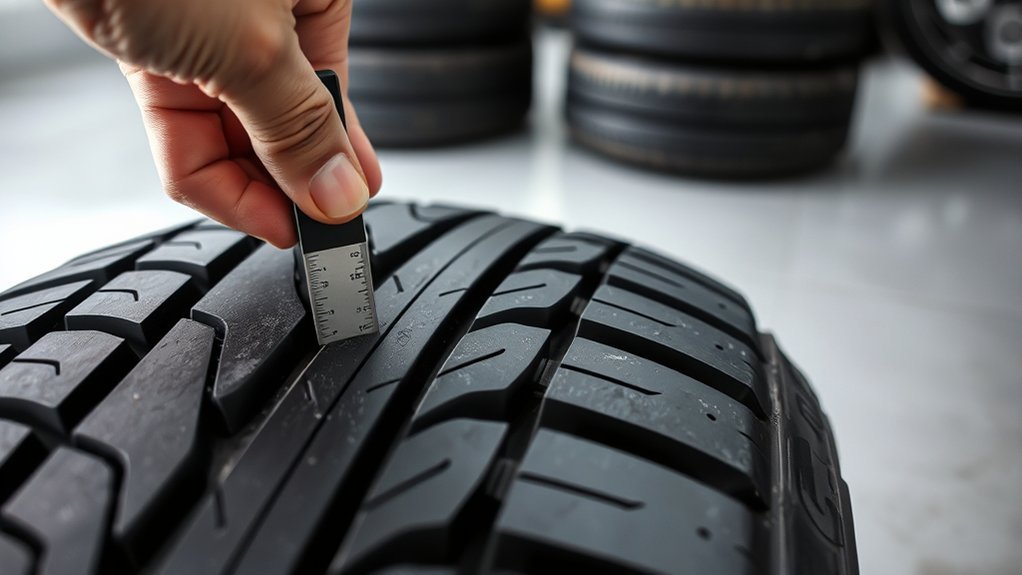
You can check tire tread depth with a penny, a quarter, the tire’s wear bars, or a tread-depth gauge. A gauge gives the clearest reading, but the coin tests are useful for quick checks at home or before a trip.
[Products Worth Considering]

The SAFELIFE dial tire tread depth gauge measures tread depth in 1/32 inch increments with clear, easy-to-read 2-inch dial face. Color zones using a traffic light system help you quickly judge whether tread is low, marginal, or ample for safer driving. Built with a durable zinc cast body and a metal detect probe for precise, comfortable use across cars, motorcycles, trucks, and buses.

Milton S-921 pencil tire pressure gauge helps you maintain optimal tire pressure for passenger cars with accurate readings in PSI and kPa. It features a built-in deflator valve for convenient pressure adjustments, plus a single chuck head and nylon indicator bar for easy use on the go. Built from durable plated brass and designed for reliable performance, it’s a practical road trip and cold-weather maintenance tool.

AstroAI’s heavy-duty digital tire pressure gauge delivers quick, accurate readings with 0.1 increments and a secure valve-stem seal. It features a green backlit LCD and built-in flashlight for easy use in low light, plus an ergonomic non-slip stainless-steel design. The wide 0–230 PSI range works across common vehicle tires, with unit selection and an auto shut-off to save battery.
Penny Test for 2/32 Inch
- Place a penny into a tread groove with Lincoln’s head upside down and facing you.
- Check several grooves across the inner, center, and outer tread.
- If you can see the top of Lincoln’s head in any major groove, the tire is at or near 2/32 inch.
- Replace the tire if any area fails the test.
Quarter Test for 4/32 Inch
The quarter test helps you plan earlier for wet-road safety. Insert a quarter into the tread with Washington’s head upside down. If the tread does not cover part of Washington’s head, the tire is around 4/32 inch or lower. At that point, start shopping before rain, snow, or a long trip forces a rushed decision.
Tread-Depth Gauge
A tread-depth gauge is the most precise simple tool. Insert the probe into the lowest major groove, press the base flat against the tread, and read the result in 32nds of an inch or millimeters. Measure each tire at the inner edge, center, and outer edge because uneven wear can hide on one side.
Tread-Wear Indicator Bars
Most tires have raised wear bars molded into the tread grooves. When the surrounding tread wears down level with those bars, the tire has reached the replacement point. Do not wait for the entire tire to look smooth. One dangerously low area is enough to replace the tire.
Pro Tip: Measure tread before and after each rotation. If one tire loses tread faster than the others, you may have an alignment, pressure, balance, or suspension issue.
How Do You Check Tire Age?
Check tire age by finding the DOT Tire Identification Number on the sidewall. The final four digits show the production week and year. For example, a tire code ending in 2522 means the tire was made in the 25th week of 2022.
Look on both sidewalls because the full code may appear on only one side. If the tire is older than six years, inspect it more carefully and check the tire maker’s age guidance. If the tire is near 10 years old, many manufacturers recommend replacement even if the tread still looks usable.
Do not ignore the spare tire. Full-size and temporary spares can age while sitting unused. Check spare-tire pressure, tread, sidewall condition, and age before long trips.
How Can You Make Tires Last Longer?
You can make tires last longer by keeping them properly inflated, rotating them on schedule, keeping the wheels aligned, balancing tires when needed, and driving smoothly. Tire care does not guarantee a specific mileage, but it helps you get the most safe service from each set.
- Check pressure monthly: Measure all tires, including the spare, when they are cold. Use the PSI on the driver-side door label or owner’s manual, not the maximum pressure printed on the tire sidewall.
- Rotate on schedule: Follow your owner’s manual. If the manufacturer recommends it, many vehicles use a 5,000 to 8,000-mile tire-rotation interval.
- Keep alignment in check: Schedule alignment service if the vehicle pulls, the steering wheel is off-center, or the tread wears more on one edge.
- Balance when needed: New vibration after tire service, a pothole hit, or highway driving can point to a balance issue.
- Drive smoothly: Avoid hard launches, sudden braking, and fast cornering when possible.
- Store tires correctly: If you swap seasonal tires, keep the off-season set clean, dry, cool, and away from direct sunlight.
Proper inflation also supports fuel economy. FuelEconomy.gov notes that correct tire pressure can improve gas mileage and helps tires last longer. NHTSA also says proper inflation can extend average tire life.
[Products Worth Considering]

Keep your tires properly inflated with this analog VONDIOR tire pressure gauge, designed for fast, easy readings without batteries. The swiveling, two-axis hose and large glow dial help you measure at any tire angle with instant visibility. Built with a protective rubber shield, it supports durable, low-maintenance use for cars and trucks.

Steelman white tire marking crayons provide high-contrast, semi-permanent marks for repairing and inspecting tires and equipment. They write on wet or dry, smooth or coarse surfaces including rubber, metal, glass, and wood, making them ideal for puncture location and damage outlining. The lead- and zinc-free crayons resist weather and fading yet wipe away when you no longer need the marks.

Measure tyre tread depth precisely with a digital gauge that reads in both MM and inches, helping you monitor safe driving conditions. The large LCD screen is easy to operate, and the compact tool fits for cars, trucks, and motorcycles. It provides high accuracy with a 0-25.4mm range and includes a 1-year warranty for added peace of mind.
How Often Should You Inspect Tires?
Inspect tires at least once a month and before long trips. Check pressure first, then inspect tread depth, sidewalls, valve stems, and the spare. You should also look after any hard pothole hit, curb strike, or sudden air-pressure warning.
A quick monthly routine can prevent bigger problems:
- Park on a level surface and let the tires cool for at least three hours when possible.
- Check the recommended PSI on the driver-side door label or owner’s manual.
- Measure all tires with a reliable pressure gauge.
- Add or release air until each tire matches the recommended cold pressure.
- Check tread depth across the tire, not just in the center.
- Look for nails, cuts, cracks, bulges, exposed cords, and uneven wear.
- Check the spare tire and tire-changing tools.
Frequently Asked Questions
Is 40,000 miles a lot for tires?
Forty thousand miles is not automatically a lot for tires. It is a normal midpoint for many everyday tires, but condition matters more than mileage. Check tread depth, wear pattern, age, sidewall condition, pressure history, and how the tire feels while driving.
Is 20,000 miles on tires a lot?
Twenty thousand miles is usually not a lot for standard passenger tires, but some tires can wear quickly under hard driving, poor alignment, low pressure, heavy loads, or rough roads. If the tread is uneven, shallow, cracked, or noisy, inspect the tire even at low mileage.
Is two years too soon to replace tires?
Two years is usually early, but it is not too soon if the tires are worn, damaged, incorrectly sized, repeatedly losing air, or showing cracks, bulges, vibration, or uneven wear. A high-mileage driver can also wear out tires in two years.
How long will 4/32 tread last?
You cannot predict 4/32 tread life by mileage alone. Driving style, tire compound, alignment, pressure, road surface, and weather all change the result. Treat 4/32 as a planning point, especially for wet roads, and replace before the tire reaches 2/32 inch.
Can tires expire even if the tread looks good?
Yes. Tires can age out because rubber and internal materials change over time. Heat, sunlight, storage, low use, and poor maintenance can speed aging. Check the DOT date code and follow the tire maker’s and vehicle maker’s age guidance.
Should you replace all four tires at once?
Sometimes, yes. If all four tires are worn evenly, replacing the full set keeps handling balanced. If only one or two tires are worn, follow your owner’s manual and tire-shop guidance. All-wheel-drive vehicles often need closely matched tread depths.
Conclusion
You cannot judge tire life by mileage alone. Many tires last about 30,000 to 80,000 miles, but tread depth, damage, tire age, inflation, alignment, rotation, climate, and driving habits matter more than the odometer. Replace tires at 2/32 inch, and start planning earlier at 4/32 inch if you drive often in rain or winter conditions.
Check pressure monthly, measure tread across each tire, inspect the DOT age code, and watch for cracks, bulges, vibration, or uneven wear. Good tire care helps tires last longer, but safety should always decide the final replacement point.
Sources
- NHTSA TireWise — backs tread-depth replacement, penny test, pressure checks, rotation guidance, tire aging, and tire maintenance safety.
- Bridgestone Tire Tread Depth Guide — backs penny test, quarter test, 2/32-inch replacement point, and 4/32-inch wet-weather planning.
- FuelEconomy.gov Vehicle Maintenance Guide — backs proper inflation, fuel economy, and tire longevity guidance.
- NHTSA Recall Lookup — backs tire recall and safety-defect checking.
