
A tire repair usually takes 15 to 60 minutes once the vehicle is in the service bay. A simple tread puncture may be repaired in about 15 to 30 minutes, while a proper professional repair with tire removal, internal inspection, patch-plug installation, inflation, and balancing often takes 30 to 60 minutes. A spare tire swap can be faster, but it is only a temporary way to keep moving.
Quick Answer
Most tire repairs take 15 to 60 minutes. A quick spare tire installation may take 10 to 15 minutes, a simple tread puncture repair often takes 15 to 30 minutes, and a full professional patch-plug repair with inspection and balancing can take 30 to 60 minutes.
Key Takeaways
- Most tire repairs take 15 to 60 minutes, depending on the damage, repair method, shop workload, and whether the tire must be removed from the wheel.
- A proper permanent puncture repair is not a plug alone. It requires tire removal, internal inspection, a rubber stem or plug to fill the injury, and a patch to seal the inner liner.
- Sidewall damage, shoulder damage, punctures larger than 1/4 inch, overlapping repairs, internal damage, and worn-out tread usually mean the tire should be replaced.
- Sealants, plug kits, and donut spares are temporary solutions. They can help you reach service, but they do not replace a professional repair or tire replacement.
At a Glance
| Time Required | 10 to 15 minutes for a spare swap; 15 to 30 minutes for a simple tread puncture; 30 to 60 minutes for a full professional repair. |
| Difficulty | Easy for a trained technician; moderate to risky for DIY roadside work depending on traffic, tools, vehicle weight, and weather. |
| Tools Needed | Professional repair: tire machine, inspection tools, patch-plug repair unit, vulcanizing cement, air source, balancer, and torque wrench. Roadside temporary fix: spare, jack, lug wrench, tire gauge, inflator, or sealant kit. |
| Cost | Varies by shop, tire type, road-hazard coverage, and whether the tire can be repaired or must be replaced. Confirm pricing before service starts. |
How Long Does Tire Repair Take?
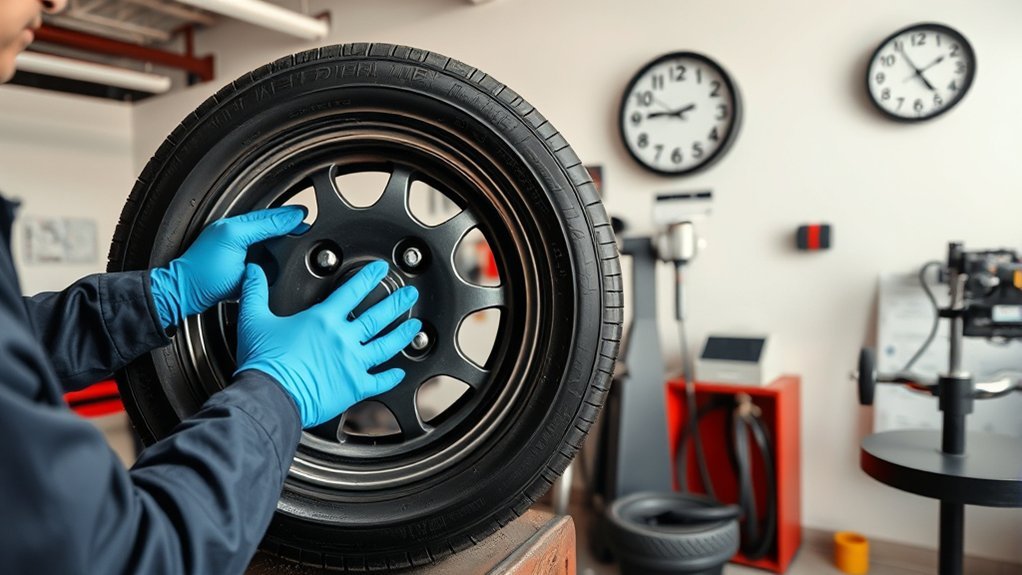
In most cases, tire repair takes 15 to 60 minutes. The fastest option is usually installing a spare tire, which may take 10 to 15 minutes when the spare is inflated and the vehicle is in a safe location. A simple puncture in the tread can often be handled in 15 to 30 minutes, but a proper professional repair usually takes longer because the technician needs to remove the tire from the wheel and inspect the inside.
The important point is this: a fast repair is not always a safe repair. According to the U.S. Tire Manufacturers Association, a proper tire repair requires removing the tire from the rim, inspecting it for hidden damage, filling the puncture injury with a rubber stem or plug, and sealing the inner liner with a patch.
Warning: Do not treat an outside-in plug, aerosol sealant, or a donut spare as a permanent repair. These options can help in an emergency, but the tire still needs professional inspection as soon as possible.
Tire Repair Time by Fix Type
Tire repair time depends on the method used and whether the tire is repairable. Use the timing below as a practical estimate, not a guarantee.
| Fix Type | Typical Time | Best For |
| Spare tire installation | 10 to 15 minutes | Getting safely to a repair shop when the spare is usable. |
| Sealant or inflator kit | 10 to 20 minutes | Temporary mobility for a small tread puncture when the tire still holds some pressure. |
| Plug-only roadside fix | 15 to 30 minutes | Temporary emergency use only; not a proper permanent repair. |
| Professional patch-plug repair | 30 to 60 minutes | Repairable tread punctures after tire removal and internal inspection. |
| Tire replacement | 30 to 90+ minutes | Sidewall damage, worn tread, large punctures, internal damage, or non-repairable tires. |
If you use a tire plug kit, treat it as a short-term emergency tool for small tread leaks only. Drive carefully to a tire professional and ask for a full inspection.
Factors That Affect Tire Repair Time
Your tire repair time depends on more than the size of the nail. The location of the damage, the tire’s condition, the shop queue, the equipment available, and whether the tire must be replaced all affect how long you wait.
Tire Damage Severity
Small punctures in the tread area are usually the fastest repairs. Damage near the shoulder, sidewall, bead, or internal liner takes longer to inspect and often cannot be repaired safely.
Before a technician repairs a tire, the damage should pass these basic checks:
- The puncture is in the repairable tread area, not the sidewall or shoulder.
- The puncture is no larger than 1/4 inch, or about 6 mm.
- The repair will not overlap another repair.
- The tire has enough tread depth and is not worn to the wear bars or 2/32 inch.
- The tire was not driven flat long enough to cause internal damage.
- The tire has no bead damage, exposed cords, bulges, cracking, or severe aging.
The Tire Industry Association says puncture repairs are limited to the center tread area, and tires with shoulder or sidewall damage are not repairable. Bridgestone also lists worn tread below 2/32 inch, punctures larger than 1/4 inch, sidewall or shoulder damage, bead damage, and rubber deterioration as conditions where the tire cannot be repaired.
Shop Workload & Tools
Even a simple puncture can take longer when the shop is busy. High customer volume, seasonal tire changes, bad weather, and missing equipment can all add wait time before the actual repair begins.
| Factor | Effect on Repair Time |
| Shop workload | Longer wait before the vehicle enters the bay. |
| Proper repair tools | Faster demounting, inspection, repair, inflation, and balancing. |
| Tire type | Run-flat, low-profile, performance, or specialty tires may require stricter inspection or replacement. |
| Off-peak timing | Shorter queues when bays and technicians are available. |
Tire construction and tire selection can also affect service time. Some tires are harder to demount, inspect, or approve for repair than others.
Pro Tip: Call ahead before driving to a shop. Ask whether they can inspect the tire now, whether they follow USTMA-style repair procedures, and whether they can replace the tire if repair is not safe.
Patch, Plug, or Replace?
The safest choice depends on where the puncture is, how large it is, and what condition the tire is in.
- Choose a professional patch-plug repair when the puncture is small, straight, in the repairable tread area, and the tire passes internal inspection.
- Use a plug-only repair only as a temporary emergency fix. It may slow a leak, but it does not inspect or seal the inner liner properly.
- Use sealant only as a temporary mobility aid. It can help you reach a service location, but the tire still needs professional cleaning, inspection, and repair or replacement.
- Replace the tire if there is sidewall damage, shoulder damage, a puncture larger than 1/4 inch, overlapping damage, worn-out tread, bead damage, visible bulging, or internal damage from driving flat.
The Michelin tire repair guidance states that repairs must be of the combined plug-and-inside-patch type and that the tire must be removed from the wheel for inspection before repair. That extra work is why a proper repair can take longer than a quick roadside plug.
Also consider the tire’s age, treadwear, and UTQG rating when deciding whether repair is worth it. A repairable puncture in a newer tire may be worth fixing; a puncture in an old, worn, cracked, or mismatched tire may be a better replacement candidate.
[Products Worth Considering]

Wykodra tire plugs provide quick vulcanizing repairs for tubeless tires, helping you seal punctures and get back on the road. The industrial-strength rubber creates a long-lasting, leak-resistant bond and is designed for emergency fixes without removing the tire. Choose between two standard plug sizes with color-matched options for small to larger damage across many vehicles and off-road uses.
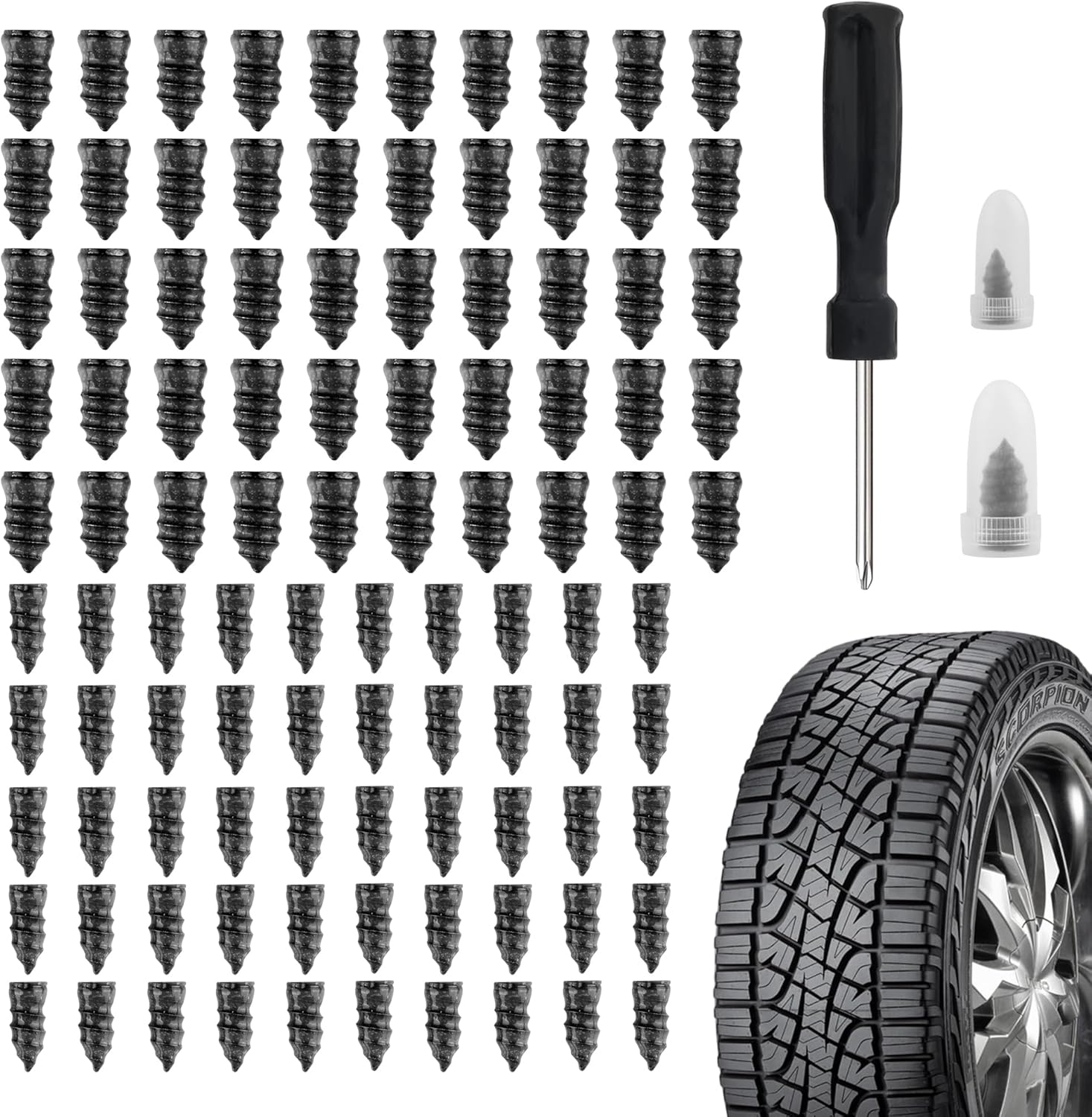
Salior’s tire plug kit provides a fast, reliable self-service fix for punctured or leaking tires without the need for flaring tools. Choose the correct plug size, then screw the nail into the puncture using the included screwdriver for an enhanced seal. The set is durable and convenient for on-the-go maintenance across multiple vehicle types.

Get back on the road fast with this compact tire plug repair kit for tubeless tires. It includes self-vulcanizing rubber plugs, T-handle rasp and insert tools, and a storage box that fits in your glove compartment for easy access. Also included are a 4-way valve steam tool set with valve cores and caps for added roadside convenience.
What Happens During a Pro Repair

A professional tire repair is more than finding the nail and sealing the hole. The technician should inspect the tire inside and out before deciding whether it can safely go back on the road.
- Locate the leak. The technician checks air pressure, valve stem condition, tread area, and the source of air loss.
- Remove the tire from the wheel. This allows the inner liner and casing to be inspected for hidden damage.
- Inspect the injury. The technician checks puncture size, angle, location, tread depth, previous repairs, and signs of run-flat damage.
- Prepare the repair area. If the tire is repairable, the inside surface is cleaned and buffed according to repair-material instructions.
- Install the proper repair unit. A rubber stem or plug fills the puncture channel, and an inside patch seals the inner liner.
- Reinstall, inflate, and balance. The tire is mounted back on the wheel, inflated to the correct pressure, checked for leaks, balanced, and reinstalled with proper torque.
This process is why a real repair commonly takes 30 to 60 minutes. It may feel slower than a roadside plug, but it gives the technician a chance to catch unsafe damage before you drive away.
Quick Fixes for a Flat Tire
If you need to get out of a parking lot or off the roadside, a quick fix can help. The key is knowing which fixes are temporary and when to stop driving.
- Tire sealant: Sealant may take 10 to 20 minutes to use and can help with small tread punctures. Fix-a-Flat says the tire should be inspected and repaired within 3 days or 100 miles, whichever comes first.
- Tire plug: A plug may take 15 to 30 minutes, especially with a tire repair plug kit, but it should be treated as temporary until a professional inspects the tire from the inside.
- Spare tire: A spare tire swap may take 10 to 15 minutes when you have the right tools and a safe work area. A reliable spare tire kit can make the process faster.
- Inflator: If the leak is slow, an inflator can restore enough pressure to reach a nearby shop. Stop if the tire loses pressure again quickly.
Note: Tell the tire shop if you used sealant or drove on the tire while it was flat. Sealant must be cleaned out, and driving flat can cause internal damage that is not visible from the outside.
[Products Worth Considering]

Rhino USA’s 86-piece tire repair kit provides everything you need for quick, emergency flat repairs, including a reamer and plug insertion tool plus 60 reusable tire plugs. The heavy-duty, metal-handled design helps you fix punctures from nails and screws on tubeless tires for cars, trucks, motorcycles, ATVs, UTVs, and more. A high-visibility compact case stores easily for on-the-go use, with illustrated instructions to help you complete repairs with confidence.

KEVWR self-service tire repair nails are made to firmly fix punctures with strong bite and reliable sealing, helping prevent water from entering the wound. The spiral rubber screws are easy to insert without removing the tire, providing a simple DIY repair for many vehicle and tire types. Suitable for cars, motorcycles, trucks, bikes, buses, and agricultural tires with two size options for different puncture nails.

AUTOWN’s 68-piece tire repair kit helps you fix punctures and plug flats quickly and effectively. It includes a T-handle and spiral probe tool for easy insertion, while the steel patch and plug materials are designed for strong adhesion and long-lasting airtight performance. The compact case makes it convenient for roadside repairs across a wide range of vehicles.
When Tire Repair Isn’t Safe
Some tire damage is not safe to repair because it weakens the tire structure. In those cases, replacement is safer than saving time with a patch.
| Damage or Condition | Repairable? | Best Action |
| Sidewall puncture, cut, or bulge | No | Replace the tire. |
| Shoulder or belt-edge damage | No | Replace the tire. |
| Puncture larger than 1/4 inch or 6 mm | No | Replace the tire. |
| Overlapping repairs or previous improper repair | No | Replace the tire. |
| Tread at wear bars or 2/32 inch | No | Replace the tire. |
| Small tread puncture within repair limits | Usually | Have a technician inspect and perform a patch-plug repair. |
A GlueTread Tire Repair Kit may be useful for certain off-road ATV or UTV situations, but sidewall repair is not considered a safe permanent road repair for normal passenger vehicle tires.
How to Speed Up Tire Repair
You can speed up tire repair by preparing before you arrive and giving the shop the details they need.
- Check the damage location. If it is in the sidewall or shoulder, expect replacement instead of repair.
- Do not remove the nail unless you are ready to control the air leak. Pulling it out can cause the tire to deflate faster.
- Check tire pressure. If pressure is very low, avoid driving except to move to a safer nearby spot.
- Call ahead. Ask whether the shop can inspect the tire now and whether they have your tire size in stock if replacement is needed.
- Bring useful information. Tell the technician how far you drove, whether the tire was flat, whether TPMS warned you, and whether you used sealant.
- Carry emergency tools. A tire gauge, inflator, gloves, flashlight, and tubeless tire repair kit can help with temporary roadside decisions.
The fastest safe repair is the one that starts with the right diagnosis. A tire that is not repairable should be replaced, not patched quickly and sent back on the road.
Spare Tires, Run-Flat Tires, and Sealants
A spare tire can save time, but it is usually not the end of the repair. Temporary donut spares are designed to get you to a service location, not to replace your normal tire. AAA recommends treating temporary spares as short-distance, low-speed solutions, commonly no more than 50 miles and 50 mph unless your owner’s manual gives different instructions.
Run-flat tires are different. They may allow limited driving after pressure loss, but the exact speed and distance limit depends on the tire and vehicle manufacturer. After any run-flat event, have the tire inspected before assuming it can be repaired.
Sealants can also complicate repair. If you used a temporary seal, tell the shop before service starts. The technician may need to clean the inside of the tire before deciding whether a proper repair is possible.
[Products Worth Considering]

TireJect Off-Road Tire Sealant Kit provides 5-in-1 sealing to help fix tread punctures up to 3/8", sidewall punctures up to 3/8", bead leaks, slow leaks, and minor dry rot on low-speed tires. It permanently seals with liquid rubber, recycled tire particles, and Aramid fibers, making it ideal for flats caused by thorns, nails, and screws. The included dispensing cap attaches to the valve stem for a no-mess installation, along with a metal valve core remover tool and valve stem cap. This kit is for off-road use only.

CKAuto Universal Tire Repair Kit provides a complete emergency solution for fixing flat tire punctures using plug-style repairs without removing the tire from the rim. The kit includes insertion/probe tools, repair plugs, lubricant, valve accessories, and a convenient carry bag for quick roadside use. Designed for tubeless tires across cars, SUVs, trucks, motorcycles, RVs, and more, it’s easy enough for anyone to perform a proper repair.

This flat tire repair kit lets you handle punctures quickly with two plug sizes for different damage, helping restore drivability on the spot. It includes T-handle insertion and spiral probe tools plus lubricant and a utility knife, all packed in a compact bag for easy carry. Universal compatibility makes it suitable for tubeless tires across cars, motorcycles, ATVs, trucks, jeeps, and more.
Frequently Asked Questions
How long can I drive on a patched tire?
A properly repaired tire can often stay in service for a long time, but there is no guaranteed mileage number. The tire must be repaired correctly, have enough tread, hold pressure, and remain free of new damage. Check pressure regularly and have the tire inspected if it leaks again, vibrates, bulges, or shows uneven wear.
Can I drive 2 hours with a nail in my tire?
No, not safely. A nail can shift, leak faster, or cause pressure loss while you drive. Check the tire pressure, avoid high speeds, and go directly to a tire shop if the tire is still holding air. If pressure is dropping, stop and use a spare, inflator, roadside assistance, or towing.
Can I drive 2 miles with a flat tire?
You should not drive 2 miles on a fully flat standard tire. Driving flat can destroy the tire and damage the wheel. If your current location is unsafe, move slowly only as far as needed to reach a safer stopping spot, then use a spare, call roadside assistance, or arrange a tow.
Can I drive 200 miles with Fix-a-Flat?
No. Fix-a-Flat says the tire should be inspected and repaired within 3 days or 100 miles, whichever comes first. It is a temporary emergency product, not a permanent tire repair. Tell the tire technician that sealant was used.
Is a tire plug permanent?
A plug by itself is not considered a proper permanent repair for passenger and light truck tires. A proper repair uses a plug or stem to fill the puncture injury and an inside patch to seal the inner liner after the tire is removed and inspected.
Can sidewall tire damage be repaired?
For normal road use, sidewall tire damage should not be repaired. The sidewall flexes constantly and carries load, so a patch or plug cannot restore the tire’s full strength. Replace the tire if it has a sidewall puncture, cut, crack, or bulge.
Conclusion
Tire repair is usually a short stop, but the safest fix is not always the fastest one. A spare swap may take 10 to 15 minutes, a simple puncture repair may take 15 to 30 minutes, and a full professional patch-plug repair often takes 30 to 60 minutes. If the damage is in the sidewall, shoulder, too large, overlapping, or paired with worn tread, replacement is the safer choice. Handle the flat quickly, avoid driving on low pressure, and let a trained tire professional decide whether the tire can safely return to service.
Sources
- U.S. Tire Manufacturers Association — Tire Repair Basics — proper puncture repair method, tire removal, inspection, plug/stem plus patch, and repair limits.
- Tire Industry Association — Tire Repair — center tread repair limits, 1/4-inch puncture limit, sidewall/shoulder restrictions, overlap rules, and tread-depth limits.
- Bridgestone Americas — Tire Repair — when a tire cannot be repaired and why plug-and-patch is the proper repair method.
- Michelin USA — Can My Tire Be Repaired? — combined plug-and-inside-patch repair requirements and sidewall damage guidance.
- Fix-a-Flat FAQ — How Long Does Fix-a-Flat Work? — 3 days or 100 miles temporary-use guidance.
- AAA Club Alliance — How Far Can You Drive on a Spare Tire? — temporary spare tire speed and distance guidance.