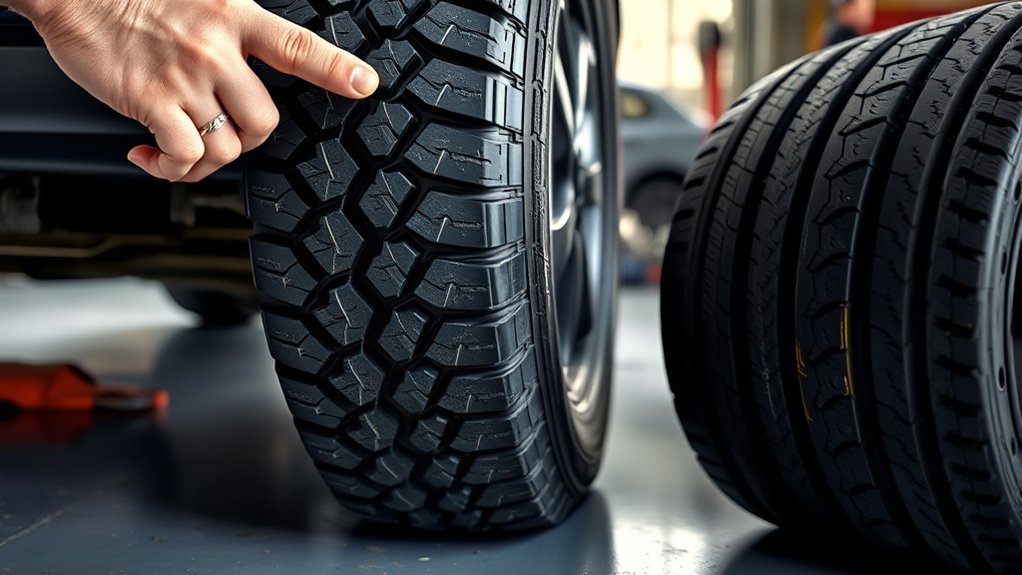
H/T on a tire stands for Highway Terrain. It tells you the tire is built mainly for paved roads, daily commuting, highway driving, and light truck or SUV use where comfort, low road noise, steady handling, and tread life matter more than aggressive off-road grip.
Quick Answer
H/T means Highway Terrain. An H/T tire is best for drivers who spend most of their time on highways, city streets, and other paved roads. It usually rides quieter and smoother than an A/T tire, but it is not the best choice for regular mud, rocks, deep snow, or rough trails.
Key Takeaways
- H/T stands for Highway Terrain, a tire category made mainly for paved-road driving.
- H/T tires usually focus on comfort, low road noise, stable highway handling, and fuel-efficient rolling resistance.
- A/T tires are better for mixed pavement, gravel, dirt, and light trails, but they often ride louder and firmer.
- Always match the original equipment tire size, load index, speed rating, and load range before buying replacement H/T tires.
- For frequent snow or ice, look beyond the H/T label and check for the Three-Peak Mountain Snowflake symbol or a dedicated winter tire.
What H/T Means on a Tire
H/T, sometimes written as HT, means Highway Terrain. You will usually see it in the tire model name or category, especially on tires for SUVs, crossovers, pickups, and light trucks.
The label describes the tire’s intended use. H/T tires are designed for on-road driving, not aggressive off-road use. Their tread patterns usually have smaller tread blocks, tighter spacing, and shallower voids than all-terrain or mud-terrain tires. That design helps reduce road noise, improve steering stability, and support a smoother ride on pavement.
Manufacturers use different names and technology, but the goal is similar. For example, Toyo describes its highway tire category as built for comfortable, fuel-efficient highway driving, while Continental describes its TerrainContact H/T as a highway-terrain tire for light trucks and SUVs with quiet road noise and on-road manners.
NHTSA’s TireWise guidance also makes one important point clear: the safest replacement tire is not just the right category. It must also match the size, load capacity, speed rating, and safety information required for your vehicle.
HT Vs. A/T Tires: Which Is Better For You?
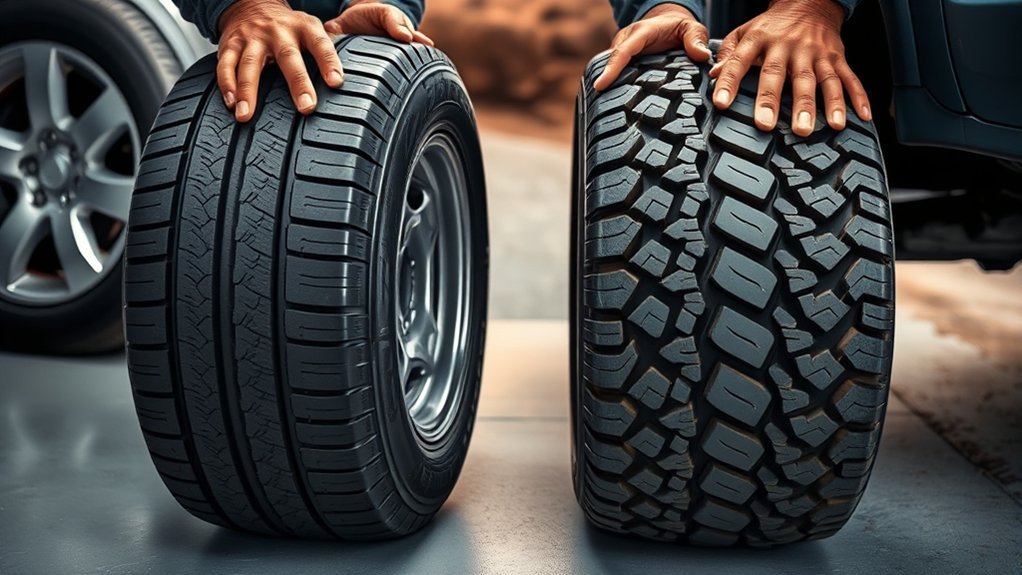
Choose H/T tires if most of your driving happens on highways, city streets, and paved suburban roads. They make the most sense when you want quiet road manners, good ride comfort, predictable wet and dry handling, and long tread life for everyday driving.
Choose A/T tires if you regularly drive on gravel, dirt roads, job sites, grass, forest roads, or light trails. A/T tires use a more open and aggressive tread pattern to bite into loose surfaces, but that extra capability can bring more road noise, more rolling resistance, and a firmer ride on pavement.
Note: The letters H/T, A/T, and M/T describe the tire’s terrain category. They do not replace the required tire size, load index, speed rating, or load range listed on your door placard or in your owner’s manual.
| Tire Type | Best For | Main Tradeoff |
| H/T | Highways, city streets, commuting, road trips, light truck and SUV road use | Limited grip in mud, rocks, deep snow, and rough trails |
| A/T | Mixed pavement, gravel, dirt, light trails, occasional off-road driving | Usually louder and less efficient than H/T tires |
| M/T | Mud, rocks, ruts, and serious off-road use | Noisier, heavier, rougher on pavement, and often faster-wearing on road |
[Products Worth Considering]

Steelman white tire marking crayons provide high-contrast, semi-permanent marks for repairing and inspecting tires and equipment. They write on wet or dry, smooth or coarse surfaces including rubber, metal, glass, and wood, making them ideal for puncture location and damage outlining. The lead- and zinc-free crayons resist weather and fading yet wipe away when you no longer need the marks.
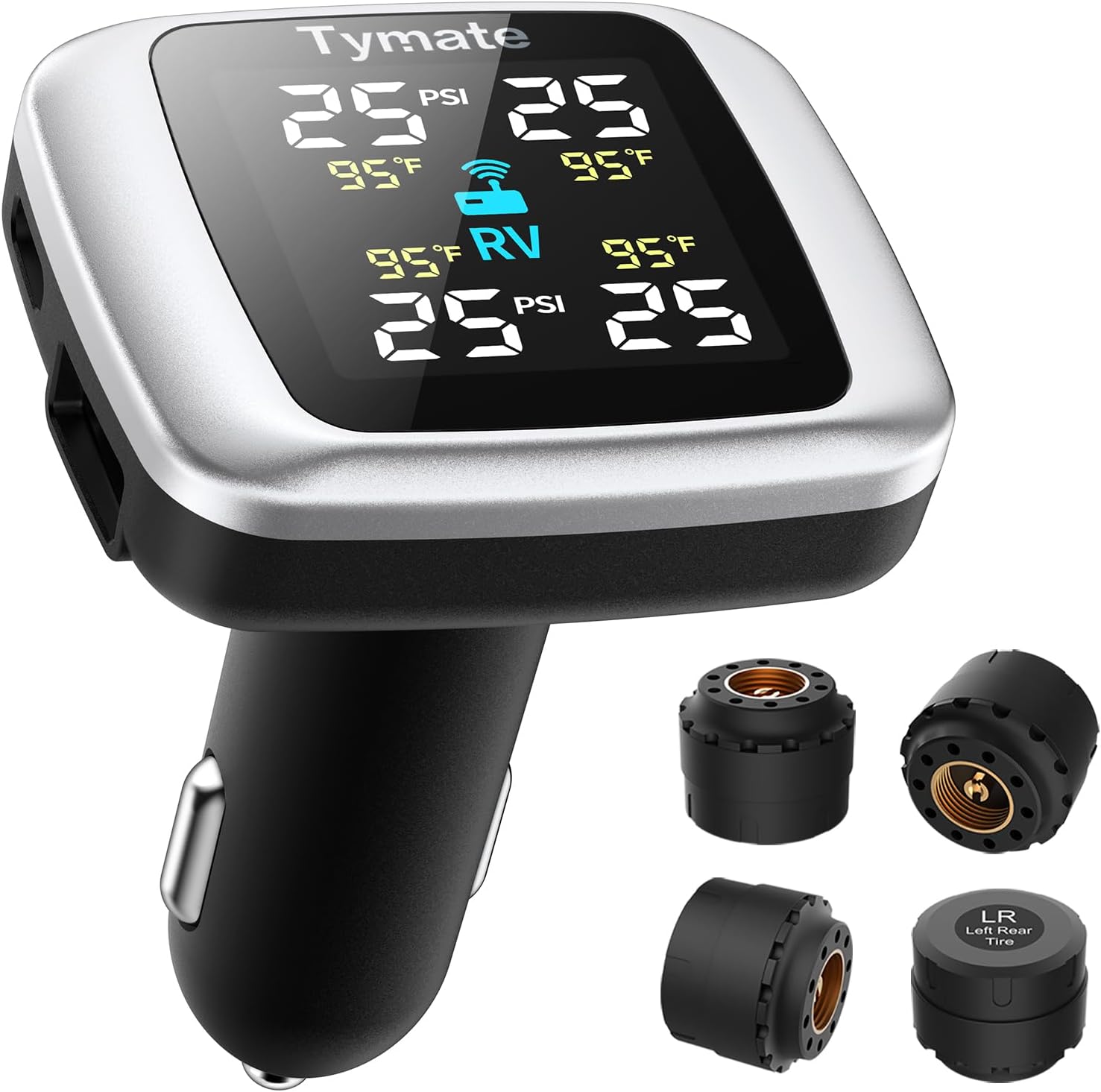
Tymate TM7 is a wireless tire pressure monitoring system that delivers real-time pressure and temperature readings for safer driving. It includes four external sensors, a bright color LCD display with adjustable backlight, and six alarm modes for high/low pressure, fast leakage, high temperature, and sensor signal or battery issues. The system covers a wide 0–144 PSI range and plugs into your vehicle’s cigarette lighter socket for quick DIY setup.

The TYAMATE TM8 solar-powered wireless TPMS delivers real-time tire pressure and temperature monitoring with six alarm modes for safer driving. A vibrant color LCD display shows readings clearly while windshield mounting keeps it hands-free and easy to read. With a wide 0–87 PSI range, strong 433.92 MHz signal transmission, and quick sensor pairing, it’s ideal for RV, sedan, SUV, MPV, and truck use.
What H/T Tires Are Designed To Do
H/T tires are designed to make a truck, SUV, or crossover feel calm and controlled on pavement. Their tread pattern is usually less aggressive than an A/T tire, which helps the tire roll smoothly and reduces the humming sound you may hear from larger tread blocks.
- Improve paved-road comfort: H/T tires are built for smoother road contact and less vibration.
- Reduce road noise: Tighter tread spacing can make highway driving quieter.
- Support predictable handling: Many H/T tires use stable tread blocks and sidewall construction for steady steering response.
- Help fuel economy: Road-focused tread patterns often reduce rolling resistance compared with more aggressive off-road designs.
- Provide everyday wet and dry traction: Most modern H/T tires include grooves and siping for rain, light slush, and normal paved-road use.
That does not mean every H/T tire performs the same way. A premium H/T tire may stop shorter in rain, ride quieter, or last longer than a budget option in the same size. Read the tire’s warranty, UTQG information, service description, and manufacturer test notes before buying.
How H/T Tires Perform On Pavement
On pavement, H/T tires usually feel more refined than A/T or M/T tires. They are made for the kind of driving most commuters actually do: merging onto highways, changing lanes, braking in rain, and driving for long stretches without a loud tread hum.
On dry roads, an H/T tire should feel stable and predictable when it is properly inflated and matched to the vehicle. In rain, the tread channels help move water away from the contact patch, although wet braking still depends heavily on the specific tire model, tread depth, vehicle weight, and road surface.
H/T tires can also help with ride comfort. Because the tread is less open and aggressive than an A/T tire, there is usually less block movement and less impact noise at highway speeds. That is one reason H/T tires are common original-equipment or replacement choices for family SUVs, crossovers, and light-duty pickups.
A good H/T tire is not trying to be the toughest trail tire. It is trying to make everyday paved-road driving quieter, steadier, and more efficient.
HT Vs. A/T Tires: Key Differences
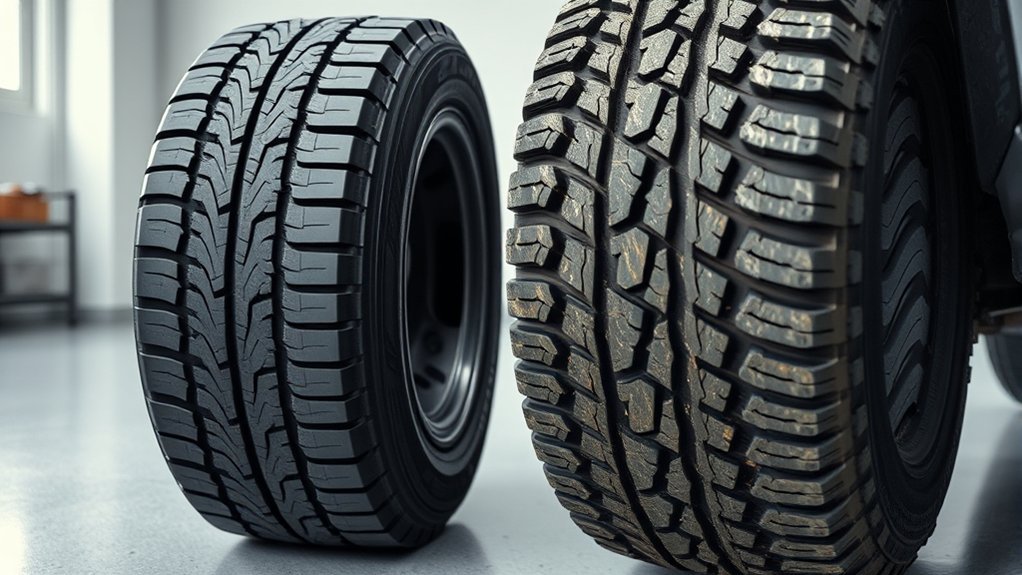
The biggest difference between H/T and A/T tires is tread design. H/T tires use a more road-focused tread. A/T tires use larger tread blocks, deeper grooves, and more open voids to find grip on loose ground.
That tread difference affects daily driving. H/T tires usually win for road comfort, quietness, and efficiency. A/T tires usually win for gravel, dirt, mud, and rougher surfaces. If your SUV or truck spends 90% of its time on pavement, H/T is usually the cleaner match. If your weekends regularly include unpaved roads or job sites, A/T may be worth the tradeoff.
Pro Tip: Do not buy A/T tires only for the rugged look if you drive almost entirely on pavement. The extra tread aggression can add noise, weight, and rolling resistance without giving you much real-world benefit.
[Products Worth Considering]

The 22800 wheel stud installer makes replacing wheel studs quick and secure, saving time and effort during tire service. It uses a ratchet or impact wrench to pull new studs firmly into place, helping when existing studs are too long. Compatible with most automotive wheels and light-duty truck wheel studs, it’s designed for easy, tool-assisted installation.
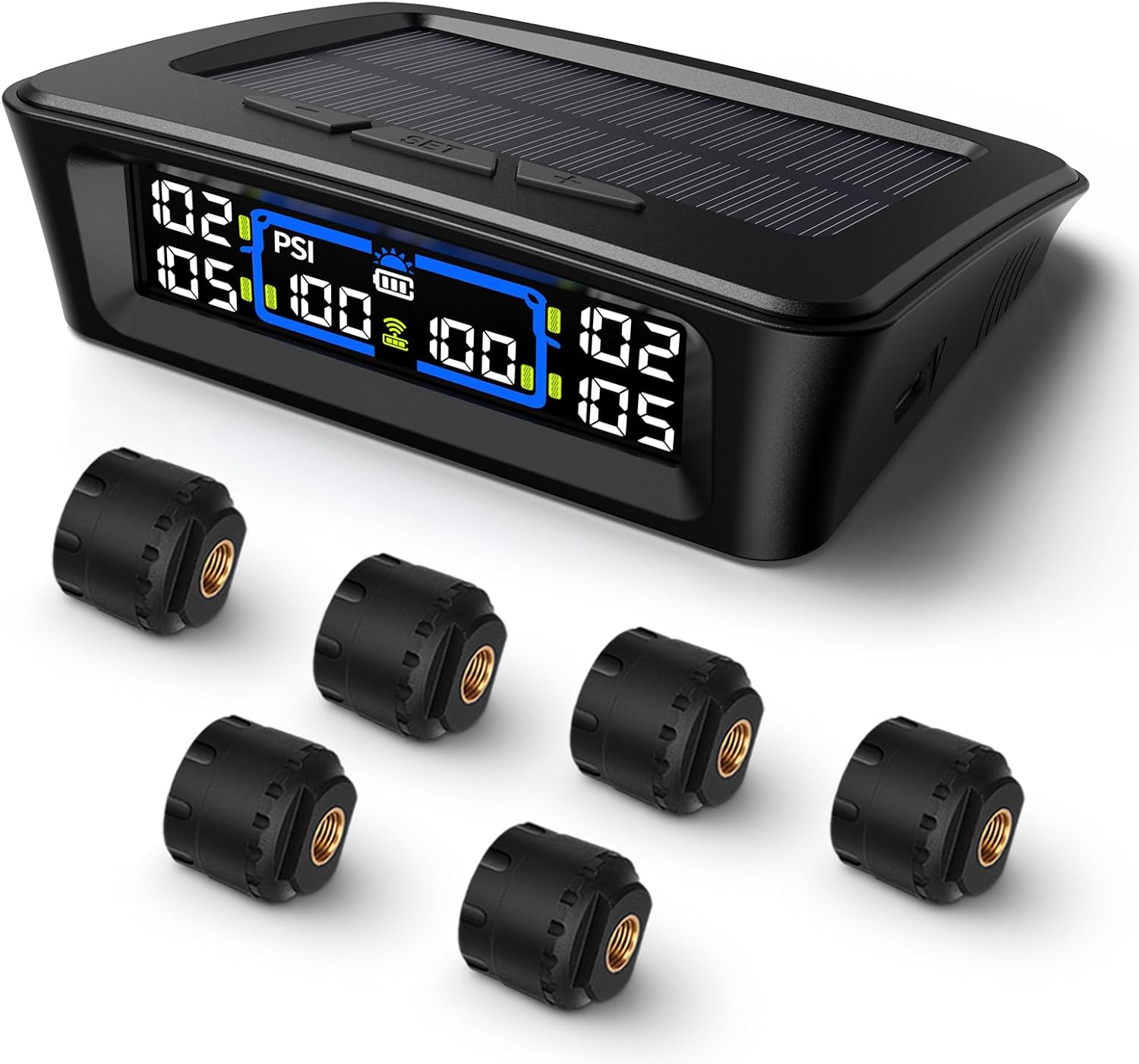
The Tymate TM12 RV TPMS delivers real-time tire pressure and temperature monitoring with a stable 433Hz display for safer long-distance driving. It supports simultaneous monitoring across vehicle and trailer zones, includes six alarm modes for pressure, temperature, leakage, battery, and signal loss, and features easy DIY installation with auto calibration. Power is supplied via USB-C charging or solar recharging, with a wide 0–144 PSI range and up to 50 ft signal coverage for RVs and towable trailers.

ETENWOLF’s tire pressure gauge helps you quickly and accurately check tire PSI across cars, trucks, motorcycles, bikes, and more. It’s manually calibrated to ANSI B40.1 Grade A for reliable readings, includes a large glow dial for easy nighttime viewing, and features a 360-degree swivel chuck for use at any valve angle. The gauge also works consistently in extreme hot or cold weather.
H/T Tire Sizes, Load Ratings, And Fitment
Before choosing an H/T tire, check the tire information placard on the driver’s door jamb and the owner’s manual. The H/T label alone is not enough. You need the correct size, load index, speed rating, and, for light trucks, the correct load range.
H/T Size Types
H/T tires may appear in several sizing formats:
- P-metric sizes, such as P265/70R17, are common on passenger-oriented SUVs, crossovers, and light-duty pickups.
- Metric sizes without “P”, such as 265/70R17, are also common on SUVs and trucks.
- LT-metric sizes, such as LT265/70R17, are made for heavier light-truck use, towing, hauling, and higher load demands.
- Flotation sizes, such as 31×10.50R15, are more common on older trucks and off-road-oriented fitments.
The safest starting point is the original tire size and service description. Changing size can affect speedometer accuracy, gearing feel, braking, stability control, fender clearance, and ride quality.
Load Index, Load Range, And Speed Rating
The load index tells you how much weight the tire can carry when used correctly. The speed rating tells you the tire’s maximum speed capability under specified test conditions. Together, they form the tire’s service description, such as 111T or 116H.
Goodyear’s load index and speed rating guide explains that the load index communicates how many pounds a tire can safely carry, while the speed rating is tied to maximum speed capability. USTMA tire safety guidance also lists size, speed rating, and load index as key replacement-tire considerations.
For LT tires, you may also see a load range, such as C, D, or E. This is especially important for trucks that tow or haul. Never replace an LT tire with a lower-capacity option just because it is cheaper or quieter.
Warning: Do not install tires with a lower load index, load range, or speed rating than your vehicle requires unless the vehicle manufacturer or a qualified tire professional confirms it is safe for that exact application.
Fitment Considerations
Correct fitment protects more than the tires. It also helps your braking, steering, suspension, traction control, and Tire Pressure Monitoring System work as intended.
- Match the factory tire size unless you have verified a safe alternate size.
- Use a load index and load range that meet or exceed the vehicle requirement.
- Match or exceed the required speed rating unless your owner’s manual allows a different seasonal tire rating.
- Check wheel width and diameter compatibility.
- Confirm clearance at full steering lock and over bumps.
- Use the recommended cold inflation pressure from the vehicle placard, not the maximum pressure printed on the tire sidewall.
When H/T Tires Make The Most Sense
H/T tires make the most sense when your truck, SUV, or crossover is used mostly like a road vehicle. They are a practical choice for commuting, family travel, highway miles, delivery routes, and light-duty work where paved-road control matters more than trail grip.
Daily Highway Driving
If you spend a lot of time at highway speed, H/T tires are often the most comfortable option. The tread pattern is built to reduce noise and keep the vehicle stable in a straight line. This can make long drives less tiring than driving on a more aggressive A/T or M/T tire.
Comfort And Quiet Ride
H/T tires are a strong choice when cabin comfort matters. Their road-focused tread helps reduce vibration and tread slap, especially on smooth pavement. That makes them useful for family SUVs, commuter crossovers, and pickups that rarely leave the road.
Light Truck Road Use
For light trucks used mainly on pavement, H/T tires can provide the right mix of comfort, durability, and load capability. Just make sure the tire’s load index or LT load range matches your towing and hauling needs.
When H/T Tires Are Not The Best Choice
H/T tires are not ideal for every driver. Choose something more aggressive if your driving includes frequent mud, sharp rocks, deep ruts, construction sites, farm roads, or rough trails.
You should also think carefully before using standard H/T tires for harsh winter driving. Some H/T tires have M+S markings, but M+S is not the same as a severe snow rating. For regular packed snow, mountain roads, or icy winter conditions, look for the Three-Peak Mountain Snowflake symbol or a dedicated winter tire. Continental’s winter tire marking guide explains that the Three-Peak Mountain Snowflake is a more stringent winter certification than basic M+S marking.
How To Choose The Right H/T Tire
Use this checklist before buying:
- Start with the vehicle placard: confirm the factory size, load index, speed rating, and inflation pressure.
- Match your real driving: choose H/T for mostly pavement, A/T for mixed terrain, and M/T for serious off-road use.
- Check wet traction: if you drive in heavy rain, compare wet braking and traction ratings.
- Check winter needs: if snow is common, look for 3PMSF or consider dedicated winter tires.
- Consider towing and hauling: light trucks may need LT-rated tires with the correct load range.
- Compare warranties carefully: mileage warranties vary by brand, model, size, and rotation history.
- Read current owner feedback: focus on noise, wet grip, tread life, and ride comfort in your vehicle type.
[Products Worth Considering]
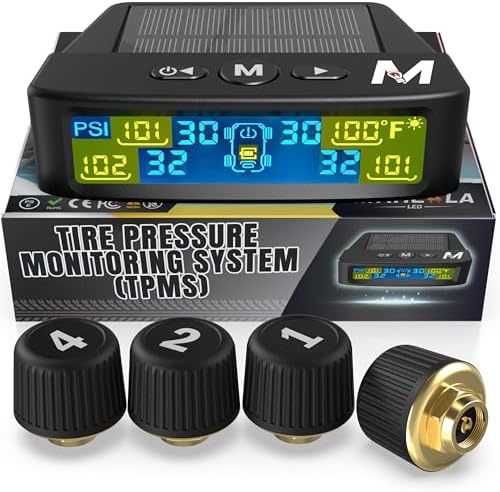
Marcala’s TPMS set of four sensors helps you monitor tire pressure and temperature in real time while driving, with updates every second. The bright color LCD uses auto-dimming for easy viewing, powered by dual solar and USB charging, and offers six alarm modes. Built for trailers, RVs, campers, trucks, and towing setups, the sensors support monitoring 1-4 wheels up to 98 PSI with IP67 waterproof protection.

Accurately measure tire tread depth with a calibrated gauge marked from 0 to 1 inch in 1/32 inch increments. The color-coded bar helps you quickly identify tread condition ranges, supporting safe driving for trucks, motorcycles, automobiles, and passenger vehicles.

Measure tire tread depth quickly and accurately with this LUMITECO dial gauge that reads in 1/32" increments up to 14/32". The color-coded green/yellow/red zones make it easy to judge tire wear and know when replacement is needed. A rugged, compact design with a protective pouch helps keep the gauge ready for use on cars, trucks, motorcycles, and more.
How To Maintain H/T Tires
H/T tires last longer and perform better when they are maintained correctly. Check cold tire pressure at least monthly, rotate tires on the schedule in your owner’s manual, and inspect tread depth before long trips.
Uneven wear can point to underinflation, overinflation, worn suspension parts, or poor alignment. If the vehicle pulls, vibrates, or wears one shoulder faster than the rest of the tread, have it inspected before the tire damage becomes permanent.
Frequently Asked Questions
Should I get H/T or A/T tires?
Get H/T tires if you drive mostly on highways, city streets, and paved roads and want a quieter, smoother, more efficient ride. Get A/T tires if you regularly drive on gravel, dirt, job sites, or light trails and are willing to accept more road noise and a firmer ride.
Are H/T tires good in the snow?
Some H/T tires can handle light snow, especially if they carry an M+S marking, but they are not automatically built for severe winter conditions. If you often drive in packed snow, mountain snow, or ice, look for the Three-Peak Mountain Snowflake symbol or use dedicated winter tires.
Which speed rating is better, H or T?
H is a higher speed rating than T, but that does not automatically make it the better choice for every vehicle. The best speed rating is the one that meets or exceeds your vehicle manufacturer’s requirement. Check the tire placard, owner’s manual, and original tire service description before changing ratings.
What is the difference between H/T and LT tires?
H/T describes the tire’s terrain category: Highway Terrain. LT describes the tire’s service type: Light Truck. A tire can be both, such as an LT-size H/T tire. LT tires are built for heavier load demands, towing, and hauling, while P-metric or standard metric H/T tires are often used for lighter-duty SUVs, crossovers, and pickups.
Can I use H/T tires off-road?
You can use H/T tires on mild dirt roads, packed gravel, or a dry campsite road, but they are not designed for regular mud, rocks, ruts, or rough trails. If off-road driving is part of your normal routine, an A/T tire is usually the better match.
Do H/T tires last longer than A/T tires?
They often can, especially when used mostly on pavement, because the tread is less aggressive and usually rolls more evenly on road surfaces. Still, tread life depends on the specific tire model, driving style, vehicle weight, alignment, rotation schedule, inflation pressure, and road conditions.
Conclusion
H/T means Highway Terrain, and it is the right tire category for many SUV, crossover, pickup, and light-truck drivers who spend most of their time on paved roads. If you want quiet highway manners, steady handling, good ride comfort, and practical tread life, H/T tires are often the smart choice.
Do not choose by the H/T label alone, though. Match the correct size, load index, speed rating, and load range for your vehicle. If you need regular off-road grip, choose A/T or M/T. If you need winter confidence, look for 3PMSF-rated tires or dedicated winter tires. The best tire is the one that matches both your vehicle and the roads you actually drive.
Sources
- NHTSA TireWise — tire safety ratings, sidewall information, and replacement-tire safety basics.
- U.S. Tire Manufacturers Association Tire Care & Safety — tire size, speed rating, load index, maintenance, and replacement guidance.
- Goodyear Load Index and Speed Rating Guide — what load index and speed rating mean when buying tires.
- Bridgestone Tire Speed Rating Guide — how speed ratings work and why they matter.
- Toyo Tires Highway Tire Category — manufacturer description of highway tires for comfort, efficiency, and long drives.
- Continental Winter Tire Markings — M+S and Three-Peak Mountain Snowflake marking guidance.