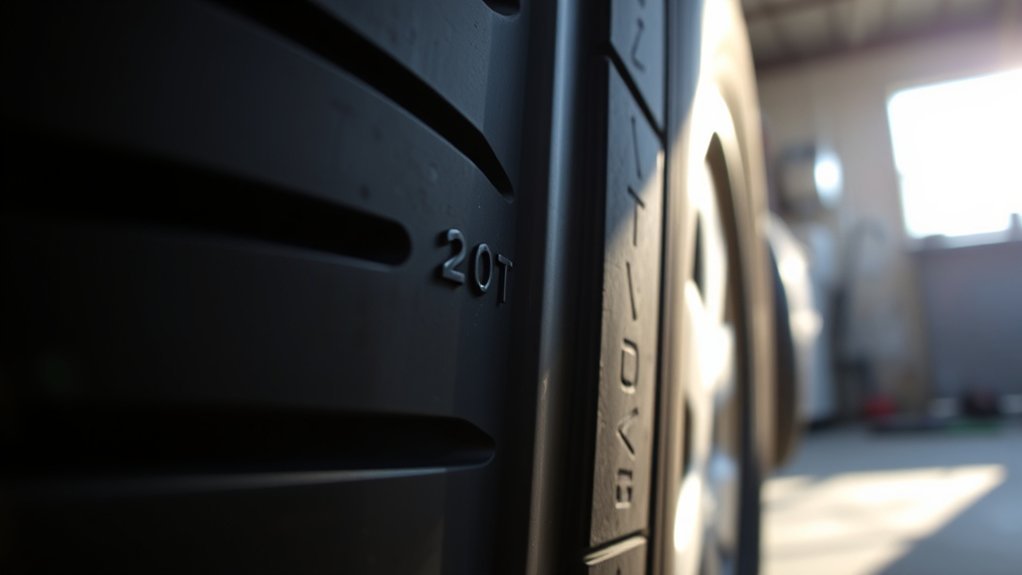
Checking tire age is one of the fastest tire-safety checks you can do at home. The key is the DOT Tire Identification Number (TIN) molded into the sidewall. Once you find the final four digits, you can tell the tire’s manufacture week and year, then compare its age with tire-condition checks and your vehicle or tire manufacturer’s guidance.
Quick Answer
To check tire age, find the DOT code on the tire sidewall and read the last four digits. The first two digits show the production week, and the last two show the year. For example, “2319” means the tire was made in the 23rd week of 2019.
Key Takeaways
- The tire manufacture date is in the last four digits of the DOT Tire Identification Number.
- Check both sidewalls; the full DOT/TIN may appear on only one side of the tire.
- A tire can age even when it has plenty of tread, especially on spares, RVs, trailers, collector cars, and low-mileage vehicles.
- Many tire makers recommend professional inspection after about five years of service and replacement by 10 years from manufacture, but always follow the most conservative vehicle or tire manufacturer guidance.
- Replace or professionally inspect tires sooner if you see cracks, bulges, exposed cords, vibration, air loss, uneven wear, or tread at 2/32 inch.
At a Glance
| Time Required | 3–5 minutes per tire |
| Difficulty | Easy for visible sidewalls; moderate if the full code is on the inner sidewall |
| Tools Needed | Flashlight, phone camera, tire pressure gauge, and optional tread depth gauge |
| Cost | Free if you only read the code; a basic tread depth gauge usually costs a few dollars |
Where to Find the DOT Date Code on Your Tires
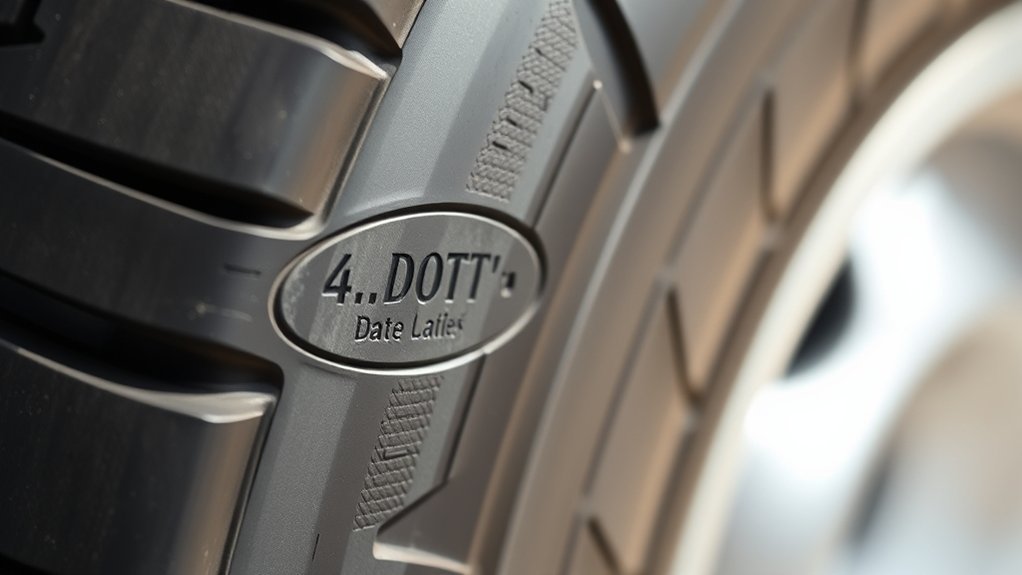
Look for the letters DOT molded into the tire sidewall. The full code is officially called the Tire Identification Number, or TIN. Under U.S. tire identification rules, the date code is the final four numerical symbols and identifies the week and year of manufacture.
The full DOT/TIN may not be visible on both sidewalls. If you only see a shorter code on the outside, check the inner sidewall with a flashlight or phone camera. Do not crawl under a vehicle or remove a wheel unless the vehicle is safely supported; if you cannot see the full code safely, ask a tire shop to check it.
Warning: Tire age is only one safety factor. A newer tire can still be unsafe if it has cracks, bulges, puncture damage, exposed cords, severe uneven wear, vibration, or repeated air loss.
How to Check Tire Age Step by Step
- Park on a flat, safe surface. Turn the steering wheel to make the front sidewalls easier to see.
- Find the DOT letters. Scan the sidewall for “DOT,” then follow the letters and numbers after it.
- Check both sidewalls. If the outside code does not end with four numbers, the full code may be on the inside sidewall.
- Read the last four digits. These are the date code, such as 2319, 0921, or 3520.
- Decode the date. The first two digits are the manufacturing week, and the last two digits are the year.
- Compare the age with condition. Use the date along with tread depth, cracking, bulges, pressure loss, vibration, and your manufacturer’s replacement guidance.
Note: The DOT symbol means the tire manufacturer certifies the tire conforms to applicable Federal Motor Vehicle Safety Standards. It is not an expiration date by itself.
Decoding the DOT Code: Week and Year Format
The date code is simple once you know which four digits to read. The first two digits identify the manufacturing week, from 01 through 52 or sometimes the final short week of the year. The last two digits identify the year.
| DOT Date Code | What It Means | Plain-English Reading |
|---|---|---|
| 0619 | 6th week of 2019 | Made in early February 2019 |
| 2319 | 23rd week of 2019 | Made in early June 2019 |
| 0921 | 9th week of 2021 | Made in early 2021 |
| 3520 | 35th week of 2020 | Made in late summer 2020 |
If you see a three-digit week-and-year code, the tire was made before 2000. A tire that old should be removed from service because of age, even if the tread looks deep.
Why Tire Age Matters for Safety and Performance
Tires age because rubber and internal materials change over time from heat, sunlight, oxygen, ozone, storage conditions, load, inflation pressure, road impacts, and use. Aging can be hard to see from the outside, so a tire can look acceptable but still deserve closer inspection.
Age matters most on tires that do not wear out quickly. That includes spare tires, RV tires, trailer tires, collector-car tires, seasonal vehicles, and vehicles driven very few miles each year. These tires may have plenty of tread left while the rubber and internal structure continue to age.
NHTSA reported 511 motor vehicle traffic fatalities in tire-related crashes in 2024, which is why tire pressure, tread, damage, and age checks all matter.
How Old Is Too Old for Tires?
There is no single age that proves every tire is unsafe. Service life depends on the tire, vehicle, climate, storage, maintenance, load, inflation, and driving conditions. That said, many vehicle and tire manufacturers give age-based guidance.
- After about five years of service: have tires inspected at least annually by a trained tire professional, especially if they still look usable.
- Six to 10 years: pay closer attention to manufacturer guidance, tire condition, and performance changes. NHTSA notes that some manufacturers recommend replacement in this range regardless of treadwear.
- At 10 years from manufacture: many major tire makers recommend replacement as a precaution, including spare tires, even if the tire appears usable.
Pro Tip: When two sources disagree, follow the most conservative guidance from your vehicle owner’s manual, the tire manufacturer, and your tire professional.
How to Inspect Tires for Other Signs of Wear
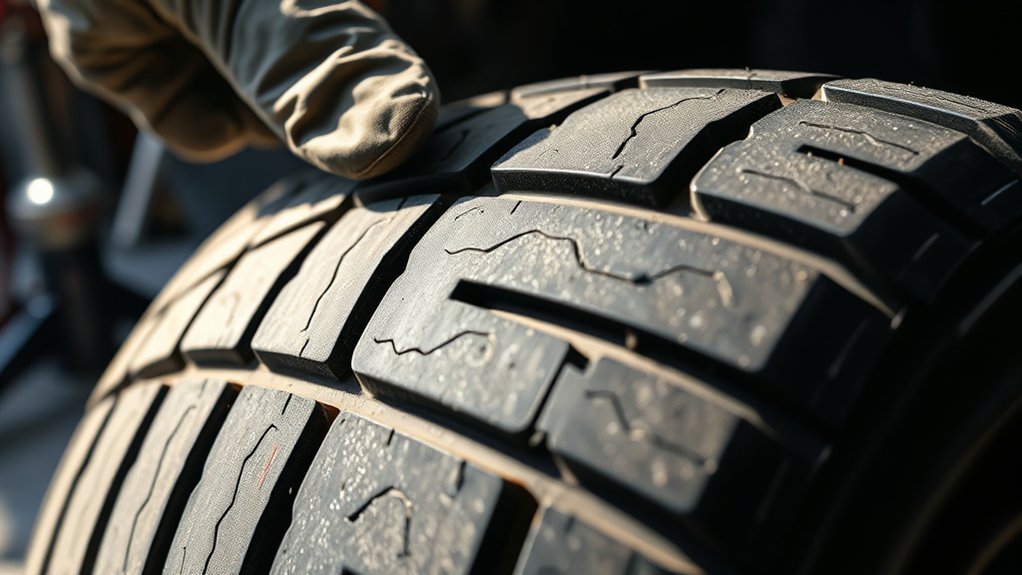
Do not stop after reading the DOT date code. A tire’s age should be checked alongside tread depth, sidewall condition, air pressure, wear pattern, and ride symptoms.
Start with the penny test: place a penny into a main tread groove with Lincoln’s head facing down. If you can see the top of Lincoln’s head, the tread is at or near 2/32 inch and the tire should be replaced. For a more accurate reading, use a tread depth gauge and measure several grooves across each tire.
| What You See or Feel | What It May Mean | Action Needed |
|---|---|---|
| Tread at 2/32 inch | Minimum tread depth reached | Replace the tire |
| Cracks, bulges, bubbles, or exposed cords | Possible structural damage or aging | Stop relying on the tire and get professional inspection |
| Uneven inner, outer, center, or cupped wear | Possible alignment, inflation, rotation, or suspension issue | Inspect alignment, pressure, rotation schedule, and suspension |
| Repeated air loss | Leak, bead issue, valve problem, puncture, or aging damage | Have the tire checked before driving far |
| New vibration, noise, pulling, or rough ride | Possible balance, alignment, wear, or internal tire issue | Have a qualified technician inspect it |
| Nails, screws, stones, or cuts | Possible puncture or tread damage | Do not pull out deep objects; have the tire inspected |
[Products Worth Considering]

Keep your tires properly inflated with this analog VONDIOR tire pressure gauge, designed for fast, easy readings without batteries. The swiveling, two-axis hose and large glow dial help you measure at any tire angle with instant visibility. Built with a protective rubber shield, it supports durable, low-maintenance use for cars and trucks.

Monitor tire tread wear with a smart, color-coded depth gauge that shows clear condition ranges at a glance. The bar is range marked for fast, easy readings, helping you maintain safer traction and performance. Each gauge is portable with a pocket clip, and the set includes 20 units for daily use and sharing.

Accurately measure tire tread depth with a calibrated gauge marked from 0 to 1 inch in 1/32 inch increments. The color-coded bar helps you quickly identify tread condition ranges, supporting safe driving for trucks, motorcycles, automobiles, and passenger vehicles.
Next Steps for Aging Tires: Replacement and Safety Tips
If your tire is older than the manufacturer’s recommended service window, shows aging damage, or has performance symptoms, treat it as a safety issue rather than a cosmetic problem. Use this simple decision path:
- Check the DOT date code. Record the week and year for all four tires and the spare.
- Compare all tire ages. Tires are often replaced in pairs or sets, but spares may be much older than the tires on the ground.
- Inspect tread and sidewalls. Look for low tread, cracks, bulges, cuts, uneven wear, and exposed cords.
- Check cold inflation pressure monthly. Use the pressure listed on the vehicle placard or owner’s manual, not the maximum pressure molded on the tire sidewall.
- Consult a professional when in doubt. Age, damage, and vibration can involve internal problems you cannot confirm visually.
[Products Worth Considering]

The Big Rig Defense Tire Thumper is a truck tire pressure checker that lets you quickly check multiple tires by giving them a firm whack. Listen for a reassuring thump and feel the stick bounce when a tire is fully inflated, helping you get back on the road safely. It features a comfortable, glove-friendly handle and a secure wrist strap for confident use on busy routes.

The SAFELIFE dial tire tread depth gauge measures tread depth in 1/32 inch increments with clear, easy-to-read 2-inch dial face. Color zones using a traffic light system help you quickly judge whether tread is low, marginal, or ample for safer driving. Built with a durable zinc cast body and a metal detect probe for precise, comfortable use across cars, motorcycles, trucks, and buses.

This tire inflator with pressure gauge delivers long-lasting performance with a durable rubber-protected gauge and sturdy build. The longer hose and 360 swivel air chuck help you seal the valve securely and keep your hands free while measuring, inflating, or deflating. It’s battery-free for reliable use and provides ±2 PSI accuracy in the mid-range for most typical tires, with universal compatibility for 1/4 NPT compressor outputs.
How to Spot Altered, Incomplete, or Suspicious Tire Date Codes
Most drivers are not dealing with counterfeit tires, but unclear or incomplete markings can still create problems. A legitimate DOT/TIN should be molded cleanly into the sidewall and should include a final four-digit date code on the full TIN side.
Be cautious if the date area looks shaved, patched, oddly re-stamped, smudged, or inconsistent with the rest of the sidewall. Also be careful with unusually cheap “new” tires that have old date codes, missing manufacturer information, or no clear DOT marking for U.S. road use.
If the code is hard to read, ask the seller or tire shop to show you the full TIN before installation. For used tires, inspect even more carefully: age, tread depth, puncture repairs, sidewall damage, and unknown storage history all matter.
Effective Maintenance Tips for Tire Longevity
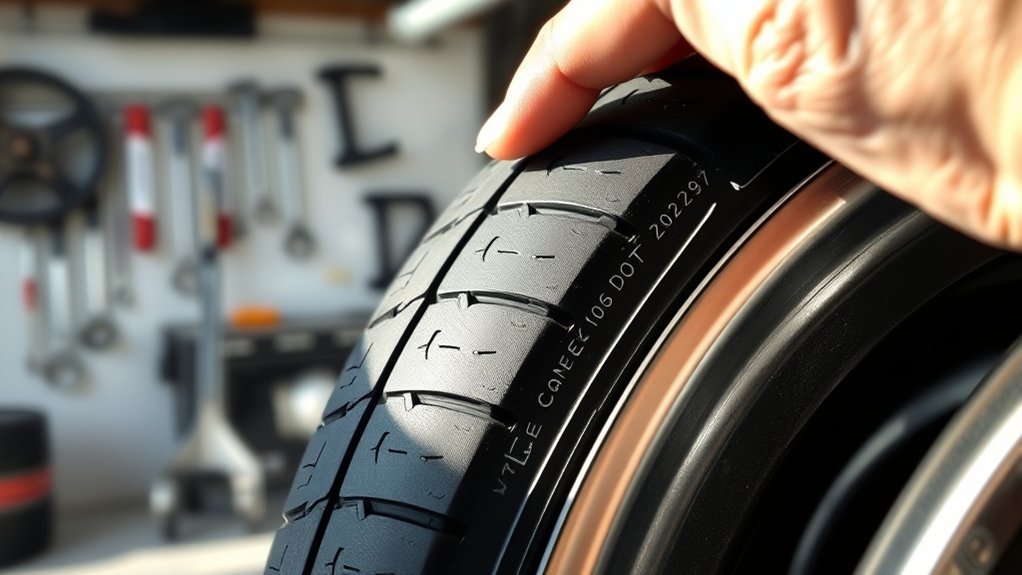
Good maintenance cannot stop tire aging, but it can reduce avoidable wear and help you catch safety issues earlier.
- Check pressure monthly when tires are cold. Include the spare. A tire can be dangerously underinflated before it looks flat.
- Rotate tires on schedule. Follow the vehicle owner’s manual. If no schedule is listed, many vehicles use a 5,000- to 8,000-mile rotation interval.
- Use a tread depth gauge. A penny is helpful, but a gauge gives a clearer reading across inner, center, and outer grooves.
- Watch for uneven wear. Uneven patterns can point to alignment, inflation, suspension, or rotation problems.
- Store unused tires correctly. Keep tires away from sunlight, heat, moisture, petroleum products, and ozone sources such as some electric motors.
- Do not ignore the spare. Spare tires age even when they are rarely used, and compact spares have strict speed and distance limits.
Resources for Checking Tire Recalls Using DOT Codes
Tires can be recalled just like vehicles and car seats. A recall may apply to a specific brand, line, size, plant code, date range, or production batch, so your DOT/TIN can help identify whether your tire is included.
[Products Worth Considering]

Measure tire tread depth quickly and accurately with this LUMITECO dial gauge that reads in 1/32" increments up to 14/32". The color-coded green/yellow/red zones make it easy to judge tire wear and know when replacement is needed. A rugged, compact design with a protective pouch helps keep the gauge ready for use on cars, trucks, motorcycles, and more.

Measure tyre tread depth precisely with a digital gauge that reads in both MM and inches, helping you monitor safe driving conditions. The large LCD screen is easy to operate, and the compact tool fits for cars, trucks, and motorcycles. It provides high accuracy with a 0-25.4mm range and includes a 1-year warranty for added peace of mind.

ETENWOLF T300 is a calibrated digital tire pressure gauge for accurate readings from 3 to 200 PSI across light and heavy-duty vehicles. It includes thermal compensation for reliable performance in extreme cold or heat, with an auto shut-off to extend battery life and an LED for easier reading. The sturdy design supports rugged everyday use, making it ideal for pickups, RVs, and industrial applications.
How to Check Recalls
- Write down the full DOT/TIN. Check both sidewalls and record the complete code, not only the last four digits.
- Search official recall tools. Use the NHTSA recall search and the USTMA Tire Recall Lookup.
- Check every tire. Tires on the same vehicle may have different DOT codes, especially if one or two were replaced later.
- Follow the remedy instructions. If a tire is recalled, contact the tire manufacturer, dealer, or retailer listed in the recall notice.
Using NHTSA Resources
The NHTSA TireWise resource explains tire maintenance, aging, labeling, fuel efficiency, tread checks, inflation, and recalls. NHTSA also recommends checking recalls twice a year and reporting safety problems when you suspect a defect.
Understanding Recall Notifications
Recall notices may be based on a production date range, which is why the DOT date code matters. If your tire falls within the affected range, follow the manufacturer’s instructions. Do not assume a tire is safe just because it looks new or has deep tread.
Frequently Asked Questions
Can tire age affect fuel efficiency?
Tire age can affect performance as rubber changes over time, but fuel efficiency is usually affected more directly by inflation pressure, tread condition, alignment, tire design, and driving habits. Keep tires properly inflated and inspect them monthly for the best mix of safety, tire life, and fuel economy.
How often should I check my tire age?
Check the DOT date code when you buy tires, before installing used tires, before long road trips, and during your regular tire inspections. Also check the spare at least once or twice a year because spare tires often age without obvious tread wear.
Do all tires have a DOT date code?
Tires sold for U.S. road use are required to have a DOT Tire Identification Number, and the final four digits identify the week and year of manufacture. The full code may appear on only one sidewall, so check both sides if you cannot find the date code.
What is the maximum age for tires?
There is no one-size-fits-all legal expiration date for every passenger tire. Many manufacturers recommend annual professional inspection after about five years of service and replacement by 10 years from manufacture, even if tread remains. Replace sooner if the tire is damaged, worn, leaking, vibrating, or outside your vehicle or tire maker’s guidance.
Can tire age impact insurance coverage?
Insurance rules vary by policy, claim, location, and circumstances. Tire age alone may not decide a claim, but driving on visibly unsafe, badly worn, damaged, or neglected tires can create problems after a crash. For coverage questions, review your policy or ask your insurer directly.
Where is the DOT code on a tire?
The DOT code is molded into the tire sidewall after the letters “DOT.” If you do not see the final four-digit date code on the outside sidewall, check the inner sidewall because the full TIN may be on only one side.
Is a tire with good tread still unsafe if it is old?
Yes, it can be. Tread depth is important, but rubber and internal materials can age even when the tire has not been driven much. This is why spare tires, RV tires, trailer tires, and low-mileage vehicle tires need age checks as well as tread checks.
Conclusion
Your tire’s DOT date code is a simple safety clue, but it is not the whole story. Read the final four digits to find the manufacture week and year, check both sidewalls if needed, and compare the tire’s age with tread depth, pressure, sidewall condition, ride symptoms, and manufacturer guidance. When a tire is old, damaged, worn, leaking, or vibrating, have it inspected or replaced before it turns into a roadside emergency.
Sources
- eCFR 49 CFR 574.5 — Tire identification requirements — DOT/TIN date code format and week/year requirements.
- NHTSA TireWise — Tire aging, tread, pressure, maintenance, and replacement guidance.
- NHTSA Recalls — Official recall search and recall-safety guidance.
- U.S. Tire Manufacturers Association Tire Facts — Tire service life, aging factors, and manufacturer-guidance context.
- Michelin — When to Replace Tires — Five-year inspection and 10-year replacement guidance.
- Bridgestone Americas — Tire Replacement Guidance — Inspection, monthly pressure checks, and 10-year replacement guidance.