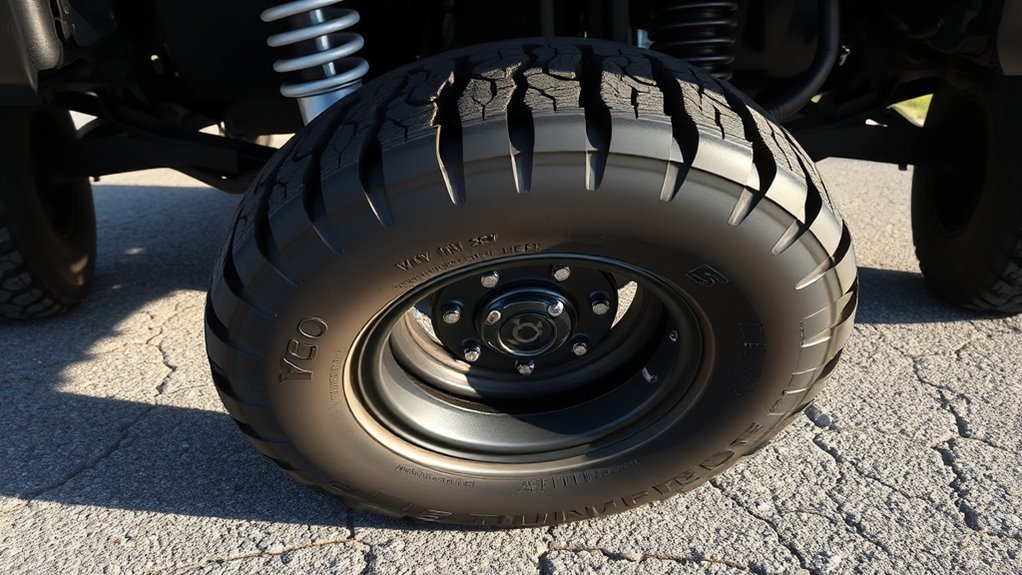
If your 4Runner tires are wearing on the inside edge, do not assume the tire itself is defective. Inner-edge wear usually points to an alignment or suspension problem, especially toe or camber that has moved outside spec. Worn ball joints, loose tie rod ends, tired bushings, lift kits, incorrect tire pressure, and delayed rotations can all make the same tire wear pattern show up faster.
Quick Answer
Your 4Runner tires are wearing on the inside edge because the inner shoulder is carrying or scrubbing more load than it should. The most common causes are toe or camber out of spec, worn steering or suspension parts, lift-kit geometry changes, incorrect tire pressure, or missed rotations.
Key Takeaways
- Inside-edge wear is not one single problem. Toe, camber, worn parts, lift kits, pressure, and driving load can all contribute.
- A feathered or sawtooth feel usually points toward toe wear, while a smooth inner-shoulder strip often points toward camber or load concentration.
- If the inner edge is at 2/32 inch, shows cords, has cracks, or has a bulge, replace the tire before continuing to drive on it.
- Check pressure cold using the driver-door placard, rotate on schedule, and ask for a before-and-after alignment printout after any correction.
At a Glance
| Time Required | 15–30 minutes for a driveway inspection; 45–90 minutes for a shop alignment if no repairs are needed |
| Difficulty | Easy to inspect; professional equipment recommended for final toe, camber, and caster correction |
| Tools Needed | Tread-depth gauge, tire-pressure gauge, flashlight, chalk, notebook or phone camera, and jack stands if you safely lift the vehicle |
| Cost | Home inspection is usually free; a four-wheel alignment commonly runs about $100–$200, while worn suspension parts or lifted setups can add more |
Warning: Do not keep driving on a tire with exposed cords, a visible steel belt, a sidewall bulge, deep cracking, or an inner shoulder worn to 2/32 inch. The outer tread can look acceptable while the hidden inner edge is already unsafe.
What Inside-Edge Tire Wear Looks Like on Your 4Runner

Inside-edge tire wear shows up when the inner shoulder or inner tread ribs wear faster than the center and outer shoulder. On a 4Runner, this damage can hide because the outside of the tire may still look fine during a quick walkaround.
Turn the front wheels outward and look at the inner tread blocks. You may see a smooth sloped strip, shallow grooves, feathered tread edges, cupping, cracking, or exposed cords. Run your hand lightly across the tread face. A sharp step or sawtooth feel usually points to toe-related scrub. A smoother, even strip on the inner shoulder often points to camber, load, or ride-height geometry.
Wet-road grip can suffer before the tire looks completely bald. The National Highway Traffic Safety Administration says tire tread provides the grip that helps prevent slipping on wet or icy roads, and tires should be replaced when tread is worn to 2/32 inch.
Note: If only the inside edge is at the wear bars, treat the tire as worn out even if the center and outer shoulder still have more tread.
Why Alignment Issues Cause Inner Tread Wear
Alignment controls the angles your tires use as they meet the road. The three big settings are toe, camber, and caster. For inner-edge tire wear, toe and camber matter most.
Toe describes whether the tires point slightly inward or outward when viewed from above. If toe is outside spec, the tire does not roll straight. It scrubs sideways across the road, which can wear the inner or outer tread quickly. Tire Rack notes that toe is one of the most critical alignment settings for tire wear.
Camber describes whether the top of the tire leans inward or outward when viewed from the front. Too much negative camber tips the top of the tire inward and can overload the inner shoulder during straight-line driving. A mild amount of negative camber may help cornering, but too much for street driving can shorten tire life.
| What You Notice | Likely Cause | What to Do Next |
|---|---|---|
| Feathered or sawtooth tread across the tire | Toe out of spec | Get an alignment and ask for toe readings before and after |
| Smooth inner-shoulder strip | Excess negative camber or ride-height change | Check camber, caster, ride height, and control-arm hardware |
| Cupping, vibration, or wandering | Worn shocks, ball joints, tie rods, bushings, or imbalance | Inspect suspension parts before aligning |
| Both edges worn faster than the center | Underinflation or overload | Set cold pressure to the driver-door placard and reduce excess load |
How Worn Ball Joints and Bushings Speed Up Inner Wear
Even a good alignment will not hold if steering or suspension parts are loose. Worn ball joints, loose tie rod ends, cracked control-arm bushings, and damaged mounting points can let the wheel move under load. That movement changes toe and camber while you drive.
This is why some 4Runner owners get an alignment, see good numbers on the printout, and still destroy the inner shoulder of the next tire set. The static alignment may look fine on the rack, but worn parts can shift once the truck brakes, turns, hits bumps, or carries cargo.
| Component | Failure Mode | How It Affects Tire Wear | Best Fix |
|---|---|---|---|
| Ball joints | Excess play or looseness | Wheel angle changes under load | Replace worn parts before alignment |
| Control-arm bushings | Cracking, compression, or separation | Toe and caster shift while braking or cornering | Replace bushings or control arms |
| Tie rod ends | Loose socket or torn boot | Toe changes and steering feels vague | Replace, then align |
| Shocks and struts | Weak damping or leaks | Cupping and uneven contact | Replace worn dampers and inspect tire balance |
Ask the shop to inspect these parts before setting toe and camber. Aligning a 4Runner with worn steering or suspension parts is usually wasted money because the angles can move again as soon as the vehicle leaves the rack.
Do Lift Kits and Suspension Mods Cause Inner Tire Wear?

Yes, lift kits and suspension modifications can cause inside tire wear if the alignment is not corrected afterward. Raising the front of a 4Runner changes control-arm angles, caster, camber, and toe. Larger tires, aftermarket wheels, spacers, and heavy accessories can also change how the tire loads the road.
Tire Rack notes that out-of-alignment conditions can be caused by suspension wear, impacts, or a change in vehicle ride height. That is exactly why a 4Runner should be aligned after a lift, leveling kit, control-arm replacement, tie rod replacement, or hard curb or pothole hit.
Lifted 4Runners may need more than a standard toe adjustment. Some setups need adjustable upper control arms, usable camber and caster bolt range, replacement eccentric bolts, or correction of seized hardware. If the shop cannot bring camber and caster close to preferred settings, the printout should show you why.
Pro Tip: After a new lift or major suspension work, get the alignment done right away, then recheck it after the suspension settles or after your first few hundred miles of normal driving.
Why Overinflation Can Hide Alignment Wear
Some owners add extra pressure because the steering feels sharper or the truck feels less squirmy. That can hide the real problem. Extra pressure changes the tire contact patch, but it does not fix toe, camber, worn bushings, or loose steering parts.
Use the cold tire pressure listed on your 4Runner’s driver-door placard or in the owner’s manual. NHTSA says the correct pressure is the vehicle manufacturer’s recommended cold inflation pressure, not the maximum number printed on the tire sidewall. For many stock 4Runners this may be around 32 psi cold, but the placard is the source that matters because tire size, model year, load, and modifications can vary.
Overinflation can make the center of the tread look better while the inner edge continues to disappear. Underinflation can wear both shoulders and add heat. Neither one solves the root cause of inner-edge wear.
- Set pressure cold. Check before driving or after the vehicle has been parked long enough for the tires to cool.
- Use a real gauge. TPMS is helpful, but it is not a replacement for regular manual checks.
- Compare all four tires. A single tire that drops repeatedly may have a puncture, bead leak, valve-stem issue, or wheel problem.
- Recheck after load changes. Towing, camping gear, armor, and rooftop accessories can change how the tire wears.
How to Check for Inner Tire Wear and Alignment Issues at Home
You can diagnose a lot from your driveway before paying a shop. The goal is not to perform a perfect alignment at home. The goal is to find evidence, measure the wear, and decide whether the tire, suspension, or alignment needs immediate attention.
- Park on level ground. Set the parking brake and keep the vehicle safely stable.
- Turn the front wheels outward. This exposes the inner shoulder where damage usually hides.
- Inspect with a flashlight. Look for cords, cracks, bulges, cupping, feathering, and missing tread blocks.
- Measure tread depth. Use a tread-depth gauge at the outer shoulder, center groove, and inner shoulder. Write down the numbers.
- Compare across the tire. A difference of about 2/32 inch or more between the inner and outer shoulder is a clear warning sign.
- Use the penny test if needed. Place a penny in the inner groove with Lincoln’s head upside down. If you can see the top of his head, the tire is at the replacement point.
- Check cold pressure. Set pressure to the door placard before judging wear patterns.
- Photograph the wear. Photos help you show the shop exactly what changed and how fast it happened.
Also note how the 4Runner drives. Pulling, wandering, an off-center steering wheel, steering vibration, or a tire that gets noisy on one side all support the case for an alignment and suspension inspection.
DIY vs. Shop Alignment: What You Can Actually Fix Yourself
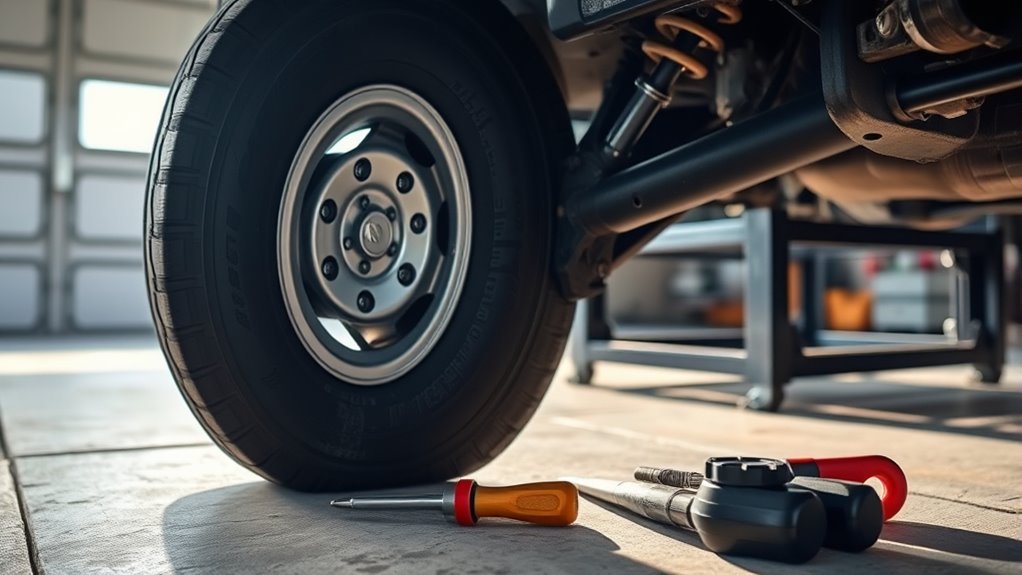
You can inspect tire wear, measure tread depth, set tire pressure, check for obvious loose parts, and document symptoms at home. You may also be able to spot a badly off-center steering wheel or obvious toe problem with string-line methods. But a proper 4Runner alignment needs accurate equipment and a level rack.
Camber and caster are especially difficult to correct accurately at home. Lifted 4Runners can also need special attention to caster, upper control arms, seized camber bolts, and tire clearance. A small change can affect tire wear, braking feel, steering return, and stability.
A driveway inspection can tell you something is wrong. A professional alignment printout tells you which angle was wrong and whether it was actually corrected.
When you visit the shop, ask for:
- Before-and-after alignment readings
- Toe, camber, caster, and thrust angle readings
- A suspension and steering inspection before adjustment
- Confirmation that the vehicle was aligned at normal ride height
- Notes if any angle could not be brought into spec
Warning: If you lift the vehicle for inspection, use proper jack stands on safe lifting points. Never rely on a jack alone while your hands or body are near the tire, suspension, or steering components.
[Products Worth Considering]

Accurately measure tire tread depth with a calibrated gauge marked from 0 to 1 inch in 1/32 inch increments. The color-coded bar helps you quickly identify tread condition ranges, supporting safe driving for trucks, motorcycles, automobiles, and passenger vehicles.

Monitor tire tread wear with a smart, color-coded depth gauge that shows clear condition ranges at a glance. The bar is range marked for fast, easy readings, helping you maintain safer traction and performance. Each gauge is portable with a pocket clip, and the set includes 20 units for daily use and sharing.

Measure tire tread depth quickly and accurately with this LUMITECO dial gauge that reads in 1/32" increments up to 14/32". The color-coded green/yellow/red zones make it easy to judge tire wear and know when replacement is needed. A rugged, compact design with a protective pouch helps keep the gauge ready for use on cars, trucks, motorcycles, and more.
What a 4Runner Alignment Actually Costs
Alignment prices vary by location, shop, equipment, and how modified your 4Runner is. As a current general range, a two-wheel alignment commonly runs about $50–$100, while a four-wheel alignment commonly runs about $100–$200. A 4Runner usually benefits from a full alignment check because rear thrust angle and front settings both affect how the vehicle tracks.
Lifted or modified 4Runners can cost more because the shop may need extra time to adjust caster, work around aftermarket upper control arms, free seized camber bolts, correct steering-wheel position, or diagnose tire clearance issues. The alignment itself may be the cheap part if the real problem is worn suspension hardware.
A lifetime alignment plan can make sense if you rotate often, adjust suspension height, change tires, wheel off-road, or keep experimenting with lift parts. It only helps if the shop understands body-on-frame Toyota trucks and gives you real printouts instead of only “green” numbers.
[Products Worth Considering]

The Ziopetru adjustable magnetic wheel alignment tool helps you check and restore camber and caster positioning after removing and reinstalling undercarriage components. With a clear leveling/bubble measurement system and an easy zeroing adjustment knob, it supports precise horizontal angle checking. The strong magnetic base mounts to metal surfaces for convenient use at home on cars, motorcycles, trucks, vans, and SUVs.

The SAFELIFE dial tire tread depth gauge measures tread depth in 1/32 inch increments with clear, easy-to-read 2-inch dial face. Color zones using a traffic light system help you quickly judge whether tread is low, marginal, or ample for safer driving. Built with a durable zinc cast body and a metal detect probe for precise, comfortable use across cars, motorcycles, trucks, and buses.

This universal wheel alignment tool helps you accurately restore tire tilt angles after tire or suspension repairs using an adjustable camber gauge. It features a powerful magnetic base that firmly attaches to brake rotors for stationary, slip-free readings, improving consistency during measurement. Built from durable PC plastic, it resists wear and corrosion and is compact enough for car, truck, RV, and motorcycle alignment tasks.
How to Prevent Inside-Edge Wear on Your Next Tire Set
The best time to stop inside-edge wear is before the new tires go on. If you install new tires without correcting the cause, the next set can wear the same way.
[Products Worth Considering]

Steelman white tire marking crayons provide high-contrast, semi-permanent marks for repairing and inspecting tires and equipment. They write on wet or dry, smooth or coarse surfaces including rubber, metal, glass, and wood, making them ideal for puncture location and damage outlining. The lead- and zinc-free crayons resist weather and fading yet wipe away when you no longer need the marks.

The Topeak SmartGauge D2 delivers precise digital tire pressure readings for bikes, motorcycles, and sports equipment up to 250 psi (17 bar). Its rotating SmartHead works with both Presta and Schrader valves, so you can check pressure quickly without adapters. The LCD display makes it easy to read results in psi, bar, or kg/cm² with an included CR2032 battery for immediate use.

Vigorder rubber cement glue delivers superior adhesion and cures quickly within about 30 seconds for seamless rubber bonding. Once cured, it helps provide a strong, durable, waterproof seal that holds up to vehicle weight, pressure, and heat. Suitable for cars, motorcycles, trucks, bicycles, and off-road tires, it’s designed for emergency patch and maintenance repairs.
Check Alignment First
Get an alignment when you see uneven tire wear, install new tires, replace suspension or steering parts, lift or level the vehicle, hit a major pothole, or notice pulling or an off-center steering wheel. NHTSA also recommends balance and alignment by a qualified technician to maximize tire life and vehicle safety.
Do not accept “it is within range” without looking at the printout. Ask whether the shop set the angles close to the preferred settings or only barely inside the allowed range. On a lifted 4Runner, also ask whether caster is high enough for stable tracking and whether camber is balanced side to side.
Rotate Tires Regularly
Rotating your tires does not reverse existing inner-edge damage, but it helps spread normal wear and gives you more chances to catch a problem early. NHTSA says to check the owner’s manual for rotation frequency and pattern, and to rotate every 5,000 to 8,000 miles if the manufacturer recommends it.
Use the correct pattern for your tire type. Directional tires usually move front to rear on the same side. Non-directional tires may allow cross-rotation. If your front and rear sizes differ, rotation may be limited or not recommended.
Monitor Tire Pressure
Check tire pressure at least monthly and before long trips. Use a calibrated gauge and check the tires cold. NHTSA says TPMS is not a substitute for regular tire maintenance because it may not warn you until a tire is already significantly underinflated.
- Use the placard pressure. Start with the driver-door tire label or owner’s manual.
- Check all tires. Include the spare if your model has one that needs service pressure.
- Watch temperature swings. Cold weather can lower tire pressure and hot tires can read higher after driving.
- Track wear after each rotation. If the inside shoulder keeps dropping faster, schedule alignment before the tire is ruined.
Frequently Asked Questions
Can tire rotation reverse existing inner-edge damage?
No. Tire rotation cannot put rubber back on a worn inner edge. It can only move the damaged tire to another position and help you monitor future wear. If the inner edge is at 2/32 inch, has cords, or shows structural damage, replace the tire and correct the alignment or suspension problem before relying on the next set.
Does 4WD mode accelerate inner tire wear?
Correct 4WD use is not usually the main cause of inner-edge wear. However, using part-time 4WD on dry pavement can add tire scrub and driveline bind on some 4Runner models. If inner wear is present, check alignment, pressure, tire rotation history, and suspension condition first.
Will larger tires hide or worsen alignment wear signs?
Larger tires can make early inner-edge wear harder to see because the inside shoulder is tucked farther under the truck. They can also make caster, camber, clearance, and steering feel more sensitive. After installing larger tires, get an alignment and inspect the inner shoulders more often during the first few thousand miles.
Is inner tire wear covered under Toyota warranty?
Usually not if the wear is caused by alignment, tire pressure, suspension wear, impacts, modifications, or normal maintenance. Toyota’s basic warranty excludes normal wear and maintenance items, and tire warranties may come from the tire manufacturer. Check your Toyota Warranty and Maintenance Guide and your tire warranty paperwork before assuming coverage.
How soon after lifting a 4Runner should alignment be checked?
Check alignment immediately after a lift, leveling kit, upper control arm change, tie rod replacement, or major suspension work. Then recheck after the suspension settles or if you notice pulling, wandering, steering-wheel offset, rubbing, or new inner-edge wear.
Can I keep driving if only the inside edge is worn?
Only if the tire still has safe tread depth and no structural damage. If the inner edge is at 2/32 inch, shows cords, has a bulge, or has deep cracking, replace it before driving. The outer tread does not make the tire safe if the hidden inner shoulder is already worn out.
Conclusion
Inside-edge tire wear on a 4Runner is a warning sign, not a normal wear pattern to ignore. Start with a careful inner-shoulder inspection, set cold tire pressure to the door placard, measure tread depth, and document the wear. Then inspect steering and suspension parts before paying for an alignment. If your 4Runner is lifted or running larger tires, make sure the shop understands Toyota truck alignment and gives you a before-and-after printout. Fix the cause before installing the next set of tires, and you will protect your tread life, steering feel, and safety.
Sources
- NHTSA TireWise — supports tire pressure, tread depth, TPMS, rotation, balance, and alignment safety guidance.
- Tire Rack: Alignment Settings — supports toe, camber, caster, ride-height changes, and tire-wear explanations.
- Toyota Manuals and Warranties — supports checking model-specific owner’s manuals, warranty guides, and Toyota warranty coverage terms.
- Investopedia: Wheel Alignment Costs — supports current general alignment cost ranges and cost factors.