
Toe alignment on a Toyota Tacoma is the direction the front tires point when viewed from above. If the fronts of the tires point slightly toward each other, that is toe-in. If they point away from each other, that is toe-out. The right setting helps your Tacoma track straight, keeps the steering wheel centered, and reduces uneven tire wear.
Quick Answer
Toyota Tacoma toe alignment should match the factory specification shown on a reliable alignment machine or Toyota service information. If your 2000 Tacoma alignment printout lists total toe as 0.00° to 0.40°, a reading of 0.31° is within that listed range, but it should not be called “ideal” for every Tacoma.
Key Takeaways
- Toe is one of the three main alignment angles, along with camber and caster.
- A Tacoma’s correct toe setting depends on the exact model, suspension setup, tire size, ride height, and factory spec range.
- Excessive toe-in or toe-out can cause feathered tread, uneven tire wear, pulling, and a crooked steering wheel.
- A home toe check can reveal a problem, but a professional alignment rack is the best way to set toe accurately.
What Is Toe Alignment and Why Does It Matter for Your Tacoma?
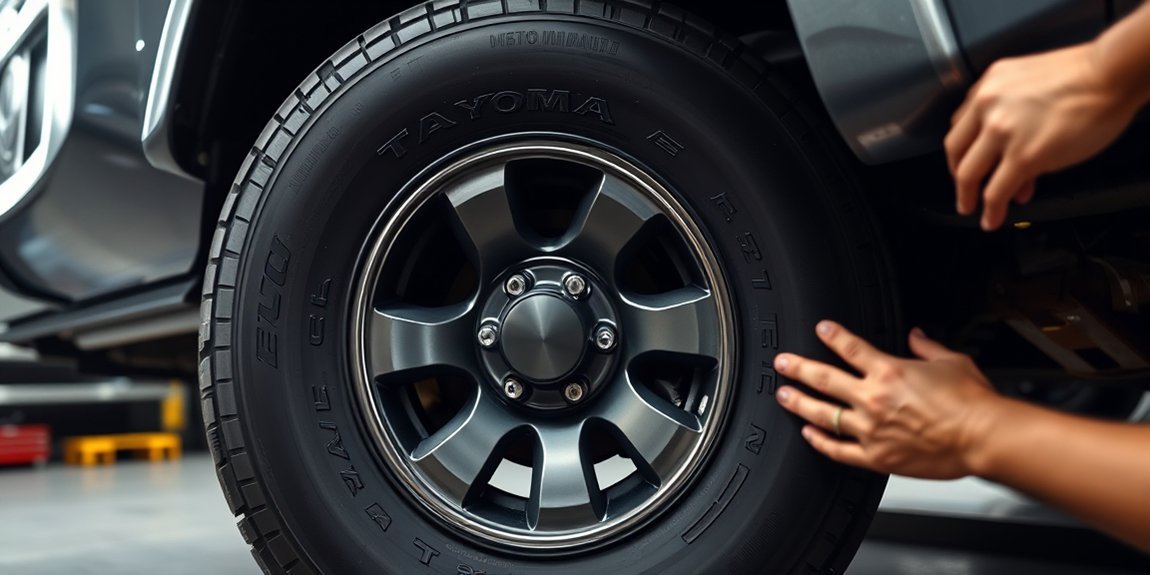
Wheel alignment is the process of setting the wheel angles to the vehicle manufacturer’s specifications. Toe is the left-to-right pointing direction of the tires when viewed from above. On a Tacoma, toe is adjusted at the front steering linkage so the truck tracks straight and the tires roll without excessive scrub.
Toe matters because it has a direct effect on steering feel and tire wear. Too much toe-in can scrub the outside edges of the tires. Too much toe-out can make the truck feel nervous or wander, and it can wear the inside edges or create feathering. The goal is not always “zero toe”; the goal is the correct toe value for your Tacoma’s factory specification and current setup.
Note: A Tacoma with a lift kit, worn steering parts, different tire size, or heavy added weight may need extra inspection before the final alignment is set. The alignment should still be based on a trusted specification and a centered steering wheel.
Understanding the Toe Range for a 2000 Tacoma
For the 2000 Tacoma example in this article, the alignment printout shows a total toe range of 0.00° to 0.40°. If that is the approved range shown by the shop’s alignment database for your exact truck, then a total toe reading of 0.31° is inside the listed range. That makes it acceptable on that printout, not automatically “perfect” for every 2000 Tacoma.
The safest way to talk about toe specs is to compare your actual readings with the minimum, preferred, and maximum values on the alignment report. Toyota alignment information and repair publications can be accessed through Toyota owner and service resources, and a professional shop should be able to show the spec range used for your truck.
| Alignment term | What it means | What to check |
|---|---|---|
| Individual toe | Toe angle for one front wheel. | Left and right should both be within spec and reasonably balanced. |
| Total toe | Combined toe of both front wheels. | Compare the final total toe to the spec range on the printout. |
| Preferred value | The target value in the middle of the allowed range. | A good alignment usually ends near the preferred value, not just barely inside the range. |
How to Read a Tacoma Alignment Printout
A good alignment printout shows “before” and “after” readings for camber, caster, and toe. The toe section should show left toe, right toe, and total toe. Green readings usually mean the value is within the machine’s selected spec range, while red readings usually mean it is outside the range.
- Confirm the vehicle selection: Make sure the alignment machine was set for your exact Tacoma year, drivetrain, cab style, suspension type, and wheel/tire setup when applicable.
- Look at total toe: Total toe tells you the combined direction of both front tires.
- Compare left and right toe: A total toe number can look good even when one side is doing most of the work. Balanced individual readings matter.
- Check steering wheel position: The truck should drive straight with the steering wheel centered after the adjustment.
- Ask about worn parts: If tie rods, ball joints, control arm bushings, or wheel bearings are loose, the alignment may not hold.
[Products Worth Considering]

The Ziopetru adjustable magnetic wheel alignment tool helps you check and restore camber and caster positioning after removing and reinstalling undercarriage components. With a clear leveling/bubble measurement system and an easy zeroing adjustment knob, it supports precise horizontal angle checking. The strong magnetic base mounts to metal surfaces for convenient use at home on cars, motorcycles, trucks, vans, and SUVs.

Monitor tire tread wear with a smart, color-coded depth gauge that shows clear condition ranges at a glance. The bar is range marked for fast, easy readings, helping you maintain safer traction and performance. Each gauge is portable with a pocket clip, and the set includes 20 units for daily use and sharing.

Measure tire tread depth quickly and accurately with this LUMITECO dial gauge that reads in 1/32" increments up to 14/32". The color-coded green/yellow/red zones make it easy to judge tire wear and know when replacement is needed. A rugged, compact design with a protective pouch helps keep the gauge ready for use on cars, trucks, motorcycles, and more.
How Misalignment Affects Tire Wear and Handling
When a Tacoma’s toe is outside specification, the tires do not roll straight down the road. They scrub slightly as the truck moves, which can create feathered tread, one-sided shoulder wear, wandering, or a steering wheel that does not sit straight. Bridgestone lists uneven tread wear, pulling, off-center steering, and steering vibration as common alignment warning signs.
Tire pressure can make the problem worse. Improper inflation changes how the tread contacts the road, and Bridgestone’s tire wear guidance recommends checking pressure monthly and before long trips or heavy loads. NHTSA TireWise also emphasizes tire maintenance as a key part of safe driving.
Toe is often the alignment angle that shows up fastest in tire wear because the tread is being scrubbed sideways as the tire rolls.
Benefits of Slight Toe-In for Tacoma Highway Stability
A slight amount of toe-in can be normal on many trucks because suspension and tire forces change as the vehicle rolls down the road. If the factory specification calls for slight toe-in, it can help the Tacoma track steadily at highway speed. The key is moderation: too much toe-in still causes tire scrub and premature wear.
Improved Highway Handling Stability
When toe is set correctly, the Tacoma should feel more settled in a straight line. It should not dart, wander, or require constant steering correction on a smooth, level road. Keep in mind that road crown, tire conicity, uneven tire pressure, or brake drag can also cause a pull, so alignment is only one part of the diagnosis.
Reduced Tire Wear Rates
Correct toe helps the tread roll instead of scrub. That reduces feathering and edge wear. For the best tire life, pair proper toe with correct tire pressure, regular rotation, good shocks, and tight steering components.
Enhanced Steering Responsiveness
A Tacoma with toe set in spec usually feels predictable when you turn into a lane change or curve. Too much toe-out can make the truck feel twitchy. Too much toe-in can make it feel sluggish and can wear the outer shoulders of the tires.
Signs Your Tacoma’s Toe Is Off
You may need a toe check or full alignment if you notice any of these symptoms:
- Feathered tire tread: The tread feels smooth in one direction and sharp in the other when you run your hand across it.
- Uneven shoulder wear: The inside or outside edge of a front tire wears faster than the rest.
- Pulling or drifting: The truck does not track straight on a flat road.
- Crooked steering wheel: The wheel is off-center even though the truck is driving straight.
- Recent impact: You hit a curb, pothole, trail obstacle, or road debris.
- Recent suspension work: You replaced tie rods, control arms, ball joints, shocks, struts, or installed a lift kit.
Warning: Do not keep driving on tires with exposed cords, bulges, severe edge wear, or a sudden pull. Also do not try to “align around” loose tie rods, worn ball joints, or damaged suspension parts. Repair the mechanical problem first, then align the truck.
What Factors Affect Toe Alignment Adjustments?
Toe is not adjusted in isolation. A technician should check tire pressure, ride height, steering play, suspension condition, and tire wear before making final toe changes. On Tacomas and similar Toyota trucks, camber and caster are commonly handled through lower control arm cam adjusters, while toe changes are made through the steering tie rods. AccuTune Offroad’s Tacoma and 4Runner alignment overview explains how tie rods and cam tab adjusters affect alignment on these trucks.
Suspension Geometry Effects
Suspension geometry changes when parts wear, when ride height changes, or when a lift kit is installed. That is why a Tacoma that drove straight before a lift may pull or wear tires afterward. The alignment should be checked after any meaningful suspension or steering work.
Driving Conditions Impact
Road impacts, off-road driving, heavy loads, towing, and aggressive cornering can all knock alignment out of range or reveal worn parts. If your Tacoma sees trail use, construction sites, or frequent towing, inspect tires and steering components more often than a pavement-only commuter truck.
Checking Your Tacoma’s Toe Alignment at Home
A home toe check is useful for spotting an obvious problem, especially after steering work or before driving to an alignment shop. It is not a perfect replacement for a calibrated alignment rack because small toe changes are measured in fractions of a degree.
At a Glance
| Time Required | 20–45 minutes for a basic check |
| Difficulty | Moderate; measuring is simple, adjusting accurately is harder |
| Tools Needed | Tire pressure gauge, tread depth gauge, tape measure, string or toe plates, chalk, flat floor, and basic hand tools only if adjusting |
| Cost | $0–$40 for a basic check; professional alignment is commonly about $65–$200+ depending on shop and service type |
- Park on a flat surface: Use a level garage floor or driveway. Set tire pressures to the door placard or owner’s manual recommendation before measuring.
- Inspect the tires first: Look for cupping, feathering, edge wear, bulges, or exposed cords. Severe tire damage needs attention before alignment.
- Center the steering wheel: Roll the truck forward a few feet, settle the suspension, and keep the steering wheel straight.
- Measure front and rear tire distance: Measure between the front edges of the front tires and then between the rear edges at the same height. A smaller front measurement means toe-in; a larger front measurement means toe-out.
- Compare, do not guess: The measurement tells you whether the toe is likely off, but it does not replace the degree-based spec on a professional alignment machine.
- Get a final alignment if needed: If you adjusted tie rods, replaced steering parts, lifted the truck, or see uneven wear, schedule a professional alignment.
Pro Tip: Ask the shop for a before-and-after printout. Keep it with your maintenance records so you can compare future tire wear or steering complaints against the last known alignment settings.
[Products Worth Considering]

The SAFELIFE dial tire tread depth gauge measures tread depth in 1/32 inch increments with clear, easy-to-read 2-inch dial face. Color zones using a traffic light system help you quickly judge whether tread is low, marginal, or ample for safer driving. Built with a durable zinc cast body and a metal detect probe for precise, comfortable use across cars, motorcycles, trucks, and buses.

Accurately measure tire tread depth with a calibrated gauge marked from 0 to 1 inch in 1/32 inch increments. The color-coded bar helps you quickly identify tread condition ranges, supporting safe driving for trucks, motorcycles, automobiles, and passenger vehicles.

These aluminum alloy tire valve stem caps with an O-ring seal help protect valve stems from corrosion while adding a clean, stylish look to your vehicle. The universal fit works across cars, trucks, motorcycles, bicycles, and more, making them an easy upgrade for everyday driving and off-road use. Installation is quick, and the included four-pack keeps all your tires dressed and protected.
Professional Alignment Services: What to Expect
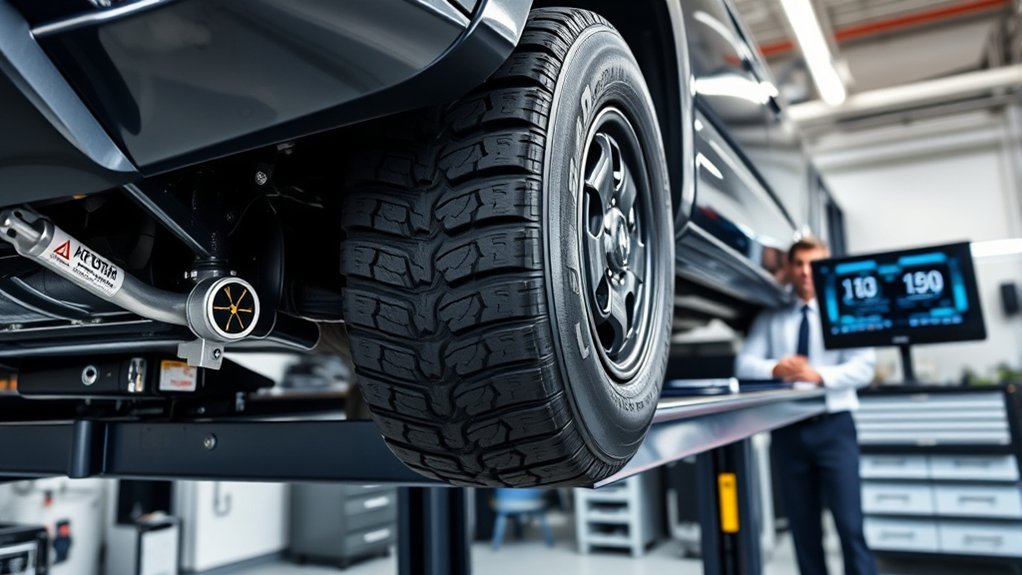
A professional alignment shop will place sensors on the wheels, select the correct vehicle specification, measure camber, caster, and toe, then adjust the front suspension and steering components as needed. On many Tacoma setups, toe is adjusted with the tie rods. Camber and caster are adjusted separately, commonly through front lower control arm cam adjusters.
Before the final adjustment, a good technician should check tire pressure, steering looseness, suspension wear, and ride height. If your truck is lifted or has aftermarket upper control arms, tell the shop before the alignment begins. Modified Tacomas may need a shop familiar with Toyota trucks, not just a quick toe-and-go adjustment.
Cost varies by location and shop. Kelley Blue Book lists front-end alignments as commonly around $65–$100, while full alignments, lifetime plans, modified trucks, or repairs can cost more.
[Products Worth Considering]

This universal wheel alignment tool helps you accurately restore tire tilt angles after tire or suspension repairs using an adjustable camber gauge. It features a powerful magnetic base that firmly attaches to brake rotors for stationary, slip-free readings, improving consistency during measurement. Built from durable PC plastic, it resists wear and corrosion and is compact enough for car, truck, RV, and motorcycle alignment tasks.

The Big Rig Defense Tire Thumper is a truck tire pressure checker that lets you quickly check multiple tires by giving them a firm whack. Listen for a reassuring thump and feel the stick bounce when a tire is fully inflated, helping you get back on the road safely. It features a comfortable, glove-friendly handle and a secure wrist strap for confident use on busy routes.

Steelman white tire marking crayons provide high-contrast, semi-permanent marks for repairing and inspecting tires and equipment. They write on wet or dry, smooth or coarse surfaces including rubber, metal, glass, and wood, making them ideal for puncture location and damage outlining. The lead- and zinc-free crayons resist weather and fading yet wipe away when you no longer need the marks.
How to Keep Your Toe Alignment in Check
Keeping toe alignment in check is mostly about catching changes early. A Tacoma can feel “fine” while slowly scrubbing tires, so build tire inspection into routine maintenance.
Regular Inspections Needed
- Check tire pressure monthly and before long trips or heavy loads.
- Inspect tread depth and look for feathering or edge wear.
- Rotate tires on the schedule recommended for your tires and driving conditions.
- Check alignment after curb hits, pothole impacts, off-road trips, or suspension work.
Adjust For Driving Style
A daily-driven Tacoma, a tow rig, and a lifted trail truck do not live the same life. Heavy loads, off-road impacts, and larger tires can expose alignment and steering problems faster. If you use your Tacoma hard, inspect it more often and do not wait until the tires are already ruined.
Monitor Tire Wear Patterns
Tire wear is one of the best early warnings. Feathering often points toward toe problems. One-sided shoulder wear can involve camber, toe, or worn parts. Cupping can involve shocks, balance, or suspension looseness. Do not assume every pattern is caused by toe alone.
Frequently Asked Questions About Tacoma Toe Alignment
What is the best toe setting for a Toyota Tacoma?
The best toe setting is the factory specification for your exact Tacoma, not a universal number. Use the spec range on a trusted alignment machine or Toyota service information, then aim for a balanced final setting with the steering wheel centered.
Is 0.31 degrees total toe good on a 2000 Tacoma?
It can be good if your alignment printout lists 0.00° to 0.40° as the correct total toe range for your exact truck. In that case, 0.31° is within range. Still, it is better to call it “in spec” rather than “ideal” unless it matches the preferred target on the printout.
Can bad toe alignment ruin Tacoma tires?
Yes. Excessive toe-in or toe-out can scrub the tread and create feathering, inner-edge wear, or outer-edge wear. Tire pressure, worn steering parts, bad shocks, and camber problems can also contribute, so inspect the whole front end.
Can I adjust Tacoma toe at home?
You can check toe at home with string, toe plates, or careful tape measurements, and experienced DIYers can make small tie-rod adjustments. However, a professional rack is more accurate and should be used after suspension work, steering work, a lift kit, or abnormal tire wear.
How much does an alignment cost on a Toyota Tacoma?
A basic front-end alignment often costs about $65–$100, while a more complete alignment, dealership visit, lifetime plan, modified truck, or repair-related alignment can cost $100–$200 or more. Prices vary by location and shop.
Does a lifted Tacoma need a different alignment?
A lifted Tacoma usually needs an alignment after the lift because ride height changes suspension geometry. The truck may also need aftermarket upper control arms or additional adjustment range depending on lift height, tire size, and caster goals.
How often should I check Tacoma alignment?
Check alignment whenever the truck pulls, the steering wheel is off-center, tires show uneven wear, or you hit a curb or pothole. Also check it after tire replacement, steering repairs, suspension repairs, or a lift kit installation.
Conclusion
Toe alignment is a small setting with a big effect on how your Toyota Tacoma drives and how long its tires last. If your alignment printout shows a total toe reading inside the approved range for your exact truck, that is a good sign. But avoid treating one number as perfect for every Tacoma. Verify the spec, keep tire pressure correct, watch tread wear, and get a professional alignment when the truck pulls, wears tires unevenly, or has suspension work done.
Sources
- Toyota — Wheel Alignment & Why It Matters — supports alignment basics, caster/camber/toe, and why alignment affects tire wear and handling.
- Toyota Support — Toyota Repair Information and Publications — supports using Toyota service information for repair manuals and factory references.
- NHTSA TireWise — supports tire safety and tire maintenance importance.
- Bridgestone — Tire Alignment — supports toe definition, alignment warning signs, and tire-wear effects.
- Bridgestone — Tire Tread Wear & Causes — supports tire pressure, alignment-related wear patterns, and monthly pressure checks.
- Kelley Blue Book — Wheel Alignment Prices — supports alignment cost ranges and common symptoms.
