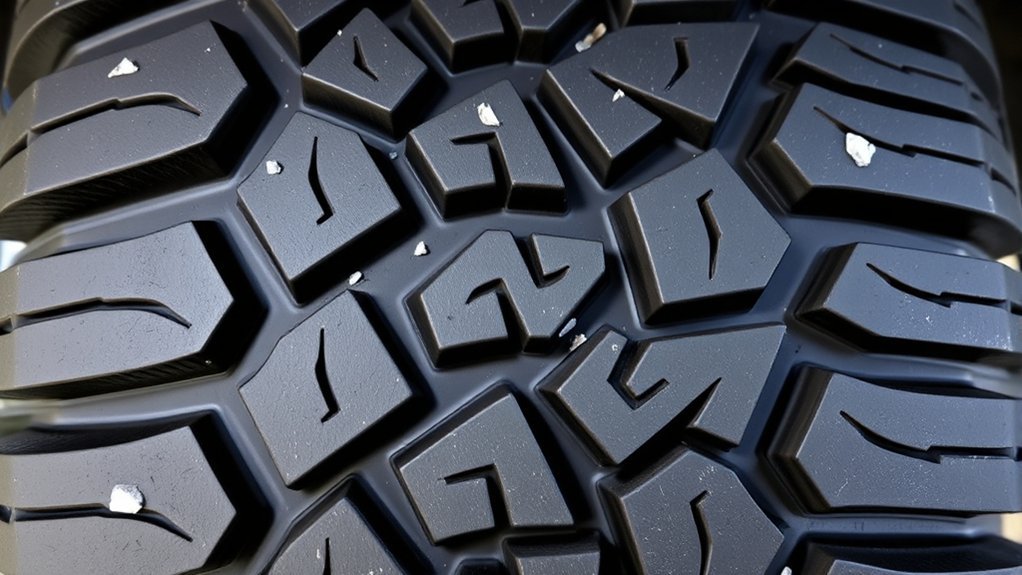
Choosing the right tire tread pattern for your Toyota Hilux is not just about looks. The best choice depends on where you drive most, how much load you carry, whether you tow, and how often you face rain, mud, gravel, or long highway miles. A Hilux used mostly on sealed roads needs a different tire than one used for farms, worksites, beaches, and rocky tracks.
Quick Answer
For most Toyota Hilux drivers, a quality all-terrain tire with the correct size, load rating, and speed rating is the best balanced choice. Choose highway-terrain tires for quiet road use, directional or wet-focused designs for heavy rain, and mud-terrain tires only if you regularly drive in deep mud, rocks, or ruts.
Key Takeaways
- Start with your driving conditions first: highway, mixed use, heavy rain, sand, mud, gravel, snow, towing, or loaded work.
- Tread pattern and tire category are different: symmetrical, asymmetrical, and directional describe the pattern; H/T, A/T, M/T, and winter describe the tire’s job.
- Avoid mixing different tread patterns on the same axle. A full matching set is the safest and most predictable setup.
- Directional tires must face the correct rolling direction, while asymmetrical tires must be mounted with the correct “inside” and “outside” sidewall orientation.
- Always confirm your Hilux’s tire size, load index, speed rating, rim size, and recommended pressure from the tire placard, owner’s manual, or Toyota specifications.
At a Glance
| Time Required | 10–20 minutes to compare your driving needs, tire size, tread type, and load rating before shopping. |
| Difficulty | Easy for basic selection; ask a tire professional before changing rim size, tire diameter, or load rating. |
| Tools Needed | Tire placard, owner’s manual, tire sidewall size, tread-depth gauge, and a tire-pressure gauge. |
| Cost | Inspection is usually low-cost or free; tire replacement cost depends on size, construction, brand, and terrain category. |
What Tire Tread Patterns Suit the Toyota Hilux?
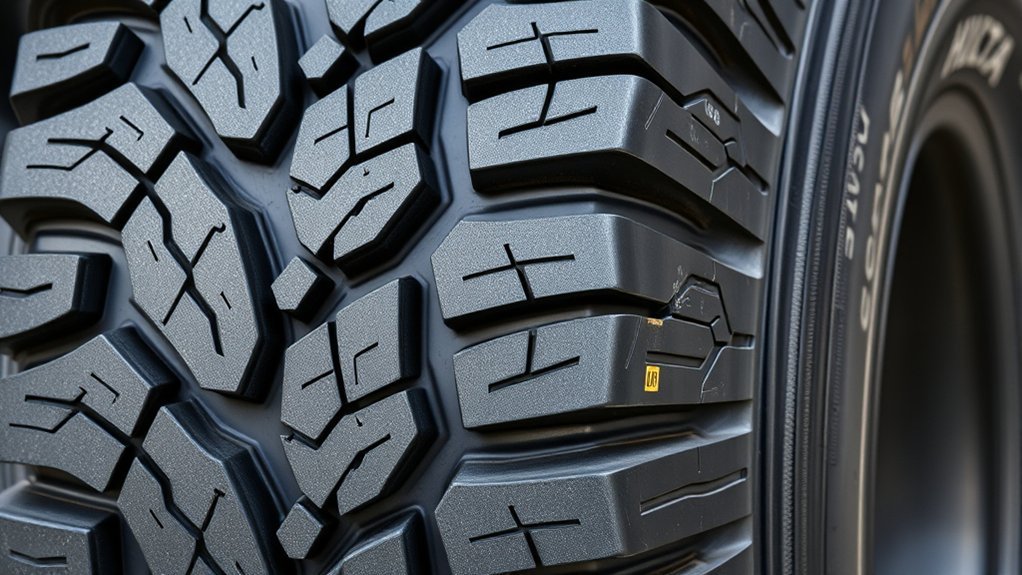
The best Toyota Hilux tire tread pattern is the one that matches your main driving conditions. If your Hilux spends most of its time on highways and city roads, choose a quiet highway-terrain tire with a symmetrical or mild asymmetrical tread. If you split your time between sealed roads, gravel, campsites, farms, and light trails, a quality all-terrain tire is usually the better balance. If you regularly drive through deep mud, ruts, or rocky tracks, a mud-terrain tire can add bite, but it usually brings more road noise, weight, and tread wear.
Before choosing any tire, confirm the correct size and load rating. Current Toyota HiLux specifications vary by market and grade; for example, Toyota Australia lists sizes such as 265/65R17 and 265/60R18 across many current grades, so your exact Hilux may not use the same tire as another model year or trim. Always check the tire placard, owner’s manual, existing sidewall, or Toyota HiLux specifications before buying.
| Main Use | Best Tire Direction | Why It Works |
| Daily commuting and highways | H/T tire with symmetrical or mild asymmetrical tread | Quiet ride, even wear, predictable handling, and good fuel efficiency. |
| Mixed road, gravel, and light trails | A/T tire with moderate voids and reinforced construction | Better chip resistance and off-road grip while staying usable on sealed roads. |
| Heavy rain and wet highways | Wet-focused directional or asymmetrical tread | Channels water away and helps maintain grip when tread depth is healthy. |
| Deep mud, rocks, and ruts | M/T tire with aggressive blocks and large voids | Clears mud and grips loose terrain, but is usually louder and less refined on-road. |
| Cold climates, snow, and ice | Winter or all-weather tire suited to your local laws | Rubber compound and siping matter as much as tread pattern in cold weather. |
Note: Bigger or more aggressive tires are not automatically better. Changes in tire diameter, width, load rating, and wheel offset can affect braking, steering, speedometer accuracy, clearance, fuel use, insurance, and legal compliance.
[Products Worth Considering]

Monitor tire tread wear with a smart, color-coded depth gauge that shows clear condition ranges at a glance. The bar is range marked for fast, easy readings, helping you maintain safer traction and performance. Each gauge is portable with a pocket clip, and the set includes 20 units for daily use and sharing.

Accurately measure tire tread depth with a calibrated gauge marked from 0 to 1 inch in 1/32 inch increments. The color-coded bar helps you quickly identify tread condition ranges, supporting safe driving for trucks, motorcycles, automobiles, and passenger vehicles.

Measure tire tread depth quickly and accurately with this LUMITECO dial gauge that reads in 1/32" increments up to 14/32". The color-coded green/yellow/red zones make it easy to judge tire wear and know when replacement is needed. A rugged, compact design with a protective pouch helps keep the gauge ready for use on cars, trucks, motorcycles, and more.
Tread Pattern vs Tire Category: Do Not Mix Them Up
Many drivers use “tread pattern” and “tire type” as if they mean the same thing, but they are different. The main tread patterns are symmetrical, asymmetrical, and directional. Tire categories include highway-terrain (H/T), all-terrain (A/T), mud-terrain (M/T), all-season, all-weather, and winter.
That difference matters for a Toyota Hilux. An all-terrain tire can have a symmetrical, asymmetrical, or directional-looking pattern depending on the tire model. A directional tire may be excellent in rain but may not be the toughest option for sharp gravel. A mud-terrain tire may look aggressive, but it may be noisy and less stable in wet braking than a good road-focused tire.
A good rule is simple: choose the category for your driving environment first, then compare the tread pattern, wet grip, load rating, sidewall strength, road noise, and warranty.
How Symmetrical Treads Enhance Everyday Driving
Symmetrical tire treads use a repeating pattern across the tire face. This makes them a strong choice for Hilux owners who mostly drive on sealed roads, highways, and light-duty routes. They usually offer steady handling, low road noise, even wear, and flexible rotation options.
For a work ute or family Hilux that spends most of its life on pavement, a highway-terrain tire with a symmetrical tread can be the most comfortable and cost-effective choice. It will not have the most aggressive bite in mud, but it is often the better option for long road trips, daily commutes, and fuel efficiency.
Are Asymmetrical Treads Good for Hilux Off-Road Use?
Asymmetrical tire treads use different inner and outer tread zones. One side may focus more on water evacuation, while the other side may use larger, firmer shoulder blocks for cornering stability. That can help a Hilux feel more controlled on wet and dry roads, especially when carrying passengers, tools, or weekend gear.
However, asymmetrical tread does not automatically mean better off-road traction. For off-road use, the bigger factors are the tire category, tread block spacing, sidewall strength, puncture resistance, rubber compound, and how well the tread clears mud or stones. A mild asymmetrical highway tire may be excellent on wet roads but poor in deep mud. A proper all-terrain or mud-terrain tire is usually the better off-road choice.
Pro Tip: If your Hilux does 80% highway driving and 20% gravel or trails, choose a quiet all-terrain tire instead of jumping straight to mud-terrain. You will usually get better road comfort, braking, and tread life.
[Products Worth Considering]

The SAFELIFE dial tire tread depth gauge measures tread depth in 1/32 inch increments with clear, easy-to-read 2-inch dial face. Color zones using a traffic light system help you quickly judge whether tread is low, marginal, or ample for safer driving. Built with a durable zinc cast body and a metal detect probe for precise, comfortable use across cars, motorcycles, trucks, and buses.

Measure tyre tread depth precisely with a digital gauge that reads in both MM and inches, helping you monitor safe driving conditions. The large LCD screen is easy to operate, and the compact tool fits for cars, trucks, and motorcycles. It provides high accuracy with a 0-25.4mm range and includes a 1-year warranty for added peace of mind.

Milton S-921 pencil tire pressure gauge helps you maintain optimal tire pressure for passenger cars with accurate readings in PSI and kPa. It features a built-in deflator valve for convenient pressure adjustments, plus a single chuck head and nylon indicator bar for easy use on the go. Built from durable plated brass and designed for reliable performance, it’s a practical road trip and cold-weather maintenance tool.
Why Directional Treads Matter in Wet Conditions
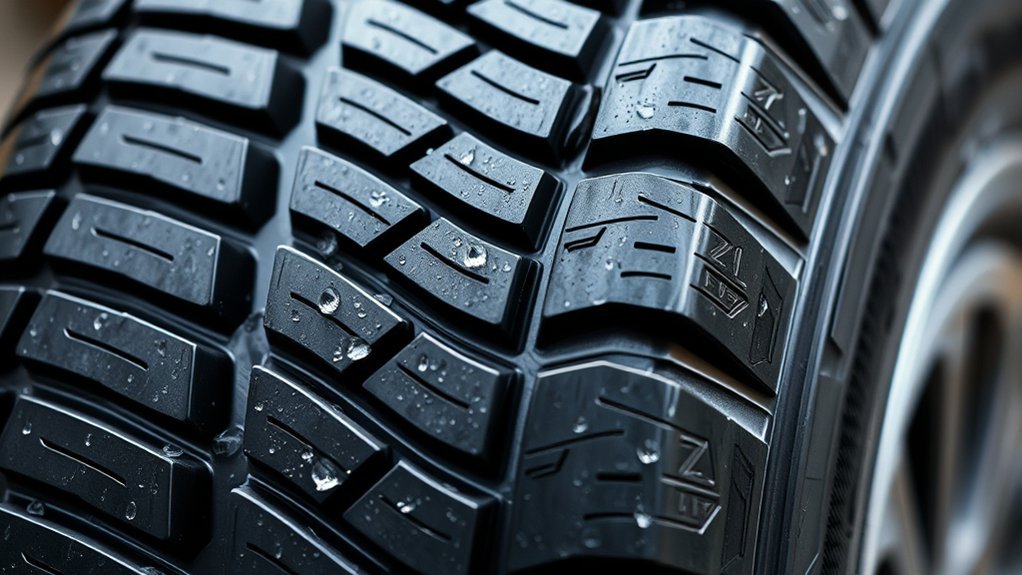
Directional treads are designed to roll one way. They often use a V-shaped or arrow-like pattern that helps move water away from the tire’s contact patch. This can improve wet-road grip and reduce the risk of hydroplaning when the tire has enough tread depth and is mounted correctly.
Key Benefits of Directional Treads
Directional tires can be useful for Hilux drivers who regularly face heavy rain, wet highways, and fast-changing weather. Their main benefit is water evacuation. Many directional patterns also feel stable at higher speeds and can work well in snow or mud when the tire category and compound are designed for those conditions.
Hydroplaning Resistance Explained
Hydroplaning happens when the tire cannot push water away quickly enough and starts to ride on top of the water. Tread depth, tread pattern, speed, water depth, tire pressure, and vehicle load all affect the risk. Even the best directional tread cannot perform well if it is worn, underinflated, overloaded, or installed backward.
| Feature | Benefit | Important Check |
| V-shaped channels | Help move water away from the tread | Mount with the sidewall arrow facing forward rotation |
| Wide grooves | Improve water dispersion and wet grip | Replace tires before tread becomes too shallow |
| One-way design | Keeps water-flow channels working as designed | Rotate front-to-rear only unless the tire is demounted |
Optimal Water Displacement Design
For wet roads, look for open grooves, good siping, and a tire compound designed for rain. A directional pattern can help, but tread depth is still critical. If the grooves are worn down, the tire has less room to move water, braking distances increase, and steering control can drop sharply in heavy rain.
Warning: A directional tire mounted backward can lose much of its wet-weather advantage. Always check the sidewall arrow after installation or rotation.
Should You Combine Tread Patterns on a Toyota Hilux?
For normal driving, the safest answer is no: do not combine different tread patterns just to create a “balanced” setup. A matching set of four tires gives the most predictable braking, steering, traction, and stability. At minimum, tires on the same axle should match in size, construction, load index, speed rating, and tread pattern.
If you replace only two tires, fit the newer or deeper-tread pair to the rear axle. This helps reduce the chance of rear-end grip loss in wet conditions. If your Hilux has directional tires, rotate them front-to-rear on the same side unless a tire professional demounts and remounts them correctly. If your Hilux has asymmetrical tires, make sure the “outside” marking faces outward on every wheel.
Warning: Do not mix highway, all-terrain, and mud-terrain tires on the same axle. Mixed grip can make emergency braking and wet cornering less predictable.
Choosing the Right Tire Tread Patterns for Your Driving Needs
When choosing tire tread patterns for your Toyota Hilux, think less about the most aggressive-looking tread and more about your real driving week. The right tire is the one that handles your usual roads safely while still covering your occasional trips.
[Products Worth Considering]

Vigorder rubber cement glue delivers superior adhesion and cures quickly within about 30 seconds for seamless rubber bonding. Once cured, it helps provide a strong, durable, waterproof seal that holds up to vehicle weight, pressure, and heat. Suitable for cars, motorcycles, trucks, bicycles, and off-road tires, it’s designed for emergency patch and maintenance repairs.

These aluminum alloy tire valve stem caps with an O-ring seal help protect valve stems from corrosion while adding a clean, stylish look to your vehicle. The universal fit works across cars, trucks, motorcycles, bicycles, and more, making them an easy upgrade for everyday driving and off-road use. Installation is quick, and the included four-pack keeps all your tires dressed and protected.

The 22800 wheel stud installer makes replacing wheel studs quick and secure, saving time and effort during tire service. It uses a ratchet or impact wrench to pull new studs firmly into place, helping when existing studs are too long. Compatible with most automotive wheels and light-duty truck wheel studs, it’s designed for easy, tool-assisted installation.
Tread Patterns Explained
Symmetrical patterns are usually quiet, durable, and easy to rotate. Asymmetrical patterns can improve wet and dry handling by using different inside and outside tread zones. Directional patterns are designed to roll one way and can improve water evacuation when mounted correctly. For off-road work, also compare tread depth, void ratio, shoulder design, sidewall strength, and stone-ejection features.
Weather Considerations
- Wet conditions: Choose tires with strong water channels, healthy tread depth, and good wet-braking ratings.
- Hot dry roads: Choose a tire that balances heat resistance, stability, and tread life.
- Snow and ice: Use winter or all-weather tires that meet local winter-tire requirements instead of relying on aggressive tread alone.
- Sand: Look for a suitable all-terrain tire and use correct pressure practices for the terrain, then reinflate before returning to the road.
- Mud and clay: Choose wider voids and self-cleaning tread blocks, but expect more noise on sealed roads.
Driving Style and Load Impact
A Hilux carrying tools, camping gear, passengers, or towing weight needs a tire with the correct load rating. Aggressive tread will not compensate for an under-rated tire. If you tow or carry heavy loads, check pressure recommendations for loaded conditions and inspect tread shoulders often for heat, underinflation, or uneven wear.
The best Hilux tire is not always the toughest-looking one. It is the tire that matches your load, terrain, weather, and daily road use.
Maintenance Tips for Extending Tire Life on Your Toyota Hilux
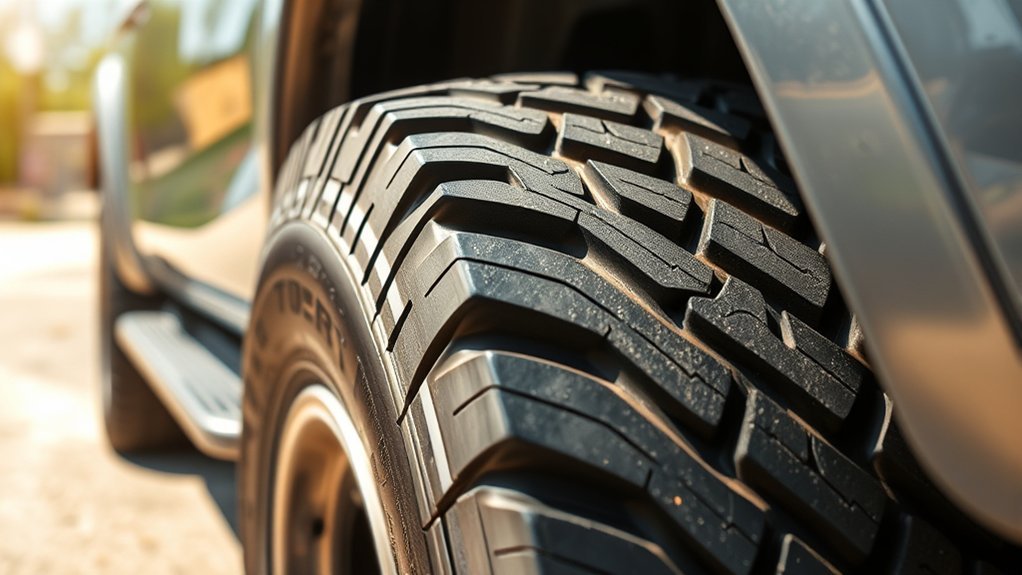
Good tire maintenance helps your Hilux stop, steer, tow, and carry loads safely. It also protects your investment, because uneven wear can ruin a good set of tires long before the tread is fully used.
- Check tire pressure monthly: Use a gauge, not just the tire-pressure warning light. Set pressure according to the vehicle placard and driving load.
- Measure tread depth: Use a tread-depth gauge and check several grooves across each tire. Judge the tire by the lowest reading.
- Watch wet-weather tread depth: Replace at the legal minimum in your market, but consider earlier replacement if you often drive in heavy rain.
- Rotate regularly: Follow the owner’s manual. If no interval is listed, many tire-safety groups recommend rotating roughly every 5,000 to 8,000 miles.
- Check alignment: Edge wear, feathering, or pulling to one side can point to alignment or suspension problems.
- Balance after fitting: Vibration at speed can shorten tire life and make highway driving tiring.
- Inspect after off-road trips: Look for cuts, stones, sidewall damage, bulges, missing tread chunks, and punctures.
Signs Your Hilux Tires Need Replacement or Inspection
Replace or professionally inspect your tires if you see any of these warning signs:
- Tread wear bars are flush with the tread surface.
- One shoulder is wearing faster than the other.
- There are cracks, bulges, exposed cords, or sidewall cuts.
- The tire vibrates, thumps, or pulls even after pressure correction.
- Wet braking feels longer than usual.
- The tire has frequent punctures or visible tread separation.
- One tire has much less tread than the others on a 4×4 setup.
When in doubt, have a tire professional inspect the full set. This is especially important before towing, remote travel, long highway trips, or off-road driving where tire failure can leave you stranded.
Frequently Asked Questions
What stud pattern is the Toyota Hilux?
Many modern Toyota Hilux models use a 6×139.7 mm stud pattern, also written as 6×5.5 inches. However, wheel fitment is model-year and market dependent, so confirm your exact Hilux’s stud pattern, center bore, offset, nut seat, rim size, and load rating before buying wheels.
Are all-terrain tires the best choice for a Toyota Hilux?
All-terrain tires are the best balanced choice for many Hilux owners who drive both sealed roads and gravel, worksites, farms, or light trails. If you drive mostly highways, a highway-terrain tire may be quieter and more efficient. If you drive mostly deep mud or rocks, a mud-terrain tire may be more suitable.
Can I mix different tread patterns on my Hilux?
Avoid mixing different tread patterns, especially on the same axle. A matching set of four gives the most predictable grip and handling. If you must replace only two tires, use the same size, construction, load index, speed rating, and pattern on the axle, and fit the better pair to the rear.
Can directional tires be rotated on a 4×4 Hilux?
Yes, but rotation options are limited. Directional tires usually move front-to-rear on the same side so the rolling direction stays correct. Moving them side-to-side usually requires demounting and remounting the tire on the wheel.
What tread depth is safe for wet roads?
The legal minimum varies by market, and 2/32 inch or about 1.6 mm is a common replacement floor. For frequent rain, do not wait until the absolute minimum. Wet braking and hydroplaning resistance decline as tread depth drops, so plan replacement earlier if wet-road safety is a priority.
Which tread pattern is quietest for daily Hilux driving?
A highway-terrain tire with a symmetrical or mild asymmetrical tread is usually the quietest option. Aggressive all-terrain and mud-terrain tires often create more road noise because their larger blocks and wider voids strike the road surface more heavily.
Conclusion
The right tire tread pattern for your Toyota Hilux depends on your real driving conditions. Choose symmetrical highway-terrain tires for quiet daily use, all-terrain tires for mixed work and weekend travel, directional or wet-focused tires for heavy rain, and mud-terrain tires only when off-road grip matters more than road comfort. Above all, match the correct size, load rating, speed rating, and pressure to your Hilux, and avoid unsafe mixing of tread patterns. With the right choice and regular maintenance, your Hilux will feel safer, steadier, and more capable wherever the road ends.
Sources
- Toyota Australia HiLux Specifications — supports current tire-size variation by grade and the need to verify exact model specs.
- Toyota New Zealand: Choosing the Best Tyres for Your Truck — supports choosing tires by conditions, replacing in sets or pairs, and checking pressure, tread depth, balancing, and alignment.
- Bridgestone: Tire Tread Patterns — supports definitions of symmetric, asymmetric, and directional tread patterns.
- Continental Tires: Tire Tread — supports tread components, directional/aquaplaning guidance, asymmetric tread behavior, and tread-depth checks.
- U.S. Tire Manufacturers Association: Tire Care Essentials — supports monthly tire-pressure checks, tread-depth guidance, wear bars, and rotation intervals.
- Tire Industry Association: Tire Rotation — supports tire-rotation patterns and directional-tire rotation limits.