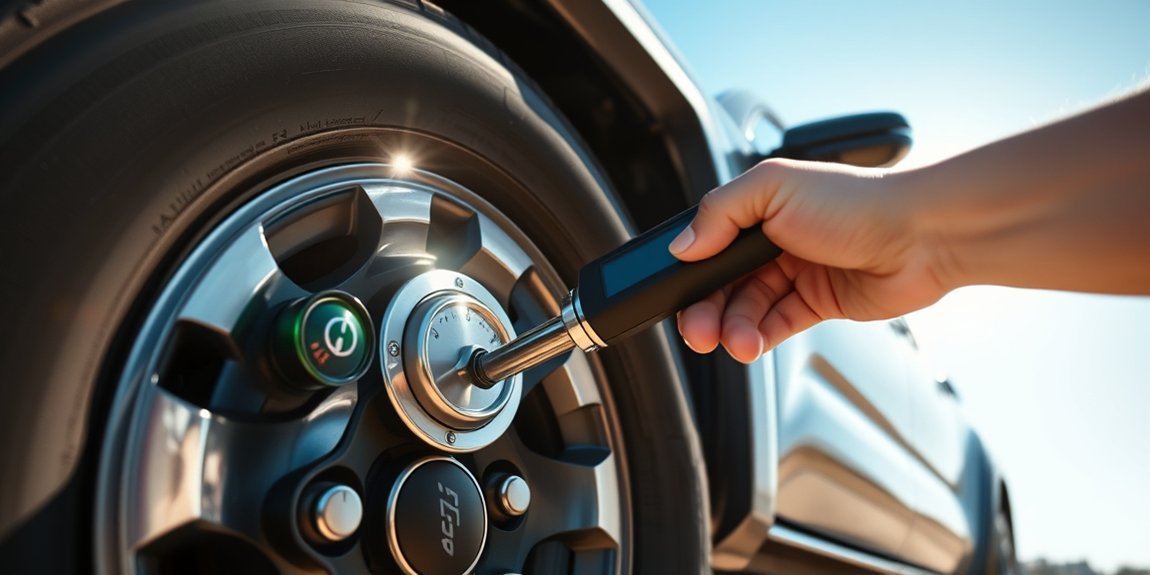
Checking the tire pressure on a Toyota Tacoma only takes a few minutes, but the right PSI depends on your exact model year, tire size, wheel package, and spare tire type. Use the pressure listed on your driver-side door-jamb tire label or in the Toyota owner’s manual first, then use the Tacoma-specific examples below as a helpful reference.
Quick Answer
To check Toyota Tacoma tire pressure, park the truck long enough for the tires to cool, remove the valve cap, press a reliable tire pressure gauge firmly onto the valve stem, compare the reading with the driver-door tire label, then add or release air as needed. Check the spare tire too.
Key Takeaways
- The correct Tacoma tire pressure is the cold PSI on the driver-side door-jamb label or in the Toyota owner’s manual, not the maximum PSI printed on the tire sidewall.
- For many 2024+ Tacoma 17-inch tire setups, Type A and Type B main tires are 35 psi cold, while Type C main tires are 30 psi cold. Spare tire pressure depends on the spare type.
- Check tire pressure when the tires are cold, ideally before driving or at least three hours after driving.
- Do not rely only on the TPMS light or Toyota app; both can warn late, show delayed data, or fail to show a reading.
At a Glance
| Time Required | 5–10 minutes |
| Difficulty | Easy |
| Tools Needed | Tire pressure gauge, air compressor or gas-station air pump, valve caps, optional soapy water for leak checks |
| Cost | Usually free if you already have a gauge; about $5–$20 for a basic gauge |
Why Tire Pressure Matters on a Toyota Tacoma
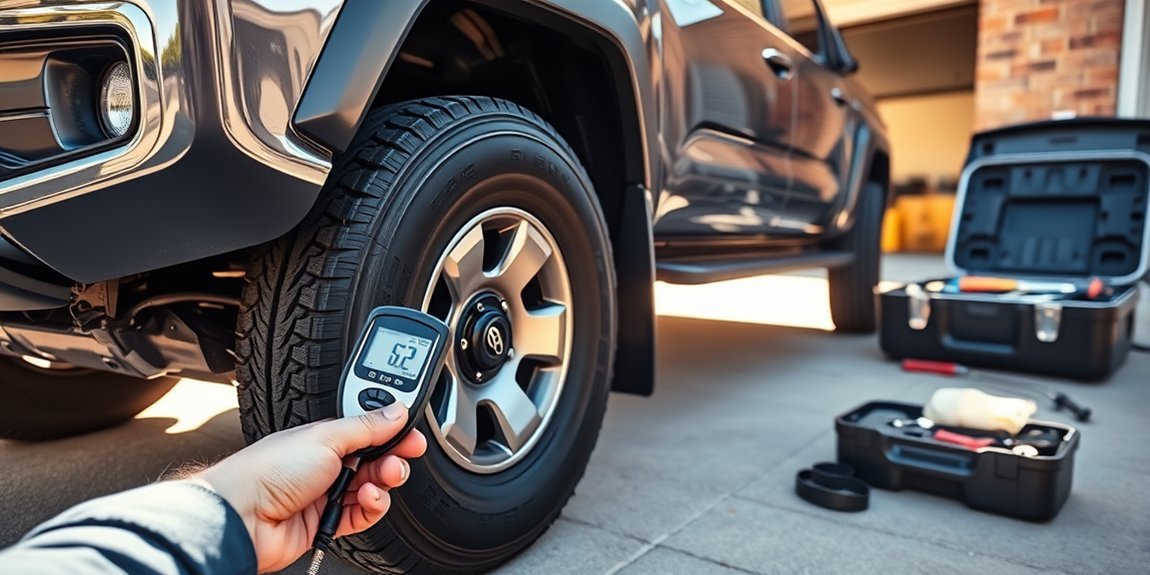
Tire pressure affects how your Tacoma steers, brakes, rides, carries cargo, and wears its tires. When tires are underinflated, they flex more, build extra heat, and can wear faster on the edges. When they are overinflated, the ride can feel harsher and the tread can wear unevenly in the center.
Proper inflation also helps fuel economy. FuelEconomy.gov notes that properly inflated tires are safer and last longer, and that underinflated tires can lower gas mileage by about 0.2% for every 1 psi drop in the average pressure of all tires.
Warning: The tire pressure number molded into the tire sidewall is the tire’s maximum pressure, not the recommended Tacoma driving pressure. Use the driver-door tire label or owner’s manual as your target.
How Tire Pressure Affects Safety, Ride, and Fuel Economy
Correct tire pressure helps your Tacoma maintain stable handling, predictable braking, and even tread contact with the road. This matters during everyday driving, highway trips, towing, and off-road use.
The Tire Pressure Monitoring System, or TPMS, is helpful, but it is not a replacement for manual checks. Federal TPMS rules require the system to warn when tire pressure becomes significantly low, often around 25% below the manufacturer’s recommended cold pressure. That means a tire can be below your target PSI before the warning light appears.
TPMS is a warning system, not a maintenance schedule. Check your Tacoma’s tires manually at least monthly and before long trips.
Tools You Need to Check Tire Pressure Accurately
You do not need special tools to check Tacoma tire pressure, but you do need a gauge you trust. A good digital or dial-style gauge is better than guessing by looking at the tire, because visual checks can miss a low tire.
- Tire pressure gauge: Digital, dial, or stick-style is fine if it reads consistently.
- Air source: Use a home compressor, portable inflator, or gas-station air pump.
- Valve caps: Replace missing caps to help keep dirt and moisture out of the valve stem.
- Soapy water: Optional, but useful for spotting slow leaks around the valve stem or tread puncture.
Pro Tip: Keep a small gauge in the glove box. It is faster than waiting for the TPMS light, and it lets you check pressure before road trips, cold snaps, heavy loads, or off-road weekends.
[Products Worth Considering]

The TYAMATE TM8 solar-powered wireless TPMS delivers real-time tire pressure and temperature monitoring with six alarm modes for safer driving. A vibrant color LCD display shows readings clearly while windshield mounting keeps it hands-free and easy to read. With a wide 0–87 PSI range, strong 433.92 MHz signal transmission, and quick sensor pairing, it’s ideal for RV, sedan, SUV, MPV, and truck use.

Keep your tires properly inflated with this analog VONDIOR tire pressure gauge, designed for fast, easy readings without batteries. The swiveling, two-axis hose and large glow dial help you measure at any tire angle with instant visibility. Built with a protective rubber shield, it supports durable, low-maintenance use for cars and trucks.
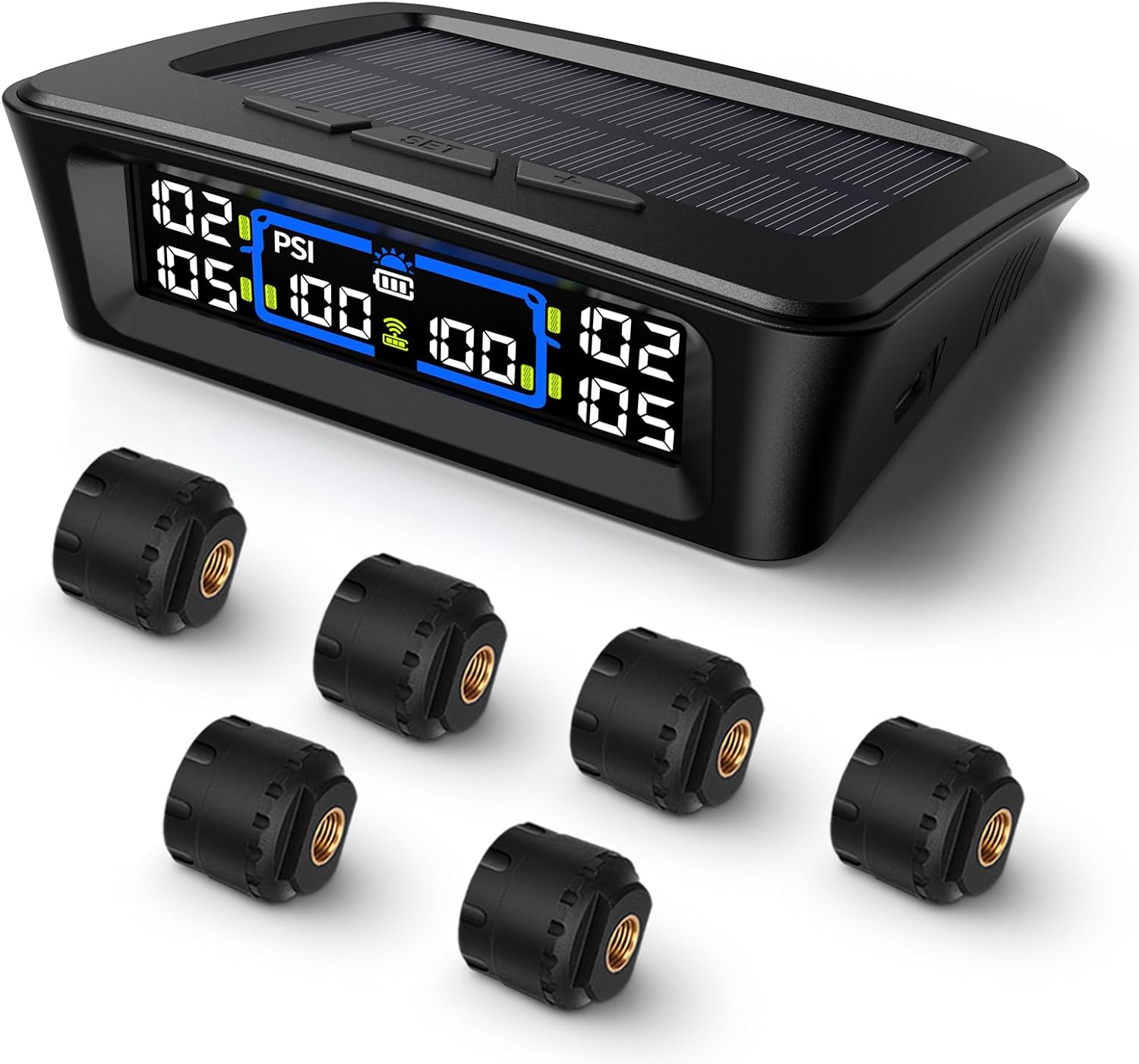
The Tymate TM12 RV TPMS delivers real-time tire pressure and temperature monitoring with a stable 433Hz display for safer long-distance driving. It supports simultaneous monitoring across vehicle and trailer zones, includes six alarm modes for pressure, temperature, leakage, battery, and signal loss, and features easy DIY installation with auto calibration. Power is supplied via USB-C charging or solar recharging, with a wide 0–144 PSI range and up to 50 ft signal coverage for RVs and towable trailers.
Recommended Tire Pressure Specifications for Your Tacoma
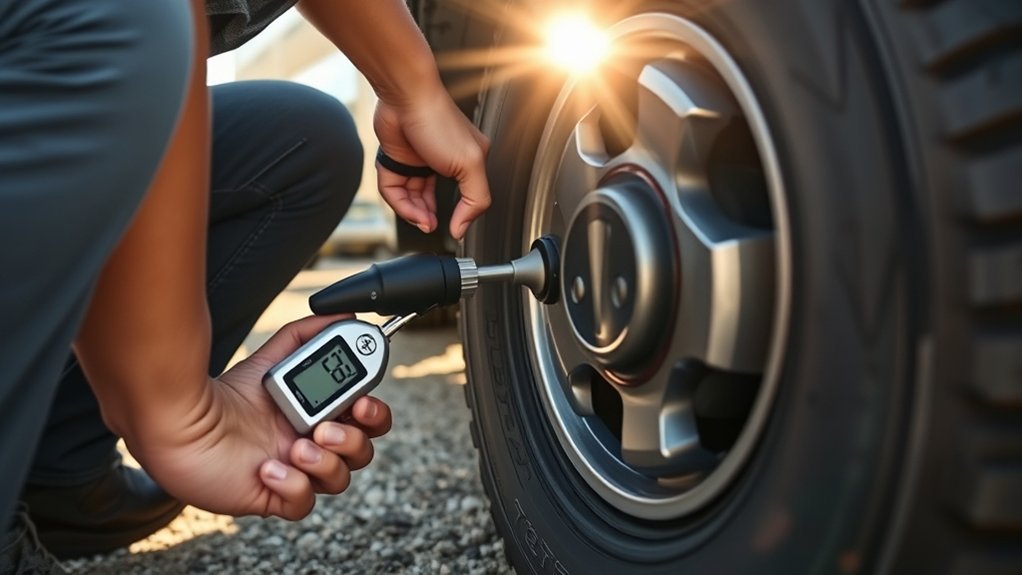
The exact PSI for your Tacoma is printed on the tire and loading information label on the driver-side door jamb. You can also confirm it in the Toyota owner’s manual for your model year. Use that label first, especially if your truck has a different trim, tire size, aftermarket wheels, replacement tires, or a changed load rating.
For many 2024+ Toyota Tacoma 17-inch tire configurations, the common cold-pressure examples are:
| Tacoma Tire Type | Main Tire Size | Main Tire Cold PSI | Spare Cold PSI |
| 17-inch Type A | 245/70R17 | 35 psi | 60 psi temporary spare |
| 17-inch Type B | 245/70R17 | 35 psi | 35 psi full-size spare |
| 17-inch Type C | 265/70R17 | 30 psi | 32 psi |
Note: These are common 2024+ Tacoma examples, not a universal Tacoma chart. Older Tacomas, different trims, aftermarket tires, and heavy-duty replacement tires may require different pressures.
[Products Worth Considering]

These aluminum alloy tire valve stem caps with an O-ring seal help protect valve stems from corrosion while adding a clean, stylish look to your vehicle. The universal fit works across cars, trucks, motorcycles, bicycles, and more, making them an easy upgrade for everyday driving and off-road use. Installation is quick, and the included four-pack keeps all your tires dressed and protected.
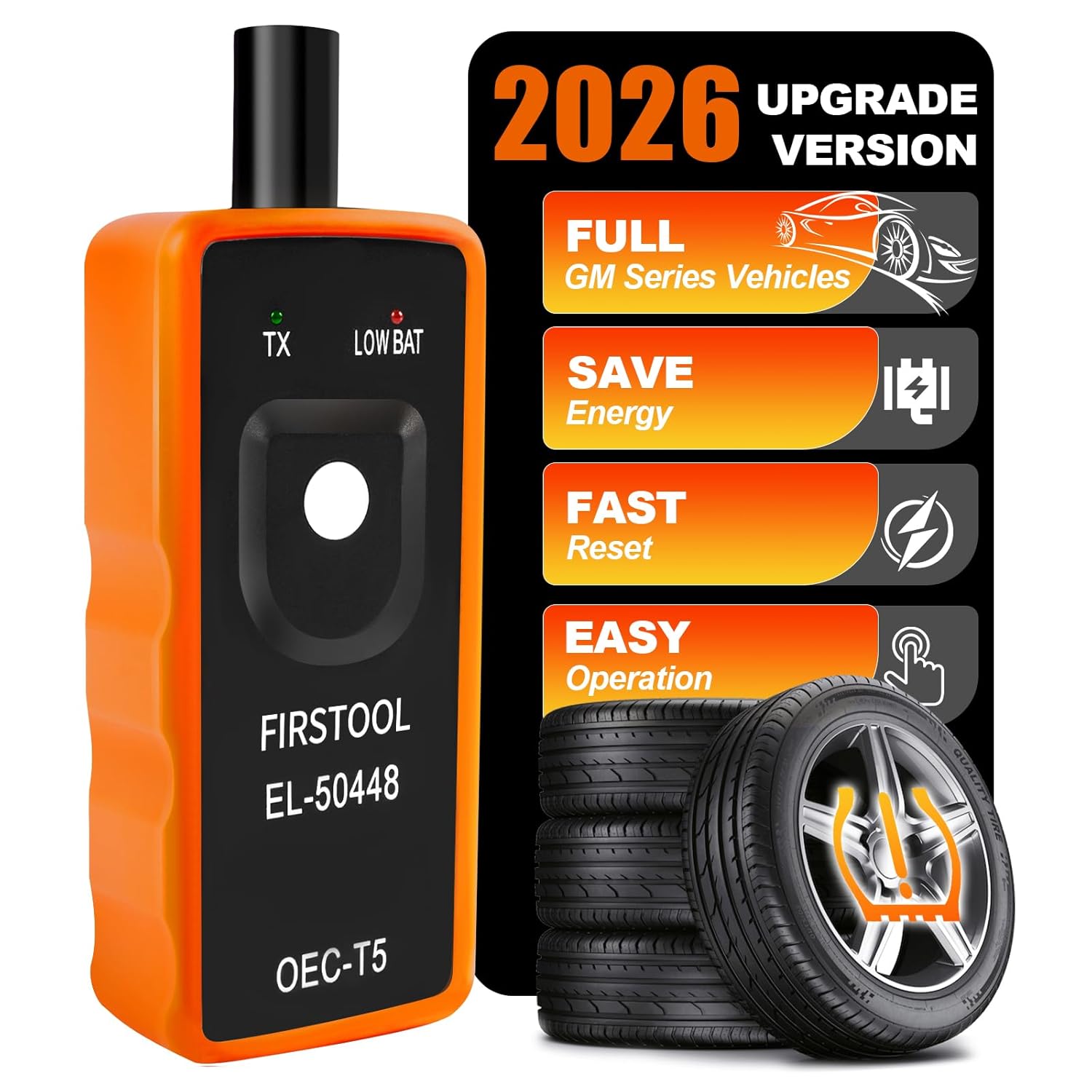
This TPMS relearn tool helps you quickly activate, match, and reset GM tire pressure sensors to keep the vehicle monitoring system working properly. It clears tire pressure alarms and dashboard warning lights after sensor replacement or tire rotation, and supports learning for common 315/433 MHz TPMS sensors. Designed for simple one-button operation, it can help you avoid unnecessary trips to repair shops.

ETENWOLF’s calibrated tire pressure gauge delivers accurate readings for cars, trucks, motorcycles, bikes, SUVs, RVs, and ATVs across a 0–75 PSI range. The large glow dial improves visibility in low light, while the 360° swivel chuck makes it easy to check valve pressure from any angle. It’s designed to stay accurate even in extreme hot or cold weather.
Your Easy Step-by-Step Guide to Checking Tire Pressure
Follow these steps when the truck has been parked long enough for the tires to cool. NHTSA defines a cold tire as one that has not been driven on for at least three hours.
- Find your target PSI. Open the driver’s door and read the tire and loading information label. Confirm the front, rear, and spare tire pressure.
- Remove the valve cap. Put it in your pocket so it does not roll away.
- Press the gauge straight onto the valve stem. A brief hiss is normal, but a long hiss means the gauge is not sealed correctly.
- Read the pressure. Compare the gauge reading with the cold PSI on the door label.
- Add air if the tire is low. Add air in short bursts, then recheck with the gauge.
- Release air if the tire is too high. Press the valve core briefly, then check again.
- Replace the valve cap. Make sure it is snug, but do not overtighten it.
- Repeat for all tires, including the spare. A spare can lose pressure slowly even when it is never used.
How to Adjust Tire Pressure Effectively
If your Tacoma tires are low, inflate them to the cold PSI listed on the door label. If they are high, release air slowly until the gauge matches the target. Recheck each tire after adjustment because small bursts of air can change the reading quickly.
If you already drove several miles, the tires may be warm and the reading may be higher than a true cold reading. In that case, do not bleed a warm tire down below the recommended cold pressure. Check again after the truck has been parked for at least three hours.
After filling the tires, the TPMS light may not turn off instantly. Some systems need a short drive to update. If the light flashes for about a minute and then stays on, that can indicate a TPMS malfunction rather than a simple low-pressure warning.
[Products Worth Considering]

ETENWOLF’s tire pressure gauge helps you quickly and accurately check tire PSI across cars, trucks, motorcycles, bikes, and more. It’s manually calibrated to ANSI B40.1 Grade A for reliable readings, includes a large glow dial for easy nighttime viewing, and features a 360-degree swivel chuck for use at any valve angle. The gauge also works consistently in extreme hot or cold weather.

This tire inflator with pressure gauge delivers long-lasting performance with a durable rubber-protected gauge and sturdy build. The longer hose and 360 swivel air chuck help you seal the valve securely and keep your hands free while measuring, inflating, or deflating. It’s battery-free for reliable use and provides ±2 PSI accuracy in the mid-range for most typical tires, with universal compatibility for 1/4 NPT compressor outputs.

Replace worn or malfunctioning GM TPMS sensors with this 433MHz pre-programmed sensor set designed for compatibility with many Chevrolet, Buick, GMC, and Cadillac models. It includes guidance for proper OBDII relearning/pairing after installation and supports reliable long-term operation with a high-performance CR2032 battery. Quality tested for durability and performance to help restore accurate tire pressure monitoring.
Troubleshooting Tire Pressure Monitoring Issues in the App
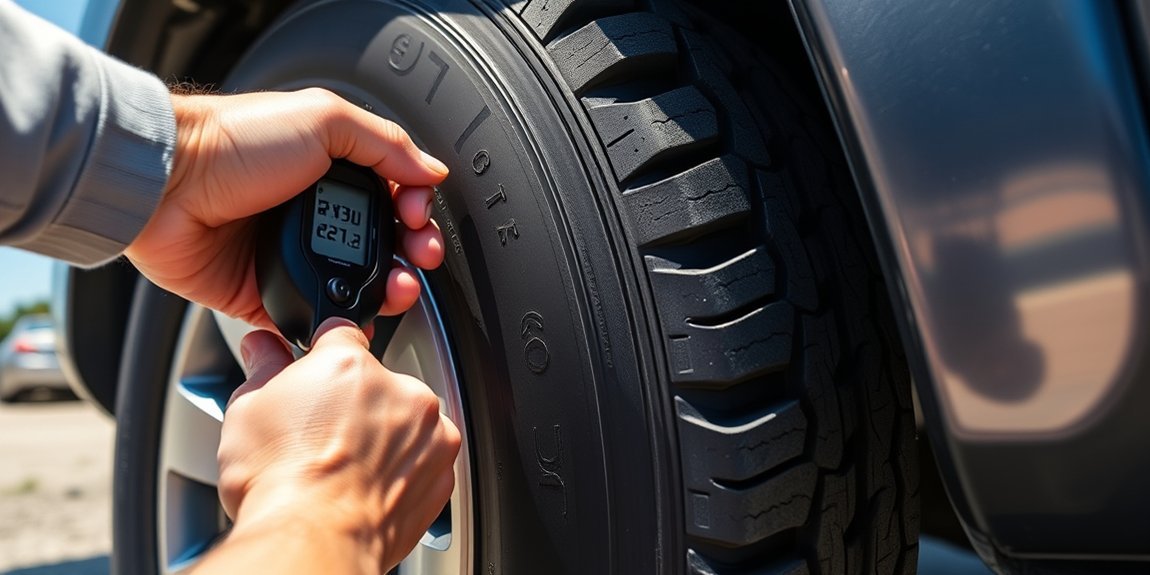
Some Tacoma owners check tire pressure through the Toyota app or dashboard display, but app availability depends on the vehicle, connected-services setup, software, and account status. If the app shows N/A or does not match the dash, use a physical gauge and the dashboard TPMS information first.
- Confirm the pressure manually. A gauge gives you a direct reading at the tire.
- Check the dashboard display. If the dash shows pressure but the app shows N/A, the issue may be app/account/connectivity related.
- Update the Toyota app. Install the latest app version and sign back in if needed.
- Confirm connected-services setup. Make sure the truck is linked to the correct Toyota account and that supported services are active.
- Drive briefly after adjustment. Some TPMS readings update only after the truck moves.
- Contact Toyota support or your dealer if the issue continues. Persistent app N/A readings, flashing TPMS lights, or missing tire data after tire service may need sensor registration or service diagnosis.
Warning: If one tire keeps losing pressure after you inflate it, do not keep topping it off and ignoring it. Check for a puncture, leaking valve stem, damaged wheel, or tire bead leak, and have it inspected before highway driving.
The Importance of Checking Your Spare Tire’s Pressure
The spare tire is easy to forget because it is not part of everyday driving, but it can lose air over time. A low spare is a problem when you need it most, especially on a road trip or trail.
Check the spare monthly when it is cold. For Tacoma models with a temporary spare, the spare may require a much higher pressure than the main tires. For trucks with a full-size spare, the pressure may match or closely follow the main tire pressure. Always use the spare-tire pressure listed on the door label or in the owner’s manual.
Essential Practices for Regular Tire Pressure Maintenance
Make tire pressure part of your normal Tacoma maintenance routine. A simple schedule works best:
- Check all tires monthly. Include the spare if your Tacoma has one.
- Check before long trips. Do this before towing, hauling, off-roading, or driving in extreme heat or cold.
- Check when seasons change. Tire pressure often drops when outside temperatures fall.
- Inspect tread and sidewalls. Look for nails, cuts, bulges, cracking, or uneven wear.
- Replace missing valve caps. They help keep dirt and moisture away from the valve core.
Also keep load in mind. If you tow or carry heavy cargo, follow the Tacoma owner’s manual and tire label guidance for load limits, and never exceed the tire or vehicle ratings.
Community Insights and Resources for Tire Pressure Monitoring
Tacoma owner communities are useful for real-world tips, especially when owners compare dashboard readings, app behavior, and TPMS quirks. Still, forum advice should not override the Toyota owner’s manual, the tire label on your truck, or a professional tire inspection.
The safest approach is simple: use the driver-door label for the target PSI, use a physical gauge for the actual reading, and treat the Toyota app or dashboard display as a helpful backup. If the app is wrong, delayed, or unavailable, your gauge and the dash warning light matter more.
Frequently Asked Questions
How do I look at tire pressure on a Toyota Tacoma?
Use the tire-pressure screen in the multi-information display if your Tacoma is equipped with individual tire readings. Then confirm the pressure with a manual gauge at each valve stem, especially if the warning light is on or one tire looks low.
Can you check tire pressure on the Toyota Tacoma dashboard?
Yes, many newer Tacomas can show tire-pressure information on the dashboard display. Use the steering-wheel controls to cycle through vehicle information screens. If the display is unavailable or delayed, check manually with a tire pressure gauge.
Should I use the PSI printed on the tire sidewall?
No. The PSI printed on the tire sidewall is the maximum pressure for that tire, not the recommended pressure for your Tacoma. Use the cold PSI on the driver-side tire label or in the owner’s manual.
Why does my Toyota app show tire pressure as N/A?
The app may show N/A because of account setup, connected-services availability, weak vehicle communication, app bugs, sensor learning, or unsupported vehicle features. Confirm pressure with a gauge and dashboard display first, update the app, then contact Toyota support or a dealer if the issue continues.
How often should I check Tacoma tire pressure?
Check all tires at least once a month when cold, and check again before long trips, towing, hauling, off-roading, or major temperature changes. Include the spare tire in your monthly check.
What should I do if the TPMS light stays on after adding air?
Recheck all tires with a gauge, including the spare if your system monitors it. If the pressures are correct, drive for a few minutes to let the system update. If the light flashes and then stays on, or if it returns quickly, have the TPMS sensors and tires inspected.
Conclusion
Checking Toyota Tacoma tire pressure is simple: start with the cold PSI on the driver-door label, use a reliable gauge, adjust each tire carefully, and remember the spare. TPMS and app readings are useful backups, but they are not a substitute for regular manual checks. A few minutes each month can improve safety, ride quality, tire life, and fuel economy.
Sources
- Toyota Manuals and Warranties — official Tacoma owner’s manual access and model-specific owner information
- NHTSA Tire Safety Ratings and Awareness — cold tire pressure, tire placard guidance, and tire safety basics
- 49 CFR § 571.138 TPMS Standard — TPMS warning requirements and owner-manual tire-pressure language
- NHTSA Summer Driving & Road Trip Tips — cold tire checks and warning not to use sidewall maximum PSI as the target
- FuelEconomy.gov Gas Mileage Tips — fuel-economy impact of proper tire inflation