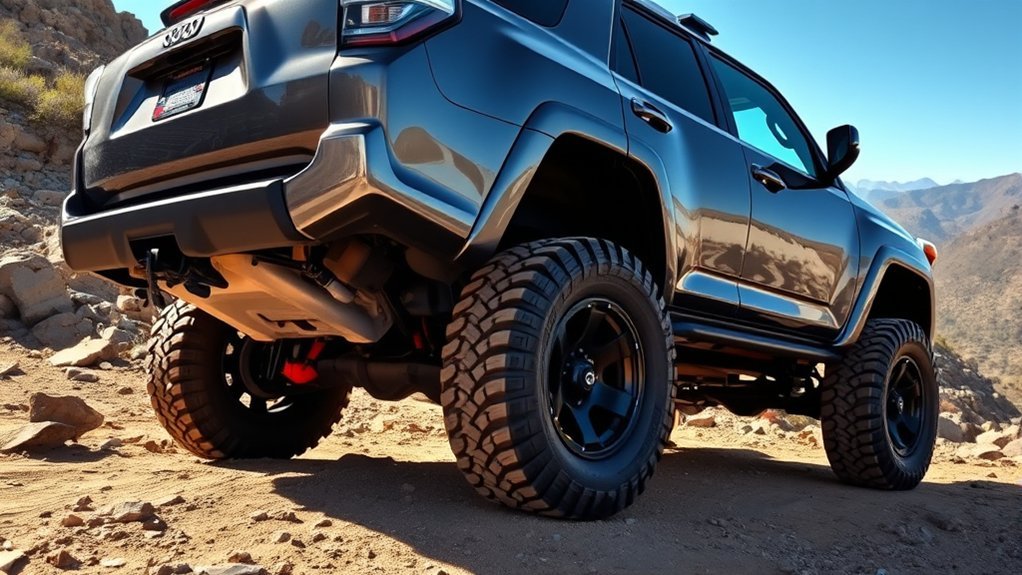
You can run 33-inch tires on a Toyota 4Runner, but the right setup depends on your generation, wheel offset, tire width, suspension height, and how much trimming you are willing to do. On many 2010-2024 4Runners, a common 33-inch size such as 285/70R17 usually needs a front lift, fender liner relocation, mud flap trimming, careful alignment, and sometimes a body mount chop. On some 2025+ trims, Toyota now offers factory 33-inch tire setups, so the answer is different for newer models.
Quick Answer
Yes, a 4Runner can run 33-inch tires, but most older stock setups will rub without clearance work. For many 2010-2024 builds, plan on about 2.5-3 inches of front lift, proper caster, fender liner relocation, mud flap trimming, and possible body mount work.
Key Takeaways
- A common 33-inch 4Runner tire size is 285/70R17, which is about 32.7 inches tall on paper.
- A lift helps, but it does not fix every rubbing point because the tire still moves backward and upward during steering and suspension compression.
- Wheel offset, caster, tire brand, tread shape, mud flaps, fender liners, and body mount clearance all affect fitment.
- After installation, check alignment, tire pressure, lug torque, spare tire fitment, and any rubbing at full lock and full compression.
At a Glance
| Time Required | 2-6 hours for basic liner and mud flap trimming; longer if a body mount chop, lift kit, or alignment is included. |
| Difficulty | Moderate for plastic trimming; advanced for body mount cutting or suspension work. |
| Tools Needed | Floor jack, stands, torque wrench, trim tools, marker, heat gun, cut-off tool or Dremel, file, and alignment equipment through a shop. |
| Cost | Usually $0-$200 for DIY trimming and alignment support, or $1,000-$3,000+ if you add quality suspension, wheels, UCAs, and professional labor. |
Understanding Compatibility of 33-Inch Tires on a 4Runner
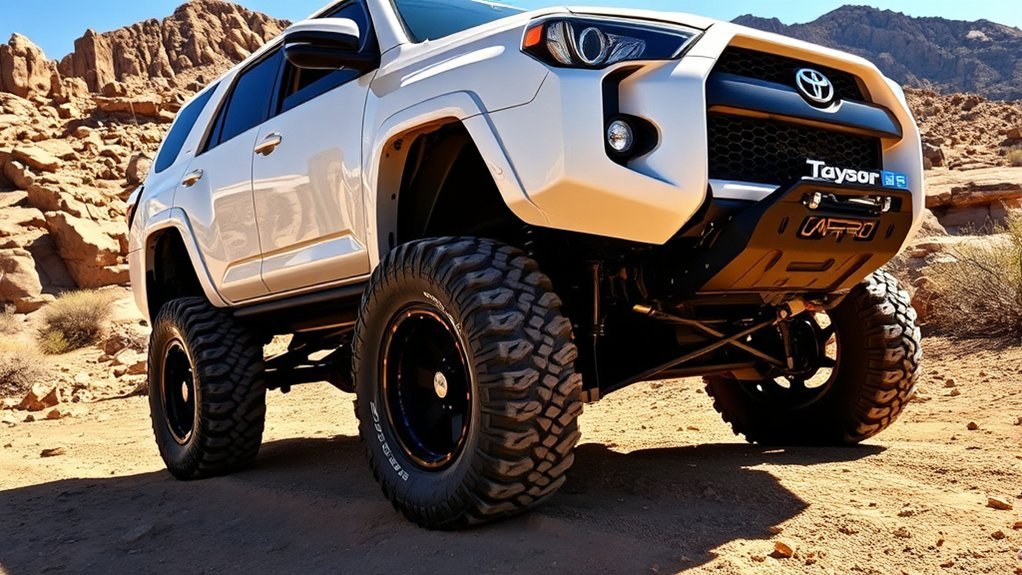
A 33-inch tire is not one exact size. It is a general category. The most common 4Runner choice is 285/70R17, which calculates to about 32.7 inches tall. Other near-33 sizes include 275/70R18, 285/75R16, 255/80R17, and some 33×10.50 or 33×12.50 flotation sizes.
Actual tire height can vary by brand, tread design, load range, and rim width. A mud-terrain tire with square shoulders can rub more than an all-terrain tire in the same marked size. That is why two 4Runners with the “same” 33-inch tire size can need different trimming.
For context, Toyota’s 2024 4Runner brochure lists several trims with P265/70R17 tires, while Limited trims use P245/60R20 tires. Both are roughly in the 31.5-31.6 inch range. Moving to a 33-inch tire adds diameter, width, weight, and leverage against the drivetrain.
Warning: Tire size changes can affect steering clearance, braking feel, speedometer accuracy, fuel economy, load capacity, and safety systems. Check your owner’s manual, tire placard, and tire load rating before installing larger tires. If metal cutting or body mount work is needed, use a qualified shop.
Fitment by 4Runner Generation
Before buying tires, identify your 4Runner generation and trim. A lifted 5th-gen TRD Off-Road does not fit the same as a stock 4th-gen Sport or a 2025+ Trailhunter.
| 4Runner Generation | 33-Inch Tire Notes |
| 4th Gen, 2003-2009 | Usually needs lift, trimming, and careful wheel offset. Body mount clearance can become an issue with wide tires. |
| 5th Gen, 2010-2024 | Most 285/70R17 setups need about 2.5-3 inches of front lift, fender liner relocation, mud flap trimming, alignment with positive caster, and possible body mount chop. |
| 6th Gen, 2025+ | Toyota’s 2025 Trailhunter uses 33-inch Toyo Open Country A/T tires with Old Man Emu shocks from the factory. Other trims should still be checked for clearance before copying that setup. |
Step-by-Step Modifications for Fitting 33-Inch Tires
Fitting 33-inch tires is best handled as a clearance plan, not just a tire purchase. Do the checks in order so you do not cut more than needed.
- Pick the tire size first. A 285/70R17 is easier than a 33×12.50 because it is narrower and fits a 17-inch wheel well.
- Check your wheel offset. Stock wheels may sit farther inward. Low-offset aftermarket wheels push the tire outward, which can improve upper control arm clearance but increase fender and bumper rubbing.
- Install the lift if needed. Most 2010-2024 builds work best with about 2.5-3 inches of front lift and balanced rear height.
- Set alignment and caster. More positive caster can move the tire forward and reduce rubbing near the body mount.
- Test fit before cutting. Turn full lock left and right, reverse slowly, compress the suspension if possible, and mark every contact point.
- Trim only what rubs. Start with mud flaps and plastic liners before moving to bumper trimming or body mount work.
- Road test and recheck. Listen for rubbing while turning, braking, reversing, and entering driveways at an angle.
[Products Worth Considering]

These M14x1.5 closed-end chrome lug nuts are a one-piece replacement designed for secure fitment on compatible GM, Ford, and select Chrysler/Dodge models. Featuring a 60-degree conical seat and anti-rust chrome plating, they help resist corrosion and maintain a bright look for everyday driving. Built for long-term durability, they include OEM-style part references and are backed by 12 months of support.

This manual duck head tire changer kit makes tire installation and removal simpler by letting you embed the duck head into the tire with applied pressure. The integrated design and durable steel construction help reduce friction and improve efficiency and safety during use. Suitable for 16–21 inch wheels, it’s convenient for cars, trucks, SUVs, and ATV tires, with 24-hour after-sales support.

These aluminum alloy tire valve stem caps with an O-ring seal help protect valve stems from corrosion while adding a clean, stylish look to your vehicle. The universal fit works across cars, trucks, motorcycles, bicycles, and more, making them an easy upgrade for everyday driving and off-road use. Installation is quick, and the included four-pack keeps all your tires dressed and protected.
Required Trimming Modifications
Start with the easy plastic parts. The front mud flaps and lower fender liner are the most common first contact points. You can often gain useful space by moving the front fender liner forward and securing it with new holes or clips.
If the tire still rubs at the front bumper corner, trim only the lower plastic edge that contacts the tire. Use painter’s tape to mark a clean line, cut slowly, then file or sand the edge smooth. Avoid cutting painted metal unless you have a clear reason and a rust-prevention plan.
The hardest rubbing point is the body mount area behind the front tire. A body mount chop removes and plates part of the mount for clearance. This is a structural area, so it should be welded and finished by someone who understands frame and body mount work.
Suspension Lift Recommendations
A lift creates more vertical room, but it does not make the tire smaller. During steering and suspension travel, the tire still moves toward the fender liner, bumper, and body mount. That is why a 3-inch lift can still rub if the wheel offset, caster, or tire width is wrong.
- Daily driver with mild trails: 285/70R17 all-terrain tires, 2-3 inches of front lift, mild trimming, and a clean alignment are usually the best balance.
- Trail-focused build: Add stronger upper control arms, more precise alignment, extra trimming, and stronger skid protection.
- Wide stance build: Expect more bumper and fender trimming because low-offset wheels push the tires outward.
Pro Tip: If you want the least cutting, choose a narrower 33-inch tire and a conservative wheel offset. A tall, narrow tire often fits with fewer problems than a wide 12.50-inch tire.
Handling Rubbing and Clearance Issues
Rubbing is not always obvious in the driveway. Some setups clear while parked but rub when reversing, turning downhill, braking, or flexing off-road. Test your 4Runner in real conditions before assuming the fitment is finished.
Common Rubbing Locations
- Front fender liner: Usually rubs near the front of the wheel well during turns.
- Front mud flap: Common with 285/70R17 tires and almost always worse in reverse.
- Lower bumper corner: Often rubs when the steering is near full lock.
- Body mount behind the front tire: A common problem with wider tires, low-offset wheels, or low caster.
- Upper control arm: Can happen when wide tires are used on stock wheels.
- Sway bar and inner frame area: More likely with unusual wheel widths or offsets.
Clearance Modifications Required
The cleanest approach is to work from least invasive to most invasive. Remove or trim mud flaps first. Move the fender liner forward next. Then trim plastic bumper edges. Only consider a body mount chop if alignment and plastic trimming do not solve the rearward tire contact.
After each change, turn the wheel to full lock both directions and check again. Look for shiny plastic, fresh rubber marks, or scuffed paint. Those marks tell you exactly where the tire is hitting.
Steering Angle Considerations
Full steering lock is where most 33-inch tire problems show up. A tire that clears while driving straight may rub hard when the wheel is turned and the suspension compresses. Positive caster can help move the tire forward in the wheel well, but alignment must stay within a safe range.
If your 4Runner feels unstable after the tire change, do not ignore it. Larger and heavier tires can change steering feel, braking distance, and lane tracking. Have the alignment checked by a shop that understands lifted Toyota trucks.
How 33-Inch Tires Affect Performance and Fuel Economy
Upgrading to 33-inch tires can improve ground clearance and off-road traction, but it also adds trade-offs. The tire is usually taller, wider, and heavier than stock. That extra rotating weight can make the 4Runner feel slower from a stop and more reluctant to downshift on hills.
Fuel economy commonly drops by about 1-3 MPG, depending on tire weight, tread pattern, tire pressure, gearing, roof accessories, driving style, and terrain. NHTSA notes that tire pressure affects safety, tire durability, and fuel consumption, so check pressure with the tires cold and do not rely only on the sidewall maximum rating.
| Area | What Changes With 33s |
| Fuel Economy | Often drops because of extra weight, tread drag, and rolling resistance. |
| Acceleration | Can feel slower because taller tires effectively raise the gearing. |
| Braking | May require more pedal effort because heavier tires add rotating mass. |
| Speedometer | Can read low because the tire travels farther per rotation. |
| Ride Quality | Can improve on rough trails but feel heavier, noisier, or less sharp on pavement. |
How Much Should You Lift Your Suspension for 33s?
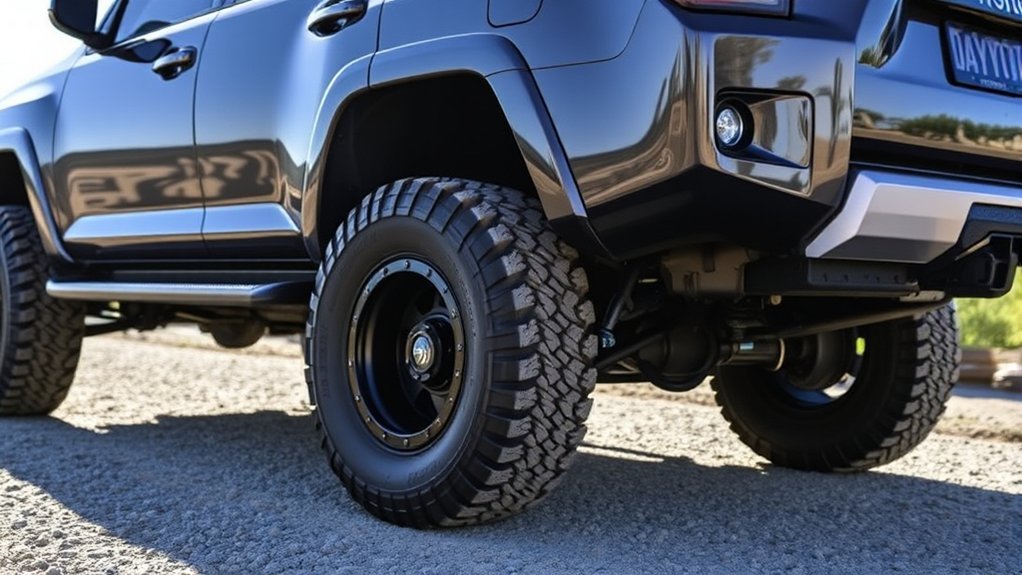
For most 2010-2024 4Runners, the practical answer is about 2.5-3 inches of front lift with enough rear height to keep the truck level under load. Some owners fit 33s with less lift, but they usually accept more trimming, narrower tires, or limited off-road articulation.
Do not judge clearance only by ride height. A lift may make the tire look clear while parked, but the tire can still hit the body mount, liner, or bumper when the suspension compresses. That is why alignment, caster, tire width, and wheel offset matter as much as lift height.
Note: Toyota’s 2025 Trailhunter is a special case because it comes engineered with 33-inch Toyo Open Country A/T tires and Old Man Emu hardware from the factory. Do not assume a base 2025+ trim has the same clearance without checking.
[Products Worth Considering]

This spare tire tool kit is designed for the 2004 to 2018 Ford F-150 to help you loosen and tighten wheel lug nuts and manage the spare tire and provided jack functions from underneath the vehicle. It includes the lug nut wrench and extension pieces plus a convenient storage carrying case for organized transport. The jack itself is not included.

The Trivd Frol 1/2" air impact wrench delivers high performance torque up to 1500 ft-lbs with a twin hammer impact mechanism for strong, balanced blows. It features an ergonomic grip, compact lightweight design, and quick-stop control with 3 forward speeds up to 8000 RPM plus a reverse speed. Built for demanding automotive repair and tire shop work, the rear exhaust helps keep debris away from the surface.

Keep your tires properly inflated with this analog VONDIOR tire pressure gauge, designed for fast, easy readings without batteries. The swiveling, two-axis hose and large glow dial help you measure at any tire angle with instant visibility. Built with a protective rubber shield, it supports durable, low-maintenance use for cars and trucks.
Selecting Optimal Wheels and Offsets for Enhanced Tire Fitment
Wheel offset decides where the tire sits in the wheel well. A higher positive offset keeps the tire farther inward. A lower offset pushes it outward. Both can create problems if taken too far.
On a 4Runner, a moderate offset is usually easier to live with than an aggressive stance. Too much inward position can rub the upper control arm. Too much outward position can rub the fender, bumper, and mud flap. Many 33-inch setups work best with an 8- to 9-inch-wide wheel and a mild offset, but the exact choice depends on your tire width and suspension parts.
Always test fit the tire and wheel combo before buying a full set if you can. Tires with the same printed size can measure differently, and sidewall lugs can be the difference between a clean fit and constant rubbing.
[Products Worth Considering]
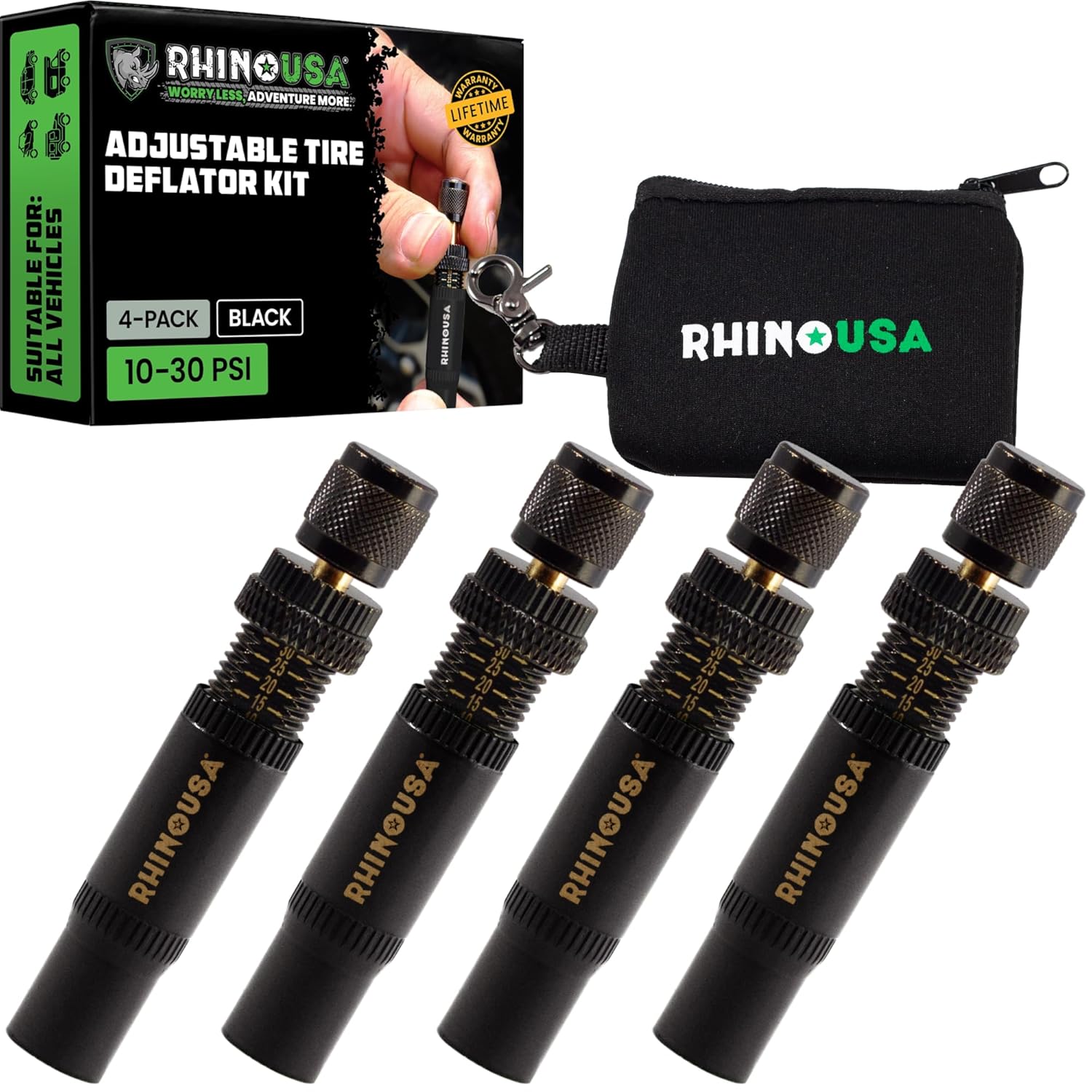
Use the Rhino USA adjustable tire deflators to air down all four tires at once by screwing one deflator onto each valve stem, letting you step away while the tires reach your preset pressure. Each deflator independently adjusts across a 10–30 PSI range with laser-etched indicators for quick setup and verification, making it ideal for beach, sand, and rocky off-road trails.

The Big Rig Defense Tire Thumper is a truck tire pressure checker that lets you quickly check multiple tires by giving them a firm whack. Listen for a reassuring thump and feel the stick bounce when a tire is fully inflated, helping you get back on the road safely. It features a comfortable, glove-friendly handle and a secure wrist strap for confident use on busy routes.

Upgrade your wheels with MIKKUPPA M12x1.5 mag seat lug nuts built for secure, corrosion-resistant performance. These closed-end chrome lug nuts are a direct replacement for select Toyota models, including Camry, Corolla, RAV4, Sienna, Avalon, Highlander, Matrix, Venza, and Prius. Triple-chromium plating and cold-forged, heat-treated steel help deliver strength for daily driving and replacement needs.
What to Watch For: Maintenance and Downsides of Larger Tires
After installing 33-inch tires, inspect the truck more often during the first few weeks. The first drives will reveal clearance issues that were not obvious in the shop.
- Check tire pressure cold. Use the vehicle placard and tire professional guidance, not the maximum pressure printed on the sidewall.
- Re-torque lug nuts. Recheck after the first short drive and again after 50-100 miles if your wheel or tire shop recommends it.
- Get an alignment. NHTSA notes that alignment helps maximize tire life and prevents the vehicle from pulling on a straight, level road.
- Inspect for rubbing. Look inside the wheel wells for fresh marks after tight turns and trail use.
- Check the spare tire. A 33-inch spare may not fit in the factory spare location on every setup.
- Watch load rating. Choose a tire with enough load capacity for your 4Runner, passengers, cargo, armor, roof load, and towing setup.
- Think about tire chains. Larger tires may reduce chain clearance, and some owner’s manuals limit chain use by tire size and axle.
The best 33-inch setup is not the tallest or widest one you can force under the truck. It is the one that clears safely at full steering lock, full compression, and real trail angles.
Frequently Asked Questions
What’s better on a 4Runner, 33s or 35s?
For most daily driven 4Runners, 33s are the better balance. They improve clearance and off-road grip without the extra cutting, gearing changes, weight, and drivetrain stress that often come with 35s. Choose 35s only if you are building a more serious trail rig and accept the added work.
Can I put 33-inch tires on my 4th-gen 4Runner without rubbing?
You may be able to mount them, but rubbing is likely without suspension lift, trimming, and the right wheel offset. The most common trouble spots are the front mud flaps, fender liners, bumper corners, and body mount area behind the front tires.
Can a stock 5th-gen 4Runner fit 285/70R17 tires?
Some owners can mount 285/70R17 tires on a mostly stock 5th-gen 4Runner, but clean no-rub fitment is not guaranteed. You should expect at least fender liner relocation, mud flap trimming, careful alignment, and possible body mount contact, especially with aggressive tread or low-offset wheels.
Will 33-inch tires hurt fuel economy?
Usually, yes. The drop depends on tire weight, tread pattern, pressure, lift height, roof gear, driving speed, and terrain. Many drivers notice about 1-3 MPG loss, but your result can be smaller or larger.
Do I need new upper control arms for 33s?
Not always, but aftermarket upper control arms can help on lifted 4Runners because they support better alignment and caster. They are most useful when you add a 2.5-3 inch lift and want better clearance, steering feel, and suspension travel.
Conclusion
Running 33-inch tires on a 4Runner is a proven upgrade, but it works best when you plan the whole setup. Do not rely on lift height alone. Match the tire size to your generation, choose wheels with sensible offset, set alignment carefully, trim only where needed, and inspect for rubbing after real driving. If you want a daily-friendly build, a 285/70R17 all-terrain with mild lift and clean clearance work is usually the sweet spot.
Sources
- Toyota USA Newsroom: 2025 Toyota 4Runner Refines Adventure Ready Heritage — backs up 2025+ 4Runner redesign, Trailhunter 33-inch Toyo Open Country A/T tires, OME shocks, and factory off-road context.
- Toyota 2024 4Runner e-brochure — backs up factory 2024 4Runner tire sizes such as P265/70R17 and P245/60R20.
- NHTSA TireWise — backs up tire size, tire pressure, tread, alignment, TPMS, and tire maintenance safety guidance.