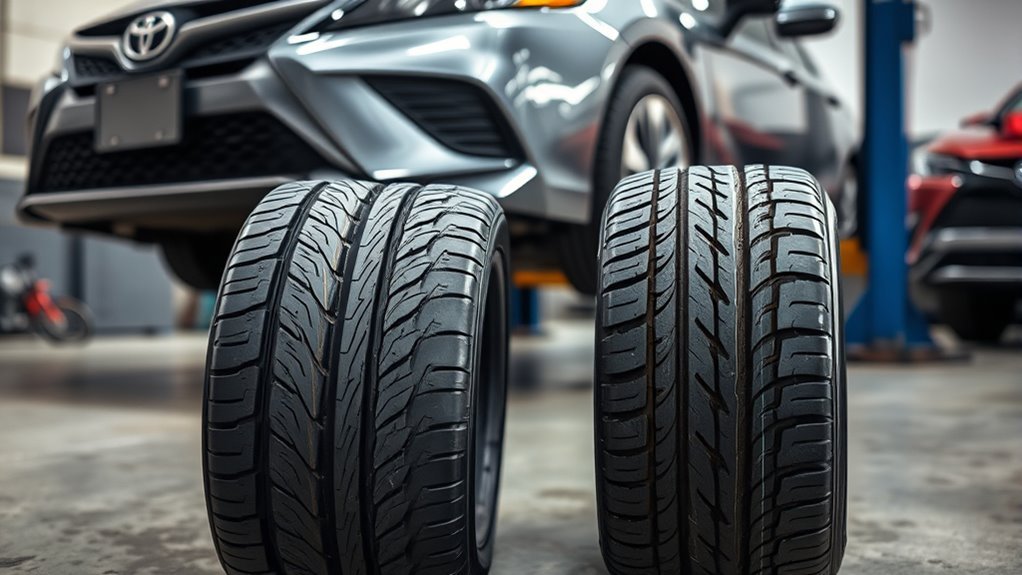
You don’t have to replace your Toyota Camry’s tires with the exact same OE tire model, but you do need to stay within the correct tire size, load index, speed rating, and seasonal tire type for your model year and trim. OE tires are selected to match Toyota’s ride, noise, efficiency, and handling targets, while replacement tires can improve tread life, wet grip, winter traction, or road comfort when you choose them carefully.
Quick Answer
Toyota Camry replacement tires do not have to be the same OE brand or model. They should match the tire placard or owner’s manual for size, load index, speed rating, and inflation guidance. You can choose a different tire if it fits properly and matches your driving needs.
Key Takeaways
- You can move beyond the factory OE tire, but do not ignore the approved size, load index, speed rating, and wheel fitment.
- OE tires often focus on quiet ride, comfort, and efficiency; replacement tires may offer better tread life, wet grip, winter grip, or sharper handling.
- Check the driver-door tire placard, owner’s manual, and tire sidewall before buying.
- If your Camry has AWD, keep all four tires closely matched in size, model, and tread depth.
What Are OE Tires on a Camry?
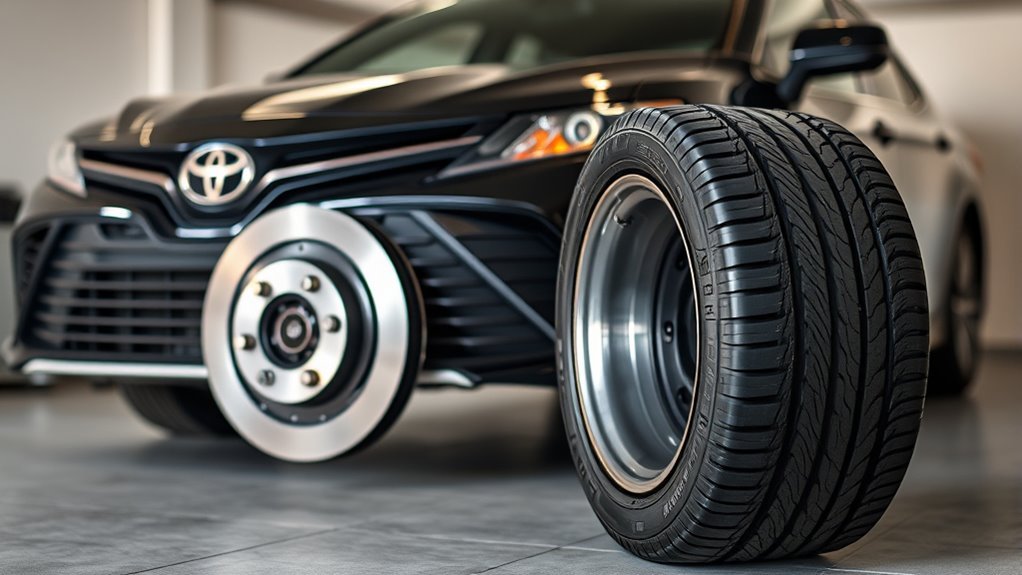
OE tires, short for original equipment tires, are the tires installed on a Toyota Camry when it leaves the factory. Toyota and its tire suppliers choose those tires to support the car’s intended balance of ride comfort, cabin noise, braking feel, fuel economy, steering response, and stability-system calibration.
That does not mean the OE tire is automatically the best tire for every Camry owner. A factory tire is a balanced starting point. It may be quiet and efficient, but a different replacement tire may give you longer tread life, stronger wet traction, better snow performance, or a firmer steering feel.
Note: OE means the tire was selected for the vehicle when new. OEM is often used casually, but tires are usually compared as OE tires versus replacement tires.
Do Camry Replacement Tires Need OEM Specs?
No, Camry replacement tires do not need to match the exact OE tire model or brand. They should match the required size, load index, speed rating, rim diameter, and overall fitment for your specific Camry. The safest starting point is the tire placard on the driver-side door jamb and the tire section of your Toyota owner’s manual.
The tire code on the sidewall tells you the tire’s width, aspect ratio, construction, wheel diameter, load index, and speed rating. For example, a tire code includes the rim size and the service description that shows how much weight the tire can carry and the speed category it is rated for. You can learn more about tire code markings from NHTSA tire safety guidance.
What Specs Must Match?
Before you buy Camry tires, confirm these items:
| Spec | Why It Matters |
|---|---|
| Tire size | Keeps diameter, clearance, speedometer reading, and stability systems within the intended range. |
| Load index | Confirms each tire can safely carry the vehicle’s required load. |
| Speed rating | Shows the tire’s tested speed category when properly loaded and inflated. |
| Season type | Matches the tire to rain, heat, snow, ice, or year-round commuting. |
| Inflation pressure | Affects wear, braking, comfort, fuel economy, and tire temperature. |
Warning: Do not install a random “close enough” tire size on a Camry. A taller, wider, or lower-rated tire can affect clearance, braking, steering, speedometer accuracy, ABS, traction control, and AWD operation.
What Changes When You Switch Tires?
When you switch from OE tires to replacement tires, you can change ride comfort, road noise, steering feel, wet braking, tread life, fuel economy, and winter traction. The size may be the same, but tread pattern, sidewall stiffness, rubber compound, tire weight, and UTQG ratings can make the car feel different.
Ride Comfort Changes
Ride comfort changes because tire construction and sidewall design affect how the Camry absorbs bumps. A grand touring all-season tire usually favors smoothness and quietness. A performance all-season tire may feel sharper in corners but firmer over broken pavement. A winter tire can feel softer and louder in mild weather because its tread and compound are built for cold conditions.
If your priority is a quiet commute, look for tires that advertise low road noise, comfort-focused touring construction, and strong owner reviews for ride quality. If your priority is steering response, a sportier tire may suit you better, but expect more road texture and possibly faster wear.
Handling and Longevity
Handling can improve when you choose a tire with stronger wet grip, stiffer sidewalls, or a more responsive tread design. Longevity can improve when you choose a tire with a higher treadwear focus and a longer mileage warranty. Those two goals do not always move together. A tire built for maximum grip may wear faster than a touring tire built for long commuting life.
Your driving style still matters. Hard braking, aggressive cornering, pothole impacts, poor alignment, and low tire pressure can shorten the life of any tire, whether it is OE or aftermarket.
Pro Tip: If your old Camry tires wore unevenly, fix the cause before installing new tires. Ask the shop to check alignment, suspension wear, wheel balance, and tire pressure.
Why Camry OE Tires Can Wear Faster
Camry OE tires can wear faster than some replacement tires when they use softer compounds, lighter construction, or lower rolling-resistance tuning. That does not mean every OE tire is weak. It means the factory tire may be optimized for the new-car test drive, cabin quietness, ride feel, or fuel economy rather than maximum tread life.
Softer OE Compounds
A softer compound can help the tire grip and absorb small road vibrations, but it may also wear faster under heat, hard braking, and aggressive turning. A harder or more durability-focused replacement tire may last longer, though it can feel firmer and may not grip as well in every condition.
| Compound Focus | Typical Feel | Typical Tradeoff |
|---|---|---|
| Comfort-focused OE | Smooth and quiet | May wear sooner |
| Touring replacement | Balanced and stable | Less sporty response |
| Performance replacement | Sharper steering | Can be louder or shorter-lived |
Low Treadwear Ratings
The Uniform Tire Quality Grading system compares passenger-car tires using treadwear, traction, and temperature grades. Treadwear is useful for comparison, but it is not a guaranteed mileage number. Real tire life still depends on pressure, alignment, rotation, road surface, climate, and how you drive.
- Higher treadwear grades often suggest longer wear potential, but they do not guarantee exact mileage.
- Traction grades compare wet straight-line stopping ability under controlled conditions.
- Temperature grades show resistance to heat buildup at speed.
- Winter tires and some specialty tires may not carry the same UTQG labeling requirements.
Driving Habits Matter
Your habits can shorten tire life quickly. Fast starts, late braking, tight cornering, high-speed heat, overloaded trips, and pothole impacts all add stress. Tire maintenance matters too. Check pressure when tires are cold, rotate tires on the schedule in your owner’s manual, and correct alignment if the car pulls, the steering wheel is off-center, or the tread wears unevenly.
Best Tire Features for Camry Drivers

The best tire for your Camry depends on your climate, mileage, roads, and comfort expectations. For many daily drivers, a grand touring all-season tire is the safest starting point because it balances ride comfort, wet traction, tread life, and low noise. If you drive in real winter weather, consider a dedicated winter tire with the three-peak mountain snowflake symbol instead of relying only on standard all-season tires.
- Daily commuting: choose a quiet touring all-season tire with strong wet braking reviews.
- Long highway trips: prioritize stability, low noise, treadwear warranty, and fuel-efficient design.
- Sportier driving: choose a performance all-season tire, but expect a firmer ride.
- Snow and ice: use winter tires when temperatures and road conditions justify them.
- Rough pavement: stay with an approved tire size and choose a comfort-focused tire, not an unverified oversized fitment.
A better Camry tire is not always the most expensive one. It is the tire that matches your approved specs, climate, driving style, and comfort needs.
[Products Worth Considering]

This tire inflator with pressure gauge delivers long-lasting performance with a durable rubber-protected gauge and sturdy build. The longer hose and 360 swivel air chuck help you seal the valve securely and keep your hands free while measuring, inflating, or deflating. It’s battery-free for reliable use and provides ±2 PSI accuracy in the mid-range for most typical tires, with universal compatibility for 1/4 NPT compressor outputs.

These universal tire valve stem caps help protect valve cores from dust, debris, and moisture while helping maintain stable tire pressure. The corrosion-resistant metal construction and sealed design provide reliable protection in road grime, mud, and winter conditions. Twist-on installation makes them quick to fit on cars, SUVs, trucks, and motorcycles.

Keep your tires properly inflated with this analog VONDIOR tire pressure gauge, designed for fast, easy readings without batteries. The swiveling, two-axis hose and large glow dial help you measure at any tire angle with instant visibility. Built with a protective rubber shield, it supports durable, low-maintenance use for cars and trucks.
How to Compare Camry Tire Ratings
When you compare Camry tire ratings, start with the basics: approved size, load index, and speed rating. Then compare UTQG grades, wet traction, temperature grade, mileage warranty, noise reviews, and seasonal performance. A tire with a long mileage warranty may not be the best choice if it performs poorly in heavy rain. A tire with excellent grip may not be ideal if you need quiet highway commuting.
Use these questions before buying:
- Does the tire match the door-jamb placard or a verified fitment tool?
- Is the load index equal to or higher than the required rating?
- Is the speed rating suitable for the Camry and your driving needs?
- Does the tire match your climate: all-season, performance all-season, summer, or winter?
- Do reviews mention noise, vibration, wet braking, tread life, and comfort on sedans?
- Does the tire come with a road-hazard option, mileage warranty, or satisfaction trial?
[Products Worth Considering]

Upgrade your wheels with MIKKUPPA M12x1.5 mag seat lug nuts built for secure, corrosion-resistant performance. These closed-end chrome lug nuts are a direct replacement for select Toyota models, including Camry, Corolla, RAV4, Sienna, Avalon, Highlander, Matrix, Venza, and Prius. Triple-chromium plating and cold-forged, heat-treated steel help deliver strength for daily driving and replacement needs.

Upgrade your wheels with MIKKUPPA closed-end lug nuts designed for reliable fit and corrosion resistance. The one-piece, cold-forged and heat-treated steel construction helps resist rust and stripping, while the integrated finish delivers a durable black appearance. Built to OEM standards with a conical 60-degree seat, these nuts provide a secure solution for compatible Ford, Honda, Jeep, and Chevrolet models.

These M14x1.5 closed-end chrome lug nuts are a one-piece replacement designed for secure fitment on compatible GM, Ford, and select Chrysler/Dodge models. Featuring a 60-degree conical seat and anti-rust chrome plating, they help resist corrosion and maintain a bright look for everyday driving. Built for long-term durability, they include OEM-style part references and are backed by 12 months of support.
When the Factory Tire Size Makes Sense
Matching the factory tire size on your Toyota Camry makes sense when you want predictable steering, braking, ride comfort, and stability-system behavior. It also reduces the risk of rubbing, speedometer error, wheel-clearance problems, and tire-shop fitment mistakes.
- You keep the factory balance of comfort, fuel efficiency, and handling.
- You reduce the risk of ABS, traction-control, and stability-control issues caused by tire diameter changes.
- You make tire shopping easier because most fitment tools start with the factory size.
- You avoid problems on leased vehicles or vehicles still under warranty.
If you want to change wheel or tire size, use a qualified tire shop and confirm the new setup keeps overall diameter, load capacity, speed rating, and clearance within safe limits. Do not guess based on appearance alone.
Special Note for AWD Camry Models
If your Camry has all-wheel drive, be more careful about tire matching. Use the same tire size, model, and similar tread depth across all four wheels whenever possible. Mixing tires with different diameters or wear levels can stress AWD components and may affect traction-control behavior.
Warning: On an AWD Camry, replacing one tire may not be enough if the other three are significantly worn. Ask the tire shop to measure tread depth and confirm whether one, two, or four tires should be replaced.
Where to Buy Camry Replacement Tires

Shopping for Camry replacement tires starts with accurate fitment. Enter your model year, trim, wheel size, and drivetrain into a tire retailer’s fitment tool, then confirm the result against the tire placard. If your Camry has different wheel options by trim, do not assume another Camry’s tire size fits yours.
| Channel | Strength | Tradeoff |
|---|---|---|
| Toyota dealer | Factory fitment support | May cost more |
| Local tire shop | Hands-on advice and installation | Selection varies |
| National chain | Warranty and road-hazard options | Pricing can vary by package |
| Online retailer | Broad selection and easy comparison | Fitment and installation must be coordinated |
Before paying, confirm the total installed price. Mounting, balancing, valve stems, TPMS service kits, disposal fees, alignment, and road-hazard coverage can change the final cost.
[Products Worth Considering]

Upgrade your Toyota’s wheels with durable aluminum alloy valve stem caps that help protect valve cores from corrosion and direct exposure to road grime, clay, water, and snow. Rubber rings improve sealing to help prevent air leakage and maintain stable tire pressure for safer driving. These caps are easy to install or remove without tools and add a unique, stylish look to your car.

These aluminum alloy tire valve stem caps with an O-ring seal help protect valve stems from corrosion while adding a clean, stylish look to your vehicle. The universal fit works across cars, trucks, motorcycles, bicycles, and more, making them an easy upgrade for everyday driving and off-road use. Installation is quick, and the included four-pack keeps all your tires dressed and protected.

The SAFELIFE dial tire tread depth gauge measures tread depth in 1/32 inch increments with clear, easy-to-read 2-inch dial face. Color zones using a traffic light system help you quickly judge whether tread is low, marginal, or ample for safer driving. Built with a durable zinc cast body and a metal detect probe for precise, comfortable use across cars, motorcycles, trucks, and buses.
After-Installation Checks
Once the new tires are installed, do a few quick checks before you assume the job is finished:
- Check cold tire pressure against the door-jamb placard.
- Confirm the TPMS light is off after the system has had time to register the new setup.
- Listen for vibration, humming, rubbing, or pulling during the first drive.
- Retorque lug nuts if your installer recommends it after the first short driving period.
- Schedule an alignment if your old tires wore unevenly or the car pulls to one side.
- Keep the rotation schedule from your Toyota maintenance guide.
Frequently Asked Questions
What tire brand does Toyota recommend for a Camry?
Toyota does not use one universal tire brand recommendation for every Camry year and trim. Your Camry may have come with a tire from a major OE supplier, but the replacement should be chosen by approved size, load index, speed rating, season type, and performance needs first.
Can I use a different tire brand than the original Camry tires?
Yes. You can use a different tire brand if the tire matches the approved fitment and has the correct load index and speed rating. Compare wet traction, treadwear, noise, comfort, warranty, and seasonal performance before choosing.
Should I replace all four Camry tires at once?
If all four tires are worn, replace all four. If only one tire is damaged, a tire shop should measure tread depth and check whether one tire, a pair, or a full set is safest. AWD Camry models need closer tire matching than front-wheel-drive models.
Do replacement tires change Camry fuel economy?
They can. Low-rolling-resistance tires may help efficiency, while heavier or more aggressive tires can reduce it. Tire pressure, alignment, speed, temperature, and driving style also affect fuel economy, so the exact change varies.
Are performance tires worth it on a Toyota Camry?
Performance tires can be worth it if you want sharper steering and stronger dry or wet grip. They may ride firmer, create more road noise, cost more, and wear faster than touring tires. For most commuters, a quality touring all-season tire is the better balance.
Conclusion
You do not have to match your Toyota Camry’s OE tires exactly, but you should not treat tire replacement as a guess. Match the approved size, load index, speed rating, and seasonal type first. Then choose the tire that best fits your driving: quiet commuting, long tread life, wet-road confidence, winter traction, or sharper handling. The smartest Camry tire choice is not simply the factory tire or the most expensive tire. It is the one that fits correctly, performs safely, and matches the way you actually drive.
Sources
- Toyota Owners Manuals & Warranty Guides — supports checking the owner’s manual for vehicle-specific tire information.
- NHTSA Tire Safety — supports tire placard, tire pressure, tread, and tire safety guidance.
- 49 CFR § 575.104 Uniform Tire Quality Grading Standards — supports treadwear, traction, and temperature grade explanations.
- FuelEconomy.gov Maintenance Tips — supports tire pressure and fuel-economy maintenance guidance.
- Michelin Tire Number Guide — supports tire sidewall code interpretation.