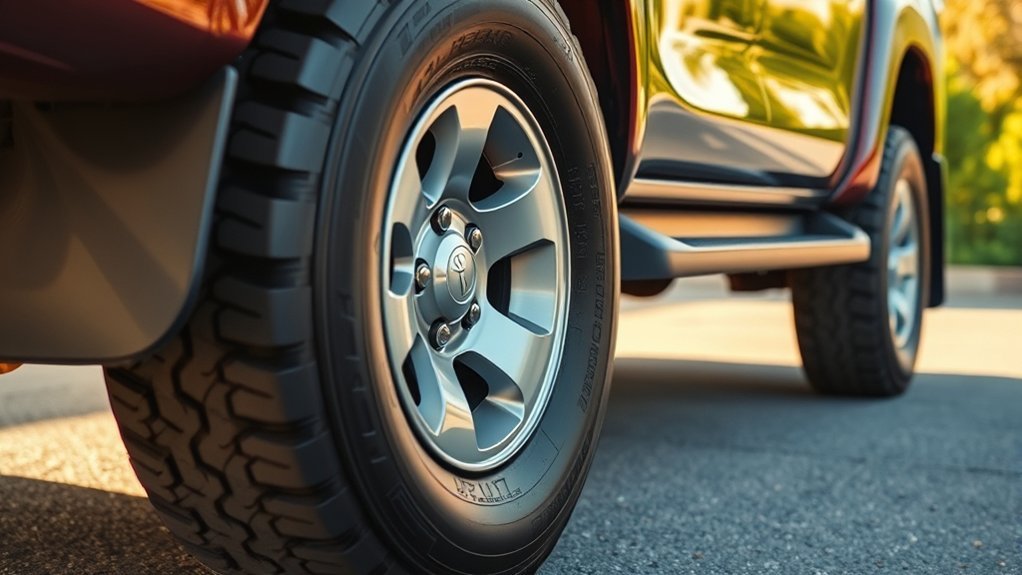
You do not need to rebalance your Toyota Hilux tires on a fixed mileage schedule every time you drive 5,000 to 7,500 miles. That mileage range is better used as a tire rotation and balance-check interval. Have the tires balanced when you install new tires, feel vibration, see uneven wear, hit a pothole or curb, repair a tire, or use your Hilux heavily off-road or for towing.
Quick Answer
For a Toyota Hilux, check tire balance whenever you rotate the tires, usually around 5,000 to 8,000 miles if your maintenance guide recommends that rotation interval. Rebalance the tires sooner if you install new tires, feel steering-wheel or seat vibration, notice cupping or scalloped tread, or hit a pothole, curb, or rough off-road track.
Key Takeaways
- Use 5,000 to 8,000 miles as a practical rotation and balance-check window, not as a strict rule that every Hilux must be rebalanced at that mileage.
- Balance new tires every time they are installed, and rebalance after a tire repair, wheel replacement, lost wheel weight, or clear vibration.
- A shake in the steering wheel often points to a front tire or wheel issue, while vibration through the seat or floor can point to the rear tires, driveline, or suspension.
- Towing, heavy payloads, gravel roads, mud, corrugations, potholes, and curbs can make balancing checks more important for a Hilux.
At a Glance
| Time Required | About 30 to 60 minutes at a tire shop, depending on wait time and whether all four wheels are checked. |
| Difficulty | Easy to schedule, but balancing itself should be done with professional equipment. |
| Tools Needed | For checks: tire pressure gauge and tread-depth gauge. For balancing: a shop-grade wheel balancing machine. |
| Cost | Often around $60 to $120 for four wheels in many markets, but pricing varies by shop, wheel size, tire type, and whether road-force balancing is needed. |
Why Balancing Your Toyota Hilux Tires Is Essential

When your Toyota Hilux tires are balanced correctly, the wheel and tire assembly spins with its weight evenly distributed. That helps reduce shaking, protects ride comfort, and keeps the tires from wearing in odd patterns. For a pickup like the Hilux, this matters even more if you carry tools, tow trailers, drive gravel roads, or run all-terrain tires.
The National Highway Traffic Safety Administration explains that tire balancing helps wheels rotate properly and prevents vehicle shake or vibration. It also notes that tire pressure, tread, balance, alignment, and rotation all work together as part of safe tire care.
Balancing is not the same as tire pressure or wheel alignment. A tire can be correctly inflated and still be out of balance. A Hilux can also have balanced tires but still pull to one side because the alignment, suspension, tire pressure, or road crown is the real cause.
Recommended Frequency for Balancing Toyota Hilux Tires
For most Toyota Hilux owners, the best rule is simple: check tire balance during regular tire rotation and rebalance when symptoms appear. Many drivers rotate tires around 5,000 to 8,000 miles when their owner’s manual or service guide recommends it. That is a good time to ask the shop to check for uneven wear, missing wheel weights, bent wheels, and vibration complaints.
You should rebalance your Hilux tires sooner in these situations:
| When to Balance | Why It Matters |
|---|---|
| When new tires are installed | New tires should be balanced so the tire and wheel assembly spins smoothly from day one. |
| Every tire rotation visit | A quick check can catch irregular wear, lost weights, or a developing vibration before it gets worse. |
| Steering wheel, seat, or floor vibration | Speed-related vibration is one of the most common signs of a tire or wheel balance issue. |
| After hitting a pothole, curb, rock, or deep rut | Impact can bend a wheel, shift a tire, knock off a weight, or damage suspension parts. |
| After tire repair or wheel replacement | Removing or remounting a tire can change the balance of the assembly. |
| After heavy mud, snow, or gravel buildup | Debris stuck inside the wheel can mimic an imbalance until it is cleaned out. |
Always use your model-year maintenance guide as the final authority. Hilux tire size, load rating, rotation pattern, and service needs can vary by year, market, drivetrain, and tire type. Toyota provides owner manual access through its manuals and warranties page, and your local Toyota site or dealer can help with Hilux-specific service information for your region.
Note: Tire balancing fixes uneven weight distribution in the tire and wheel assembly. It does not fix low tire pressure, a bent wheel, poor alignment, worn shocks, bad wheel bearings, brake vibration, or damaged suspension parts.
Tire Balancing vs. Rotation vs. Alignment
Many Hilux owners confuse these three services because they are often done during the same visit. They solve different problems.
| Service | What It Does | Common Signs You Need It |
|---|---|---|
| Tire balancing | Adds small weights so the tire and wheel spin evenly. | Speed-related vibration, cupping, lost weights, vibration after new tires. |
| Tire rotation | Moves tires to different positions to even out wear. | Front and rear tires wearing at different rates, routine service interval due. |
| Wheel alignment | Adjusts wheel angles so the tires meet the road correctly. | Pulling to one side, crooked steering wheel, edge wear, poor straight-line tracking. |
[Products Worth Considering]

Malco tire mounting and demounting lubricant is a ready-to-use tire lube formulated to reduce friction during tire installation for passenger cars, light trucks, farm tires, and heavy-duty equipment. It provides rust-inhibiting protection to help reduce corrosion on rims and wheels, and helps support proper tire bead seating during inflation to reduce air leakage. The silicone-free, soap-free formula is whitewall safe to help prevent discoloration on whitewall tires and sensitive sidewall markings.

The SAFELIFE dial tire tread depth gauge measures tread depth in 1/32 inch increments with clear, easy-to-read 2-inch dial face. Color zones using a traffic light system help you quickly judge whether tread is low, marginal, or ample for safer driving. Built with a durable zinc cast body and a metal detect probe for precise, comfortable use across cars, motorcycles, trucks, and buses.

Measure tire tread depth quickly and accurately with this LUMITECO dial gauge that reads in 1/32" increments up to 14/32". The color-coded green/yellow/red zones make it easy to judge tire wear and know when replacement is needed. A rugged, compact design with a protective pouch helps keep the gauge ready for use on cars, trucks, motorcycles, and more.
Signs Your Toyota Hilux Tires May Need Balancing
The clearest sign of tire imbalance is vibration that appears at certain road speeds and fades at others. You may feel it through the steering wheel, seat, floorboard, or body of the truck. Because the Hilux is often used as a work truck, do not ignore new vibration after towing, hauling, off-road driving, or hitting rough road edges.
Common Vibration Symptoms
Watch for these common symptoms:
- Steering wheel vibration: Shaking through the wheel at highway speeds often points to a front tire or wheel issue.
- Seat or floor vibration: A shake felt more through the seat can point to rear tire imbalance, but driveline or suspension issues can also cause it.
- Vibration after new tires: If the shake starts right after new tires are installed, ask the shop to recheck balance, mounting, and tire seating.
- Vibration after impact: A pothole, curb, rock, or rut can knock a wheel out of balance or bend a rim.
Uneven Tire Wear
Uneven tire wear can affect the performance and safety of your Toyota Hilux. Cupping, scalloping, patchy wear, or rough tread edges can mean the tire has been bouncing or vibrating instead of rolling smoothly. Balance can be one cause, but alignment, low tire pressure, worn shocks, loose steering parts, or aggressive off-road use can also create abnormal wear.
Check tread depth and pressure at least monthly. NHTSA recommends checking tire pressure when the tires are cold and using the pressure listed on the vehicle placard or in the owner’s manual, not the number printed on the tire sidewall.
Steering Instability Issues
Steering instability needs careful diagnosis. If your Hilux pulls to one side, the steering wheel sits crooked, or the truck wanders on a straight road, do not assume balancing alone will fix it. You may need a tire pressure correction, wheel alignment, suspension inspection, or tire replacement.
Warning: If vibration starts suddenly after a hard impact, slow down and inspect the tires and wheels as soon as it is safe. Do not keep driving at highway speed with a visible sidewall bulge, cracked wheel, severe shake, or tire that is losing air.
How Unbalanced Tires Affect Your Hilux’s Performance and Safety

When tires are unbalanced, they can compromise your Toyota Hilux’s comfort, tire life, and control. The heavier spot in the tire and wheel assembly can create a repeated shake as the wheel turns. At higher speeds, that vibration can become strong enough to travel through the steering wheel, seat, or floor.
Over time, that shaking can contribute to uneven tread wear. It can also make the truck feel less stable, especially when towing, carrying weight in the tray, or driving on rough roads. Proper tire maintenance also supports fuel economy because tire pressure, tread condition, alignment, rotation, and balance all affect how efficiently the truck rolls.
A Hilux used for towing, payload, gravel, or off-road tracks should have tire balance, pressure, tread, and alignment checked more often than a truck used only for light city driving.
Driving Conditions That Demand More Frequent Tire Balancing
Driving conditions play a major role in how often you should inspect your Hilux tires. You may need more frequent balance checks if your truck works hard or spends time away from smooth pavement.
- Rough or unpaved roads: Gravel, corrugations, rocks, and ruts can loosen weights, damage wheels, or cause irregular tire wear.
- Potholes or curbs: After a hard strike, check for bent rims, sidewall bulges, air leaks, and new vibration.
- Heavy towing or payload: Added load increases stress on tires and suspension parts, so inspect pressure, tread, and wear more often.
- Mud, snow, and clay: Packed debris inside the wheel can temporarily throw off balance and cause vibration.
- All-terrain or mud-terrain tires: Heavier tread blocks can make balance quality more noticeable at highway speeds.
Seasonal temperature changes also affect tire pressure. A pressure change can feel like a balance problem, so check cold tire pressure before paying for another service.
Risks of Attempting DIY Tire Balancing for Your Hilux
Attempting DIY tire balancing for your Toyota Hilux can seem tempting, but it often leads to guesswork. A modern wheel balancing machine measures where the imbalance is and tells the technician how much weight to add and where to place it. Home methods rarely match that precision.
| Risk | DIY Balancing | Professional Balancing |
|---|---|---|
| Precision | Often inaccurate without a balancing machine. | Uses measured weight placement for the specific tire and wheel assembly. |
| Diagnosis | Can miss bent wheels, bad tires, alignment issues, or worn suspension. | Can identify when balance is not the only problem. |
| Long-term cost | May leave vibration in place and speed up tire wear. | Helps protect tire life, ride quality, and steering feel. |
You can still do useful checks at home. Look for missing wheel weights, mud packed inside the wheel, uneven tread, low tire pressure, sidewall damage, and visible rim bends. Leave the actual balancing to a qualified technician.
[Products Worth Considering]

Accurately measure tire tread depth with a calibrated gauge marked from 0 to 1 inch in 1/32 inch increments. The color-coded bar helps you quickly identify tread condition ranges, supporting safe driving for trucks, motorcycles, automobiles, and passenger vehicles.

Monitor tire tread wear with a smart, color-coded depth gauge that shows clear condition ranges at a glance. The bar is range marked for fast, easy readings, helping you maintain safer traction and performance. Each gauge is portable with a pocket clip, and the set includes 20 units for daily use and sharing.

AstroAI’s heavy-duty digital tire pressure gauge delivers quick, accurate readings with 0.1 increments and a secure valve-stem seal. It features a green backlit LCD and built-in flashlight for easy use in low light, plus an ergonomic non-slip stainless-steel design. The wide 0–230 PSI range works across common vehicle tires, with unit selection and an auto shut-off to save battery.
What You Should Expect to Pay for Professional Tire Balancing
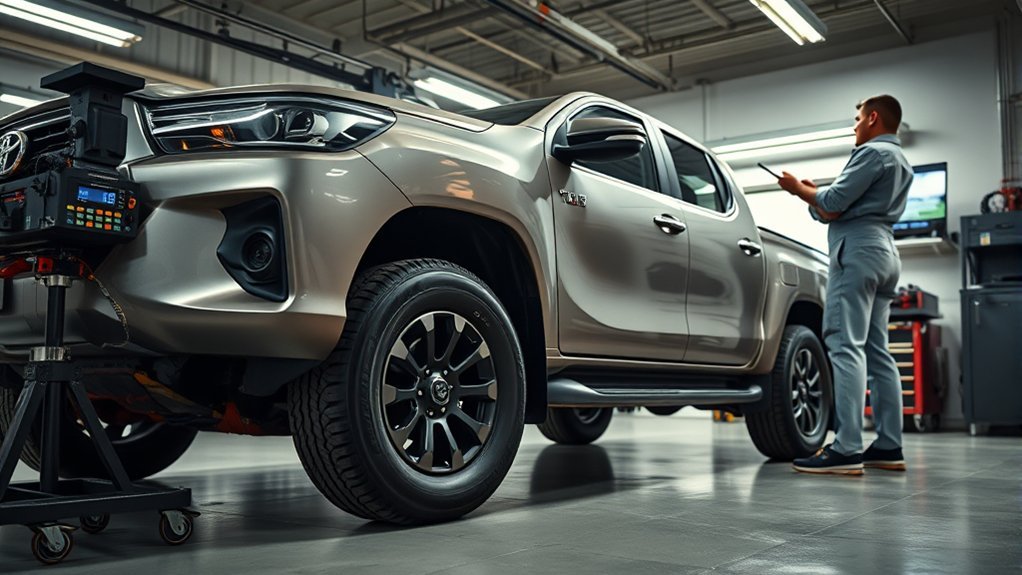
Professional tire balancing is usually priced per wheel or as a four-wheel package. For many Hilux owners, a standard four-wheel balance may fall around $60 to $120, but this is only a practical estimate. Prices vary by region, shop, tire size, wheel size, TPMS handling, and whether balancing is bundled with tire mounting or rotation.
Road-force balancing often costs more because it uses equipment that applies load to the tire and can help diagnose harder vibration problems. It can be useful when standard balancing does not solve the shake, when the Hilux has larger all-terrain tires, or when a tire may have stiffness variation or poor match-mounting.
Before approving the work, ask the shop:
- Is the price per wheel or for all four wheels?
- Is tire rotation included?
- Will you inspect for bent wheels, damaged tires, or missing weights?
- Do I need standard balancing or road-force balancing?
- Will you recheck the balance if the vibration remains?
[Products Worth Considering]

Keep your tires properly inflated with this analog VONDIOR tire pressure gauge, designed for fast, easy readings without batteries. The swiveling, two-axis hose and large glow dial help you measure at any tire angle with instant visibility. Built with a protective rubber shield, it supports durable, low-maintenance use for cars and trucks.

ETENWOLF’s tire pressure gauge helps you quickly and accurately check tire PSI across cars, trucks, motorcycles, bikes, and more. It’s manually calibrated to ANSI B40.1 Grade A for reliable readings, includes a large glow dial for easy nighttime viewing, and features a 360-degree swivel chuck for use at any valve angle. The gauge also works consistently in extreme hot or cold weather.

Vigorder rubber cement glue delivers superior adhesion and cures quickly within about 30 seconds for seamless rubber bonding. Once cured, it helps provide a strong, durable, waterproof seal that holds up to vehicle weight, pressure, and heat. Suitable for cars, motorcycles, trucks, bicycles, and off-road tires, it’s designed for emergency patch and maintenance repairs.
Benefits of Regular Tire Balancing for Your Vehicle
Regular tire balance checks help your Hilux drive more smoothly and can protect your tires from uneven wear. When tire weight is distributed correctly, the tire rolls with less shake, which improves comfort and steering feel.
The biggest benefits include:
- Smoother highway driving: Less vibration through the steering wheel, seat, and floor.
- More even tire wear: Reduced risk of cupping, scalloping, and patchy tread wear caused by vibration.
- Better tire value: Tires can last longer when balance, pressure, rotation, and alignment are all maintained.
- Less stress on steering and suspension: Reducing constant vibration can help protect related components.
- More confidence under load: A balanced Hilux feels steadier when towing or carrying weight.
Pro Tip: If your Hilux only vibrates after driving through mud, snow, or gravel, wash the wheels first. Packed debris inside the rim can feel like a balance problem and may disappear after cleaning.
How to Schedule Professional Tire Balancing Services
Scheduling professional tire balancing services for your Toyota Hilux is straightforward. The best time is during tire rotation, tire installation, tire repair, or after you notice symptoms.
- Check your symptoms: Note when the vibration happens, such as 45 mph, 60 mph, under braking, after a pothole, or only with a trailer attached.
- Inspect before you book: Check pressure, tread, wheel damage, and mud buildup so you can explain the issue clearly.
- Choose a qualified shop: Look for a tire shop or Toyota service center with modern balancing equipment and experience with pickup tires.
- Ask for a full tire check: A balance-only job may miss alignment, suspension, or tire damage problems.
- Test drive afterward: If the vibration remains, return and ask for a recheck or road-force diagnosis.
Toyota’s tire service network notes that tires affect safety and performance, and Toyota Tire Center highlights factory-trained installation for Toyota vehicles. If your Hilux is still under warranty or uses original equipment tire sizes, a Toyota dealer or Hilux-experienced tire shop can help confirm the correct service approach.
When to Seek Professional Help Instead of DIY Tire Balancing?
You should seek professional help when vibration is noticeable, new, or getting worse. DIY checks can spot obvious problems, but a shop can measure balance, inspect wheel runout, check tire condition, and look for steering or suspension issues.
| When to Seek Professional Help | Why DIY Checks Are Limited |
|---|---|
| Noticeable vibration at speed | You need measured correction, not guesswork. |
| Uneven tire wear | The cause may be balance, alignment, pressure, shocks, or suspension wear. |
| After a pothole, curb, rut, or rock strike | Hidden wheel, tire, steering, or suspension damage may be present. |
| New tire installation | New tires should be balanced after mounting. |
| No access to proper equipment | A tire balancing machine is needed for accurate weight placement. |
Frequently Asked Questions
How often do you really need to balance Toyota Hilux tires?
Check balance during tire rotation and rebalance when needed. A practical rotation check is often around 5,000 to 8,000 miles if your owner’s manual recommends that interval, but tire balancing itself is most important after new tire installation, vibration, tire repair, impact, or uneven wear.
Do unbalanced tires get worse over time?
Yes, they can. If a tire stays out of balance, vibration can contribute to uneven tread wear and a rougher ride. The longer you ignore it, the more likely you are to wear the tire unevenly or miss another issue, such as a bent wheel or worn suspension part.
How much does wheel balancing usually cost?
A standard four-wheel balance often costs about $60 to $120 in many markets, but pricing varies. Larger truck tires, all-terrain tires, TPMS work, road-force balancing, and regional labor rates can raise the price. Ask whether the quote is per wheel or for all four wheels.
Should I balance my Hilux tires every time I rotate them?
Not always. If the truck drives smoothly and the tires are wearing evenly, a balance check may be enough. Rebalancing during rotation makes sense if you feel vibration, see uneven wear, lost a wheel weight, use the truck off-road, or recently hit a pothole or curb.
Can tire balancing fix my Hilux pulling to one side?
Usually not. Pulling to one side is more often linked to tire pressure, alignment, tire conicity, brake drag, road crown, or suspension issues. Balancing mainly fixes vibration caused by uneven weight in the tire and wheel assembly.
Conclusion
Balancing your Toyota Hilux tires is essential, but it should be done at the right time for the right reason. Use your tire rotation interval as a smart time to check balance, tread, pressure, and wheel condition. Rebalance immediately when you install new tires, feel vibration, see uneven wear, repair a tire, lose a wheel weight, or hit a pothole, curb, rock, or rut.
For a Hilux that tows, hauls, or works off-road, tire checks matter even more. Balanced tires help your truck ride smoother, protect tire life, and maintain better control on the road.
Sources
- NHTSA TireWise — supports tire pressure, tread, rotation, balance, alignment, and tire safety guidance.
- Toyota Manuals and Warranties — supports checking the correct Toyota owner’s manual and maintenance guide for model-specific service information.
- Toyota Tire Center — supports Toyota tire service, tire safety, installation, and performance context.
- Extended Pacejka Tire Model for Enhanced Vehicle Stability Control — supports the role of tire pressure, tread depth, temperature, and road surface in tire and vehicle behavior.