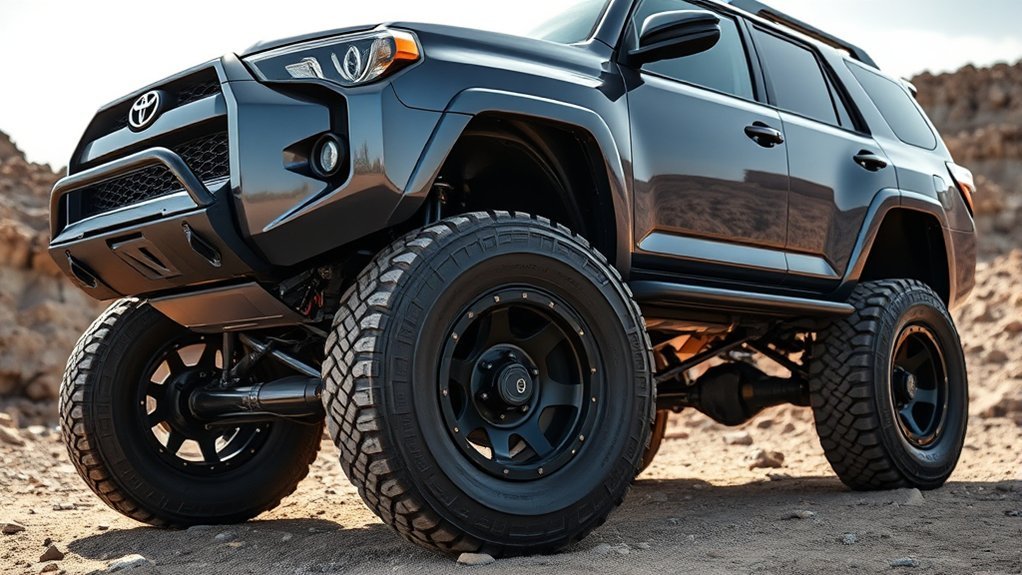
Fitting 35-inch tires on a Toyota 4Runner is possible, but it is not a simple tire swap. In most cases, you need a lift, correct wheel backspacing, trimming, careful alignment, and a full clearance test at steering lock and suspension compression. The exact work depends on your model year, trim, tire width, wheel offset, and how hard you use the truck off-road.
Quick Answer
To fit 35-inch tires on a 4Runner, plan on a quality 3-inch lift, aftermarket upper control arms, the right wheel offset or backspacing, fender liner and bumper trimming, and often front body mount clearance work. A 3-inch lift helps, but it does not guarantee rub-free 35s by itself.
Key Takeaways
- 35s usually need more than lift. Expect trimming, alignment work, and careful wheel selection.
- Model year matters. A 2010–2024 4Runner and a 2025+ 4Runner do not have the same factory suspension or clearance.
- Wheel offset controls where the tire rubs. Too much positive offset can create inner clearance problems, while too much negative offset can push the tire into the fender and body mount area.
- Check safety items after the install. Recheck lug torque, tire pressure, alignment, brake-line clearance, ABS wiring, and spare tire fitment.
At a Glance
| Time Required | 1–3 days for suspension, wheels, trimming, alignment, and clearance testing; longer if body mount work or regearing is included |
| Difficulty | Advanced; professional suspension alignment and fabrication are strongly recommended |
| Tools Needed | Lift or jack stands, torque wrench, trim tools, cutoff wheel, grinder, paint/primer, alignment rack, and welding equipment if body mount work is done |
| Cost | High; expect a several-thousand-dollar build once lift, UCAs, wheels, tires, trimming, alignment, and optional gearing are included |
Preparing Your 4Runner for 35-Inch Tires: Essential Modifications
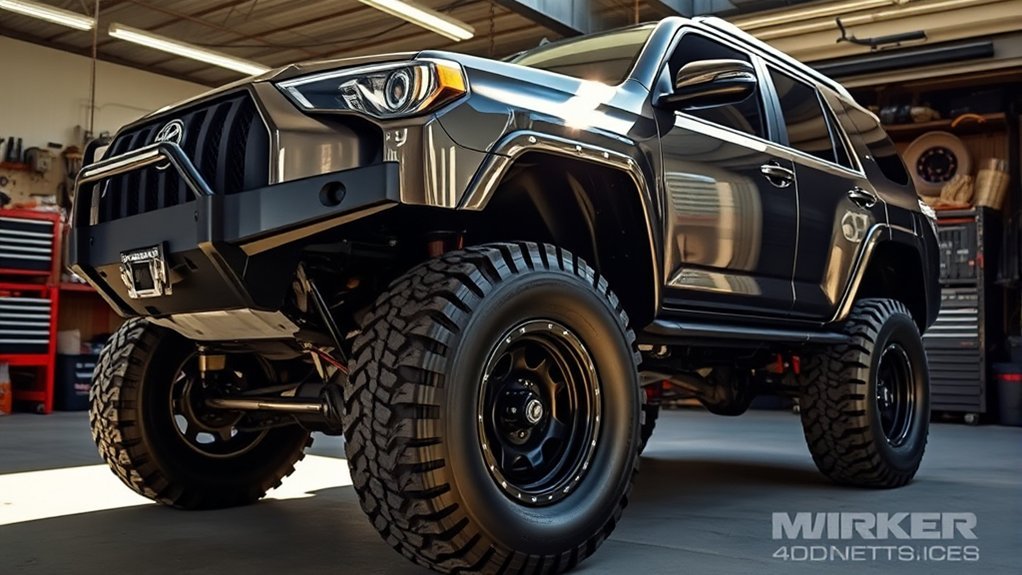
Before buying parts, identify your 4Runner generation, trim, current suspension height, wheel size, and intended tire size. A 35×12.50R17, 315/70R17, and other “35-inch” tire sizes can vary in real measured diameter and section width by brand. That small difference can decide whether the tire clears or rubs badly.
For 2025 and newer models, remember that Toyota redesigned the 4Runner on its newer truck platform. Toyota’s official 2025 4Runner information says the Trailhunter uses 33-inch Toyo Open Country A/T tires with ARB Old Man Emu shocks from the factory. That means 33s are already part of the newest factory off-road package, but 35-inch tires are still an aftermarket fitment that needs extra planning.
Warning: Cutting, grinding, or welding around the fender, pinch weld, or front body mount can affect safety and corrosion protection if done poorly. Have structural cutting or body mount work handled by an experienced off-road fabrication shop.
[Products Worth Considering]

The Big Rig Defense Tire Thumper is a truck tire pressure checker that lets you quickly check multiple tires by giving them a firm whack. Listen for a reassuring thump and feel the stick bounce when a tire is fully inflated, helping you get back on the road safely. It features a comfortable, glove-friendly handle and a secure wrist strap for confident use on busy routes.

This universal wheel alignment tool helps you accurately restore tire tilt angles after tire or suspension repairs using an adjustable camber gauge. It features a powerful magnetic base that firmly attaches to brake rotors for stationary, slip-free readings, improving consistency during measurement. Built from durable PC plastic, it resists wear and corrosion and is compact enough for car, truck, RV, and motorcycle alignment tasks.

These aluminum alloy tire valve stem caps with an O-ring seal help protect valve stems from corrosion while adding a clean, stylish look to your vehicle. The universal fit works across cars, trucks, motorcycles, bicycles, and more, making them an easy upgrade for everyday driving and off-road use. Installation is quick, and the included four-pack keeps all your tires dressed and protected.
Check Your Generation Before Buying Parts
The phrase “fits a 4Runner” is not specific enough for 35-inch tires. A tire setup that works on one model year may rub on another. Use this as a starting point:
- 2010–2024 4Runner: These fifth-generation trucks commonly need a 3-inch lift, aftermarket upper control arms, wheel-offset planning, front bumper and fender liner trimming, and often body mount clearance work for true 35s.
- 2025+ 4Runner: The sixth-generation platform has different suspension and body dimensions. Even though some trims come closer to 35s from the factory with 33-inch tires, true 35s still need test fitting, trimming, and alignment work.
- TRD Pro, Trail, Trailhunter, and Off-Road trims: These may start with better off-road hardware, but they are not automatically ready for 35-inch tires.
Note: Always compare your planned tire to the actual manufacturer’s spec sheet, not just the size printed in the name. Some “35-inch” tires measure closer to 34.5 inches, while others run taller or wider.
What Lift Kit Do You Need for 35-Inch Tires?
A 3-inch lift kit is the common starting point for fitting 35-inch tires on a 4Runner, but it is not a complete answer. Lift increases vertical clearance, while rubbing often happens at the front bumper, fender liner, pinch weld, and body mount during turns or suspension compression.
For a reliable setup, look for these parts:
- Quality front coilovers or struts: Avoid maxing out preload just to chase height. Too much preload can hurt ride quality and downtravel.
- Rear springs matched to your weight: Choose rear spring rate based on bumpers, drawer systems, roof racks, tools, water, camping gear, and spare tire weight.
- Aftermarket upper control arms: UCAs help restore caster and alignment range after a lift, especially when you need the front tires pulled forward in the wheel well.
- Extended brake-line or ABS-line checks: Make sure lines do not stretch at full droop or rub at full lock.
- Differential drop only when needed: A diff drop may help front CV angles on some independent front suspension lifts, but it is not a cure-all and is not required for every setup.
| Build Level | What It Usually Includes | Best For |
| Minimum 35-inch attempt | 3-inch lift, UCAs, careful wheel offset, front trimming, alignment | Light trail use and owners willing to test-fit carefully |
| Better trail build | Lift, UCAs, body mount clearance, bumper trimming, proper bump stops, skid-plate check, spare solution | Regular off-road use with fewer rubbing problems |
| Complete 35-inch build | Everything above plus gearing review, brake review, speedometer calibration, heavier-duty suspension tuning | Heavy overlanding, rock crawling, loaded vehicles, and long-term drivability |
[Products Worth Considering]

These M14x1.5 closed-end chrome lug nuts are a one-piece replacement designed for secure fitment on compatible GM, Ford, and select Chrysler/Dodge models. Featuring a 60-degree conical seat and anti-rust chrome plating, they help resist corrosion and maintain a bright look for everyday driving. Built for long-term durability, they include OEM-style part references and are backed by 12 months of support.

The TYAMATE TM8 solar-powered wireless TPMS delivers real-time tire pressure and temperature monitoring with six alarm modes for safer driving. A vibrant color LCD display shows readings clearly while windshield mounting keeps it hands-free and easy to read. With a wide 0–87 PSI range, strong 433.92 MHz signal transmission, and quick sensor pairing, it’s ideal for RV, sedan, SUV, MPV, and truck use.

This professional wheel and rim brush kit makes it easy to lift brake dust, grime, and dirt from wheels and tires without scratching finishes. The brushes feature soft, metal-free wool heads and a flexible 360-degree rim brush design for reaching hard-to-clean areas. Includes multiple brush types plus accessories for thorough car, motorcycle, and general vehicle detailing.
How to Choose Compatible Wheels and Tires for Your 4Runner
Wheel choice is just as important as lift height. The wrong wheel can turn a manageable 35-inch tire install into constant rubbing. Before ordering wheels, confirm your exact model year’s bolt pattern, center bore, lug hardware, brake caliper clearance, load rating, offset, and backspacing with the wheel maker or a professional fitment shop.
For many 35-inch 4Runner builds, owners use a 17-inch wheel because it leaves more tire sidewall for off-road airing down. Common wheel widths are 17×8.5 and 17×9, but the correct choice depends on your tire’s approved rim-width range and the clearance you need.
Offset changes where the tire sits:
- More positive offset tucks the tire inward, which can create upper control arm, sway bar, and inner liner contact.
- More negative offset pushes the tire outward, which can improve inner clearance but increases fender, bumper, and body mount contact.
- Backspacing is often easier for off-road shops to use because it tells you how far the wheel sits inward from the mounting surface.
Pro Tip: Test-fit one front wheel and tire before mounting all four. Turn full lock left and right, reverse slowly, compress the suspension, and mark every contact point before trimming.
[Products Worth Considering]
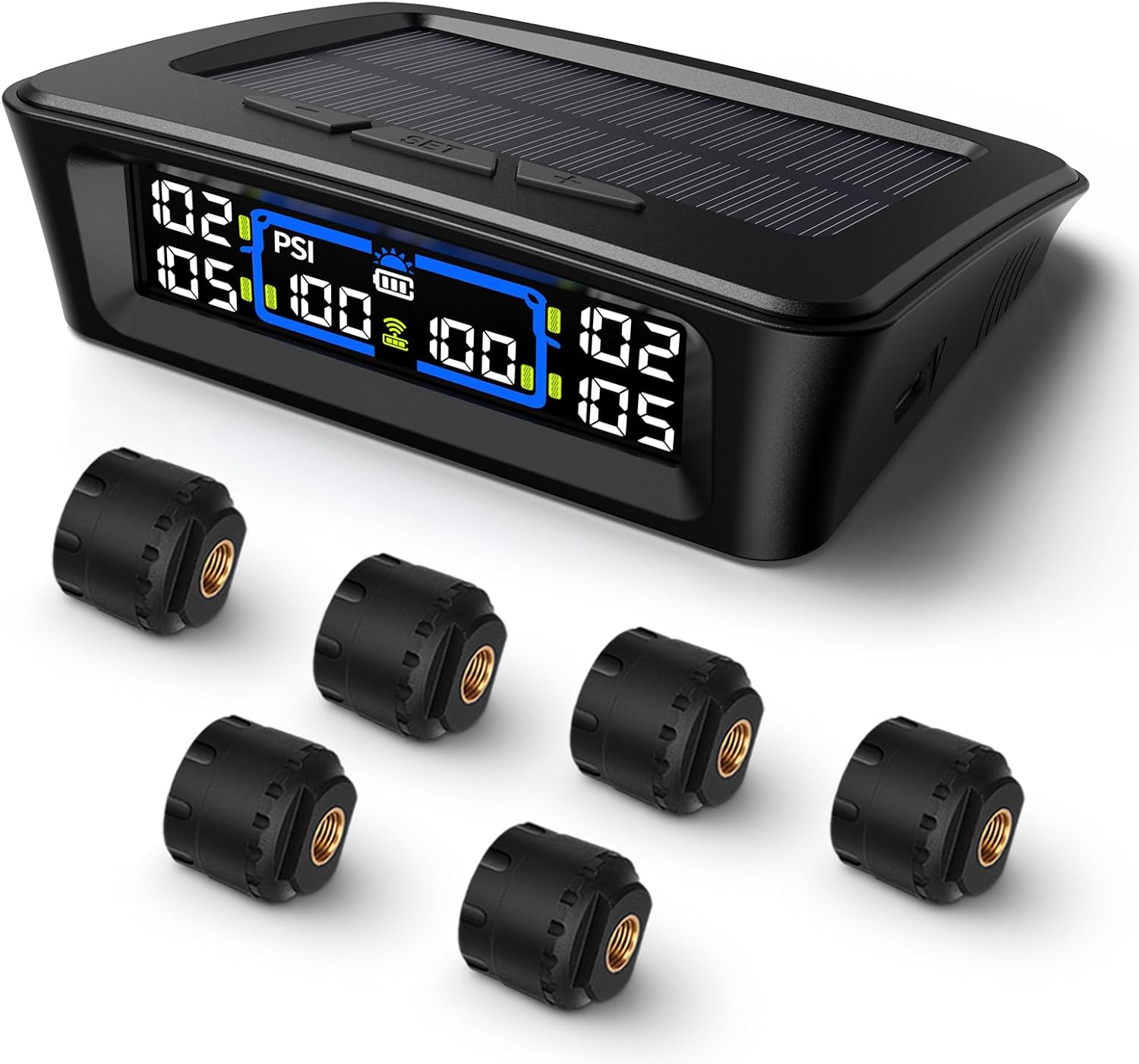
The Tymate TM12 RV TPMS delivers real-time tire pressure and temperature monitoring with a stable 433Hz display for safer long-distance driving. It supports simultaneous monitoring across vehicle and trailer zones, includes six alarm modes for pressure, temperature, leakage, battery, and signal loss, and features easy DIY installation with auto calibration. Power is supplied via USB-C charging or solar recharging, with a wide 0–144 PSI range and up to 50 ft signal coverage for RVs and towable trailers.
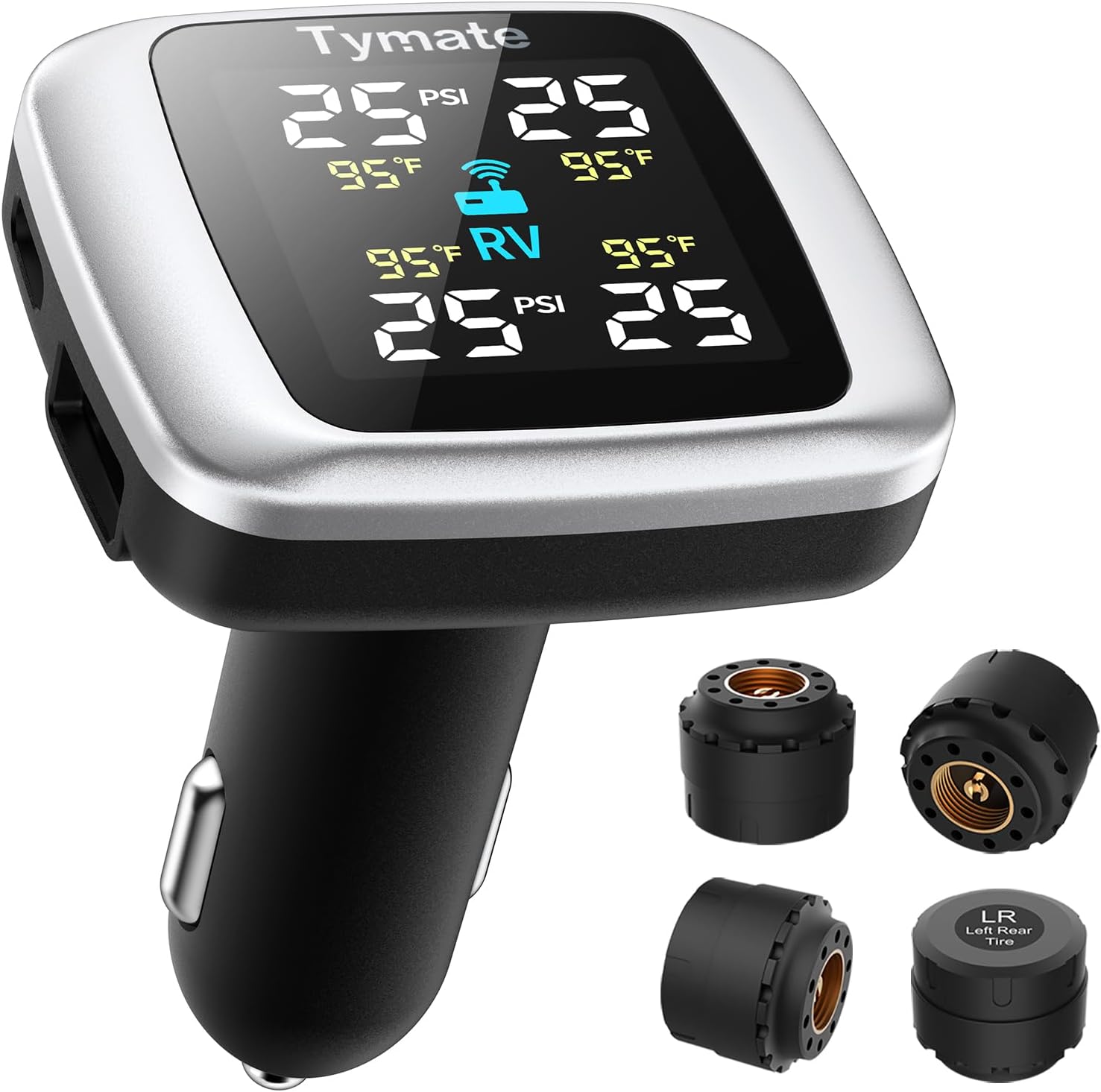
Tymate TM7 is a wireless tire pressure monitoring system that delivers real-time pressure and temperature readings for safer driving. It includes four external sensors, a bright color LCD display with adjustable backlight, and six alarm modes for high/low pressure, fast leakage, high temperature, and sensor signal or battery issues. The system covers a wide 0–144 PSI range and plugs into your vehicle’s cigarette lighter socket for quick DIY setup.

Keep your tires properly inflated with this analog VONDIOR tire pressure gauge, designed for fast, easy readings without batteries. The swiveling, two-axis hose and large glow dial help you measure at any tire angle with instant visibility. Built with a protective rubber shield, it supports durable, low-maintenance use for cars and trucks.
How to Trim for 35-Inch Tire Clearance
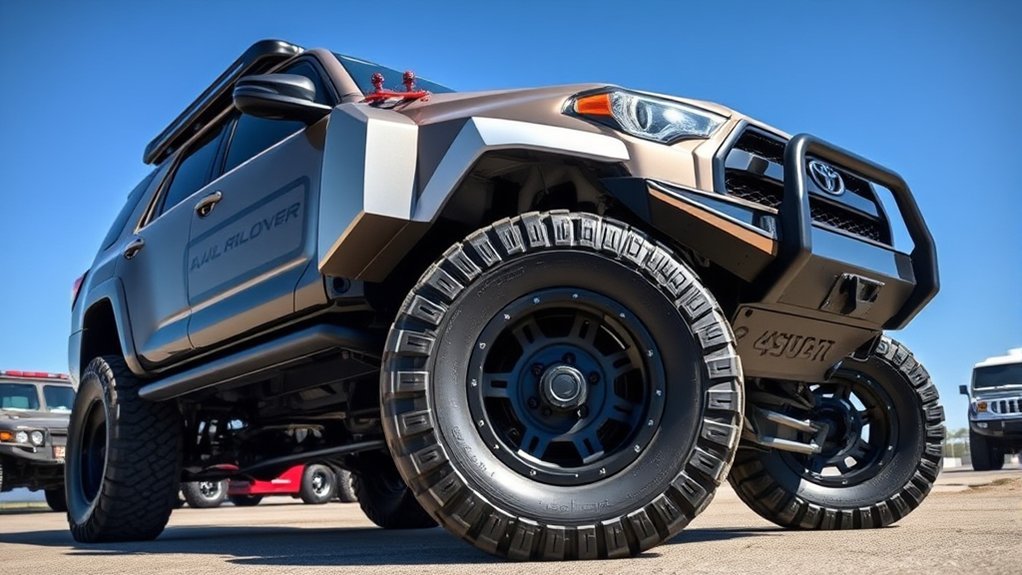
Trimming for 35-inch tire clearance should be done in stages. Do not cut everything at once. Start with the least invasive changes, test the tire again, then continue only where the tire still contacts the body.
- Remove or trim the front mud flaps. These are common rubbing points with larger tires.
- Move the front fender liner forward. On many builds, the liner can be pushed forward or re-pinned to create extra clearance.
- Trim the lower front bumper edge. Cut evenly, seal the edge, and keep the final line clean.
- Check the pinch weld area. If the tire contacts the rear of the front wheel well, the pinch weld may need to be flattened, sealed, and painted.
- Inspect body mount clearance. True 35s often contact the front body mount area on fifth-generation 4Runners, especially with wider tires and lower caster.
- Cycle the suspension. Clearance at parking-lot height is not enough. Check at full steering lock and compression.
If a body mount chop or relocation is needed, use a shop that understands 4Runner suspension geometry and corrosion protection. The work should be welded cleanly, sealed, painted, and inspected before trail use.
Aligning for Performance With 35-Inch Tires
After trimming, alignment decides whether your 4Runner drives straight, tracks safely, and keeps the tires away from the back of the wheel well. A larger tire often needs more positive caster than a stock setup, which is one reason aftermarket UCAs are so useful.
Ask the alignment shop to focus on:
- Caster: More positive caster helps move the tire forward in the wheel opening and improves straight-line stability.
- Camber: Keep it even side to side so the tires wear correctly.
- Toe: Incorrect toe can destroy expensive 35-inch tires quickly.
- Steering wheel center: A centered steering wheel helps the vehicle’s stability systems read correctly.
The National Highway Traffic Safety Administration notes that wheel alignment and tire balancing help with safety and tire life. That matters even more with heavy all-terrain or mud-terrain tires.
Do You Need Gears, Speedometer Calibration, or Brake Upgrades?
Going from a factory-size tire to a 35-inch tire changes more than ground clearance. It changes effective gearing, acceleration, braking feel, transmission shifting, speedometer accuracy, and fuel economy.
- Gearing: If your 4Runner feels sluggish, hunts gears, or carries heavy overland weight, regearing may be worth considering.
- Speedometer: A taller tire travels farther per wheel rotation, so your indicated speed and actual speed can differ unless calibrated.
- Brakes: Heavier wheels and tires add rotating mass. Make sure pads, rotors, brake fluid, and tire traction are in good condition.
- Spare tire: Confirm where the 35-inch spare will fit. The factory spare location may not accept every 35-inch tire.
- TPMS: Reuse compatible sensors or install new ones so the tire pressure monitoring system works correctly.
- Tire pressure: Use a safe cold-pressure starting point and adjust based on tire load, wear pattern, and manufacturer guidance. NHTSA advises checking the Tire and Loading Information Label or owner’s manual for original pressure guidance, but oversized LT tires may require a tire professional’s load-based pressure calculation.
Note: Do not use the maximum pressure printed on the tire sidewall as your normal street pressure. That number is not the same as the vehicle’s recommended operating pressure.
Post-Install Clearance and Safety Checklist
After the lift, tires, wheels, trimming, and alignment are complete, do a final inspection before daily driving or trail use.
- Torque all lug nuts to the correct specification for your wheels and lug hardware.
- Recheck lug torque after the first short drive and again after the first trail run.
- Check tire pressure cold, including the spare.
- Turn full lock left and right while moving forward and backward slowly.
- Inspect brake lines, ABS wiring, sway bar clearance, and upper control arm clearance.
- Check for tire contact at the bumper, fender liner, pinch weld, body mount, mud flap area, and skid plates.
- Listen for rubbing during dips, driveways, and tight turns.
- Schedule a follow-up alignment if the vehicle pulls, wanders, or wears tires unevenly.
- Confirm your tire tread is covered enough to meet your local road rules.
- Review warranty and insurance implications before cutting or heavily modifying the vehicle.
Frequently Asked Questions
How big of tires can you fit on a stock 4Runner?
It depends on the model year, trim, wheel offset, and tire width. Many 2010–2024 4Runners can fit tire sizes around 32 inches with little trouble, while some 33-inch setups may need careful offset choice and minor trimming. Toyota’s newer 2025+ off-road trims can come closer to 33 inches from the factory, but true 35-inch tires still need aftermarket work.
Is 265 or 275 better for a 4Runner?
A 265 tire is usually easier to fit, lighter, and better for fuel economy. A 275 tire adds width and traction but may rub sooner depending on wheel offset. For daily driving and mild trails, 265 or 275 sizes are simpler than jumping straight to 35-inch tires.
Can you fit 35-inch tires on a 4Runner with only a 3-inch lift?
Sometimes, but it is not the best way to plan the build. A 3-inch lift helps vertical clearance, but 35s often rub at the bumper, fender liner, pinch weld, and body mount. Wheel offset, caster, tire width, and trimming matter as much as lift height.
Do 35-inch tires require a body mount chop on a 4Runner?
On many fifth-generation 4Runner builds, yes, especially with wide 35×12.50 tires and aggressive wheel offset. Some narrower or smaller-measuring “35s” may need less work, but you should test at full steering lock and suspension compression before assuming the body mount clears.
Will 35-inch tires hurt fuel economy and acceleration?
Yes, usually. Larger and heavier tires increase rotating weight and effectively make the gearing taller. Expect slower acceleration, more frequent shifting, reduced fuel economy, and more strain on brakes and driveline parts, especially if the vehicle is loaded for overlanding.
Should you regear a 4Runner after installing 35s?
Regearing is not mandatory for every driver, but it can make a 35-inch tire setup feel much better. Consider it if your 4Runner feels sluggish, shifts often on hills, carries heavy armor or camping gear, tows, or sees regular technical off-road use.
Conclusion
Fitting 35-inch tires on a Toyota 4Runner can add ground clearance, traction, and trail confidence, but the job needs careful planning. Start with your model year and tire size, choose the right lift and UCAs, match the wheels to your clearance needs, trim only after test-fitting, and finish with a professional alignment. Done correctly, a 35-inch setup can work well. Done casually, it can rub, drive poorly, wear tires quickly, and create avoidable safety problems.
Sources
- Toyota USA Newsroom: 2025 Toyota 4Runner Refines Adventure Ready Heritage — backs the 2025+ 4Runner platform update and factory Trailhunter 33-inch tire context.
- NHTSA TireWise — backs tire-size, tire-pressure, tire maintenance, alignment, and safety guidance.
- NHTSA Tire Buyers’ FAQ — backs checking the owner’s manual or Tire and Loading Information Label when selecting tire size.