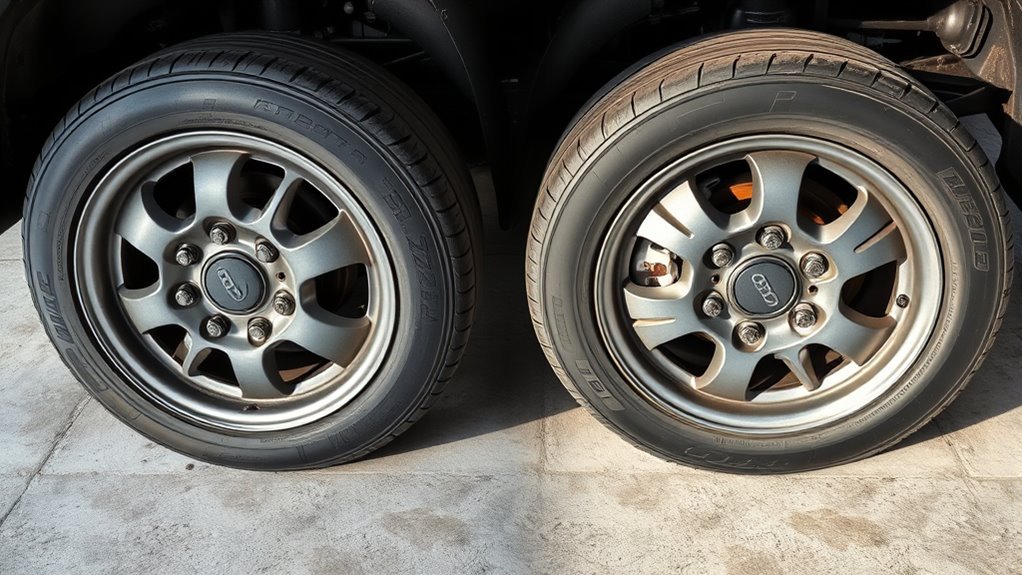
On most Toyota Camry models, the front tires usually wear faster because they handle steering, braking, and drive load at the same time. Current Camry models are offered as front-wheel drive or Electronic On-Demand AWD, not rear-wheel drive, so the front axle still does a large share of the work. Rotate your tires on schedule, check pressure and tread monthly, and put two new tires on the rear for better wet-road stability.
Quick Answer
Toyota Camry front tires usually wear faster, especially on front-wheel-drive models, because they steer, brake, and pull the car forward. AWD Camrys may spread some load rearward, but the front tires still need close monitoring. Rotate every 5,000 to 7,500 miles, unless your manual or wear pattern says sooner.
Key Takeaways
- Front tires usually wear first on a Toyota Camry because they carry steering, braking, and drive forces.
- Current Camry models are front-wheel drive or available with Electronic On-Demand AWD, so avoid treating the Camry as a rear-wheel-drive car.
- Rotate tires about every 5,000 to 7,500 miles, or sooner if you see uneven wear.
- When replacing only two tires, install the newer pair on the rear to improve wet-road stability.
- Replace tires at 2/32 inch tread depth or sooner if you see cords, bulges, cracking, cupping, or unstable handling.
At a Glance
| Time Required | 5 to 10 minutes for a monthly tire check; 30 to 60 minutes for a shop rotation |
| Difficulty | Easy for inspection; moderate if rotating at home with proper lifting equipment |
| Tools Needed | Tire pressure gauge, tread depth gauge or penny, owner’s manual, and door-jamb tire placard |
| Cost | Pressure and tread checks are usually free if you have a gauge; rotation and alignment costs vary by shop |
Why Camry Front Tires Wear Faster
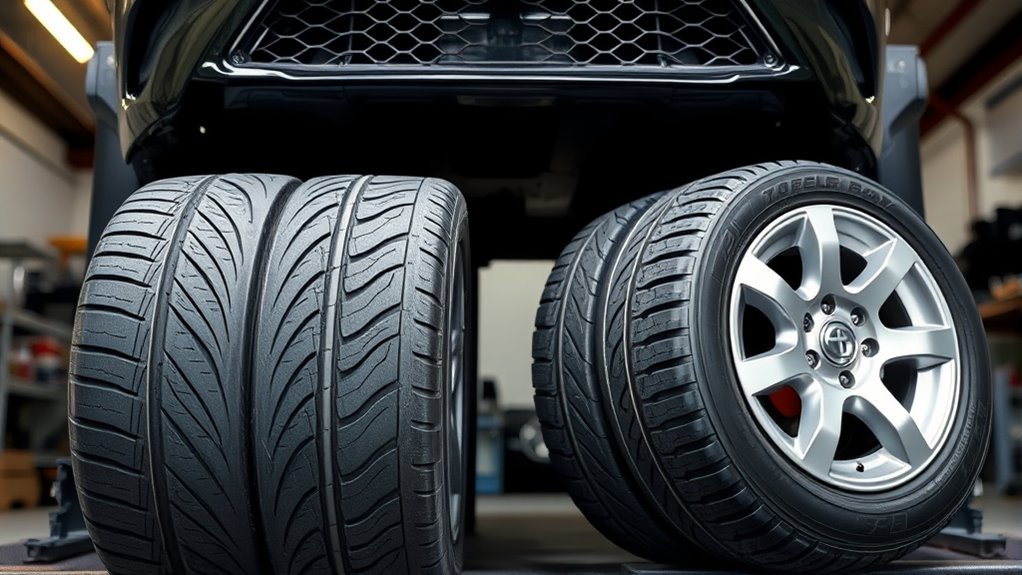
In a Toyota Camry, the front tires wear faster mainly because the front axle handles several jobs at once. The front tires steer the car, carry much of the braking load, and, on front-wheel-drive models, transmit engine power to the road. That combination creates more scrub, heat, and tread abrasion at the front contact patches.
This wear pattern is normal, but it should not be ignored. Tire Rack explains that front-wheel-drive front tires wear faster because they transmit acceleration, steering, and much of the braking force. Current Camry models also need updated context: Toyota describes the latest Camry as a hybrid offered in front-wheel drive or Electronic On-Demand AWD.
That means the front tires usually remain the first set to show wear, even when the Camry has AWD. The rear axle may help when extra traction is needed, but the front axle still does a large share of steering and braking.
Note: If someone compares Camry tire wear with a rear-wheel-drive car, remember that the comparison is about drivetrain layout in general. A current production Camry is not a rear-wheel-drive sedan.
Which Camry Tires Wear First?
For most front-wheel-drive Toyota Camry models, the front tires wear first. You will usually see faster tread loss on the front left and front right tires because those tires absorb steering input, braking force, and drive torque. The rear tires often retain more tread because they mainly support stability and follow the car’s path.
| Tire Position | Typical Wear Rate | Main Stress |
|---|---|---|
| Front left | High | Steering, braking, cornering load |
| Front right | High | Drive torque, steering, braking load |
| Rear axle on FWD Camry | Usually lower | Stability support and trailing load |
| Rear axle on AWD Camry | Can be more balanced | Rear assist during traction demand |
If one front tire wears much faster than the other, do not blame the drivetrain alone. Uneven left-to-right wear often points to pressure loss, alignment error, worn suspension parts, tire imbalance, hard cornering, or previous tire damage.
Best Rotation Pattern for Camry Tires
The best Camry tire rotation pattern depends on tire design. For many same-size, non-directional tires, a forward-cross pattern is commonly used on front-wheel-drive vehicles: the front tires move straight to the rear, and the rear tires cross to the opposite front positions. However, your owner’s manual and tire sidewall markings should decide the final pattern.
| Tire Type | Best Rotation Approach | Why It Matters |
|---|---|---|
| Same-size, non-directional tires | Use the owner’s manual pattern, often forward-cross on FWD vehicles | Helps distribute front-axle wear across all four tires |
| Directional tires | Rotate front to rear on the same side only | Keeps the tread rolling in the correct direction |
| Staggered tire sizes | Do not swap front to rear unless the manual and tire size allow it | Different front and rear sizes may not be interchangeable |
| Uneven, cupped, or feathered tires | Inspect alignment, balance, and suspension before rotating | Rotation alone will not fix a mechanical wear problem |
NHTSA tire guidance recommends checking your owner’s manual for the proper rotation schedule and notes that rotation, balancing, alignment, and proper inflation help tires last longer. A practical Camry interval is about 5,000 to 7,500 miles, but rotate sooner if tread wear becomes uneven.
Pro Tip: Measure tread depth at all four tires before every rotation. Write the numbers down. A growing front-to-rear or left-to-right difference tells you whether the rotation schedule is working.
[Products Worth Considering]

Accurately measure tire tread depth with a calibrated gauge marked from 0 to 1 inch in 1/32 inch increments. The color-coded bar helps you quickly identify tread condition ranges, supporting safe driving for trucks, motorcycles, automobiles, and passenger vehicles.

Measure tire tread depth quickly and accurately with this LUMITECO dial gauge that reads in 1/32" increments up to 14/32". The color-coded green/yellow/red zones make it easy to judge tire wear and know when replacement is needed. A rugged, compact design with a protective pouch helps keep the gauge ready for use on cars, trucks, motorcycles, and more.

Monitor tire tread wear with a smart, color-coded depth gauge that shows clear condition ranges at a glance. The bar is range marked for fast, easy readings, helping you maintain safer traction and performance. Each gauge is portable with a pocket clip, and the set includes 20 units for daily use and sharing.
Why New Camry Tires Go on the Rear
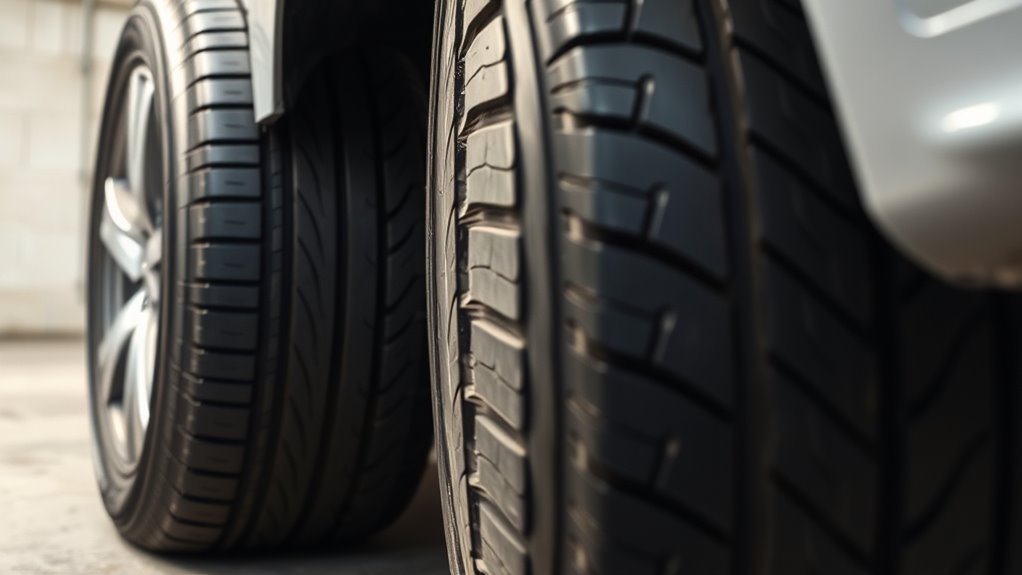
New tires should go on the rear axle when you replace only two Camry tires. This can feel backward on a front-wheel-drive car because the front tires wear faster, but rear grip is what helps keep the car stable when traction drops.
With deeper tread on the rear, the back of the car is less likely to hydroplane first in wet conditions. If the front loses grip first, the car tends to understeer, which is often easier for most drivers to manage. If the rear loses grip first, the car can oversteer or rotate, which is harder to catch.
Warning: Do not install two new tires on the front while leaving badly worn tires on the rear. The car may feel sharper at first, but the rear axle can lose wet-road grip suddenly.
This rear-tire rule applies whether your Camry is front-wheel drive or AWD. The safest setup is not just about which axle wears faster. It is about keeping the rear of the car stable during rain, emergency lane changes, and sudden braking.
[Products Worth Considering]

The SAFELIFE dial tire tread depth gauge measures tread depth in 1/32 inch increments with clear, easy-to-read 2-inch dial face. Color zones using a traffic light system help you quickly judge whether tread is low, marginal, or ample for safer driving. Built with a durable zinc cast body and a metal detect probe for precise, comfortable use across cars, motorcycles, trucks, and buses.

Steelman white tire marking crayons provide high-contrast, semi-permanent marks for repairing and inspecting tires and equipment. They write on wet or dry, smooth or coarse surfaces including rubber, metal, glass, and wood, making them ideal for puncture location and damage outlining. The lead- and zinc-free crayons resist weather and fading yet wipe away when you no longer need the marks.

The Topeak SmartGauge D2 delivers precise digital tire pressure readings for bikes, motorcycles, and sports equipment up to 250 psi (17 bar). Its rotating SmartHead works with both Presta and Schrader valves, so you can check pressure quickly without adapters. The LCD display makes it easy to read results in psi, bar, or kg/cm² with an included CR2032 battery for immediate use.
How Driving Habits Change Camry Tire Wear
Your driving style can make Camry tire wear better or worse. Rapid acceleration, late braking, fast cornering, and repeated pothole impacts all increase stress on the tread. Smooth inputs, correct pressure, and regular alignment checks help the tires wear more evenly.
Aggressive Driving Effects
Aggressive driving wears Camry front tires faster because the front axle is already doing heavy work. Hard launches add drive-torque stress. Late braking shifts weight forward. Sharp cornering scrubs the outer shoulders. Combined, those habits can make the front tires lose tread much sooner than the rears.
- Hard launches increase tread heat.
- Late braking accelerates front-shoulder wear.
- Fast cornering scrubs the outside edges.
- Pothole impacts can knock alignment out of spec.
- Uneven pressure can make one tire wear faster than the others.
If you drive in heavy city traffic, on rough roads, or with frequent stop-and-go braking, check tread depth more often than the rotation interval alone suggests.
Smooth Braking Benefits
Smooth braking helps reduce tire stress by limiting heat buildup and tread scrubbing. This matters on a Camry because the front tires take much of the stopping load. Gradual braking gives the tread contact patch a better chance to stay stable instead of sliding across the pavement.
You do not need to coast unsafely or brake too early. The goal is simple: look farther ahead, leave more following distance, and avoid sudden pedal inputs when traffic allows. This helps preserve tread depth and keeps braking feel more predictable.
Cornering and Alignment
Hard cornering can wear the outside shoulders of the front tires. Misalignment can make the problem worse by forcing the tire to drag slightly even when the steering wheel is straight. Toe error often causes feathering, while camber problems can concentrate wear on the inner or outer edge.
- Outer-edge wear often points to hard cornering or underinflation.
- Inner-edge wear can point to alignment or suspension issues.
- Feathered tread can point to toe alignment problems.
- Cupping can point to balance, shock, strut, or suspension issues.
- One tire wearing much faster than the rest deserves inspection.
If the steering wheel is off-center, the car pulls, or the tires show edge wear after rotation, schedule an alignment check before buying another set of tires.
How to Keep Camry Tires Wearing Evenly
To keep your Camry tires wearing evenly, treat tire care as a monthly habit instead of waiting for visible damage. NHTSA recommends checking tire pressure when tires are cold and using the pressure listed on the vehicle placard or owner’s manual, not the maximum pressure molded into the tire sidewall.
- Check pressure monthly: Use a quality gauge before driving or after the car has been parked long enough for the tires to cool.
- Measure tread depth monthly: Use a tread depth gauge, or use the penny test as a quick backup.
- Rotate on schedule: Use 5,000 to 7,500 miles as a practical interval unless your manual or tire wear says otherwise.
- Inspect the shoulders: Edge wear can reveal underinflation, hard cornering, or alignment problems.
- Watch for vibration: New vibration after a pothole or curb strike can mean wheel, tire, balance, or suspension damage.
- Keep records: Write down tire pressure, tread depth, mileage, and rotation dates.
Good tires still wear out, but consistent pressure, rotation, alignment, and inspection help you get more safe miles from the set.
[Products Worth Considering]

Measure tyre tread depth precisely with a digital gauge that reads in both MM and inches, helping you monitor safe driving conditions. The large LCD screen is easy to operate, and the compact tool fits for cars, trucks, and motorcycles. It provides high accuracy with a 0-25.4mm range and includes a 1-year warranty for added peace of mind.

ETENWOLF’s tire pressure gauge helps you quickly and accurately check tire PSI across cars, trucks, motorcycles, bikes, and more. It’s manually calibrated to ANSI B40.1 Grade A for reliable readings, includes a large glow dial for easy nighttime viewing, and features a 360-degree swivel chuck for use at any valve angle. The gauge also works consistently in extreme hot or cold weather.

Vigorder rubber cement glue delivers superior adhesion and cures quickly within about 30 seconds for seamless rubber bonding. Once cured, it helps provide a strong, durable, waterproof seal that holds up to vehicle weight, pressure, and heat. Suitable for cars, motorcycles, trucks, bicycles, and off-road tires, it’s designed for emergency patch and maintenance repairs.
Camry Tire Wear: When to Replace Them
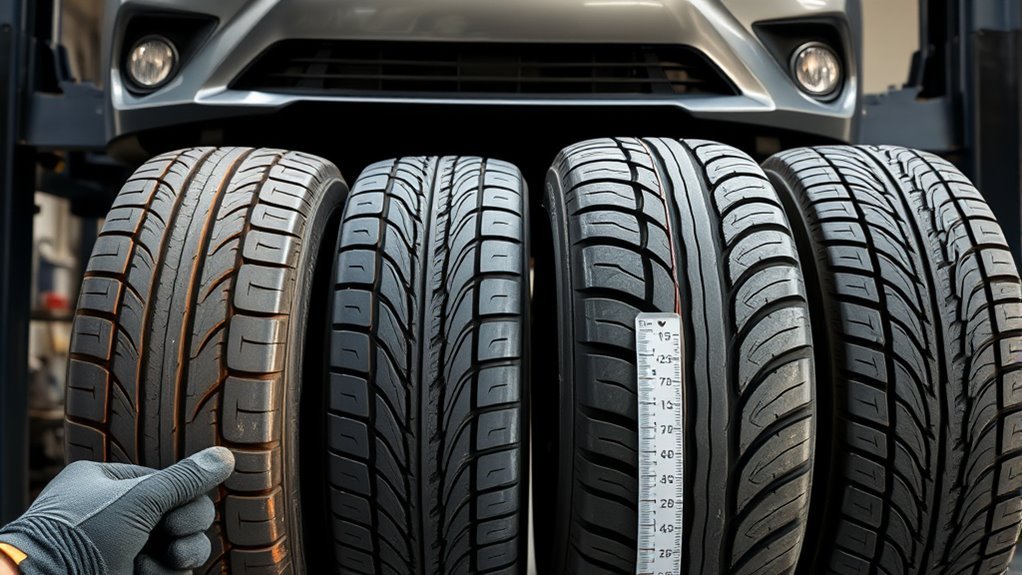
Replace a Camry tire when tread depth reaches 2/32 inch, or sooner if the tire is damaged. NHTSA states that tires are unsafe at 2/32 inch tread depth, and worn tires can reduce traction, especially on wet roads.
Tread depth is not the only replacement trigger. Replace the tire or have it inspected immediately if you see:
- Visible cords or belts
- Sidewall bulges or bubbles
- Deep cuts, cracks, or puncture damage
- Severe cupping or scalloped tread
- Persistent vibration after balancing
- Uneven wear that keeps returning after rotation
- Old, weather-cracked rubber even if tread remains
Minimum legal tread is not the same as best wet-road performance. If you drive in heavy rain, snow, or long highway conditions, consider replacing tires before they reach the absolute 2/32 inch limit.
If the front tires are worn but the rear tires still have deeper tread, do not automatically put the new pair on the front. Install the new pair on the rear, then keep rotating future sets so tread depth stays closer across all four corners.
Frequently Asked Questions
Do front or rear tires wear faster on a Toyota Camry?
Front tires usually wear faster on a Toyota Camry, especially on front-wheel-drive models. They handle steering, braking, and drive torque, so they carry more stress than the rear tires.
Do AWD Camry tires wear differently than FWD Camry tires?
Yes. AWD can spread some driving force to the rear axle when extra traction is needed, so wear may be more balanced than on a FWD Camry. However, the front tires still steer and handle much of the braking load, so they still need close monitoring.
Should new tires go on the front or rear of a Camry?
When replacing only two tires, install the newer tires on the rear. Deeper rear tread helps keep the back of the car stable on wet roads and reduces the chance of sudden rear traction loss.
How often should I rotate Toyota Camry tires?
A practical interval is every 5,000 to 7,500 miles, but your owner’s manual should be the final guide. Rotate sooner if you notice uneven wear, vibration, pulling, or a large tread-depth difference between tires.
When should Camry tires be replaced?
Replace tires at 2/32 inch tread depth, or sooner if you see visible cords, bulges, deep cracks, severe cupping, or unstable handling. Wet or winter driving may justify replacement before the minimum tread limit.
What causes different tire wear patterns on a Camry?
Different wear patterns usually come from tire pressure, alignment, suspension condition, wheel balance, road conditions, and driving habits. Edge wear, feathering, cupping, and one-tire wear should be inspected before the next rotation.
Conclusion
Your Camry’s front tires usually wear faster because they do more work: steering, braking, and, on FWD models, driving the car forward. AWD Camrys may balance some load better, but they still need regular rotation and inspection. Check pressure and tread monthly, rotate on schedule, keep the newer pair on the rear when replacing only two tires, and replace damaged or worn tires before they compromise traction.
Sources
- Toyota USA Newsroom — current Camry hybrid, FWD, and Electronic On-Demand AWD drivetrain context
- NHTSA TireWise — tire pressure, tread depth, rotation, alignment, and replacement safety guidance
- Tire Rack — why FWD front tires wear faster and why two new tires should be installed on the rear
- Guemez and Fiolhais, The Physics of Automobile Traction — basic wheel-force explanation for front-wheel-drive vehicles
- Persson et al., Rubber Friction on Wet and Dry Road Surfaces — wet-road friction context for tire tread and traction