
How to Make Toyota Camry Tires Last Longer: Habits That Add Miles

Your Toyota Camry tires last longer when pressure, rotation, alignment, driving habits, inspection, repair, and storage all work together. Most early tire wear is not random; it comes from low pressure, skipped rotations, misalignment, overload, hard braking, rough impacts, or small damage that gets ignored.
Quick Answer
To make Toyota Camry tires last longer, check cold tire pressure monthly, use the driver-door placard PSI, rotate tires on the model-year maintenance schedule, inspect tread and sidewalls often, fix repairable tread punctures quickly, avoid overloading, drive smoothly, and store seasonal tires in a cool, dry, dark place.
Key Takeaways
- Use the Camry’s Tire and Loading Information label, not the tire sidewall maximum, for the correct cold PSI.
- Rotate tires on your model-year Toyota maintenance schedule, and sooner if uneven wear appears.
- Check alignment and balancing when the car pulls, vibrates, shows shoulder wear, or after a pothole or curb hit.
- Replace tires at unsafe tread depth, serious damage, or age limits recommended by the vehicle or tire manufacturer.
- Only tread-area punctures within repair limits should be repaired by a trained tire technician.
At a Glance
| Time Required | 10 minutes for a monthly home check; longer if a tire shop rotates, balances, aligns, or repairs a tire. |
| Difficulty | Easy for pressure and visual checks; professional service required for alignment, balancing, mounting, and puncture repair. |
| Tools Needed | Digital tire-pressure gauge, tread-depth gauge or penny, flashlight, tire log or phone reminder, and the Camry owner’s manual or maintenance guide. |
| Cost | Home checks are usually free after buying a gauge. Rotation, balancing, alignment, repair, and replacement costs vary by shop, tire size, and service plan. |
Keep Your Camry Tires Properly Inflated
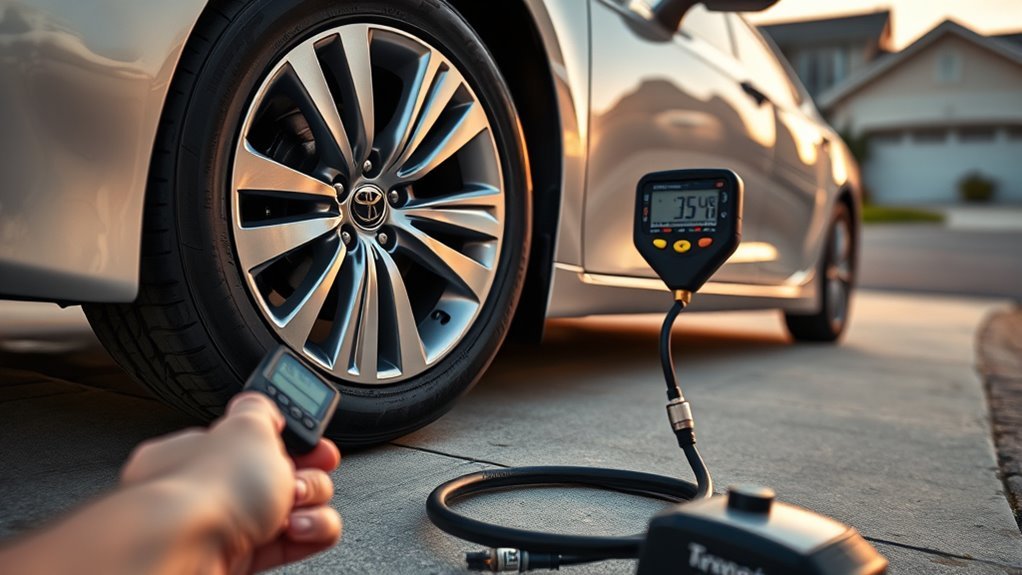
Keeping your Camry tires properly inflated is the easiest way to protect tread life, fuel economy, handling, and braking. Check tire pressure at least once a month and before long trips. Measure when the tires are cold, meaning the car has been parked for at least three hours.
Use the PSI listed on the Camry’s Tire and Loading Information label on the driver’s door area or in the owner’s manual. Do not use the maximum pressure printed on the tire sidewall unless it happens to match the vehicle placard. The sidewall number is a tire limit, not the Camry’s recommended daily inflation pressure. The National Highway Traffic Safety Administration gives the same guidance: use the vehicle manufacturer’s recommended pressure and check tires cold.
Tires naturally lose pressure over time, and temperature changes can move the reading too. Bridgestone notes that tires lose about 1 PSI per month on average and that pressure changes about 1 PSI for every 10°F change in ambient temperature. That is why a Camry that was perfect in warm weather may be low after a cold night.
FuelEconomy.gov says properly inflated tires can improve gas mileage by 0.6% on average and up to 3% in some cases.
Pro Tip: Keep a tire-pressure gauge in the glove box and set a monthly phone reminder. TPMS is helpful, but it usually warns only after a tire is already significantly underinflated.
[Products Worth Considering]

The JACO FlowPro Tire Inflator measures, inflates, and airs down tires up to 100 PSI with battery-free operation and ±2% accuracy after calibration. It features a glowing pressure dial for night visibility, a heavy-duty steel build with a hybrid hose, and a precision push-to-inflate thumb trigger. The patented Lightning Air Chuck locks on for a secure seal, and the kit includes quick-connect hardware for easy inline use with your air compressor.

This portable cordless tire inflator delivers up to 160 PSI with fast 17 L/min airflow to help you quickly top up tires and get back on the road. It features dual power mode, running on a 21V rechargeable battery or a 12V DC adapter for convenient roadside use. An automatic shut-off with digital pressure gauge helps prevent overinflation, and a built-in LED light improves visibility in low-light conditions.

EVOULTES heavy duty tire inflator with an integrated gauge delivers accurate pressure readings from 10–120 PSI, helping you inflate, deflate, and check tires in one tool. The 16.5-inch extended dual-head air chuck with swivel base reaches hard-to-access dual wheel valves on trucks and RVs. A brass trigger core and side-mounted air release valve make operation smooth, with standard 1/4" NPT threading and quick-connect compatibility for easy setup.
Rotate Camry Tires on Schedule
Rotate your Camry tires on the schedule in your model-year Toyota maintenance guide. Many Camry maintenance schedules include tire rotation at regular 5,000-mile or 6-month service points, and NHTSA says rotation can reduce irregular wear and help tires last longer. If your tires show uneven wear sooner, have them inspected before waiting for the next service interval.
Rotation Mileage Intervals
A practical routine is to pair tire rotation with the Camry’s regular maintenance visit. That makes it easier to remember and helps all four tires wear as a set. Front tires often wear faster because they handle steering, braking forces, and more cornering load. Rotation spreads those jobs around the tire set instead of letting one pair wear out early.
Track rotation mileage in a maintenance log, app, or glove-box note. Write down the odometer reading, tire positions, tread depth, and any unusual wear. This simple record helps a tire shop spot changes before they become expensive.
Use the Correct Rotation Pattern
The correct pattern depends on your tire type, drivetrain, wheel size, and whether the tires are directional. For many same-size, non-directional front-wheel-drive Camrys, a shop may use a forward-cross pattern. Directional tires usually stay on the same side and move front-to-rear. Staggered wheel sizes may not rotate front-to-rear at all. Check your owner’s manual or ask a tire professional before rotating if you are unsure.
Note: If one tire is wearing much faster than the others, do not treat rotation as the whole fix. Uneven wear can point to low pressure, misalignment, worn suspension parts, balance problems, or driving conditions.
Even Wear Benefits
Regular tire rotation helps distribute tread wear across the set. That protects grip, keeps handling more predictable, and reduces the chance of replacing two tires long before the others. Balanced tread depth also helps the Camry brake and corner more consistently in rain.
Align and Balance Your Camry Tires
Wheel alignment and tire balancing are different services, and both affect tire life. Alignment adjusts suspension angles so the tires meet the road correctly. Balancing corrects uneven weight distribution in the wheel-and-tire assembly. Have both handled by a qualified technician.
Alignment Prevents Uneven Wear
When your Camry’s wheels are out of alignment, the tread can scrub the road instead of rolling cleanly. That often shows up as feathered tread, inner-edge wear, outer-edge wear, pulling to one side, or an off-center steering wheel.
Check alignment when you notice those symptoms, after a hard pothole or curb strike, after suspension or steering repairs, or when new tires are installed and the old tires wore unevenly. A scheduled inspection is smart, but a universal “align every few thousand miles” rule is less useful than watching for real symptoms.
Balance Eliminates Vibrations
Balancing your Camry’s tires keeps the wheel-and-tire assembly spinning smoothly. A balance issue often feels like steering-wheel shake, seat vibration, or a highway-speed wobble. Ignoring it can create cupping or patchy tread wear and can make the car tiring to drive.
Balance tires when they are installed, when they are rotated if vibration is present, after a tire repair, or any time a shop removes and remounts a tire. If vibration remains after balancing, ask the technician to check for bent wheels, tire separation, worn suspension parts, or uneven tire wear.
Rotate With Alignment Checks
Each rotation is a good time to inspect tread depth, shoulder wear, sidewall condition, and vibration complaints. Ask the shop to note whether all four tires are wearing evenly. If the tread tells a story, fix the cause before the tire set loses thousands of miles of useful life.
Drive in Ways That Protect Tread
Smooth driving helps your Camry tires last longer. Hard launches, sudden braking, fast cornering, and sharp steering corrections build heat and scrub rubber from the tread. Gentle inputs are easier on the tire, suspension, brakes, and fuel budget.
Accelerate gradually from stops. Leave enough space to brake early. Slow down before turns instead of braking hard while turning. Avoid potholes when it is safe, and slow down for rough railroad crossings, gravel, broken pavement, and speed bumps.
Also watch the load. Carrying too much weight or loading the trunk unevenly can make tires run hotter and wear faster. Check the Tire and Loading Information label for the Camry’s load limit, and remove heavy cargo when you do not need it.
Inspect Camry Tires for Early Warning Signs

A quick monthly tire check can catch problems before they become unsafe or expensive. Inspect all four tires, and check the spare if your Camry has one. Use a flashlight so you can see the inner shoulders, not just the outer sidewalls.
- Look for cuts, cracks, bulges, bubbles, exposed cords, nails, screws, glass, or sidewall discoloration.
- Measure tread depth with a tread-depth gauge, or use the penny test as a quick backup. If you can see the top of Lincoln’s head when the penny is placed upside down in the tread, the tire is at the replacement point.
- Check for uneven wear. Inner-edge wear, outer-edge wear, center wear, cupping, and feathering all point to different problems.
- Read the DOT date code on the sidewall. The last four digits show the week and year the tire was made.
NHTSA says tires are not safe and should be replaced when tread is worn to 2/32 inch. It also notes that some vehicle and tire manufacturers recommend replacing tires that are six to 10 years old, regardless of treadwear. Michelin recommends replacing tires 10 years after the manufacture date as a precaution, even if tread remains.
Warning: Do not keep driving on a tire with a bulge, exposed cords, deep sidewall cut, tread separation, or repeated pressure loss. Install the spare if safe to do so and have the tire inspected immediately.
Fix Tire Damage Before It Spreads
Catch tire damage early so it does not spread into a bigger repair or a roadside failure. If you find a nail or screw, do not pull it out in the driveway unless you are prepared for the tire to lose air. Check pressure, avoid high-speed driving, and have a tire professional inspect it as soon as possible.
Not every puncture can be repaired. The U.S. Tire Manufacturers Association says repair should be considered only when the damage is limited to the tread area and the puncture is no greater than 1/4 inch, or 6 mm, in diameter. The tire should be removed from the wheel for internal inspection, and a proper repair uses both a plug/stem to fill the injury and a patch to seal the inner liner.
Do not repair sidewall damage, shoulder damage, overlapping repairs, large punctures, tires worn to the treadwear indicators, or tires with internal damage from being driven flat. In those cases, replacement is the safer choice.
[Products Worth Considering]

This compact capsule-style tire repair kit helps you quickly fix punctures and plug flats with minimal effort. The rugged stainless steel shell protects the contents for reliable roadside use, while the simple plug assembly makes repairs fast and tool-free. Suitable for motorcycles, cars, ATVs, UTVs, and even mountain bikes.
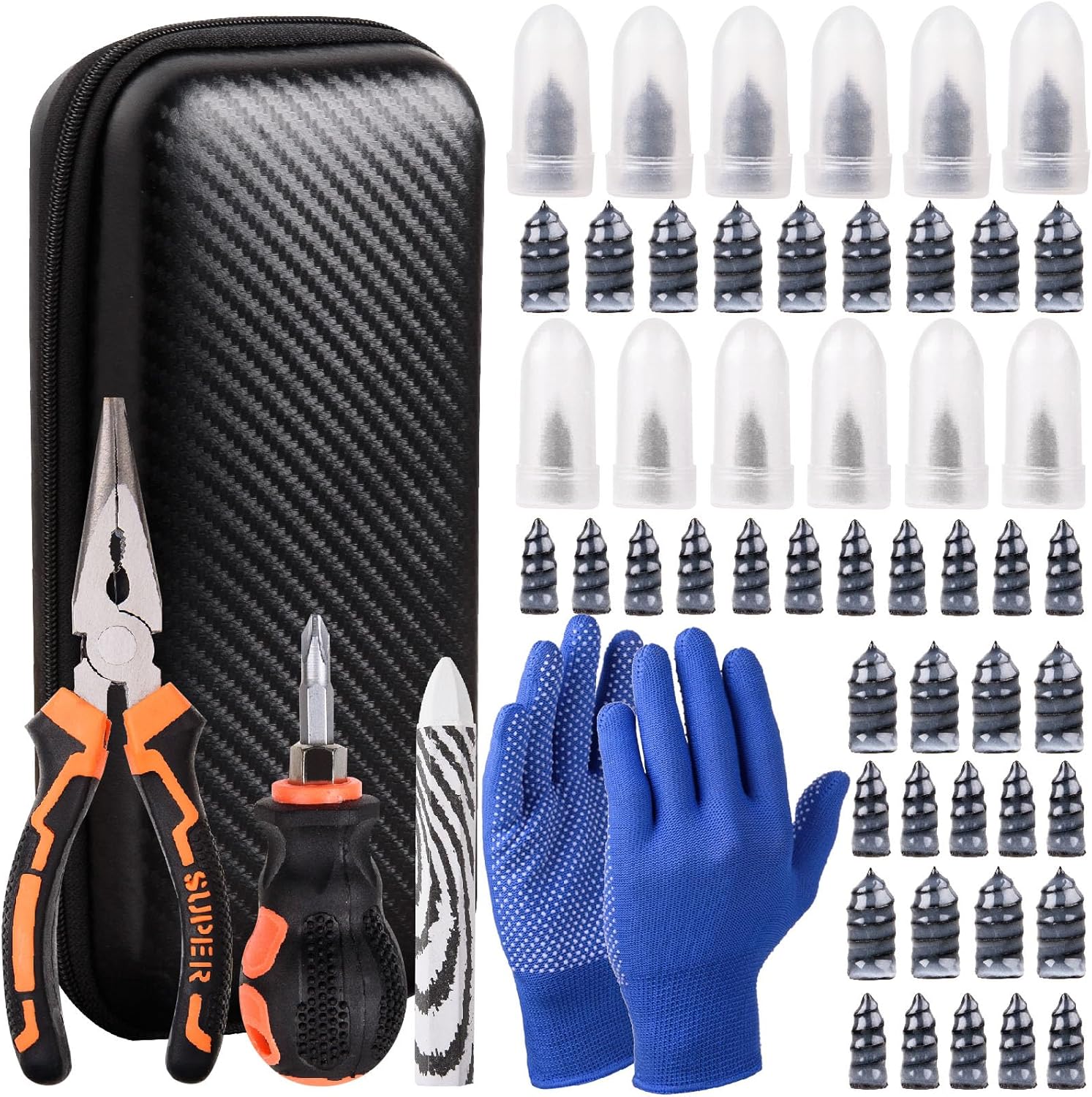
This tire sidewall puncture repair kit fixes flats fast without removing the tire, helping you get back on the road in minutes. It includes self-tapping repair nails, essential tools, gloves, and a portable storage bag for convenient roadside use. Designed for tubeless tires, it helps create a tight, leak-resistant seal for cars, motorcycles, trucks, SUVs, and ATVs.
Choose the Best Tires for Your Camry
The right tires set the foundation for longer Camry tire life, better grip, and safer handling. Start with the owner’s manual or the Tire and Loading Information label so you match the correct size, load rating, and speed rating. Then choose the tire type for your climate and driving style.
- Use all-season tires for mild mixed conditions where snow and ice are limited.
- Use winter tires if you regularly drive in freezing temperatures, packed snow, or ice.
- Use touring or grand-touring tires if comfort, quietness, and tread life matter most.
- Use performance tires only if you accept that sharper grip may come with shorter tread life.
- Keep tires matched by size, type, load rating, speed rating, and similar tread depth whenever possible.
When replacing tires, avoid mixing different tire types unless your owner’s manual or a tire professional approves it. A mismatched set can affect braking, wet traction, stability control, and handling. If you replace only two tires, many tire makers recommend installing the newer pair on the rear axle for stability, but always follow the vehicle and tire manufacturer’s guidance.
Store Seasonal Tires the Right Way
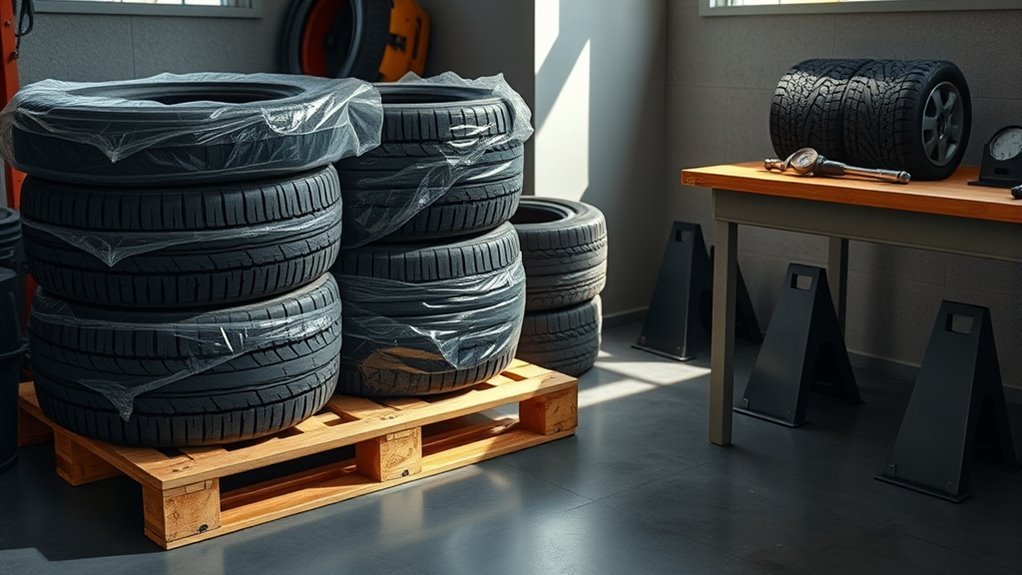
When you switch to seasonal tires, store the off-season set correctly so the rubber does not age faster than it should. The Tire Industry Association recommends a clean, cool, dry, dark storage area away from direct sunlight, moisture, oil, grease, and ozone sources such as electric motors, battery chargers, welding equipment, and generators.
Clean and dry the tires before storage. Remove stones from the tread, label each tire’s last position, and store them off the ground on a rack or pallet. Use covers that protect from dust and light while allowing the tires to stay dry.
For unmounted tires, upright storage in a rack helps prevent distortion and makes remounting easier. If horizontal storage is necessary, stack them carefully so the bottom tire keeps its shape. For tires stored while mounted on rims, TIA recommends inflating them to 50% of normal pressure. Before reinstalling any stored tire, inspect it again and inflate it to the Camry’s placard pressure.
Frequently Asked Questions
How often should I check my Camry tire pressure?
Check your Camry tire pressure at least once a month and before long trips. Check when the tires are cold, then adjust to the PSI on the driver-door Tire and Loading Information label or in the owner’s manual.
Can overinflated tires wear out faster on a Camry?
Yes. Overinflation can make the center of the tread wear faster and can reduce the tire’s contact patch. Use the Camry’s recommended cold PSI, not the maximum number on the tire sidewall.
Do Camry tire rotations need to follow a specific pattern?
Yes. The pattern depends on tire type, wheel size, drivetrain, and whether the tires are directional. Same-size, non-directional front-wheel-drive setups are often rotated differently from directional, staggered, or AWD setups. Follow the owner’s manual or ask a tire professional.
What causes Camry tires to wear unevenly?
Common causes include underinflation, overinflation, missed rotations, misalignment, unbalanced wheels, worn shocks or suspension parts, aggressive driving, hard braking, rough roads, and carrying too much weight.
Should I replace all four Camry tires at once?
Replacing all four keeps handling and tread depth balanced. If only two are replaced, match the size, type, load rating, speed rating, and overall performance as closely as possible, and follow the vehicle and tire manufacturer’s guidance on placement.
Does TPMS mean I can skip manual pressure checks?
No. TPMS is a warning system, not a monthly maintenance replacement. It may not alert until a tire is already significantly underinflated, so manual cold-pressure checks are still important.
When should I replace Camry tires for tread depth?
Replace tires when tread reaches 2/32 inch or the treadwear indicators are level with the tread. A penny test can help, but a tread-depth gauge gives a more precise reading.
Can a Camry tire sidewall puncture be repaired?
No. Sidewall and shoulder damage should not be repaired. A repair is only potentially safe when the puncture is in the tread area, within size limits, and the tire passes an internal inspection by a trained technician.
Conclusion
When you keep your Camry’s tires inflated, rotated, inspected, aligned when needed, and balanced when symptoms appear, you slow the wear that shortens tread life. Add smooth driving, correct load habits, fast damage checks, safe repair decisions, and proper seasonal storage, and your tires have a much better chance of lasting their full useful life.
Sources
- Toyota 2024 Camry Warranty & Maintenance Guide — supports Camry maintenance schedule and recurring tire rotation service.
- NHTSA TireWise — supports cold tire pressure checks, placard PSI, tread depth, penny test, tire age awareness, rotation, balancing, and alignment basics.
- FuelEconomy.gov Gas Mileage Tips — supports fuel-economy impact of proper tire inflation.
- U.S. Tire Manufacturers Association Tire Repair Basics — supports puncture repair limits and proper repair method.
- Tire Industry Association Best Management Practices for Proper Tire Storage — supports seasonal tire storage conditions and mounted/unmounted storage guidance.
- Michelin When to Replace Tires — supports tire age, DOT date-code awareness, damage signs, and replacement guidance.

Related Articles

Toyota Camry All-Season Tires Explained: What They Can and Can’t Do
In exploring Toyota Camry all-season tires, discover their benefits and limitations—are they really the right choice for your driving needs?
Read More
Toyota Camry Tire Traction in Ice and Snow: A Practical Winter Driving Guide
Learn essential tips for maximizing tire traction on ice and snow in your Toyota Camry, ensuring your winter driving is safe and confident. Discover more now!
Read More
Do Toyota Camry Tires Need Snow Chains? When They Help and When They Don’t
How do snow chains enhance your Toyota Camry's winter driving safety, and when should you avoid using them? Discover the essential details inside!
Read More