“Left RR Tire Low” is an ambiguous tire-pressure warning because RR usually means right rear, while the left rear tire is usually shown as LR or “Left Rear.” Before you add air, confirm the exact wheel shown on your dashboard or TPMS screen. Then check that tire with a gauge when it is cold, inflate it to the pressure on the door-jamb placard, and inspect it for a leak, puncture, or damage.
Quick Answer
If your dashboard says “Left Rear Tire Low,” check the left rear tire. If it says “RR Tire Low,” check the right rear tire because RR normally means rear right. Use a tire-pressure gauge, inflate to the vehicle placard pressure, and do not reset TPMS until all tires are correctly inflated.
Key Takeaways
- RR means rear right in normal wheel-position shorthand; left rear is usually LR or “Left Rear.”
- A steady TPMS warning means at least one tire is significantly underinflated, and you should check pressure as soon as possible.
- Use the pressure listed on the driver-side door label or in the owner’s manual, not the maximum pressure molded into the tire sidewall.
- Cold weather can trigger a TPMS light, but you should still verify the pressure with a gauge.
- If the light flashes for about 60 to 90 seconds and then stays on, treat it as a TPMS malfunction and have the system inspected.
At a Glance
| Time Required | 5 to 15 minutes for a pressure check and inflation; longer if a leak or sensor fault is found. |
| Difficulty | Easy for checking and adding air; professional help may be needed for punctures, damaged tires, or TPMS sensor faults. |
| Tools Needed | Tire-pressure gauge, air compressor, valve caps, and your owner’s manual or driver-side tire label. |
| Cost | Usually free to a few dollars for air; tire repair or TPMS sensor service costs vary by vehicle and shop. |
What Does Left RR Tire Low Mean?
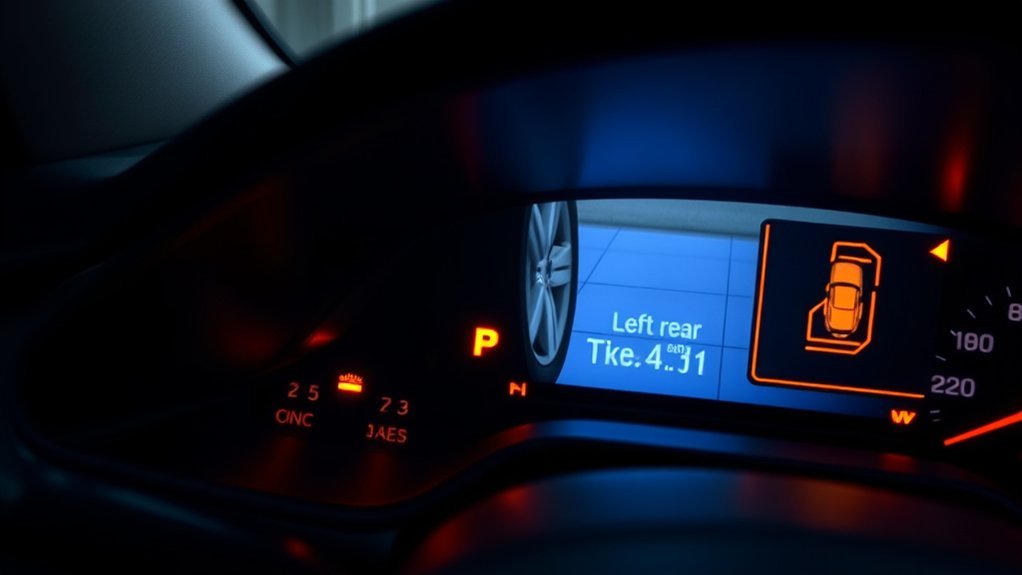
A “Left RR Tire Low” message needs careful reading because it mixes two location ideas. In most automotive shorthand, LR means left rear and RR means right rear. If your display spells out “Left Rear,” check the driver-side rear tire on most left-hand-drive vehicles. If the display says “RR,” check the rear tire on the vehicle’s right side.
Do not guess by looking at the tires from the front of the car. Tire positions are normally described from the driver’s seated position facing forward. On a left-hand-drive vehicle in the United States or Canada, the right rear tire is usually the passenger-side rear tire. On right-hand-drive vehicles, “right” still means the vehicle’s right side when facing forward, not necessarily the passenger side.
| Code or Message | Which Tire to Check |
| LR or Left Rear | Left rear tire |
| RR or Right Rear | Right rear tire |
| Low Tire Pressure Only | Check all four tires, and the spare if your vehicle monitors it. |
Warning: Do not keep driving on a visibly flat tire, a tire with sidewall bulges, exposed cords, a puncture near the sidewall, or a tire that loses air again right after inflation. Install the spare if safe to do so or call roadside assistance.
Check the Correct Rear Tire Pressure First
Start by confirming which wheel the warning names, then check that tire with a reliable tire pressure gauge. A TPMS warning means the vehicle sees pressure below its acceptable range, but the gauge reading tells you what is actually happening.
- Park safely on a level surface away from traffic.
- Let the tires cool if possible. A cold reading means the vehicle has not been driven for at least three hours.
- Find the correct PSI on the driver-side Tire and Loading Information Label or in the owner’s manual.
- Check the named tire, then check the other three tires so one low reading does not hide another problem.
- Add air in small steps, rechecking with the gauge until the tire matches the placard pressure.
- Inspect for leaks or damage, including nails, screws, cracked valve stems, missing valve caps, uneven wear, cuts, or bulges.
The correct pressure is the vehicle manufacturer’s cold inflation pressure, not the maximum pressure printed on the tire sidewall. The sidewall number is a tire limit, not the target pressure for your vehicle.
Why a TPMS Light Comes On
A TPMS light comes on when the system detects that one or more tires are significantly underinflated. Many U.S.-compliant systems are designed around a significant underinflation threshold, often around 25% below the placard pressure, but exact behavior can vary by vehicle and system design.
Your vehicle may use one of two TPMS types:
- Direct TPMS: Sensors inside the wheels measure tire pressure and send readings to the vehicle.
- Indirect TPMS: The vehicle estimates tire pressure changes from wheel-speed data and other sensors.
Cold weather can also trigger the alert. Tire pressure drops as air temperature falls, so a tire that was barely within range in warm weather may dip below the warning point on a cold morning. Still, do not assume it is harmless. Check the tire pressure and correct it before relying on the light to clear.
Note: A TPMS light is not a substitute for routine pressure checks. Check tire pressure at least once a month, before long trips, and after major temperature swings.
How to Reset the Tire Pressure Light
Reset the tire pressure light only after all tires are set to the correct cold pressure. On many vehicles, the warning clears by itself after proper inflation and a short drive. Other vehicles need a TPMS reset button, a dashboard menu calibration, or a sensor relearn procedure. Your owner’s manual is the source of truth because the steps vary by make, model, year, and TPMS type.
Pro Tip: Never reset TPMS while a tire is still low. On indirect systems, resetting at the wrong pressure can teach the system a bad baseline and delay the next warning.
[Products Worth Considering]

Replace your worn or missing TPMS sensors with pre-programmed, direct-fit sensors for compatible Ford, Lincoln, and select Mazda models. Each sensor comes ready to activate with a scan tool, helping restore accurate tire pressure monitoring and trouble-free installation. Built with a long-life CR2032 battery and tested before factory release, this set provides dependable performance with a one-year warranty.
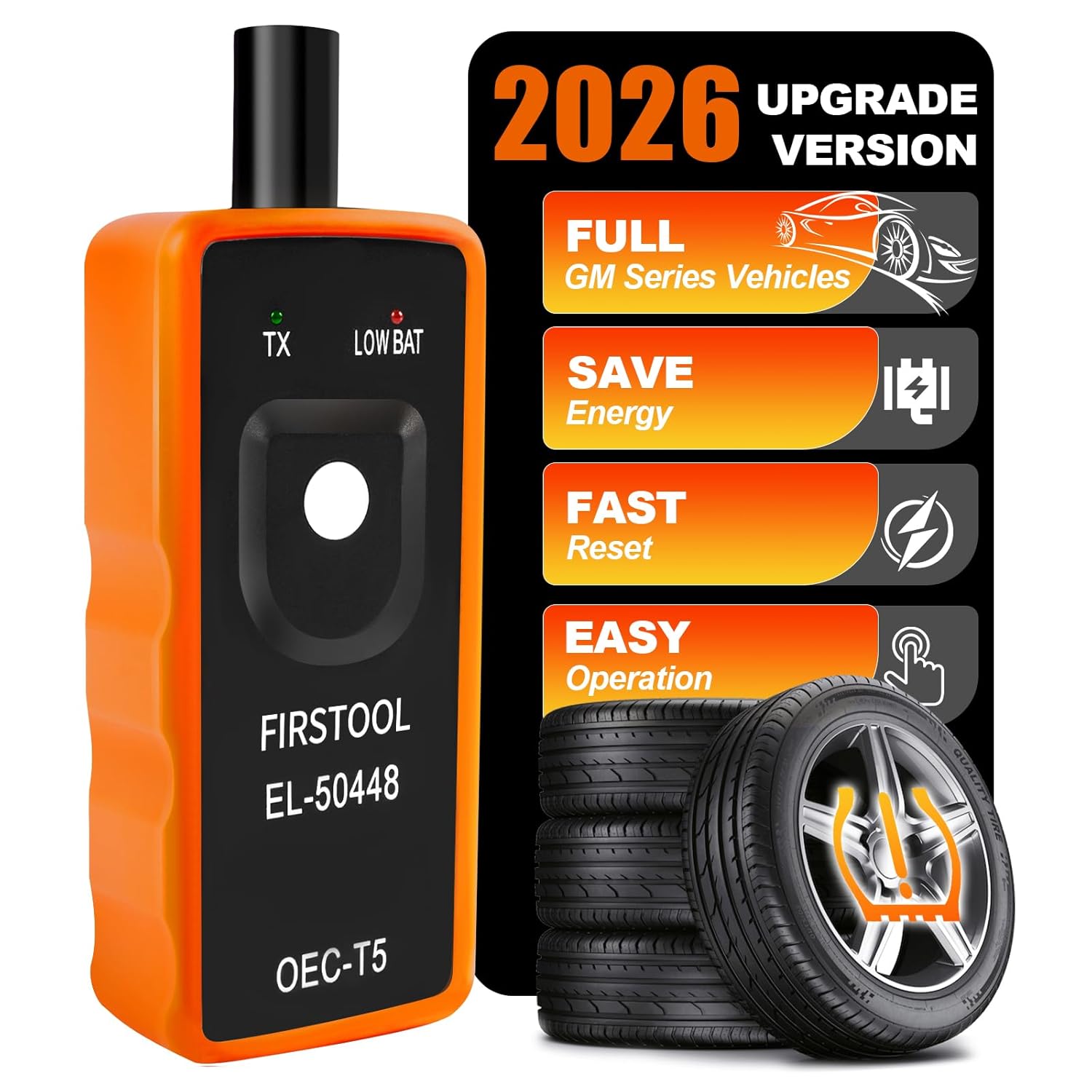
This TPMS relearn tool helps you quickly activate, match, and reset GM tire pressure sensors to keep the vehicle monitoring system working properly. It clears tire pressure alarms and dashboard warning lights after sensor replacement or tire rotation, and supports learning for common 315/433 MHz TPMS sensors. Designed for simple one-button operation, it can help you avoid unnecessary trips to repair shops.

The VEHLIVE SU-50448 II TPMS relearn tool provides a fast activation reset to restore accurate tire pressure monitoring after sensor replacement or tire rotation. It supports 315 MHz and 433 MHz GM series sensors and helps clear dashboard pressure warnings. With simple two-button operation and horn-confirmed relearning order, you can reprogram sensors conveniently at home.
Resetting TPMS Light
Use this safe general sequence before checking your owner’s manual for the exact reset method:
- Inflate all tires to the placard pressure while they are cold.
- Replace valve caps and inspect each tire for visible damage.
- Turn the ignition or vehicle power to the position required by your manual.
- Use the TPMS reset button or vehicle menu if your model has one.
- Drive normally only if the tires are properly inflated and undamaged.
- If the light stays on, recheck pressure with a gauge before assuming the sensor is bad.
Some vehicles confirm calibration with a flashing light, dashboard message, horn chirp, or menu confirmation. Others do not. Do not rely on a generic internet reset sequence if your manual gives a different procedure.
Relearn Sensor Locations
A sensor-location relearn may be needed after rotating tires, replacing a TPMS sensor, changing wheels, or installing seasonal tire sets. Direct TPMS systems may need the vehicle to match each sensor ID to the correct wheel position. That is why a dashboard can sometimes point to the wrong corner after tire service if the relearn was skipped or done incorrectly.
Common relearn methods include a dashboard menu, a reset button, a scan tool, a TPMS activation tool at each valve stem, or a specific drive cycle. Some vehicles use a horn chirp during relearn, but that is not universal. If you recently had tire work done and the warning names the wrong tire, return to the shop and ask them to verify sensor location programming.
Verify Tire Pressures
Before you chase sensors, verify the simple things:
- Check all four tires cold with a gauge.
- Check the spare if your vehicle monitors it.
- Compare each reading with the driver-side tire label.
- Look for punctures, valve-stem leaks, missing valve caps, or uneven tread wear.
- Recheck the tire the next day to see if pressure dropped again.
If pressure drops again, the tire likely has a slow leak. If pressure is correct but the TPMS light flashes for about 60 to 90 seconds and then stays on, the system may have a sensor, receiver, wiring, or control-module fault.
What the RR Tire Sensor Indicates
The RR tire sensor indicates the right rear tire position, not the left rear tire. If your dashboard specifically says RR, check the right rear tire first. If your dashboard says left rear or LR, check the left rear tire first.
RR Tire Location Meaning
RR means rear right. The easiest way to avoid confusion is to sit in the driver’s seat and imagine looking forward through the windshield. The tire at the rear corner on the vehicle’s right side is the right rear tire.
- RF: right front
- LF: left front
- RR: right rear
- LR: left rear
After tire rotation, the physical tire may move to a different corner. The dashboard position should still refer to the wheel location, not the tire’s past position, as long as the TPMS relearn is correct.
Sensor Alert Interpretation
A rear tire pressure alert should be read as a location cue plus a safety warning. The vehicle is telling you which corner needs attention, but the gauge confirms whether the tire is truly low.
| Signal | Meaning |
| Steady TPMS light | At least one tire is significantly underinflated. |
| Flashing then steady light | Possible TPMS malfunction. |
| RR Tire Low | Check the right rear tire first. |
| LR or Left Rear Tire Low | Check the left rear tire first. |
When a TPMS Sensor Needs Replacing
If the tire pressure is correct but the warning keeps returning, the TPMS sensor may need service. Direct TPMS sensors are commonly battery-powered and mounted inside the wheel. When the battery weakens or the sensor is damaged during tire service, the vehicle may stop receiving accurate pressure data.
A pressure warning that stays on after correct inflation should be treated as either a tire leak, a relearn issue, or a TPMS fault until proven otherwise.
Common signs of TPMS sensor trouble include:
- A flashing TPMS light followed by a steady warning.
- A warning that names the wrong wheel after tire rotation.
- One tire reading missing from the dashboard display.
- A warning that returns even though all tires hold the correct cold pressure.
- A sensor that is many years old or was recently disturbed during tire service.
Use an original equipment or high-quality compatible replacement sensor. After sensor replacement, the vehicle usually needs a relearn so the new sensor ID matches the correct wheel position.
[Products Worth Considering]

This TPMS sensor training and relearn reset tool is customized for Ford, Lincoln, and Mercury vehicles to help activate tire pressure programming after sensor replacement or tire rotation. It can activate individual tire pressure sensors with one-button operation, helping prevent TPMS warning light illumination. It is not a sensor programming tool and cannot program replacement sensors—use it to trigger/activate sensors only.
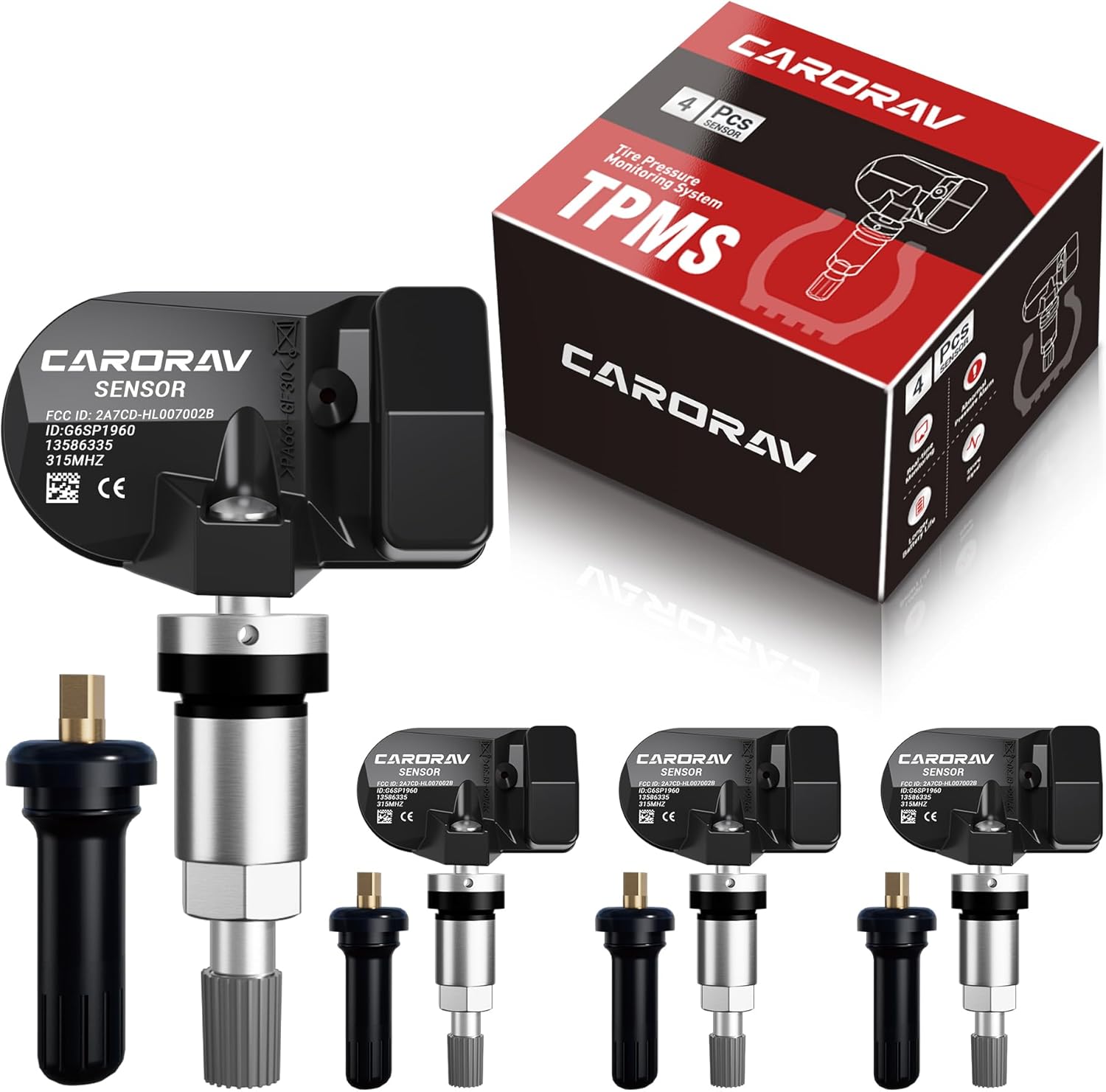
Replace worn or missing TPMS sensors with CARORAV pre-programmed GM-compatible sensors for a smoother installation experience. These 315MHz replacement sensors help monitor tire pressure in real time with long battery life, and they are designed to withstand harsh temperatures. Manual or OBDII relearn may be required to reset the system for proper recognition.

Masoll Gen 2 external TPMS sensors are a DIY replacement set of 4 for select GM vehicles made after 2006, helping you shut off the TPMS warning light quickly. Simply screw the sensors onto the tire valves and sync to your car ECU using the included EL-50448 relearn tool. Dual-frequency 315/433 MHz design provides OEM-level performance with accurate readings and replaceable batteries for about two years.
How to Maintain Correct Tire Pressure
Check tire pressure at least once a month and before long trips. The National Highway Traffic Safety Administration recommends checking all tires, including the spare, when they are cold and using the pressure listed on the Tire and Loading Information Label or in the owner’s manual.
Good pressure maintenance is simple:
- Keep a gauge in the vehicle.
- Check pressure when tires are cold.
- Inspect valve stems and replace missing valve caps.
- Rotate tires on the schedule in your owner’s manual or service guide.
- Check tread depth monthly when you check pressure.
- Replace tires when tread reaches 2/32 inch or sooner if damage or severe uneven wear appears.
Proper inflation supports handling, braking, fuel economy, and tire life. It also helps you get the best performance from your low rolling resistance tires if your vehicle uses them. If tread is uneven, ask a shop to inspect alignment, balance, suspension parts, and proper tread depth before the tire problem becomes a handling problem.
If you are shopping for replacements, choose the correct tire type and size for your vehicle. Regular tire rotations and pressure checks help protect tread life, fuel economy, and ride quality.
[Products Worth Considering]
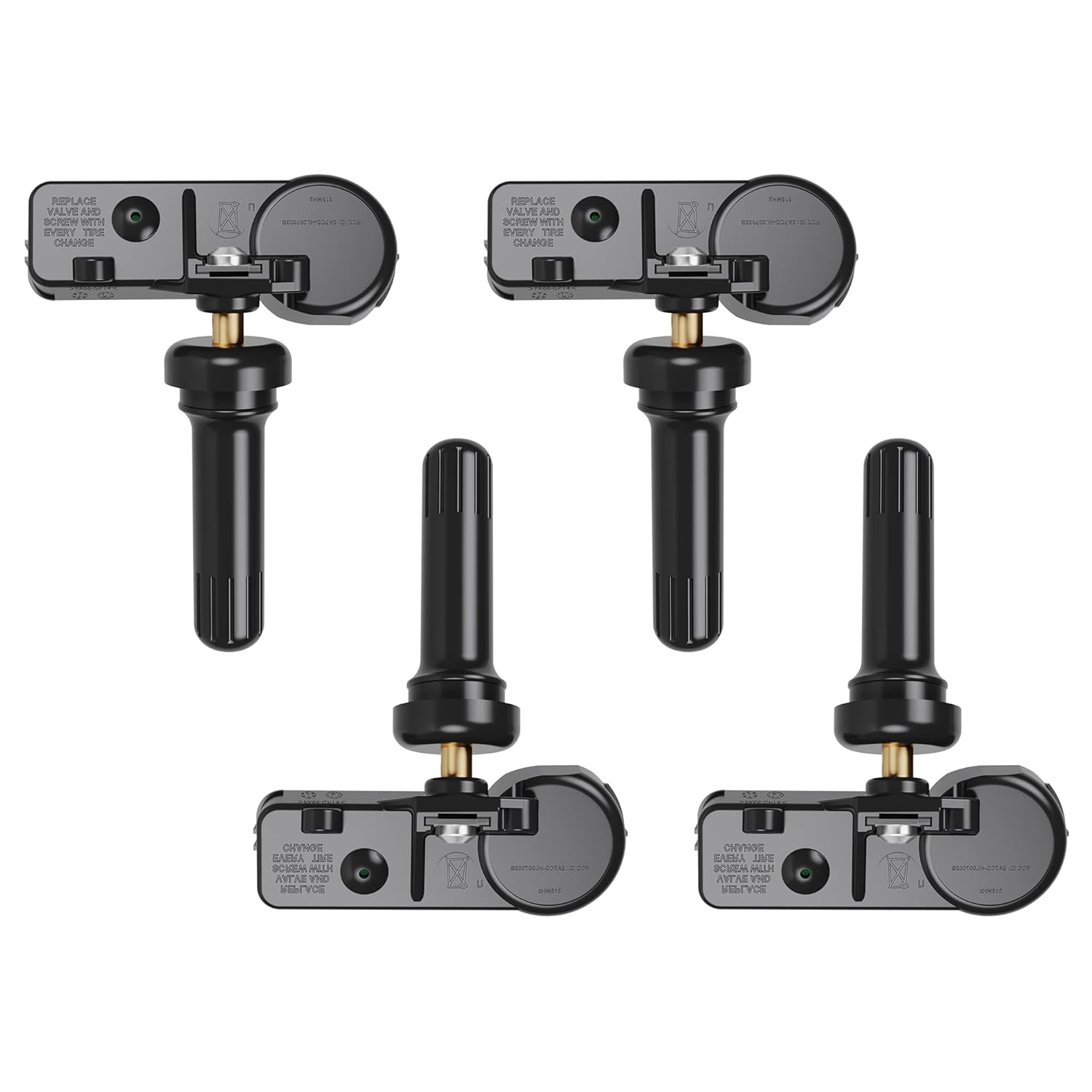
Replace worn or faulty TPMS sensors with this brand new 315MHz GM-compatible replacement set for select Chevy, GMC, Buick, Cadillac, and similar vehicles. These sensors are pre-programmed for your make/model/year and typically only require activation with a scan tool. Built for long service life with a high-temperature battery, they help maintain reliable tire pressure monitoring for safer driving.
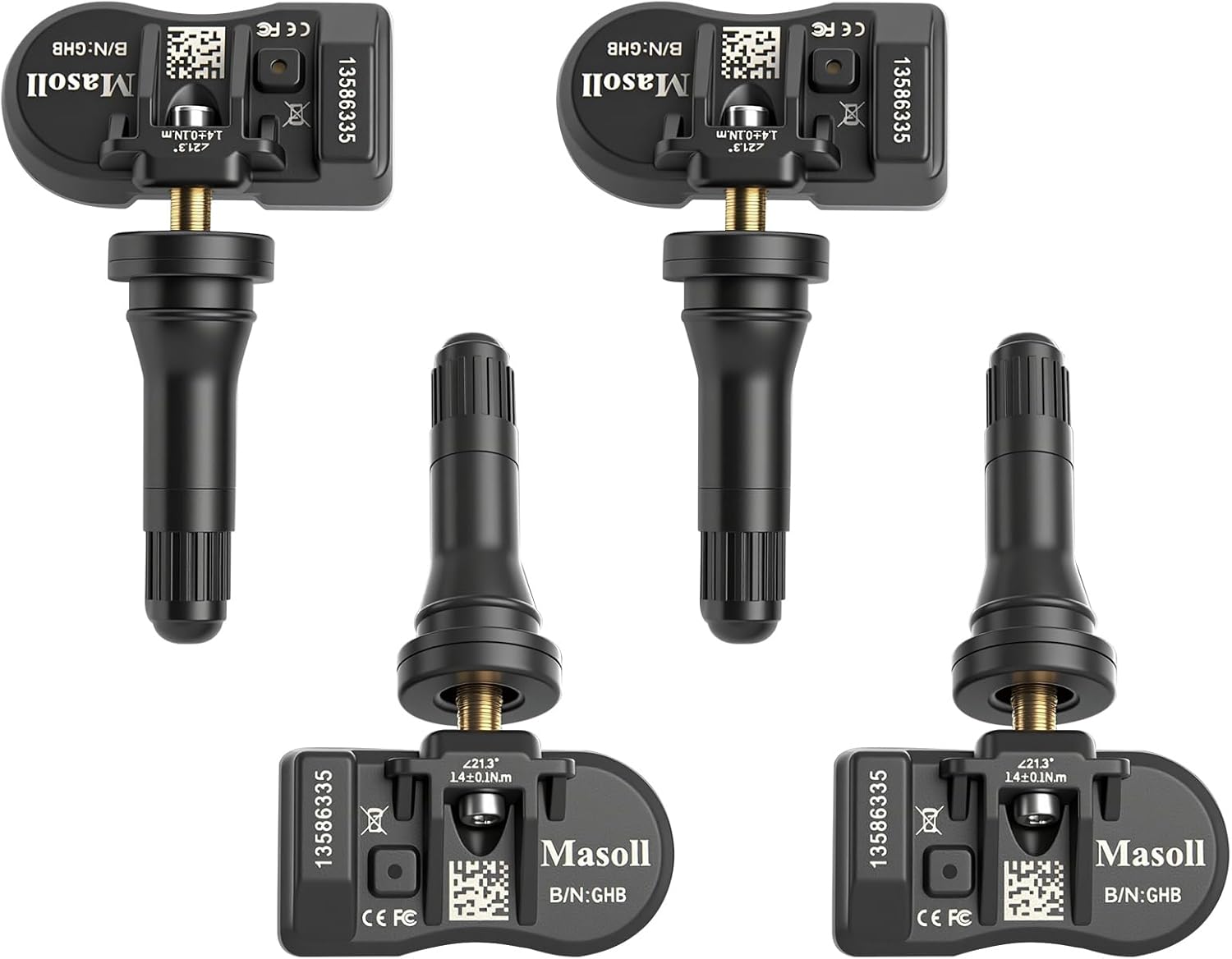
Masoll TPMS sensors are designed for most GM vehicles after 2006, helping you clear tire pressure warnings with OEM-level 315/433MHz compatibility. The 4-pack includes pre-programmed sensors, but re-learning is required after installation using a GM TPMS relearn tool or scan tool. Built with a dual-antenna design and a long-life CR2050 battery, these sensors deliver reliable performance in extreme temperatures with corrosion-resistant valve construction.

Replace worn or malfunctioning GM TPMS sensors with this 433MHz pre-programmed sensor set designed for compatibility with many Chevrolet, Buick, GMC, and Cadillac models. It includes guidance for proper OBDII relearning/pairing after installation and supports reliable long-term operation with a high-performance CR2032 battery. Quality tested for durability and performance to help restore accurate tire pressure monitoring.
Frequently Asked Questions
What does RR mean for tires?
RR means right rear. In normal wheel-position shorthand, RF means right front, LF means left front, LR means left rear, and RR means right rear. If your dashboard says RR Tire Low, check the right rear tire first.
What side is RR on a car?
RR is the rear tire on the vehicle’s right side when you are seated in the vehicle facing forward. On most left-hand-drive vehicles in the United States and Canada, that is the passenger-side rear tire.
Is it okay to drive with a low tire pressure light on?
You should not ignore it. Slow down, avoid hard braking or sharp turns, and check the tire pressure as soon as it is safe. Do not keep driving if the tire is visibly flat, damaged, or losing air quickly. Low pressure can increase heat, tire wear, and the risk of tire failure.
What does RR mean in driving?
In vehicle warnings, RR usually means rear right. You may see it in TPMS displays, service diagrams, tire rotation charts, or wheel-speed sensor diagnostics. It tells you which wheel position the vehicle is referring to.
Why does my TPMS light come on when it gets cold?
Cold air lowers tire pressure. If a tire was already near the warning threshold, a cold morning can make the TPMS light come on. Check the tires with a gauge and inflate them to the cold pressure on the vehicle placard.
Why is the TPMS light flashing instead of staying solid?
A flashing TPMS light that later stays on often points to a system malfunction, not just low pressure. Check tire pressure first. If all tires are correct and the light still flashes, have the TPMS sensors and system checked.
Conclusion
If you see “Left RR Tire Low,” do not assume the location until you read the warning carefully. Left rear usually means LR or “Left Rear,” while RR means right rear. Check the named tire with a gauge, inflate it to the placard pressure, inspect for leaks or damage, and only reset TPMS after all tires are correct. If the warning stays on or flashes, the tire may have a leak, the sensor location may need relearning, or the TPMS sensor may need service.
Sources
- NHTSA TireWise – supports cold tire pressure checks, placard pressure, TPMS warning meaning, monthly maintenance, tread depth, and malfunction guidance.
- NHTSA Recalls – supports checking tire and vehicle recalls when tire safety problems are suspected.
- 49 CFR §571.138, Tire Pressure Monitoring Systems – supports the federal TPMS performance standard for applicable U.S. vehicles.
- NHTSA Tire Safety: Everything Rides on It – supports consumer tire safety, inflation, inspection, and maintenance guidance.