
Yes, you can put LT tires on a Toyota RAV4 in some cases, but they are not the best choice for most RAV4 drivers. The safe answer depends on your exact tire size, load index, speed rating, wheel rating, inflation pressure, and how you actually use your RAV4.
Quick Answer
You can use LT tires on a Toyota RAV4 only when the tire size, load index, speed rating, wheel pressure rating, and inflation plan are correct for your exact model. For most daily-driven RAV4s, a passenger or XL passenger tire is the better, safer, and more comfortable choice.
Key Takeaways
- LT tires do not increase your RAV4’s payload or towing rating. Toyota’s vehicle limits still apply.
- Most RAV4 owners should stay with passenger, XL passenger, all-weather, winter, or passenger-rated all-terrain tires that match the door placard.
- LT tires can help with sidewall toughness and rough-road durability, but they often add weight, road noise, ride harshness, and rolling resistance.
- Do not guess on pressure. LT tires may need different inflation pressure than the factory passenger tires to carry the same load.
At a Glance
| Time Required | 10–20 minutes to check the tire placard, owner’s manual, tire size, load index, and tire shop recommendation. |
| Difficulty | Moderate, because LT tires may need load/inflation-table matching rather than simple size matching. |
| Tools Needed | Driver-side tire placard, owner’s manual, tire pressure gauge, and a qualified tire installer with load/inflation data. |
| Cost | Checking fitment is free. LT tires often cost more than standard passenger tires and may reduce fuel economy. |
What Are LT Tires and Their Impact on Your RAV4?
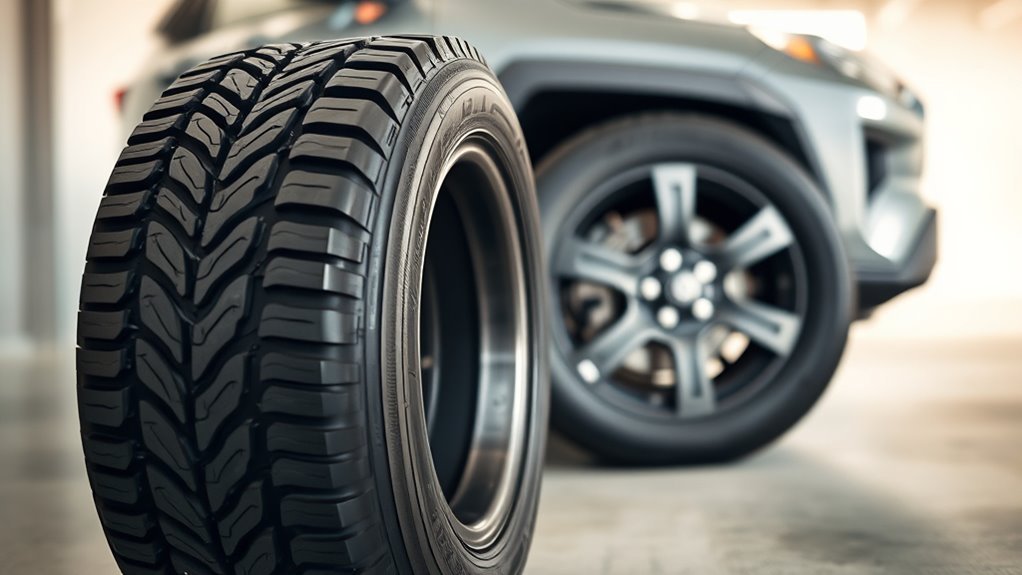
LT means Light Truck. LT tires are built for trucks, vans, and some SUVs that carry heavy loads, tow often, or drive on rough surfaces. Compared with many passenger tires, they usually have stronger construction, higher load-range options, and stiffer sidewalls.
On a Toyota RAV4, that toughness can be useful if you regularly drive on rocky roads, carry heavy camping gear, or want extra sidewall protection. But the trade-off is real: LT tires are often heavier and stiffer, so your RAV4 may feel harsher, louder, slower to respond, and less efficient on pavement.
Warning: LT tires do not increase your Toyota RAV4’s payload rating, axle rating, gross vehicle weight rating, or towing capacity. Those limits come from Toyota and are listed in the owner’s manual and on the vehicle labels.
Before changing tire type, start with the driver-side Tire and Loading Information Label. It lists the original tire size and the cold tire pressure Toyota designed the vehicle around. NHTSA also recommends using the same tire size as the original tires or another size recommended by the vehicle manufacturer.
Key Differences Between LT Tires and Passenger Tires
LT tires and passenger tires are not just different labels. They are built around different priorities. Passenger tires focus on comfort, noise, handling, braking, and fuel economy for daily driving. LT tires focus more on load support, durability, and rough-use strength.
| Feature | LT Tires | Passenger Tires |
|---|---|---|
| Main purpose | Heavy-duty use, hauling, towing support, rough roads | Daily driving, comfort, handling, quiet ride |
| Ride comfort | Usually firmer and more road feel | Usually smoother and quieter |
| Inflation pressure | May need higher pressure to carry the same load | Usually follows the RAV4 placard pressure when the tire matches the OE spec |
| Fuel economy | Can drop because of added weight and rolling resistance | Often better for commuting and highway use |
| Best fit for a RAV4 | Special-use builds, rough roads, frequent heavy gear, careful fitment | Most daily drivers, families, commuters, and mixed city/highway use |
The old “ply” language can be confusing. Instead of shopping only by “8-ply” or “10-ply,” compare the load index, load range, speed rating, and maximum inflation pressure. Your replacement tire should meet or exceed the load and speed rating required for your RAV4.
How LT Tires Affect Your RAV4’s Performance
LT tires can change how your RAV4 feels every day. Some changes are helpful if you need toughness. Others can make the vehicle less pleasant for normal commuting.
- Ride quality gets firmer: Stiffer sidewalls can make bumps and broken pavement feel sharper.
- Road noise may increase: Many LT and all-terrain LT tires use stronger, more open tread patterns that can hum on the highway.
- Fuel economy can drop: Heavier tires require more energy to start, stop, and keep rolling.
- Steering can feel slower: Added weight and stiff sidewalls may reduce the light, easy feel many RAV4 owners expect.
- Durability can improve in rough use: LT tires may resist bruising, cuts, and impact damage better than a soft touring tire.
For off-road trails, gravel access roads, job sites, or remote camping routes, that extra durability may be worth the trade-off. For school runs, commuting, road trips, and light weekend use, a high-quality passenger tire usually makes more sense.
Note: Wet traction is not automatically better with passenger tires or LT tires. It depends on tread design, rubber compound, tread depth, tire age, inflation pressure, and road conditions.
What to Check Before Putting LT Tires on a RAV4
If you are seriously considering LT tires, do this fitment check before buying anything:
- Read the driver-side tire placard. Confirm the original tire size, cold PSI, seating/load information, and tire type.
- Check the owner’s manual. Toyota’s RAV4 tire guidance says replacement winter tires should match the original size, construction, and load capacity.
- Match the tire size. A tire that is taller, wider, or heavier may rub, affect speedometer accuracy, or change AWD behavior.
- Match or exceed the load index and speed rating. Do not choose a tire only because it says “LT.”
- Confirm wheel pressure rating. Some LT tires need higher inflation pressure, and the wheel must be rated for that pressure.
- Ask the installer to use load/inflation tables. Bridgestone notes that LT tires may require higher pressure than placard pressure to carry the same load as the original tire.
- Check TPMS behavior. A pressure change can affect tire-pressure monitoring system warnings, so have the installer confirm the correct setup.
- Keep all four tires matched. On AWD RAV4 models, mismatched tire sizes or rolling diameters can create drivetrain stress.
Pro Tip: If you want more load margin without the harshness of LT tires, look first at an XL passenger tire or a passenger-rated all-terrain tire in the correct RAV4 size and rating.
[Products Worth Considering]

Upgrade your Toyota’s wheels with durable aluminum alloy valve stem caps that help protect valve cores from corrosion and direct exposure to road grime, clay, water, and snow. Rubber rings improve sealing to help prevent air leakage and maintain stable tire pressure for safer driving. These caps are easy to install or remove without tools and add a unique, stylish look to your car.

These universal tire valve stem caps help protect valve cores from dust, debris, and moisture while helping maintain stable tire pressure. The corrosion-resistant metal construction and sealed design provide reliable protection in road grime, mud, and winter conditions. Twist-on installation makes them quick to fit on cars, SUVs, trucks, and motorcycles.

Keep your tires properly inflated with this analog VONDIOR tire pressure gauge, designed for fast, easy readings without batteries. The swiveling, two-axis hose and large glow dial help you measure at any tire angle with instant visibility. Built with a protective rubber shield, it supports durable, low-maintenance use for cars and trucks.
Expert Recommendations for Choosing Tires for Your RAV4
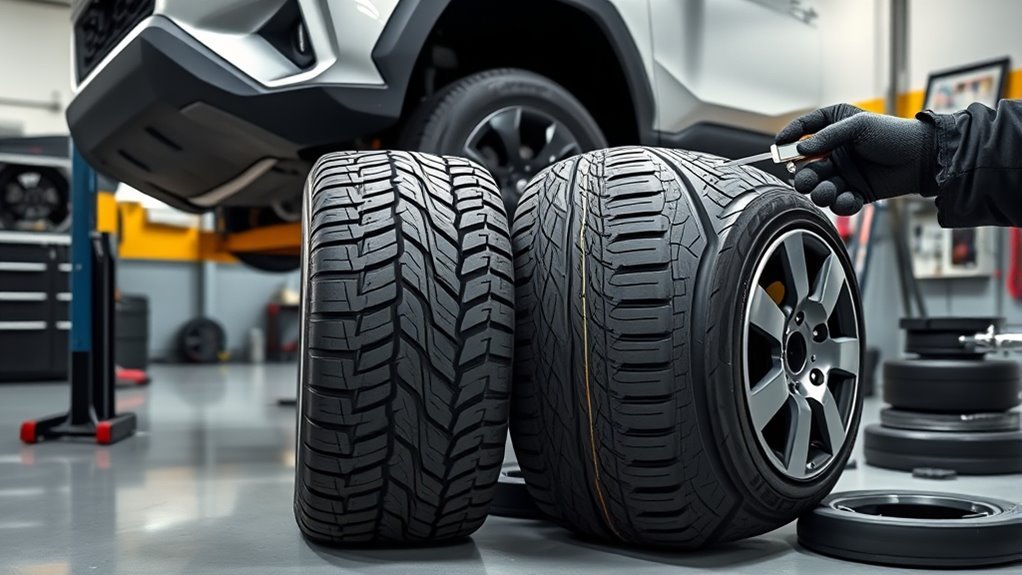
The best tire for your RAV4 depends on how you drive, not just what looks rugged. Use this simple guide:
| Your RAV4 Use | Best Tire Direction | Why |
|---|---|---|
| Daily commuting and family use | Passenger touring or all-season tire | Best balance of comfort, noise, braking, and fuel economy |
| Heavy cargo within Toyota’s limits | XL passenger tire or higher-load passenger option | Adds load margin without jumping straight to an LT tire |
| Gravel roads, campsites, mild trails | Passenger-rated all-terrain tire | More traction and sidewall confidence while keeping RAV4-friendly ride quality |
| Frequent rough-road work or sharp rocks | Carefully fitted LT tire | Better impact and cut resistance may be worth the comfort and efficiency trade-off |
| Snow and ice | Winter tires in the correct size/load rating | Winter compound and siping matter more than LT construction |
Also keep Toyota’s vehicle load limits in mind. Passengers, luggage, cargo, accessories, and trailer tongue weight all count against the vehicle’s capacity. A tougher tire does not cancel those limits.
[Products Worth Considering]

These aluminum alloy tire valve stem caps with an O-ring seal help protect valve stems from corrosion while adding a clean, stylish look to your vehicle. The universal fit works across cars, trucks, motorcycles, bicycles, and more, making them an easy upgrade for everyday driving and off-road use. Installation is quick, and the included four-pack keeps all your tires dressed and protected.

The 22800 wheel stud installer makes replacing wheel studs quick and secure, saving time and effort during tire service. It uses a ratchet or impact wrench to pull new studs firmly into place, helping when existing studs are too long. Compatible with most automotive wheels and light-duty truck wheel studs, it’s designed for easy, tool-assisted installation.
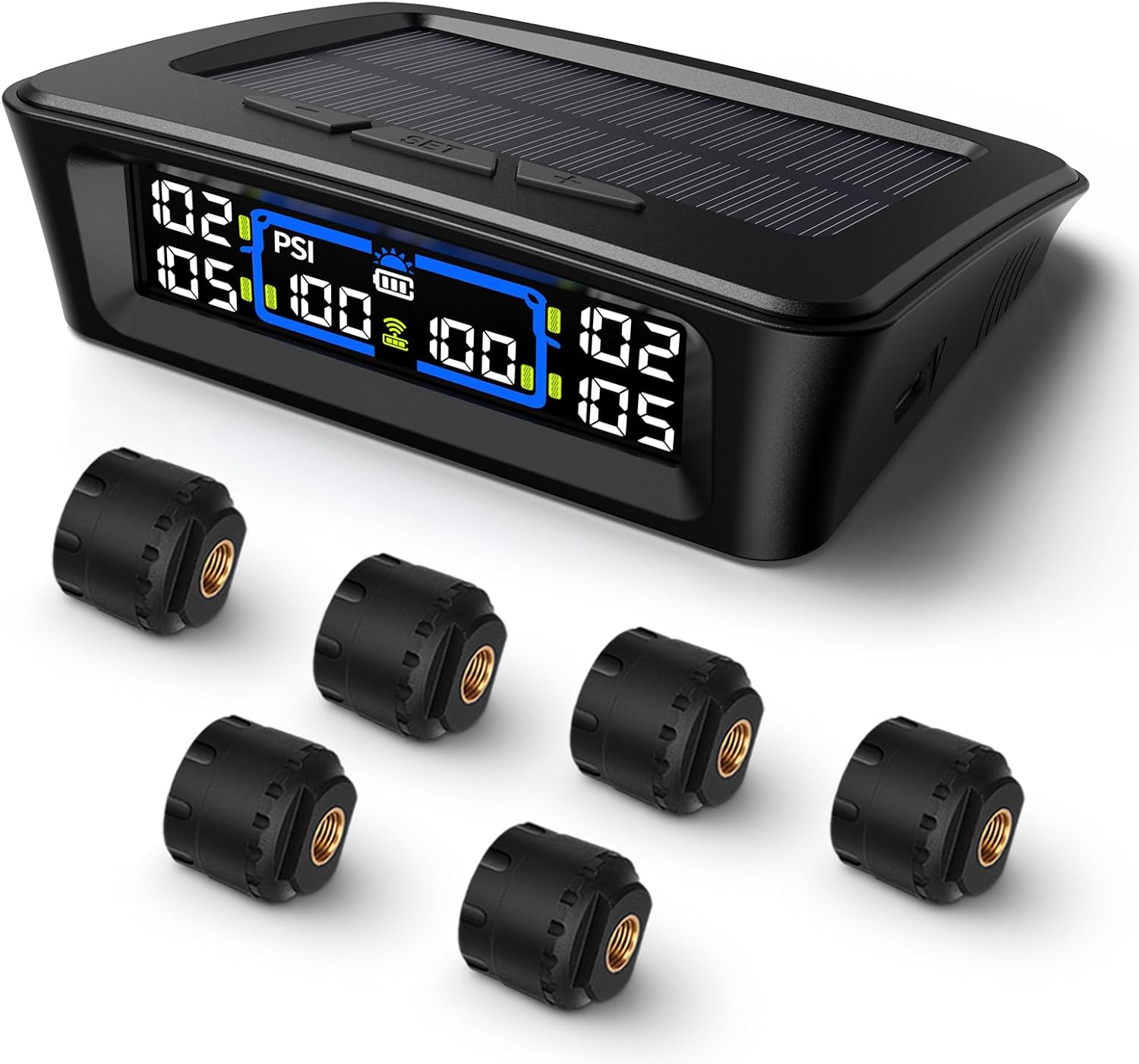
The Tymate TM12 RV TPMS delivers real-time tire pressure and temperature monitoring with a stable 433Hz display for safer long-distance driving. It supports simultaneous monitoring across vehicle and trailer zones, includes six alarm modes for pressure, temperature, leakage, battery, and signal loss, and features easy DIY installation with auto calibration. Power is supplied via USB-C charging or solar recharging, with a wide 0–144 PSI range and up to 50 ft signal coverage for RVs and towable trailers.
When Should You Go for Passenger Tires?
Choose passenger tires for your RAV4 if most of your driving is on pavement. That includes commuting, errands, highway trips, school runs, and light weekend travel. Passenger tires are usually quieter, lighter, more efficient, and better matched to the way Toyota tuned the RAV4.
Passenger tires are also the smart choice when you want:
- A smoother ride: Better comfort over potholes, expansion joints, and rough city roads.
- Lower noise: Less highway hum than many LT all-terrain tires.
- Better efficiency: Less tire weight and rolling resistance can help preserve fuel economy.
- More predictable handling: A tire designed for crossover use usually feels more natural on a RAV4.
- Lower cost: Passenger tires are often less expensive to buy and replace.
If you want a more rugged look or occasional dirt-road grip, do not jump straight to LT tires. A passenger-rated all-terrain tire in the correct size can often deliver the look and traction you want with fewer downsides.
When LT Tires Make Sense on a RAV4
LT tires can make sense for a RAV4 when the vehicle is used in a way that regularly damages normal passenger tires. Examples include repeated rocky-road driving, remote trail access, sharp gravel, construction-site access, or carrying heavy gear while staying within Toyota’s limits.
Even then, the LT tire must be properly matched. The installer should confirm the tire’s load capacity at the chosen pressure, wheel compatibility, clearance, speed rating, TPMS behavior, and whether the tire’s weight is appropriate for the vehicle.
Skip LT tires if you mainly want them because they “look tougher.” On a compact crossover like the RAV4, the wrong LT tire can add more drawbacks than benefits.
[Products Worth Considering]

Monitor tire tread wear with a smart, color-coded depth gauge that shows clear condition ranges at a glance. The bar is range marked for fast, easy readings, helping you maintain safer traction and performance. Each gauge is portable with a pocket clip, and the set includes 20 units for daily use and sharing.

The TYAMATE TM8 solar-powered wireless TPMS delivers real-time tire pressure and temperature monitoring with six alarm modes for safer driving. A vibrant color LCD display shows readings clearly while windshield mounting keeps it hands-free and easy to read. With a wide 0–87 PSI range, strong 433.92 MHz signal transmission, and quick sensor pairing, it’s ideal for RV, sedan, SUV, MPV, and truck use.
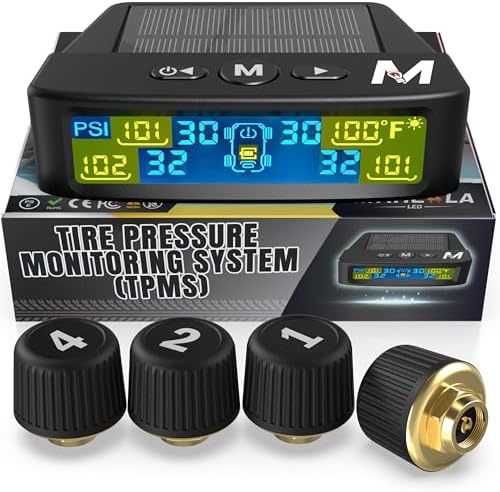
Marcala’s TPMS set of four sensors helps you monitor tire pressure and temperature in real time while driving, with updates every second. The bright color LCD uses auto-dimming for easy viewing, powered by dual solar and USB charging, and offers six alarm modes. Built for trailers, RVs, campers, trucks, and towing setups, the sensors support monitoring 1-4 wheels up to 98 PSI with IP67 waterproof protection.
Maintenance After Changing Tire Type
After installing any new tire type, check the basics more often for the first few weeks:
- Check cold tire pressure monthly and before long trips. NHTSA recommends checking pressure when tires are cold, meaning the vehicle has not been driven for at least three hours.
- Watch for rubbing when turning, braking, reversing, or driving over dips.
- Recheck torque if your installer recommends it after the first short driving period.
- Monitor tread wear for cupping, edge wear, or uneven patterns.
- Rotate on schedule according to your RAV4 owner’s manual and tire manufacturer guidance.
If the RAV4 feels unstable, noisy, harsh, or slow to stop after the tire change, do not ignore it. Have the tire shop recheck tire pressure, load rating, balance, alignment, and fitment.
Frequently Asked Questions
Can you put LT tires on a passenger vehicle?
Sometimes, but only if the tire size, load rating, speed rating, wheel rating, clearance, and inflation pressure are correct. On a Toyota RAV4, LT tires are usually unnecessary for normal driving and can make the ride harsher and noisier.
Will LT tires increase my RAV4’s towing capacity?
No. LT tires may be tougher, but they do not increase Toyota’s towing rating, payload rating, axle rating, braking capacity, or gross vehicle weight rating. Always follow the owner’s manual and vehicle labels.
Can you replace LT tires with P tires?
Only if the vehicle and tire specifications allow it. Vehicles that came from the factory with LT tires usually need LT-rated replacements. Most RAV4 models are designed around passenger or Euro-metric tires, so a properly rated passenger or XL passenger tire is often the correct choice.
Do LT tires last longer than passenger tires?
Not always. LT tires can be more durable in rough conditions, but tread life depends on tire compound, alignment, pressure, rotation, driving style, road surface, and vehicle weight. A heavy LT tire used mostly on pavement may not be the longest-lasting or best-value option.
Are XL passenger tires better than LT tires for a RAV4?
For many RAV4 owners, yes. XL passenger tires can offer a higher load rating than standard-load passenger tires while keeping better comfort, weight, and efficiency than many LT tires. They still must match the correct size, load index, speed rating, and pressure guidance.
Should I use LT tires for off-roading in a RAV4?
Use LT tires only if your off-road driving is rough enough to justify the extra weight and stiffness. For mild trails, gravel, campsites, and forest roads, a passenger-rated all-terrain tire is often the better match for a RAV4.
Conclusion
You can put LT tires on a Toyota RAV4, but you should not treat them as an automatic upgrade. LT tires can add toughness for rough roads, heavy gear, and demanding use, but they can also make the RAV4 ride harder, sound louder, use more fuel, and feel less responsive.
For most RAV4 owners, the best choice is a passenger, XL passenger, all-weather, winter, or passenger-rated all-terrain tire that matches the driver-side placard and owner’s manual. Choose LT tires only when your driving truly calls for the extra durability and a qualified tire professional confirms the size, load rating, pressure, wheel rating, and TPMS setup are correct.
Sources
- NHTSA TireWise — tire placard, tire pressure, tread checks, tire size, and tire safety guidance.
- NHTSA Tire Safety Brochure — cold tire pressure, replacement tire size guidance, tread-depth basics, and tire sidewall information.
- Toyota 2024 RAV4 Owner’s Manual: Tires — Toyota tire replacement and winter tire guidance.
- Toyota 2024 RAV4 Owner’s Manual: Vehicle Load Limits — RAV4 load-limit and overloading guidance.
- Bridgestone Light Truck & SUV Tire Information — LT tire benefits, inflation-pressure considerations, and limits of switching tire types.
- Tire Rack Tire Placard Guide — how the tire placard identifies original tire size, cold pressure, seating, and load information.