
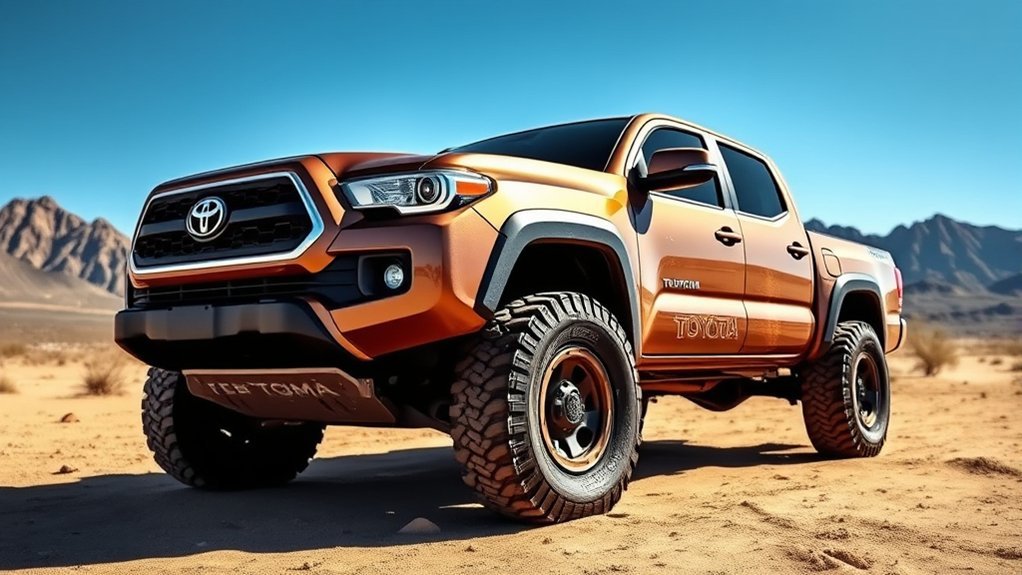
Installing bigger tires on your Toyota Tacoma does not automatically cancel the truck’s entire factory warranty. The real issue is whether the tire or wheel modification caused the failure behind a specific warranty claim. Larger tires can increase stress on steering, suspension, axle, brake, and drivetrain components, so careful fitment and documentation matter.
Quick Answer
Bigger tires do not automatically void your Toyota Tacoma warranty. However, Toyota or a dealer may deny coverage for a damaged component if they can show that the oversized tires, wheels, lift, incorrect installation, or related modification caused the failure. Unrelated covered defects should remain eligible for warranty consideration.
Key Takeaways
- Aftermarket tires do not automatically cancel the entire factory warranty.
- A claim may be denied when the modification caused or contributed to the damaged part.
- A 285/70R17 is approximately 3.49% taller than a 265/70R17, based on nominal size calculations.
- The often-quoted 3% guideline is not a legal warranty threshold or Toyota approval.
- Check your Tacoma’s door placard, owner’s manual, wheel specifications, load rating, clearance, and alignment before changing tire size.
- Keep invoices, alignment results, tire specifications, photographs, and written dealer communications in case a dispute develops.
How Bigger Tires Affect Tacoma Warranty Coverage
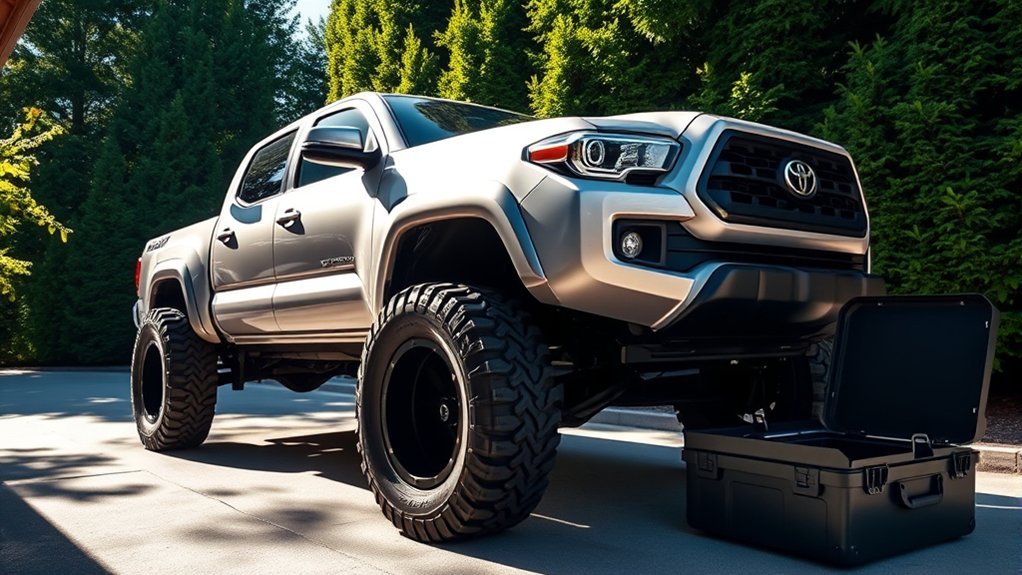
The most important distinction is between voiding the entire warranty and denying one warranty claim. Simply installing aftermarket tires does not normally erase every remaining warranty protection on your Tacoma.
According to the Federal Trade Commission’s auto-warranty guidance, a vehicle warranty remains in effect when you use aftermarket parts. However, a manufacturer or dealer can deny coverage for a damaged part if it proves that a defective aftermarket part or incorrect installation caused the damage.
For example, oversized tires would not reasonably explain a defective window switch or an air-conditioning control failure. They could become relevant to a claim involving a wheel bearing, axle, differential, steering component, transmission behavior, brake component, or damaged bodywork if the evidence connects the failure to the modification.
The presence of bigger tires is not enough by itself. The key warranty question is whether the modification caused or contributed to the specific failure.
What Federal Warranty Law Actually Protects
In the United States, the Magnuson-Moss Warranty Act and FTC rules limit a company’s ability to require branded parts or dealer-only service as a condition of warranty coverage. A company generally cannot deny an unrelated repair solely because you used a third-party tire, wheel, part, or repair shop.
That protection does not require Toyota to pay for damage caused by an unsafe tire size, an overloaded tire, an incompatible wheel, severe rubbing, incorrect installation, an improper lift, or another modification. The warranty still applies according to its written terms, but modification-caused damage may be excluded.
| Warranty situation | Likely treatment | Why |
|---|---|---|
| Defective power-window motor | Normally still considered | The tire size has no clear connection to the window failure. |
| Premature wheel-bearing failure | May be disputed | Heavier tires or wheels and changed offset can increase bearing loads. |
| Damaged fender liner caused by rubbing | Likely excluded | The tire-to-body contact directly caused the damage. |
| Transmission complaint that existed before the tire change | Requires evidence and diagnosis | Dated repair orders and installation records can establish when the symptom began. |
| Damage caused by an incorrectly installed wheel | Likely excluded | The installer or part warranty may be responsible instead of Toyota. |
Warning: Physical clearance while the truck is parked does not prove that a tire is safe. Check clearance at full steering lock, during suspension compression, under payload, and through normal suspension travel. Tire contact with brake lines, suspension parts, or bodywork can damage the truck or cause loss of control.
Toyota Warranty Terms and Modifications
Toyota warranty coverage varies by model year and market. For the U.S. 2026 Tacoma, Toyota lists 36 months or 36,000 miles of basic coverage and 60 months or 60,000 miles of powertrain coverage. Older or non-U.S. Tacomas may have different terms, so use the warranty guide assigned to your VIN and model year.
You can find the current manuals and warranty documents through the Toyota Tacoma Manuals and Warranties portal. The written guide, rather than a casual verbal statement from a salesperson or service adviser, controls the manufacturer-warranty terms.
Larger tires are most likely to become relevant when a claim involves a part that carries or controls the added rotating mass. Potentially related areas include:
- Wheel bearings and hubs: Heavier assemblies and aggressive wheel offsets can change bearing loads.
- Steering and suspension: Rubbing, altered geometry, lift components, and added leverage can contribute to wear or damage.
- Axles and differentials: Taller and heavier tires can increase driveline load, especially during towing, hard launches, or off-road use.
- Transmission behavior: A larger effective tire diameter changes the relationship between road speed, engine speed, and gearing.
- Brakes: A heavier rotating assembly may require more energy to accelerate and stop.
- Body and liners: Damage caused by direct tire contact is unlikely to qualify as a manufacturing defect.
This does not mean those claims will always be denied. Toyota or the dealer still needs a technical reason for connecting the modification to the failure.
265/70R17 vs. 285/70R17: What Actually Changes?
The original article compares 265/70R17 and 285/70R17 tires. Using the nominal size formula, the difference is slightly more than one inch in overall diameter.
| Measurement | 265/70R17 | 285/70R17 | Difference |
|---|---|---|---|
| Nominal section width | 265 mm | 285 mm | 20 mm wider |
| Calculated nominal diameter | 31.61 inches | 32.71 inches | 1.10 inches larger |
| Diameter change | Baseline | Approximately 3.49% larger | Above the common 3% comparison guideline |
| Estimated actual speed when 60 mph is indicated | Approximately 60 mph | Approximately 62.1 mph | Before any successful recalibration |
These are calculated nominal measurements. Actual mounted diameter, tread width, weight, and clearance vary by tire model, wheel width, inflation pressure, tread design, and vehicle load.
Note: The common 3% guideline is a quick comparison tool, not a federal warranty rule, Toyota approval, or guarantee of proper fitment. The National Highway Traffic Safety Administration recommends using the original tire size or another size recommended by the vehicle manufacturer.
[Products Worth Considering]

Masoll M13 TPMS monitors tire pressure across RV and trailer applications and helps protect safety on the road. Set your reference pressure for auto alarm triggers, while the system automatically calibrates as you inflate or deflate. Solar charging with intelligent sleep/wake keeps operation efficient, and the color LCD provides clear readings in day or night driving.

These aluminum alloy tire valve stem caps with an O-ring seal help protect valve stems from corrosion while adding a clean, stylish look to your vehicle. The universal fit works across cars, trucks, motorcycles, bicycles, and more, making them an easy upgrade for everyday driving and off-road use. Installation is quick, and the included four-pack keeps all your tires dressed and protected.

Replace worn or malfunctioning GM TPMS sensors with this 433MHz pre-programmed sensor set designed for compatibility with many Chevrolet, Buick, GMC, and Cadillac models. It includes guidance for proper OBDII relearning/pairing after installation and supports reliable long-term operation with a high-performance CR2032 battery. Quality tested for durability and performance to help restore accurate tire pressure monitoring.
Safety Systems, TPMS, and Calibration
Tacoma safety-system terminology depends on the model year. The 2023 Tacoma used Toyota Safety Sense P, commonly called TSS-P. Toyota introduced Toyota Safety Sense 3.0 on every 2024 Tacoma, and TSS 3.0 remains standard on the 2026 model.
A tire-size change does not automatically prove that a Toyota Safety Sense system is defective. However, changes involving tire diameter, suspension height, wheel offset, alignment, vehicle rake, or sensor position may affect vehicle behavior or require inspection and calibration. Follow the procedures for your exact model year after a lift, collision repair, alignment change, windshield replacement, or other work that may affect safety-system sensors.
The tire-pressure monitoring system measures tire pressure through compatible sensors. Larger tires alone do not necessarily trigger a TPMS warning, but incompatible sensors, failed registration, damaged sensors, or incorrect inflation can. Use pressure specifications established for the complete vehicle and tire setup by a qualified tire professional rather than relying on the maximum pressure molded into the tire sidewall.
Larger tires may also change speedometer, odometer, shift, cruise-control, and fuel-economy calculations. Ask whether your exact Tacoma configuration supports an approved recalibration method.
[Products Worth Considering]

Replace your worn or missing TPMS sensors with pre-programmed, direct-fit sensors for compatible Ford, Lincoln, and select Mazda models. Each sensor comes ready to activate with a scan tool, helping restore accurate tire pressure monitoring and trouble-free installation. Built with a long-life CR2032 battery and tested before factory release, this set provides dependable performance with a one-year warranty.

The Tymate TM12 RV TPMS delivers real-time tire pressure and temperature monitoring with a stable 433Hz display for safer long-distance driving. It supports simultaneous monitoring across vehicle and trailer zones, includes six alarm modes for pressure, temperature, leakage, battery, and signal loss, and features easy DIY installation with auto calibration. Power is supplied via USB-C charging or solar recharging, with a wide 0–144 PSI range and up to 50 ft signal coverage for RVs and towable trailers.

Marsflex brand TPMS replacement sensors help restore tire pressure monitoring for compatible Toyota, Lexus, Scion, and Pontiac models. Each sensor is pre-programmed for the vehicle application and includes a long-life battery for up to 8 years of normal use. Designed to replace common OE numbers and requires relearning using a TPMS scan tool after installation.
Dealer Policies and Waivers
Dealer responses can vary because service advisers may have different experience with modified trucks, while the technical facts of each claim also differ. A dealer may document the tire size, wheel offset, lift height, rubbing, diagnostic codes, and other modifications before requesting warranty authorization.
Some dealers or installers may ask you to sign an acknowledgement stating that you accept risks associated with a non-factory setup. That document is not the same as a waiver granted by the FTC that allows a manufacturer to require specific branded parts or services. No universal Toyota policy requiring a special TSS-P or larger-tire waiver was verified.
Read any form before signing it. Ask what components it covers, whether it applies only to installation-related damage, and whether the dealer is making a recommendation or issuing a formal warranty decision. A dealer acknowledgement does not automatically prove that every future problem was caused by the tires.
Why Dealer Responses Can Differ
Tacoma owners often hear different answers from sales staff, tire installers, service advisers, and dealership managers. A verbal opinion given before installation is not necessarily a final warranty determination, and one dealer’s comfort with a modification does not bind every future claim decision.
Ask for important statements in writing. Save the name and position of the person you spoke with, the date, the exact tire and wheel specifications discussed, and any limitations they identified. If a dealer later denies a claim, request a written explanation that identifies the failed component and explains how the modification caused or contributed to the failure.
Do not rely on a promise that a certain size is “dealer approved” unless the dealer clearly documents what that approval covers. It may confirm that the shop is willing to install the tires without promising warranty coverage for every related component.
What to Check Before Installing Bigger Tires
- Confirm the factory specification. Read the driver-door tire placard, owner’s manual, and warranty guide for your VIN and model year.
- Verify wheel compatibility. Check wheel diameter, width, offset, bolt pattern, center bore, brake clearance, and lug-seat design.
- Match load requirements. Choose tires and wheels with adequate load capacity for the truck, passengers, payload, and towing use.
- Check the speed rating. Do not install tires with a rating unsuitable for the vehicle and intended use.
- Measure full-range clearance. Test steering lock, suspension compression, reverse steering, loaded ride height, and clearance around brake and suspension parts.
- Consider tire and wheel weight. Two tires with the same labeled size can have significantly different weights and construction.
- Complete an alignment. Save the before-and-after alignment report, especially after changing suspension height or wheel offset.
- Check calibration. Determine whether the speedometer, odometer, driver-assistance systems, or other modules require inspection or recalibration.
- Keep documentation. Save tire specifications, wheel specifications, invoices, installation records, torque records, photographs, and dealer communications.
- Reinspect after installation. Check lug torque, rubbing marks, tire pressure, alignment, warning lights, and unusual vibration after the initial driving period.
Pro Tip: Before modifying a truck that has an existing steering, transmission, vibration, or safety-system symptom, have the symptom documented on a dated repair order. That record can help establish that the condition existed before the new tires were installed.
[Products Worth Considering]

This manual duck head tire changer kit makes tire installation and removal simpler by letting you embed the duck head into the tire with applied pressure. The integrated design and durable steel construction help reduce friction and improve efficiency and safety during use. Suitable for 16–21 inch wheels, it’s convenient for cars, trucks, SUVs, and ATV tires, with 24-hour after-sales support.

Replace worn or missing TPMS sensors with a pre-programmed 4-pack designed for compatible GM vehicles. These 315MHz sensors provide real-time tire pressure monitoring and alert you if pressure is too high, too low, or if a rapid air leak occurs. Most installations are ready with minimal relearn effort after mounting, helping improve safety and driving confidence.
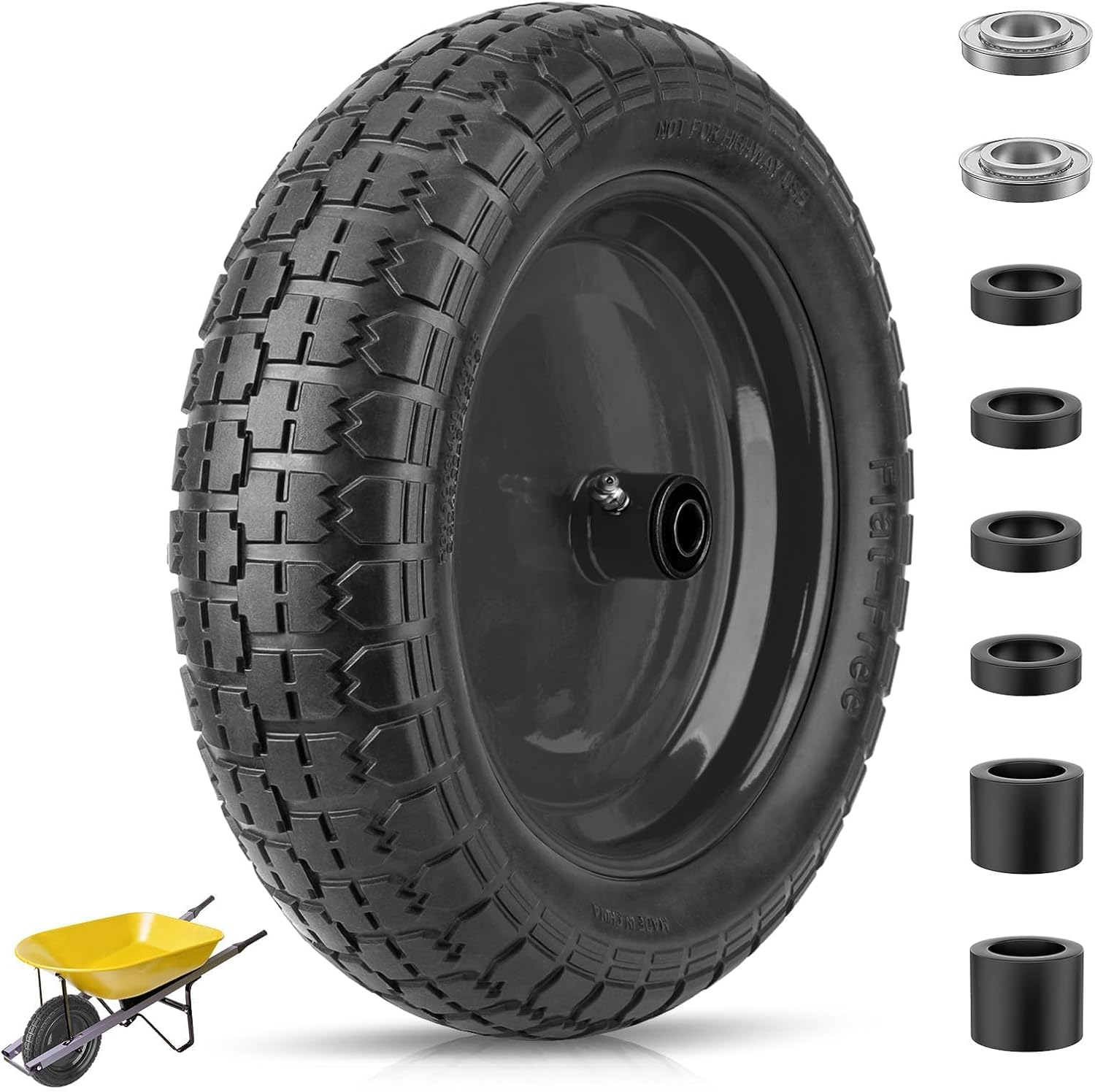
This flat-free TICONN wheelbarrow tire features durable polyurethane foam construction that never needs inflation, helping prevent punctures and reducing maintenance on rough outdoor terrain. With a 300 lb max load capacity and stable steel rim design, it supports safer transport for yard work and hauling tasks. An adapter kit with ball bearings and nylon spacers is included for easier fit and customization across common wheelbarrow and cart axle setups.
Navigating a Warranty Dispute
If a dealer connects a denied claim to your tires or wheels, keep the discussion focused on evidence and the affected component.
- Request the decision in writing. Ask which part is not covered and the technical reason the tire or wheel modification caused the failure.
- Collect your records. Provide installation dates, tire and wheel specifications, alignment reports, maintenance records, photographs, and earlier repair orders.
- Ask for the diagnostic findings. Request measurements, photographs, trouble codes, inspection notes, and failed-part observations supporting the decision.
- Escalate within the dealership. Speak with the service manager or customer-relations manager when the explanation is incomplete.
- Contact Toyota. Use the contact and escalation instructions in your model-year Warranty and Maintenance Guide.
- Use Toyota’s dispute program when eligible. The National Center for Dispute Settlement administers Toyota’s informal warranty-dispute program for eligible claims.
- Review other consumer remedies. Depending on the facts and your state, you may contact your state attorney general, submit a report to the FTC, or seek advice from a qualified consumer-warranty attorney.
Note: This article provides general U.S. consumer and automotive information, not legal advice. Warranty terms, state laws, vehicle configurations, and dispute procedures vary. Review your written warranty and consult a qualified professional about a specific denied claim.
Frequently Asked Questions
Do bigger tires void the Toyota Tacoma warranty?
No. Bigger tires do not automatically void the entire factory warranty. Toyota or a dealer may deny coverage for a specific damaged component if the evidence shows that the tires, wheels, lift, installation, or related modification caused or contributed to the failure.
Can 285/70R17 tires affect a Tacoma warranty claim?
They can become relevant to a claim involving steering, suspension, wheel bearings, axles, differentials, brakes, transmission behavior, rubbing, or calibration. A 285/70R17 is nominally about 3.49% taller than a 265/70R17, but the tire size alone does not prove that it caused a failure.
What is the biggest tire you can install on a Toyota Tacoma?
No single maximum applies to every Tacoma. The answer depends on generation, trim, factory wheel size, wheel width and offset, suspension height, alignment, tire construction, payload, and intended use. A tire that clears while parked may still rub during steering, braking, compression, or off-road articulation.
Does staying within 3% of the factory diameter protect the warranty?
No. The 3% figure is only a common comparison guideline. It is not a federal warranty threshold, Toyota approval, or guarantee that the tire will clear the body, match the wheel, carry the required load, or work correctly with the vehicle’s systems.
Do I need a dealer waiver before installing bigger tires?
Toyota does not publish a universal larger-tire or TSS waiver requirement for every Tacoma. An individual dealer or installer may use an acknowledgement form. Read it carefully and ask whether it addresses installation liability, particular components, or a specific warranty concern.
Should I reinstall the stock tires before requesting warranty service?
Do not conceal a relevant modification or make false statements about the truck’s history. Bring complete records and describe when the modification was installed. Reinstalling a factory setup may help diagnosis in some cases, but it does not erase prior use or damage caused by an earlier configuration.
Does a lift kit increase the warranty risk?
It can. A lift may change suspension geometry, alignment, axle angles, sensor position, body clearance, and steering behavior. When a lift and larger tires are installed together, a dealer may investigate both modifications when evaluating a related suspension, driveline, or safety-system claim.
Conclusion
Bigger tires do not automatically void your Toyota Tacoma warranty. The practical risk is narrower: Toyota or a dealer may deny a claim when reliable evidence connects the tire, wheel, lift, incorrect fitment, or installation to the failed component.
Protect yourself by choosing a properly rated setup, checking full-range clearance, completing an alignment, addressing calibration needs, and keeping detailed records. When a claim is questioned, request the reason in writing and focus on whether the modification actually caused the problem rather than accepting a blanket statement that the warranty is “void.”
Sources
- Federal Trade Commission: Auto Warranties and Auto Service Contracts — aftermarket parts, maintenance records, and claim-denial causation.
- Federal Trade Commission: Magnuson-Moss Warranty Act — federal written-warranty framework and consumer remedies.
- Toyota: 2026 Tacoma Manuals and Warranties — current U.S. Tacoma owner and warranty documents.
- NHTSA TireWise — replacement tire size, placard, load, pressure, and tire-safety guidance.
- Toyota USA Newsroom: 2024 Tacoma and Toyota Safety Sense 3.0 — current-generation Tacoma safety-system information.
- National Center for Dispute Settlement: Toyota Program — informal Toyota warranty-dispute mediation and arbitration.

