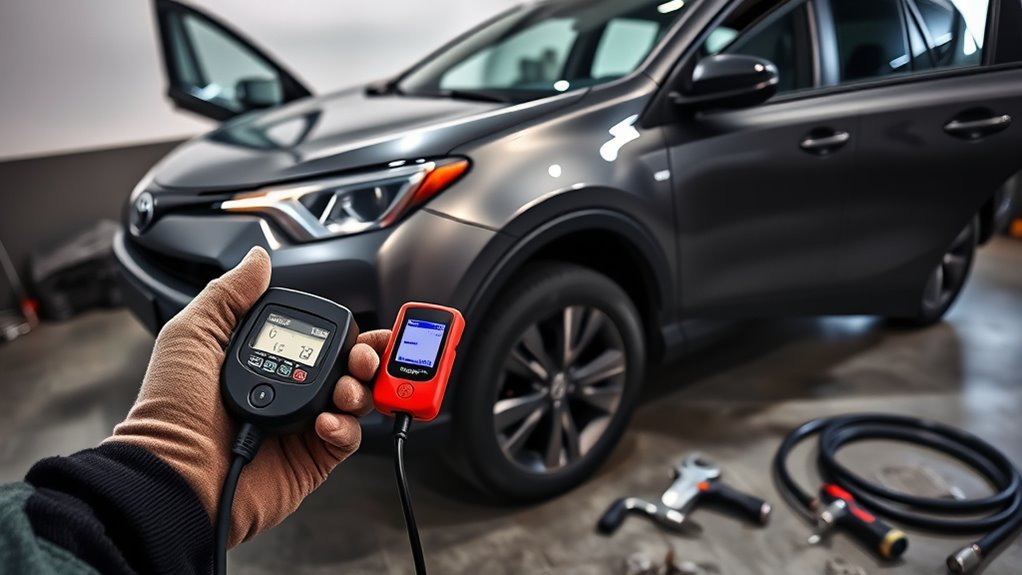
Troubleshooting TPMS problems on a Toyota RAV4 starts with the basics: stop safely, check every tire with a gauge, and include the spare tire. For the 2008 Toyota RAV4, the owner’s manual lists 220 kPa, or 32 PSI, for the front, rear, and spare tires on the common factory tire sizes. If the warning light stays on after the pressures are corrected, the next step is to identify whether you have a low-pressure problem, a flat tire, or a TPMS sensor/system fault.
Quick Answer
To fix most Toyota RAV4 TPMS warnings, check all four tires and the spare when cold, inflate them to the pressure on the driver-door placard or owner’s manual, then wait a few minutes. If the light flashes for about one minute and stays on, the TPMS system needs diagnosis.
Key Takeaways
- For a 2008 RAV4 with factory tire sizes, Toyota lists 32 PSI for the front, rear, and spare tires.
- The 2008 RAV4 spare tire has a tire pressure warning valve and transmitter, so a low spare can turn on the TPMS light.
- A solid light usually means low tire pressure; a light that flashes for about one minute and then stays on points to a TPMS malfunction.
- Do not rely on a generic “drive above 25 mph” reset. On the 2008 RAV4, correct inflation should turn the warning light off after a few minutes if the system is working.
At a Glance
| Time Required | 10–20 minutes for pressure checks; longer if a leak, flat tire, or sensor fault is found |
| Difficulty | Easy for pressure checks; moderate for sensor diagnosis |
| Tools Needed | Accurate tire pressure gauge, air compressor, valve caps, soapy water for leak checks, TPMS scan tool if the light flashes |
| Cost | Usually free to a few dollars for air; sensor replacement and programming may require professional service |
How to Fix Common TPMS Problems in the 2008 RAV4
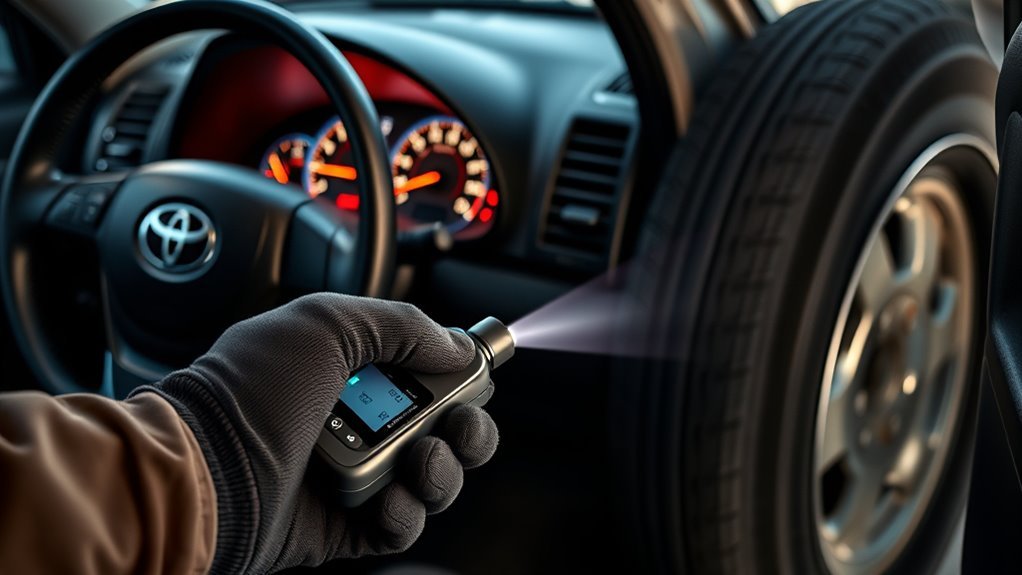
Start with tire pressure, not the reset procedure. The 2008 Toyota RAV4 owner’s manual lists these cold tire inflation pressures for the common factory tire sizes:
| 2008 RAV4 tire size | Front | Rear | Spare |
|---|---|---|---|
| 215/70R16 99H | 32 PSI | 32 PSI | 32 PSI |
| 225/65R17 101H | 32 PSI | 32 PSI | 32 PSI |
| 235/55R18 99H | 32 PSI | 32 PSI | 32 PSI |
Use the pressure on your driver-door tire placard if your RAV4 has a different tire size or non-original wheels. Tire pressure should be checked when the tires are cold, because pressure rises after driving.
Warning: If the TPMS light comes on while driving, slow down, avoid abrupt braking or sharp steering, and stop in a safe place as soon as practical. A low or damaged tire can overheat, affect handling, and lead to tire failure.
[Products Worth Considering]

Marsflex brand TPMS replacement sensors help restore tire pressure monitoring for compatible Toyota, Lexus, Scion, and Pontiac models. Each sensor is pre-programmed for the vehicle application and includes a long-life battery for up to 8 years of normal use. Designed to replace common OE numbers and requires relearning using a TPMS scan tool after installation.
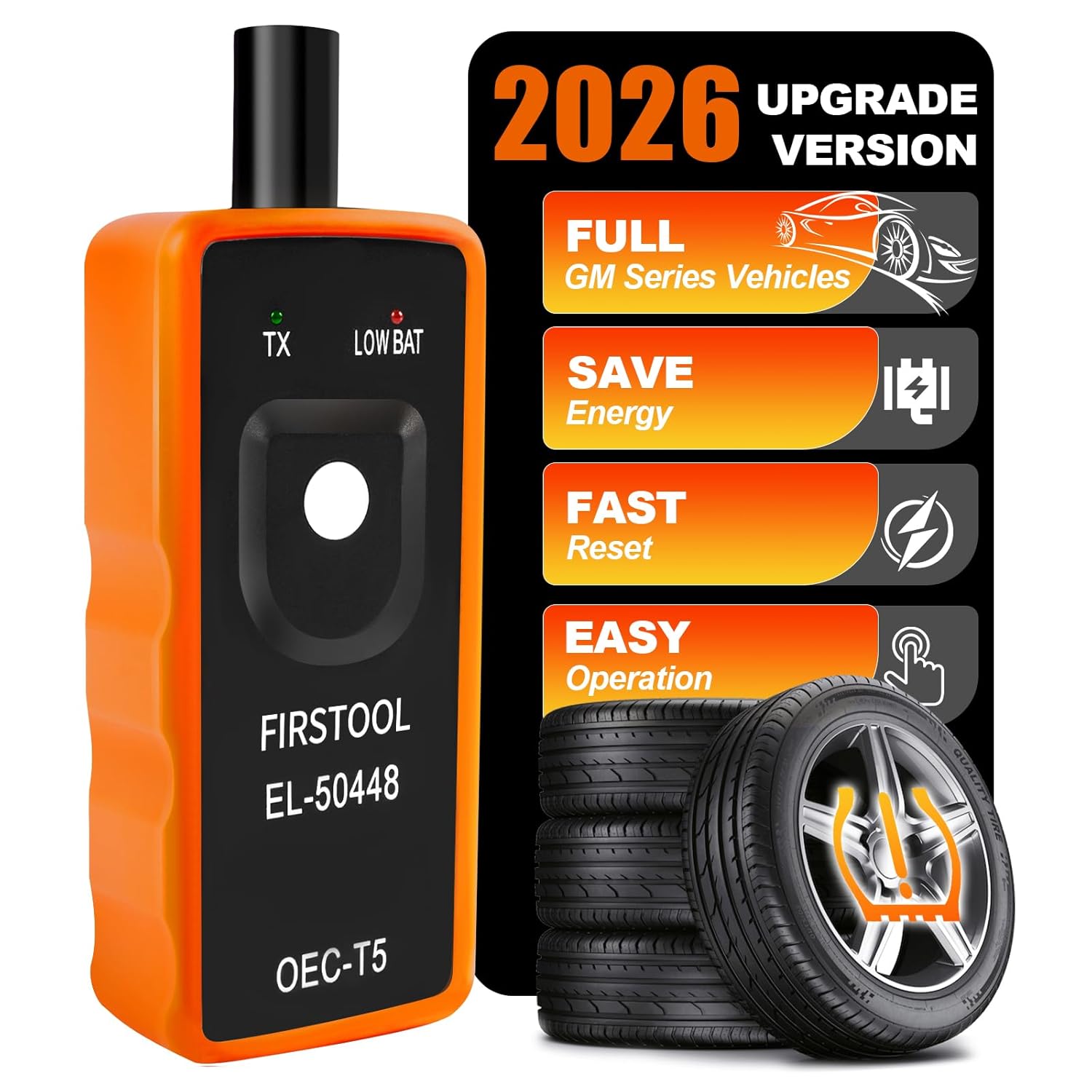
This TPMS relearn tool helps you quickly activate, match, and reset GM tire pressure sensors to keep the vehicle monitoring system working properly. It clears tire pressure alarms and dashboard warning lights after sensor replacement or tire rotation, and supports learning for common 315/433 MHz TPMS sensors. Designed for simple one-button operation, it can help you avoid unnecessary trips to repair shops.

Replace your worn or missing TPMS sensors with pre-programmed, direct-fit sensors for compatible Ford, Lincoln, and select Mazda models. Each sensor comes ready to activate with a scan tool, helping restore accurate tire pressure monitoring and trouble-free installation. Built with a long-life CR2032 battery and tested before factory release, this set provides dependable performance with a one-year warranty.
Step-by-Step 2008 RAV4 TPMS Check
- Park safely and let the tires cool. For the most accurate reading, check pressure before driving or after the vehicle has been parked long enough for the tires to cool.
- Check all four road tires. Use a reliable gauge and compare each tire to the door placard or owner’s manual pressure.
- Check the spare tire. On the 2008 RAV4, the spare is also equipped with a tire pressure warning valve and transmitter, so a low spare can keep the TPMS light on.
- Inflate to the correct cold pressure. Do not use the tire sidewall maximum pressure as your target. Use the vehicle placard/manual pressure.
- Inspect for damage. Look for nails, cuts, bulges, cracked valve stems, missing valve caps, or signs that one tire is losing air faster than the others.
- Wait a few minutes after correction. If pressure was the only issue and the system is working, the warning light should turn off after the tire pressures are corrected.
- If the light stays on, check for a flat or leak. Toyota notes that if the light remains on after pressure adjustment, a flat tire is possible and the tires should be checked.
- If the light flashes, diagnose the TPMS system. A light that flashes for about one minute and then stays on indicates a TPMS malfunction, not just low air.
Pro Tip: Label your gauge readings as LF, RF, LR, RR, and spare. If one tire is much lower than the others, refill it and recheck it the next day. A repeated drop usually means a leak, not a reset problem.
Quick Fixes for TPMS Warnings
The best quick fix depends on how the TPMS warning light behaves. Use this table before replacing parts:
| Warning light behavior | Most likely meaning | What to do |
|---|---|---|
| Solid TPMS light | One or more tires may be significantly underinflated. | Check all four tires and the spare, inflate correctly, and inspect for leaks or tire damage. |
| Light comes on after a cold night | Cold temperature lowered tire pressure enough to trigger the warning. | Set pressures when cold. Do not bleed air from warm tires just because the reading is higher after driving. |
| Light flashes for about 1 minute, then stays on | TPMS malfunction, such as a failed sensor, unregistered sensor ID, incompatible wheel, or signal problem. | Use a TPMS scan tool or have a Toyota dealer or qualified tire shop diagnose and register sensors. |
| Light stays on after sensor replacement | Sensor IDs may not be registered, or a sensor may be incompatible. | Have the ID codes registered and confirm the correct sensors were installed. |
A TPMS scan tool, such as a shop-grade Toyota-compatible tool, can read sensor IDs, pressure data, battery/signal status, and system faults. A basic tire gauge is still the first tool to use because TPMS is a warning system, not a substitute for checking tire pressure manually.
[Products Worth Considering]

Replace worn or malfunctioning GM TPMS sensors with this 433MHz pre-programmed sensor set designed for compatibility with many Chevrolet, Buick, GMC, and Cadillac models. It includes guidance for proper OBDII relearning/pairing after installation and supports reliable long-term operation with a high-performance CR2032 battery. Quality tested for durability and performance to help restore accurate tire pressure monitoring.
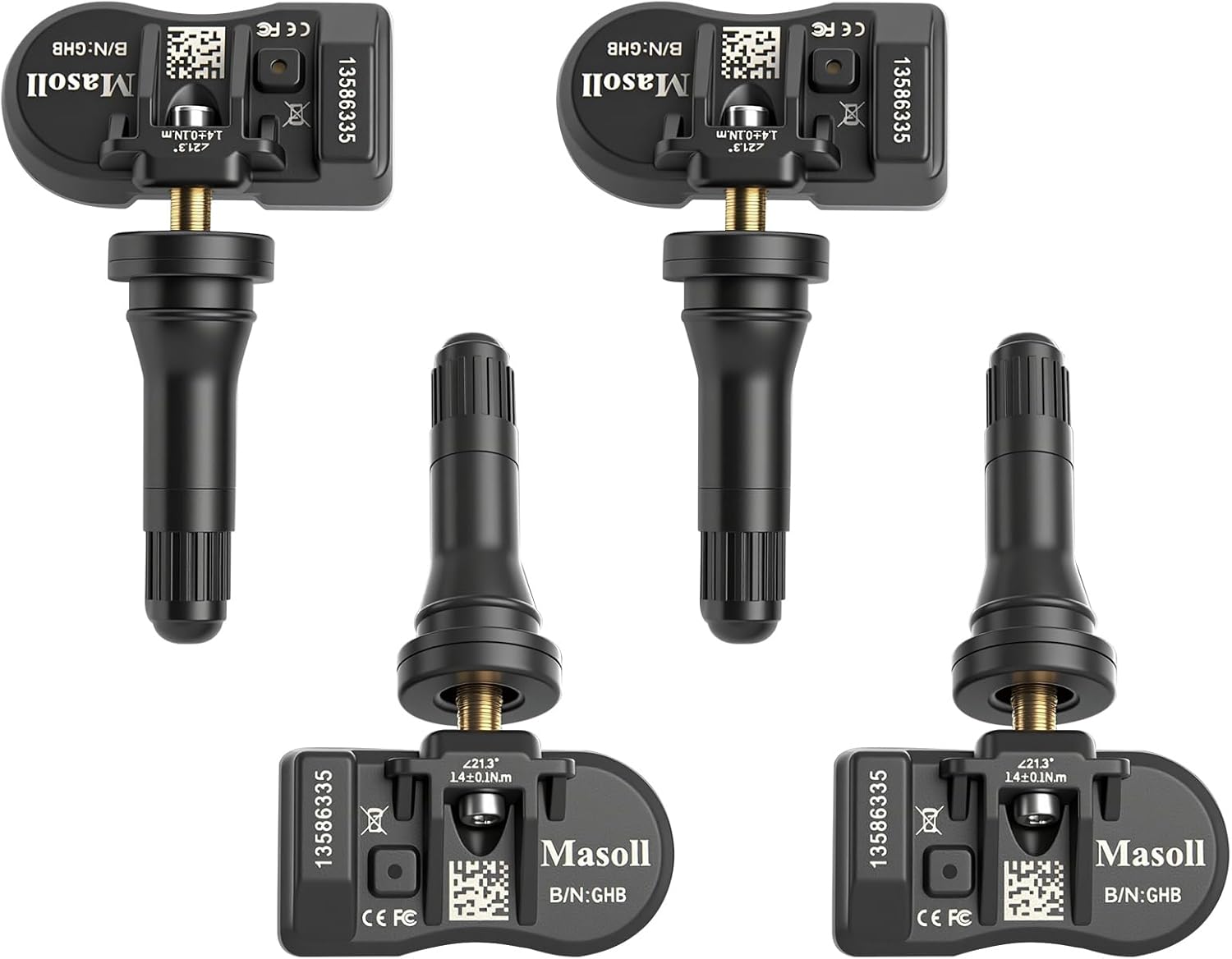
Masoll TPMS sensors are designed for most GM vehicles after 2006, helping you clear tire pressure warnings with OEM-level 315/433MHz compatibility. The 4-pack includes pre-programmed sensors, but re-learning is required after installation using a GM TPMS relearn tool or scan tool. Built with a dual-antenna design and a long-life CR2050 battery, these sensors deliver reliable performance in extreme temperatures with corrosion-resistant valve construction.

This TPMS sensor training and relearn reset tool is customized for Ford, Lincoln, and Mercury vehicles to help activate tire pressure programming after sensor replacement or tire rotation. It can activate individual tire pressure sensors with one-button operation, helping prevent TPMS warning light illumination. It is not a sensor programming tool and cannot program replacement sensors—use it to trigger/activate sensors only.
Understanding TPMS and Its Role in Tire Safety
The Tire Pressure Monitoring System, or TPMS, warns you when tire pressure drops low enough to create a safety concern. Federal TPMS rules require covered vehicles to warn drivers when one or more tires are significantly underinflated, but the warning may not appear for small pressure losses. That is why NHTSA tire safety guidance still recommends checking tire pressure with a gauge.
The 2008 Toyota RAV4 uses tire pressure warning valves and transmitters. In plain language, each monitored tire has a sensor that sends pressure information to the vehicle. This is different from indirect TPMS systems that estimate pressure loss from wheel-speed data.
TPMS helps catch serious underinflation, but it should not replace monthly cold tire-pressure checks with an accurate gauge.
Key TPMS facts for the RAV4:
- The spare matters: On the 2008 RAV4, the spare tire is equipped with a tire pressure warning valve and transmitter.
- Cold pressure matters: Tire pressure changes with temperature and driving heat, so check pressure cold whenever possible.
- A flashing light matters: Flashing for about one minute and then staying on points to a system fault, not just low air.
- Sensor IDs matter: Replacement tire pressure warning valves/transmitters must have their ID codes registered in the vehicle’s TPMS computer.
Note: Tire sealants can interfere with or damage TPMS valves and transmitters. If sealant has been used, tell the tire shop before repair or replacement.
When Should You Call in the Pros for TPMS Problems?
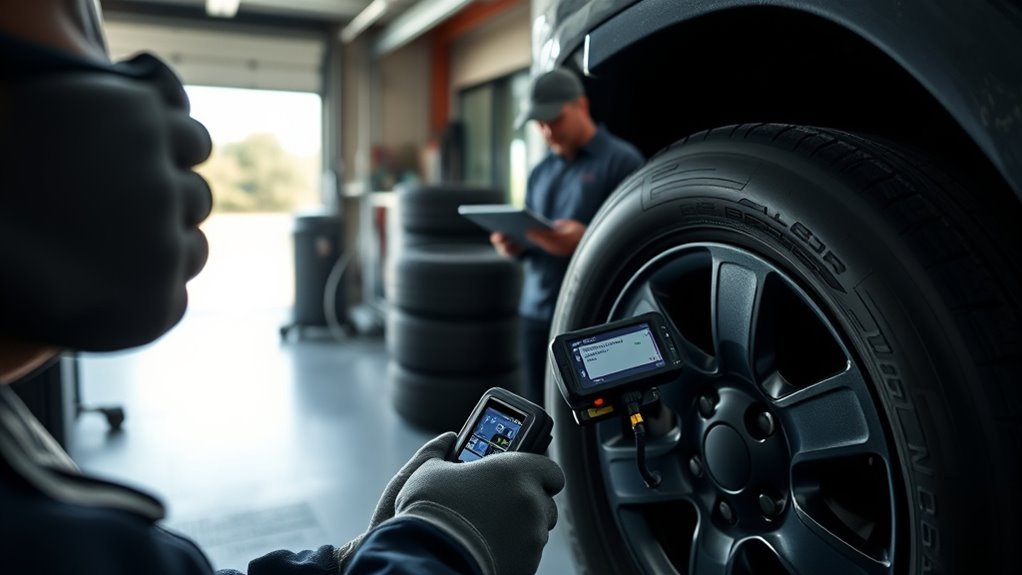
You can handle basic pressure checks at home, but some TPMS problems need professional equipment. Call a Toyota dealer or qualified tire shop if the light flashes for about one minute and then stays on, if a sensor was recently replaced, or if the light remains on after every tire and the spare have been checked cold and inflated correctly.
| Scenario | What it may mean | Professional help needed? |
|---|---|---|
| Light flashes for about 1 minute, then stays on | TPMS malfunction | Yes |
| Light stays on after replacing sensors | Sensor ID codes may not be registered | Yes |
| One tire keeps losing air | Puncture, bead leak, cracked valve stem, or wheel corrosion | Usually |
| Warning begins after new wheels or tires | Sensor incompatibility, missing transmitter, or registration issue | Yes |
For older RAV4s, sensor failure is also realistic because TPMS sensors use sealed batteries that eventually wear out. When one sensor fails, many owners choose to replace all sensors during a tire change so the system does not need to be reopened again soon.
[Products Worth Considering]
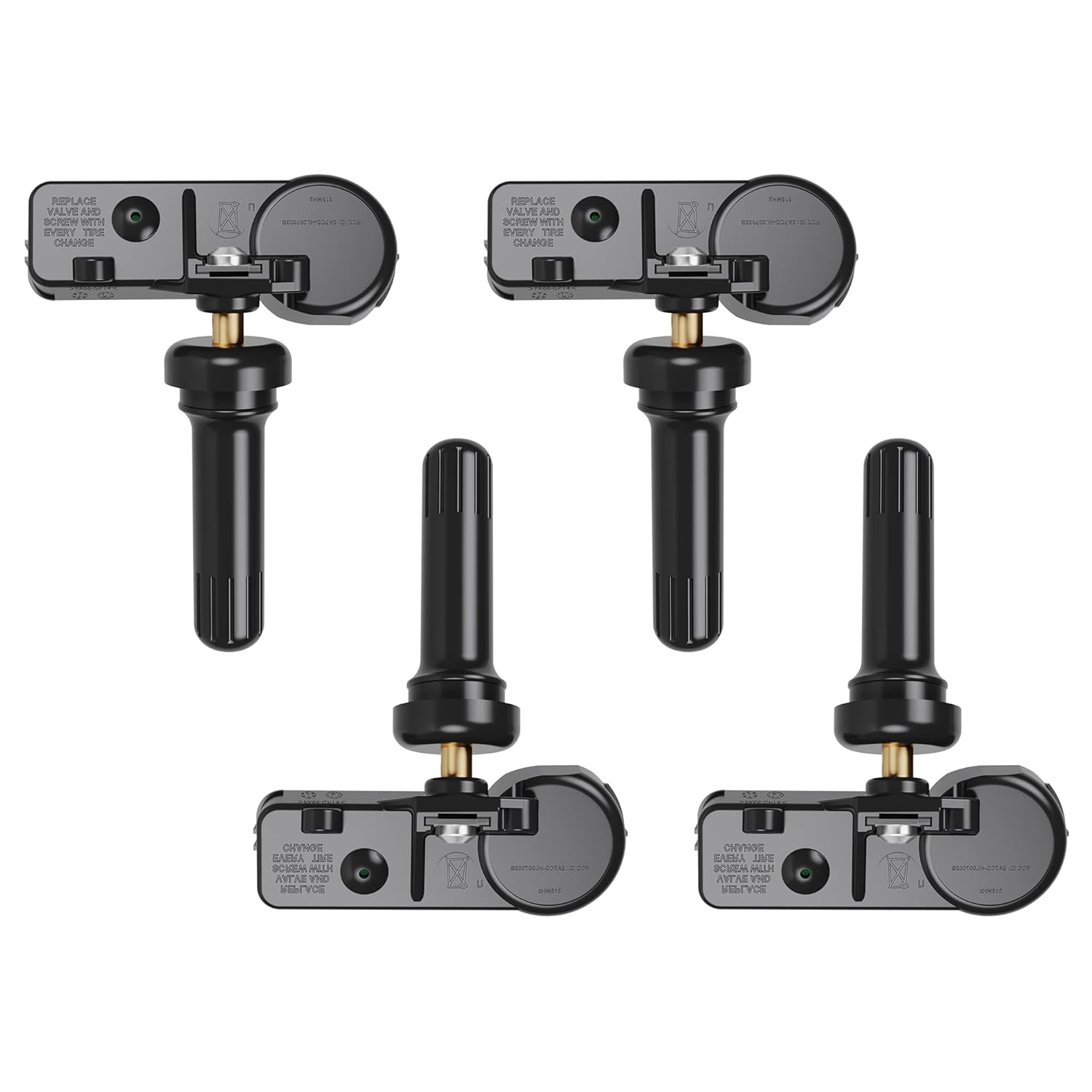
Replace worn or faulty TPMS sensors with this brand new 315MHz GM-compatible replacement set for select Chevy, GMC, Buick, Cadillac, and similar vehicles. These sensors are pre-programmed for your make/model/year and typically only require activation with a scan tool. Built for long service life with a high-temperature battery, they help maintain reliable tire pressure monitoring for safer driving.

Autel MX TPMS sensors combine 315MHz and 433MHz in a single easy-to-install press-in design for faster tire service. They support wireless programming with strong signal performance, and the sensors are clone-able for streamlined replacement. Built for reliability and tested to SAE standards, each sensor includes a series number for quality control.

The VEHLIVE SU-50448 II TPMS relearn tool provides a fast activation reset to restore accurate tire pressure monitoring after sensor replacement or tire rotation. It supports 315 MHz and 433 MHz GM series sensors and helps clear dashboard pressure warnings. With simple two-button operation and horn-confirmed relearning order, you can reprogram sensors conveniently at home.
Tips for Maintaining a Healthy TPMS System
Maintaining a healthy TPMS system is mostly about good tire maintenance. The system can warn you, but it cannot repair a leak or replace routine pressure checks.
- Check tire pressure monthly. Include the spare tire, especially on 2008 RAV4 models where the spare has a transmitter.
- Use the door placard or owner’s manual. Do not inflate to the sidewall maximum unless that matches a specific tire-service instruction.
- Check pressure when cold. Cold means before driving or after the vehicle has been parked long enough for tire temperature to settle.
- Keep valve caps installed. Caps help keep dirt and moisture out of the valve stem area.
- Tell the tire shop you have TPMS. Tire removal, wheel replacement, and valve service can affect the tire pressure warning valves and transmitters.
- Register sensor IDs after replacement. If new sensors are installed and the vehicle does not recognize them, the TPMS light can stay on or flash.
Temperature changes can make TPMS warnings appear suddenly, especially when the weather turns cold. That does not mean the system is wrong. It usually means the tire pressure has dropped enough that the tires need to be set back to the correct cold pressure.
Frequently Asked Questions
Where is the TPMS reset button on a 2012 RAV4?
Do not start by hunting for a reset button. The 2012 RAV4 quick reference guidance says that if tire pressure becomes critically low on any tire, including the spare, the warning light will come on and correctly adjusting tire inflation should turn the light off after a few minutes. If it does not turn off, have the system checked by Toyota or a qualified shop.
Why is my Toyota RAV4 tire pressure light on when the tires look fine?
A tire can be underinflated without looking flat. Check all four tires and the spare with a gauge when cold. If pressures are correct and the light stays on, look for a slow leak, a low spare, a damaged valve stem, an unregistered sensor, or a failing TPMS sensor.
Can the spare tire turn on the TPMS light on a 2008 RAV4?
Yes. The 2008 RAV4 spare tire is equipped with a tire pressure warning valve and transmitter. If the spare tire is low, the TPMS light can turn on even when the four road tires are properly inflated.
How long should the TPMS light take to go off after adding air?
On the 2008 RAV4, Toyota states that adjusting tire inflation pressure should turn off the warning light after a few minutes when low pressure was the cause. If the light remains on, recheck the spare and look for a flat tire or leak. If it flashes first, diagnose the TPMS system.
Do I need a TPMS scan tool for a RAV4 warning light?
Not for the first check. Use a tire pressure gauge first. A TPMS scan tool becomes useful when the warning light flashes, when sensors have been replaced, or when all tire pressures are correct but the system still reports a fault.
Conclusion
Most Toyota RAV4 TPMS problems start with low pressure, a low spare tire, or a slow leak. For the 2008 RAV4, check the front tires, rear tires, and spare against the correct cold pressure before trying anything else. If the TPMS light flashes for about one minute and then stays on, treat it as a system malfunction and have the sensors, ID registration, and receiver communication checked. A well-maintained TPMS helps, but regular tire-pressure checks are still your best protection.
Sources
- Toyota 2008 RAV4 Owner’s Manual — 2008 RAV4 tire pressures, spare tire TPMS transmitter, warning-light behavior, and TPMS malfunction guidance.
- Toyota Owners: 2008 RAV4 Manuals and Warranties — official Toyota manual access.
- Toyota Support: How the Tire Pressure Monitor System Works — Toyota’s general TPMS owner guidance.
- NHTSA Tire Safety — cold tire pressure and tire safety guidance.
- 49 CFR § 571.138 Tire Pressure Monitoring Systems — federal TPMS performance and owner-manual language.
- Toyota 2012 RAV4 Quick Reference Guide — 2012 RAV4 tire pressure warning guidance including the spare tire.