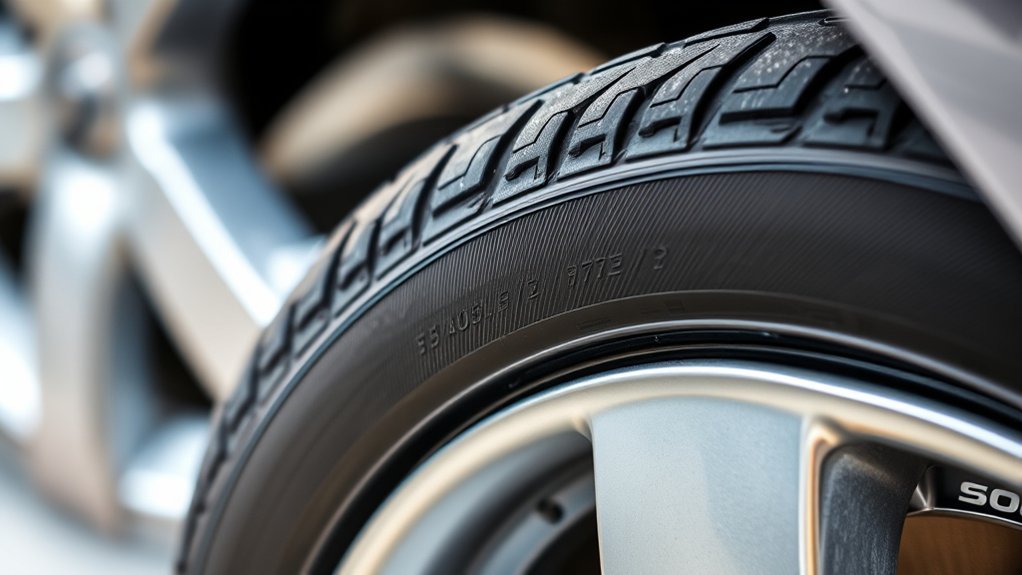
The correct tire size for a 2008 Honda Accord depends on whether you have a sedan or coupe and which trim you drive. Before buying tires or wheels, check the tire placard on the driver’s doorjamb and match it to your trim, load index, speed rating, and wheel size.
Quick Answer
Most U.S.-spec 2008 Honda Accord sedans use P215/60R16 94H on LX/LX-P trims or P225/50R17 93V on EX, EX-L, and V6 trims. The coupe uses P225/50R17 93V on 4-cylinder trims and P235/45R18 94V on the EX-L V6 coupe.
Key Takeaways
- There is no single stock tire size for every 2008 Honda Accord; the correct size depends on trim and body style.
- Use the driver’s doorjamb tire placard as the final fitment reference for your specific vehicle.
- Match or exceed the original load index and speed rating when replacing tires.
- Changing tire or wheel size can affect clearance, speedometer accuracy, TPMS, ABS, VSA, ride comfort, and handling.
2008 Honda Accord OEM Tire Size Chart

Use this chart as a starting point for U.S.-spec 2008 Accord models. Because cars can be modified over time, always confirm your tire size on the driver’s doorjamb placard, current tire sidewall, or owner’s manual before ordering.
| Body Style | Trim | OEM Tire Size | Load/Speed Rating |
| Sedan | LX, LX-P | P215/60R16 | 94H |
| Sedan | EX, EX-L, EX V6, EX-L V6 | P225/50R17 | 93V |
| Coupe | LX-S, EX, EX-L 4-cylinder | P225/50R17 | 93V |
| Coupe | EX-L V6 | P235/45R18 | 94V |
These factory sizes are supported by Honda’s official sedan and coupe factsheets. The sedan factsheet lists P215/60 R16 94H for LX/LX-P and P225/50 R17 93V for EX/EX-L and V6 sedans. The coupe factsheet lists P225/50 R17 93V for 4-cylinder coupes and P235/45 R18 94V for the EX-L V6 coupe. See the official 2008 Accord Sedan factsheet and 2008 Accord Coupe factsheet.
Pro Tip: If your current tire size does not match the chart, check whether the wheels were changed by a previous owner. The doorjamb placard and wheel specifications should guide your replacement choice.
[Products Worth Considering]

Replace your worn or missing TPMS sensors with pre-programmed, direct-fit sensors for compatible Ford, Lincoln, and select Mazda models. Each sensor comes ready to activate with a scan tool, helping restore accurate tire pressure monitoring and trouble-free installation. Built with a long-life CR2032 battery and tested before factory release, this set provides dependable performance with a one-year warranty.

Measure tire tread depth quickly and accurately with this LUMITECO dial gauge that reads in 1/32" increments up to 14/32". The color-coded green/yellow/red zones make it easy to judge tire wear and know when replacement is needed. A rugged, compact design with a protective pouch helps keep the gauge ready for use on cars, trucks, motorcycles, and more.

Monitor tire tread wear with a smart, color-coded depth gauge that shows clear condition ranges at a glance. The bar is range marked for fast, easy readings, helping you maintain safer traction and performance. Each gauge is portable with a pocket clip, and the set includes 20 units for daily use and sharing.
Recommended Tire Pressure for the 2008 Honda Accord
Tire pressure should be checked when the tires are cold, meaning the car has been parked for several hours or driven only a short distance. Honda’s owner’s manual lists the following normal cold pressures for the U.S.-spec sedan:
| Model / Tire Size | Front Pressure | Rear Pressure |
| Sedan LX/LX-P — P215/60R16 94H | 30 psi | 30 psi |
| Sedan EX/EX-L and V6 — P225/50R17 93V | 32 psi | 32 psi |
| Compact spare tire | 60 psi | 60 psi |
For coupe models, modified vehicles, or non-U.S. Accords, use the driver’s doorjamb label as the final pressure guide. The tire sidewall shows the tire’s maximum pressure, not the vehicle’s recommended everyday pressure.
Note: TPMS is helpful, but it is not a replacement for monthly pressure checks with a gauge. Tire pressure can be too low before the warning light appears.
What the Tire Size Numbers Mean
A size like P225/50R17 93V tells you more than just width. Here is how to read it:
- P means passenger-vehicle tire.
- 225 is the tire width in millimeters.
- 50 is the aspect ratio, meaning the sidewall height is 50% of the tire width.
- R means radial construction.
- 17 is the wheel diameter in inches.
- 93 is the load index.
- V is the speed rating.
When replacing tires, the safest approach is to use the original size and match or exceed the original load index and speed rating. This helps preserve the Accord’s intended braking, steering, ride comfort, and stability-control behavior.
What You Need to Know About Bolt Patterns for Your Accord
The commonly listed bolt pattern for the 2008 Honda Accord is 5×114.3mm, but bolt pattern is only one part of wheel fitment. You also need the correct center bore, lug-seat style, thread pitch, wheel offset, brake clearance, wheel load rating, and TPMS compatibility.
Warning: Do not buy wheels based only on diameter or bolt pattern. A wheel can bolt on and still have unsafe offset, poor brake clearance, wrong lug seating, or a load rating that is too low.
Stock Wheel Sizes
Honda’s sedan information lists 16-inch wheels for LX/LX-P sedans and 17-inch wheels for EX, EX-L, and V6 sedans. The coupe factsheet lists 17-inch alloy wheels for 4-cylinder coupes and 18-inch alloy wheels for the EX-L V6 coupe.
| Model | Factory Wheel Size | Factory Tire Size |
| Sedan LX/LX-P | 16-inch | P215/60R16 94H |
| Sedan EX/EX-L/V6 | 17-inch | P225/50R17 93V |
| Coupe LX-S/EX/EX-L 4-cylinder | 17-inch alloy | P225/50R17 93V |
| Coupe EX-L V6 | 18-inch alloy | P235/45R18 94V |
Importance of Compatibility
Wheel compatibility affects more than appearance. The wrong fitment can cause rubbing, vibration, uneven tire wear, steering pull, speedometer error, or interference with brakes and suspension parts. If your Accord has TPMS sensors, confirm that the replacement wheels support the correct sensors.
Upgrading Wheel Options
If you upgrade from a 16-inch wheel to a 17-inch or 18-inch setup, keep the overall tire diameter close to the factory diameter and confirm clearance before driving. A lower-profile tire may sharpen steering response, but it can also make the ride firmer and increase the risk of wheel damage on potholes.
Alternative Tire Sizes for Improved Performance
For most drivers, the best replacement tire size is the original size listed on the doorjamb placard. If you want a different size for appearance or handling, use a tire professional and compare the new size against the original diameter, load rating, speed rating, wheel width, offset, and clearance.
A tire-size change should be treated as a fitment calculation, not a guess. Even a small change can affect ABS, VSA, speedometer accuracy, ride quality, and fender clearance.
Before changing sizes, check these points:
- Overall diameter: Keep the new tire close to the original diameter to limit speedometer and stability-control issues.
- Load index: Match or exceed the original load index.
- Speed rating: Match or exceed the original rating unless a tire professional confirms a safe seasonal exception.
- Wheel width: Make sure the tire is approved for the wheel width you plan to use.
- Offset and clearance: Check inner suspension clearance and outer fender clearance through steering and suspension travel.
- TPMS: Confirm the wheels and valve stems support the Accord’s tire-pressure monitoring system.
[Products Worth Considering]

The TYAMATE TM8 solar-powered wireless TPMS delivers real-time tire pressure and temperature monitoring with six alarm modes for safer driving. A vibrant color LCD display shows readings clearly while windshield mounting keeps it hands-free and easy to read. With a wide 0–87 PSI range, strong 433.92 MHz signal transmission, and quick sensor pairing, it’s ideal for RV, sedan, SUV, MPV, and truck use.

The Tymate TM12 RV TPMS delivers real-time tire pressure and temperature monitoring with a stable 433Hz display for safer long-distance driving. It supports simultaneous monitoring across vehicle and trailer zones, includes six alarm modes for pressure, temperature, leakage, battery, and signal loss, and features easy DIY installation with auto calibration. Power is supplied via USB-C charging or solar recharging, with a wide 0–144 PSI range and up to 50 ft signal coverage for RVs and towable trailers.

Replace worn or malfunctioning GM TPMS sensors with this 433MHz pre-programmed sensor set designed for compatibility with many Chevrolet, Buick, GMC, and Cadillac models. It includes guidance for proper OBDII relearning/pairing after installation and supports reliable long-term operation with a high-performance CR2032 battery. Quality tested for durability and performance to help restore accurate tire pressure monitoring.
Choosing the Right Tire Brand for Your 2008 Honda Accord

Once you know the correct tire size, choose a tire category that matches how and where you drive. A commuter who wants comfort and long tread life may prefer a touring all-season tire. A driver who wants sharper response may prefer a performance all-season tire. Drivers in areas with real winter weather should consider dedicated winter tires or all-weather tires with severe-snow-service marking.
When comparing tires, look at:
- Correct size: Match the OEM size or a verified alternate size.
- Load and speed rating: Do not undercut the factory rating.
- Wet traction: Important for braking and hydroplaning resistance.
- Ride comfort and noise: Especially important on daily-driven sedans.
- Treadwear warranty: Useful, but only if you rotate and maintain the tires as required.
- Climate: All-season tires are not the same as winter tires on snow and ice.
[Products Worth Considering]

The SAFELIFE dial tire tread depth gauge measures tread depth in 1/32 inch increments with clear, easy-to-read 2-inch dial face. Color zones using a traffic light system help you quickly judge whether tread is low, marginal, or ample for safer driving. Built with a durable zinc cast body and a metal detect probe for precise, comfortable use across cars, motorcycles, trucks, and buses.

Accurately measure tire tread depth with a calibrated gauge marked from 0 to 1 inch in 1/32 inch increments. The color-coded bar helps you quickly identify tread condition ranges, supporting safe driving for trucks, motorcycles, automobiles, and passenger vehicles.
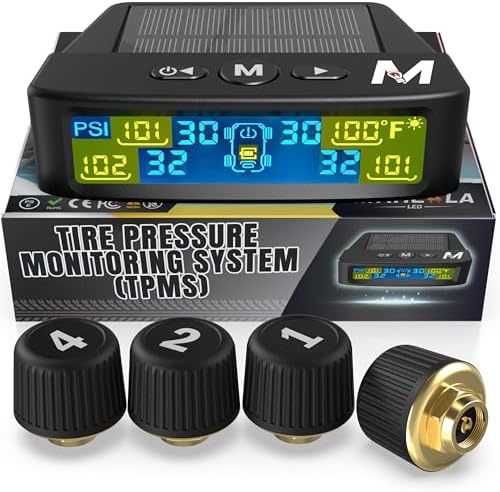
Marcala’s TPMS set of four sensors helps you monitor tire pressure and temperature in real time while driving, with updates every second. The bright color LCD uses auto-dimming for easy viewing, powered by dual solar and USB charging, and offers six alarm modes. Built for trailers, RVs, campers, trucks, and towing setups, the sensors support monitoring 1-4 wheels up to 98 PSI with IP67 waterproof protection.
Maintenance Tips for Your 2008 Honda Accord Tires
Good tire maintenance helps your Accord ride better, stop better, and wear tires more evenly. The basics are simple but easy to skip.
- Check pressure monthly: Use a gauge and check when tires are cold. Include the spare tire.
- Inspect tread depth: Replace tires when tread reaches 2/32 inch. Replace sooner if wet traction, cracking, bulges, or uneven wear become a concern.
- Rotate regularly: Follow Honda’s maintenance minder or your tire manufacturer’s schedule. If no interval is specified, the U.S. Tire Manufacturers Association recommends rotation every 5,000 to 8,000 miles.
- Check alignment: Have alignment inspected if the car pulls, vibrates, or wears tires unevenly.
- Watch tire age: NHTSA notes that some vehicle and tire manufacturers recommend replacing tires after six to 10 years regardless of treadwear.
- Re-torque wheels after service: Honda’s owner’s manual lists the Accord wheel-nut torque at 80 lbf-ft.
Note: If you replace only two tires, install the better pair on the rear axle unless your tire installer or tire manufacturer gives a different vehicle-specific instruction. This helps reduce the chance of oversteer in wet conditions.
Frequently Asked Questions
What tire size comes standard on a 2008 Honda Accord?
It depends on the trim. U.S.-spec sedans use P215/60R16 94H on LX/LX-P trims and P225/50R17 93V on EX, EX-L, and V6 trims. Coupes use P225/50R17 93V on 4-cylinder trims and P235/45R18 94V on the EX-L V6 coupe.
Is 205/65R15 the correct tire size for a 2008 Honda Accord?
Not for the U.S.-spec 2008 Accord sedan and coupe sizes listed by Honda. The common U.S. factory sizes are P215/60R16, P225/50R17, and P235/45R18 depending on trim. If your car has 205/65R15 tires, verify the market, trim, and wheel setup before replacing them.
What PSI should 2008 Honda Accord tires be?
For U.S.-spec sedans, Honda lists 30 psi front and rear for P215/60R16 tires and 32 psi front and rear for P225/50R17 tires under normal driving. The compact spare is listed at 60 psi. Always confirm the placard on your driver’s doorjamb.
Can I put 18-inch wheels on a 2008 Honda Accord?
Some 2008 Accord coupe trims came with 18-inch wheels from the factory, but that does not mean every 18-inch wheel fits every Accord. Confirm tire diameter, wheel width, offset, brake clearance, fender clearance, load rating, lug-seat type, and TPMS compatibility before installing 18-inch wheels.
How often should I rotate tires on a 2008 Honda Accord?
Follow the Maintenance Minder, owner’s manual, or tire manufacturer’s schedule. If no interval is specified, USTMA recommends rotating tires every 5,000 to 8,000 miles to help prevent irregular wear.
Conclusion
The best tire size for your 2008 Honda Accord is the size Honda specified for your body style and trim: P215/60R16, P225/50R17, or P235/45R18 depending on the model. Use the doorjamb placard as your final reference, keep the correct cold pressure, and avoid wheel or tire changes that have not been checked for load rating, clearance, offset, and TPMS compatibility. The right fit keeps the Accord comfortable, predictable, and safe on the road.
Sources
- Honda 2008 Accord Sedan Factsheet — sedan tire sizes, wheel sizes, and trim specifications.
- Honda 2008 Accord Coupe Factsheet — coupe tire sizes and wheel sizes.
- Honda 2008 Accord Sedan Owner’s Manual — cold tire pressures, compact spare pressure, tire replacement cautions, and wheel-nut torque.
- NHTSA TireWise — tire pressure, TPMS, tire age, and tire safety guidance.
- U.S. Tire Manufacturers Association Tire Care Essentials — pressure checks, tread depth, rotation, and alignment guidance.