
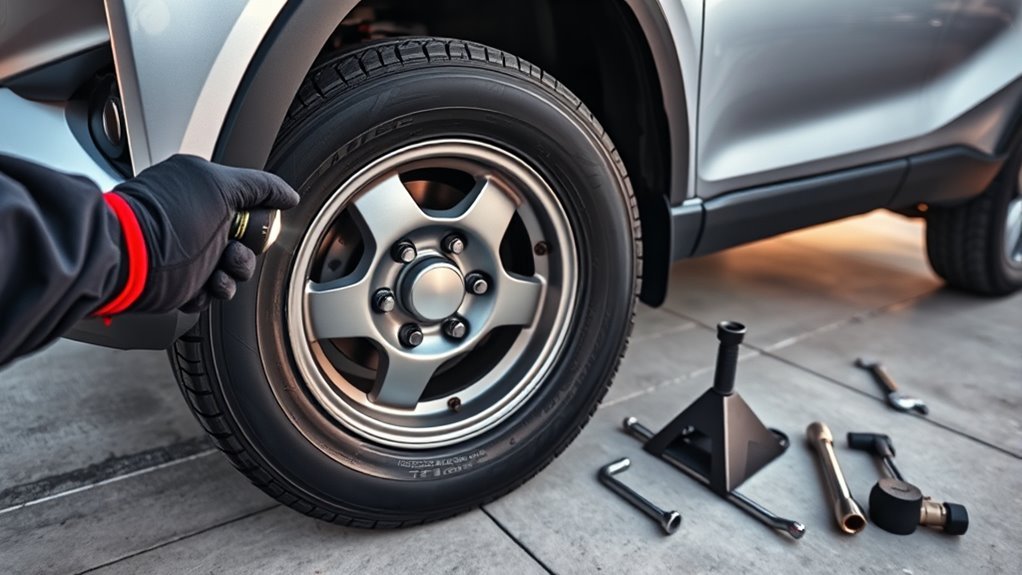
If your RAV4 has a rhythmic thumping noise from the tires or wheels, treat it as a safety clue, not just an annoyance. The cause may be simple, such as a low tire, uneven tread wear, a flat spot, or a wheel balance problem, but it can also come from brakes, wheel bearings, suspension parts, or the rear driveline on AWD models. Start with the safe checks below, then have the vehicle inspected if the noise is getting louder, changes while braking or turning, or comes with vibration.
Quick Answer
A RAV4 tire thumping noise is most often caused by uneven tire wear, a flat-spotted or out-of-round tire, incorrect tire pressure, wheel imbalance, or tire cupping. If the thump changes while braking or turning, also check brakes, wheel bearings, suspension parts, and AWD driveline components.
Key Takeaways
- A thump that speeds up with the vehicle usually points to something rotating: tire, wheel, brake rotor, hub, bearing, axle, or driveshaft.
- Check tire pressure cold, inspect tread depth, and look for cupping, bubbles, exposed cords, nails, or flat spots before driving far.
- If the noise started after new tires, a rotation, or a pothole hit, ask for balance, road-force balance, wheel runout, and lug-torque checks.
- Do not keep driving if you feel severe vibration, brake pulsation, wheel wobble, grinding, burning smell, or visible tire damage.
At a Glance
| Time Required | 15–30 minutes for basic tire checks; longer if a shop needs to inspect brakes, bearings, suspension, or driveline parts. |
| Difficulty | Easy for visual tire checks; professional inspection recommended for brakes, wheel bearings, suspension, and AWD driveline diagnosis. |
| Tools Needed | Tire pressure gauge, tread depth gauge or penny, flashlight, gloves, and a phone for photos/notes. A lift, torque wrench, dial indicator, and scan/inspection tools may be needed at a shop. |
| Cost | Basic checks are usually free at home. Shop diagnosis and repairs vary by location, tire condition, parts needed, and whether balance, alignment, brakes, bearings, or driveline work is required. |
Warning: Stop driving and get help if you see a tire bulge, exposed cords, tread separation, a flat tire, a strong wobble, severe vibration, grinding, smoke, burning smell, or brake pedal pulsation. Never crawl under a RAV4 supported only by a jack.
Identifying the Thumping Noise: Symptoms and Causes
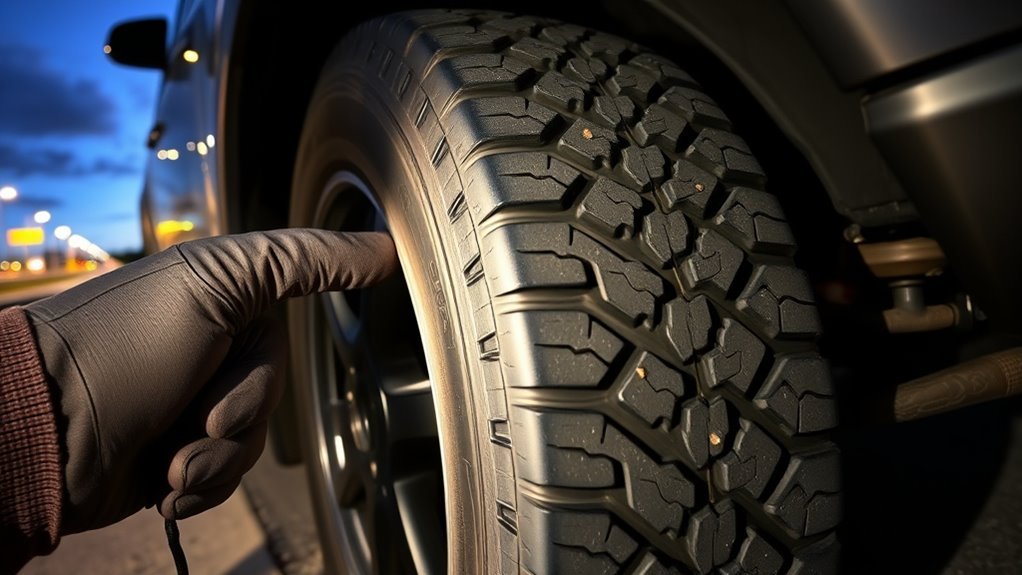
A tire or wheel thump is usually rhythmic. It often rises and falls with road speed, not engine rpm. That is an important clue because it means the cause is likely connected to a rotating part: tire, wheel, brake rotor, hub, bearing, axle, or driveline component.
Before guessing, pay attention to exactly when the sound happens. A thump that appears only while braking points in a different direction than a thump that gets louder during turns or after a tire rotation.
| What You Notice | Most Likely Area | Best Next Step |
|---|---|---|
| Thump speeds up as the RAV4 speeds up | Tire, wheel, hub, bearing, axle, or brake rotor | Inspect tires first, then schedule a wheel/tire and brake check. |
| Thump or vibration mainly while braking | Brake rotor, pad deposits, caliper, or hub runout | Have the brake system inspected before continued driving. |
| Noise changes when turning left or right | Wheel bearing, tire wear, suspension, or CV axle | Do not replace parts by guesswork; have the noisy corner confirmed. |
| Noise began after new tires or rotation | Balance, tire defect, road-force variation, mounting, or lug torque | Return to the tire shop and ask for a recheck. |
| Noise began after a pothole or curb hit | Bent wheel, damaged tire, alignment, suspension, or bearing | Inspect the tire immediately and schedule a shop check. |
What Causes Thumping Noises in RAV4 Tires?
The most common causes are tire-related, but the RAV4’s brakes, wheel bearings, suspension, and AWD driveline can create similar sounds. Use the clues below to narrow the issue without ignoring safety.
Possible Tire Issues
Start with the tires because they are the easiest and safest parts to inspect. A tire can thump when it is out of round, flat-spotted from sitting or hard braking, cupped from uneven wear, underinflated, overinflated, damaged, or mounted/balanced poorly.
Check the tire pressure when the tires are cold and compare it with the pressure listed on the driver-door placard or in the Toyota RAV4 owner’s manual guidance. Do not use the number molded into the tire sidewall as your target pressure; that number is the tire’s maximum pressure, not the vehicle’s recommended cold pressure.
Next, inspect the tread. A tire with alternating high and low spots can make a steady “whomp-whomp” or thudding sound. Tire cupping is often linked to imbalance, skipped rotations, alignment concerns, incorrect pressure, or worn steering/suspension parts.
Note: A cupped tire may keep making noise even after the underlying cause is corrected because the uneven tread has already worn into the tire. The fix may require correcting the cause and replacing the tire if the wear is severe.
Wheel Bearing Concerns
A worn wheel bearing often sounds like a hum, growl, drone, or rumble, but some drivers describe it as a thump when the bearing is badly worn or when tire noise is mixed in. The sound may get louder with speed or change when the vehicle’s weight shifts during a turn.
Do not assume the bearing is bad just because the noise changes with speed. Cupped tires, loose brake hardware, bent wheels, and driveline issues can mimic bearing noise. A technician can lift the vehicle safely, check for play or roughness, compare wheel hub noise, and confirm which corner is faulty before replacement.
Brake System Problems
Brake problems usually show up while slowing down. A pulsing brake pedal, shaking steering wheel, scraping, grinding, or a thump that appears mainly during braking can point to rotor thickness variation, rotor runout, pad deposits, loose hardware, sticking calipers, or other brake issues.
If the RAV4 thumps only when you press the brake pedal, treat it as a brake inspection issue rather than a tire-only problem. Driving with a brake fault can reduce control and stopping confidence.
Suspension and AWD Driveline Issues
Suspension parts keep the tire planted evenly on the road. Worn struts, control arm bushings, ball joints, tie rods, or rear suspension components can cause uneven tire wear, clunks, and vibration. On AWD RAV4 models, rear driveline parts such as axles, the driveshaft, couplers, or differential-related components can also create speed-related noises, especially from the rear.
These areas are not good guesswork repairs. If tire checks do not reveal the cause, have a shop inspect the suspension, brakes, bearings, and driveline together.
How to Check Your Tires for Uneven Wear
Park on level ground, set the parking brake, and inspect all four tires in good light. Look at the inside edge, center, and outside edge of each tire. Run your hand lightly over the tread only if there are no exposed cords, sharp metal, or obvious damage.
- Check cold tire pressure and adjust to the RAV4’s door placard or owner’s manual specification.
- Measure tread depth with a gauge, or use the penny test as a quick backup.
- Look for cupping, scalloping, flat spots, one-sided wear, center wear, shoulder wear, cracks, punctures, bulges, or exposed cords.
- Compare the left and right tires on the same axle for similar size, type, wear, and pressure.
- Take photos of any abnormal wear so a tire shop or mechanic can see the pattern clearly.
For U.S. passenger vehicles, federal inspection guidance uses 2/32 inch as the minimum tread-depth floor, and NHTSA tire safety guidance recommends keeping at least 2/32 inch of tread on all tires. Replace tires sooner if they have damage, severe uneven wear, poor wet traction, or visible structural issues.
| Wear Pattern | What It May Mean | What To Do |
|---|---|---|
| Cupping or scalloped dips | Imbalance, worn suspension, skipped rotation, or alignment issue | Check balance, alignment, suspension, and tire condition. |
| One edge worn faster | Alignment, bent component, or suspension wear | Schedule alignment and suspension inspection. |
| Both shoulders worn | Often underinflation or overload | Correct pressure and inspect for damage. |
| Center worn faster | Often overinflation or load/tire mismatch | Set pressure to the vehicle placard and inspect tire fitment. |
| Single flat spot | Hard braking, long storage, or tire damage | Have the tire checked for replacement or road-force balance. |
| Bulge, knot, cords, or tread separation | Structural tire damage | Stop driving and replace the tire after professional inspection. |
[Products Worth Considering]

The SAFELIFE dial tire tread depth gauge measures tread depth in 1/32 inch increments with clear, easy-to-read 2-inch dial face. Color zones using a traffic light system help you quickly judge whether tread is low, marginal, or ample for safer driving. Built with a durable zinc cast body and a metal detect probe for precise, comfortable use across cars, motorcycles, trucks, and buses.

Monitor tire tread wear with a smart, color-coded depth gauge that shows clear condition ranges at a glance. The bar is range marked for fast, easy readings, helping you maintain safer traction and performance. Each gauge is portable with a pocket clip, and the set includes 20 units for daily use and sharing.

Measure tire tread depth quickly and accurately with this LUMITECO dial gauge that reads in 1/32" increments up to 14/32". The color-coded green/yellow/red zones make it easy to judge tire wear and know when replacement is needed. A rugged, compact design with a protective pouch helps keep the gauge ready for use on cars, trucks, motorcycles, and more.
How Wheel Bearings and Suspension Affect Thumping Noises
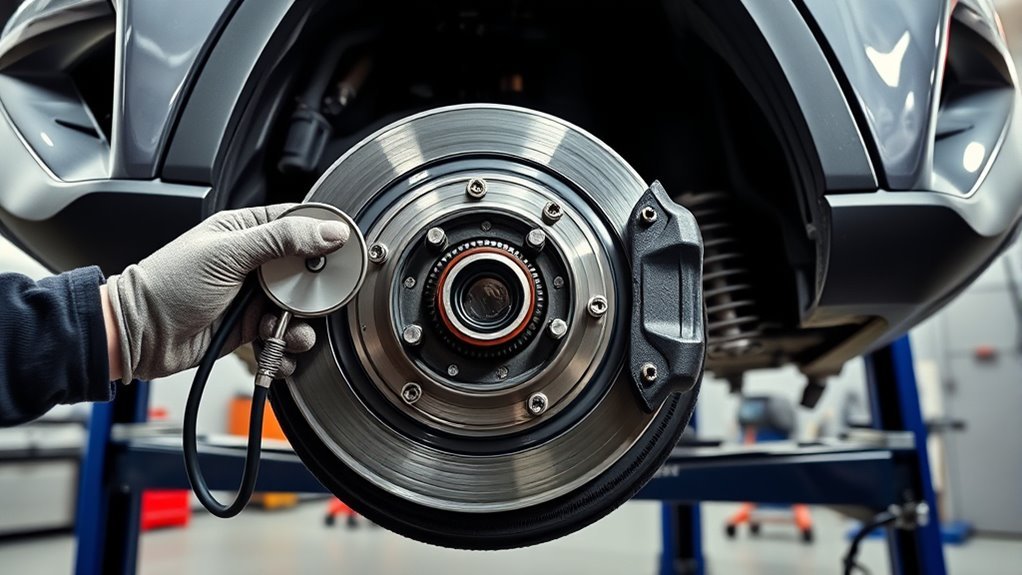
Wheel bearings and suspension parts affect how smoothly each tire rolls. When a bearing wears, the wheel may not rotate quietly under load. When suspension parts wear, the tire can bounce, skip, or wear unevenly, creating a repeated thump.
A safe diagnosis usually requires more than listening. A technician may road-test the RAV4, inspect tread patterns, lift the vehicle, check for wheel play, spin the wheel, inspect suspension joints, look for leaking struts, and compare left-to-right hub behavior.
If the thump follows road speed, think “rotating part” first. If it changes with braking, turning, or added load, the clue points beyond the tire itself.
[Products Worth Considering]

Malco tire mounting and demounting lubricant is a ready-to-use tire lube formulated to reduce friction during tire installation for passenger cars, light trucks, farm tires, and heavy-duty equipment. It provides rust-inhibiting protection to help reduce corrosion on rims and wheels, and helps support proper tire bead seating during inflation to reduce air leakage. The silicone-free, soap-free formula is whitewall safe to help prevent discoloration on whitewall tires and sensitive sidewall markings.

Accurately measure tire tread depth with a calibrated gauge marked from 0 to 1 inch in 1/32 inch increments. The color-coded bar helps you quickly identify tread condition ranges, supporting safe driving for trucks, motorcycles, automobiles, and passenger vehicles.

Steelman white tire marking crayons provide high-contrast, semi-permanent marks for repairing and inspecting tires and equipment. They write on wet or dry, smooth or coarse surfaces including rubber, metal, glass, and wood, making them ideal for puncture location and damage outlining. The lead- and zinc-free crayons resist weather and fading yet wipe away when you no longer need the marks.
Diagnosing Brake and Differential Problems
Rear thumping in a RAV4 can be confusing because tire, brake, bearing, suspension, and AWD driveline noises can overlap. Use these checks to decide what to inspect next:
- Brake clue: If the thump appears when braking, have the pads, rotors, calipers, hub surfaces, and wheel torque history checked.
- Wheel bearing clue: If the sound grows with speed and changes during turns, ask the shop to confirm bearing noise before replacing parts.
- Tire clue: If the noise changes after rotating tires front-to-rear, the tire or wheel may be the source.
- AWD driveline clue: If the noise comes from the rear under acceleration or load and tires check out, have the rear driveline and differential area inspected.
If differential service is needed, use the Toyota-specified fluid for your RAV4 model and year. Avoid adding aftermarket fluid additives unless Toyota service information or a qualified technician specifically recommends them for your exact repair.
Pro Tip: If the thump started after new tires, ask for road-force balancing. Standard balancing can miss an out-of-round tire, stiff spot, or wheel/tire assembly that only shows up under load.
[Products Worth Considering]

Replace worn wheelchair rear tires with a universal 24x1 no-flat polyurethane foam option designed to mount tightly on 24-inch rims without the tire falling off. Installation is made easier with included tools and multiple methods, including using a pry bar or softening the tire in hot water to reduce resistance. The package includes two tires plus tie ropes for convenient fitting and handling.

The Trivd Frol 1/2" air impact wrench delivers high performance torque up to 1500 ft-lbs with a twin hammer impact mechanism for strong, balanced blows. It features an ergonomic grip, compact lightweight design, and quick-stop control with 3 forward speeds up to 8000 RPM plus a reverse speed. Built for demanding automotive repair and tire shop work, the rear exhaust helps keep debris away from the surface.

This universal wheel alignment tool helps you accurately restore tire tilt angles after tire or suspension repairs using an adjustable camber gauge. It features a powerful magnetic base that firmly attaches to brake rotors for stationary, slip-free readings, improving consistency during measurement. Built from durable PC plastic, it resists wear and corrosion and is compact enough for car, truck, RV, and motorcycle alignment tasks.
When Should You Call in the Pros for Help?
Call a tire shop or mechanic if the noise is getting louder, the RAV4 vibrates, the steering wheel shakes, the brake pedal pulses, the vehicle pulls, or you see uneven tread wear. Also schedule service if the noise remains after correcting tire pressure or if you cannot safely inspect the inside edges of the tires.
| Sign of Trouble | Recommended Action | Timing |
|---|---|---|
| Bulge, exposed cords, tread separation, or flat tire | Do not continue driving; replace or tow as needed | Immediately |
| Brake pedal pulsation, grinding, or burning smell | Brake inspection | Immediately |
| Thump after tire replacement or rotation | Return to tire shop for balance, mounting, road-force, and lug-torque checks | As soon as possible |
| Noise changes while turning | Wheel bearing, tire, suspension, and CV axle inspection | Promptly |
| Cupped or uneven tire wear | Balance, alignment, suspension, and tire evaluation | Before long trips |
Preventive Maintenance Tips to Avoid Future Thumping Noises
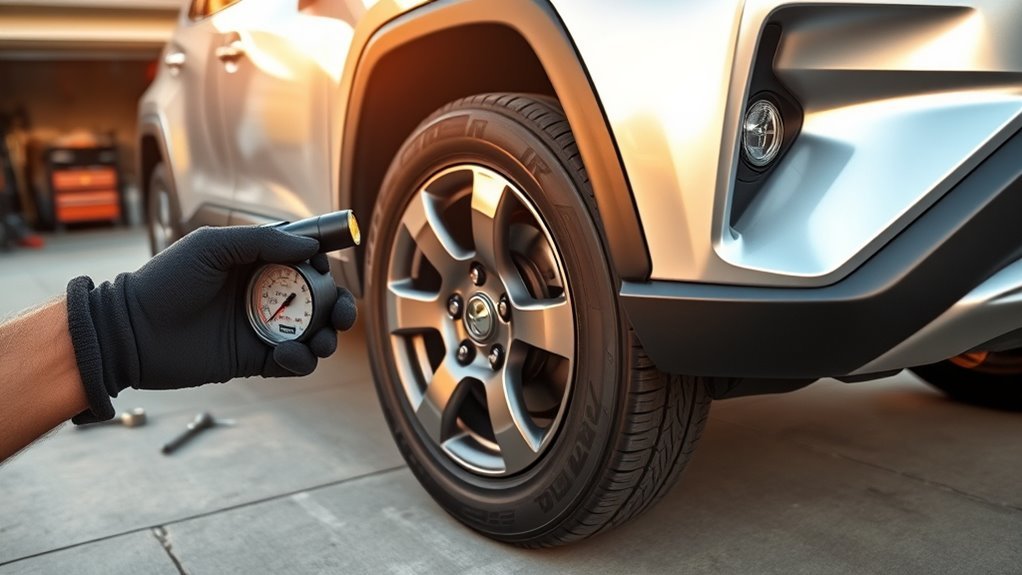
Preventing tire thumps is mostly about keeping the tire contact patch even and catching small problems early. The best routine is simple:
- Check tire pressure at least monthly and before long trips, using cold pressure and the driver-door placard.
- Inspect tread and sidewalls for uneven wear, cuts, punctures, scrapes, cracks, bumps, and bulges.
- Rotate tires according to the maintenance guide for your RAV4 model year. Toyota guidance commonly places tire rotation around 5,000 to 7,500 miles depending on driving habits and road conditions.
- Have the wheels balanced if vibration appears or after tire replacement.
- Have alignment checked if the RAV4 pulls, the steering wheel is off-center, tires wear unevenly, or the vehicle hit a curb or pothole.
- Inspect suspension and steering parts when cupping, vibration, clunking, or abnormal tire wear appears.
- Use the correct tire size, load rating, and type for your RAV4, and keep tires on the same axle matched in size, construction, and condition.
For official tire safety basics, NHTSA’s TireWise guidance is a helpful reference. For tread-depth inspection standards, see 49 CFR § 570.9.
Frequently Asked Questions
Why do my RAV4 tires make a thudding sound?
A thudding sound usually means the tire or wheel is not rolling smoothly. Common causes include uneven tread wear, tire cupping, a flat spot, low or uneven tire pressure, wheel imbalance, an out-of-round tire, or a bent wheel. If the sound changes when braking or turning, brakes, wheel bearings, suspension, or driveline parts may also be involved.
Is it safe to drive with a tire thumping noise?
It depends on the cause and severity. A mild thump from uneven wear may allow a short drive to a shop, but do not keep driving if the tire has a bulge, exposed cords, tread separation, a flat, severe vibration, wobble, grinding, brake pulsation, or a burning smell.
Can a bad wheel bearing sound like tire thumping?
Yes, but wheel bearings more often make a humming, growling, or rumbling sound that changes with speed or turning load. Cupped tires can sound similar, so a technician should confirm the source before replacing a bearing.
Why did the thumping start after new tires?
If the thump started right after new tires, the likely causes are wheel imbalance, a tire that is out of round, a stiff spot in the tire, improper seating, a bent wheel that became more noticeable, or incorrect lug torque. Return to the tire shop and ask for balance and road-force checks.
Will rotating the tires fix the thumping noise?
Rotation may reduce the noise if the tire wear is mild, but it will not erase cupping, flat spots, structural damage, or an out-of-round tire. If the noise moves to a different part of the vehicle after rotation, that is a strong clue that a tire or wheel is involved.
Conclusion
A thumping noise from your RAV4 tires is usually a sign that something is not rolling evenly. Start with tire pressure, tread depth, and visible damage, then consider balance, road-force issues, brakes, bearings, suspension, and AWD driveline parts if the basic tire checks do not reveal the cause. The safest move is to act early: a small tire wear pattern or balance problem is much easier to correct than a failed tire, damaged bearing, or brake issue.
Sources
- Toyota RAV4 Owner’s Manual — Tire inflation pressure — supports correct tire pressure and owner-manual/placard guidance.
- NHTSA Summer Driving Tips — Tires — supports cold-pressure checks, tire inspection, tread depth, and uneven-wear guidance.
- 49 CFR § 570.9 — Tires — supports the 2/32 inch minimum tread-depth inspection standard.
- Bridgestone — Tire Cupping — supports causes and remedies for cupped tire wear.
- Toyota Scheduled Maintenance Guide — supports Toyota tire-rotation guidance of 5,000 to 7,500 miles depending on driving habits and road conditions.
