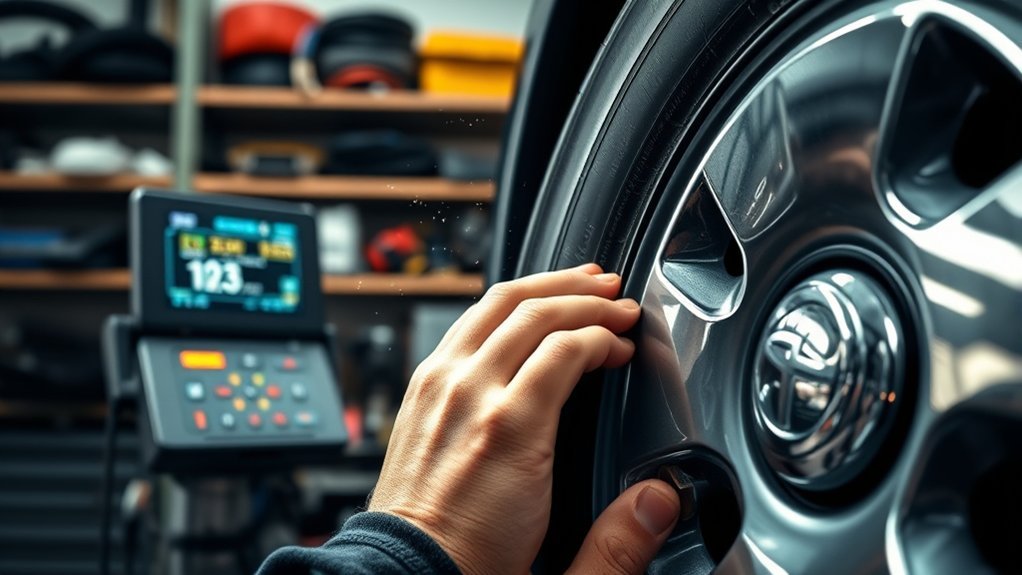
Tire vibration in a Toyota Tacoma usually starts as a small shake in the steering wheel, seat, floor, or brake pedal. The key is to notice when the vibration happens, where you feel it, and what recently changed, such as new tires, a lift kit, wheel rotation, brake work, or a hard pothole hit. Work through the checks below before replacing parts at random.
Quick Answer
To diagnose Toyota Tacoma tire vibration, first check cold tire pressure, tread condition, wheel weights, lug torque, and visible tire or wheel damage. Then note whether the shake happens at highway speed, while braking, while accelerating, or through turns. That pattern points you toward balance, alignment, brakes, suspension, bearings, or driveline parts.
Key Takeaways
- A shake that appears mostly at highway speed often points to tire balance, wheel damage, tire runout, or a missing wheel weight.
- A vibration that appears mainly while braking usually points toward brake rotors, pads, calipers, or wheel bearing play.
- A shake felt in the seat or floor can come from rear tires, axle bearings, U-joints, driveshaft issues, or differential problems.
- Lifted Tacomas and trucks with larger tires may need road-force balancing, alignment correction, and driveline angle checks.
- Do not keep driving if the vibration is severe, sudden, worsening, or paired with grinding, pulling, smoke, loose steering, or tire bulges.
At a Glance
| Time Required | 15 minutes for basic checks; 1 to 2 hours for shop diagnosis |
| Difficulty | Easy for visual checks; moderate to professional for balance, alignment, bearings, and driveline diagnosis |
| Tools Needed | Tire pressure gauge, tread depth gauge or penny, flashlight, torque wrench, jack stands, and professional balancer/alignment rack when needed |
| Cost | Basic checks are free; shop balancing, alignment, brake, bearing, or driveline repair costs vary by tire size, parts, and labor |
Warning: Stop driving and have the Tacoma inspected if the vibration is sudden, severe, or getting worse, or if you also notice a tire bulge, burning smell, grinding noise, brake pedal pulsing, strong pulling, or loose steering. Those symptoms can point to tire damage, brake failure, bearing failure, or loose suspension parts.
Identifying Symptoms of Tire Vibration in Toyota Tacoma
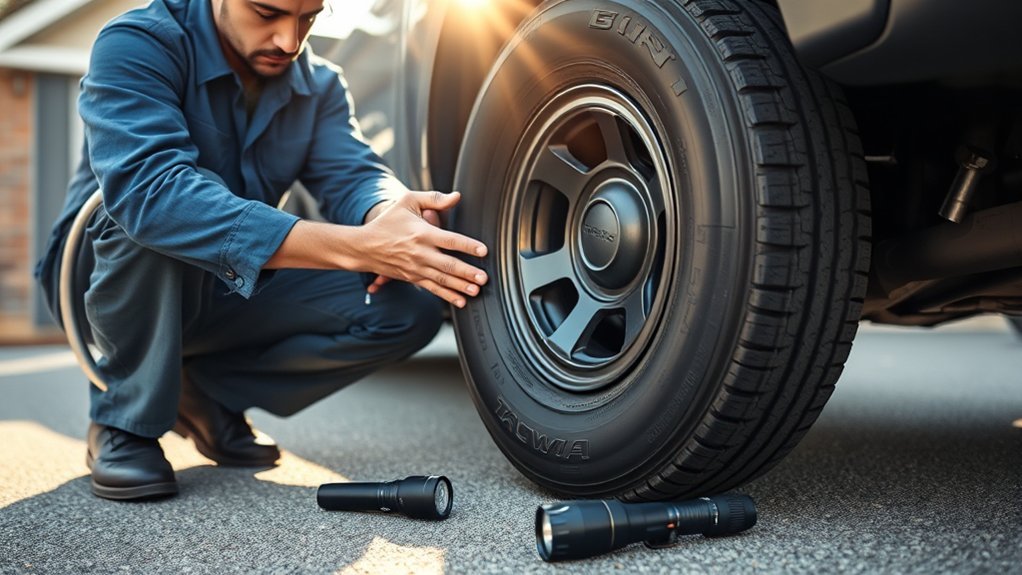
Start by paying attention to the exact driving condition that causes the shake. A Tacoma that vibrates at 20 to 35 mph may have a different issue than one that shakes only around highway speed. A steering-wheel shake often points toward the front tires, wheels, alignment, steering, or front suspension. A vibration in the seat or floor often points toward rear tires, rear axle parts, driveshaft parts, or driveline angle.
Also note what changed recently. New tires, tire rotation, wheel spacers, aftermarket wheels, suspension lifts, brake work, or a hard curb strike can all create vibration. If the vibration began right after tire service, check the basics first: tire pressure, wheel weights, lug torque, wheel centering, and whether a tire or wheel is out of round.
Match the Vibration to the Likely Cause
| When You Feel It | Most Likely Area | First Check |
| At highway speed | Tire balance, wheel damage, tire runout, missing wheel weight | Balance the tires and inspect wheels for bends or debris |
| Only while braking | Brake rotors, pads, calipers, hub or bearing play | Inspect brake rotors, pads, caliper movement, and wheel bearing play |
| During acceleration or under load | Driveshaft, U-joints, carrier bearing, axle, differential, pinion angle | Inspect driveline parts and check angles on lifted trucks |
| After a lift or larger tires | Alignment, balance, suspension geometry, driveline angle, tire load rating | Request alignment specs, road-force balance, and suspension torque check |
How to Diagnose Tire Vibration Issues
Use a simple order so you do not waste money on parts that are not causing the problem. Start with the tire and wheel checks you can see, then move to balance, alignment, suspension, brakes, bearings, and driveline components.
- Check cold tire pressure: Use the pressure listed on the Tire and Loading Information Label or the Tacoma owner manual, not the maximum pressure printed on the tire sidewall. NHTSA recommends checking all tires, including the spare, at least once a month when the tires are cold. NHTSA TireWise
- Inspect tread and sidewalls: Look for cupping, scalloping, flat spots, bulges, cracks, exposed cords, separated tread, or one tire wearing faster than the others.
- Look for missing wheel weights: A clean rectangular mark on the wheel can show where a stick-on weight fell off.
- Check for packed mud, stones, snow, or ice: Debris stuck inside a wheel can mimic an out-of-balance tire.
- Confirm lug nuts are properly tightened: This matters most after a tire rotation, brake job, wheel spacer installation, or roadside tire change. Use the correct torque specification from the owner manual or service information.
- Move the tires front to rear if safe: If the vibration moves from the steering wheel to the seat, the problem likely moved with the tire or wheel assembly.
- Balance the tires: NHTSA notes that tire balancing helps wheels rotate properly and prevents shake or vibration. NHTSA TireWise
- Ask for road-force balancing if vibration remains: Road-force balancing can catch issues a standard spin balance may miss, including tire stiffness variation, tire runout, or wheel runout.
- Check alignment: Misalignment can create uneven tire wear, pulling, and vibration. It is especially important after suspension work, lift kits, or hard impacts.
- Inspect suspension, steering, brakes, bearings, and driveline: If tire and wheel checks do not solve it, move to the mechanical systems that support the wheel assembly.
Pro Tip: Write down the speed range, road surface, braking condition, and where you feel the vibration before visiting a shop. “Shakes through the steering wheel at 60 to 70 mph after tire rotation” is much easier to diagnose than “it vibrates.”
Common Causes of Tire Vibration
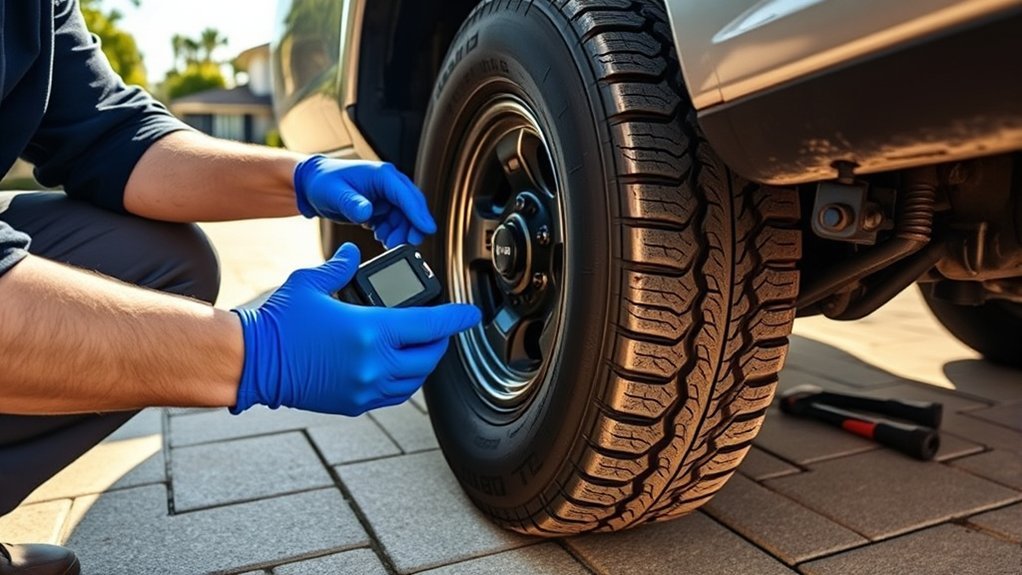
The most common causes of Toyota Tacoma tire vibration are wheel imbalance, uneven tire wear, bent wheels, tire runout, low or uneven tire pressure, alignment problems, worn suspension parts, brake rotor issues, wheel bearing play, and driveline vibration. Larger all-terrain tires can make small balance or runout problems more noticeable because they are heavier and have more rotating mass.
Do not assume every shake is a tire problem. If the steering wheel shakes mainly while braking, inspect the brake system. If the floor or seat shakes during acceleration, inspect the rear tires, axle, driveshaft, U-joints, carrier bearing, and differential. If the truck pulls or the tire shoulders wear unevenly, alignment and suspension checks should move higher on the list.
How to Check Tire Balance and Alignment
Tire balance and alignment are different problems, but both can create a rough ride. Balance deals with how evenly weight is distributed around the tire and wheel assembly. Alignment deals with the wheel angles that control how the tires meet the road.
[Products Worth Considering]

Measure tire tread depth quickly and accurately with this LUMITECO dial gauge that reads in 1/32" increments up to 14/32". The color-coded green/yellow/red zones make it easy to judge tire wear and know when replacement is needed. A rugged, compact design with a protective pouch helps keep the gauge ready for use on cars, trucks, motorcycles, and more.

These aluminum alloy tire valve stem caps with an O-ring seal help protect valve stems from corrosion while adding a clean, stylish look to your vehicle. The universal fit works across cars, trucks, motorcycles, bicycles, and more, making them an easy upgrade for everyday driving and off-road use. Installation is quick, and the included four-pack keeps all your tires dressed and protected.

Monitor tire tread wear with a smart, color-coded depth gauge that shows clear condition ranges at a glance. The bar is range marked for fast, easy readings, helping you maintain safer traction and performance. Each gauge is portable with a pocket clip, and the set includes 20 units for daily use and sharing.
Visual Inspection Techniques
A visual inspection can catch many problems before you pay for a shop diagnosis. Park on a level surface, turn the steering wheel to expose the front tread, and inspect each tire with good lighting.
- Tread pattern: Look for cupping, feathering, bald spots, or wear on one shoulder. These patterns can point to bad shocks, alignment issues, tire imbalance, or worn steering parts.
- Tire pressure: Use a reliable gauge and check pressure when the tires are cold. Correct pressure supports safety, durability, and fuel use. NHTSA TireWise
- Sidewall condition: Replace any tire with a bulge, exposed cord, deep cut, or signs of tread separation.
- Wheel condition: Check for bent rims, cracked wheels, missing wheel weights, and mud or ice packed inside the wheel barrel.
- Bounce check: Push down firmly at each corner. Excessive bouncing can point to weak shocks or struts that allow tire hop.
Professional Balancing Services
If the Tacoma vibrates mostly at speed, have the tire and wheel assemblies professionally balanced. A standard dynamic balance corrects weight imbalance. A road-force balance uses a diagnostic load roller to help find vibration problems that may come from tire stiffness, wheel runout, or tire-to-wheel matching.
| Service Type | Purpose | Best Used When |
| Dynamic Balancing | Corrects uneven tire and wheel weight | Vibration appears at road speed or after new tire installation |
| Road-Force Balancing | Measures tire and wheel behavior under load | Standard balancing does not remove the vibration |
| Alignment Check | Measures and corrects wheel angles | Truck pulls, tires wear unevenly, or suspension was modified |
| Runout Check | Checks whether the tire or wheel is out of round | Balance numbers look good, but vibration remains |
Inspecting Suspension Components for Wear
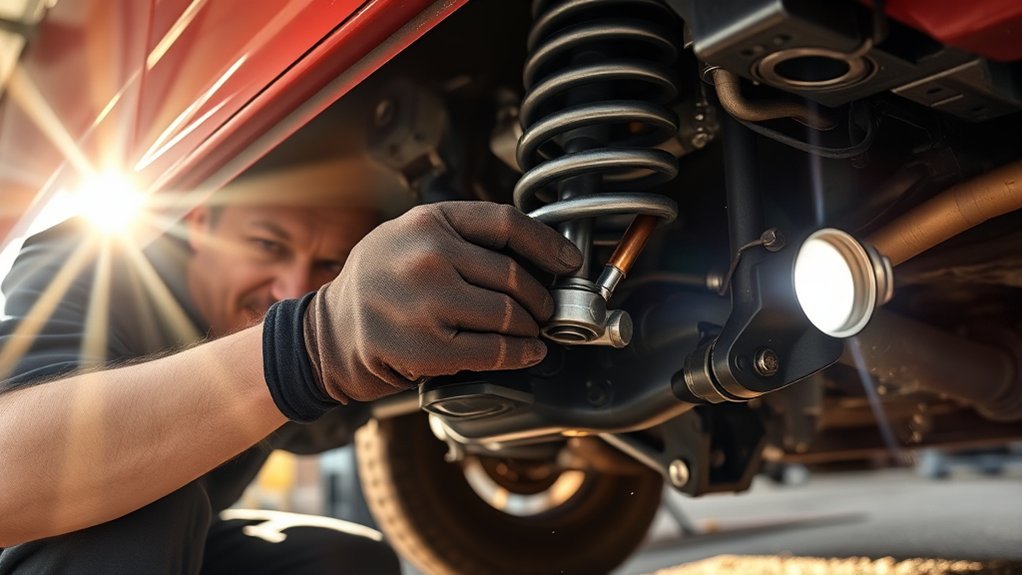
Worn suspension or steering parts can let the tire move instead of tracking smoothly. That movement can feel like tire vibration even when the tires are properly balanced. Inspect suspension parts after you rule out tire pressure, visible tire damage, wheel weights, and balance.
[Products Worth Considering]

The SAFELIFE dial tire tread depth gauge measures tread depth in 1/32 inch increments with clear, easy-to-read 2-inch dial face. Color zones using a traffic light system help you quickly judge whether tread is low, marginal, or ample for safer driving. Built with a durable zinc cast body and a metal detect probe for precise, comfortable use across cars, motorcycles, trucks, and buses.

Accurately measure tire tread depth with a calibrated gauge marked from 0 to 1 inch in 1/32 inch increments. The color-coded bar helps you quickly identify tread condition ranges, supporting safe driving for trucks, motorcycles, automobiles, and passenger vehicles.

This manual duck head tire changer kit makes tire installation and removal simpler by letting you embed the duck head into the tire with applied pressure. The integrated design and durable steel construction help reduce friction and improve efficiency and safety during use. Suitable for 16–21 inch wheels, it’s convenient for cars, trucks, SUVs, and ATV tires, with 24-hour after-sales support.
Common Suspension Issues
Focus on the parts that locate the wheel and control movement. Worn or loose parts can create shaking, clunking, pulling, uneven tire wear, and poor steering feel.
- Ball joints: Check for play, torn boots, grease loss, or clunking over bumps.
- Control arms and bushings: Look for cracked rubber, shifted bushings, or loose mounting hardware.
- Tie rod ends: Check for looseness, torn boots, and steering play.
- Shocks and struts: Look for leaks, weak damping, tire cupping, or excessive bounce.
- Leaf springs and U-bolts: Inspect for sagging, broken leaves, shifted axle position, or loose hardware, especially on lifted Tacomas.
Signs of Worn Components
Common signs include clunks over bumps, wandering steering, uneven tire wear, steering-wheel play, vibration after hitting a bump, or a shake that changes when the truck is loaded. If the Tacoma has a lift, oversized tires, wheel spacers, or aftermarket control arms, also check that every fastener was tightened at the correct ride height and torque.
Impact on Vehicle Performance
Suspension and steering problems do more than make the ride uncomfortable. They can shorten tire life, reduce braking stability, and make the truck harder to control during emergency maneuvers. NHTSA also notes that tire maintenance items such as rotation, balance, and alignment help tires last longer and support vehicle safety. NHTSA TireWise
Diagnosing Brake Issues That Cause Vibration
If the vibration happens mainly when you press the brake pedal, focus on the braking system before blaming the tires. A pulsing brake pedal or shaking steering wheel during braking can come from rotor thickness variation, rotor runout, uneven pad deposits, sticking calipers, loose hardware, or wheel bearing play.
Inspect the pads for uneven wear, glazing, or contamination. Check the rotors for scoring, heat spots, rust buildup, and runout. Make sure caliper slide pins move freely and the caliper releases properly. If one wheel is much hotter than the others after a short drive, a sticking caliper may be dragging.
Note: Brake vibration and tire vibration can overlap. If the truck shakes at highway speed and gets worse when braking, you may have both a tire/wheel issue and a brake issue.
[Products Worth Considering]

This spare tire tool kit is designed for the 2004 to 2018 Ford F-150 to help you loosen and tighten wheel lug nuts and manage the spare tire and provided jack functions from underneath the vehicle. It includes the lug nut wrench and extension pieces plus a convenient storage carrying case for organized transport. The jack itself is not included.

This 1/2-inch drive breaker bar delivers powerful leverage for loosening and tightening stubborn lug nuts and automotive fasteners. The 180-degree flex head helps you reach tight spaces at the angle you need, making tire and brake jobs easier. A spring-loaded ball detent design holds 1/2-inch sockets securely while the chrome-moly head provides durable strength for everyday use.

ETENWOLF T300 is a calibrated digital tire pressure gauge for accurate readings from 3 to 200 PSI across light and heavy-duty vehicles. It includes thermal compensation for reliable performance in extreme cold or heat, with an auto shut-off to extend battery life and an LED for easier reading. The sturdy design supports rugged everyday use, making it ideal for pickups, RVs, and industrial applications.
Why You Should Road-Force Balance Your Tires
A standard balance can show that a tire and wheel assembly has the correct weight placement, but the truck may still vibrate if the tire is stiff in one area, the wheel has runout, or the tire is not matched well to the wheel. Road-force balancing is useful when the vibration remains after a normal balance.
- It tests the assembly under load: A load roller presses against the tire to simulate how it behaves on the road.
- It can find tire or wheel runout: An out-of-round tire or bent wheel can vibrate even when balance weights are correct.
- It helps with larger tires: Heavy all-terrain or mud-terrain tires can be more sensitive to small balance or uniformity issues.
- It can guide tire-to-wheel matching: Some shops can rotate the tire on the rim to reduce the force variation.
If your Tacoma has 33-inch or larger tires, aftermarket wheels, or a lift kit, ask the shop whether it can perform road-force balancing and provide the road-force numbers for each assembly.
Checking Alignment After Lifts, Larger Tires, or Hard Impacts
Alignment problems do not always create an obvious vibration, but they can create tire wear patterns that eventually cause vibration. A Tacoma should get an alignment check after suspension work, a lift kit, new control arms, hard curb or pothole impact, uneven tire wear, or a steering wheel that no longer sits straight.
Use the correct tire size and load rating for your truck. NHTSA recommends using the owner manual or Tire and Loading Information Label on the driver-side door edge or post to confirm the right tire size and pressure. NHTSA TireWise Toyota also provides owner manuals and warranty information through its official Toyota Manuals and Warranties page.
Signs of Rear End Bearing Issues
Rear-end vibration can come from more than the tires. If you feel the shake through the seat or floor, listen for humming, growling, grinding, or whining that changes with speed. Rear wheel bearings, axle bearings, differential bearings, U-joints, and driveshaft parts can all create vibration or noise.
A bad wheel bearing may get louder as speed increases and may change pitch when the truck’s weight shifts during a lane change. A worn U-joint may create a clunk when shifting from park to drive or a vibration under acceleration. Differential issues may add whining or grinding from the rear axle area. If the vibration persists after tire balancing and alignment, have the rear axle and driveline inspected before the damage spreads.
What to Check on Lifted or Modified Tacomas
Lift kits, larger tires, wheel spacers, and aftermarket wheels can make vibration diagnosis harder. The parts may be safe when installed correctly, but they change tire weight, wheel offset, suspension angles, and driveline angles.
- Wheel centering: Make sure aftermarket wheels are hub-centric or use the correct centering rings when required.
- Wheel spacers: Check spacer torque, hardware quality, and proper seating.
- Pinion angle: Rear driveline vibration under acceleration can appear after lift changes.
- Control arms: Aftermarket upper control arms may need correct alignment settings and torque checks.
- Tire load rating: Heavier tires can change ride feel and may need careful pressure tuning within safe limits.
- Road-force numbers: Oversized tires may balance on a machine but still produce road-force vibration.
Frequently Asked Questions
How do I tell which tire is causing vibration?
Start by checking pressure, tread wear, sidewall condition, wheel weights, and wheel damage on all four tires. If the vibration is felt mostly in the steering wheel, suspect the front tire and wheel assemblies first. If it is felt mostly in the seat or floor, suspect the rear assemblies first. Rotating the tires front to rear can also show whether the vibration moves with a specific tire.
What is the worst year for Tacomas for vibration problems?
Do not rely on one “worst year” label for vibration diagnosis. Tire vibration depends more on tire condition, wheel balance, alignment, suspension wear, brake condition, driveline condition, modifications, and service history. For any used Tacoma, check the VIN for open recalls or service campaigns through the official Toyota recall lookup and inspect the frame, suspension, and tire wear before buying.
How do I diagnose wheel vibration on a Tacoma?
Note the speed and driving condition first. A highway-speed shake often points to balance, tire runout, or wheel damage. A braking-only shake points toward brake rotors, pads, calipers, or bearing play. A shake under acceleration can point toward U-joints, driveshaft, carrier bearing, axle, differential, or driveline angle.
How can I tell if a Tacoma wheel bearing is bad?
Common signs include humming, growling, grinding, looseness at the wheel, vibration that changes with speed, and noise that changes when vehicle weight shifts during turns. Because bearing failure can affect wheel stability, have the truck inspected promptly if you suspect bearing play or hear grinding.
Can tire pressure cause Tacoma vibration?
Yes. Underinflation, overinflation, or uneven pressure between tires can change how the truck rides and handles. Check pressure when the tires are cold and use the pressure listed on the Tire and Loading Information Label or owner manual.
Why does my Tacoma still vibrate after balancing?
A tire can be balanced by weight and still vibrate because of tire runout, wheel runout, belt separation, a bent wheel, poor wheel centering, worn suspension parts, brake issues, bearing play, or driveline problems. Ask for road-force balancing and a runout check if standard balancing does not fix it.
Conclusion
Diagnosing Toyota Tacoma tire vibration is easier when you follow the symptom instead of guessing. Start with cold tire pressure, tread condition, wheel weights, lug torque, and visible tire or wheel damage. Then use the driving condition to narrow the cause: highway-speed shake points toward balance or runout, braking shake points toward brakes, and acceleration vibration points toward driveline or rear axle parts.
If basic checks do not solve the issue, have a qualified technician inspect balance, road-force variation, alignment, suspension, brakes, bearings, and driveline components. A smooth Tacoma should feel stable through the steering wheel, seat, and floor, so do not ignore a vibration that is new, severe, or getting worse.
Sources
- NHTSA TireWise — tire pressure, tread, balance, alignment, rotation, tire size, TPMS, and tire safety guidance
- Toyota Manuals and Warranties — official owner manual lookup for Toyota vehicles
- Toyota Safety Recalls & Service Campaigns Lookup — VIN-based Toyota recall and service campaign checks
- Hunter Engineering Road Force Wheel Balancers — road-force balancing and diagnostic load roller context