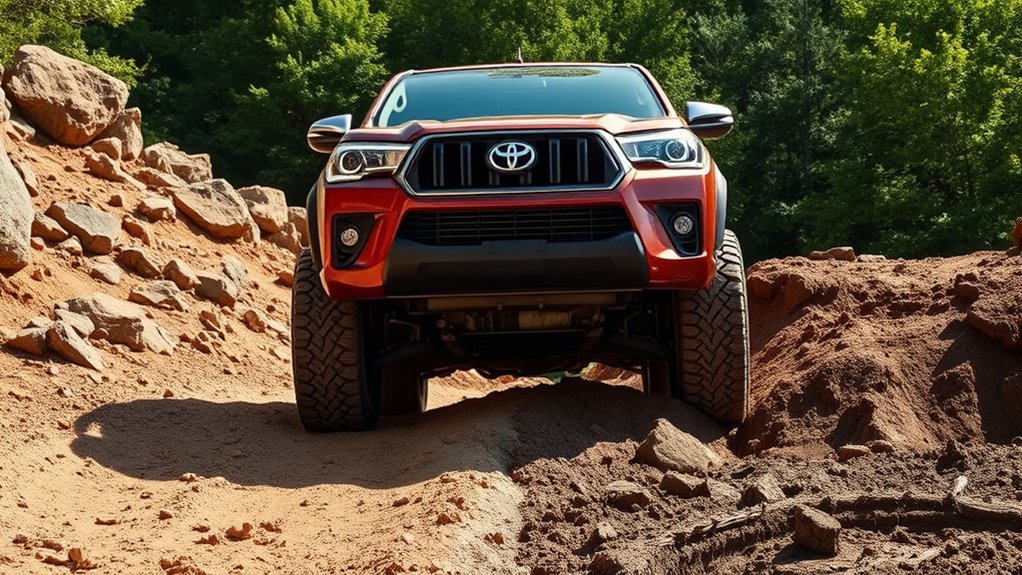
Choosing between All-Terrain (A/T) and Mud-Terrain (M/T) tires for your Toyota Hilux comes down to where you drive most, not which tire looks tougher. A/T tires suit mixed highway, gravel, rain, and light trail use. M/T tires make more sense when deep mud, ruts, rocks, and low-speed off-road traction matter more than quiet road manners.
Quick Answer
For most Toyota Hilux drivers, A/T tires are the better everyday choice because they balance road comfort, wet-road control, gravel traction, and tread life. Choose M/T tires only if you regularly drive through deep mud, rocky tracks, or rutted trails and can accept more noise, faster wear, and lower fuel efficiency.
Key Takeaways
- Pick A/T tires if your Hilux spends most of its time on pavement, highways, gravel roads, job sites, sand tracks, or light trails.
- Pick M/T tires if deep mud, loose clay, rocky climbs, or rutted off-road tracks are part of your regular driving.
- Do not assume every A/T tire is snow-rated. Look for the 3PMSF symbol if you need tested severe-snow performance.
- Before upsizing, check your Hilux tire placard, owner’s manual, load index, speed rating, rim width, offset, spare tire fit, and local modification rules.
- Tire pressure, rotation, alignment, and tread-depth checks matter as much as tire type for safety and tire life.
A/T vs M/T Tires: Quick Comparison
| Category | A/T Tires | M/T Tires |
| Best Use | Daily driving, gravel, mild trails, touring, mixed work use | Deep mud, rocky climbs, ruts, loose clay, slow technical tracks |
| Road Comfort | Usually quieter and smoother | Usually louder and firmer |
| Mud Traction | Good for light mud, but can clog in thick mud | Stronger self-cleaning tread for deep mud |
| Tread Life | Often better on pavement and mixed use | Often wears faster on highway driving |
| Fuel Economy | Usually easier on fuel than aggressive M/T tires | Can reduce efficiency due to weight and tread drag |
| Best Hilux Driver | Commuter, tourer, tradesperson, weekend camper | Serious off-roader who accepts road compromises |
[Products Worth Considering]

Measure tire tread depth quickly and accurately with this LUMITECO dial gauge that reads in 1/32" increments up to 14/32". The color-coded green/yellow/red zones make it easy to judge tire wear and know when replacement is needed. A rugged, compact design with a protective pouch helps keep the gauge ready for use on cars, trucks, motorcycles, and more.
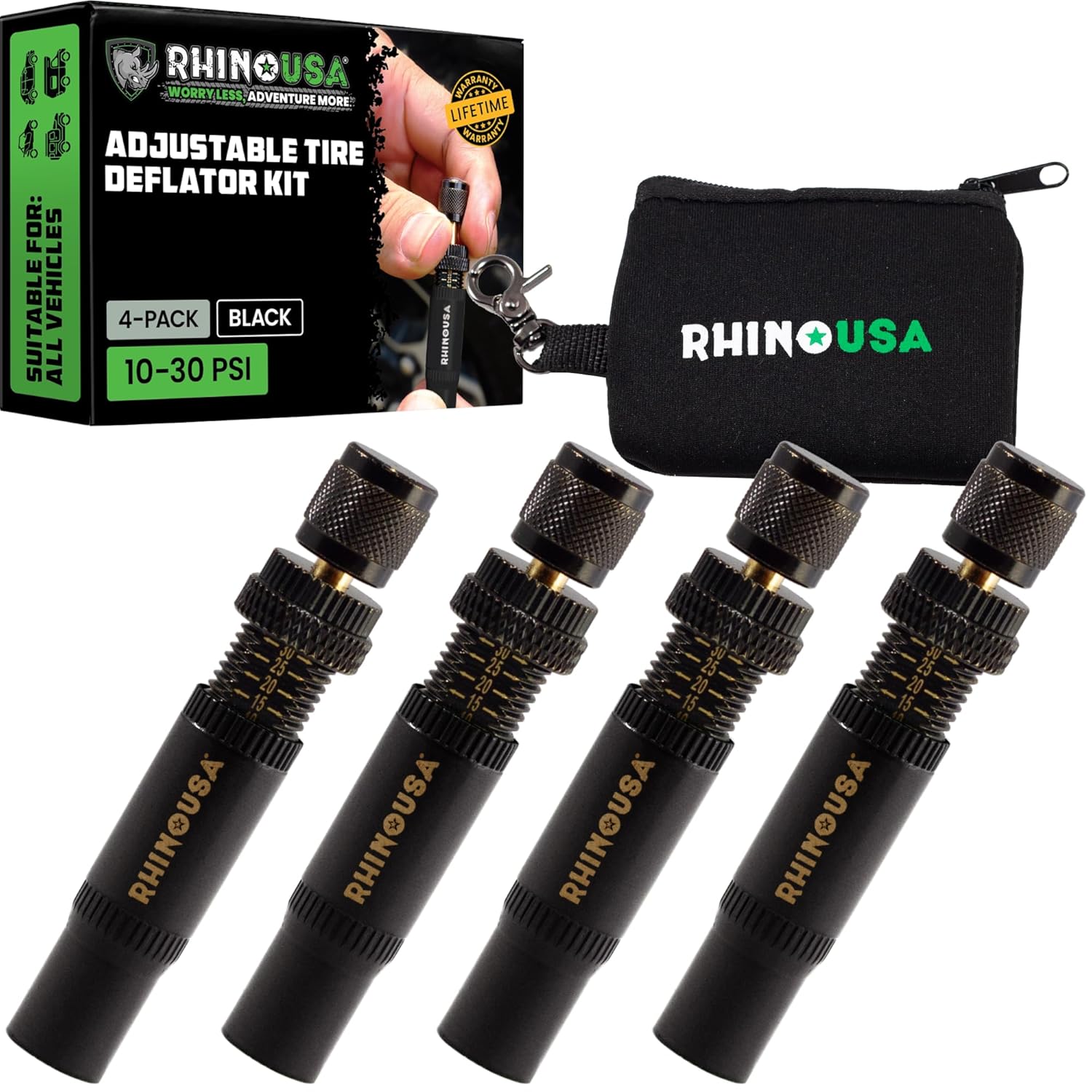
Use the Rhino USA adjustable tire deflators to air down all four tires at once by screwing one deflator onto each valve stem, letting you step away while the tires reach your preset pressure. Each deflator independently adjusts across a 10–30 PSI range with laser-etched indicators for quick setup and verification, making it ideal for beach, sand, and rocky off-road trails.

Monitor tire tread wear with a smart, color-coded depth gauge that shows clear condition ranges at a glance. The bar is range marked for fast, easy readings, helping you maintain safer traction and performance. Each gauge is portable with a pocket clip, and the set includes 20 units for daily use and sharing.
Understanding A/T Tires: Features and Benefits
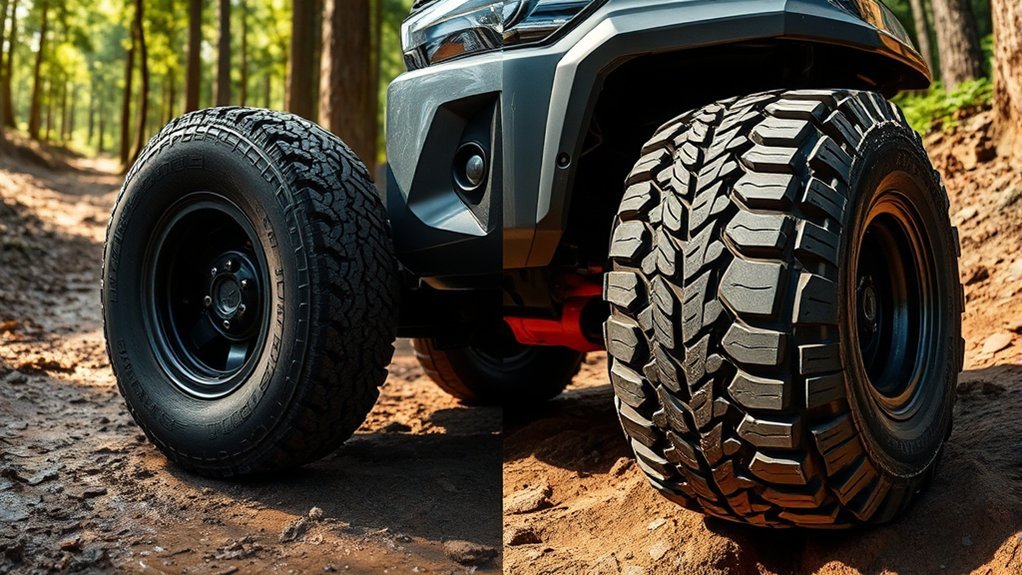
All-Terrain tires are built as a compromise between highway tires and aggressive off-road tires. On a Hilux, that makes them a strong fit for drivers who commute during the week, tow or carry gear, and still want dependable grip on gravel roads, campsites, farm tracks, sand, and mild trails.
A/T tires usually use a less aggressive tread than M/T tires. The blocks are spaced enough to bite into loose surfaces, but not so widely that the tire becomes harsh and loud on pavement. This helps your Hilux stay more comfortable on long drives while still giving you more off-road ability than a highway-terrain tire.
Some A/T tires also carry the 3-Peak Mountain Snowflake (3PMSF) symbol, which means that specific model has met a severe-snow traction test. Do not assume every A/T tire has this marking. If you drive in snow or icy mountain areas, check the tire sidewall and the manufacturer’s specs before buying.
Pro Tip: If your Hilux spends more than half its time on paved roads, start your search with a quality A/T tire. It usually gives you the best mix of grip, comfort, tread life, and everyday usability.
Exploring M/T Tires: What Sets Them Apart?
Mud-Terrain tires are designed for harder off-road work. They use larger tread blocks, wider voids, and stronger shoulder lugs to dig into mud, loose soil, ruts, and rocky trails. That open tread pattern helps the tire clear mud as it rotates, which is why M/T tires can outperform A/T tires in thick mud.
- Aggressive tread blocks: Large lugs help the tire bite into mud, rocks, and soft ground.
- Open voids: Wider tread gaps help shed mud and debris better than most A/T tires.
- Stronger shoulders: Many M/T tires use reinforced sidewall and shoulder designs for rough terrain.
- Low-speed grip: M/T tires are useful when traction matters more than noise, comfort, and fuel economy.
The trade-off is road behavior. M/T tires often create more highway noise, more vibration, and more rolling resistance. They can also wear faster if you drive mostly on pavement. For a Hilux that doubles as a family vehicle or daily work truck, those compromises can become tiring.
[Products Worth Considering]

Keep your tires properly inflated with this analog VONDIOR tire pressure gauge, designed for fast, easy readings without batteries. The swiveling, two-axis hose and large glow dial help you measure at any tire angle with instant visibility. Built with a protective rubber shield, it supports durable, low-maintenance use for cars and trucks.

The SAFELIFE dial tire tread depth gauge measures tread depth in 1/32 inch increments with clear, easy-to-read 2-inch dial face. Color zones using a traffic light system help you quickly judge whether tread is low, marginal, or ample for safer driving. Built with a durable zinc cast body and a metal detect probe for precise, comfortable use across cars, motorcycles, trucks, and buses.

Upgrade your 2024-2026 Tesla Model 3 Highland with REEVAA all-weather mud flaps designed for seamless fit along the original body lines. The set of four delivers strong splash protection against mud, gravel, and road debris while using OEM-grade durable materials. Installation is non-destructive with original hole positions and snap-in clips, and the aerodynamic design helps minimize impact on efficiency.
Comparing A/T and M/T Tires: Performance, Durability, and Cost
A/T tires are usually the smarter value for mixed driving because they handle more situations well. They are not the strongest tire in deep mud, but they perform well enough for dirt roads, gravel, wet pavement, camping tracks, and moderate off-road use. They also tend to stay quieter and more stable at highway speed.
M/T tires are more specialized. They make sense when your Hilux regularly faces mud holes, loose clay, rocky tracks, or steep rutted climbs. In those conditions, the aggressive tread can make the difference between moving forward and getting stuck. However, that same tread can feel noisy and less refined on long road trips.
Durability depends on the exact tire, construction, inflation pressure, load, rotation schedule, alignment, and terrain. Instead of trusting one generic mileage number, compare tire warranties, treadwear ratings, reviews from Hilux owners with similar driving habits, and the tire maker’s load and inflation data.
[Products Worth Considering]

Replace worn or missing TPMS sensors with a pre-programmed 4-pack designed for compatible GM vehicles. These 315MHz sensors provide real-time tire pressure monitoring and alert you if pressure is too high, too low, or if a rapid air leak occurs. Most installations are ready with minimal relearn effort after mounting, helping improve safety and driving confidence.

This ALL-TOP auto-stop tire deflator valve kit lets you air down off-road tires quickly without watching pressure, automatically stopping when your preset PSI is reached. Each valve is individually calibrated for reliable performance with an acceptable +/- 2 PSI tolerance. The adjustable deflator range covers 10 to 30 PSI and includes four valves plus valve caps and a zipper pouch for easy setup on trucks, SUVs, RVs, UTVs, and powersports.
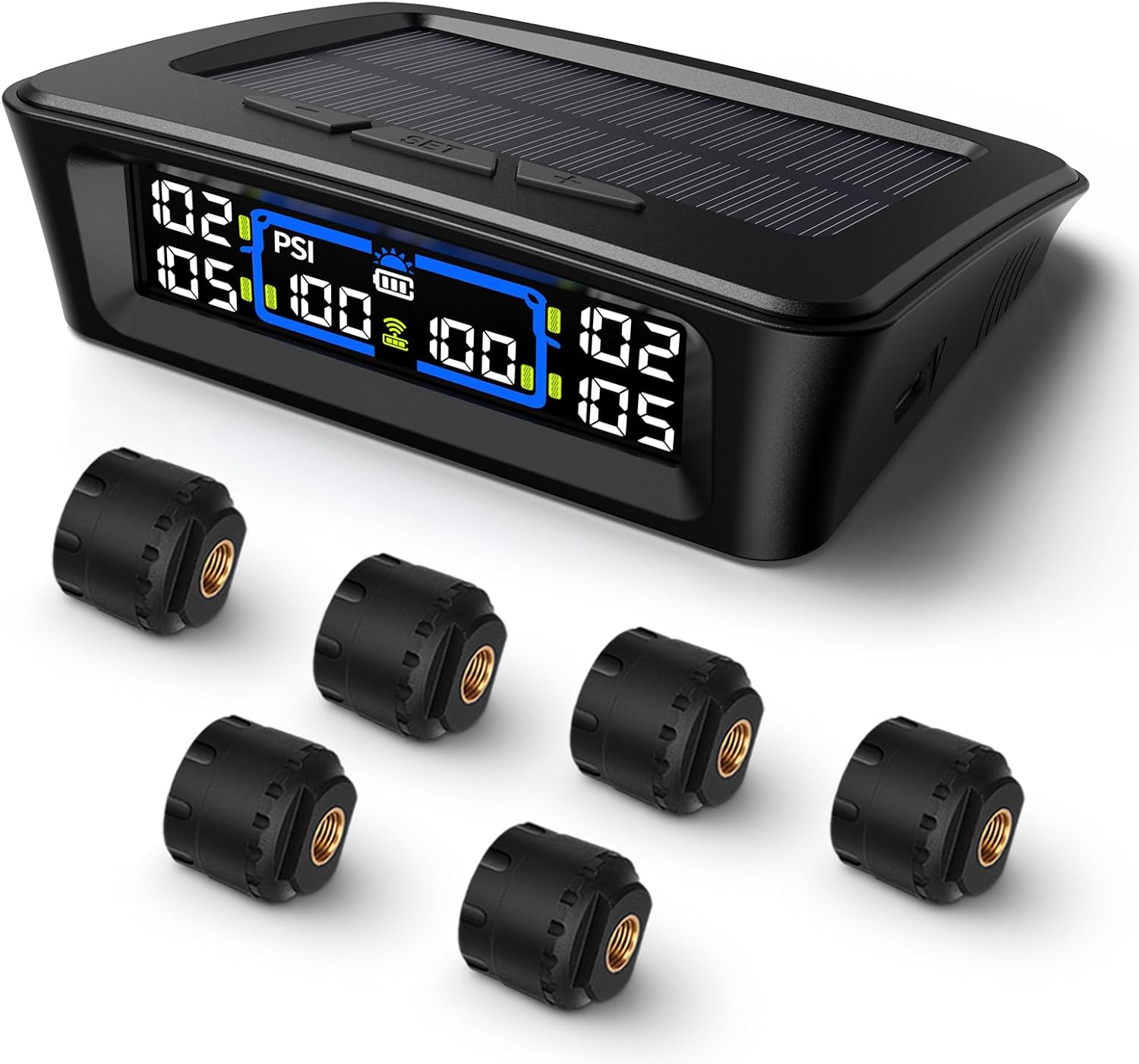
The Tymate TM12 RV TPMS delivers real-time tire pressure and temperature monitoring with a stable 433Hz display for safer long-distance driving. It supports simultaneous monitoring across vehicle and trailer zones, includes six alarm modes for pressure, temperature, leakage, battery, and signal loss, and features easy DIY installation with auto calibration. Power is supplied via USB-C charging or solar recharging, with a wide 0–144 PSI range and up to 50 ft signal coverage for RVs and towable trailers.
Deciding Between A/T and M/T Tires: What You Need to Know
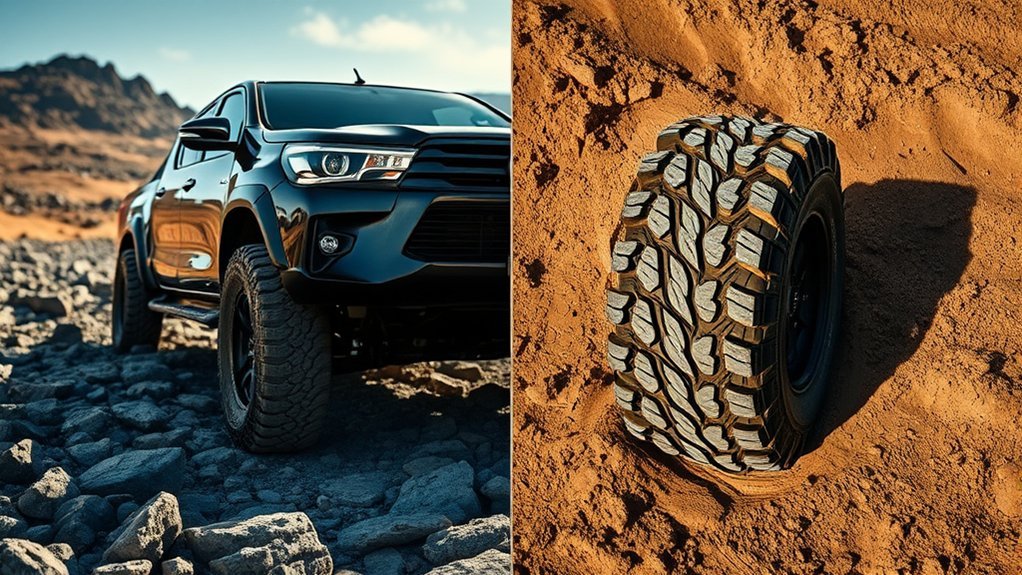
Start with your real driving split. A Hilux that spends 80% of its time on highways and town roads does not need the same tire as one that spends every weekend in mud or rocky terrain. Your best tire choice should match your usual roads, not the most extreme trip you might take once a year.
Choose A/T Tires If
- You drive mostly on pavement, gravel, hard-packed dirt, or mild trails.
- You want better road comfort for commuting, touring, or family use.
- You tow, carry work gear, or travel long distances and want predictable handling.
- You need a tire that can handle changing weather without sounding too aggressive on the highway.
- You want longer tread life under normal mixed driving.
Choose M/T Tires If
- You regularly drive through deep mud, clay, ruts, or rocky tracks.
- You are willing to accept more road noise and a firmer ride.
- You air down off-road and understand how to reinflate before returning to pavement.
- You prioritize maximum off-road grip over highway comfort and fuel economy.
- You inspect your tires often for cuts, chipped lugs, and uneven wear.
Warning: Never choose a tire only by diameter or appearance. A tire that is too large, too heavy, incorrectly load-rated, or poorly matched to the rim can affect braking, steering, speedometer accuracy, clearance, insurance, and road legality.
Ideal Tire Size for Your Hilux
The ideal tire size for your Toyota Hilux depends on the model year, market, trim, wheel size, suspension, load needs, and local modification rules. Your safest starting point is the tire placard on the vehicle and the owner’s manual. These show the approved factory tire size, cold tire pressure, and load information for your specific vehicle.
As a current example, Toyota Australia’s June 2026 HiLux specification sheet lists 265/65R17 tires on many 17-inch-wheel variants and 265/60R18 tires on many 18-inch-wheel variants. Other markets and older Hilux models can differ, so use those sizes as examples, not universal rules.
Recommended Tire Dimensions
For many Hilux owners, staying close to the factory overall diameter is the cleanest and safest option. It helps protect speedometer accuracy, braking feel, electronic stability systems, gearing, and clearance. A mild size change may work, but you should confirm the diameter difference, load index, speed rating, rim width, and body clearance before installing anything.
A popular aftermarket size such as 285/75R16 is often discussed because it is roughly a 33-inch tire, but it is not a simple bolt-on answer for every Hilux. Depending on your model and setup, that size may need suspension lift, trimming, offset changes, alignment correction, and engineering approval.
- Check the tire placard first: Use it as your baseline for size, pressure, and load requirements.
- Match or exceed load rating: A Hilux often carries tools, passengers, camping gear, or towing load, so do not downrate the tire.
- Confirm rim width: The wheel must match the tire maker’s approved rim-width range.
- Check full steering lock: Turn both ways and inspect for rubbing at the guards, mud flaps, chassis, and suspension.
- Remember the spare: Your spare tire should match the rolling diameter closely enough for safe emergency use.
Lift Kit Considerations
A lift kit can create more clearance for larger tires, but it does not solve every fitment problem. Larger tires can still rub during compression, turning, reversing, or off-road articulation. Wheel offset, caster, guard shape, mud flaps, bullbars, and suspension travel all matter.
If you lift your Hilux, have the alignment checked after installation. Poor alignment can cause uneven tire wear, steering pull, vibration, and reduced stability. Also confirm that brake lines, stability-control systems, headlights, and suspension geometry remain within safe limits.
Legal Modification Guidelines
Tire and suspension modification rules vary by country, state, province, and insurer. Before fitting larger A/T or M/T tires, check your local road authority rules and ask whether your setup needs inspection, engineering approval, or documentation. This is especially important if you change tire diameter, track width, wheel offset, suspension height, or vehicle weight rating.
Keep records of your tire size, load rating, speed rating, wheel specs, alignment, and suspension parts. If you use the Hilux for towing, work, or long-distance travel, this paperwork can help with insurance, warranty discussions, and future tire replacements.
Choosing the Right Rims for Off-Road Fun
The right rim matters as much as the tire. A strong rim with the correct diameter, width, offset, load rating, and hub fitment helps your Hilux handle properly on and off the road. The wrong rim can create rubbing, extra bearing stress, steering changes, or poor bead seating.
Steel rims are popular for off-road use because they are tough, widely available, and often cheaper to replace. Alloy rims are lighter and can improve appearance, but they may cost more to repair or replace after heavy trail damage. For most touring Hilux builds, either material can work if the wheel is properly rated and fitted.
Beadlock-style wheels can help in specialized low-pressure off-road use, but road legality varies. Do not fit them for public-road use unless they are approved in your area and installed correctly.
| Rim Factor | Why It Matters |
| Width | Must match the tire maker’s approved rim-width range. |
| Offset | Affects guard clearance, steering feel, bearing load, and track width. |
| Load Rating | Important for towing, work loads, touring gear, and off-road impacts. |
| Material | Steel is usually tougher and cheaper; alloy is usually lighter and cleaner-looking. |
User Experiences With A/T and M/T Tires
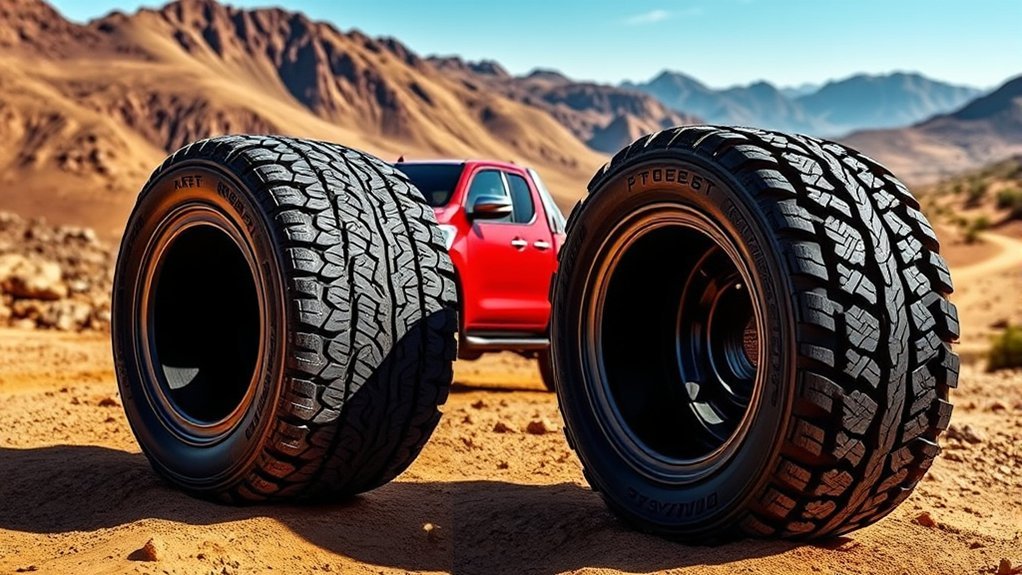
Hilux owners often describe A/T tires as the best all-rounder. They are easier to live with during commuting, highway touring, rain, and gravel-road driving. Drivers who use their Hilux for work or family travel usually appreciate the quieter ride and more predictable road behavior.
M/T tire users usually praise the off-road grip first. In thick mud, ruts, and loose climbs, M/T tires can clear debris and bite harder than most A/T tires. The downside is that the same aggressive tread can become loud and rough on pavement, especially as the tire wears.
Off-Road Performance Insights
In light to moderate off-road conditions, a good A/T tire is often enough. Gravel, dry dirt, fire roads, sand tracks, and camping routes usually do not require a full M/T tire. A/T tires also tend to perform better when the route includes long paved sections between trails.
M/T tires pull ahead when the surface gets sticky, deep, and uneven. If you often drive through mud holes, wet clay, rocky ledges, or rutted forest tracks, the extra tread void and shoulder bite can help your Hilux keep moving.
On-Road Comfort Levels
A/T tires usually feel smoother at highway speed because their tread pattern is less open. They also tend to produce less road noise, which matters on long trips. If you drive several hours to reach the trail, A/T tires can make the whole journey more comfortable.
M/T tires can drone, hum, or vibrate more, especially as they wear unevenly. Some drivers accept this because they need off-road grip. Others regret choosing M/T tires when most of their driving happens on sealed roads.
Tread Life Comparisons
A/T tires often last longer in mixed road use because the tread blocks are less aggressive and usually wear more evenly on pavement. M/T tires can wear faster if they spend most of their life on highways, especially if tire pressure, rotation, and alignment are neglected.
Do not judge tread life by category alone. Compare the specific tire model, warranty, compound, load rating, and owner feedback. Then maintain the tires correctly so your Hilux gets the best life from them.
Maintenance Tips: How to Extend the Life of Your Tires
Good tire maintenance protects your Hilux, your passengers, and your wallet. The National Highway Traffic Safety Administration recommends checking tire pressure at least once a month when the tires are cold, including the spare. Use the pressure shown on your vehicle’s tire placard or owner’s manual, not the maximum pressure printed on the tire sidewall.
Check tread depth at the same time. NHTSA says tires should be replaced when tread depth reaches 2/32 of an inch. For off-road driving, you may want more tread depth than the legal minimum because mud, gravel, rain, and loose surfaces demand more grip.
- Check pressure monthly: Measure cold pressure before driving or after the vehicle has been parked for several hours.
- Rotate regularly: Follow your Hilux owner’s manual. If the manufacturer recommends it, NHTSA notes that many tires are rotated every 5,000 to 8,000 miles.
- Inspect after trails: Look for cuts, sidewall bruises, embedded rocks, punctures, chipped lugs, and bead damage.
- Clean mud from the tread: Packed mud can hide damage and throw the tire out of balance.
- Align after impacts: Get an alignment after hard off-road hits, suspension work, or uneven wear.
- Reinflate after airing down: Low pressure can help off-road traction, but it can overheat or damage tires on the highway.
Note: Tire Pressure Monitoring Systems are helpful, but they do not replace manual checks. Use a quality tire-pressure gauge and check the spare before long trips.
Making the Final Decision: A/T vs M/T Tires for Your Adventures
For most Toyota Hilux owners, A/T tires are the best first choice. They handle daily driving, towing, wet roads, gravel, campsites, and mild trails without the noise and wear penalties of M/T tires. They also make sense if your Hilux is a family vehicle, work truck, or long-distance tourer.
M/T tires are the right choice when your off-road routes are serious enough to justify the trade-offs. If you regularly drive through deep mud, slick clay, ruts, or rock trails, M/T tires can give your Hilux the extra bite it needs. Just be honest about how often you really use that capability.
Before buying either type, confirm the correct size, load rating, speed rating, rim fitment, and inflation guidance. If you plan to upsize, lift, tow, or carry heavy gear, speak with a qualified tire shop or 4×4 suspension specialist.
Frequently Asked Questions
Should I get mud tires or all-terrain tires for my Hilux?
Choose all-terrain tires if you drive mostly on pavement, gravel, and light trails. Choose mud-terrain tires if you regularly drive in deep mud, ruts, rocky tracks, or loose off-road conditions where maximum traction matters more than road comfort.
Is the Toyota Hilux good for off-road driving?
Yes, a 4×4 Toyota Hilux can be a strong off-road platform when it has the right tires, tire pressure, recovery gear, ground clearance, and driver technique. Tires make a major difference, so match them to the terrain you drive most often.
Can you fit 33-inch tires on a Hilux?
Some Hilux builds can run 33-inch tires, but it is not a guaranteed bolt-on fit. You may need a lift, alignment changes, trimming, suitable wheel offset, and legal approval. Always check clearance at full steering lock and suspension compression.
Are A/T tires good in snow?
Some A/T tires are good in snow, but only specific models carry the 3PMSF severe-snow symbol. If you regularly drive in snow or ice, check the tire sidewall and choose a tire designed for those conditions.
Do M/T tires wear out faster than A/T tires?
M/T tires often wear faster on pavement because of their aggressive tread blocks and off-road-focused design. Actual tire life depends on the tire model, pressure, rotation, alignment, load, road surface, and driving style.
Conclusion
A/T tires are the best choice for most Toyota Hilux drivers because they balance daily comfort with real off-road usefulness. They work well for commuting, touring, gravel roads, mild trails, and changing weather. M/T tires are better when mud, ruts, rocks, and technical tracks are a regular part of your driving.
Before you buy, check your Hilux tire placard, owner’s manual, wheel size, load rating, speed rating, and local modification rules. The right tire is not just the one with the most aggressive tread. It is the one that fits your Hilux safely and matches how you actually drive.
Sources
- NHTSA TireWise — tire sizing, tire pressure, tread depth, rotation, and tire safety guidance.
- Toyota Australia HiLux Specification Sheet, June 2026 — current HiLux wheel and tire examples, vehicle weights, and specifications.
- Toyota Australia HiLux Range — current HiLux model range and trim-level context.