RAV4 Shaking at High Speeds: 7 Causes & Fixes

Toyota RAV4 Shaking at High Speeds: Causes and Fixes
What’s in This Article
- Recognizing Symptoms of RAV4 Shaking
- Spotting Tire Problems That Make Your RAV4 Shake
- The Impact of Misalignment on Your RAV4
- Suspension and Steering Issues to Check
- Brake Problems: Understanding the Risks
- Common Engine and Axle Issues in Your RAV4
- Fixing Vibration Problems: Effective Solutions
- When to Stop Driving and Call a Mechanic
- Frequently Asked Questions
- Conclusion
A RAV4 that shakes at highway speed can turn a normal drive into a safety concern fast. The most common causes include unbalanced tires, wheel misalignment, uneven tire wear, and worn suspension parts. You may feel the vibration through the steering wheel, seat, or floor. This guide helps you spot the likely cause, understand the risk, and choose the right next step.
Quick Answer
If your RAV4 shakes at high speeds, start with the tires and wheels. Check tire pressure, tread wear, wheel balance, and alignment first because these issues cause many speed-related vibrations. If the shaking gets worse during braking, acceleration, or turns, have a mechanic inspect the brakes, axles, steering, and suspension.
Key Takeaways
- Check tire pressure, tread wear, and wheel balance before moving to more complex repairs.
- Schedule an alignment if your RAV4 pulls to one side or the steering wheel sits off center.
- Inspect brakes if shaking appears or gets worse when you slow down.
- Have a mechanic check suspension, steering, axles, and wheel bearings if vibration continues.
- Stop driving if the shaking feels severe, sudden, or paired with grinding, clunking, or steering loss.
Recognizing Symptoms of RAV4 Shaking

You can often narrow the cause by noticing when and where the vibration happens. A shake in the steering wheel usually points toward the front tires, wheels, brakes, or steering parts. A vibration through the seat or floor may point more toward rear tires, driveline parts, or suspension wear.
Many drivers notice shaking at a steady highway speed, often after the vehicle reaches about 50 mph. A vibration that changes with speed often points to tire balance, wheel damage, or tire wear. A vibration that appears only during braking points more toward brake rotors or pads.
Pay close attention to changes during acceleration, braking, turns, and rough roads. Those details help a shop test the right parts first. They can also reduce guesswork and save you from replacing parts that still work.
Warning: If the steering wheel shakes hard or the vehicle feels hard to control, pull over safely and avoid highway driving until a mechanic checks it.
[Products Worth Considering]

Keep RV, trailer, or truck dual-axle tires protected with waterproof, UV-resistant covers that help guard against sunlight, snow, rust, and dirt. The dual tire covers are easy to install with a rope/bungee fastener for a stable fit that won’t easily slip. Designed for 27–30 inch diameter wheels, they help maintain tire condition through harsh weather.

This portable cordless tire inflator delivers fast, efficient inflation for cars, motorcycles, bikes, and sports balls with a digital pressure gauge. Use the one-click PSI preset with auto shut-off for accurate, hands-free topping to your target pressure up to 150 PSI. It’s compact and rechargeable with a built-in emergency LED light plus valve adapters and accessories for quick, ready-to-go use.

This portable cordless tire inflator delivers up to 160 PSI with fast 17 L/min airflow to help you quickly top up tires and get back on the road. It features dual power mode, running on a 21V rechargeable battery or a 12V DC adapter for convenient roadside use. An automatic shut-off with digital pressure gauge helps prevent overinflation, and a built-in LED light improves visibility in low-light conditions.
Spotting Tire Problems That Make Your RAV4 Shake
To pinpoint tire problems that can make your RAV4 shake, start with the simplest checks. Look at tire pressure, tread depth, sidewall damage, and uneven wear. Then check wheel balance if the vibration appears mainly at higher speeds.
Common Tire Issues
Unbalanced tires can make your RAV4 shake once speed builds. A tire or wheel loses balance when weight no longer spreads evenly around the assembly. Small differences can feel much larger at highway speed.
Check your tire pressure with a reliable gauge when the tires are cold. Under-inflated tires can flex too much, while over-inflated tires can reduce contact with the road. Both conditions can hurt stability and handling.
Inspect the tire tread for bubbles, cuts, separated belts, and flat spots. Cold weather, long parking periods, and road impacts can make these issues more noticeable. Replace any tire that shows structural damage.
Signs of Uneven Wear
Uneven tire wear can greatly affect your RAV4’s ride at higher speeds. Look for cupping, scalloping, feathering, or one edge wearing faster than the other. These patterns often point to alignment, suspension, or tire rotation problems.
Rotate your tires on the schedule in your owner’s manual or at the interval your tire shop recommends. Regular rotation helps tires wear more evenly. It can also help you catch damage before it becomes a bigger problem.
If you find worn-out or damaged tires, replace them promptly. Tires with poor tread or internal damage can reduce grip and raise safety risks. A smooth ride starts with tires that match, balance well, and hold pressure.
Importance of Regular Maintenance
Regular maintenance helps your RAV4 drive smoothly and safely. Tire balancing and rotation reduce uneven wear, which often leads to speed-related shaking. Alignment checks also help keep the vehicle stable and predictable.
Ask a shop to inspect the wheels if the vibration returns soon after balancing. A bent wheel, poor tire seating, or damaged tire can mimic a balance issue. A road-force balance test can help find tire and wheel problems that normal balancing may miss.
Pro tip: Tell the technician the exact speed where shaking starts, because that detail helps them test tire balance and wheel runout.
The Impact of Misalignment on Your RAV4
If your RAV4 shakes at high speeds, misalignment may contribute to the problem. Misalignment changes the way your tires meet the road. That can cause uneven tire wear, pulling, and steering vibration.
Symptoms of Misalignment
You may notice your RAV4 pulling to one side on a flat road. The steering wheel may also sit off center while the vehicle drives straight. These symptoms suggest the wheels no longer point in the correct direction.
Misalignment can also make tires wear faster on one edge. Once tire wear becomes uneven, an alignment alone may not remove all vibration. You may need tire replacement or balancing as well.
Causes of Misalignment Issues
Potholes, curbs, worn steering parts, and normal suspension wear can change alignment angles. Even a small change can affect steering feel and tire life. The problem often grows slowly until the vehicle starts to shake or pull.
Check alignment after a hard impact or any suspension repair. You should also check it if new tires start wearing unevenly. Prompt alignment service can help protect the tires and restore stable handling.
Suspension and Steering Issues to Check
Suspension and steering problems can make your RAV4 feel unstable at highway speed. Worn ball joints, tie rods, control arm bushings, struts, or wheel bearings can all cause vibration. These parts keep the wheels controlled as the road surface changes.
Listen for clunks, knocks, squeaks, or grinding sounds. A worn wheel bearing may hum or grind, and the sound may change during turns. Loose steering parts can create play in the wheel and make the vehicle wander.
Have a mechanic inspect these parts if tire service does not solve the shaking. Suspension and steering parts affect braking, handling, and tire wear. Delaying repairs can make the vehicle harder to control.
Brake Problems: Understanding the Risks
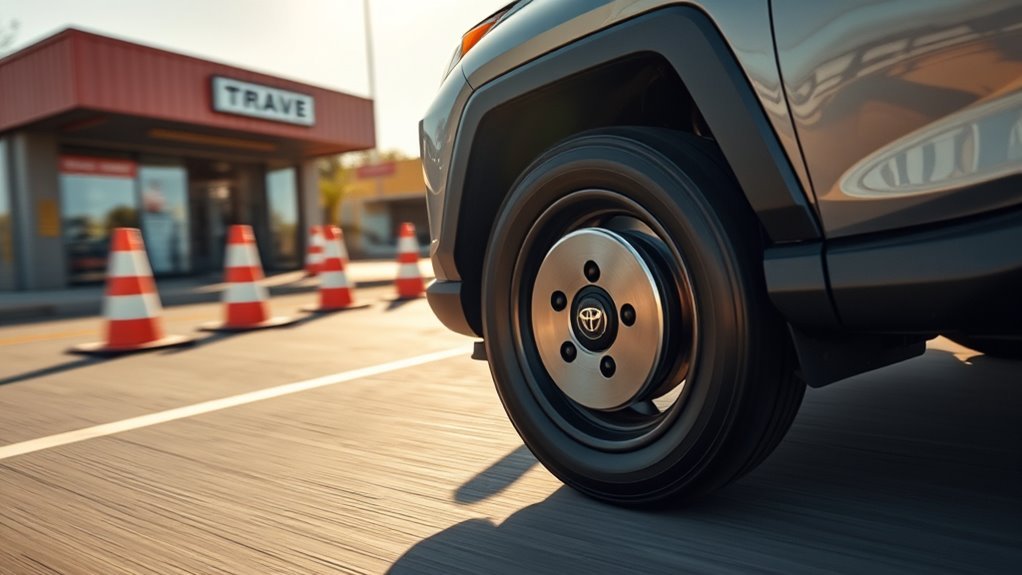
Shaking during braking can signal brake problems that need prompt attention. Warped or uneven brake rotors can create a pulsing feel through the steering wheel or brake pedal. Worn brake pads can also reduce braking power and control.
Do not ignore brake vibration, especially if the vehicle needs more distance to stop. Have a shop inspect the pads, rotors, calipers, and hardware. They may recommend rotor resurfacing, rotor replacement, or new pads depending on wear and thickness.
- Warped or uneven rotors can cause brake pedal pulsation.
- Worn brake pads can reduce braking efficiency.
- Sticking calipers can create heat, pulling, and vibration.
- Loose brake hardware can cause noise and uneven pad contact.
- Delayed brake repairs can raise the risk of a longer stop.
[Products Worth Considering]

The JACO FlowPro Tire Inflator measures, inflates, and airs down tires up to 100 PSI with battery-free operation and ±2% accuracy after calibration. It features a glowing pressure dial for night visibility, a heavy-duty steel build with a hybrid hose, and a precision push-to-inflate thumb trigger. The patented Lightning Air Chuck locks on for a secure seal, and the kit includes quick-connect hardware for easy inline use with your air compressor.

This tire repair patch tool kit helps you quickly seal small punctures using upgraded mushroom plugs and a built-in roller system that presses for even penetration. The tungsten buffing wheel and HSS twist drill bits prepare the damaged surface for stronger adhesion, while the crown-angle friendly plugs are designed to keep water and debris out. Ideal for puncture repairs on many vehicle types, from cars and trucks to bikes and scooters.
Common Engine and Axle Issues in Your RAV4
If your RAV4 vibrates during acceleration, the cause may involve the engine, mounts, axles, or constant velocity (CV) joints. Engine misfires can create shaking that feels different from a tire vibration. The shake may also appear at idle or during light throttle.
Worn or damaged axles can cause vibration during acceleration and deceleration. Bent axles, worn CV joints, and torn CV boots need attention before they fail. A clicking sound during turns often points toward a CV joint problem.
Bad engine mounts can let the engine move too much under load. You may feel a thump when shifting from park to drive or when accelerating. A mechanic can inspect mounts, scan for misfire codes, and check the axle assemblies.
Fixing Vibration Problems: Effective Solutions
Start with the easiest and most common fixes before replacing major parts. A careful inspection can separate tire issues from brake, axle, steering, and suspension problems. Use this order to keep the repair process practical.
- Check tire pressure and set it to the specification listed for your RAV4.
- Inspect each tire for uneven wear, bubbles, cracks, punctures, and flat spots.
- Balance the tires and ask the shop to check for bent wheels.
- Schedule a wheel alignment if the vehicle pulls or the steering wheel sits off center.
- Inspect brakes if the shaking appears when you press the brake pedal.
- Check suspension and steering parts if the vibration continues after tire service.
- Inspect axles, CV joints, engine mounts, and engine performance if shaking changes with acceleration.
Do not replace parts at random. Speed, road condition, braking behavior, and steering feel can all point toward the right system. A short road test with a trained technician often saves time.
When to Stop Driving and Call a Mechanic
Some vibration problems can wait for a scheduled repair, but others need immediate attention. Stop driving if the shaking begins suddenly, gets severe, or comes with steering loss. You should also stop if you hear grinding, clunking, or metal-on-metal brake noise.
Call a mechanic if the vehicle pulls hard, the brake pedal pulses badly, or the tires show bulges or exposed cords. These symptoms can point to safety-critical failures. Driving faster can make the problem worse and raise the chance of losing control.
Note: A dashboard warning light may not appear for tire balance, alignment, brake rotor, or suspension wear problems.
Frequently Asked Questions
Why Does My Car Vibrate at High Speeds in My RAV4?
Your RAV4 may vibrate at high speeds because of tire imbalance, uneven tire wear, bent wheels, or poor alignment. If the vibration changes during braking, acceleration, or turning, the cause may involve brakes, axles, steering, or suspension.
What Is the Recall on the RAV4 Suspension?
Some RAV4 model years have had suspension-related recalls, but recall coverage depends on the exact year, trim, and vehicle identification number (VIN). Check your VIN with Toyota or the official recall lookup tool before assuming your vehicle qualifies.
Why Is My Car Suddenly Shaking at High Speeds?
Sudden shaking at high speeds can come from a tire losing balance, a damaged tire, a bent wheel, or a suspension part that has worn out. If the shake starts right after hitting a pothole or curb, have the tires, wheels, and alignment inspected.
Can Bad Wheel Bearings Make a RAV4 Shake?
Bad wheel bearings can cause vibration, humming, grinding, or a growling sound. The noise may change when you turn because the load shifts from one side of the vehicle to the other.
Is It Safe to Drive a RAV4 That Shakes on the Highway?
Light vibration may let you drive slowly to a repair shop, but strong shaking is not safe to ignore. Avoid highway speeds until you know the cause, especially if the vehicle pulls, brakes poorly, or makes loud noises.
Conclusion
A RAV4 that shakes at high speeds usually needs a tire, wheel, alignment, brake, suspension, or driveline inspection. Start with tire pressure, tread wear, wheel balance, and alignment because those checks solve many vibration complaints. If the shaking continues, have a mechanic inspect the brakes, steering, suspension, axles, and engine mounts. Acting early helps protect your tires, your repair budget, and your control on the road.

Related Articles
Why These 10 Wheel Locks Are Perfect for Your RAV4
Protecting your RAV4 starts before you lock the doors. Wheel theft is an avoidable cost and a hassle that interrupts your routine, and choosing…
Read More
10 Best 80000 Mile Tires for Rav4
You want tires that last, keep you safe, and save you money over the long run. Choosing 80,000 mile tires for your RAV4 matters…
Read More
10 Long Warranty Tires That Will Transform Your RAV4 Experience
You spend a lot of time behind the wheel of your RAV4, and the right tires change everything from ride comfort to fuel economy…
Read More