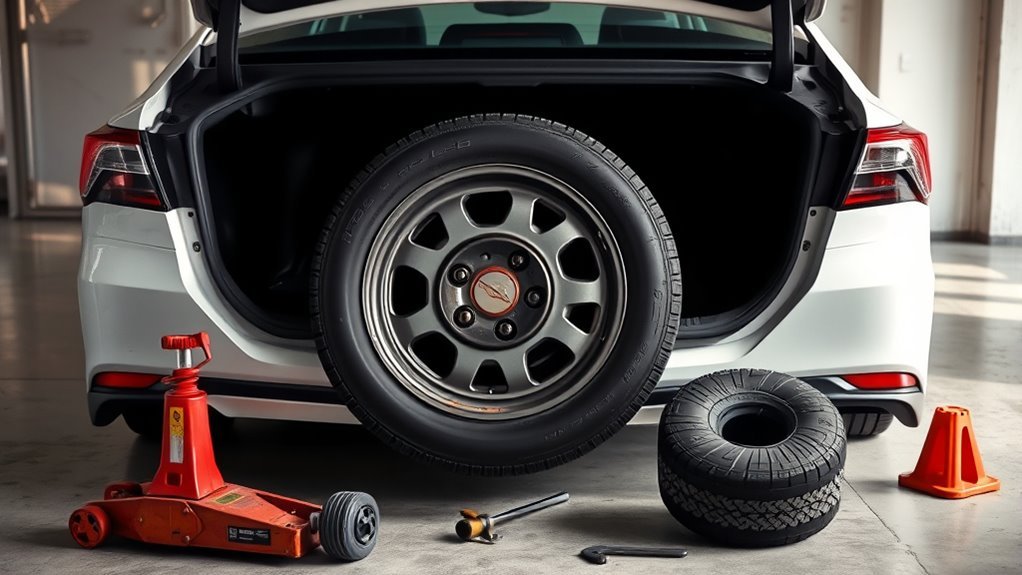
If your Toyota Camry spare tire won’t fit, stop and troubleshoot before you force it. The most common causes are the wrong spare wheel, the wrong bolt pattern or center bore, debris or rust on the wheel contact surface, a shifted trunk tray, a stuck hold-down bolt, or a wheel that is not centered on the hub. A spare that does not sit flat can loosen, wobble, or damage the wheel hardware.
Quick Answer
A Camry spare tire usually won’t fit because the spare is not correct for the year and trim, the lug holes or center bore do not match, or dirt, rust, carpet, tools, or trunk-well parts are blocking a flush fit. Park safely, verify the spare against the owner’s manual or door-jamb tire label, clean the hub face, then center the wheel before tightening.
Key Takeaways
- Do not force a spare tire onto the hub. If the wheel does not sit flat, something is mismatched, dirty, bent, or misaligned.
- Verify the spare’s tire size, wheel size, bolt pattern, center bore, and lug nut style for your exact Camry year and trim.
- Clean the wheel contact surface before installation. Toyota warns that dirt or foreign matter on the contact surface can allow wheel nuts to loosen while driving.
- Check spare-tire pressure before driving. NHTSA recommends checking all tires, including the spare, at least once a month.
- After the spare is installed, tighten the lug nuts in a crisscross pattern and have the final torque checked to the specification in your owner’s manual.
At a Glance
| Time Required | 10–30 minutes for basic checks; longer if hardware is stuck or the spare is incorrect |
| Difficulty | Easy to moderate if the car is parked safely and the correct tools are available |
| Tools Needed | Camry jack, jack handle, lug wrench, wheel lock key if equipped, tire pressure gauge, gloves, flashlight, clean rag, and torque wrench if available |
| Cost | Usually $0 if it is a fitment or debris issue; replacement spare, wheel, tire, or roadside service costs vary by market and model year |
Warning: Do not continue driving on a flat tire, and do not work on the car in traffic, soft ground, darkness, heavy rain, or any location where you cannot stand safely away from moving vehicles. Move to a safe, hard, flat surface and call roadside assistance if the situation feels unsafe.
Common Reasons a Camry Spare Won’t Fit
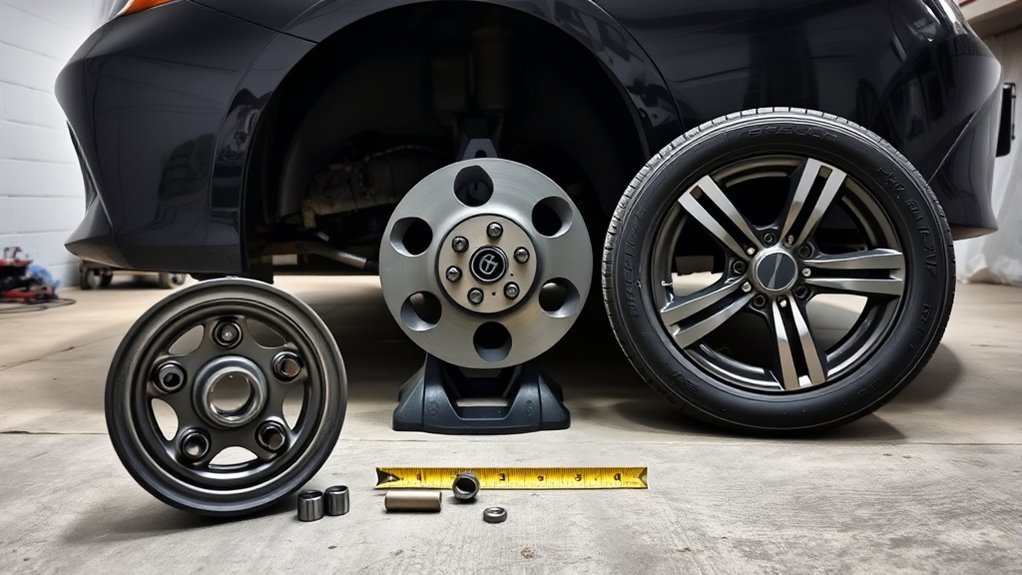
A Toyota Camry spare tire won’t fit when the spare wheel, tire, lug holes, center bore, or mounting surface does not match the car. It can also feel stuck when the spare is correct but the wheel is not centered on the hub, the car is not lifted high enough, or the trunk liner and foam tool tray are blocking access to the spare.
Start with the simple checks. Confirm that the spare came from your Camry or is specified for your exact year and trim. Then look for dirt, rust, bent wheel studs, wrong lug nuts, a missing wheel lock key, or cargo in the trunk well. If the spare was bought used or borrowed from another Toyota, do not assume it fits just because it has five lug holes.
Note: Toyota Camry equipment can vary by model year, trim, market, and wheel package. The safest fitment source is your owner’s manual, the driver-side Tire and Loading Information Label, the spare tire sidewall, or a Toyota dealer using your VIN.
[Products Worth Considering]

Upgrade your wheels with MIKKUPPA M12x1.5 mag seat lug nuts built for secure, corrosion-resistant performance. These closed-end chrome lug nuts are a direct replacement for select Toyota models, including Camry, Corolla, RAV4, Sienna, Avalon, Highlander, Matrix, Venza, and Prius. Triple-chromium plating and cold-forged, heat-treated steel help deliver strength for daily driving and replacement needs.

This spare tire tool kit is designed for the 2004 to 2018 Ford F-150 to help you loosen and tighten wheel lug nuts and manage the spare tire and provided jack functions from underneath the vehicle. It includes the lug nut wrench and extension pieces plus a convenient storage carrying case for organized transport. The jack itself is not included.

The Dr.Roc spare tire tool kit helps you release, lower, or raise your spare tire with reliable extension tools and a lug nut wrench. It is made from rustproof automotive-grade steel and includes an organized carry case for convenient storage. Designed for compatibility with select GM models from the late 1990s through 2019, it uses upgraded extension components to install and remove spare tires with less hassle.
Check the Spare Tire Size and Type
Before mounting the spare, compare the tire size and wheel information with your Camry’s original specifications. You can find the recommended tire size on the driver-side door-jamb label or in the owner’s manual. NHTSA also recommends using the vehicle manufacturer’s listed pressure, not the number molded into a tire sidewall as a maximum.
[Products Worth Considering]

These M14x1.5 closed-end chrome lug nuts are a one-piece replacement designed for secure fitment on compatible GM, Ford, and select Chrysler/Dodge models. Featuring a 60-degree conical seat and anti-rust chrome plating, they help resist corrosion and maintain a bright look for everyday driving. Built for long-term durability, they include OEM-style part references and are backed by 12 months of support.

Upgrade your wheels with MIKKUPPA closed-end lug nuts designed for reliable fit and corrosion resistance. The one-piece, cold-forged and heat-treated steel construction helps resist rust and stripping, while the integrated finish delivers a durable black appearance. Built to OEM standards with a conical 60-degree seat, these nuts provide a secure solution for compatible Ford, Honda, Jeep, and Chevrolet models.

This car D-wheel lock nut key provides an anti-theft solution for D-shaped wheel lock bolts, helping keep your wheels secure. It features a flower-shaped internal pattern that resists micro-adjustment theft while allowing removal and mounting of compatible locking nuts. Made for reliable performance under high torque, it’s easy to use with standard socket wrench turning for quick tire maintenance and emergency repairs.
Verify Tire Diameter and Pressure
Check the spare tire’s sidewall for its size, load rating, and temporary-use markings. A compact spare is smaller and narrower than a regular tire, so it may look wrong even when it is the correct emergency spare. A full-size spare should match the vehicle’s approved size much more closely.
| Check | What to Confirm | Why It Matters |
|---|---|---|
| Tire size | Matches the manual, door label, or temporary-spare specification | Prevents clearance and drivetrain problems |
| Spare type | Compact temporary spare or full-size spare | Sets the correct speed, distance, and handling expectations |
| Pressure | Inflated to the vehicle or spare-tire specification when cold | An underinflated spare may be unsafe to drive on |
| Condition | No cracks, bulges, cuts, exposed cords, or bent rim edges | Damage can make the spare unsafe even if it fits |
| Storage well | Clear of cargo, tools, trim clips, coins, dirt, and broken plastic | Lets the spare lift out and store correctly |
Match Wheel Bolt Pattern and Center Bore
The wheel’s lug holes must line up with the Camry’s wheel studs, and the center hole must fit over the hub. Many late-model Camrys use a 5-lug wheel pattern commonly listed as 5×114.3 mm, but you should still verify the exact pattern, center bore, offset, and lug nut style for your model year and trim before installing a spare from another car.
If the spare almost lines up but will not slide on, do not pull it into place with the lug nuts. That can damage the studs or cross-thread the nuts. Remove the spare, rotate it slightly, clean the hub face, and check that the wheel is actually the correct one.
Match the Spare Type
A temporary compact spare is designed only to get you to a repair location. A full-size spare may look like a regular wheel, but it still has to match the approved tire size, wheel dimensions, load rating, lug nut seat, and pressure. If your Camry has aftermarket wheels, confirm whether the factory spare still works with the current lug nuts and wheel hardware.
Pro Tip: If you recently bought a used Camry, check the spare before you need it. Make sure the spare, jack, lug wrench, wheel lock key, and hold-down hardware are all in the trunk and that the spare actually fits the hub.
Confirm the Spare Matches Your Camry
Do a fitment check before you rely on the spare. The safest path is to compare the spare with your Camry’s owner’s manual, driver-side tire label, and spare-tire sidewall. If anything conflicts, use the manual or Toyota service information for your exact vehicle.
[Products Worth Considering]

The 22800 wheel stud installer makes replacing wheel studs quick and secure, saving time and effort during tire service. It uses a ratchet or impact wrench to pull new studs firmly into place, helping when existing studs are too long. Compatible with most automotive wheels and light-duty truck wheel studs, it’s designed for easy, tool-assisted installation.

The Trivd Frol 1/2" air impact wrench delivers high performance torque up to 1500 ft-lbs with a twin hammer impact mechanism for strong, balanced blows. It features an ergonomic grip, compact lightweight design, and quick-stop control with 3 forward speeds up to 8000 RPM plus a reverse speed. Built for demanding automotive repair and tire shop work, the rear exhaust helps keep debris away from the surface.

Secure a full-size spare on your trailer with this powder-coated steel spare tire mount bracket. It fits most 4-, 5-, and 6-lug wheel bolt patterns and mounts to trailer tongues up to 4 in wide and 5 in tall. Built for reliable carry with a max 150 lb load rating and includes zinc-plated hardware for straightforward installation.
Verify Wheel Size
Look at the wheel diameter, wheel width, tire size, and load rating. A wheel that is too small may not clear the brake caliper. A wheel with the wrong offset may contact suspension or body parts. A tire with the wrong outside diameter can affect handling, traction systems, and drivetrain stress.
Check Bolt Pattern
Check that every lug hole lines up cleanly with the wheel studs. If the wheel rocks, hangs on one stud, or only lines up when forced, stop. Use a bolt-pattern gauge, a trusted fitment database, or a Toyota parts/service counter to confirm compatibility. This matters even more if the spare came from a different Camry generation, a salvage vehicle, or an aftermarket kit.
Check Lug Nuts and Wheel Locks
Camry wheel nuts must match the wheel. The tapered end of the lug nut must face the wheel seat. If your Camry has wheel locks, find the wheel lock key in the trunk tray before you remove or install the wheel. Do not use random lug nuts from another car, and do not use oil or grease on wheel studs or lug nuts unless your owner’s manual specifically tells you to.
Clear Trunk Obstructions and Debris
Clear out the trunk completely so you can access the spare tire and tools without interference. Lift the carpet, cargo floor, foam tray, and any trim cover carefully. Then check the spare tire well for loose tools, coins, broken clips, road grit, water, rust flakes, or cargo that has slid under the floor panel.
If the spare will not come out of the well, look for a hold-down bolt, wing nut, threaded retainer, or tool tray holding it down. Do not pry aggressively against plastic trim. If the hold-down hardware is rusty or stuck, apply steady hand pressure with the correct tool and call roadside assistance if it will not move.
Warning: Do not deflate the spare tire to make it fit in the trunk or on the car. A spare that only fits when underinflated is either blocked by something, stored incorrectly, or not the right spare for the vehicle.
Center the Spare on the Hub
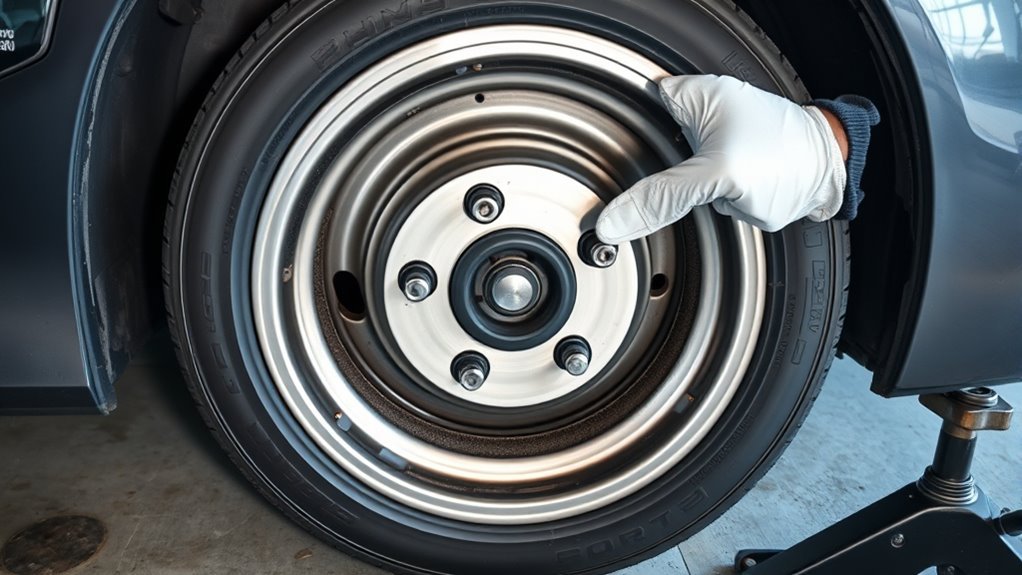
Center the spare tire squarely on the hub so the lug holes slide over the studs and the wheel sits flat against the mounting surface. If the spare is crooked, the lug nuts may start at an angle or the wheel may wobble after the car is lowered.
Lift the spare with both hands, align the holes, and push it straight onto the hub. If the wheel hangs up, remove it and check for dirt, rust, bent studs, damaged lug holes, or the wrong center bore. Do not use the lug nuts to drag the wheel into position.
Once the wheel sits flat, hand-start every lug nut. If one nut will not turn easily by hand for the first few threads, back it off and try again. Cross-threaded lug nuts can damage the stud and make the wheel unsafe.
Inspect the Mounting Surface for Damage
Inspect the wheel contact surface for dents, rust, dirt, gravel, or raised corrosion. Toyota’s flat-tire instructions warn that foreign matter on the wheel contact surface can allow wheel nuts to loosen while the vehicle is moving. Wipe the hub face and the back of the spare wheel with a clean rag before installation.
Also inspect the wheel studs, lug nut threads, and lug holes. Bent studs, cracked bolt holes, rounded lug nuts, damaged threads, or a bent spare rim can stop the wheel from seating correctly. If you see cracks, deformation, or damaged threads, do not drive on that wheel. Call roadside assistance or have the vehicle inspected by a qualified technician.
What to Check If the Spare Still Won’t Fit?
If the spare still will not fit after you clean the hub and verify the size, work through this checklist in order:
- Wrong spare: The spare may be from a different vehicle, model year, wheel package, or drivetrain configuration.
- Wrong bolt pattern: The lug holes may look close but not line up exactly with the Camry’s studs.
- Wrong center bore: The center hole may be too small to slide over the hub or too large to center properly without the correct hardware.
- Brake caliper interference: A wheel that is too small or shaped incorrectly may contact the brake caliper.
- Aftermarket wheel hardware: Current lug nuts may not match the factory spare’s seat style.
- Wheel lock problem: If a lock nut is still installed or the key is missing, the flat wheel may not come off or the spare may not install correctly.
- Bent stud or damaged threads: A bent wheel stud can make the spare hang up before it reaches the hub face.
- Jack height or angle: If the car is not lifted high enough, the spare may hit the ground before it reaches the studs. Use only the proper jack point and a stable surface.
- Rust or debris: Rust buildup on the hub or dirt on the wheel contact surface can keep the wheel from sitting flat.
What Not to Do When the Spare Doesn’t Fit
A spare that resists installation is a warning sign. Avoid these mistakes:
- Do not force the wheel on with the lug nuts. That can strip threads, bend studs, or leave the wheel unevenly clamped.
- Do not drive with missing, loose, or mismatched lug nuts. The wheel can loosen while the vehicle is moving.
- Do not grease the lug nuts or wheel studs. Lubrication can change tightening force and lead to damaged hardware.
- Do not crawl under a car supported only by the factory jack. The jack is for wheel changes only, not under-vehicle work.
- Do not exceed the compact-spare speed limit. Follow the spare label and owner’s manual; many compact spares are limited to 50 mph.
A clean, correct spare should slide onto the hub and sit flat before the lug nuts are tightened. If it only fits when forced, it does not fit safely.
After the Spare Fits: Tighten and Drive Carefully
Once the spare is seated flat, install the lug nuts by hand first. Snug them lightly in a crisscross pattern while the car is still raised, then lower the vehicle until the tire touches the ground and cannot spin. Finish tightening in a crisscross pattern. For many Camry model years, Toyota lists wheel nut torque at 76 ft-lbf (103 N·m), but you should confirm the correct specification in your owner’s manual for your exact vehicle.
If you do not have a torque wrench, use the factory lug wrench carefully, then have the lug nuts checked with a torque wrench as soon as possible. Drive slowly, avoid hard cornering and braking, and go directly to a tire shop or safe repair location. A compact spare is temporary and is not meant to replace a normal tire for daily driving.
When to Call Roadside Assistance

Call roadside assistance if the spare will not seat flat, the lug nuts will not start by hand, the wheel lock key is missing, the jack feels unstable, the flat tire will not come off, or the spare appears damaged. Also call for help if you are on a narrow shoulder, in traffic, in poor weather, on soft ground, or in a dark area.
| Trigger | Risk | Best Action |
|---|---|---|
| Spare will not sit flat | Wrong wheel, debris, rust, or hub mismatch | Stop and call for service |
| Lug nuts will not thread by hand | Cross-threading or damaged studs | Do not force them |
| Wheel lock key is missing | Flat wheel may not come off | Request roadside help or dealer support |
| Unsafe roadside location | Traffic injury risk | Stay clear and call assistance |
Frequently Asked Questions
Can a spare tire not fit?
Yes. A spare tire may not fit if the wheel size, tire size, bolt pattern, center bore, offset, lug nut seat, or brake clearance is wrong. It may also fail to seat if the hub face is dirty, the wheel is crooked, or the wheel studs are damaged.
Why won’t the lug holes line up on my Camry spare?
The spare may have the wrong bolt pattern, or it may simply be rotated out of position. Remove the spare, rotate it, and try again without forcing it. If the holes still do not line up cleanly, the spare is not compatible with your Camry.
Can I deflate the spare tire to make it fit?
No. Do not deflate a spare tire to make it fit on the car or in the trunk. A spare should be inflated to the specified pressure before driving. If it only fits when deflated, check for trunk obstructions, wrong storage position, or an incorrect spare.
How fast can I drive on a Camry compact spare?
Follow the speed limit printed on the spare tire and listed in your owner’s manual. Many compact temporary spares are limited to 50 mph, and they are intended only for short emergency use until the regular tire can be repaired or replaced.
How much does it cost to replace a Camry spare tire?
The cost depends on whether you need only a tire, a complete spare wheel and tire, a jack/tool kit, or dealer-specific hardware. Compact spare tires, mounted assemblies, and OEM parts can vary widely by model year and location, so get a current quote from a Toyota dealer or tire shop using your VIN.
Do all Toyota Camry spare tires fit all Camrys?
No. Camry wheel and spare specifications can vary by year, trim, market, brake package, drivetrain, and wheel option. Always verify compatibility before using a spare from another vehicle.
Conclusion
If your Camry spare won’t fit, do not force it. Park safely, confirm the spare is correct for your exact Camry, clear the trunk and tire well, check the bolt pattern and center bore, clean the mounting surface, and center the wheel on the hub before tightening. If the spare still will not sit flat or the lug nuts will not start by hand, call roadside assistance. A spare tire is only helpful when it fits securely and can be driven safely.
Sources
- Toyota Owners Manuals and Warranties — model-specific owner’s manual lookup and Toyota service information.
- Toyota Owners: 2025 Camry If You Have a Flat Tire — Camry flat-tire safety steps, spare/jack/tool information, wheel contact surface guidance, and wheel-nut torque guidance.
- NHTSA TireWise — tire size, pressure, tread, aging, maintenance, and tire safety guidance.
- NHTSA Tire Safety Checklist — monthly tire pressure checks, including the spare, and tire inspection guidance.