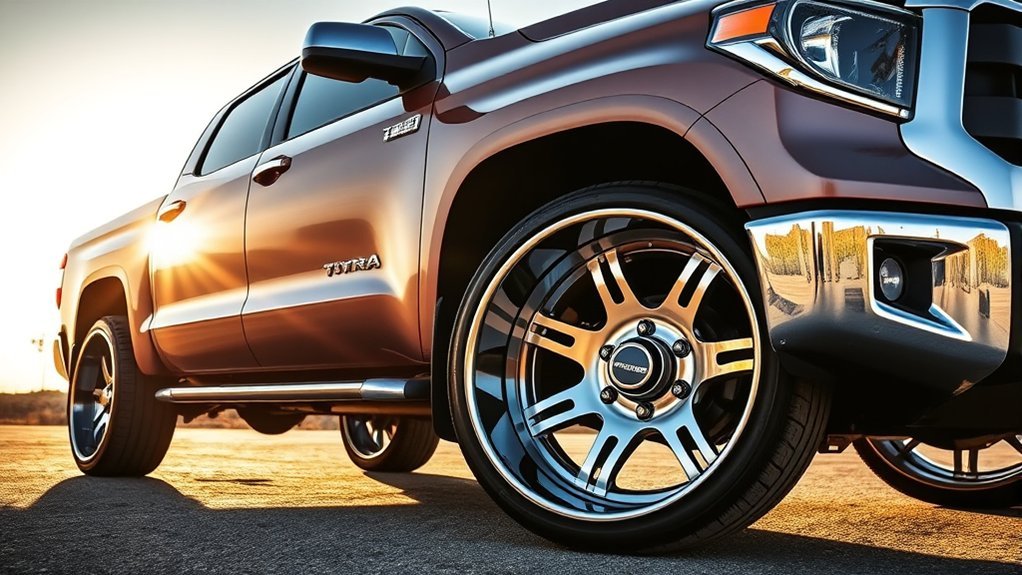
Upgrading Toyota Tundra wheels is not just a style choice. The right setup has to match your truck’s bolt pattern, center bore, lug hardware, offset, brake clearance, tire load rating, and suspension height. Use this guide to narrow the fitment before you buy, then confirm the final specs with your owner’s manual, door-jamb tire placard, wheel manufacturer, or a qualified tire shop.
Quick Answer
Most 2022–2026 Toyota Tundras use a 6×139.7 mm bolt pattern, about a 95.2 mm center bore, and M14x1.5 lug hardware. Most 2007–2021 Tundras use a 5×150 mm bolt pattern, 110.1 mm center bore, and M14x1.5 hardware. Offset and tire size depend on wheel width, trim, suspension, and how much trimming you are willing to do.
Key Takeaways
- Do not buy Tundra wheels by bolt pattern alone; center bore, offset, width, brake clearance, load rating, and lug-seat style also matter.
- Factory-style 2022–2026 offsets are usually much more positive than aggressive aftermarket stance offsets.
- A larger center bore is not automatically better. The wheel should be hub-centric or use the correct hub-centric ring.
- Match tire load index and cold tire pressure to the door-jamb placard or a safe upgraded equivalent.
- Use the exact lug nut torque from your owner’s manual or wheel/lug manufacturer, then recheck torque after the first drive cycle.
At a Glance
| Time Required | 30–60 minutes for a wheel swap after fitment is confirmed |
| Difficulty | Moderate; fitment planning is harder than the wheel installation itself |
| Tools Needed | Floor jack, jack stands, wheel chocks, socket, breaker bar, calibrated torque wrench, hub rings if required, TPMS tool if sensors are being changed |
| Cost | Varies widely; budget for wheels, tires, TPMS sensors or transfer, mounting, balancing, hub rings, lug nuts, alignment, and possible trimming |
Essential Wheel Specifications for the Toyota Tundra
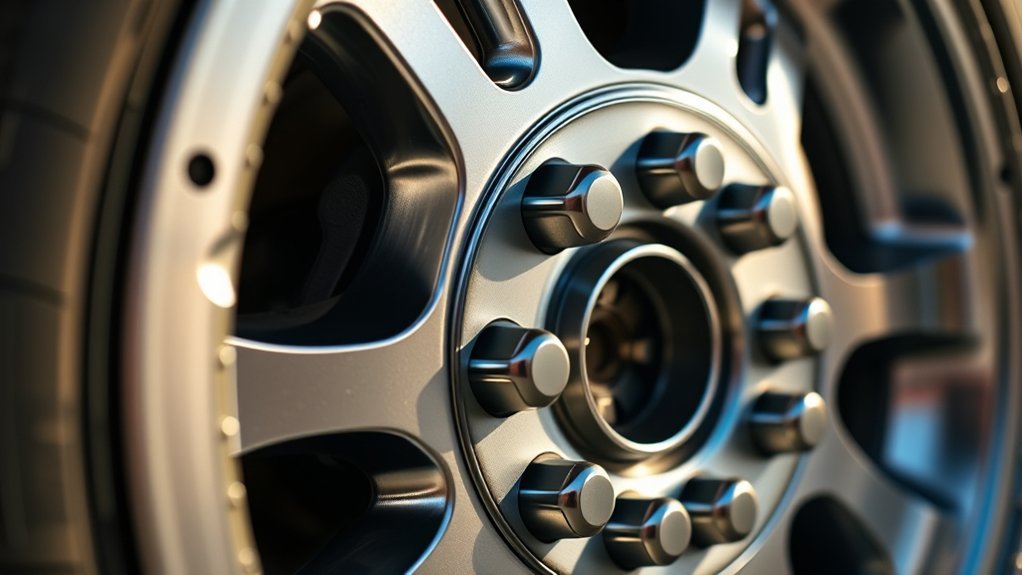
Start with the specs for your exact generation. Toyota’s official 2026 Tundra page confirms factory wheel diameters from 18 inches to 22 inches depending on trim, including 18-inch styled-steel wheels on SR, 18-inch alloy wheels on SR5, 20-inch alloy wheels on several trims, 18-inch forged-aluminum BBS wheels on TRD Pro, and 22-inch wheels on Capstone. You can review the current trim wheel overview on the official Toyota Tundra page.
Warning: Wheel fitment is safety-critical. A wheel can have the correct bolt pattern and still be wrong because the bore, offset, width, brake clearance, load rating, lug-seat style, or tire size does not match your truck.
| Tundra years | Bolt pattern | Center bore | Lug thread | Typical OE-style offset context |
|---|---|---|---|---|
| 2000–2006 | 6×139.7 mm | About 106.1 mm | M12x1.5 | Often around +15 mm on common factory-style wheels; verify exact trim and wheel. |
| 2007–2021 | 5×150 mm | 110.1 mm | M14x1.5 | Many OE-style 18- and 20-inch setups are around +60 mm. |
| 2022–2026 | 6×139.7 mm | About 95.1–95.2 mm | M14x1.5 | OE-style references commonly show positive offsets around +47.5 to +60 mm depending on wheel and tire package. |
For published fitment data, cross-check current references such as Wheel-Size’s 2026 Toyota Tundra fitment page and Wheel-Size’s 2021 Toyota Tundra fitment page. Treat these as planning references, not a substitute for your owner’s manual, tire placard, or the wheel maker’s final fitment confirmation.
[Products Worth Considering]

This 1/2-inch drive breaker bar delivers powerful leverage for loosening and tightening stubborn lug nuts and automotive fasteners. The 180-degree flex head helps you reach tight spaces at the angle you need, making tire and brake jobs easier. A spring-loaded ball detent design holds 1/2-inch sockets securely while the chrome-moly head provides durable strength for everyday use.

These M14x1.5 closed-end chrome lug nuts are a one-piece replacement designed for secure fitment on compatible GM, Ford, and select Chrysler/Dodge models. Featuring a 60-degree conical seat and anti-rust chrome plating, they help resist corrosion and maintain a bright look for everyday driving. Built for long-term durability, they include OEM-style part references and are backed by 12 months of support.

Upgrade your wheels with MIKKUPPA closed-end lug nuts designed for reliable fit and corrosion resistance. The one-piece, cold-forged and heat-treated steel construction helps resist rust and stripping, while the integrated finish delivers a durable black appearance. Built to OEM standards with a conical 60-degree seat, these nuts provide a secure solution for compatible Ford, Honda, Jeep, and Chevrolet models.
What Is Wheel Offset and Why Does It Matter?
Wheel offset is the distance between the wheel’s mounting surface and the wheel centerline. A positive offset means the mounting pad is toward the street-facing side of the wheel, which usually tucks the wheel farther inward. A zero or negative offset pushes the wheel farther outward toward the fender. Tire Rack’s wheel offset guide explains the same basic relationship between offset, suspension clearance, and outward poke.
For a Toyota Tundra, offset matters because it changes more than appearance. It affects inner clearance near the upper control arm, outer clearance near the fender liner and mud flap, brake clearance, scrub radius, steering feel, and wheel-bearing load. A lower positive offset, such as +18 or +25 mm on a 9-inch-wide aftermarket wheel, can create a wider stance, but it is not the same as a factory-style offset.
Note: Offset cannot be judged by the number alone. A 17×8 +35 wheel and a 20×10 +35 wheel will not sit the same because wheel width and backspacing change the final position.
Understanding the Center Bore for Compatibility
The center bore is the hole in the middle of the wheel that sits over the Tundra’s hub. On hub-centric setups, the hub helps center the wheel before the lug nuts clamp it down. This reduces the chance of vibration and helps the wheel seat evenly.
For 2022–2026 Tundras, look for a wheel bore that matches the truck’s approximately 95.1–95.2 mm hub, or use the correct hub-centric ring if the aftermarket wheel has a larger bore. For 2007–2021 Tundras, the common center bore is 110.1 mm. For 2000–2006 Tundras, it is about 106.1 mm. Do not assume “bigger is better.” A bore that is larger than the hub usually needs the correct ring to center the wheel properly.
Pro Tip: If you feel vibration after installing new wheels and the tires balanced correctly, check whether the wheels are lug-centric instead of hub-centric, whether the hub rings are the right size, and whether the wheel is fully seated on a clean hub face.
What’s Your Tundra’s Bolt Pattern?
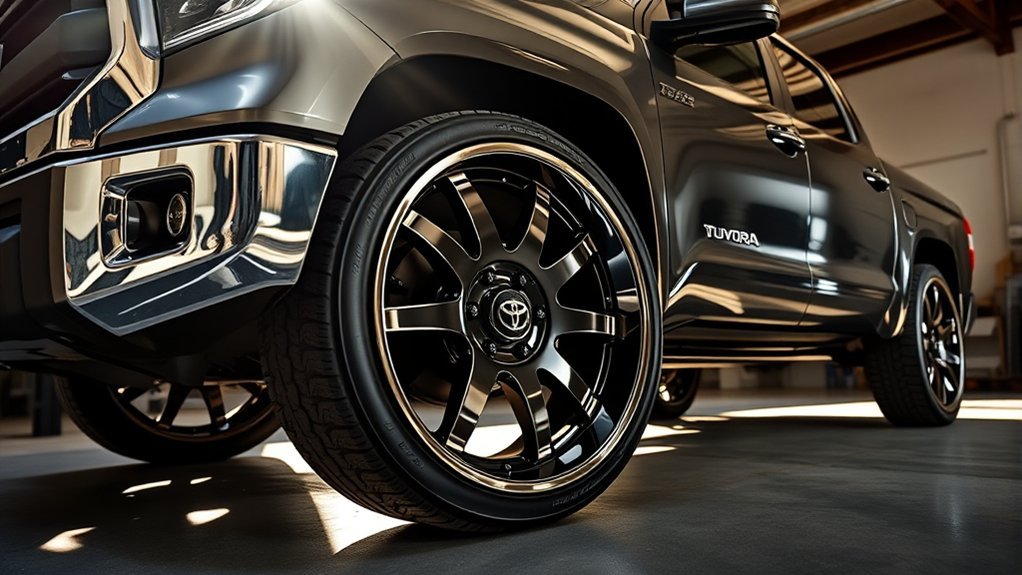
Your Tundra’s bolt pattern depends on model year. Most 2007–2021 Tundras use 5×150 mm. Most 2022–2026 Tundras use 6×139.7 mm. First-generation 2000–2006 Tundras also use 6×139.7 mm, but they have different hub and lug hardware than the newer 2022–2026 trucks.
- 2022–2026 Tundra: 6×139.7 mm bolt pattern, about 95.1–95.2 mm center bore, M14x1.5 lug thread.
- 2007–2021 Tundra: 5×150 mm bolt pattern, 110.1 mm center bore, M14x1.5 lug thread.
- 2000–2006 Tundra: 6×139.7 mm bolt pattern, about 106.1 mm center bore, M12x1.5 lug thread.
Warning: Do not assume Tacoma, 4Runner, Sequoia, Land Cruiser, or older Tundra wheels fit just because the bolt pattern looks familiar. Center bore, offset, brake clearance, lug-seat type, and load rating still have to match.
Choosing the Right Aftermarket Wheel Size for Your Tundra
Aftermarket Tundra wheels commonly range from 17 to 22 inches, but the best size depends on how you use the truck. A smaller wheel with more tire sidewall is usually better for off-road comfort and impact protection. A larger wheel can sharpen the street look but often leaves less sidewall and may ride firmer.
For a stock-height truck, conservative wheel width and offset choices help avoid rubbing. For a wider stance, many Tundra owners shop 18×9 or 20×9 wheels with offsets in the +18 to +25 mm range, but this is an aftermarket stance range, not a universal factory replacement range. If you want an OEM-like fit, stay closer to the factory offset and width for your generation.
Also check load rating. A Tundra is a full-size pickup, so the wheel must be rated for the truck’s weight and intended use. The tire must also meet or exceed the original equipment load index. The U.S. Tire Manufacturers Association tire replacement guidance recommends using proper tire size, speed rating, and load index rather than guessing.
[Products Worth Considering]

Upgrade your wheels with MIKKUPPA M12x1.5 mag seat lug nuts built for secure, corrosion-resistant performance. These closed-end chrome lug nuts are a direct replacement for select Toyota models, including Camry, Corolla, RAV4, Sienna, Avalon, Highlander, Matrix, Venza, and Prius. Triple-chromium plating and cold-forged, heat-treated steel help deliver strength for daily driving and replacement needs.

These universal tire valve stem caps help protect valve cores from dust, debris, and moisture while helping maintain stable tire pressure. The corrosion-resistant metal construction and sealed design provide reliable protection in road grime, mud, and winter conditions. Twist-on installation makes them quick to fit on cars, SUVs, trucks, and motorcycles.

These aluminum alloy tire valve stem caps with an O-ring seal help protect valve stems from corrosion while adding a clean, stylish look to your vehicle. The universal fit works across cars, trucks, motorcycles, bicycles, and more, making them an easy upgrade for everyday driving and off-road use. Installation is quick, and the included four-pack keeps all your tires dressed and protected.
Common Tire Sizes and Their Fitment on the Tundra
Common Toyota Tundra tire sizes include 255/70R18, 265/70R18, 275/65R18, 285/65R18, 275/55R20, 265/60R20, and 265/50R22 depending on model year and trim. The right tire size depends on the wheel width, suspension height, offset, fender-liner clearance, and whether you are willing to trim.
Tire pressure and load limits are not minor details. NHTSA identifies proper tire pressure, load limits, tread checks, and tire inspections as key steps for helping prevent tire failure.
| Setup | Typical tire range | Fitment notes |
|---|---|---|
| Stock suspension | Factory size to about 33 inches overall diameter | Best chance of no rubbing with conservative width and offset. Wide 33-inch tires may still rub depending on offset. |
| 2–3 inch leveling kit | 33-inch tires; some 35-inch setups | 35s often need careful offset selection and may need trimming, mud-flap changes, or liner adjustment. |
| 4–6 inch lift | 35-inch tires; some 37-inch setups | Requires lift-specific wheel specs. Check upper control arm clearance, bumper clearance, fender liner, spare fitment, and speedometer impact. |
Before changing tire size, read the driver-door placard and Toyota owner materials. The NHTSA TireWise tire safety guide explains tire pressure, load limits, tire recalls, and tire maintenance. Do not install a tire with a lower load-carrying capacity than the original equipment tire unless a qualified tire professional confirms the setup is safe.
[Products Worth Considering]

The Trivd Frol 1/2" air impact wrench delivers high performance torque up to 1500 ft-lbs with a twin hammer impact mechanism for strong, balanced blows. It features an ergonomic grip, compact lightweight design, and quick-stop control with 3 forward speeds up to 8000 RPM plus a reverse speed. Built for demanding automotive repair and tire shop work, the rear exhaust helps keep debris away from the surface.

Secure your trailer or RV tires with a scissor-style wheel chock stabilizer that applies opposing force to help prevent wheel shift. It fits tight wheel gaps from 3.5 inches up to 12 inches and works for travel trailers, campers, fifth wheels, toy haulers, and heavy-duty trucks. The surface uses new electrophoretic technology to help prevent rust for reliable travel use.

The 22800 wheel stud installer makes replacing wheel studs quick and secure, saving time and effort during tire service. It uses a ratchet or impact wrench to pull new studs firmly into place, helping when existing studs are too long. Compatible with most automotive wheels and light-duty truck wheel studs, it’s designed for easy, tool-assisted installation.
How to Install Your Aftermarket Wheels Safely
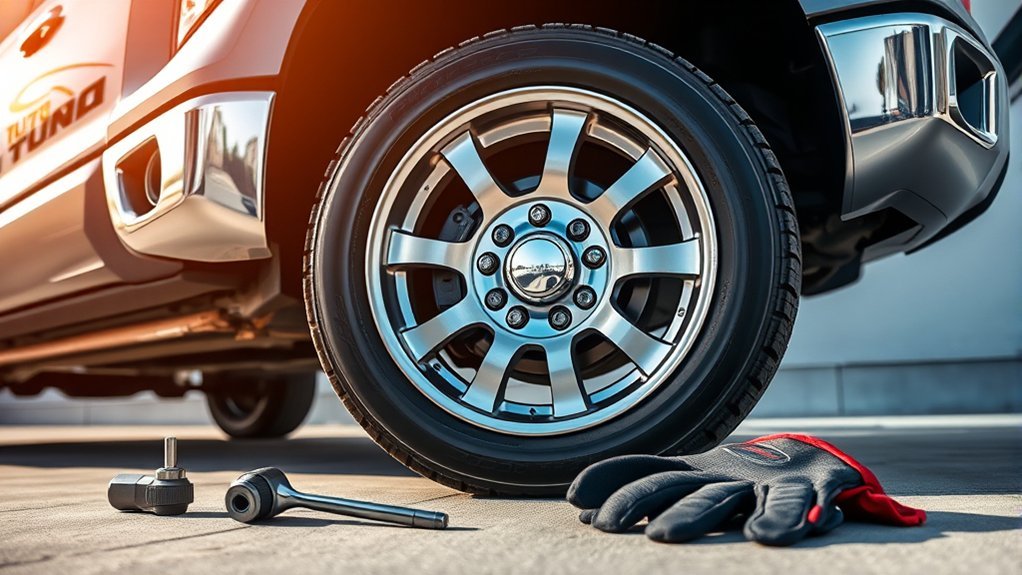
Installing aftermarket wheels safely starts before the truck is on the jack. Confirm the bolt pattern, bore, wheel load rating, tire load index, brake clearance, TPMS compatibility, lug-seat style, and torque specification first. Toyota owner manuals are available through Toyota’s owner manual portal, and genuine wheel-related parts can be checked through Toyota Parts & Accessories.
Warning: Never use an impact gun for final tightening. Use a calibrated torque wrench and the exact torque spec for your wheel and lug setup. Commonly published values for many Tundra aluminum-wheel applications are around 97 ft-lb, but steel spare wheels and some applications may differ.
| Step | Safe installation check |
|---|---|
| 1. Confirm specs | Match bolt pattern, center bore, offset, width, brake clearance, wheel load rating, and tire load index. |
| 2. Match lug nuts | Use the correct thread pitch and lug-seat style required by the wheel maker. Do not assume stock lug nuts fit every aftermarket wheel. |
| 3. Clean the hub | Remove rust and debris from the hub face so the wheel seats flat. Install hub-centric rings if the wheel bore requires them. |
| 4. Hand-thread first | Start every lug nut by hand to avoid cross-threading. Stop if any nut does not turn smoothly. |
| 5. Torque in stages | Tighten in a crisscross pattern, first snug, then partial torque, then final torque with a calibrated torque wrench. |
| 6. Road-test and recheck | After a short drive, listen for rubbing, check vibration, inspect clearance at full steering lock, and recheck torque after the first 50–100 miles. |
Troubleshooting Common Fitment Problems
If the new wheel and tire setup does not feel right, stop and inspect it before driving at highway speed.
- Rubbing at full lock: Check tire width, offset, mud flaps, fender liner, body mount area, and bumper clearance.
- Vibration after balancing: Check hub-centric rings, dirty hub faces, bent wheels, uneven lug torque, and tire road-force balance.
- TPMS warning light: Confirm the sensors were transferred or programmed correctly and that tire pressure matches the placard or approved upgraded spec.
- Speedometer error: Larger tire diameter changes rolling circumference. Ask a qualified shop about recalibration if the change is significant.
- Brake clearance issue: Wheel diameter alone is not enough. Spoke shape and barrel design must clear the calipers.
Frequently Asked Questions
What is the center bore of a Toyota Tundra?
Most 2022–2026 Toyota Tundras use about a 95.1–95.2 mm center bore. Most 2007–2021 models use 110.1 mm, and many 2000–2006 models use about 106.1 mm. Always verify your model year and trim before buying wheels.
What does +35 offset mean on a rim?
A +35 offset means the wheel’s mounting surface is 35 mm toward the outer face of the wheel from the wheel centerline. On the truck, that usually tucks the wheel inward compared with a lower positive, zero, or negative offset wheel of the same width.
Can I put Tacoma or 4Runner wheels on a Tundra?
Sometimes, but do not rely on bolt pattern alone. A 2007–2021 Tundra uses 5×150, so typical Tacoma and 4Runner wheels will not bolt on. A 2022–2026 Tundra uses 6×139.7, but center bore, offset, brake clearance, lug-seat style, and load rating still have to be correct.
Can a stock Toyota Tundra fit 35-inch tires?
Some stock or lightly modified setups may clear certain 35-inch tire combinations, but it depends heavily on tire width, wheel offset, wheel width, trim, suspension, and trimming. For the least rubbing risk on stock suspension, stay closer to factory diameter or about 33 inches.
Do aftermarket Tundra wheels need hub-centric rings?
They need hub-centric rings when the wheel’s center bore is larger than the Tundra’s hub and the wheel is designed to be centered by a ring. If the bore exactly matches the hub, rings are not needed. If the bore is too small, the wheel will not fit safely.
What lug nut torque should I use on Toyota Tundra wheels?
Use the exact torque listed in your owner’s manual or supplied by the wheel and lug manufacturer. Many Tundra aluminum-wheel references list about 97 ft-lb, but some steel spare-wheel applications and aftermarket hardware can differ. Never guess from a broad range.
Conclusion
Choosing aftermarket wheels for your Toyota Tundra comes down to matching the full fitment package, not just picking a good-looking rim. Confirm the bolt pattern, center bore, offset, width, load rating, tire size, lug-seat style, TPMS setup, and torque spec before installation. When those details work together, your Tundra gets the stance and capability you want without rubbing, vibration, unsafe clamping, or premature tire wear.
Sources
- Toyota 2026 Tundra official page — factory trim wheel diameters and current Tundra model context
- Toyota Owners manuals and warranties — final owner-manual reference for safe maintenance and vehicle-specific instructions
- Toyota Parts & Accessories: 2026 Tundra — genuine Toyota wheel-related parts and vehicle-specific parts lookup
- NHTSA TireWise — tire pressure, tire load, tire recall, and tire-safety guidance
- U.S. Tire Manufacturers Association: Replacing Tires — replacement tire size, speed rating, and load index guidance
- Wheel-Size: 2026 Toyota Tundra fitment and Wheel-Size: 2021 Toyota Tundra fitment — bolt pattern, bore, tire, wheel, and offset reference data to verify before purchase