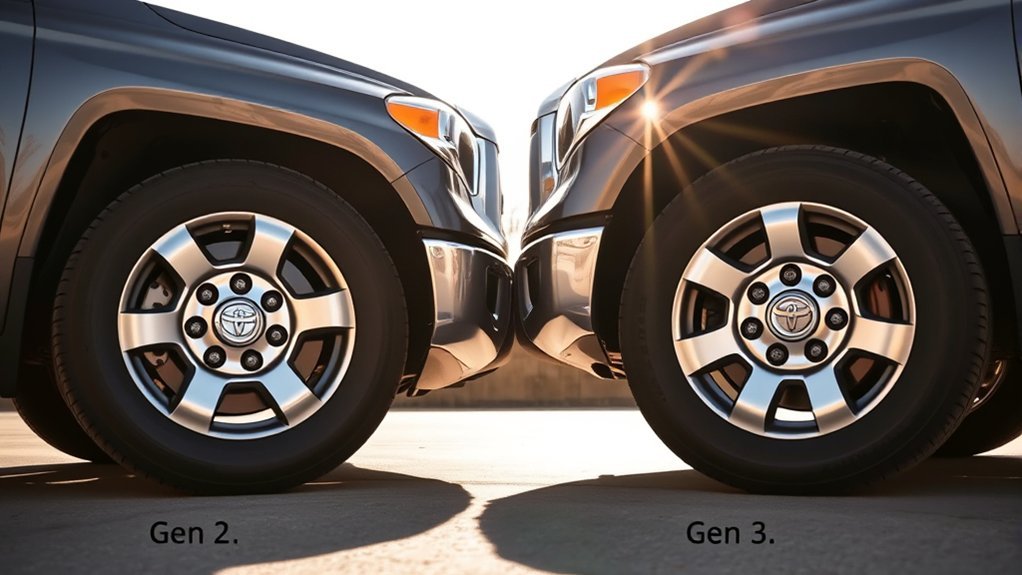
Toyota changed more than styling when the Tundra moved from the second generation to the third generation. The wheel mounting specs changed too, which means a wheel that fits a 2007–2021 Tundra usually will not bolt onto a 2022+ Tundra without an adapter. Before buying used OEM wheels or aftermarket wheels, check the bolt pattern, center bore, offset, lug hardware, brake clearance, and load rating.
Quick Answer
No, second-gen and third-gen Toyota Tundra wheels do not directly interchange. Most 2007–2021 second-gen Tundras use a 5×150 bolt pattern, while 2022+ third-gen Tundras use a 6×139.7 bolt pattern. The hub bore is also different, so the safest choice is a wheel made for your exact generation.
Key Takeaways
- Gen 2 Tundra wheels and Gen 3 Tundra wheels are not direct swaps because the bolt patterns are different.
- A second-gen Tundra is commonly 5×150 with about a 110.1 mm center bore; a third-gen Tundra is commonly 6×139.7 with about a 95–95.2 mm center bore.
- Lug thread size may be M14 x 1.5 on both generations, but the lug seat style must match the wheel.
- Wheel adapters can create offset, load, and clearance problems, so direct-fit wheels are the better choice for most owners.
- Always verify fitment by exact model year, trim, market, wheel size, and tire size before purchasing.
At a Glance
| Time Required | 10–20 minutes to verify wheel specs before buying |
| Difficulty | Easy research step; professional help recommended before using adapters or unusual offsets |
| Tools Needed | Owner’s manual, wheel spec sheet, tape measure or caliper, torque wrench, and fitment database |
| Cost | Free to check specs; wheel costs vary by brand, size, load rating, and tire package |
What’s Up With the Bolt Pattern Differences?
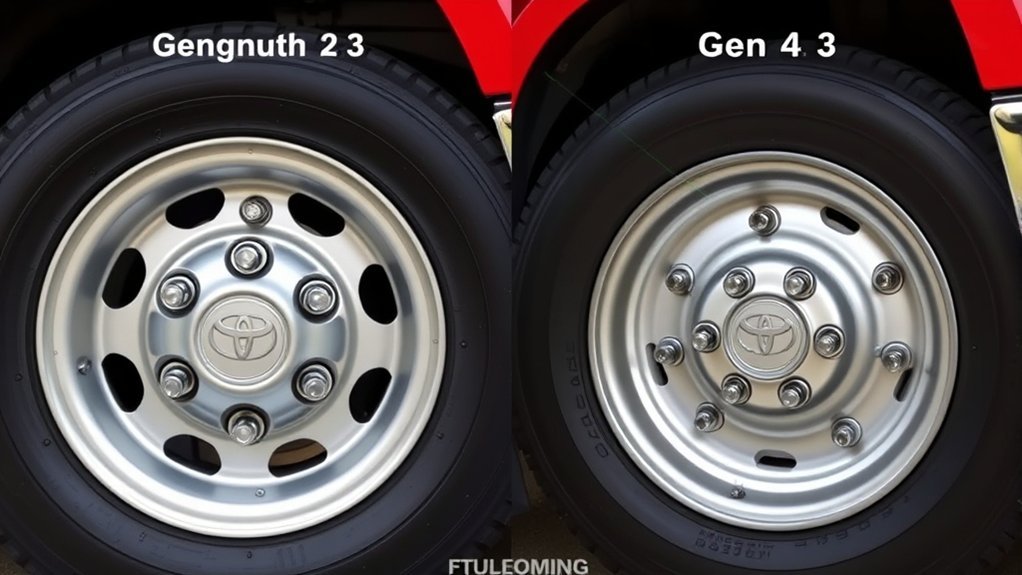
The biggest difference is simple: the second-generation and third-generation Tundra use different bolt patterns. In the common North American fitment context, the 2007–2021 second-gen Tundra uses a 5×150 bolt pattern. The 2022+ third-gen Tundra uses a 6×139.7 bolt pattern.
That means a Gen 2 wheel will not line up with the studs on a Gen 3 hub, and a Gen 3 wheel will not line up with a Gen 2 hub. This is not a small offset or spacer issue; the wheel physically has the wrong number of lug holes and the wrong pitch circle diameter.
Warning: Do not try to force a wheel onto the wrong bolt pattern, drill new holes at home, or rely on mismatched lug nuts. Wheel mounting errors can cause vibration, stud damage, wheel separation, and loss of control.
Importance of Bolt Patterns for Safe Wheel Fitment
The bolt pattern controls how the wheel seats on the hub. If the lug holes do not match the vehicle, the wheel cannot clamp evenly or safely. Even if a wheel looks close in photos, “close enough” is not safe for a truck that may tow, haul, or run larger tires.
- Bolt pattern: Must match exactly.
- Center bore: Must fit the hub or use the correct hub-centric ring when the wheel design allows it.
- Offset and backspacing: Must leave room for suspension, fenders, and brake parts.
- Lug nut seat: Must match the wheel’s seat design, not just the thread size.
- Load rating: Must be suitable for a full-size truck.
What You Need to Know Before Buying Tundra Wheels
Before buying Tundra wheels, start with the exact model year and generation. Toyota launched the all-new third-generation Tundra for the 2022 model year, but some fitment databases may show regional overlap for older platforms. Use your VIN, door-jamb tire label, owner’s manual, and the wheel manufacturer’s fitment data when in doubt.
[Products Worth Considering]

Upgrade your wheels with MIKKUPPA closed-end lug nuts designed for reliable fit and corrosion resistance. The one-piece, cold-forged and heat-treated steel construction helps resist rust and stripping, while the integrated finish delivers a durable black appearance. Built to OEM standards with a conical 60-degree seat, these nuts provide a secure solution for compatible Ford, Honda, Jeep, and Chevrolet models.

These M14x1.5 closed-end chrome lug nuts are a one-piece replacement designed for secure fitment on compatible GM, Ford, and select Chrysler/Dodge models. Featuring a 60-degree conical seat and anti-rust chrome plating, they help resist corrosion and maintain a bright look for everyday driving. Built for long-term durability, they include OEM-style part references and are backed by 12 months of support.

Upgrade your wheels with MIKKUPPA M12x1.5 mag seat lug nuts built for secure, corrosion-resistant performance. These closed-end chrome lug nuts are a direct replacement for select Toyota models, including Camry, Corolla, RAV4, Sienna, Avalon, Highlander, Matrix, Venza, and Prius. Triple-chromium plating and cold-forged, heat-treated steel help deliver strength for daily driving and replacement needs.
Wheel Compatibility Differences
| Tundra generation | Common model years | Bolt pattern | Center bore | Thread size |
| Gen 1 | 2000–2006 | 6×139.7 | Varies by year/trim | Verify by year |
| Gen 2 | 2007–2021 in common U.S. use | 5×150 | About 110.1 mm | M14 x 1.5 on many models |
| Gen 3 | 2022+ | 6×139.7 | About 95–95.2 mm | M14 x 1.5 on many models |
The big takeaway is that Gen 2 and Gen 3 wheels are not direct-fit across generations. Even when lug thread size looks similar, the bolt pattern and hub bore are different.
Measuring Bolt Patterns Accurately
You can measure bolt pattern with a tape measure or caliper, but the easiest and safest route is to confirm the wheel’s printed spec sheet. For a 5-lug wheel, the bolt circle is measured differently than a 6-lug wheel, so casual tape-measure checks can lead to mistakes.
- Confirm the wheel is 5×150 for a Gen 2 Tundra.
- Confirm the wheel is 6×139.7 for a Gen 3 Tundra.
- Check the center bore and make sure it is not smaller than the truck’s hub.
- Check the wheel width and offset against your tire size and suspension setup.
- Confirm the lug nut seat type: conical, ball, mag/shank, or manufacturer-specific.
Pro Tip: If you are buying used OEM wheels online, ask the seller for a photo of the wheel stamping, part number, backside of the wheel, and lug-hole area. Do not rely only on “fits Tundra” in the listing title.
How Offset and Backspacing Affect Fitment
Offset and backspacing decide where the wheel sits inside the fender. A wheel with too much positive offset may sit too far inward and contact suspension or brake parts. A wheel with too little positive offset, or a negative offset, may poke outward and rub the fender liner when turning or flexing.
- Positive offset: Pulls the wheel closer to the suspension side.
- Lower or negative offset: Pushes the wheel outward for a wider stance.
- Backspacing: Measures how much wheel sits behind the mounting pad.
- Brake clearance: Must be checked even when bolt pattern is correct.
- Tire size: Bigger tires may rub even if the wheel bolts on correctly.
Many factory Tundra wheels sit in a relatively conservative offset range. If you move far away from OEM offset, check real-world fitment examples for your exact tire size, lift height, mud flap setup, and suspension.
[Products Worth Considering]

The Trivd Frol 1/2" air impact wrench delivers high performance torque up to 1500 ft-lbs with a twin hammer impact mechanism for strong, balanced blows. It features an ergonomic grip, compact lightweight design, and quick-stop control with 3 forward speeds up to 8000 RPM plus a reverse speed. Built for demanding automotive repair and tire shop work, the rear exhaust helps keep debris away from the surface.

The 22800 wheel stud installer makes replacing wheel studs quick and secure, saving time and effort during tire service. It uses a ratchet or impact wrench to pull new studs firmly into place, helping when existing studs are too long. Compatible with most automotive wheels and light-duty truck wheel studs, it’s designed for easy, tool-assisted installation.

These aluminum alloy tire valve stem caps with an O-ring seal help protect valve stems from corrosion while adding a clean, stylish look to your vehicle. The universal fit works across cars, trucks, motorcycles, bicycles, and more, making them an easy upgrade for everyday driving and off-road use. Installation is quick, and the included four-pack keeps all your tires dressed and protected.
Common Problems When Mixing Gen 2 and Gen 3 Wheels
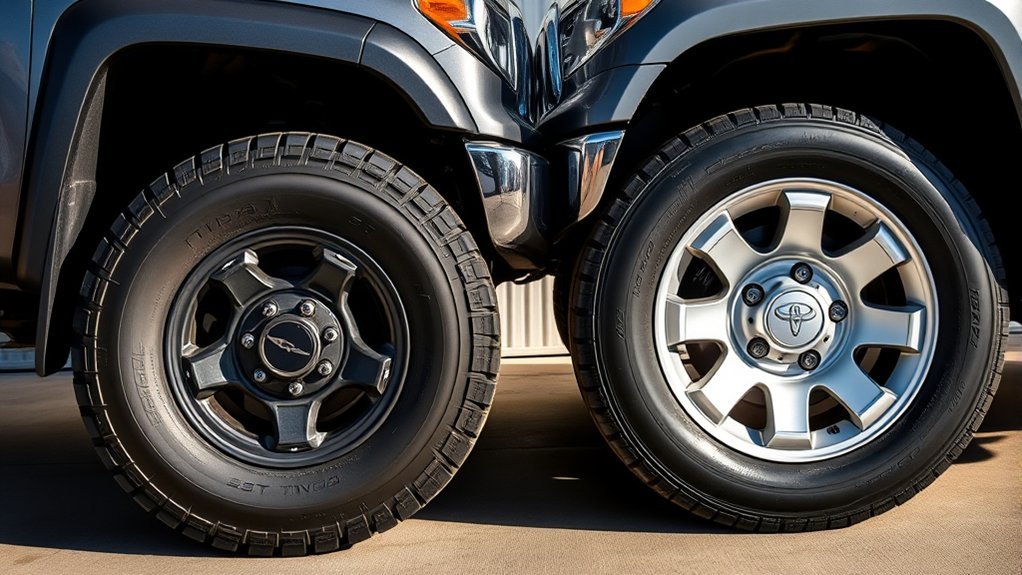
Mixing second-gen and third-gen Tundra wheels creates problems before you even get to tire size. The lug count is different, the bolt circle is different, and the hub bore is different. That combination makes direct interchange a no-go.
Hub Bore Differences
The hub bore is the large center hole in the wheel. On many vehicles, this hole helps center the wheel on the hub. Gen 2 Tundras are commonly listed around a 110.1 mm center bore, while Gen 3 Tundras are commonly listed around 95–95.2 mm.
A wheel with a center bore that is too small will not slide over the hub. A wheel with a larger center bore may need the correct hub-centric ring if the wheel design is meant to use one. Tire Rack notes that centering rings help keep wheels precisely positioned as the lug hardware is torqued down, which can reduce the chance of vibration.
Offset Compatibility Issues
Even if an adapter changes the bolt pattern, it also changes effective offset by pushing the wheel outward. That can create rubbing at the fender liner, bumper, body mount area, or mud flap. It can also increase stress on wheel bearings and suspension parts when the wheel sits much farther out than stock.
Note: Wheel adapters are not the same as simple hub-centric rings. An adapter changes the bolt pattern and wheel position. A hub-centric ring only helps center a wheel with a larger center bore.
Lug Nut Size Variations
Many Gen 2 and Gen 3 Tundra fitment references list M14 x 1.5 lug threads, but that does not mean all lug nuts are interchangeable. The lug nut seat must match the wheel. Using the wrong seat style can keep the wheel from clamping correctly, even when the thread size is right.
- Use the wheel maker’s recommended lug nuts.
- Hand-start lug nuts to avoid cross-threading.
- Torque the lugs with a calibrated torque wrench.
- Recheck torque after installation if your wheel or tire shop recommends it.
- Never mix damaged studs, mismatched lug seats, or loose adapter hardware.
Best Wheel Upgrades for Your Tundra
The best wheel upgrade is a direct-fit wheel built for your exact Tundra generation. For a Gen 2, start with 5×150 wheels. For a Gen 3, start with 6×139.7 wheels. Then narrow your options by center bore, width, offset, brake clearance, tire size, load rating, and lug hardware.
For a daily-driven or towing Tundra, do not choose wheels only because they look aggressive. Choose wheels that can support the truck’s weight and intended use. SAE J2530 is a recognized aftermarket-wheel practice covering performance requirements and test procedures for passenger cars and light trucks, so it is worth checking whether the wheel brand publishes load ratings and testing information.
The safest upgrade path is simple: match the bolt pattern first, then verify center bore, offset, lug hardware, tire clearance, and load rating before you buy.
[Products Worth Considering]

This car D-wheel lock nut key provides an anti-theft solution for D-shaped wheel lock bolts, helping keep your wheels secure. It features a flower-shaped internal pattern that resists micro-adjustment theft while allowing removal and mounting of compatible locking nuts. Made for reliable performance under high torque, it’s easy to use with standard socket wrench turning for quick tire maintenance and emergency repairs.

The SEESII cordless impact wrench delivers high tightening and loosening power for fast wheel bolt and industrial bolt work. Its brushless motor and variable-speed 3 forward/2 reverse modes help you control precision installs and stubborn nut removal. A dual-battery system with rapid charging and an included storage case make it ready for home, car, and jobsite use.

This 1/2-inch drive breaker bar delivers powerful leverage for loosening and tightening stubborn lug nuts and automotive fasteners. The 180-degree flex head helps you reach tight spaces at the angle you need, making tire and brake jobs easier. A spring-loaded ball detent design holds 1/2-inch sockets securely while the chrome-moly head provides durable strength for everyday use.
Community Insights and Real-World Experiences
Real-world Tundra owners often run into problems when a listing says “Toyota truck wheels” without naming the exact generation. First-gen Tundra, second-gen Tundra, third-gen Tundra, Tacoma, Sequoia, Land Cruiser, and Lexus truck wheels can share some-looking-close details while still failing on bolt pattern, center bore, offset, or brake clearance.
If you want a clean fit with minimal drama, search for wheels by exact year and trim. If you are running a lift, leveling kit, larger tires, or aftermarket upper control arms, check fitment examples from owners with the same setup before buying.
Frequently Asked Questions
Do all Tundras have the same wheel bolt pattern?
No. Toyota Tundra bolt patterns changed by generation. First-gen Tundras commonly use 6×139.7, second-gen Tundras commonly use 5×150, and 2022+ third-gen Tundras returned to 6×139.7. Always verify your exact year and market before buying wheels.
Will 2nd gen Tundra wheels fit a 3rd gen Tundra?
No, not directly. Most second-gen Tundra wheels are 5×150, while third-gen Tundra wheels are 6×139.7. The hub bore is also different, so the wheel will not simply bolt on.
Can I use wheel adapters to put Gen 2 wheels on a Gen 3 Tundra?
Adapters may exist, but they are not the best choice for most owners. They change effective offset, add another bolted connection, and can create clearance or load issues. If you are considering adapters, use a reputable brand, verify load rating, and have the setup inspected by a qualified wheel and tire professional.
Are Gen 2 and Gen 3 Tundra lug nuts the same?
Many references list M14 x 1.5 thread size for both generations, but thread size is only one part of fitment. The lug nut seat style must match the wheel. Use the lug hardware recommended by the wheel manufacturer.
What specs should I check before buying Tundra wheels?
Check bolt pattern, center bore, offset, backspacing, wheel width, diameter, brake clearance, tire size, load rating, lug nut seat type, and torque instructions. Also confirm the wheel fits your exact year, trim, drivetrain, and suspension setup.
Conclusion
Second-gen and third-gen Tundra wheels are not direct swaps. The second-gen Tundra commonly uses a 5×150 bolt pattern, while the third-gen Tundra uses 6×139.7. Add the hub-bore difference, offset concerns, lug-seat requirements, brake clearance, and load rating, and the safest answer is clear: buy wheels made for your exact Tundra generation instead of trying to mix Gen 2 and Gen 3 wheels.
Sources
- Toyota Owners — 2022 Tundra manuals and warranties — official owner-manual reference point for vehicle-specific verification.
- Toyota USA Newsroom — 2022 Toyota Tundra — confirms the 2022 Tundra as the redesigned third-generation platform.
- Wheel-Size.com — Toyota Tundra wheel fitment database — supports generation-level bolt pattern and wheel spec checks.
- TireWheelGuide — 2022 Toyota Tundra wheel and tire sizes — supports 2022 Tundra XK70 bolt pattern, center bore, and thread-size reference.
- Tire Rack — What Is a Wheel Centerbore? — explains center bore and centering-ring fitment.
- SAE J2530 — Aftermarket Wheels Performance Requirements — supports load-rating and tested-wheel guidance for light trucks.