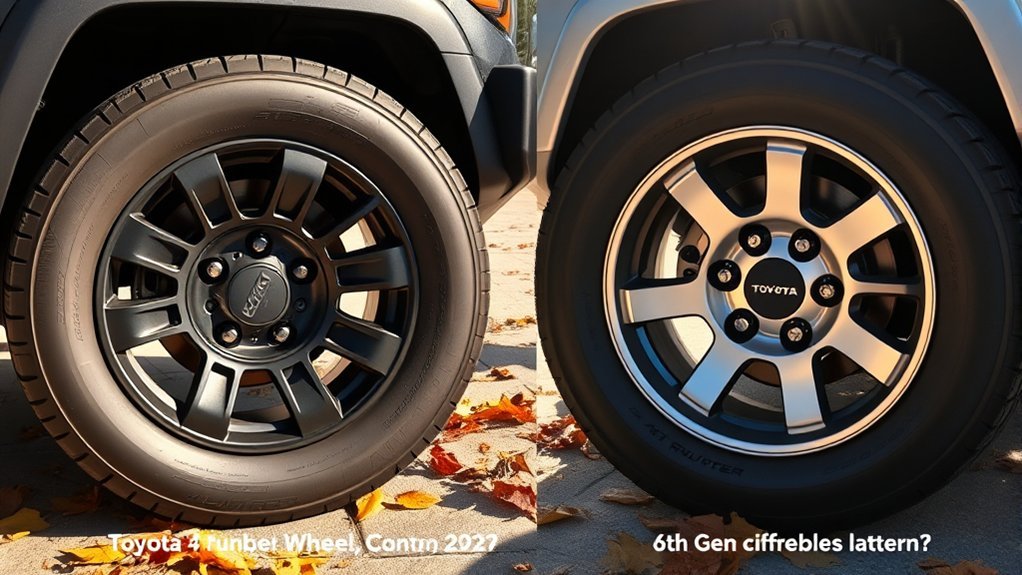
Some 5th Gen 4Runner wheels can physically bolt to a 6th Gen 4Runner, but they are not a true direct swap. The bolt pattern is the easy part. The real fitment checks are the smaller 6th Gen hub bore, larger lug studs, correct lug-nut seat, wheel offset, brake clearance, tire size, and load rating.
Quick Answer
5th Gen 4Runner wheels may fit a 6th Gen 4Runner only after you verify the center bore, lug nuts, lug-seat style, offset, brake clearance, and tire size. Do not treat them as plug-and-play wheels. In most cases, you need M14x1.5 lug nuts and 106.1-to-95.1 mm hub-centric rings.
Key Takeaways
- Both generations use a 6-lug Toyota truck pattern, commonly written as 6×139.7 mm or 6×5.5 inches.
- The commonly reported 5th Gen wheel center bore is about 106 mm, while 6th Gen fitment guides list 95.1 mm.
- Old 5th Gen lug nuts should not be reused because the 6th Gen uses larger M14x1.5 wheel studs.
- Hub-centric rings can center the wheel, but they do not fix offset, brake clearance, lug-seat mismatch, or tire rubbing.
- Always confirm tire size and pressure from the door-jamb Tire and Loading Information Label or owner’s manual.
At a Glance
| Time Required | 30 to 90 minutes for test fitting, plus shop time if machining, spacers, or tire changes are needed. |
| Difficulty | Moderate. The wheels may bolt up, but safe fitment requires careful measuring. |
| Tools Needed | Floor jack, jack stands, torque wrench, correct socket, M14x1.5 lug nuts, hub-centric rings, and a clearance gauge or straightedge. |
| Cost | Low to moderate if the wheels clear safely; higher if you need different tires, wheel machining, spacers, or a shop inspection. |
Understanding Wheel Compatibility Between 5th and 6th Gen 4Runners
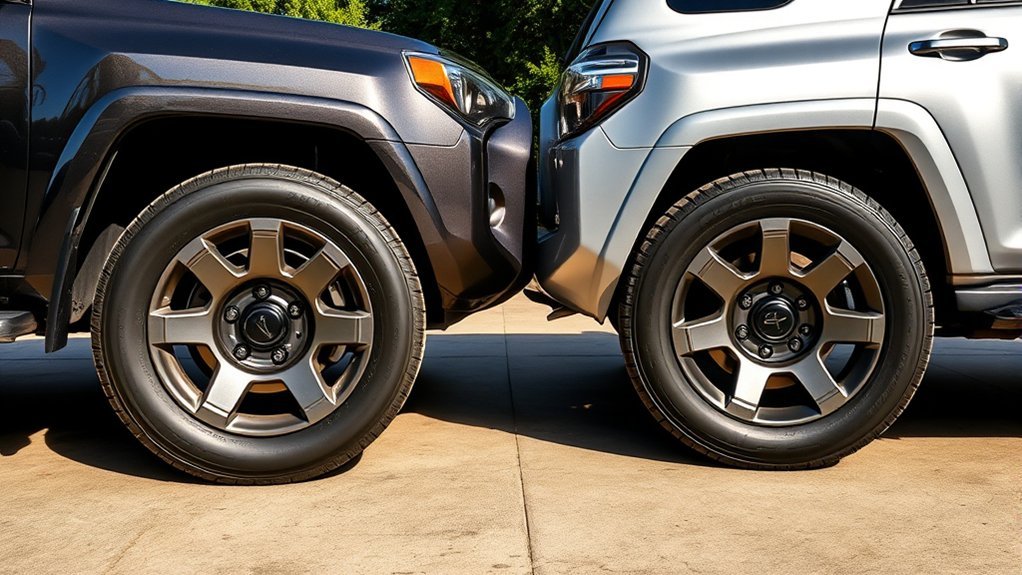
The short answer is this: the bolt pattern lines up, but the wheel system changed enough that you should not install 5th Gen wheels on a 6th Gen 4Runner without checking the full fitment stack.
Fitment references commonly list the 6th Gen 4Runner with a 6×139.7 bolt pattern, M14x1.5 lug threads, a 95.1 mm center bore, and 96 ft-lb torque for alloy wheels. The 5th Gen commonly uses the same 6×139.7 bolt pattern but has a larger center bore and smaller M12x1.5 lug hardware. That means a 5th Gen wheel may slide over the 6th Gen hub, but it will not automatically center or secure correctly.
Before you reuse older wheels, confirm these five points:
- Center bore: The wheel must center properly on the 6th Gen hub.
- Lug thread: You need lug nuts that match the 6th Gen studs.
- Lug seat: The lug nut seat must match the wheel’s seat shape.
- Offset and backspacing: The wheel must clear suspension, fenders, and brakes.
- Tire size and load rating: The tire must match your trim, load needs, and clearance.
Warning: Do not reuse 5th Gen lug nuts on a 6th Gen 4Runner. A lug nut can have the right outer shape but the wrong thread or seat. That can reduce clamping force and create a wheel-off risk.
Key Differences in Hub Bore Sizes and Their Impact
The hub bore is the large center hole in the wheel. It helps the wheel sit centered on the vehicle hub before the lug nuts clamp it down. The 5th Gen 4Runner’s wheel center bore is commonly listed at about 106 mm, while 6th Gen fitment references list a 95.1 mm hub bore.
That size difference does not mean the older wheel cannot go on the newer truck. Since the older wheel’s center hole is larger, it may physically fit over the smaller 6th Gen hub. The problem is that the wheel may become lug-centric instead of hub-centric unless you use the correct hub-centric ring.
For many 5th Gen wheels, the ring size you need is typically 106.1 mm outer diameter to 95.1 mm inner diameter. The ring fills the gap between the larger wheel bore and the smaller 6th Gen hub. Always measure your actual wheel, though, because aftermarket wheels may use a different center bore.
Note: Hub-centric rings help center the wheel. They do not increase load rating, correct the offset, change the lug pattern, or guarantee brake clearance.
Spec Comparison: 5th Gen vs 6th Gen 4Runner Wheels
| Fitment Point | 5th Gen 4Runner | 6th Gen 4Runner | What It Means |
| Bolt pattern | 6×139.7 mm / 6×5.5 in | 6×139.7 mm / 6×5.5 in | The bolt holes can line up, but this alone does not confirm safe fitment. |
| Center bore / hub bore | Commonly reported around 106 mm | Commonly reported at 95.1 mm | A 5th Gen wheel often needs hub-centric rings to sit centered on a 6th Gen hub. |
| Lug thread | Commonly M12x1.5 | Commonly M14x1.5 | You need lug nuts that match the 6th Gen studs and the wheel’s seat style. |
| Offset | Varies by wheel, often lower on TRD-style wheels | Varies by trim and wheel package | Offset affects fender poke, upper control arm clearance, and tire rubbing. |
| Factory tire sizes | Many trims use 265/70R17; Limited trims use different 20-inch sizing | Includes 245/70R17, 265/70R18, and 265/55R20 depending on trim and market | Use the door-jamb tire label as the final reference for your truck. |
Essential Modifications for Installing 5th Gen Wheels on 6th Gen
If you want to test-fit 5th Gen wheels on a 6th Gen 4Runner, treat the job as a fitment check, not a simple wheel swap. The correct parts depend on the exact wheel, tire, and trim.
[Products Worth Considering]

These aluminum alloy tire valve stem caps with an O-ring seal help protect valve stems from corrosion while adding a clean, stylish look to your vehicle. The universal fit works across cars, trucks, motorcycles, bicycles, and more, making them an easy upgrade for everyday driving and off-road use. Installation is quick, and the included four-pack keeps all your tires dressed and protected.

These M14x1.5 closed-end chrome lug nuts are a one-piece replacement designed for secure fitment on compatible GM, Ford, and select Chrysler/Dodge models. Featuring a 60-degree conical seat and anti-rust chrome plating, they help resist corrosion and maintain a bright look for everyday driving. Built for long-term durability, they include OEM-style part references and are backed by 12 months of support.

Upgrade your wheels with MIKKUPPA M12x1.5 mag seat lug nuts built for secure, corrosion-resistant performance. These closed-end chrome lug nuts are a direct replacement for select Toyota models, including Camry, Corolla, RAV4, Sienna, Avalon, Highlander, Matrix, Venza, and Prius. Triple-chromium plating and cold-forged, heat-treated steel help deliver strength for daily driving and replacement needs.
Required Hub-Centric Rings
Most 5th Gen OEM-style wheels have a larger center bore than the 6th Gen hub. That gap can cause vibration if the wheel is not centered well before torque is applied. A hub-centric ring fills the space between the wheel bore and hub.
When shopping for rings, confirm these details:
- Outer diameter: Match the wheel’s center bore, often 106.1 mm on 5th Gen Toyota truck wheels.
- Inner diameter: Match the 6th Gen hub, commonly listed as 95.1 mm.
- Material: Aluminum handles heat better, while quality polycarbonate rings can still work for many street setups.
- Fit: The ring should sit flat without rocking, cracking, or preventing the wheel from seating fully.
New Lug Nuts Needed
The 6th Gen 4Runner uses larger wheel studs than the 5th Gen, so 5th Gen lug nuts are not the right hardware. Use M14x1.5 lug nuts that match the 6th Gen studs and also match the wheel’s lug-seat design.
This second part matters. Some wheels use a conical seat, while others use a mag, shank, washer, ball, or flat-seat design. A lug nut with the wrong seat may tighten but still clamp the wheel poorly.
Pro Tip: Ask the wheel manufacturer which M14x1.5 lug nut style fits your exact wheel part number. Do not choose lug nuts by thread size alone.
Brake and Suspension Clearance Checks
Even when the wheel bolts on, it still needs to clear the brake caliper, tie rod, upper control arm, inner fender, mud flap, and outer fender lip. Clearance can change when you turn the steering wheel, compress the suspension, or move from a stock tire to a larger all-terrain tire.
Check clearance in these positions:
- Straight ahead with the truck on the ground.
- Full left lock and full right lock.
- Over bumps or ramps where the suspension compresses.
- With the spare tire location if you plan to carry a matching spare.
Cost Considerations for Wheel Modifications
Using older wheels may save money at first, but the final cost can rise once you add safe-fitment parts and inspection time. The best-case scenario is simple: new M14x1.5 lug nuts, properly sized hub-centric rings, and a clean test fit. The expensive scenario is discovering that the offset, tire size, brake clearance, or wheel load rating does not work.
Initial Setup Costs
Plan for these possible setup items before you buy tires or mount wheels:
- Hub-centric rings: Needed when the wheel center bore is larger than the 6th Gen hub.
- Correct lug nuts: Needed because the 6th Gen uses M14x1.5 studs.
- Tire mounting and balancing: Needed if you change tire size or move tires to different wheels.
- Professional inspection: Smart if you are unsure about lug-seat style, clearance, or wheel load rating.
- Possible alignment: Recommended after suspension changes or if tire size changes affect tracking.
Ongoing Maintenance Expenses
After the swap, check the wheels more often during the first few drives. New or replacement wheels should be torqued to the vehicle manufacturer’s recommendation and checked again after a short break-in drive. Also watch for steering-wheel vibration, rubbing, uneven tire wear, and any clicking or clunking from the wheel area.
If you add spacers, oversized tires, or aggressive offset wheels, maintenance becomes more important. Those changes can add load to wheel bearings, change steering feel, and increase rubbing risk.
User Experiences: Successes and Challenges in Wheel Swaps
Owner reports are useful, but you should treat them as examples, not proof that your setup will fit. Two 4Runners can have different trims, tires, wheel offsets, suspension heights, mud flaps, and alignment settings.
Common success factors include:
- Correct ring size: Owners who center the wheel correctly are less likely to report vibration.
- Correct M14x1.5 lug nuts: The right thread and seat style matter as much as torque.
- Conservative tire sizing: Staying close to factory diameter and width reduces rubbing risk.
- Real test fitting: Turning lock-to-lock and checking brake clearance prevents surprises.
Common problems include tire rub, wrong lug-seat choice, missing hub-centric rings, and assuming that a wheel works just because the bolt holes line up.
Tire Size Compatibility Between Generations
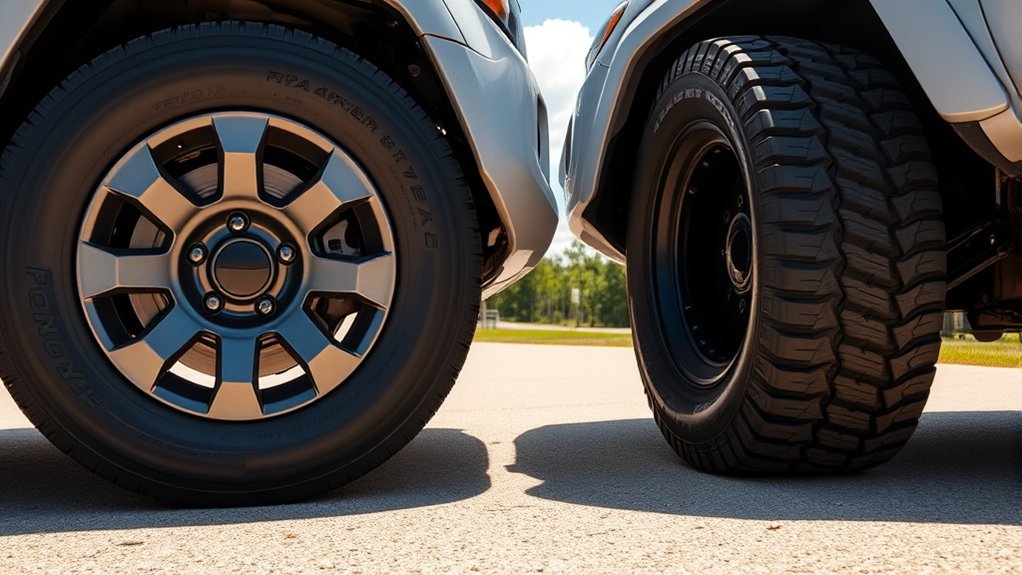
Tire size is where many wheel swaps become confusing. The wheel may fit, but the tire may still rub or carry the wrong load rating. The safest starting point is the Tire and Loading Information Label on the driver-side door jamb. The National Highway Traffic Safety Administration advises using the owner’s manual or tire placard to find the correct tire size and pressure for your vehicle.
Stock Tire Sizes
Many 5th Gen 4Runner trims use 265/70R17 tires, while some Limited models use 20-inch sizing. The 6th Gen 4Runner varies by trim. Toyota’s 2025 product materials list sizes such as 245/70R17, 265/70R18, and 265/55R20 depending on trim and market, while Toyota’s TRD Pro and Trailhunter materials describe 33-inch Toyo tires on 18-inch wheels.
That means you should not assume a 5th Gen tire package is automatically correct for a 6th Gen. Compare overall diameter, width, load index, speed rating, wheel width, and inflation requirements.
Aftermarket Tire Options
Popular aftermarket sizes such as 275/70R17 or 285/70R17 may work on some setups, but they are not guaranteed. Fitment depends on wheel width, offset, trim, tire model, alignment, mud flaps, and whether the truck has a lift.
Before installing larger tires, confirm:
- The tire manufacturer approves the tire for your wheel width.
- The load index meets or exceeds your vehicle’s needs.
- The tire clears at full steering lock.
- The tire clears during suspension compression.
- The spare tire can be stored safely if you use a matching spare.
- The speedometer and driver-assistance systems are not affected beyond acceptable limits.
Benefits of Hub-Centric Rings for Better Fitment
Hub-centric rings are useful when the wheel’s center bore is larger than the vehicle hub. In this swap, they can help a 5th Gen wheel sit centered on a 6th Gen 4Runner hub.
The main benefits are:
- Better centering: The ring helps align the wheel before the lug nuts clamp it down.
- Less vibration risk: A centered wheel is less likely to create highway-speed shake.
- Cleaner installation: The wheel sits more predictably during mounting and torqueing.
Still, rings are only one part of the job. They do not make an unsafe wheel safe, and they do not compensate for the wrong lug nuts, bad offset, poor brake clearance, or weak load rating.
[Products Worth Considering]

Upgrade your wheels with MIKKUPPA closed-end lug nuts designed for reliable fit and corrosion resistance. The one-piece, cold-forged and heat-treated steel construction helps resist rust and stripping, while the integrated finish delivers a durable black appearance. Built to OEM standards with a conical 60-degree seat, these nuts provide a secure solution for compatible Ford, Honda, Jeep, and Chevrolet models.

The Trivd Frol 1/2" air impact wrench delivers high performance torque up to 1500 ft-lbs with a twin hammer impact mechanism for strong, balanced blows. It features an ergonomic grip, compact lightweight design, and quick-stop control with 3 forward speeds up to 8000 RPM plus a reverse speed. Built for demanding automotive repair and tire shop work, the rear exhaust helps keep debris away from the surface.

This professional wheel and rim brush kit makes it easy to lift brake dust, grime, and dirt from wheels and tires without scratching finishes. The brushes feature soft, metal-free wool heads and a flexible 360-degree rim brush design for reaching hard-to-clean areas. Includes multiple brush types plus accessories for thorough car, motorcycle, and general vehicle detailing.
Are Your Old Wheels Safe to Use?
Your old wheels may be safe only if they pass every fitment check. Start by inspecting the wheel for cracks, bends, corrosion, damaged lug seats, worn center bore surfaces, and old impact damage. Then confirm the wheel’s load rating is suitable for your 6th Gen 4Runner.
After that, verify the hardware and clearances:
- M14x1.5 lug nuts match the 6th Gen studs.
- The lug-nut seat matches the wheel.
- Hub-centric rings fit tightly and sit flush.
- The wheel clears the brake caliper and suspension.
- The tire does not rub at full lock or compression.
- The wheel is torqued to the correct specification from your owner documentation.
Continental recommends retorquing replacement wheels after a short drive, because both over-tightened and loose lug nuts can create safety problems. Follow the torque value listed for your vehicle and wheel type.
Community Insights on Wheel Compatibility and Modifications
Forums and owner groups can help you find real-world photos, offsets, tire sizes, and rubbing reports. They are especially helpful for seeing how a wheel looks on the truck. Still, community posts should not replace measuring your own setup.
Use community advice in this order:
- Match the exact wheel: Same wheel diameter, width, offset, and part number.
- Match the exact tire: Tire shape varies by brand even when the size is the same.
- Check the trim: Brake, suspension, fender, and wheel packages can differ.
- Confirm with a shop: A tire shop can check lug engagement, balance, and clearance.
Recommendations for Finding the Right Aftermarket Wheels and Tires
If you are buying wheels instead of reusing 5th Gen wheels, choose wheels built for the 6th Gen 4Runner’s hub, lug hardware, load rating, and brake clearance. That is usually easier and safer than adapting older wheels.
Use this checklist before ordering:
- Bolt pattern: 6×139.7 mm / 6×5.5 in.
- Center bore: 95.1 mm hub fitment, or a larger bore with correct rings.
- Lug thread: M14x1.5 lug nuts.
- Lug seat: Confirm conical, mag, ball, flat, or shank style with the wheel maker.
- Wheel width: Match the tire manufacturer’s approved rim-width range.
- Offset: Choose an offset that clears brakes, suspension, and fenders.
- Load rating: Use wheels and tires rated for your vehicle and cargo use.
- TPMS: Confirm sensor compatibility when moving or replacing wheels.
For daily driving, the best setup is usually the one that stays close to factory diameter and uses 6th Gen-specific wheels. For off-road use, leave room for suspension travel instead of choosing the largest tire that fits while parked.
[Products Worth Considering]

This 1/2-inch drive breaker bar delivers powerful leverage for loosening and tightening stubborn lug nuts and automotive fasteners. The 180-degree flex head helps you reach tight spaces at the angle you need, making tire and brake jobs easier. A spring-loaded ball detent design holds 1/2-inch sockets securely while the chrome-moly head provides durable strength for everyday use.

Malco tire mounting and demounting lubricant is a ready-to-use tire lube formulated to reduce friction during tire installation for passenger cars, light trucks, farm tires, and heavy-duty equipment. It provides rust-inhibiting protection to help reduce corrosion on rims and wheels, and helps support proper tire bead seating during inflation to reduce air leakage. The silicone-free, soap-free formula is whitewall safe to help prevent discoloration on whitewall tires and sensitive sidewall markings.

This car D-wheel lock nut key provides an anti-theft solution for D-shaped wheel lock bolts, helping keep your wheels secure. It features a flower-shaped internal pattern that resists micro-adjustment theft while allowing removal and mounting of compatible locking nuts. Made for reliable performance under high torque, it’s easy to use with standard socket wrench turning for quick tire maintenance and emergency repairs.
Frequently Asked Questions
What is the bolt pattern on a 6th Gen 4Runner?
The 6th Gen 4Runner bolt pattern is commonly listed as 6×139.7 mm, also written as 6×5.5 inches. That matches the traditional Toyota 6-lug truck pattern, but bolt pattern alone does not confirm safe wheel fitment.
Will 5th Gen TRD Pro wheels fit a 6th Gen 4Runner?
They may fit some 6th Gen setups, but they are not plug-and-play. You need to verify the wheel bore, use correct 95.1 mm hub-centric rings if needed, install M14x1.5 lug nuts with the correct seat, and confirm brake and tire clearance.
Are all Toyota rims interchangeable?
No. Toyota wheels can share a bolt pattern but still differ in center bore, offset, load rating, brake clearance, lug thread, and lug-seat design. Always compare the full wheel specification before installing any Toyota rim on another Toyota model.
Is 6×5.5 the same as 6×139.7?
Yes. 6×5.5 inches and 6×139.7 mm describe the same 6-lug bolt circle in different units. However, that only confirms bolt-hole spacing. It does not confirm center bore, offset, lug nuts, brake clearance, or tire clearance.
Do I need hub-centric rings for 5th Gen wheels on a 6th Gen 4Runner?
Usually, yes, if the 5th Gen wheel has a larger center bore than the 6th Gen hub. Many setups use a 106.1 mm outer diameter and 95.1 mm inner diameter ring, but you should measure your exact wheel before buying rings.
Can I run 285/70R17 tires on a 6th Gen 4Runner?
Some owners may fit 285/70R17 tires with the right wheel width, offset, alignment, and clearance work, but it is not a guaranteed stock-fit size. Check the tire maker’s approved rim width, test for rubbing, and confirm the load rating before driving.
Conclusion
5th Gen 4Runner wheels can sometimes work on a 6th Gen 4Runner, but you should not call them a direct fit. The shared 6×139.7 bolt pattern helps, yet the smaller 6th Gen hub bore, larger M14 studs, lug-seat requirements, offset, brake clearance, and tire size all need attention.
If you already own 5th Gen wheels, test-fit them carefully with the correct hub-centric rings and M14x1.5 lug nuts. If you are buying new wheels, the safer route is choosing 6th Gen-specific wheels that match the hub, hardware, load rating, and brake-clearance needs from the start.
Sources
- Toyota USA Newsroom: The All-New 2025 Toyota 4Runner — backs up 2025 4Runner generation context, TRD Pro and Trailhunter 33-inch tire details, and 18-inch wheel references.
- Toyota USA Newsroom: The 2026 Toyota 4Runner — backs up current 2026 4Runner trim and off-road tire context.
- Toyota Canada 2025 4Runner Product Summary — backs up listed 2025 wheel and tire sizes such as 245/70R17, 265/70R18, and 265/55R20.
- NHTSA TireWise — backs up using the owner’s manual or Tire and Loading Information Label for correct tire size and pressure.
- Continental: Retorquing Wheels — backs up retorque guidance after new or replacement wheels are mounted.
- 4Runner6G Fitment Thread — community fitment reference for commonly reported 6th Gen bolt pattern, lug thread, and hub bore; verify against your own vehicle and wheel manufacturer.