
If your Toyota Camry sounds louder on the road, start with the simple checks before you buy sound-deadening material. Tire pressure, tread wear, wheel balance, alignment, damaged seals, and worn suspension parts can all raise cabin noise. Once those basics are correct, quieter touring tires and targeted insulation in the wheel wells, floor, doors, and trunk can make the ride feel calmer.
Quick Answer
To reduce Toyota Camry road noise, check cold tire pressure, inspect tread wear, rotate and balance the tires, and fix alignment or suspension problems first. Then choose quieter touring tires and add sound-deadening material to the wheel wells, floor, doors, and trunk for extra cabin noise control.
Key Takeaways
- Tire problems cause many Camry road-noise complaints, so check pressure, tread wear, balance, rotation, and alignment first.
- Use the tire pressure on the driver-side placard or Toyota owner’s manual, not the maximum PSI printed on the tire sidewall.
- Touring and grand-touring all-season tires usually ride quieter than aggressive performance or all-terrain-style tread patterns.
- Sound deadening works best when you treat the main noise paths: wheel wells, floor, doors, trunk, and worn weatherstripping.
- Grinding, thumping, wobbling, or humming that changes while turning needs a mechanical inspection before any soundproofing work.
At a Glance
| Time Required | 15 minutes for basic tire checks; 1 to 2 hours for seal checks; several hours for DIY sound-deadening work. |
| Difficulty | Easy for tire pressure and visual checks; moderate for trim removal and sound-deadening installation. |
| Tools Needed | Tire pressure gauge, tread-depth gauge or penny, flashlight, jack-safe inspection area, trim tools, roller, cleaning towels, and sound-deadening material. |
| Cost | Low for tire checks and seal inspections; moderate to high for new tires, alignment, professional diagnosis, or full-cabin sound treatment. |
Why Your Camry Road Noise Got Worse

If your Camry’s road noise has gotten worse, the cause may be a mix of tire, alignment, suspension, weatherstrip, and cabin-insulation issues. You may notice the change most at highway speed because tire and pavement noise usually become more obvious as speed rises.
Road surface also matters. Coarse asphalt, grooved concrete, rain, worn pavement, and expansion joints can make the same Camry sound very different from one road to the next. Before you blame the car, compare the noise on smooth asphalt, rough pavement, and a familiar highway.
Load can change what you hear too. A full trunk, different tire pressure, or worn rear tires may shift the tone of the cabin drone. That is why the best fix starts with diagnosis instead of jumping straight to expensive soundproofing.
Diagnose the Noise Before You Spend Money
Take a short test drive and listen for the pattern. A steady roar that rises with speed often points to tires or road surface. A growl that changes when you turn left or right can point to a wheel bearing. A scrape, grind, clunk, or vibration needs mechanical attention first.
| What You Hear | Likely Area to Check |
| Low roar that rises with speed | Tire tread, tire pressure, road surface, wheel balance |
| Humming that changes while turning | Wheel bearing or hub assembly |
| Steering wheel shake at speed | Wheel balance, bent wheel, tire damage |
| Grinding or scraping | Brakes, backing plate, loose shield, damaged hardware |
| Whistling near a door or window | Door seals, glass run channel, mirror area, trunk weatherstrip |
Warning: Do not try to hide grinding, thumping, wobbling, or a strong bearing-like hum with sound deadening. Inspect the tires, wheels, brakes, bearings, and suspension first, especially if the noise appeared suddenly.
Check Tire Pressure and Alignment First
Start with tire pressure because it is fast, cheap, and easy to get wrong. Use a reliable gauge and check the tires when they are cold. The correct PSI is on the Tire and Loading Information Label on the driver-side door area or in your Toyota owner’s manual, not the maximum pressure molded into the tire sidewall.
The National Highway Traffic Safety Administration recommends checking tire pressure monthly, inspecting tread, and using the vehicle label or owner’s manual for the correct cold pressure. That guidance matters because underinflated tires can run hotter, wear unevenly, and make more noise.
Next, check alignment. If your Camry pulls, the steering wheel sits off-center, or one tread edge wears faster than the other, the tires may scrub the road instead of rolling cleanly. That can create hum, feathered tread, and vibration.
Balance matters too. An unbalanced wheel can shake the car and make road noise feel worse through the steering wheel, floor, and seat. If the noise started after new tires, a pothole hit, or a wheel repair, ask the shop to recheck balance and inspect the wheel.
Choose Quieter Tires for Your Camry
Once pressure, tread, alignment, and balance are in good shape, look at the tires themselves. Tire design has a major effect on cabin sound. Touring and grand-touring all-season tires usually suit a Camry better than aggressive performance tires if your goal is comfort and low road noise.
The quietest tire for your Camry is not just the one with the softest ride. It also needs the right size, load rating, speed rating, and tread design for your model year.
- Match the tire size listed on the driver-side label or your Toyota owner’s manual.
- Choose a touring or grand-touring tire if comfort and quietness matter more than sharp handling.
- Look for reviews that mention low road noise on rough pavement, not just smooth highways.
- Avoid aggressive tread patterns unless you need their traction benefits.
- Replace cupped, feathered, cracked, or badly uneven tires before you add soundproofing.
Models such as Pirelli P7, Bridgestone Ecopia, Bridgestone Turanza, Michelin Primacy, and similar touring tires can be good starting points, but always confirm fitment for your Camry’s trim and wheel size. A quiet tire in the wrong size or rating is not the right tire.
Pro Tip: If you are replacing only two tires, ask the tire shop where they should go for your Camry and driving conditions. Many shops place the newer pair on the rear to support wet-road stability.
[Products Worth Considering]

Measure tire tread depth quickly and accurately with this LUMITECO dial gauge that reads in 1/32" increments up to 14/32". The color-coded green/yellow/red zones make it easy to judge tire wear and know when replacement is needed. A rugged, compact design with a protective pouch helps keep the gauge ready for use on cars, trucks, motorcycles, and more.

Monitor tire tread wear with a smart, color-coded depth gauge that shows clear condition ranges at a glance. The bar is range marked for fast, easy readings, helping you maintain safer traction and performance. Each gauge is portable with a pocket clip, and the set includes 20 units for daily use and sharing.

The SAFELIFE dial tire tread depth gauge measures tread depth in 1/32 inch increments with clear, easy-to-read 2-inch dial face. Color zones using a traffic light system help you quickly judge whether tread is low, marginal, or ample for safer driving. Built with a durable zinc cast body and a metal detect probe for precise, comfortable use across cars, motorcycles, trucks, and buses.
Maintain Tires to Reduce Noise
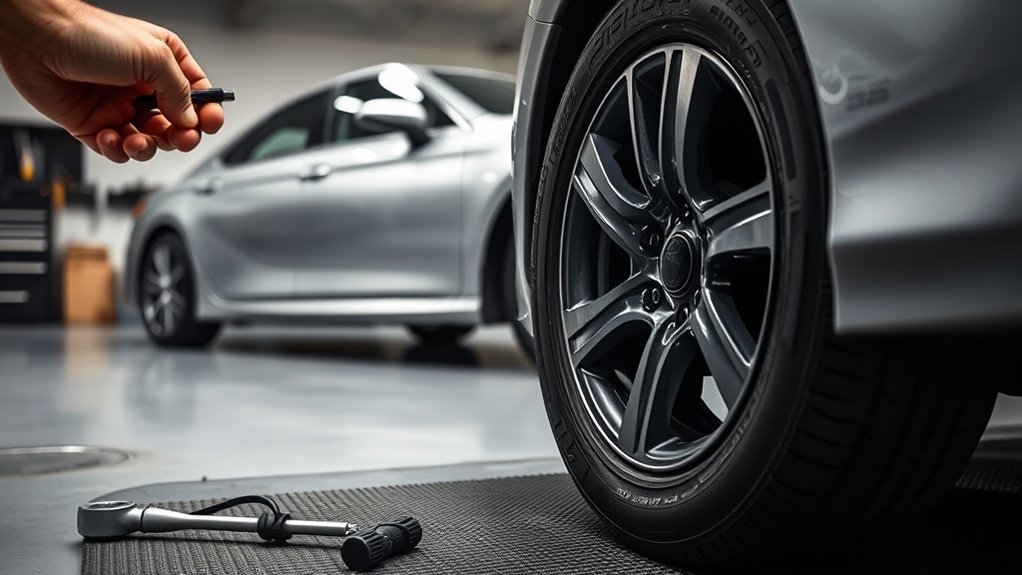
Tire maintenance is a noise fix and a safety habit. The NHTSA reports tire maintenance as part of safe driving and notes that poor tire maintenance, including low air and missed rotation, can lead to tire failure. It also reports 511 traffic fatalities in tire-related crashes in 2024.
You do not need special tools for the first round of checks. A pressure gauge, tread-depth gauge, flashlight, and careful look across all four tires can tell you whether the problem starts at the contact patch.
Check Tire Pressure
Check tire pressure at least monthly and before long trips. Use the cold-pressure method whenever possible, which means the car has been parked for at least three hours or driven only a very short distance.
- Find the correct PSI on the driver-side Tire and Loading Information Label or in the owner’s manual.
- Measure all four tires with a quality gauge.
- Add or release air until each tire matches the recommended cold pressure.
- Recheck after major temperature swings because pressure changes with weather.
- Do not rely only on the TPMS light, because it may not warn you until pressure is already significantly low.
Correct pressure helps the tread sit evenly on the road. That can reduce uneven wear, harshness, and the low hum that often builds as tires age.
Rotate and Balance
Rotating and balancing your Toyota Camry’s tires helps keep wear even and reduces the vibration that often turns into cabin noise. Follow the Toyota maintenance schedule for your model year. If your manual recommends rotation, a common interval is about every 5,000 to 8,000 miles.
| Service | Benefit |
|---|---|
| Rotate tires | Helps even out tread wear |
| Balance tires | Reduces shake and vibration |
| Check alignment | Helps prevent feathering and edge wear |
| Inspect wheels | Finds bends, dents, or damage after pothole impacts |
When you stay on top of these basics, the tires wear more evenly and the cabin stays calmer. You also avoid wasting money on sound deadening when the real problem is a tire or wheel issue.
Inspect Wear Patterns
Inspecting your Toyota Camry’s tire wear patterns can reveal problems that raise road noise before they get worse. Check each tire for feathering, cupping, bald spots, cracks, exposed cords, and low tread depth.
- Run your hand lightly over the tread to feel for sawtooth feathering.
- Compare inner and outer shoulders for uneven edge wear.
- Look for cupping or scalloping, which can point to worn shocks, balance issues, or suspension wear.
- Measure tread depth and replace tires that are at or below 2/32 inch.
- Inspect the sidewalls for bulges, cuts, or impact damage.
If one tire looks much worse than the others, fix the cause before installing new tires. A new set can become noisy quickly if alignment, shocks, or balance remain wrong.
Soundproof the Wheel Wells
Soundproofing the wheel wells can help because tire noise enters the cabin near the front footwells, rear seat area, and trunk sides. This area is one of the first places to treat after you confirm the tires and suspension are healthy.
Remove the wheel-well liners only if you are comfortable working safely around the wheels and fasteners. Clean the surface, let it dry, and apply a suitable automotive sound-deadening product according to the manufacturer’s instructions. Avoid blocking drains, vents, clips, sensors, or suspension movement.
Spray-on deadener can help in curved areas, while sheet-style damping material can help on flat metal sections behind liners. The result depends on surface prep, coverage, material thickness, and how much noise comes from the tires versus the road.
Note: Sound deadening usually reduces vibration and harshness rather than making a Camry silent. Measure the cabin before and after with the same road, speed, and phone position if you want a realistic comparison.
[Products Worth Considering]

Accurately measure tire tread depth with a calibrated gauge marked from 0 to 1 inch in 1/32 inch increments. The color-coded bar helps you quickly identify tread condition ranges, supporting safe driving for trucks, motorcycles, automobiles, and passenger vehicles.

Check tire pressure quickly and accurately with the Accutire MS-4021B digital gauge, featuring a large backlit LCD for easy visibility. The angled head and rubber-coated handle make it comfortable to grip, while unit switching lets you read psi, bar, kPa, or kg/cm2. An automatic shutoff helps preserve battery life, and it measures 5–150 PSI in small increments for confident tire maintenance.

Keep your tires properly inflated with this analog VONDIOR tire pressure gauge, designed for fast, easy readings without batteries. The swiveling, two-axis hose and large glow dial help you measure at any tire angle with instant visibility. Built with a protective rubber shield, it supports durable, low-maintenance use for cars and trucks.
Soundproof the Camry Floor
The floor is another major path for tire and pavement vibration. If your Camry has a steady low-frequency drone, floor treatment can help more than small patches in random areas.
- Use a constrained-layer damping mat on clean metal panels to reduce vibration.
- Add a dense noise barrier where it fits safely under the carpet.
- Use closed-cell foam only as a decoupler or anti-rattle layer, not as the main sound barrier.
- Keep wiring, seat mounts, airbag connectors, and drain paths accessible.
Do not stack material so thick that carpet, trim, or seat hardware no longer fits correctly. Poor fitment can create squeaks, trapped moisture, and safety issues. If you are not comfortable removing seats or trim, hire a professional installer.
[Products Worth Considering]

The Big Rig Defense Tire Thumper is a truck tire pressure checker that lets you quickly check multiple tires by giving them a firm whack. Listen for a reassuring thump and feel the stick bounce when a tire is fully inflated, helping you get back on the road safely. It features a comfortable, glove-friendly handle and a secure wrist strap for confident use on busy routes.
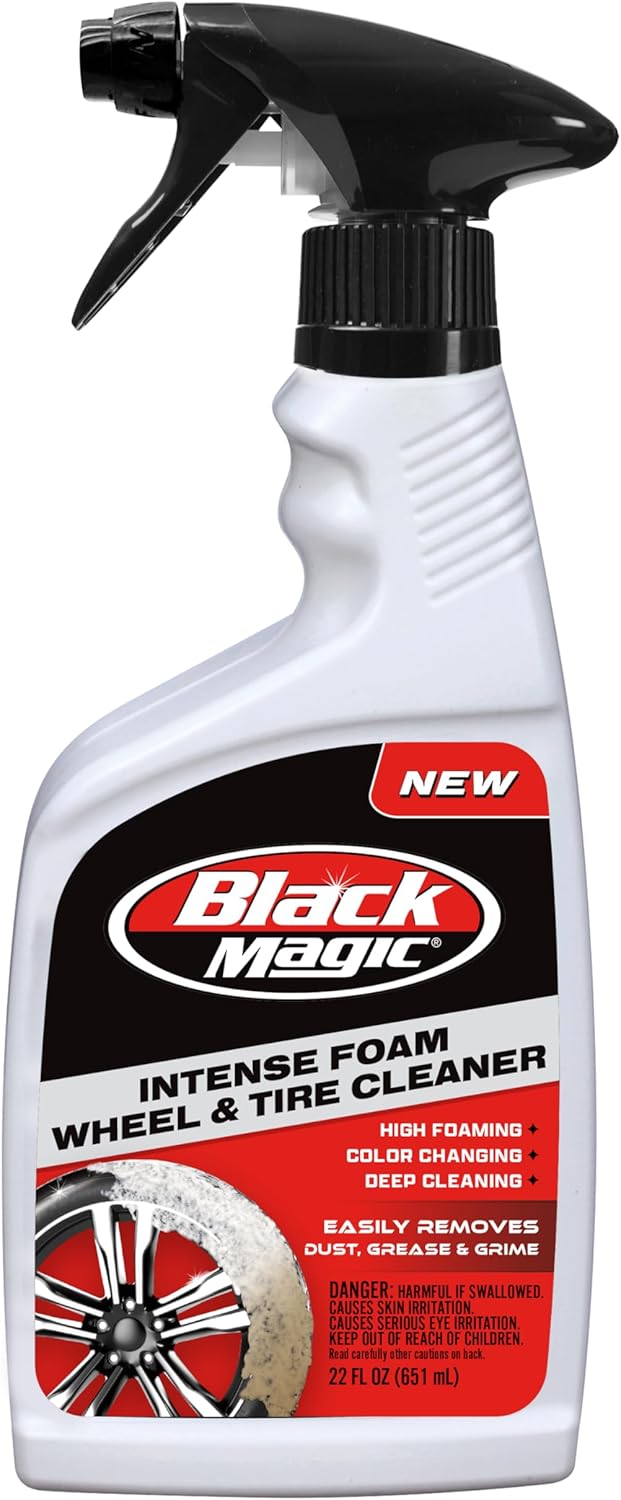
Black Magic Intense Foam Wheel & Tire Cleaner uses a high-foaming action to lift away dirt, grime, and brake dust without scrubbing. The color-changing formula helps show contaminants being dissolved as foam turns from white to brown. Safe for all wheel types and even wheel wells, it leaves a like-new, slick finish with a fresh cherry scent.

The Trivd Frol 1/2" air impact wrench delivers high performance torque up to 1500 ft-lbs with a twin hammer impact mechanism for strong, balanced blows. It features an ergonomic grip, compact lightweight design, and quick-stop control with 3 forward speeds up to 8000 RPM plus a reverse speed. Built for demanding automotive repair and tire shop work, the rear exhaust helps keep debris away from the surface.
Seal Out Noise in Doors and Trunk
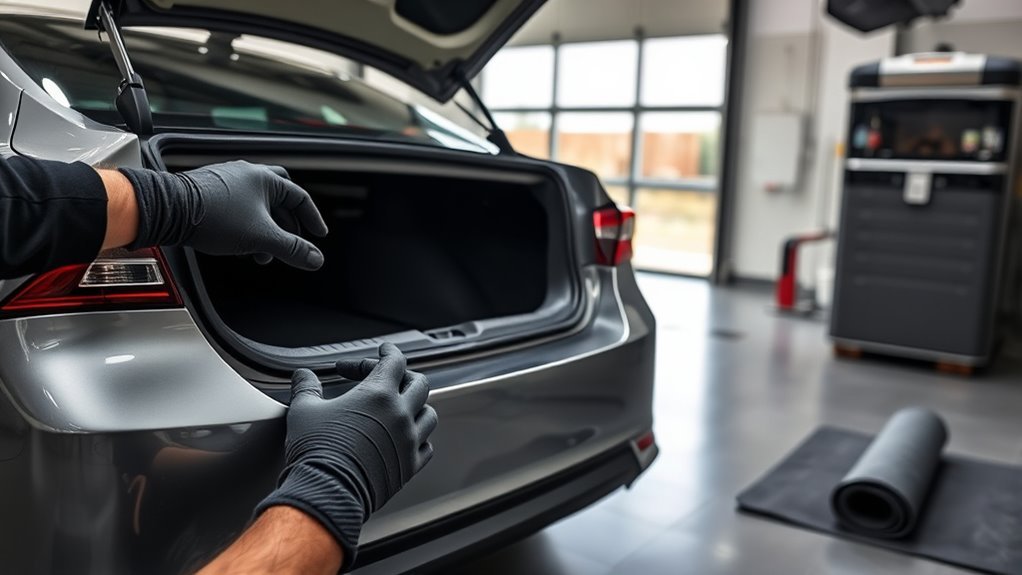
Next, focus on the doors and trunk because both can leak tire, wind, and road noise into the cabin. Door seals flatten with age, and trunk weatherstripping can leave small gaps that let noise pass through the rear of the car.
Inspect the rubber seals for cracks, tears, hard spots, or areas that no longer touch evenly. Clean the seals first. If they remain loose or damaged, replace them with the correct part for your Camry model year.
Inside the doors, small amounts of damping material on the outer metal skin can reduce panel vibration. Add a foam decoupler only where it will not trap water or interfere with window movement, wiring, clips, locks, speakers, or side-impact components.
The trunk floor and side panels can also transmit rear tire noise. Treat flat metal areas with damping material, then use a suitable barrier or liner under the trunk floor if it fits cleanly. Keep the spare tire, jack, vents, and drain areas accessible.
When to Hire a Pro for Sound Deadening
You should hire a pro when the noise remains after tire, alignment, balance, and seal checks, or when the work requires removing seats, carpet, wheel liners, or large trim panels. A trained installer can also spot loose clips, missing liners, worn insulation, and panel gaps that are easy to miss at home.
Professional work can cost several hundred dollars or more depending on the areas treated, materials used, and labor involved. That cost makes sense only after you rule out mechanical problems. Soundproofing should be the final layer, not the first guess.
Professional Installation Benefits
Professional installation can be the best choice when you want broad coverage without broken clips, rattles, or poor trim fit. Experts know where to place damping material, where to use a barrier, and where to leave factory drains and wiring alone.
- Floorboards get cleaner coverage with fewer gaps.
- Doors can be treated without blocking glass movement or drains.
- Wheel wells can be lined without interfering with suspension or liners.
- Trim can be removed and reinstalled with fewer squeaks.
This approach works best when your Camry is already mechanically sound. If the tires are cupped or a bearing is failing, even a perfect sound-deadening job will not fix the source.
Signs DIY Isn’t Enough
Even with careful DIY sound deadening, some Toyota Camry noise problems stick around. That usually means the source is mechanical, structural, or too broad for small patchwork.
- The noise changes when you turn left or right.
- The steering wheel, seat, or floor shakes at a specific speed.
- New tires became loud again after a few thousand miles.
- You see cupping, feathering, or one-sided tire wear.
- Door or trunk seals look damaged, but you cannot locate the leak.
At that point, a tire shop, alignment specialist, mechanic, or automotive sound-deadening installer can save you from guessing.
Camry Noise Fixes That Actually Work
If your Camry’s cabin is getting drowned out by road noise, work from the cheapest checks to the most involved upgrades. Start with tire pressure, tread condition, balance, rotation, and alignment. Then inspect seals and loose trim. After that, consider quieter tires or sound-deadening material.
Choose quieter tires and add insulation only after you confirm the tires, wheels, alignment, and suspension are healthy.
- Set cold tire pressure to the driver-side placard or owner’s manual specification.
- Rotate, balance, and align the tires when wear patterns or vibration point that way.
- Replace noisy, cupped, or worn tires with properly sized touring tires.
- Refresh damaged door and trunk weatherstripping.
- Treat wheel wells, floor, doors, and trunk with the right sound-deadening materials.
These fixes work best together. A Camry with good tires, straight alignment, sealed openings, and targeted insulation will usually feel calmer than one with only random sound-deadening patches.
Frequently Asked Questions
How do I make my car with all-terrain tires sound less noisy when driving?
Keep the tires properly inflated, rotate and balance them on schedule, and check alignment. All-terrain tires often use larger tread blocks, so they may stay louder than touring tires on pavement. If you mostly drive on-road, switching to a quieter highway or touring tire can make a bigger difference than soundproofing.
Why does my Toyota Camry sound loud?
Your Camry may sound loud because of tire wear, low tire pressure, wheel imbalance, poor alignment, rough pavement, worn seals, missing liners, or a mechanical issue such as a wheel bearing. If the sound changes while turning or comes with vibration, inspect the car before adding sound-deadening material.
Will sound deadening make a Camry as quiet as a luxury car?
Sound deadening can reduce vibration, harshness, and some tire noise, but it will not turn a Camry into a luxury sedan by itself. Tires, road surface, glass thickness, factory insulation, seals, suspension design, and body structure all affect cabin noise.
What is the cheapest way to reduce Camry road noise?
The cheapest first step is to set cold tire pressure correctly, inspect tread wear, remove loose items from the trunk, and check for damaged door or trunk seals. If the tires are unevenly worn, rotation, balancing, or alignment may help more than adding insulation.
Do quieter tires really reduce road noise?
Yes, tire choice can change how much road noise you hear, especially at highway speed. Choose a properly sized touring or grand-touring tire with comfort-focused reviews. Avoid aggressive tread designs unless you need their traction benefits for your driving conditions.
Conclusion
If your Camry still hums on the highway, do not start by covering the cabin with random insulation. Start with tire pressure, tread wear, wheel balance, alignment, and suspension condition. Those checks fix many noise problems and protect tire life at the same time.
After the car checks out mechanically, choose quieter tires and treat the places where road noise enters most: wheel wells, floor, doors, and trunk. These steps will not make every road silent, but they can make your Camry feel smoother, calmer, and easier to live with every day.
Sources
- NHTSA TireWise — tire pressure, tread, rotation, balance, alignment, tire safety, and 2024 tire-related crash data.
- Toyota Owners Manuals and Warranty Manuals — model-year owner manual and maintenance guide lookup for Toyota vehicles.
- CDC/NIOSH Noise-Induced Hearing Loss — sound level, duration, and hearing-risk context.
- Tire Rack: How to Read a Tire Sidewall — tire size, load, and speed-rating basics for tire shopping.