The safest tire pressure for highway driving in a 2025 Toyota Hilux or HiLux is the cold PSI printed on your own vehicle’s tire placard or owner’s manual. Do not rely on one universal number online, because Hilux pressure can vary by market, tyre size, cab style, grade, load, and towing setup.
Quick Answer
For normal highway driving, inflate your 2025 Toyota Hilux tires to the cold pressure shown on the driver-door placard or in the owner’s manual. Do not treat 35 PSI front and 38 PSI rear as universal. Check pressures cold, before long trips, and adjust for towing or heavy loads only when your manual or placard says to.
Key Takeaways
- The correct Toyota Hilux tire pressure is the cold PSI on your vehicle placard, not the maximum PSI printed on the tire sidewall.
- A single online number can be wrong because Hilux tyre sizes and specifications vary by market and trim.
- Check pressure when the tires are cold, ideally before driving, at least monthly, and before highway trips.
- Never drive at highway speed on sand/off-road pressures; reinflate before returning to sealed roads.
At a Glance
| Time Required | 5–10 minutes |
| Difficulty | Easy |
| Tools Needed | Accurate tire pressure gauge, air compressor, valve caps, and your vehicle placard or owner’s manual |
| Cost | Usually free at a service station; low-cost gauge if you buy your own |
Why Proper Tire Pressure Is Crucial for Highway Safety
Highway driving puts steady heat and load into your tires. If the pressure is too low, the sidewalls flex more, heat builds up, fuel economy drops, and the tire can wear unevenly. If the pressure is too high for your vehicle’s load, the ride can become harsh and the tread may not contact the road as Toyota intended.
The National Highway Traffic Safety Administration advises drivers to use the vehicle manufacturer’s recommended cold inflation pressure shown on the tire information placard or certification label. That is the number you should trust first for your 2025 Toyota Hilux.
Keeping tires inflated to the proper pressure can improve gas mileage by 0.6% on average and up to 3% in some cases, according to FuelEconomy.gov.
Proper pressure also helps the Hilux steer, brake, and carry weight more predictably. It is especially important before long highway trips, towing, carrying tools or cargo, or driving in hot weather.
Where to Find the Correct 2025 Toyota Hilux Tire Pressure
For the most accurate answer, check these sources in this order:
| Where to Check | What to Look For | Why It Matters |
|---|---|---|
| Driver-door tire placard | Cold front and rear PSI/kPa for your exact vehicle | This is the fastest and safest pressure reference for daily highway driving. |
| Owner’s manual | Normal load, heavy load, towing, and spare tire instructions | Load and trailer guidance can be different from normal driving pressure. |
| Toyota dealer or service center | Pressure for your VIN, market, tyres, and accessories | Useful if your tyres are not the original size or your vehicle carries added equipment. |
Note: Toyota Hilux specifications can vary by country and grade. Toyota UK’s current technical information lists different Hilux tyre sizes by trim, including 265/65R17 and 265/60R18, which is one reason a single PSI number should not be treated as universal.
Is 35 PSI Front and 38 PSI Rear Correct for a 2025 Hilux?
It may be correct only if your specific Hilux placard or owner’s manual says so. It should not be published as a universal 2025 Hilux tire pressure.
Some online tire-pressure databases show lower values for certain Hilux tyre sizes, while other sites show different numbers. That does not always mean one source is lying; it usually means the vehicles, tyres, markets, trims, or load assumptions are different.
Warning: Do not set your Hilux tires to 35/38 PSI simply because an article says so. Use the cold PSI on your door placard or owner’s manual. Also, never exceed the tyre sidewall maximum pressure, axle rating, gross vehicle mass, or towing limits.
[Products Worth Considering]

Keep your tires properly inflated with this analog VONDIOR tire pressure gauge, designed for fast, easy readings without batteries. The swiveling, two-axis hose and large glow dial help you measure at any tire angle with instant visibility. Built with a protective rubber shield, it supports durable, low-maintenance use for cars and trucks.
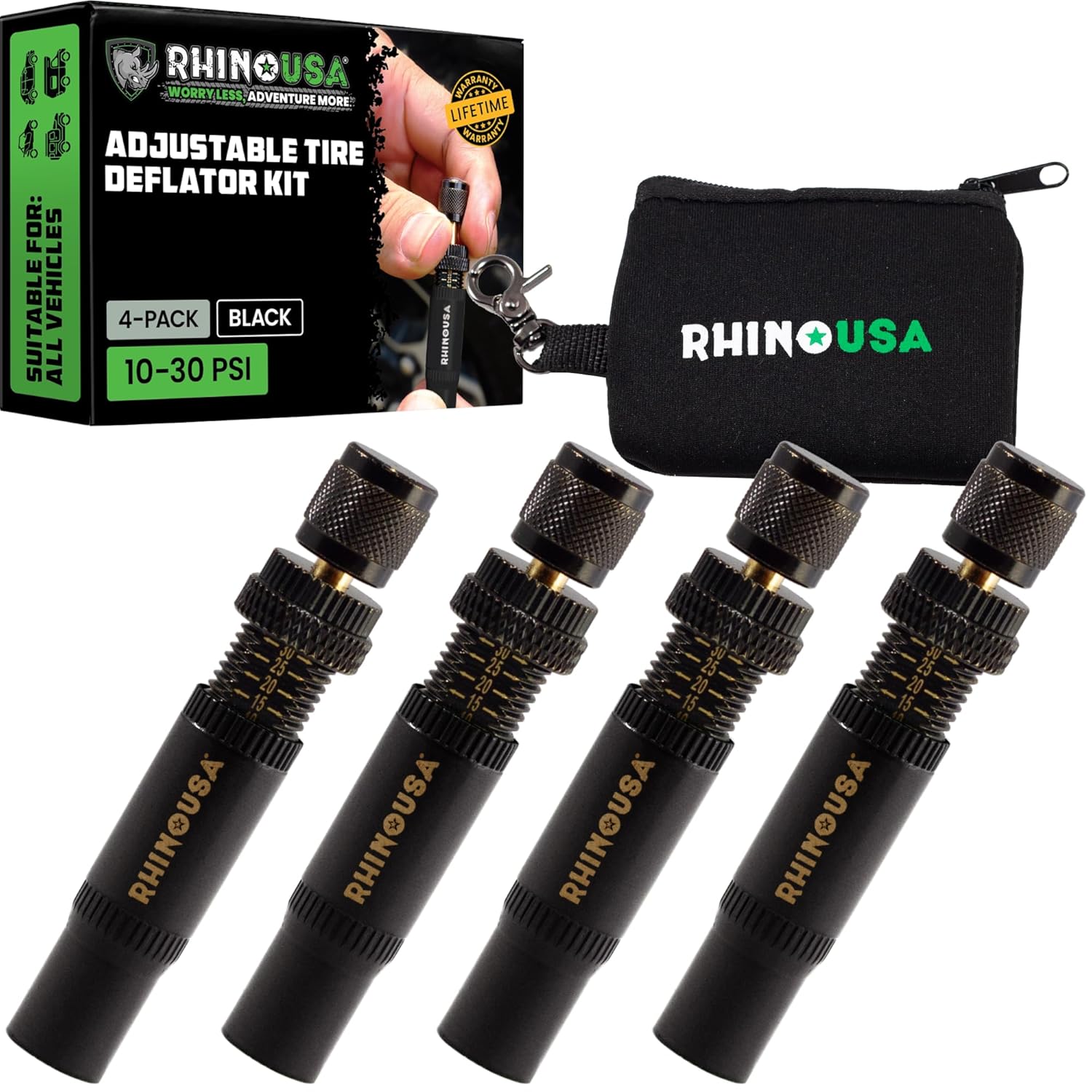
Use the Rhino USA adjustable tire deflators to air down all four tires at once by screwing one deflator onto each valve stem, letting you step away while the tires reach your preset pressure. Each deflator independently adjusts across a 10–30 PSI range with laser-etched indicators for quick setup and verification, making it ideal for beach, sand, and rocky off-road trails.
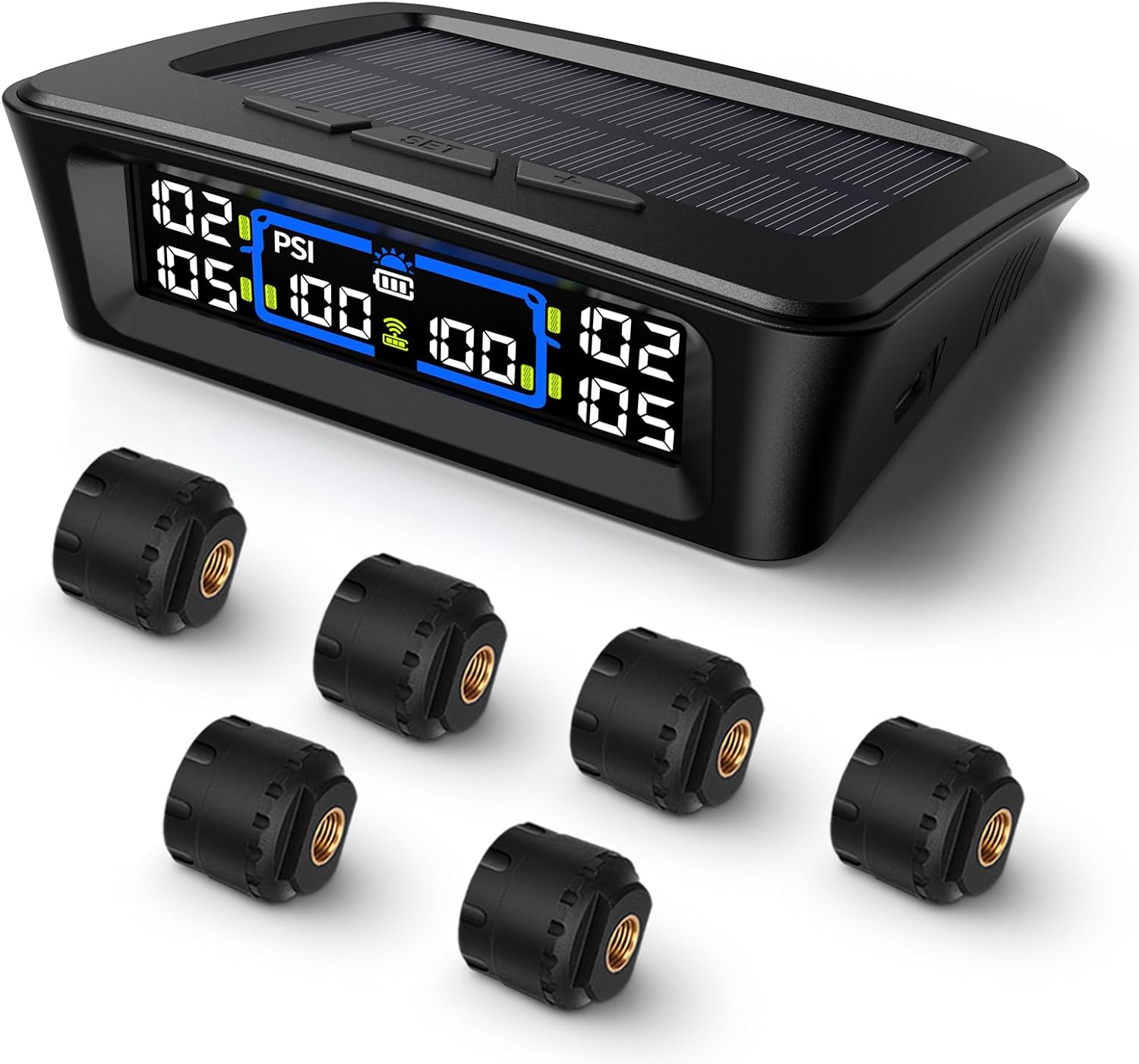
The Tymate TM12 RV TPMS delivers real-time tire pressure and temperature monitoring with a stable 433Hz display for safer long-distance driving. It supports simultaneous monitoring across vehicle and trailer zones, includes six alarm modes for pressure, temperature, leakage, battery, and signal loss, and features easy DIY installation with auto calibration. Power is supplied via USB-C charging or solar recharging, with a wide 0–144 PSI range and up to 50 ft signal coverage for RVs and towable trailers.
Recommended Pressure by Driving Condition
Use this table as a decision guide, not as a replacement for your placard.
| Condition | What to Do | Important Safety Note |
|---|---|---|
| Normal highway driving | Set all tires to the cold PSI shown on your vehicle placard. | Check before the trip, not after the tires are hot. |
| Heavy cargo | Use the load-specific pressure in your manual or placard if provided. | Do not guess extra PSI; load also affects braking and handling. |
| Towing | Follow the owner’s manual towing section and trailer manufacturer guidance. | Check vehicle and trailer tires separately. |
| Cold weather | Check pressure cold and restore it to placard PSI. | Pressure often drops when temperature falls, so do not rely only on a past reading. |
| Wet highway driving | Use placard PSI and make sure tread depth is legal and even. | Do not overinflate to “cut through” water; correct pressure and good tread matter most. |
| Sand or soft off-road surfaces | Lower pressure only temporarily and only for low-speed off-road use. | Reinflate to road pressure before highway driving. |
[Products Worth Considering]
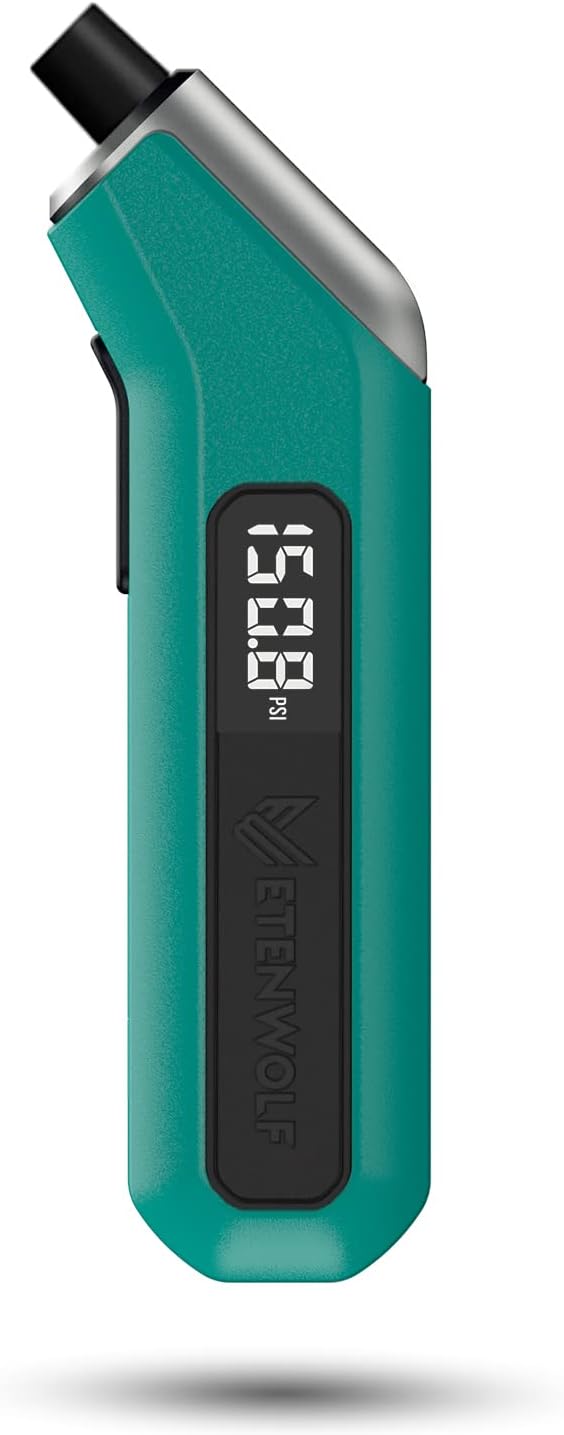
ETENWOLF T300 is a calibrated digital tire pressure gauge designed for reliable readings across low and high pressure ranges. It includes thermal compensation for stable performance in extreme cold or heat, an LED light for visibility, and an auto shut-off to help preserve battery life. Ideal for pickups, RVs, and heavy-duty vehicles, it delivers accurate PSI measurements with sturdy durability.

The TYAMATE TM8 solar-powered wireless TPMS delivers real-time tire pressure and temperature monitoring with six alarm modes for safer driving. A vibrant color LCD display shows readings clearly while windshield mounting keeps it hands-free and easy to read. With a wide 0–87 PSI range, strong 433.92 MHz signal transmission, and quick sensor pairing, it’s ideal for RV, sedan, SUV, MPV, and truck use.
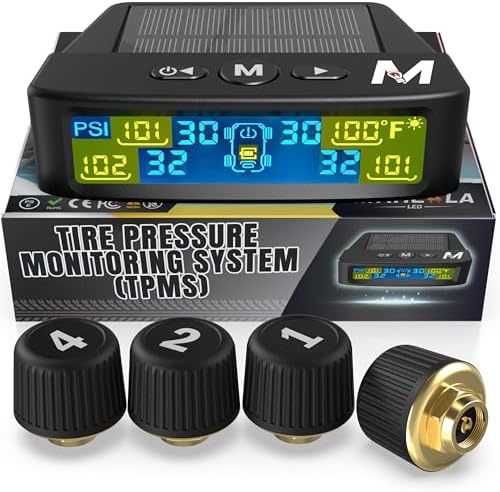
Marcala’s TPMS set of four sensors helps you monitor tire pressure and temperature in real time while driving, with updates every second. The bright color LCD uses auto-dimming for easy viewing, powered by dual solar and USB charging, and offers six alarm modes. Built for trailers, RVs, campers, trucks, and towing setups, the sensors support monitoring 1-4 wheels up to 98 PSI with IP67 waterproof protection.
Checking Your Hilux Tire Pressure: Step by Step
- Park safely and let the tires cool. For the most accurate reading, check before driving or after the vehicle has been parked for several hours.
- Find the placard PSI. Look on the driver-door jamb or inside the owner’s manual. Use the cold front and rear pressure listed for your vehicle.
- Remove the valve cap. Keep the cap somewhere clean so dirt does not enter the valve.
- Press the gauge firmly onto the valve stem. A short hiss is normal, but a long hiss usually means the gauge is not seated correctly.
- Compare the reading with the placard. Add air if low. If high, release small amounts and recheck.
- Repeat for all tires, including the spare if fitted. Spare tires are often forgotten until they are needed.
- Refit the valve caps. Caps help keep moisture and dirt away from the valve core.
Pro Tip: Keep a small digital gauge in the glove box. Service-station gauges can be convenient, but your own gauge helps you check pressure before the tires heat up.
How Often Should You Check Hilux Tire Pressure?
Check your Hilux tire pressure every two weeks if possible, and at least once a month. Also check before highway trips, before towing, after a sharp temperature change, and any time the vehicle feels heavy, unstable, or different from normal.
A tire pressure monitoring system can warn you when a tire is significantly underinflated, but it does not replace manual checks. A tire can be below the ideal placard pressure before a warning light appears.
Adjusting Tire Pressure for Load, Towing, and Conditions
[Products Worth Considering]

The Topeak SmartGauge D2 delivers precise digital tire pressure readings for bikes, motorcycles, and sports equipment up to 250 psi (17 bar). Its rotating SmartHead works with both Presta and Schrader valves, so you can check pressure quickly without adapters. The LCD display makes it easy to read results in psi, bar, or kg/cm² with an included CR2032 battery for immediate use.

This 100-piece set of snap-in tubeless tire valve stems is designed for standard 0.453 in (11.5 mm) rim holes and helps maintain reliable, steady tire pressure. Made with ozone-resistant rubber and brass cores, the valves are built for durability and long-term use. Easy to install by hand, they support safe driving and are suitable for cars, light trucks, trailers, and more.

These aluminum alloy tire valve stem caps with an O-ring seal help protect valve stems from corrosion while adding a clean, stylish look to your vehicle. The universal fit works across cars, trucks, motorcycles, bicycles, and more, making them an easy upgrade for everyday driving and off-road use. Installation is quick, and the included four-pack keeps all your tires dressed and protected.
Heavy Loads and Cargo
A Hilux carrying tools, camping gear, building materials, or passengers may need different pressure than an empty vehicle. Use the owner’s manual and placard for load-specific instructions. Also remember that air pressure is only one part of safe loading; you must stay within the vehicle’s payload, axle, tyre load, and gross vehicle mass limits.
Towing a Trailer
When towing, check both the Hilux tires and the trailer tires. The rear axle carries extra load from tow-ball weight, so the owner’s manual may give towing-specific guidance. Follow that guidance rather than adding a random 4–6 PSI.
Seasonal Temperature Changes
Cold weather can lower tire pressure, while hot driving raises pressure after the tires warm up. The correct routine is simple: check pressure when the tires are cold and set it to the placard value. Do not bleed air from hot tires just because the reading is higher after highway driving.
Sand and Off-Road Driving
Lowering tire pressure can help traction on sand, but it is for slow off-road use only. Lower pressures create more heat and sidewall flex at road speeds. Reinflating before you return to the highway is not optional; it is a safety step.
Warning: Never drive at highway speed on sand pressures. If you air down off-road, carry a compressor or plan a safe reinflation stop before returning to sealed roads.
Debunking Tire Pressure Myths
Myth: Higher Pressure Always Improves Fuel Economy
Proper inflation can help fuel economy, but overinflation is not the goal. Too much pressure for your vehicle and load can reduce ride comfort, increase uneven wear, and reduce the intended contact patch. Use the placard pressure.
Myth: The Sidewall PSI Is the Right Running Pressure
The PSI molded into the tyre sidewall is usually a maximum pressure for that tire, not the recommended running pressure for your Hilux. The vehicle placard is the correct starting point.
Myth: You Only Need to Check Pressure When the TPMS Light Comes On
TPMS is a backup warning, not a maintenance schedule. Check manually, especially before highway driving, long trips, towing, and seasonal temperature changes.
What to Do When Your Tires Show Warning Signs?
Stop and inspect your tires if you notice vibration, pulling, noise, a pressure warning light, visible damage, or a tire that keeps losing air. Do not ignore these signs before highway driving.
- Uneven tread wear: Check pressure, alignment, suspension, and rotation schedule.
- Bulges or blisters: Do not continue high-speed driving; have the tire inspected or replaced.
- Visible cuts, cords, or cracks: Get professional help before the next highway trip.
- Rapid pressure loss: Treat it as a puncture or valve problem until proven otherwise.
- Steering vibration: Check for imbalance, damage, uneven wear, or a shifted belt.
For tread depth, follow the law in your country. For example, the UK Highway Code says cars and light vans must have at least 1.6 mm of tread across the central three-quarters of the tyre and around the full circumference. Replace tires sooner if grip is poor, wet braking feels weak, or the tread is uneven.
Maintaining Tire Health for Optimal Performance
Tire pressure is only one part of keeping your Toyota Hilux safe and efficient. Combine pressure checks with a simple maintenance routine:
- Check pressure cold before long highway trips.
- Rotate tires at the interval recommended in your manual or by your service center.
- Inspect tread depth and look for uneven wear.
- Check wheel alignment if the vehicle pulls, the steering wheel is off-center, or one shoulder wears faster.
- Replace damaged valve caps and leaking valve stems.
- Use tyres with the correct size, load rating, and speed rating for your Hilux.
Small pressure checks prevent bigger problems. They help your Hilux track straight, brake consistently, carry loads more safely, and avoid premature tyre wear.
Frequently Asked Questions
What tire pressure should I use for a 2025 Toyota Hilux on the highway?
Use the cold tire pressure printed on your Hilux driver-door placard or owner’s manual. That number is safer than a generic online PSI because Hilux specifications vary by market, tyre size, trim, and load.
Is 35 PSI front and 38 PSI rear correct for a 2025 Toyota Hilux?
Only if your specific vehicle placard or manual says so. Do not use 35/38 PSI as a universal Hilux setting. If your placard shows a different front or rear pressure, follow the placard.
How much air should be in a Hilux tyre for sand driving?
Sand pressure depends on tyre size, load, terrain, and speed. Many off-road drivers temporarily reduce pressure for soft sand, but this is for low-speed off-road use only. Reinflation to road pressure is required before highway driving.
Is 40 PSI too high for a 4WD Hilux?
It depends on your placard, tyre, load, and driving condition. For an unloaded Hilux, 40 PSI may be higher than the normal placard setting. For some loads or tyre setups, it may be within the allowed range. Always compare it with the manual and sidewall maximum.
Is 26 PSI too low for highway driving?
For most Hilux highway use, 26 PSI is likely too low unless your placard specifically says otherwise, which would be unusual for normal road driving. Low pressure can cause heat buildup, poor handling, and uneven wear. Check cold and inflate to placard PSI before highway speeds.
Is 42 PSI too high to drive?
42 PSI is too high if it is above your Hilux placard recommendation for the load you are carrying, or if it exceeds the tire or vehicle limits. It may be suitable only in certain load or towing situations if the manual allows it. Do not guess.
Conclusion
For highway driving, the right Toyota Hilux tire pressure is not a one-size-fits-all 35/38 PSI answer. The correct setting is the cold pressure on your vehicle’s door placard or owner’s manual. Check it before long trips, adjust only according to Toyota’s load and towing guidance, and reinflate after any off-road deflation. This simple habit improves safety, handling, tyre life, and fuel efficiency.
Sources
- NHTSA Tire Safety — cold tire pressure, placard guidance, tire maintenance, and safety risks.
- FuelEconomy.gov: Keeping Your Vehicle in Shape — fuel-economy effect of proper tire inflation.
- Toyota UK Owner’s Manuals — official manual lookup for Toyota vehicles.
- Toyota Hilux Technical Specifications — current Hilux tyre size and specification context.
- UK Highway Code: Vehicle Maintenance, Safety and Security — tyre inflation and tread-depth safety requirements.