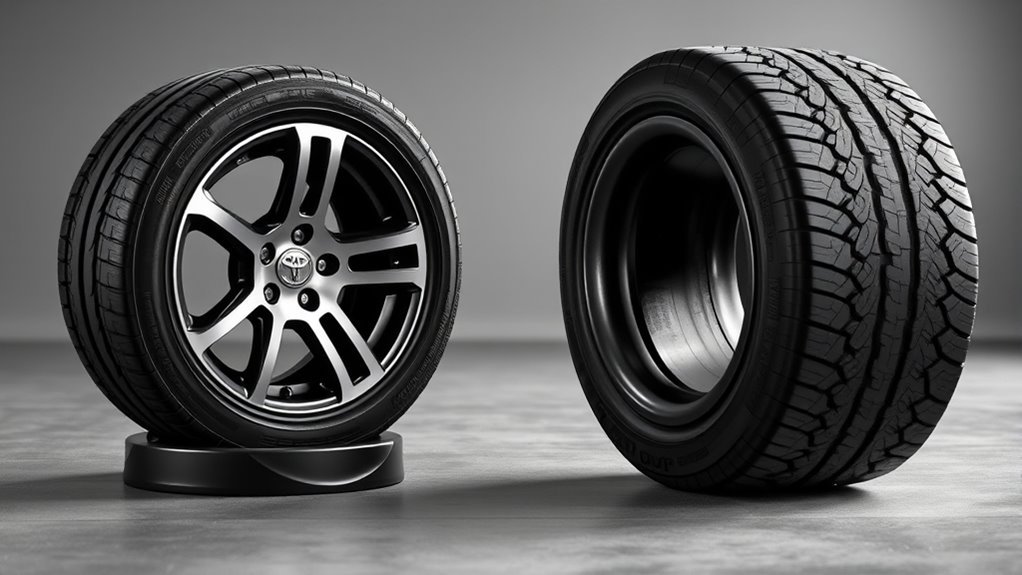
Choosing between directional and non-directional tires for your Toyota Camry is not just about wet grip. It also affects how the tires are mounted, how easily they can be rotated, how evenly they wear, and how simple future service will be. The best choice depends on your weather, driving style, tire size setup, and how much maintenance flexibility you want.
Quick Answer
Directional tires are best if your Camry often sees heavy rain and you want strong water evacuation from an arrow-like tread. Non-directional tires are usually the easier everyday choice because they allow more rotation patterns, simpler service, and more even wear management.
Key Takeaways
- Directional tires have a required rolling direction, usually shown by an arrow on the sidewall.
- Non-directional tires can roll either direction, which gives you more rotation options on a Camry with same-size tires.
- Wet grip depends on tread design, tread depth, compound, tire pressure, and speed, not tread direction alone.
- For most daily Camry drivers, a quality non-directional touring or all-season tire is the simplest choice.
What Are Directional and Non-Directional Tires?

Directional tires are designed to roll in one direction. Many use a V-shaped, arrow-like, or swept tread pattern that helps move water away from the tire’s contact patch. You can usually identify them by a sidewall arrow or wording such as “ROTATION.” If the arrow points the wrong way when the car moves forward, the tire is mounted incorrectly.
Non-directional tires do not require one specific rolling direction. Many are symmetric, which means the inner and outer tread halves look the same. Some are asymmetric, which means they have an “OUTSIDE” and “INSIDE” sidewall, but they can still roll either direction after they are mounted correctly on the wheel. That extra flexibility makes rotation easier on many Toyota Camry setups.
Note: Do not judge a tire only by the tread shape. Check the sidewall. A directional tire should have a rotation arrow, while an asymmetric tire may have “OUTSIDE” and “INSIDE” markings.
Directional vs Non-Directional Tires on a Camry
For a Toyota Camry, the difference shows up most clearly in wet-road confidence, rotation flexibility, ride comfort, and long-term wear. Directional tires can be a good fit if your area gets heavy rain and you choose a tire model built for strong wet performance. Non-directional tires are often better for normal commuting because they are easier to rotate and easier for most tire shops to service.
| Feature | Directional Tires | Non-Directional Tires |
| Best for | Rainy roads, wet traction, and drivers who want a more focused tread design. | Daily commuting, easier rotation, balanced ride comfort, and simple maintenance. |
| Rotation | Front-to-rear on the same side unless the tires are removed and remounted. | Can usually use forward cross, X-pattern, or other approved patterns if all four tires are the same size. |
| Wet grip | Often strong in standing water when mounted correctly and maintained well. | Can still be excellent if the tire has a good wet-traction rating and enough tread depth. |
| Main tradeoff | Fewer rotation options and stricter mounting rules. | May not have the same focused water-channeling design as some directional models. |
[Products Worth Considering]
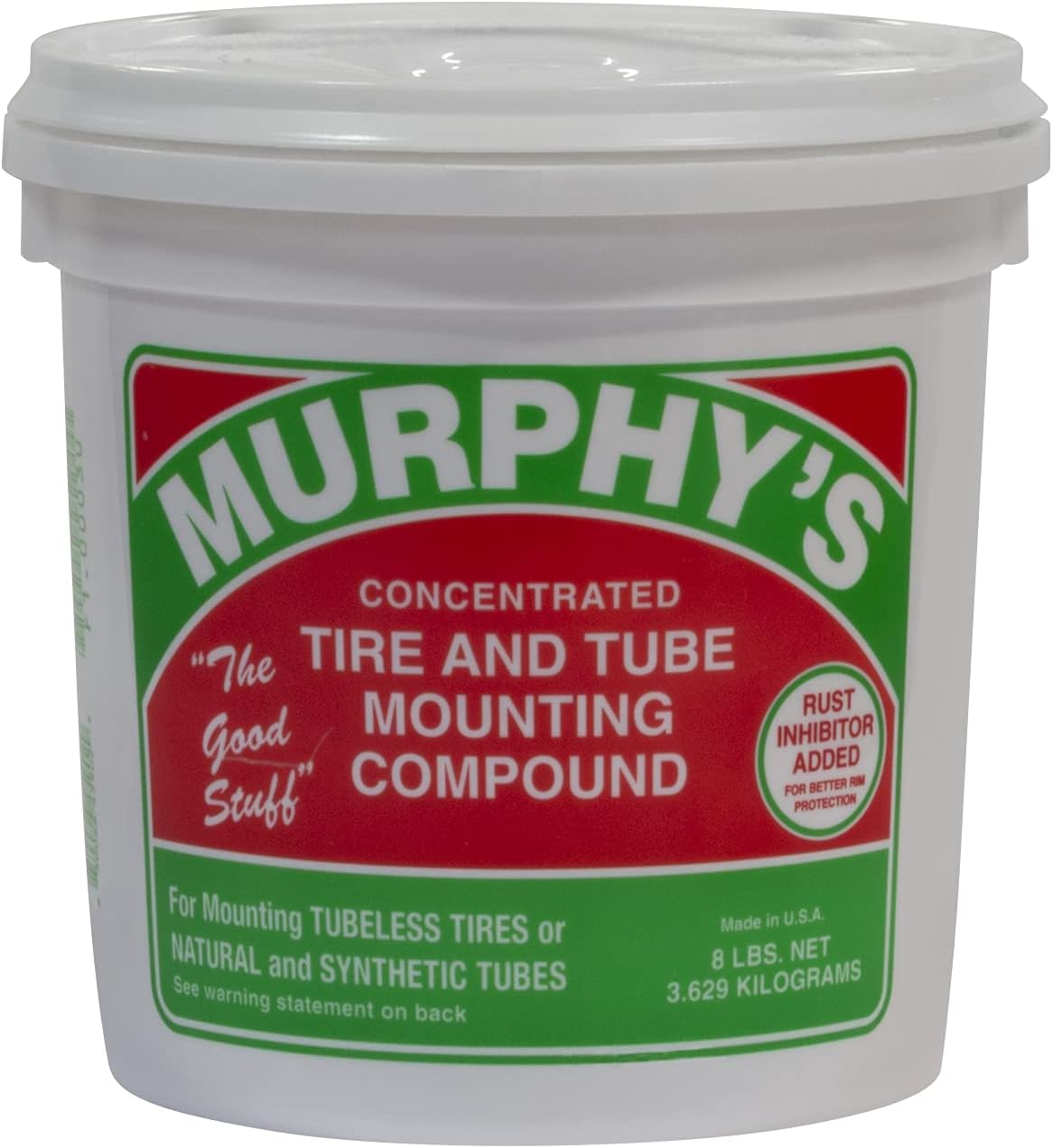
A concentrated tire and tube mounting compound designed to help simplify mounting rubber tires and tubes on passenger, semi truck, construction, and OTR applications. Its ultra-thick formula packs beads effectively and includes rust inhibitors to help protect against corrosion during use.

These universal tire valve stem caps help protect valve cores from dust, debris, and moisture while helping maintain stable tire pressure. The corrosion-resistant metal construction and sealed design provide reliable protection in road grime, mud, and winter conditions. Twist-on installation makes them quick to fit on cars, SUVs, trucks, and motorcycles.

Upgrade your Toyota’s wheels with durable aluminum alloy valve stem caps that help protect valve cores from corrosion and direct exposure to road grime, clay, water, and snow. Rubber rings improve sealing to help prevent air leakage and maintain stable tire pressure for safer driving. These caps are easy to install or remove without tools and add a unique, stylish look to your car.
Directional Tires: Wet-Weather Grip and Tradeoffs
Directional tires can work well on a Camry if you often drive through heavy rain, deep puddles, or fast highway spray. Their tread is designed to roll one way, so the grooves can channel water in the intended direction. That can help reduce hydroplaning risk when the tire has enough tread depth and the driver keeps speed reasonable.
The biggest downside is rotation flexibility. According to Michelin’s tire rotation guidance, directional tires are designed to rotate in only one direction and should stay on the same side of the vehicle during front-to-rear rotation. Crossing them left to right without remounting can reverse the tread direction.
Warning: Never install a directional tire backward. Reversed directional tread can reduce the wet-road benefit the tire was designed to provide and may increase noise, vibration, or poor handling.
Directional tires are not automatically better in snow or ice. For winter driving, look for a true winter tire with the three-peak mountain snowflake symbol, not just a directional tread. The tread direction helps only if the tire compound and winter rating match the conditions.
[Products Worth Considering]

These aluminum alloy tire valve stem caps with an O-ring seal help protect valve stems from corrosion while adding a clean, stylish look to your vehicle. The universal fit works across cars, trucks, motorcycles, bicycles, and more, making them an easy upgrade for everyday driving and off-road use. Installation is quick, and the included four-pack keeps all your tires dressed and protected.

Measure tyre tread depth precisely with a digital gauge that reads in both MM and inches, helping you monitor safe driving conditions. The large LCD screen is easy to operate, and the compact tool fits for cars, trucks, and motorcycles. It provides high accuracy with a 0-25.4mm range and includes a 1-year warranty for added peace of mind.

Measure tire tread depth quickly and accurately with this LUMITECO dial gauge that reads in 1/32" increments up to 14/32". The color-coded green/yellow/red zones make it easy to judge tire wear and know when replacement is needed. A rugged, compact design with a protective pouch helps keep the gauge ready for use on cars, trucks, motorcycles, and more.
Non-Directional Tires: Rotation Flexibility and Longer Life
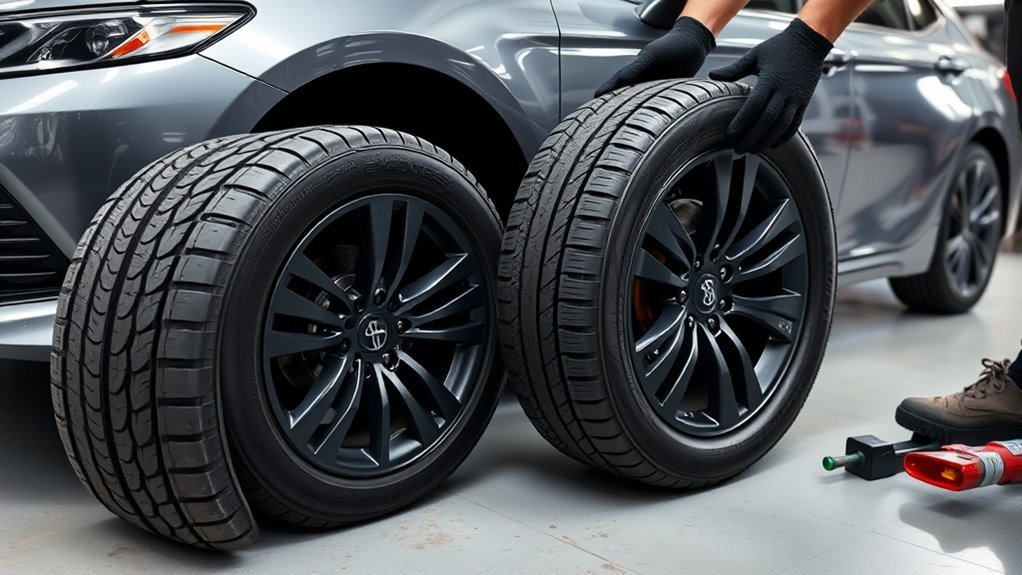
Non-directional tires are usually the more practical choice for everyday Camry driving. Because they can roll either direction, your shop has more freedom to rotate them in the pattern that fits your drivetrain and tire setup. That can help the tires share the workload more evenly over time.
On a front-wheel-drive Camry with four same-size, non-directional tires, a common pattern is the forward cross: the front tires move straight back, while the rear tires move to the front and cross sides. Bridgestone describes this as the most common pattern for front-wheel-drive vehicles. If your Camry is an AWD model, or if your tires are not all the same size, follow the owner’s manual or ask a qualified tire shop.
Pro Tip: Rotate Camry tires on a regular schedule, often around every 5,000 to 8,000 miles if recommended for your vehicle and tire warranty. Rotate sooner if you see uneven shoulder wear, cupping, vibration, or a pull to one side.
Non-directional tires do not automatically last longer because of the tread label alone. They can be easier to keep wearing evenly, but tread life still depends on tire quality, inflation pressure, alignment, balancing, road surface, braking habits, and how often you rotate them.
How to Identify the Tires on Your Camry
Before you choose a rotation pattern or buy replacement tires, check the tire sidewall. This quick check prevents most mounting and rotation mistakes.
- Look for a rotation arrow: If the sidewall says “ROTATION” with an arrow, the tire is directional.
- Look for outside/inside markings: If the tire says “OUTSIDE” and “INSIDE,” it is asymmetric and must be mounted with the correct side facing outward.
- Check tire size: Confirm all four tires match the size on the driver-door tire placard or owner’s manual.
- Check tread depth: The National Highway Traffic Safety Administration says tires are not safe and should be replaced when tread is worn to 2/32 inch.
- Check pressure cold: Measure pressure when the tires have not been driven for at least three hours, and use the Camry’s door placard pressure, not the maximum pressure printed on the tire.
Which Tire Type Fits Your Driving Needs?
Choose directional tires if you drive often in heavy rain, want a tire built around water evacuation, and do not mind a stricter front-to-rear rotation pattern. They can be a smart choice for wet highways or performance-focused tire models, as long as they are mounted in the correct direction.
Choose non-directional tires if your Camry is mainly a commuter, family car, or road-trip sedan. A good non-directional touring or all-season tire usually gives the better mix of comfort, quietness, treadwear, and simple maintenance. For many Camry owners, that balance matters more than the small wet-road advantage a specific directional model may offer.
The tire’s real-world safety depends more on tread depth, pressure, alignment, and correct mounting than on the directional label alone.
[Products Worth Considering]

Chemical Guys ShineLogic Tire Shine delivers a deep wet black, high-shine finish for rubber tires with a sleek look. It’s designed for durable, one-step application with minimal drips, streaks, or runs, and it helps produce effortless, long-lasting shine. Choose aerosol or trigger spray for easy use on cars, trucks, motorcycles, RVs, and more.

The SAFELIFE dial tire tread depth gauge measures tread depth in 1/32 inch increments with clear, easy-to-read 2-inch dial face. Color zones using a traffic light system help you quickly judge whether tread is low, marginal, or ample for safer driving. Built with a durable zinc cast body and a metal detect probe for precise, comfortable use across cars, motorcycles, trucks, and buses.

Monitor tire tread wear with a smart, color-coded depth gauge that shows clear condition ranges at a glance. The bar is range marked for fast, easy readings, helping you maintain safer traction and performance. Each gauge is portable with a pocket clip, and the set includes 20 units for daily use and sharing.
Frequently Asked Questions
Are directional or non-directional tires better for a Toyota Camry?
Neither type is always better. Directional tires can be better for heavy rain and focused wet-road performance. Non-directional tires are usually better for everyday Camry commuting because they are easier to rotate, service, and keep wearing evenly.
Can I rotate directional tires side to side on my Camry?
Not normally. Directional tires should stay on the same side of the car and move front to rear only. Moving them side to side would reverse the rolling direction unless the tires are removed from the wheels and remounted correctly.
Do non-directional tires last longer?
They can be easier to keep wearing evenly because they allow more rotation patterns. That does not guarantee longer life. Tire compound, treadwear rating, pressure, alignment, balancing, driving habits, and rotation schedule all affect how long the tires last.
Are directional tires louder than non-directional tires?
They can be, but it depends on the tire model. Aggressive directional tread may create more pattern noise, while many modern directional tires are designed to stay quiet. Always compare the specific tire’s reviews, warranty, and road-noise ratings.
Can I mix directional and non-directional tires?
It is better to avoid mixing tire types, tread patterns, sizes, or wear levels unless the tire maker or vehicle manual allows it. A matched set gives more predictable braking, steering, traction, and rotation options.
Conclusion
For most Toyota Camry drivers, non-directional tires are the easier and more balanced choice because they offer more rotation flexibility, simple service, and dependable daily comfort. Directional tires make sense if you often drive in heavy rain and choose a model built for wet-road performance. Either way, the safest tire is one that is correctly mounted, properly inflated, rotated on schedule, aligned well, and replaced before the tread becomes unsafe.
Sources
- NHTSA TireWise — tire safety, tread depth, tire pressure, rotation, and maintenance guidance.
- Michelin Tire Rotation Guide — directional tire rotation limits, rotation intervals, and tire-rotation basics.
- Bridgestone Tire Rotation Guide — rotation patterns for front-wheel drive, non-directional tires, and directional tires.