
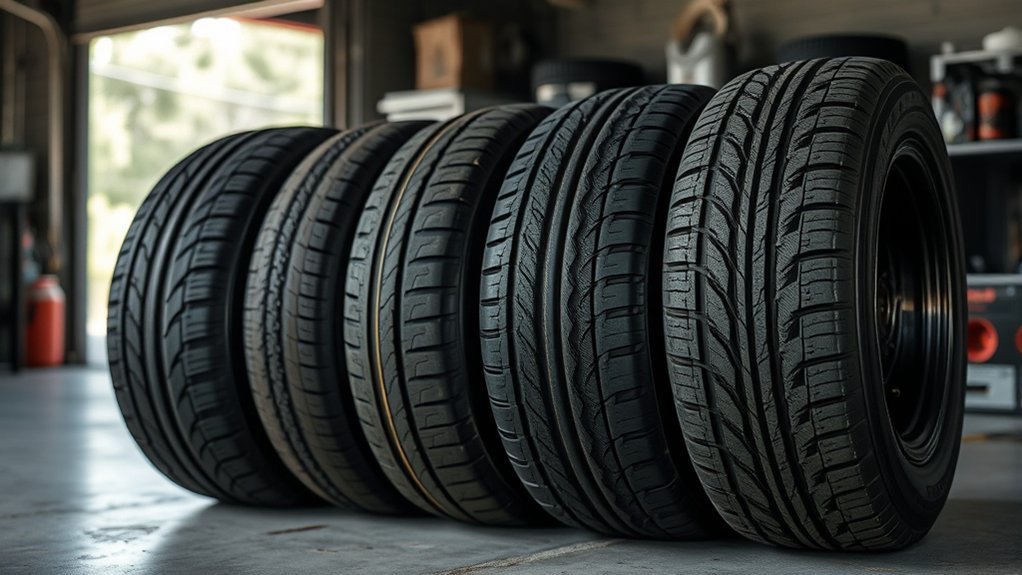
All-season tire life depends on the tire itself, how much you drive, road conditions, inflation, rotation, alignment, climate, and age. Many current all-season replacement tires carry treadwear warranties somewhere around 50,000 to 80,000 miles or more, but warranty mileage is not a guaranteed service life. Replace a tire sooner if its tread is worn out, it develops damage, or its manufacturer’s age limit is reached.
Quick Answer
Many all-season tires are sold with treadwear warranties in the 50,000-to-80,000-mile range or higher, but there is no universal lifespan. Check tread depth, tire condition, inflation, maintenance history, and age. NHTSA says tires should be replaced when tread reaches 2/32 inch, and manufacturer age recommendations also matter.
Key Takeaways
Key Takeaways
- There is no single mileage lifespan for every all-season tire; current treadwear warranties vary widely by tire model.
- A mileage warranty is not a promise that a tire will remain safe until that mileage.
- NHTSA says tires should be replaced when tread is worn to 2/32 inch, and damage can require replacement sooner.
- Check tire pressure and tread monthly, using the vehicle placard or owner’s manual for the correct cold inflation pressure.
- Age matters even when tread remains. Follow the tire and vehicle manufacturer’s age guidance and inspect older tires more closely.
How Long Do All-Season Tires Last?
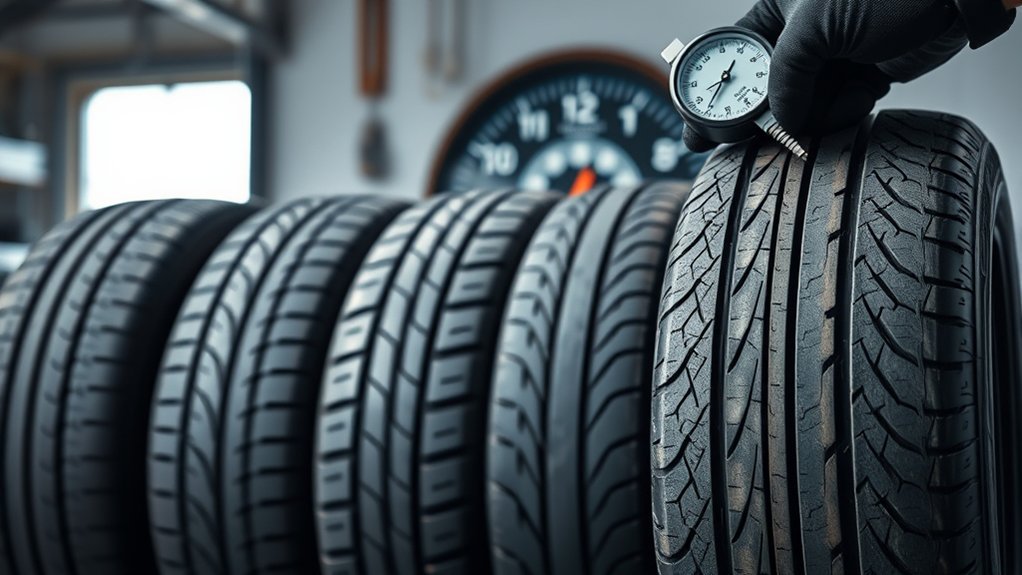
There is no official mileage that applies to every all-season tire. Tire design, tread compound, vehicle weight, driving style, road surface, inflation, alignment, and maintenance all influence how quickly the tread wears.
As a practical reference, many replacement all-season tires carry limited treadwear warranties in the tens of thousands of miles. For example, the Michelin Defender2 currently carries an 80,000-mile treadwear warranty, while other all-season models may have shorter or longer warranty limits. Those numbers describe warranty coverage under specified conditions, not a guaranteed safe lifespan.
Good maintenance can help you use the tread more evenly. Keep the tires at the vehicle manufacturer’s recommended cold pressure, rotate them according to the owner’s manual, and inspect them for irregular wear or damage.
Calendar age matters separately from mileage. A high-mileage driver may wear out a set within a few years, while a low-mileage vehicle may keep plenty of tread long enough for aging to become the greater concern.
For that reason, the safest way to judge tire life is to consider mileage, tread depth, physical condition, performance, maintenance, and age together instead of relying on one number.
Mileage is only one part of tire life. Tread depth, damage, maintenance, performance, and age determine whether a tire is still serviceable.
How Many Miles Do All-Season Tires Last?
Many passenger all-season tires are marketed with limited treadwear warranties around 50,000 to 80,000 miles, while some current models reach 85,000 miles. That makes this range useful for shopping and planning, but not as a universal replacement schedule.
Real-world mileage may be shorter because of rough roads, heavy loads, frequent stop-and-go driving, high-speed heat buildup, underinflation, overinflation, alignment problems, or irregular rotation.
You should replace a tire before its advertised mileage limit if its tread reaches the replacement threshold, it develops structural damage, or its age and manufacturer guidance call for replacement.
Typical Mileage Range
The all-season category covers many different tire types, including basic commuter tires, touring tires, performance tires, SUV tires, and long-wear models. Their expected treadwear is not identical.
Current manufacturer listings illustrate that difference. Some all-season tires are backed by 50,000- or 65,000-mile warranties, while long-wear models may reach 80,000 or 85,000 miles. This is why a blanket claim that every all-season tire should last a fixed number of miles can be misleading.
Check the warranty and specifications for your exact tire model. Then compare those numbers with your own tread measurements and wear pattern as the tire accumulates mileage.
Maintaining the correct pressure and following the proper rotation pattern can support more even wear. Smooth acceleration, sensible cornering, and early braking can also reduce unnecessary tread scrub and heat.
Remember that a treadwear warranty is governed by its own terms and maintenance requirements. It does not override safety-related replacement needs.
Note: Treat a mileage warranty as a warranty term, not an expiration date. A damaged, aged, or worn tire may need replacement well before its warranty mileage.
Factors That Reduce Mileage
Several conditions can make all-season tires wear faster than expected. Driving conditions affect the amount of friction, heat, impact, and tread movement the tire experiences.
Hard acceleration, repeated emergency-style braking, fast cornering, and sustained high-speed driving can increase heat and tread wear. Stop-and-go traffic also puts repeated acceleration, braking, and steering loads on the tread.
Environmental and mechanical conditions matter too:
- Rough, broken, or unpaved roads increase abrasion and impact loads.
- Incorrect inflation can increase irregular wear and heat buildup.
- Poor wheel alignment can wear one shoulder or edge much faster than the rest of the tread.
- Heavy loads and towing can increase tire stress when the vehicle and tire limits are approached.
- Heat, sunlight, ozone, storage conditions, and time contribute to rubber aging.
Regular tire maintenance helps you catch these problems before they destroy usable tread. Check pressure, tread depth, wear patterns, and visible condition regularly.
When to Replace Tires
Mileage alone should not determine when you replace all-season tires. NHTSA says tires are not safe and should be replaced when tread is worn to 2/32 inch.
You can check this with the built-in treadwear indicators or the penny test. Insert a penny into a main tread groove with Lincoln’s head upside down. If the top of his head remains visible, the tread has reached the NHTSA replacement threshold.
Replace or professionally inspect a tire sooner if you find a bulge, exposed cord or belt material, a deep cut, serious cracking, repeated air loss, or other structural damage.
Age is another consideration. NHTSA notes that some vehicle and tire manufacturers recommend replacing tires between six and ten years old regardless of tread. Follow the recommendations for your vehicle and tire brand rather than assuming one age applies to every tire.
Persistent vibration, noise, pulling, or unusual handling also deserves prompt inspection. Those symptoms may come from a tire, wheel balance, alignment, or suspension issue, so they should be diagnosed rather than automatically blamed on tread wear.
What Shortens All-Season Tire Life?
Your driving habits can shorten all-season tire life when they create excess heat, abrasion, or uneven loading. Repeated hard acceleration, abrupt braking, aggressive cornering, and impacts with potholes or curbs all increase stress on the tires.
Poor maintenance can have a similar effect. Driving for long periods with incorrect pressure, ignoring uneven wear, or missing recommended rotation can allow one part of the tread to wear much faster than another.
Environmental exposure matters as well. Tire materials change with time, heat, sunlight, ozone, storage conditions, and use. This is why a low-mileage tire can still become unsuitable for continued service.
[Products Worth Considering]

TIRESHIELD PRO RV tire covers in a set of four deliver year-round protection against UV rays, cracking, fading, water, and snow. The StormLock-System helps keep the covers securely fastened through high wind, while heavy-duty, double-stitched construction supports long-lasting performance. Designed for universal fit, they’re intended for RV, camper, truck, car, and trailer tires within the 26–28.75 inch diameter range, with easy wipe-clean care and storage in the included bag.

Monitor tire tread wear with a smart, color-coded depth gauge that shows clear condition ranges at a glance. The bar is range marked for fast, easy readings, helping you maintain safer traction and performance. Each gauge is portable with a pocket clip, and the set includes 20 units for daily use and sharing.

Measure tire tread depth quickly and accurately with this LUMITECO dial gauge that reads in 1/32" increments up to 14/32". The color-coded green/yellow/red zones make it easy to judge tire wear and know when replacement is needed. A rugged, compact design with a protective pouch helps keep the gauge ready for use on cars, trucks, motorcycles, and more.
Driving Habits
Aggressive driving increases the forces placed on the tread. Fast launches, late hard braking, and quick cornering can scrub away rubber faster than smooth, controlled driving.
High-speed driving can also increase tire temperature. Heat is one of the factors that contributes to tire deterioration, especially when combined with incorrect inflation or heavy loading.
- Accelerate smoothly when traffic allows.
- Brake progressively instead of waiting until the last moment.
- Slow down for potholes, broken pavement, and other road hazards when it is safe to do so.
- Avoid striking curbs, which can damage sidewalls or affect alignment.
Driving gently cannot prevent normal tire aging, but it can reduce unnecessary tread wear and impact damage.
Continue to inspect the tires even when your annual mileage is low. A tire does not have to accumulate high mileage before age or physical damage becomes important.
Road And Maintenance Conditions
Rough roads can shorten tread and casing life through abrasion and repeated impacts. Potholes can also damage a tire internally, bend a wheel, or disturb alignment even when the tire initially appears normal.
Inflation is especially important. NHTSA recommends checking every tire, including the spare where applicable, at least once a month when the tires are cold.
Rotation can reduce irregular wear, but the correct pattern and interval depend on the vehicle and tire setup. Directional tires, staggered front/rear tire sizes, and some vehicle designs have special requirements.
Alignment should be inspected when the vehicle pulls, the steering wheel is off-center, irregular wear appears, or the vehicle has taken a significant pothole or curb impact. Follow the vehicle manufacturer’s maintenance recommendations rather than assuming every vehicle needs alignment on the same calendar schedule.
Regular inspections let you correct pressure, alignment, rotation, or mechanical problems before they cause premature replacement.
Do All-Season Tires Age Out Before They Wear Out?
Yes. A low-mileage all-season tire can age enough to require replacement even while substantial tread remains. This is particularly relevant to spare tires, collector cars, recreational vehicles, second vehicles, and cars driven only occasionally.
USTMA explains that service and storage conditions vary too much to predict the usable life of a specific tire from calendar age alone. Age still matters, but it must be considered with maintenance, condition, storage, and manufacturer guidance.
NHTSA likewise warns that tires become more prone to failure as they age and says some vehicle and tire manufacturers recommend replacement at six to ten years regardless of remaining tread.
- Cracking may appear as rubber ages or deteriorates.
- Bulges can indicate structural damage and require prompt attention.
- Irregular wear may reveal inflation, alignment, balance, or suspension problems.
- Persistent air loss, vibration, or unusual noise should be inspected professionally.
Michelin provides one useful manufacturer example: it recommends increased professional inspection after five years of service and replacement by ten years from the manufacture date, even if the tire still looks usable.
The correct age limit for your tires is therefore the one specified by the tire manufacturer and, for original-equipment tires, your vehicle manufacturer.
How to Read the DOT Tire Date Code
You can find the tire’s manufacture date in its DOT Tire Identification Number on the sidewall. The final four digits identify the week and year of manufacture.
For example, a code ending in 2524 means the tire was manufactured in the 25th week of 2024. The full DOT marking may appear on only one side of the tire, so you may need to inspect the inner sidewall.
Use the manufacture date when applying the tire or vehicle manufacturer’s age recommendation. Do not count only from the date you bought the vehicle, because the tire may have been produced earlier.
Pro Tip: When you check tread depth and pressure each month, look at the tire’s DOT date as well. Recording the manufacture date makes age-based replacement much easier to track.
Signs Your All-Season Tires Need Replacing
Your all-season tires need replacement when tread reaches the minimum safe depth or when damage makes continued use unsafe. NHTSA identifies 2/32 inch as the tread depth at which tires should be replaced.
Visible damage can be just as important as tread depth. Bulges, deep cuts, exposed cords, separated tread, or serious structural deterioration require prompt professional attention and may make the tire unsuitable for continued driving.
Uneven wear can indicate incorrect inflation, misalignment, wheel imbalance, worn suspension components, or another mechanical problem. Replacing the tire without correcting the cause can make the replacement wear unevenly too.
Age should also be part of your inspection. Even when tread remains, internal and external tire materials change over time. Follow the tire manufacturer’s maximum service-life guidance and increase inspection of older tires as recommended.
Vibration, pulling, noise, or a tire that repeatedly loses pressure deserves inspection. These symptoms do not always mean the tire itself must be replaced, but they should not be ignored.
Warning: Do not keep driving normally on a tire with a bulge, exposed structural material, severe damage, or rapid pressure loss. Reduce risk and have the tire inspected by a qualified tire professional as soon as possible.
How to Check Tread Depth at Home
You can check all-season tire tread depth at home with a tread-depth gauge, the built-in wear indicators, or NHTSA’s penny test.
For the penny test, insert a penny into a main tread groove with Lincoln’s head pointing down. If you can see the top of Lincoln’s head, NHTSA says the tire has reached the 2/32-inch replacement point.
Check several grooves across the width of each tire. One good-looking spot can hide dangerous wear elsewhere.
- Use a tread-depth gauge when you want an exact measurement.
- Look for the raised treadwear indicators molded into the main grooves.
- Check the inner, center, and outer portions of the tread for differences.
- If you use another coin-based check, do not confuse its reference point with NHTSA’s 2/32-inch penny-test threshold.
- Inspect for cupping, feathering, shoulder wear, or other irregular patterns at the same time.
If you regularly drive in snow, remember that reaching the minimum tread limit does not mean the tire still provides strong winter traction. Deeper tread is important for moving snow and water away from the contact patch.
NHTSA also notes that dedicated winter tires are more effective than all-season tires in deep snow. If severe winter conditions are common where you drive, tire type matters as much as remaining tread.
Measure every tire rather than assuming all four are wearing at the same rate. Uneven measurements can reveal a rotation, alignment, inflation, or suspension issue.
[Products Worth Considering]

The SAFELIFE dial tire tread depth gauge measures tread depth in 1/32 inch increments with clear, easy-to-read 2-inch dial face. Color zones using a traffic light system help you quickly judge whether tread is low, marginal, or ample for safer driving. Built with a durable zinc cast body and a metal detect probe for precise, comfortable use across cars, motorcycles, trucks, and buses.

Accurately measure tire tread depth with a calibrated gauge marked from 0 to 1 inch in 1/32 inch increments. The color-coded bar helps you quickly identify tread condition ranges, supporting safe driving for trucks, motorcycles, automobiles, and passenger vehicles.

Measure tyre tread depth precisely with a digital gauge that reads in both MM and inches, helping you monitor safe driving conditions. The large LCD screen is easy to operate, and the compact tool fits for cars, trucks, and motorcycles. It provides high accuracy with a 0-25.4mm range and includes a 1-year warranty for added peace of mind.
How to Extend All-Season Tire Life
To extend usable all-season tire life, start with correct inflation. NHTSA recommends checking tire pressure at least monthly when the tires are cold, meaning the vehicle has not been driven for at least three hours.
Use the recommended cold pressure shown on the vehicle’s Tire and Loading Information label, usually on the driver-side door jamb, or in the owner’s manual. The maximum pressure molded onto a tire’s sidewall is not the vehicle’s normal recommended operating pressure.
Rotate tires according to the vehicle manufacturer’s instructions. NHTSA says that when rotation is recommended, a common interval is about 5,000 to 8,000 miles. Bridgestone gives a similar general range while emphasizing that vehicle type and tire configuration affect the correct schedule.
Have alignment and balance checked when symptoms appear. Pulling, steering-wheel vibration, uneven shoulder wear, or a significant pothole impact can signal a problem that will continue damaging the tires if left uncorrected.
Drive smoothly when conditions allow. Gradual acceleration, controlled braking, and sensible cornering reduce unnecessary tread scrub and heat.
Inspect tread and visible condition regularly. Catching a pressure leak, abnormal wear pattern, or sidewall problem early may prevent further tire or vehicle damage.
These maintenance habits cannot stop natural aging, but they can help the tread wear more evenly and help you get the safe service life the tire was designed to provide.
Warning: Inflate tires to the vehicle manufacturer’s cold-pressure specification, not the maximum-pressure number molded on the tire sidewall.
[Products Worth Considering]

This universal wheel alignment tool helps you accurately restore tire tilt angles after tire or suspension repairs using an adjustable camber gauge. It features a powerful magnetic base that firmly attaches to brake rotors for stationary, slip-free readings, improving consistency during measurement. Built from durable PC plastic, it resists wear and corrosion and is compact enough for car, truck, RV, and motorcycle alignment tasks.

Steelman white tire marking crayons provide high-contrast, semi-permanent marks for repairing and inspecting tires and equipment. They write on wet or dry, smooth or coarse surfaces including rubber, metal, glass, and wood, making them ideal for puncture location and damage outlining. The lead- and zinc-free crayons resist weather and fading yet wipe away when you no longer need the marks.

This tire inflator with pressure gauge delivers long-lasting performance with a durable rubber-protected gauge and sturdy build. The longer hose and 360 swivel air chuck help you seal the valve securely and keep your hands free while measuring, inflating, or deflating. It’s battery-free for reliable use and provides ±2 PSI accuracy in the mid-range for most typical tires, with universal compatibility for 1/4 NPT compressor outputs.
Mileage Warranty vs. Actual Tire Life
A treadwear warranty and actual tire lifespan are related, but they are not the same thing. The warranty states how the manufacturer handles qualifying premature treadwear under its terms.
Warranty coverage can depend on proper inflation, rotation records, alignment, vehicle condition, tire position, and other requirements. Some vehicles with staggered tire sizes may also receive different mileage coverage because normal rotation is limited or impossible.
A tire can need replacement before the warranty mileage because of puncture damage, sidewall damage, impact damage, irregular wear, age, or reaching the minimum tread depth.
The reverse is also possible: a tire may accumulate substantial mileage while remaining serviceable if it has adequate tread, no unsafe damage, and is still within the manufacturer’s service-life guidance.
Use the warranty as one reference when choosing and maintaining a tire, but make replacement decisions from the tire’s actual condition.
When to Replace All-Season Tires
You should replace all-season tires when tread reaches the safe replacement threshold, damage compromises the tire, or manufacturer age guidance says the tire has reached the end of its service life.
Do not wait for a specific odometer number if the tire already shows a safety problem. Likewise, do not assume a low-mileage tire is safe simply because its tread grooves still look deep.
- Measure tread depth and replace at 2/32 inch.
- Check whether treadwear indicators are flush with the tread surface.
- Inspect for bulges, serious cracks, deep cuts, exposed cords, or separation.
- Investigate repeated pressure loss, vibration, noise, or pulling.
- Check the DOT manufacture date and follow the tire and vehicle manufacturer’s age recommendations.
- Correct alignment, inflation, balance, or suspension problems that cause irregular wear.
If the tire is damaged but you are unsure whether it can be repaired, have it removed and inspected by a qualified tire professional. Damage location, size, internal condition, and previous repairs all affect whether repair is appropriate.
Regular inspection gives you time to plan replacement instead of discovering a problem during a trip or in bad weather.
When tread, damage, age, or performance indicates that a tire is no longer dependable, replacement is more important than trying to reach its advertised mileage figure.
Frequently Asked Questions
Is 30,000 miles on a set of tires good?
Thirty thousand miles alone does not tell you whether a set of tires is good or bad. Check remaining tread depth, evenness of wear, age, pressure history, and physical condition. A tire with substantial tread and no damage may have plenty of service life left, while an unevenly worn or damaged tire may need replacement much sooner.
How many years should all-season tires last?
There is no universal number of years for every all-season tire. Annual mileage, climate, storage, maintenance, and manufacturer guidance all matter. NHTSA notes that some manufacturers recommend replacement between six and ten years. Michelin, for example, recommends increased professional inspection after five years and replacement by ten years from manufacture.
Can a 20-year-old tire still be good?
A 20-year-old passenger tire should not be relied on for normal road service simply because tread remains. It is far beyond age limits used by major tire manufacturers such as Michelin, which recommends replacement by ten years from the manufacture date. Replace it rather than judging it only by appearance.
What is the disadvantage of all-season tires?
All-season tires are designed as a compromise for a broad range of normal conditions rather than maximum performance in one extreme. NHTSA notes that winter tires are more effective than all-season tires in deep snow. Drivers facing severe winter weather may therefore benefit from dedicated winter tires.
Does an 80,000-mile tire warranty mean the tire will last 80,000 miles?
No. It is a limited treadwear warranty subject to the manufacturer’s terms, not a guarantee that the tire will remain safe for exactly 80,000 miles. Damage, irregular wear, insufficient tread, age, or another safety issue can require earlier replacement.
How can I tell how old my tires are?
Find the DOT Tire Identification Number on the sidewall and read its final four digits. The first two indicate the manufacturing week and the final two indicate the year. For example, 2524 means the tire was made during the 25th week of 2024.
Conclusion
All-season tire life cannot be reduced to one mileage or age number. Many current tires have treadwear warranties ranging from roughly 50,000 miles to 80,000 miles or more, but actual replacement timing depends on tread depth, physical condition, maintenance, driving conditions, and age.
Check tire pressure and tread monthly, use the vehicle placard for the correct cold inflation pressure, and follow the manufacturer’s rotation and age recommendations. Replace tires at 2/32 inch of tread or sooner when unsafe damage develops. That approach gives you a much better measure of safe tire life than the odometer alone.
Sources
- National Highway Traffic Safety Administration — TireWise — backs tread-depth replacement guidance, penny testing, monthly pressure checks, rotation, alignment, tire aging, and DOT date-code information.
- U.S. Tire Manufacturers Association — Tire Facts — explains why a tire’s serviceable life cannot be predicted from calendar age alone and why maintenance and inspection matter.
- Michelin — When to Replace Tires — supports tread, damage, professional inspection after five years, and ten-year maximum-service-life guidance for Michelin tires.
- Michelin Defender2 — current example of an all-season replacement tire carrying an 80,000-mile treadwear warranty.
- Bridgestone — Tire Rotation Guide — supports common rotation intervals and explains vehicle- and tire-specific rotation patterns.

