Old tires can still have plenty of tread and yet deserve closer attention because tire materials change with time, use, storage, heat, sunlight, and maintenance. The best way to start is by checking the DOT Tire Identification Number (TIN): its last four digits show the tire’s manufacturing week and year. Age alone does not create one universal replacement date for every tire, so you should also follow your vehicle owner’s manual and the tire manufacturer’s guidance.
Quick Answer
There is no single age at which every tire becomes unsafe. NHTSA says some vehicle and tire manufacturers recommend replacing tires when they are 6 to 10 years old, regardless of tread. Check the DOT date code, follow the vehicle and tire maker’s guidance, and replace damaged or worn tires sooner.
Key Takeaways
- NHTSA says some vehicle and tire manufacturers recommend age-based replacement between 6 and 10 years, but the exact limit depends on the manufacturer.
- The last four digits of the DOT/TIN show the manufacturing week and year.
- Check both sidewalls because the complete TIN may appear on only one side.
- Cracks, bulges, cuts, irregular wear, repeated pressure loss, abnormal vibration, or tread worn to 2/32 inch can require replacement regardless of age.
- Sunlight, warmer climates, poor storage, low use, and poor maintenance can contribute to tire aging.
- Storage and good maintenance can reduce avoidable deterioration, but they do not make an old tire young again.
At a Glance
| Time Required | About 5–10 minutes to check four tires |
| Difficulty | Easy basic inspection |
| Tools Needed | Flashlight, tire-pressure gauge, vehicle owner’s manual |
| Cost | Usually no cost for a basic visual and pressure check |
How Old Is Too Old for Tires?
There is no universal age that automatically makes every tire unsafe on the same birthday. According to NHTSA TireWise, some vehicle and tire manufacturers recommend replacing tires when they are 6 to 10 years old, regardless of remaining tread.
That means you should not rely on a blanket rule such as “every tire must go at six years” or “every tire is guaranteed safe until ten years.” Instead, check the age, condition, service history, vehicle owner’s manual, and the tire manufacturer’s recommendations.
Tire aging occurs because rubber and other components change over time. Service conditions, storage, sunlight, warmer climates, poor maintenance, and low vehicle use can all affect how aging develops.
Warning: Never keep using a tire simply because it is “not old enough” for an age-based replacement recommendation. Cracks, bulges, cuts, exposed cords, repeated pressure loss, abnormal vibration, irregular wear, or tread worn to 2/32 inch can make replacement necessary much sooner.
There Is No Single Universal Tire Age Limit
Age recommendations vary among vehicle and tire manufacturers. NHTSA therefore advises consumers to pay attention to the tire’s age while also following the recommendations supplied with the vehicle and tire.
| Tire age | What to do |
|---|---|
| Under 6 years | Continue normal inspections and maintenance; condition can still require early replacement. |
| 6–10 years | Check the vehicle and tire manufacturer’s age guidance carefully; some manufacturers recommend replacement within this range. |
| 10+ years | The tire is beyond the maximum interval used by some manufacturers. Verify the manufacturer’s guidance and do not assume remaining tread means the tire is suitable for continued service. |
Manufacturing Date vs. Installation Date
Tire age is determined from the manufacturing date molded into the TIN, not from the day you bought the tire or had it installed. A tire that spent time in storage before installation is therefore older than its time on your vehicle.
This distinction matters when you buy used tires, old inventory, a used vehicle, an RV, a trailer, or a vehicle that is driven only occasionally.
How to Read the DOT Date Code
The tire’s DOT Tire Identification Number is molded into the sidewall. For modern tires, the last four digits show when the tire was manufactured.
The first two of those digits represent the production week, and the last two represent the year.
For example, a TIN ending in 2319 means the tire was manufactured during the 23rd week of 2019.
[Products Worth Considering]

The Kurgo Seasonal Tire Tote helps protect your car interior, clothes, and garage from tire grime, brake dust, and residue during seasonal tire changes. Its universal design fits most passenger tires between 22" and 31" in diameter, making storage and transport simpler with less mess. Built for rugged, repeated use, it’s machine washable for easy care and comes with a lifetime warranty.

Accurately measure tire tread depth with a calibrated gauge marked from 0 to 1 inch in 1/32 inch increments. The color-coded bar helps you quickly identify tread condition ranges, supporting safe driving for trucks, motorcycles, automobiles, and passenger vehicles.

Steelman white tire marking crayons provide high-contrast, semi-permanent marks for repairing and inspecting tires and equipment. They write on wet or dry, smooth or coarse surfaces including rubber, metal, glass, and wood, making them ideal for puncture location and damage outlining. The lead- and zinc-free crayons resist weather and fading yet wipe away when you no longer need the marks.
DOT Code Location
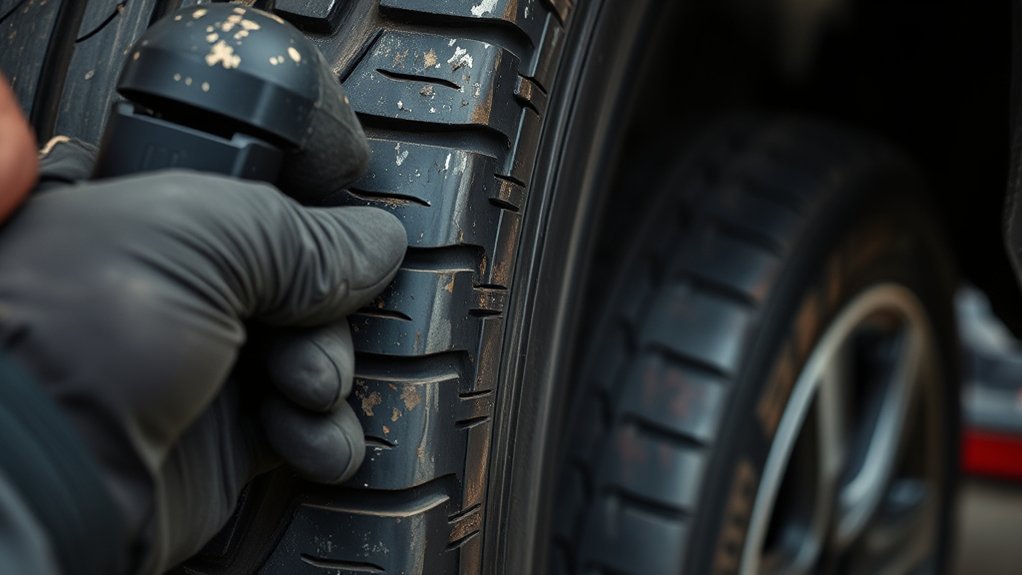
Look along the tire sidewall for the letters DOT followed by the Tire Identification Number. Do not assume the complete number will be visible from the outside of the vehicle.
NHTSA specifically advises checking both sidewalls because the complete TIN may not appear on both sides.
- Park safely and look along the visible tire sidewall for the DOT/TIN marking.
- If the date code is not visible, inspect the other sidewall.
- Find the final four digits of the complete TIN.
- Record the code for all four tires and the spare.
- Compare each tire’s age with the vehicle and tire manufacturer’s replacement guidance.
Pro Tip: Check the spare tire at the same time. Spare tires often retain deep tread because they are rarely used, but NHTSA notes that they still age.
Reading Week And Year
Once you find the complete Tire Identification Number, read the last four digits using this format:
| Code | Meaning |
|---|---|
| 2319 | 23rd week of 2019 |
| 4508 | 45th week of 2008 |
| 0115 | 1st week of 2015 |
| 3299 | 32nd week of 1999 |
| 3-digit date code | Pre-2000 format; a tire this old is far beyond normal modern service expectations |
The date code tells you when the tire was made. It does not tell you whether the tire has been stored correctly, overloaded, underinflated, damaged, repaired properly, or exposed to harsh conditions, so it is only one part of a complete safety check.
Why Tire Age Matters for Safety
NHTSA defines tire aging as changes in the rubber and other tire components that occur over time because of service, storage, and environmental conditions.
That is why tread depth alone cannot tell you everything about an older tire. A tire may accumulate very little mileage and still become older year by year.
Low-mileage vehicles deserve particular attention. NHTSA identifies recreational vehicles, 15-passenger vans, collector cars, and other vehicles driven infrequently as examples where tire aging may become important before tread wears out.
NHTSA reports 511 traffic fatalities in tire-related crashes in 2024. That figure covers tire-related crashes overall and is not an estimate of deaths caused specifically by tire aging.
Rubber Aging Risks
As tires age, their materials can change. NHTSA identifies sunlight, warmer climates, poor storage, poor maintenance, and infrequent use as factors associated with tire-aging concerns.
- Heat: Higher temperatures can increase stress on tires, especially when combined with underinflation or heavy loads.
- Sunlight: Outdoor exposure is one of the environmental factors NHTSA identifies in tire aging.
- Poor maintenance: Incorrect pressure, irregular wear, alignment problems, and other maintenance issues add avoidable stress.
- Low use: Tires on vehicles that sit for long periods can age before their tread is worn out.
The practical lesson is simple: age, condition, maintenance, and manufacturer guidance need to be considered together.
Hidden Structural Weakness
A visual inspection is important, but it cannot prove that an older tire is free from age-related changes. NHTSA states that consumers cannot detect tire aging simply by looking at a tire.
You should still look for visible damage because cuts, cracks, bulges, irregular wear, and other defects are important reasons to remove a tire from service. However, the absence of obvious surface damage is not a guarantee that an old tire is suitable for continued use.
If an older tire develops vibration, unusual noise, repeated loss of pressure, or another change in performance, have it inspected by a qualified tire professional.
Grip Loss Over Time
A tire’s ability to grip the road depends on much more than age. Tread depth, tire design, inflation pressure, temperature, road surface, weather, load, and tire condition all affect traction.
The original claim that all 10- to 12-year-old tires require more than 30 additional feet to stop is too broad to use without a specific test protocol and source. A safer rule is to avoid assuming that an old tire retains its original performance simply because visible tread remains.
For wet-road safety, tread depth is especially important. NHTSA says tires should be replaced when the tread is worn to 2/32 of an inch.
What Happens as Tires Age
Tire materials change with time and exposure. Depending on the tire and its history, you may notice cracking, damage, irregular wear, pressure problems, or changes in the way the vehicle feels.
| Age or condition indicator | What you may notice | What to do |
|---|---|---|
| Cracking | Cracks in tread or sidewall | Have the tire evaluated; significant cracking can require replacement |
| Bulge or blister | Raised area in sidewall | Stop relying on the tire and obtain professional service |
| Irregular wear | Uneven tread depth or smooth patches | Check alignment, inflation, suspension, and tire condition |
| Repeated pressure loss | Tire needs frequent reinflation | Have the tire and wheel inspected |
| Low tread | Tread at 2/32 inch or wear bars are flush | Replace the tire |
If you live in a hot climate, park outdoors, carry heavy loads, tow, or drive infrequently, pay particular attention to tire condition and maintenance.
Are 6-Year-Old Tires Still Safe?
A six-year-old tire is not automatically unsafe solely because it has reached its sixth birthday. However, six years is within the age range at which some vehicle and tire manufacturers begin recommending age-based replacement.
For a six-year-old tire:
- Check the owner’s manual for the vehicle manufacturer’s tire-age recommendation.
- Check the tire manufacturer’s service-life guidance.
- Inspect the tread and both sidewalls for cuts, cracks, bulges, or irregular wear.
- Check cold inflation pressure at least monthly.
- Pay attention to vibration, noise, or repeated pressure loss.
- Have the tire professionally inspected when its age, condition, or performance gives you concern.
You should never use tread depth alone to decide that an older tire is safe. Age is one factor, while condition and manufacturer guidance complete the picture.
Why Tires Over 10 Years Old Should Be Replaced
Once a tire is more than ten years old, it has moved beyond the upper end of the six-to-ten-year age-based replacement range cited by NHTSA for some vehicle and tire manufacturers.
That does not mean federal law creates a universal ten-year birthday on which every tire automatically becomes illegal. It does mean you should not assume that deep tread makes such an old tire suitable for normal road use.
Check the specific tire manufacturer’s age limit and your vehicle owner’s manual. If either calls for replacement by ten years, follow that recommendation.
With a tire this old, unknown storage history, environmental exposure, repairs, pressure history, and internal condition become increasingly important considerations. Replacing a very old tire is generally a much safer choice than trying to extract the last amount of tread life from it.
Can Tire Storage Slow Aging?
Storage conditions affect tire aging, but storage cannot stop time. NHTSA identifies poor storage, sunlight, and warmer climates among the factors associated with aging.
If you store seasonal or spare tires:
- Keep them in a cool, dry area away from direct sunlight.
- Keep them away from unnecessary heat and sources that can damage rubber.
- Follow the tire manufacturer’s instructions for storing mounted and unmounted tires.
- Inspect them before returning them to service.
- Record the DOT date code so you do not lose track of their actual manufacturing age.
Do not treat good storage as permission to ignore a manufacturer’s age-based replacement recommendation. Storage history is one factor, not a guarantee.
When to Replace Tires Before Tread Is Gone
A tire can need replacement even when plenty of tread remains. NHTSA lists physical damage, irregular wear, and performance changes among the reasons a tire may need professional attention or removal from service.
[Products Worth Considering]

Measure tire tread depth quickly and accurately with this LUMITECO dial gauge that reads in 1/32" increments up to 14/32". The color-coded green/yellow/red zones make it easy to judge tire wear and know when replacement is needed. A rugged, compact design with a protective pouch helps keep the gauge ready for use on cars, trucks, motorcycles, and more.

AstroAI’s heavy-duty digital tire pressure gauge delivers quick, accurate readings with 0.1 increments and a secure valve-stem seal. It features a green backlit LCD and built-in flashlight for easy use in low light, plus an ergonomic non-slip stainless-steel design. The wide 0–230 PSI range works across common vehicle tires, with unit selection and an auto shut-off to save battery.

Measure tyre tread depth precisely with a digital gauge that reads in both MM and inches, helping you monitor safe driving conditions. The large LCD screen is easy to operate, and the compact tool fits for cars, trucks, and motorcycles. It provides high accuracy with a 0-25.4mm range and includes a 1-year warranty for added peace of mind.
When to Replace a Tire Immediately Regardless of Age
Do not wait for an age milestone if you find a serious safety problem. Seek professional tire service promptly for:
- Cuts or significant cracking
- Bulges or blisters
- Exposed cords or structural damage
- Tread worn to 2/32 inch
- Severe or irregular wear
- Repeated loss of inflation pressure
- Unexplained vibration or unusual tire noise
- Damage caused by underinflation, overloading, impact, or improper repair
NHTSA recommends checking tire pressure at least once a month when the tires are cold. It also recommends checking tread regularly.
For rotation, follow your vehicle owner’s manual. If no rotation interval is specified, the U.S. Tire Manufacturers Association recommends rotation every 5,000 to 8,000 miles.
Spare Tires and Low-Mileage Vehicles
Spare tires can be easy to forget because they may never wear out visibly. NHTSA notes that spare tires are prone to aging precisely because they are replaced so infrequently.
The same issue applies to RVs, trailers, collector cars, seasonal vehicles, and low-mileage cars. A tire that has traveled only a few thousand miles can still be many years old.
Note: Include the spare when you record DOT date codes and check pressure. A spare with full tread can still be an old tire.
Used Tires and Unknown History
Be especially cautious with used tires when you do not know their complete history. The date code can tell you when the tire was manufactured, but it cannot tell you whether the tire was driven underinflated, overloaded, improperly repaired, stored poorly, or damaged before you received it.
Before relying on a used tire, verify its size and specifications for your vehicle, inspect its condition, check the date code, and have uncertain damage or repairs evaluated by a qualified tire professional.
How to Check Tires for Dry Rot
Dry, cracked rubber deserves attention, but do not rely on one visual sign or a simple “thumb test” to prove whether an older tire is safe.
- Use bright light to inspect the tread and sidewalls.
- Rotate your viewing position so you can examine as much of both sidewalls as possible.
- Look for cracking, cuts, bulges, exposed material, or unusual deformation.
- Check tread depth and look for irregular wear.
- Check cold tire pressure with an accurate gauge.
- If you find significant cracking or another suspicious condition, have the tire inspected by a tire professional.
Surface appearance alone cannot reveal every age-related change. This is especially important with older tires and low-mileage vehicles.
[Products Worth Considering]

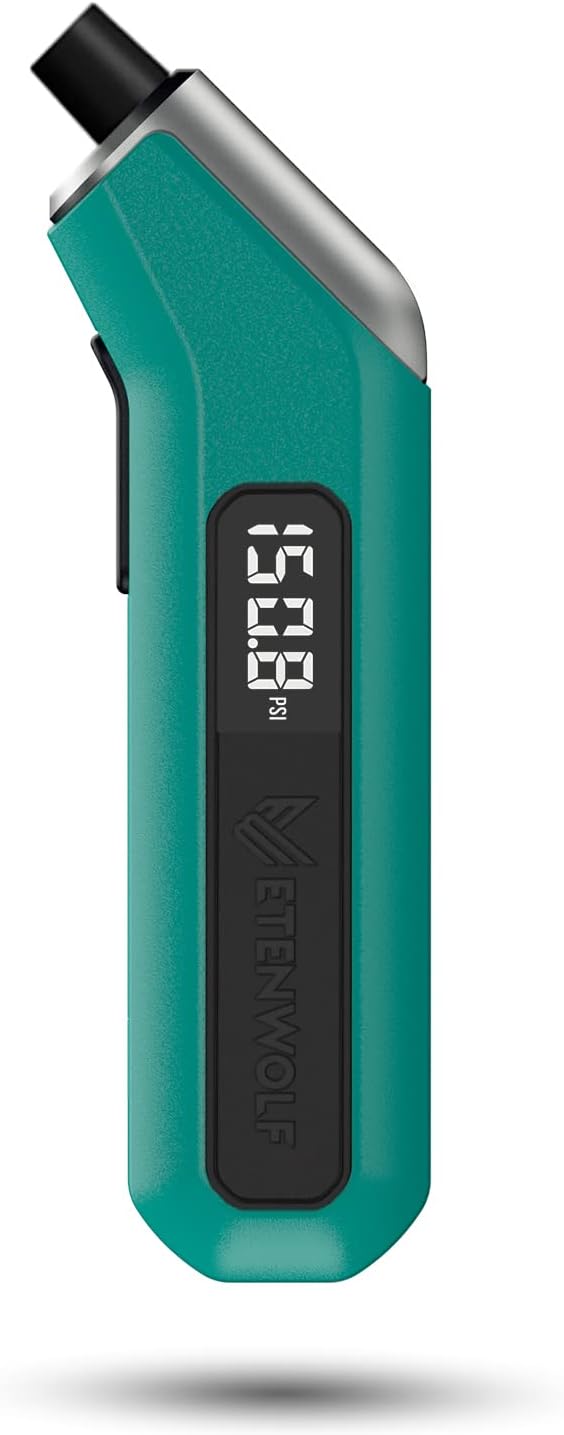
ETENWOLF’s tire pressure gauge helps you quickly and accurately check tire PSI across cars, trucks, motorcycles, bikes, and more. It’s manually calibrated to ANSI B40.1 Grade A for reliable readings, includes a large glow dial for easy nighttime viewing, and features a 360-degree swivel chuck for use at any valve angle. The gauge also works consistently in extreme hot or cold weather.

Monitor tire tread wear with a smart, color-coded depth gauge that shows clear condition ranges at a glance. The bar is range marked for fast, easy readings, helping you maintain safer traction and performance. Each gauge is portable with a pocket clip, and the set includes 20 units for daily use and sharing.

The Topeak SmartGauge D2 delivers precise digital tire pressure readings for bikes, motorcycles, and sports equipment up to 250 psi (17 bar). Its rotating SmartHead works with both Presta and Schrader valves, so you can check pressure quickly without adapters. The LCD display makes it easy to read results in psi, bar, or kg/cm² with an included CR2032 battery for immediate use.
What to Do If a Tire Blows Out
If a tire suddenly loses pressure while you are driving, NHTSA advises focusing on keeping the vehicle balanced and controllable.
- Hold the steering wheel firmly with both hands.
- Avoid slamming on the brakes or making abrupt steering inputs.
- Gradually release the accelerator.
- Correct the steering as needed to stabilize the vehicle.
- Once the vehicle is stable, slow down and pull off the road when it is safe.
After a blowout, replace or professionally inspect the damaged tire before returning the vehicle to normal service.
Frequently Asked Questions
Is It Safe to Use 20 Year Old Tires?
A 20-year-old tire is far beyond the six-to-ten-year age range in which some manufacturers already recommend replacement. Do not assume deep tread makes it suitable for normal driving. For road use, replacement is the prudent choice rather than attempting to keep such an old tire in regular service.
Can 12 Year Old Tires Still Be Good?
A 12-year-old tire is beyond the upper end of the age-based replacement range cited by NHTSA for some vehicle and tire manufacturers. Even if the tread looks good, check the manufacturer’s maximum age recommendation and do not rely on appearance alone.
Can I Still Use a 7 Year Old Tire?
Possibly, but age alone does not answer the question. Seven years falls within the range where some manufacturers recommend age-based replacement. Check the vehicle owner’s manual, tire manufacturer’s guidance, tread depth, pressure, visible condition, and any changes in performance.
Is It Illegal to Drive on 10 Year Old Tires?
Tire-age legality depends on where you drive and the applicable vehicle-inspection and equipment rules. NHTSA’s consumer guidance does not create one nationwide rule making every tire illegal solely because it reaches ten years old. Legal minimums also should not be confused with manufacturer safety recommendations.
Does Tire Age Start When the Tire Is Installed?
No. The tire’s manufacturing age is based on the date molded into its DOT Tire Identification Number. Installation date and manufacturing date can therefore be different.
Do Spare Tires Age Even If They Are Never Used?
Yes. NHTSA notes that spare tires are prone to aging because they are seldom replaced. Check the spare’s DOT date code and inflation pressure rather than judging it only by tread depth.
Conclusion
Old tires can look serviceable while still deserving age-related scrutiny. Instead of relying on a universal six-year or ten-year rule, check the DOT date code and follow the replacement guidance from your vehicle and tire manufacturer.
Inspect tires regularly for cracks, cuts, bulges, irregular wear, low tread, pressure loss, vibration, and other changes. Check the spare as well. If a tire has reached the manufacturer’s age limit or develops a condition that makes continued use questionable, replace it before a preventable tire problem turns into an emergency.
Sources
- National Highway Traffic Safety Administration — TireWise — tire aging, DOT/TIN date codes, monthly inspection, tread depth, manufacturer age recommendations, spare-tire aging, and blowout guidance.
- U.S. Tire Manufacturers Association — Tire Care Essentials — tire pressure, tread depth, rotation, alignment, and maintenance recommendations.
- U.S. Tire Manufacturers Association — Replacing Tires — replacement-tire specifications and replacement practices.