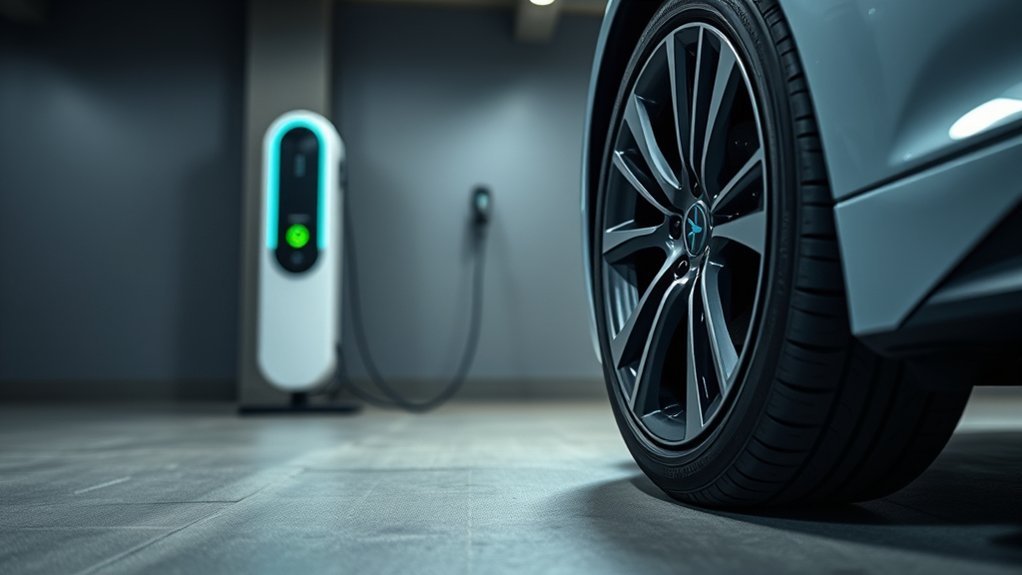
An EV-compatible tire is a tire built to handle the way electric vehicles drive: heavier battery packs, quick torque delivery, quieter cabins, and range-sensitive energy use. A regular tire can work on an EV only when it matches the vehicle’s size, load index, speed rating, pressure requirements, and manufacturer guidance, but an EV-ready tire is usually a better match for efficiency, comfort, and controlled wear.
Quick Answer
An EV-compatible tire is designed or approved for electric vehicles. It usually has stronger load support, lower rolling resistance, quiet-tread or foam technology, and tread compounds that can handle instant torque. EVs do not always require special tires, but the tire must match the vehicle placard and owner’s manual.
Key Takeaways
- EV-compatible tires are made to manage electric vehicles’ extra weight, instant torque, quiet ride, and range needs.
- The most important checks are tire size, load index, speed rating, pressure, XL or HL marking, and the vehicle tire placard.
- Low rolling resistance can help preserve range, but the exact benefit depends on the tire, vehicle, pressure, speed, road, and weather.
- EV-specific tires may cost more, but they can improve comfort, efficiency, traction, and wear control when properly matched.
- Regular pressure checks, rotation, alignment, and tread inspections matter more on EVs because weight and torque can expose tire problems faster.
What Is an EV-Compatible Tire?
An EV-compatible tire is a tire designed, rated, or approved to work well with the demands of electric vehicles. Those demands usually include a heavier curb weight from the battery pack, quick torque from the electric motor, strong braking forces from regenerative braking, and a quiet cabin where tire noise is easier to hear.
Compared with a basic standard tire, many EV-ready tires use stronger internal construction, a load rating suited to heavier vehicles, tread compounds that balance grip and durability, and low rolling resistance design to reduce wasted energy. Some also use foam liners or tuned tread patterns to reduce interior noise.
That does not mean every EV needs a tire with “EV” printed on the sidewall. It means the tire must match your EV’s required size, load index, speed rating, cold inflation pressure, and replacement rules. If your vehicle came with a special tire type, such as an HL High Load Capacity tire, replacement choices become more specific.
Note: The first place to check is not the tire store filter. Look at the Tire and Loading Information Label on the driver-side doorjamb and your owner’s manual. Those tell you the correct size, pressure, and load requirements for your EV.
Do EVs Need Special Tires?
EVs do not need “special” tires just to move, but they do need tires that meet the vehicle manufacturer’s specifications. If a non-EV tire has the correct size, load index, speed rating, construction type, and pressure rating, it may be usable. The trade-off is that it may be louder, less efficient, or wear less evenly than a tire designed around EV demands.
EV Tire Basics
Electric vehicles put different stress on tires than many gas vehicles. The battery can increase weight, the motor can deliver torque instantly, and the quiet drivetrain makes tread noise more noticeable. That is why tires for electric vehicles often focus on three goals: load support, low rolling resistance, and quiet ride comfort.
A good EV-compatible tire should still do the normal tire jobs first: stop well in the rain, carry the vehicle safely, resist heat, maintain predictable steering, and fit the wheel correctly. EV features are useful only when the basic safety specifications are correct.
OE vs. EV-Specific Tires
OE tires are the original equipment tires selected by the automaker for a specific vehicle trim. They may be tuned for range, noise, ride comfort, steering feel, or all of those at once. EV-specific tires are aftermarket or original-equipment tires built with electric vehicles in mind. Some tire makers also use terms such as EV-ready, EV-compatible, or electric vehicle approved.
The safest replacement path is simple: match the OE size, load index, speed rating, and tire category unless the owner’s manual or a qualified tire professional confirms another option. If the vehicle came with an HL tire, replace it with an HL tire of equal size and load capacity unless the vehicle maker approves a different fitment.
When Regular Tires Are OK on an EV
A regular tire may be acceptable on an EV when it meets every required specification. Before buying, confirm all of the following:
- The tire size matches the vehicle placard or approved alternate size.
- The load index is equal to or higher than the required load index.
- The speed rating meets or exceeds the vehicle requirement.
- The tire supports the required cold inflation pressure.
- The tire type matches your climate, such as all-season, summer, winter, or all-weather.
- The tires on the same axle match in size, construction, and performance category.
Warning: Do not choose a tire only because it fits the wheel diameter. A tire with the wrong load index, speed rating, pressure capacity, or seasonal compound can reduce stability, braking performance, range, and tire life.
Why EV Tires Help
EV tires help because they are built around the real trade-offs of electric driving. Lower rolling resistance can help reduce energy loss. Stronger construction can support heavier vehicles. Quieter tread or foam technology can improve cabin comfort. Tread compounds can also be tuned to manage quick acceleration without giving up too much wet traction.
- You get better support for battery weight and passenger load.
- You reduce the chance of range loss from inefficient tire design.
- You keep the quiet EV cabin from being dominated by road noise.
What Makes EV Tires Different?
The biggest differences are load capacity, rolling resistance, tread durability, and noise control. A strong EV-compatible tire does not maximize only one of these. It balances them, because a tire that saves range but stops poorly in rain is not a good tire, and a tire that grips well but wears quickly may be expensive to own.
Higher Load Capacity
Electric vehicles often weigh more than similar gas vehicles because of the battery pack. That extra mass can require a tire with a higher load index, XL marking, or HL marking. High Load Capacity tires are designed to support heavier vehicles, including many EVs, hybrids, and SUVs.
On the sidewall, an XL tire means Extra Load. An HL tire has an “HL” prefix before the tire size and is built to carry more load than a typical XL tire in the same size at the same reference inflation pressure. This matters most on heavy electric SUVs, trucks, and performance EVs.
Lower Rolling Resistance
Rolling resistance is the energy a tire loses as it rolls and flexes under the vehicle. Lower rolling resistance helps the vehicle use less energy to keep moving. For an EV, that can help preserve driving range. For a gas vehicle, the same idea can improve fuel economy.
Do not judge a tire by rolling resistance alone. Very low rolling resistance must still be balanced with wet braking, dry grip, tread life, comfort, and load capacity. The best EV tires reduce energy loss without making the vehicle feel unstable or under-tired.
Lower rolling resistance can help an EV travel farther on the same charge, but pressure, alignment, temperature, road surface, speed, and driving style can change the real-world result.
Noise Reduction Technology
Because EV motors are quiet, tire noise becomes easier to notice. EV-compatible tires may use optimized tread pitch, narrower grooves, softer tread transitions, or foam inside the tire cavity. For example, Continental’s ContiSilent technology uses a polyurethane foam layer inside the tire to absorb road vibrations and reduce interior noise.
Noise-focused tires can make long drives less tiring, but they still need to meet the same safety and load requirements as any other tire. Quietness should be a bonus, not the only buying reason.
EV-Ready vs. EV-Specific vs. HL: What the Labels Mean
| EV-compatible | A broad term for a tire that can safely fit and perform on an EV when specifications match. |
| EV-ready | A manufacturer term often used for tire lines engineered to work well on EVs and gas vehicles. |
| EV-specific | A tire designed primarily around electric vehicle weight, torque, range, and noise needs. |
| XL | Extra Load. A reinforced tire category that carries more load than a standard-load version. |
| HL | High Load Capacity. A tire with an “HL” prefix before the size, used for vehicles that need more load capacity than typical XL tires. |
Best EV Tires for Each Driving Need
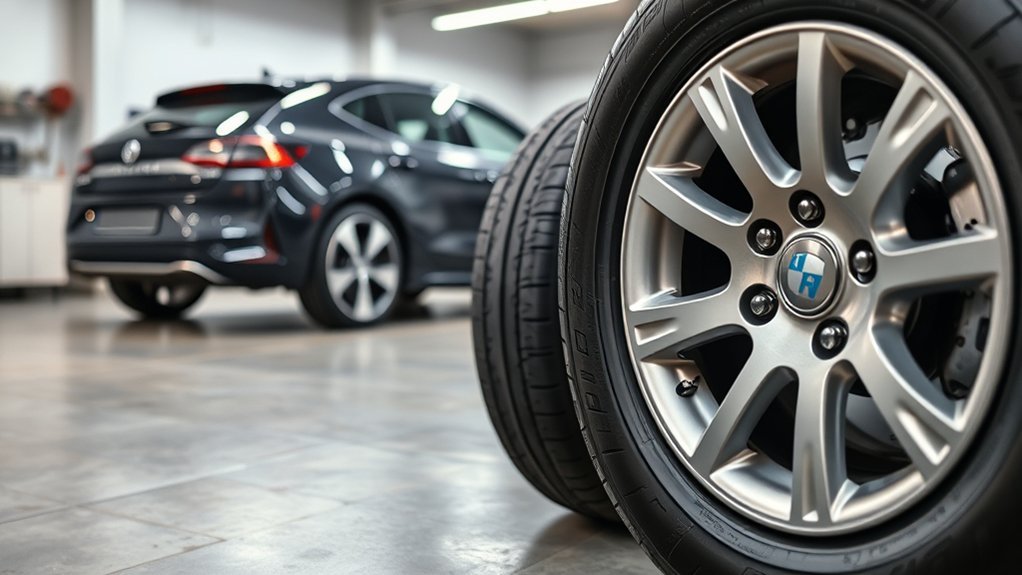
The best EV tire depends on how and where you drive. A commuter who wants long range and low noise needs a different tire than a driver who takes a performance EV through mountain roads. Start with the correct size and load rating, then choose the tire category that matches your climate and priorities.
- Daily commuting: Choose touring or grand touring EV-ready tires with low rolling resistance, quiet tread, and strong wet traction.
- Long highway trips: Prioritize low noise, even wear, stable tracking, and efficiency.
- Performance driving: Choose a performance EV tire with stronger grip and heat control, but expect higher cost and possibly shorter tread life.
- Cold climates: Use winter tires or severe-snow-rated all-weather tires when temperatures and road conditions demand them.
- Heavy EV SUVs or trucks: Pay extra attention to load index, XL or HL marking, and vehicle-maker restrictions.
Specialized brands like Michelin and Continental offer EV-ready options that balance durability, low noise, and efficiency. You can also use tread features designed for wet traction as one of your comparison points, especially if you drive often in rain.
EV Tire Types for Every Season
EV tire types vary by season because rubber compounds and tread patterns behave differently in heat, rain, snow, and cold. The right choice protects traction and range at the same time.
- All-season EV tires: Good for mild climates and everyday driving. They balance comfort, range, wet traction, and tread life.
- All-weather EV tires: A stronger year-round choice for drivers who see light snow. Look for the Three-Peak Mountain Snowflake symbol if winter grip matters.
- Summer EV tires: Best for warm weather, sharp steering, and strong dry/wet grip. They are not designed for freezing temperatures.
- Winter EV tires: Best for snow, ice, and cold roads. They use softer compounds and deeper tread features to stay flexible in low temperatures.
- Performance EV tires: Best for sporty driving and high-powered EVs. They focus on grip and steering response, often with a comfort or tread-life trade-off.
- Eco-focused EV tires: Best for drivers who prioritize range and lower energy use. Make sure wet braking and load rating still meet your needs.
If puncture protection is important, also compare whether your vehicle supports mobility kits, spare tires, sealant, or run-flat capability. Not every EV wheel and suspension setup is designed for run-flat replacements, so confirm fitment first.
How to Choose an EV Tire for Your Vehicle
Choosing an EV tire is mostly a process of eliminating unsafe or poor-fit options first, then comparing comfort, range, traction, and cost. Use this checklist before you compare brands or prices.
| Check | What to look for |
|---|---|
| Vehicle placard | Correct tire size, load index, and cold inflation pressure. |
| Load capacity | Equal or higher load index; XL or HL if your EV requires it. |
| Speed rating | Equal to or higher than the vehicle requirement unless the owner’s manual allows otherwise. |
| Efficiency | Low rolling resistance or EV-ready design that helps preserve range. |
| Traction | Strong wet braking, climate-appropriate compound, and tread pattern suited to your roads. |
| Comfort | Noise-reducing tread, foam technology, or comfort-focused touring design. |
| Season | All-season, all-weather, summer, or winter tire based on real temperatures and road conditions. |
How to Read the Sidewall Before Buying
A tire size such as HL245/40R19 101Y tells you more than width and wheel diameter. “HL” means High Load Capacity. “245” is width in millimeters. “40” is aspect ratio. “R” means radial construction. “19” is wheel diameter. “101” is the load index. “Y” is the speed rating. Your replacement tire must match the vehicle requirement, not just the wheel size.
Also look for XL, HL, M+S, 3PMSF, directional arrows, inside/outside markings, and any vehicle-specific OE codes. If you are switching tire categories, such as summer to all-season or OE foam-lined tires to non-foam tires, confirm the change with the vehicle manual or a qualified tire professional.
Pro Tip: When comparing two tires with the same size, choose the one that better matches your real driving. A quiet low-rolling-resistance tire is ideal for commuting, while a higher-grip performance tire may suit a powerful EV driven aggressively.
Do EV Tires Cost More? Do They Last Longer?
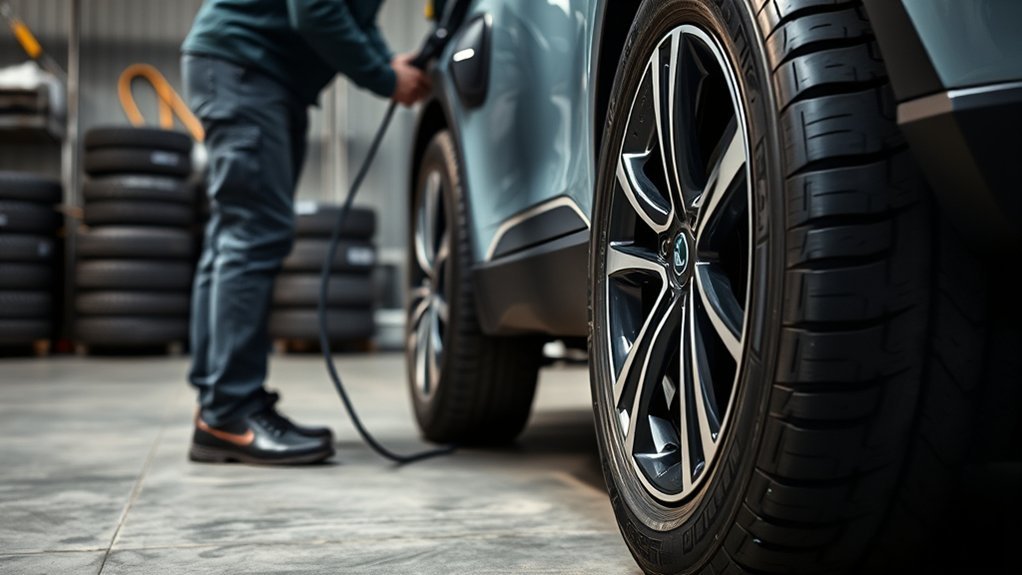
Yes, EV-compatible tires often cost more up front. They may need stronger construction, lower rolling resistance compounds, quieter tread design, foam technology, or higher load ratings. That extra engineering can raise the price compared with a basic standard tire in the same size.
Do they last longer? Not automatically. A properly matched EV tire can resist the stress of battery weight and instant torque better than a poorly matched regular tire, but tread life still depends on driving style, alignment, inflation pressure, rotation, road surface, and tire compound. Fast launches, heavy cornering, and neglected pressure checks can wear out any tire quickly.
The better question is not “Will EV tires last longer?” It is “Will this tire give my EV the best balance of range, safety, comfort, and cost per mile?” For many EV drivers, the answer is yes, especially when the tire matches the vehicle placard and driving conditions.
EV Tire Care Tips for Better Range
EV tire care is simple, but it needs to be consistent. Proper pressure, rotation, alignment, and tread checks help protect range, braking, ride comfort, and tire life. FuelEconomy.gov notes that properly inflated tires are safer and last longer, and that underinflated tires increase rolling resistance and reduce efficiency.
- Check pressure monthly when cold. Cold means the vehicle has been parked for at least three hours or driven only a short distance.
- Use the placard pressure, not the sidewall maximum. The sidewall number is a maximum tire limit, not your vehicle’s recommended pressure.
- Rotate on schedule. If your vehicle maker recommends rotation, a common interval is about 5,000 to 8,000 miles, or sooner if uneven wear appears.
- Watch tread depth. Replace tires when treadwear indicators show, and consider earlier replacement for rain or winter use if grip drops noticeably.
- Check alignment. EV weight and torque can make poor alignment expensive because it can scrub tread quickly.
- Drive smoothly. Hard launches and abrupt braking can accelerate tire wear, even with EV-specific tires.
- Keep tires clean and inspected. Look for cuts, bulges, embedded objects, sidewall damage, and uneven wear.
If you want all-year versatility, compare all-season capabilities carefully. Some all-season tires are better for mild climates, while all-weather or winter tires are safer choices for colder regions.
Common EV Tire Mistakes to Avoid
Most EV tire problems start with a small mismatch. Avoid these mistakes before they cost you range, comfort, or tread life.
- Buying by size only: Two tires can share the same size but have different load indexes, speed ratings, and construction.
- Ignoring HL or XL requirements: Heavy EVs may need reinforced tires. Do not downgrade the load category.
- Using summer tires in cold weather: Summer compounds can lose flexibility and grip when temperatures drop.
- Mixing tires on the same axle: Different sizes, constructions, or tread types can affect stability and braking.
- Overinflating to chase range: Too much pressure can reduce comfort, change handling, and cause uneven wear.
- Skipping alignment after impact: A pothole hit can change alignment and quickly damage expensive EV tires.
- Assuming foam equals better tire: Foam can reduce noise, but it does not replace correct load, traction, and pressure specs.
Frequently Asked Questions
Can I use EV-compatible tires on a regular car?
Yes, you can use EV-compatible tires on a regular car if the size, load index, speed rating, pressure requirements, and vehicle-maker guidance match. You may notice different ride feel, rolling resistance, tread life, or road noise because EV-ready tires are often tuned for heavier vehicles and quiet cabins.
Are EV-compatible tires worth it?
They are worth it for many EV drivers because they can improve the balance of range, noise, grip, and wear control. They are especially useful for heavy EVs, high-torque EVs, quiet luxury EVs, and drivers who want to preserve efficiency. The value depends on price, mileage warranty, climate, and how you drive.
What is the difference between EV tires and normal tires?
EV tires usually place more emphasis on load support, low rolling resistance, quiet ride technology, and tread compounds that can handle instant torque. Normal tires can work if they meet the vehicle specs, but they may not deliver the same range, noise comfort, or wear balance on an electric vehicle.
Do EV tires cost more than regular tires?
Often, yes. EV-compatible tires can cost more because they may use reinforced construction, low rolling resistance compounds, quiet-tread design, foam liners, or higher load ratings. The higher upfront cost may be worthwhile if the tire improves comfort, efficiency, and wear for your specific EV.
How do I know if a tire is EV-compatible?
Check the tire maker’s fitment guide, your vehicle placard, and your owner’s manual. Look for the correct size, load index, speed rating, pressure rating, and any required XL or HL marking. EV-ready branding is helpful, but the technical specifications matter more than the marketing label.
Should I replace foam-lined EV tires with foam-lined tires?
If your EV came with foam-lined tires, replacing them with foam-lined tires can help maintain the original cabin-noise character. A non-foam tire may still be safe if it matches all specs, but it may sound louder. Confirm with the tire maker, vehicle manual, or tire professional before switching.
Conclusion
An EV-compatible tire is not just a regular tire with a new label. The right one supports your EV’s weight, handles instant torque, reduces wasted energy, keeps the cabin quieter, and matches your climate. Start with the vehicle placard and owner’s manual, then compare load rating, rolling resistance, wet traction, noise features, and season type. When those details line up, your EV feels better, uses energy more efficiently, and keeps safer contact with the road.
Sources
- NHTSA TireWise — tire safety, maintenance, labeling, and consumer tire guidance.
- NHTSA Tire Safety Month guidance — tire pressure, tread checks, rotation, and replacement-size guidance.
- FuelEconomy.gov maintenance tips — tire pressure and efficiency impact.
- U.S. Tire Manufacturers Association HLC tire bulletin — HL High Load Capacity tire markings and load category guidance.
- Michelin High Load Capacity tire guide — HL tires for EVs, hybrids, and heavier vehicles.
- Continental electric vehicle tire guide — EV tire technologies including ContiSilent foam and reinforced construction.