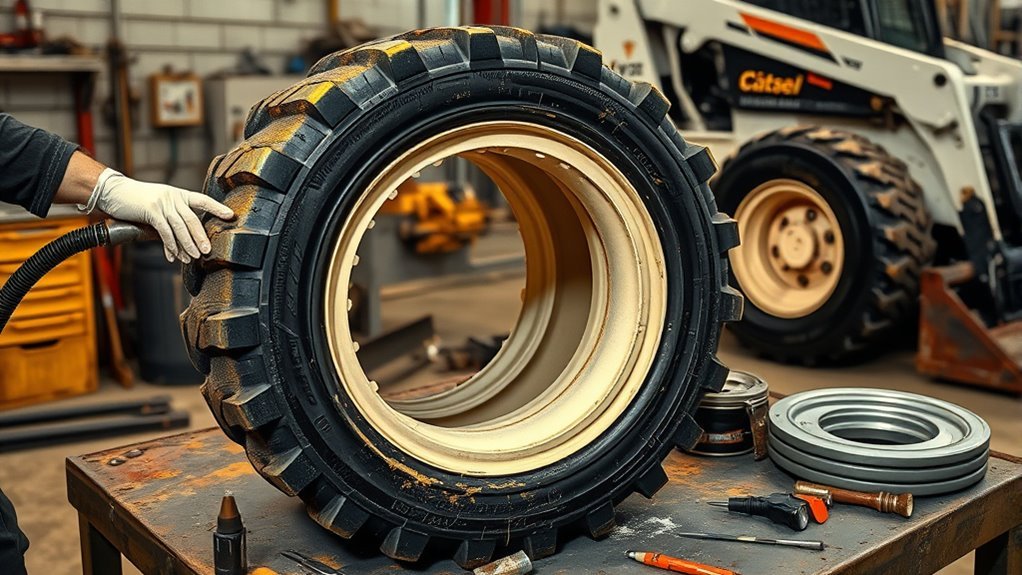
Flat tires can shut down a skid steer, telehandler, or forklift at the worst possible time. Foam fill helps solve that problem by replacing air with a cured polyurethane core, so the tire can keep working after many common punctures. This guide explains how tire foam fill works, when it makes sense, what trade-offs to expect, and how to inspect foam-filled tires for longer service life.
What’s in This Article
- What Is Tire Foam Fill and How It Works
- Quick Recommendation: When to Use Foam-Filled Tires
- Advantages for Telehandlers, Skid Steers & Forklifts
- Drawbacks & When Foam Fill Makes Sense to Avoid
- Foam-Filled vs Pneumatic vs Solid Tires: A Decision Guide
- Daily, Weekly, and Seasonal Maintenance Checklist
- Troubleshooting: Wear, Separation, Heat & Repair Tips
- Cost, ROI, and When to Refill or Replace
- Frequently Asked Questions
Quick Answer
Tire foam fill uses liquid polyurethane that cures inside the tire and replaces air with a solid core. It can reduce flats, pressure checks, and jobsite downtime, but it also adds weight and makes the ride harsher. It works best on low-speed equipment that faces nails, scrap, rocks, and debris.
Key Takeaways
- Choose foam-filled tires when puncture risk and downtime cost more than added weight and ride harshness.
- Use foam fill most often on telehandlers, skid steers, forklifts, and other low-speed jobsite equipment.
- Avoid foam fill when operator comfort, high-speed travel, easy tire changes, or low machine weight matters most.
- Inspect foam-filled tires often because heat, uneven wear, and separation can still shorten tire life.
- Compare foam-filled, pneumatic, and solid tires by terrain, load, speed, comfort, and total operating cost.
What Is Tire Foam Fill and How It Works
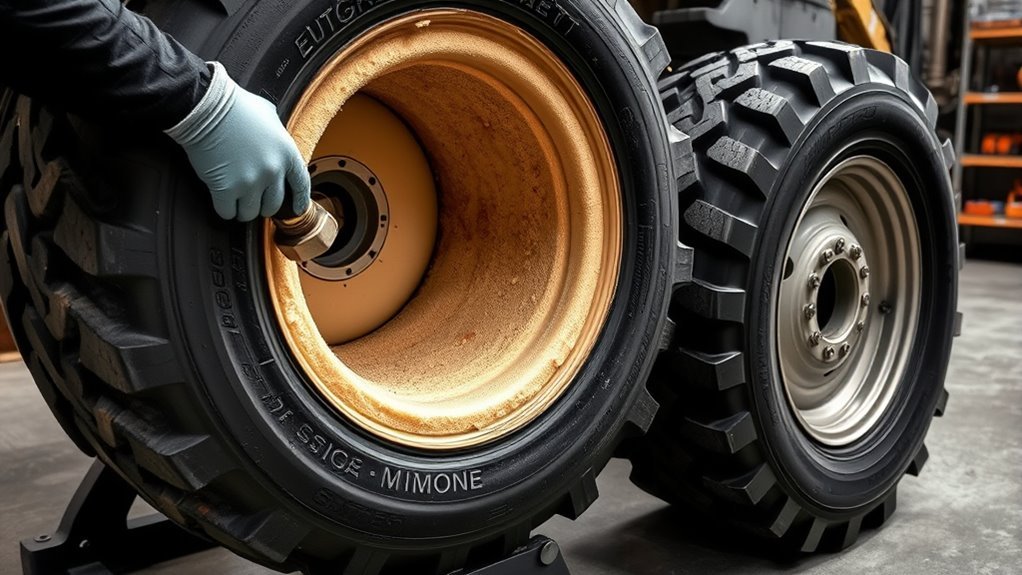
Tire foam fill uses a two-part liquid polyurethane injected into the tire cavity. The material cures into a solid, puncture-resistant core that replaces pressurized air and helps prevent flats.
The cured core supports the tire under load and removes pressure variability. That helps the tire keep a more consistent shape during work, even when the tread meets nails, sharp rock, scrap, or other debris.
You can choose foam density based on load, terrain, and ride needs. Higher-density foam supports heavier loads and reduces tire deflection, while lower-density foam can feel less harsh at lighter loads.
Foam fill also changes the tire permanently. Once a tire has foam inside it, you can’t convert it back to an air-filled tire, so plan placement, service, and disposal before you fill a fleet.
Quick Recommendation: When to Use Foam-Filled Tires
Choose foam-filled tires when your equipment works around debris, sharp material, or repeated puncture hazards. They make the most sense when uptime, load support, and fewer service calls matter more than ride comfort.
Start with your jobsite data. Compare your flat-tire rate, service-call cost, tire repair cost, and lost production time against the added cost and weight of foam fill.
Match the fill to the load profile and terrain. A solid core can improve stability under steady loads, but it also adds mass that may affect braking, acceleration, fuel use, and maneuvering.
Use a simple maintenance plan after installation. Schedule visual checks, tread-depth readings, and wear logs so you can prove whether foam fill lowers your total tire cost.
Pro tip: Track downtime hours before and after foam fill so you can judge the return on investment with real fleet data.
Advantages for Telehandlers, Skid Steers & Forklifts
Telehandlers, skid steers, and forklifts often work in debris-filled, high-impact areas. Foam-filled tires help these machines keep moving when ordinary pneumatic tires would lose air.
The polyurethane core prevents pressure loss, so the tire can keep supporting the machine after many tread punctures. That can cut unplanned stoppages on construction sites, scrapyards, recycling yards, demolition jobs, and waste facilities.
Foam-filled tires can also make load support feel more predictable. The tire shape stays more consistent because it does not depend on air pressure.
On rough ground, foam fill may help absorb some shock compared with solid tires. You still need to expect a firmer ride than standard pneumatic tires, especially during long shifts or on uneven routes.
[Products Worth Considering]

Monitor tire tread wear with a smart, color-coded depth gauge that shows clear condition ranges at a glance. The bar is range marked for fast, easy readings, helping you maintain safer traction and performance. Each gauge is portable with a pocket clip, and the set includes 20 units for daily use and sharing.
Meguiar's Supreme Shine 4" foam applicator pads make it easy to apply mild compounds, car polish, car wax, dressings, and interior products with smooth, even coverage. The ultra-soft tight-cell foam helps reduce streaks and creates a flawless finish on paint and other surfaces. Built for repeated use, the pads are machine washable for simple cleaning and long-lasting performance.

LiQuiTube Premium Heavy Duty Tire Sealant provides permanent flat tire protection to help maintain proper air pressure while sealing punctures and leaks. It seals bead, rim, and porosity weathering leaks and helps prevent flats in heavy ply industrial tires. Designed for versatile use on trailers and off-road equipment, it can be installed in tubeless tires and also inside tubes.
Drawbacks & When Foam Fill Makes Sense to Avoid
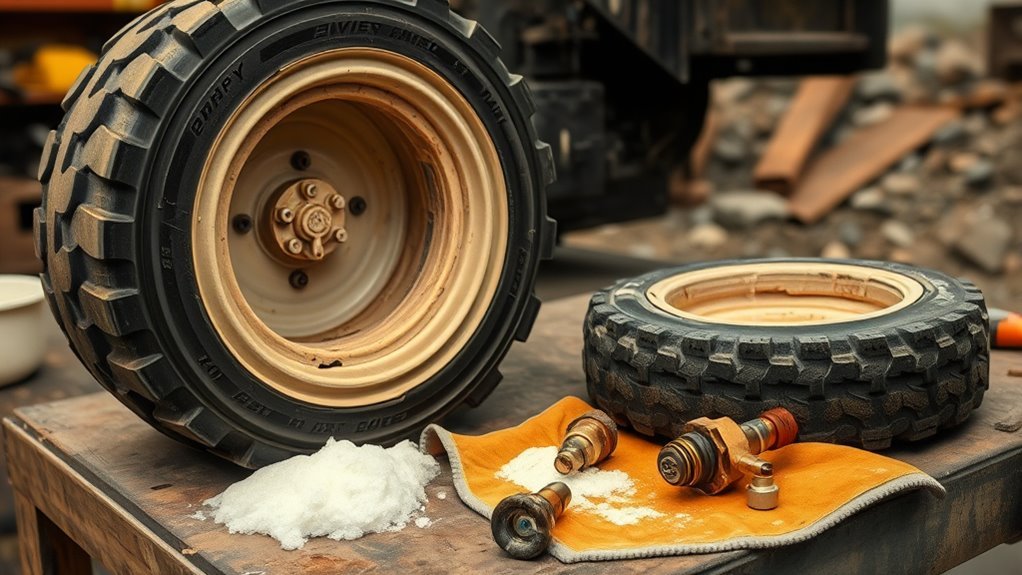
Foam fill can reduce flats, but it also changes how a tire rides, weighs, and wears. You should weigh those trade-offs before you choose it for every machine.
The main downside involves ride quality. Foam-filled tires lose the rebound of air-filled tires, so the machine can transfer more vibration to the operator.
- Reduced ride comfort: A firmer tire can tire out operators and make fine control harder.
- Added weight: More tire mass can slow acceleration, braking, and turning on compact machines.
- More component strain: Added stiffness can increase load on rims, bearings, and suspension parts.
- Harder removal: Foam-filled tires can take more labor and equipment to remove or replace.
Avoid foam fill when speed, light weight, ride comfort, or frequent tire changes matter more than puncture protection. Pneumatic tires often suit those needs better.
Warning: Foam fill does not make a damaged tire safe if the sidewall, bead, or casing has structural damage.
Foam-Filled vs Pneumatic vs Solid Tires: A Decision Guide
Compare foam-filled, pneumatic, and solid tires by puncture risk, ride comfort, surface type, and service cost. No single tire type wins in every job.
Foam-filled tires work well on harsh off-road sites where punctures happen often. Pneumatic tires give the best ride comfort and traction, but they need pressure checks and can go flat.
Solid tires give strong durability on smooth, hard surfaces. They suit warehouses and yards where long tread life matters more than cushioning.
| Tire type | Best use | Main benefit | Main trade-off |
|---|---|---|---|
| Foam-filled | Rough jobsites with puncture risk | Flat resistance and stable load support | Added weight and firmer ride |
| Pneumatic | Mixed terrain and comfort-sensitive work | Better cushioning and traction | Pressure checks, flats, and repairs |
| Solid | Smooth floors and high-wear indoor use | Maximum flat-proof durability | Harsh ride and less flexibility |
Foam filling can cost about $150 per tire in some applications, but the price changes with tire size, foam type, labor, and location. Ask your tire supplier for a written quote and compare it with your downtime cost.
[Products Worth Considering]

Accurately measure tire tread depth with a calibrated gauge marked from 0 to 1 inch in 1/32 inch increments. The color-coded bar helps you quickly identify tread condition ranges, supporting safe driving for trucks, motorcycles, automobiles, and passenger vehicles.

Steelman white tire marking crayons provide high-contrast, semi-permanent marks for repairing and inspecting tires and equipment. They write on wet or dry, smooth or coarse surfaces including rubber, metal, glass, and wood, making them ideal for puncture location and damage outlining. The lead- and zinc-free crayons resist weather and fading yet wipe away when you no longer need the marks.

TireJect Off-Road Tire Sealant Kit provides 5-in-1 sealing to help fix tread punctures up to 3/8", sidewall punctures up to 3/8", bead leaks, slow leaks, and minor dry rot on low-speed tires. It permanently seals with liquid rubber, recycled tire particles, and Aramid fibers, making it ideal for flats caused by thorns, nails, and screws. The included dispensing cap attaches to the valve stem for a no-mess installation, along with a metal valve core remover tool and valve stem cap. This kit is for off-road use only.
Daily, Weekly, and Seasonal Maintenance Checklist
You should inspect foam-filled tires on a set schedule because they can still wear, separate, overheat, or suffer casing damage. A simple checklist helps you catch problems before they stop the machine.
Daily Visual Inspections
Perform a daily visual inspection before the machine starts work. Check the sidewalls, tread, bead area, and rim for signs of damage.
- Look for cuts, bulges, cracks, separation, or exposed casing.
- Remove rocks, scrap, wire, and other debris from the tread.
- Record uneven wear, missing tread chunks, and new vibration complaints.
A short daily log gives you a record of tire condition. It also helps you spot repeat damage from a route, operator habit, or surface hazard.
Weekly Tread Measurements
Measure tread depth weekly with a calibrated gauge on heavy-use machines. Take readings at the inner, center, and outer tread points on each tire.
| Point | Action |
|---|---|
| Inner | Gauge and record depth |
| Center | Gauge and record depth |
| Outer | Gauge and record depth |
| Analysis | Compare trends over time |
| Action | Rotate, repair, or replace as needed |
Uneven tread loss can point to misalignment, overload, worn components, or aggressive operation. Fix the cause before you replace the tire, or the next tire may fail early too.
Seasonal Deep Maintenance
Seasonal inspections help you catch slow damage that daily checks may miss. Review tread logs, rim condition, wheel fasteners, alignment, and any heat-related marks.
- Daily: Scan the tire, remove debris, and log visible damage.
- Weekly: Measure tread depth, verify wheel-fastener torque, and update wear trends.
- Seasonal: Review wear history, inspect for separation, and plan repairs or replacement.
For severe work, shorten the inspection cycle. Heavy loads, long duty cycles, abrasive surfaces, and high heat can all speed up tire wear.
Troubleshooting: Wear, Separation, Heat & Repair Tips
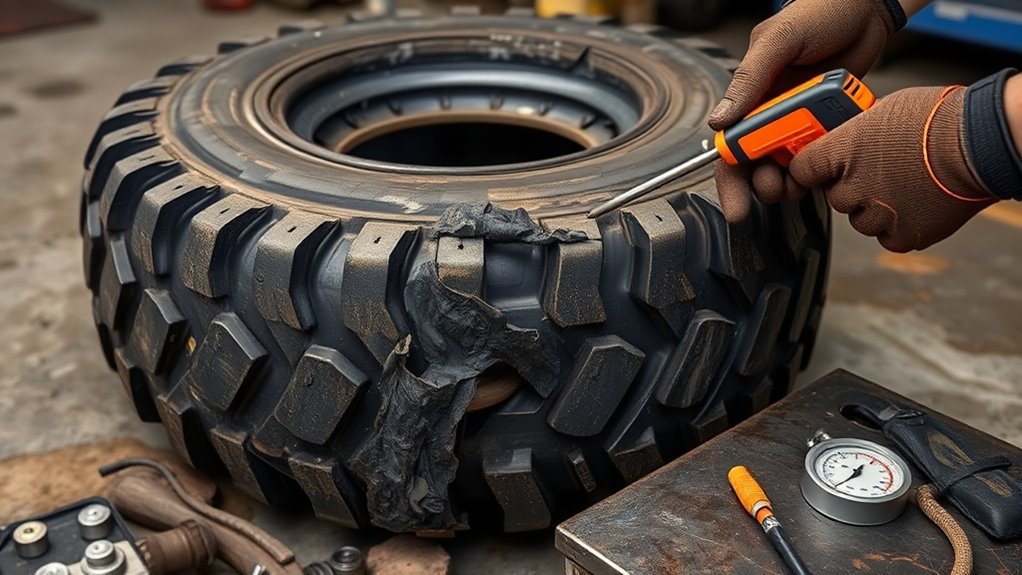
Foam-filled tires can still fail from wear, heat, casing damage, or separation. Troubleshooting starts with the tread pattern, then moves to temperature, sidewall condition, and machine setup.
Wear Pattern Diagnosis
Check tread depth across several points on each tire. Compare the readings with load records, route conditions, and alignment settings.
Fast wear on one edge can point to alignment, camber, or toe problems. Center wear, shoulder wear, and chunking can also signal overload, sharp turning, or abrasive surfaces.
- Measure tread depth across the full tire width.
- Log wear trends by machine, axle, and jobsite.
- Train operators to reduce harsh turns, sudden stops, and avoidable debris strikes.
Heat And Separation
Excessive heat can break down foam and weaken the bond between the filler and tire casing. Long runs, overloads, high ambient temperatures, and fast travel can raise that risk.
Watch for bulges, soft spots, uneven tread, cracks, odor, or new vibration. These signs can point to internal heat damage or separation.
Control heat by matching tire type to speed, load, and duty cycle. If heat remains a problem, ask your tire supplier about foam formulation, tire rating, and route changes.
Note: Follow the tire and foam supplier’s repair limits because safe repair depends on casing condition, damage location, and equipment use.
Cost, ROI, and When to Refill or Replace
Foam fill usually costs more upfront than keeping a tire pneumatic. Some jobs may see foam filling near $150 per tire, while larger industrial tires can cost more because they need more material and labor.
Compare foam-fill cost against flat repairs, tire swaps, service calls, and downtime before you make a fleet-wide change.
Your return on investment depends on how often flats stop your equipment. A site with repeated punctures may recover the extra cost faster than a clean warehouse or paved yard.
- Calculate cost per hour: Include fill cost, tire life, service calls, labor, and downtime.
- Track avoided downtime: Record fewer flats, fewer tire swaps, and less lost production.
- Set replacement rules: Replace tires when tread, casing damage, separation, or heat damage reaches your supplier’s limits.
Foam-filled tires usually get replaced, not converted back to air service. Some tire casings may not qualify for safe reuse, so confirm refill or replacement options before you buy.
[Products Worth Considering]

Measure tire tread depth quickly and accurately with this LUMITECO dial gauge that reads in 1/32" increments up to 14/32". The color-coded green/yellow/red zones make it easy to judge tire wear and know when replacement is needed. A rugged, compact design with a protective pouch helps keep the gauge ready for use on cars, trucks, motorcycles, and more.

This universal wheel alignment tool helps you accurately restore tire tilt angles after tire or suspension repairs using an adjustable camber gauge. It features a powerful magnetic base that firmly attaches to brake rotors for stationary, slip-free readings, improving consistency during measurement. Built from durable PC plastic, it resists wear and corrosion and is compact enough for car, truck, RV, and motorcycle alignment tasks.

Upgrade your ride with a 2-pack set of 26x1.95 folding mountain bike tires built for dependable traction on mud, rocks, and trail surfaces. A reinforced puncture-resistant layer helps protect against sharp debris, while included butyl inner tubes provide strong sealing and shock absorption. Ready for fast swaps with included tire levers and universal sizing for most bikes.
Frequently Asked Questions
Why Don’t We Use Foam-Filled Tires?
You may avoid foam-filled tires because they add weight, reduce ride comfort, and make tire removal harder. They can also increase strain on rims, bearings, and related parts when the machine already works under heavy loads.
Are Foam-Filled Tires Worth It?
Foam-filled tires can be worth it when punctures create costly downtime. Compare the fill price with service calls, replacement tires, lost labor, and missed production before you decide.
What Are the Disadvantages of Foam-Filled Tires?
The main disadvantages include added weight, a harsher ride, harder removal, and possible extra wear on machine components. Foam fill also makes the tire permanent, so you can’t return it to air-filled service.
Can Foam-Filled Tires Still Be Damaged?
Yes. Foam fill helps prevent air-loss flats, but it does not stop tread wear, sidewall cuts, casing damage, heat damage, or separation. Inspect the tire often and replace it when structural damage appears.
Are Foam-Filled Tires Good for Road Use?
Foam-filled tires usually suit low-speed industrial and off-road equipment better than road use. For higher-speed travel, check the tire manufacturer’s limits and choose a tire designed for that duty cycle.
Conclusion
Foam fill works best when puncture protection and uptime matter more than weight, comfort, and easy tire changes. Use it on low-speed machines that face debris, rough ground, and steady loads.
Before you commit, compare foam-filled tires with pneumatic and solid options for your surface, load, speed, and downtime cost. Then inspect tread, heat, sidewalls, and wear patterns on a set schedule.
A smart tire choice helps your fleet work longer with fewer preventable stops.