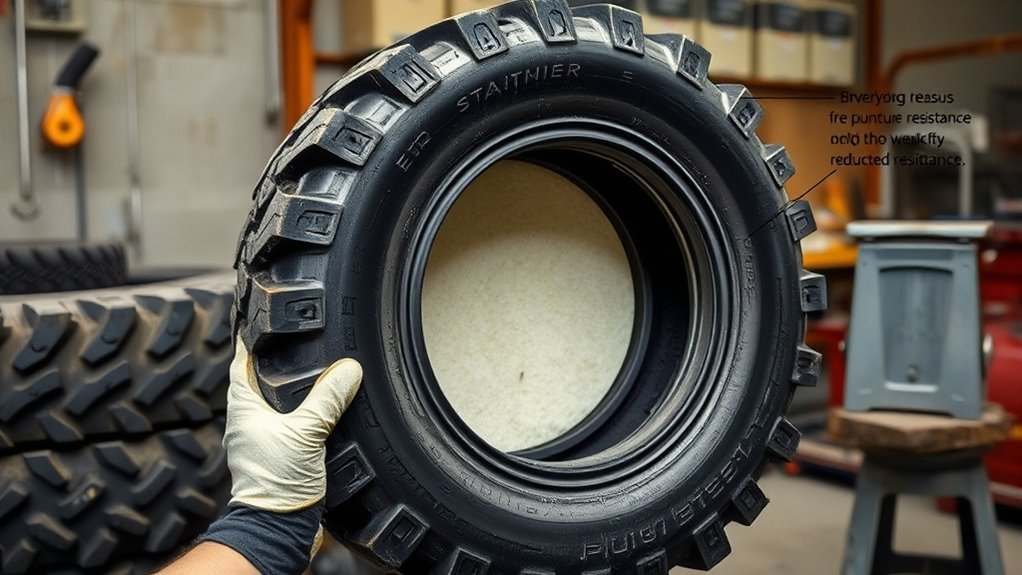
Who Should Consider Foam-Filled Tires?
What’s in This Article
- Who Should Consider Foam-Filled Tires?
- How PU Foam Filling Works and Why It Prevents Punctures
- Performance Trade-Offs: Ride, Weight, and Heat
- Best Applications for Foam-Filled Tires
- Cost vs. Lifetime Savings for Fleets
- Maintenance and Repair Challenges With Foam-Filled Tires
- Foam-Filled vs. Pneumatic vs. Solid Tires: Quick Comparison
- Decision Checklist for Fleet Managers
- Frequently Asked Questions
Flat tires can stop a fleet faster than almost any small equipment issue. You should consider polyurethane (PU) foam-filled tires when uptime, puncture resistance, and load stability matter more than a soft ride or low tire weight. A liquid PU compound fills the tire cavity, cures into closed-cell foam, supports the load, and eliminates air-pressure loss. This guide explains where foam-filled tires work best, what trade-offs to expect, and how to weigh cost against downtime.
Quick Answer
Foam-filled tires suit equipment that works around sharp debris, heavy loads, or indoor material-handling routes where flats cause costly delays. They offer strong puncture resistance and stable load support, but they add weight, feel firmer, and need specialized service. Choose them for low-speed, high-risk work sites, not highway use or comfort-focused applications.
Key Takeaways
- Use foam-filled tires when flat prevention and uptime matter more than ride softness.
- Expect a firmer ride, more tire weight, and more complex tire changes.
- Match foam filling to low-speed equipment in construction, recycling, mining, warehousing, and demolition.
- Compare total downtime, repair labor, and replacement cycles before judging upfront cost.
- Plan service access before converting a fleet because repairs require trained technicians and proper tools.
Who Should Consider Foam-Filled Tires?
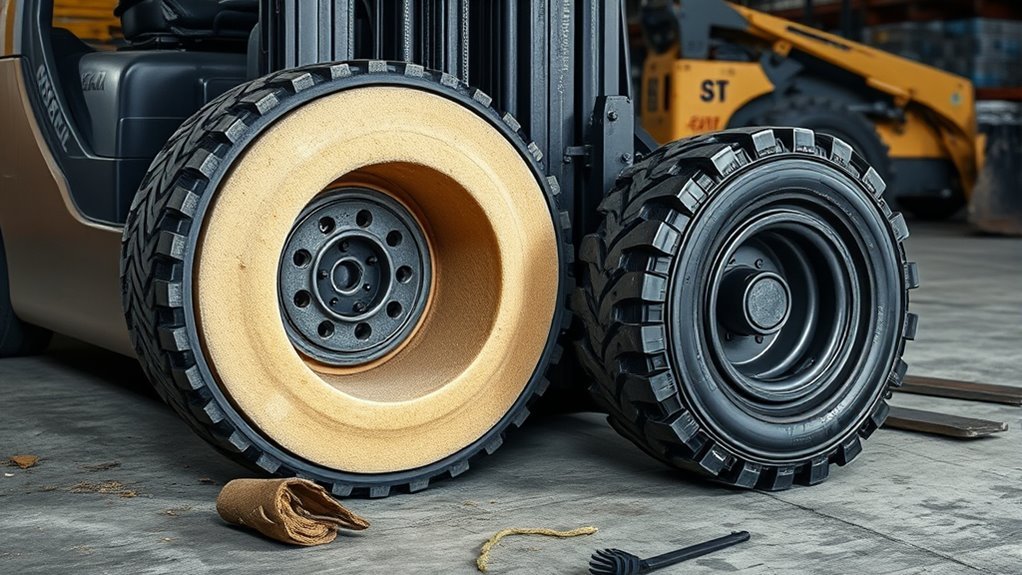
You should consider foam-filled tires if your equipment works in places where flats create lost time, safety issues, or costly service calls. They make the most sense when your tires face sharp debris, rough surfaces, heavy loads, or frequent vibration.
Construction, mining, recycling, demolition, and waste-handling fleets often benefit most. In these settings, puncture resistance can reduce unexpected stops, lower repair labor, and keep equipment available for planned work.
Foam-filled tires also help aerial work platforms, telehandlers, skid steers, forklifts, and similar low-speed machines. You should weigh the higher upfront cost against fewer tire repairs, longer service intervals, and more predictable fleet planning.
How PU Foam Filling Works and Why It Prevents Punctures
PU foam filling replaces the air inside a tire with a liquid polyurethane compound. The compound cures into dense, closed-cell foam that supports the load while the tire keeps its outside shape.
This foam core prevents flats because sharp objects no longer create an air-loss path. A nail, screw, or scrap metal piece may still damage the tread, but the tire won’t deflate like a pneumatic tire.
- Closed-cell foam supports weight while adding some vibration damping.
- Load distribution spreads stress across the casing and helps reduce sudden collapse.
- No pressure checks means crews spend less time monitoring inflation.
- Solid internal support helps the tire keep working after many common punctures.
You gain steady ride height, predictable load support, and strong flat protection in demanding work areas.
Note: Foam filling stops air-pressure loss, but it doesn’t make the tire casing immune to cuts, chunking, or severe sidewall damage.
Performance Trade-Offs: Ride, Weight, and Heat
Foam filling eliminates flats, but it changes how the tire feels and performs. You’ll notice a firmer ride because foam doesn’t compress like air.
The added fill also increases tire weight. More unsprung mass can affect steering feel, fuel use, axle loading, and traction on soft ground.
Heat also deserves attention. Long travel distances, heavy loads, high speeds, and hot work sites can raise tire temperature and speed wear.
- Ride quality: Expect less cushioning than a pneumatic tire.
- Weight: Confirm the equipment can handle the added mass.
- Heat: Avoid applications that exceed the tire or fill supplier’s limits.
- Service: Plan for longer tire removal and rim-cleaning work.
Warning: Don’t use foam-filled tires on highway vehicles or high-speed equipment unless the tire and fill supplier approve that exact use.
Best Applications for Foam-Filled Tires
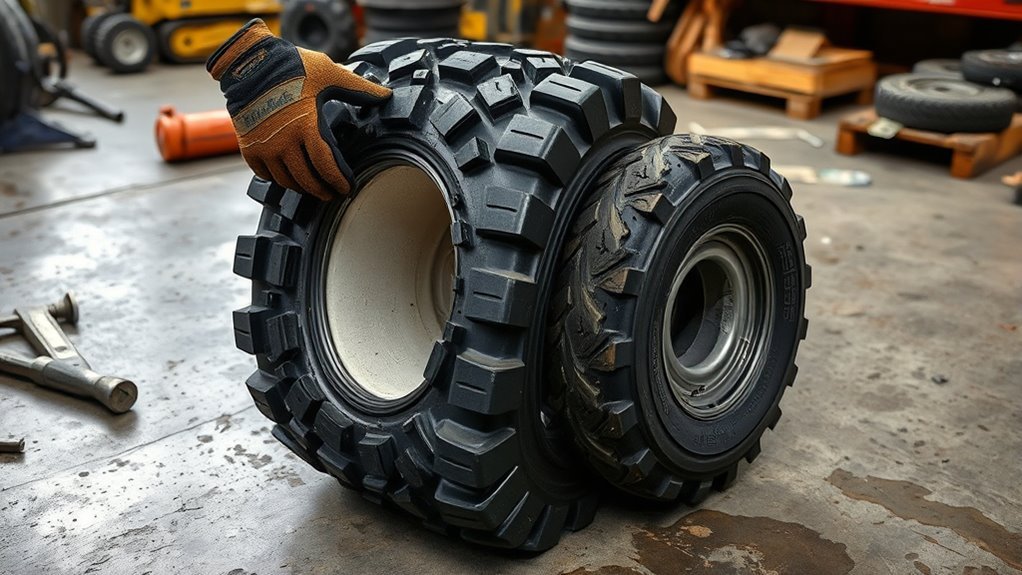
You’ll get the most value from foam-filled tires when equipment works at low speed and faces frequent puncture hazards. They perform well in heavy-duty construction, indoor material handling, mining, quarrying, recycling, and demolition.
Heavy-Duty Construction Sites
Foam-filled tires work well on sites with rebar, nails, broken concrete, scrap metal, and uneven ground. They help loaders, skid steers, telehandlers, and aerial lifts avoid flat-related downtime.
- Reduce puncture failures from common jobsite debris.
- Improve load support on rough or broken surfaces.
- Cut routine inflation checks and emergency tire calls.
- Keep low-speed equipment working through demanding shifts.
Indoor Material-Handling Equipment
Foam-filled tires can help forklifts, pallet jacks, and order pickers stay productive in busy warehouses. They remove inflation checks and help reduce flat-related interruptions.
For indoor use, choose a tire compound that matches your floor, load, and turning needs. Non-marking options can help protect finished floors when the application requires them.
| Forklifts | Pallet Jacks | Order Pickers |
|---|---|---|
| High load support | Tight turns | Elevated reach |
| Durable operation | Compact routes | Operator stability |
Mining and Quarry Operations
Mining and quarry operations put tires through rock, debris, heavy loads, and uneven terrain. Foam-filled tires help equipment keep moving when pneumatic flats would slow production.
- Improve uptime by reducing flat-related repairs.
- Support heavy loads on harsh ground.
- Reduce sudden deflation risk in debris-heavy zones.
- Help operators maintain steadier control at low speeds.
Follow tire supplier guidance for load, speed, heat, and site conditions before installing foam-filled tires in severe-duty work.
Cost vs. Lifetime Savings for Fleets
Foam filling costs more upfront than a standard pneumatic setup. Actual cost depends on tire size, fill volume, service provider, and local labor rates.
You should compare that cost with the real price of flats. Include repair calls, lost labor, delayed jobs, tire replacement, rim damage, and missed production time.
[Products Worth Considering]

AUTOWN’s 68-piece tire repair kit helps you fix punctures and plug flats quickly and effectively. It includes a T-handle and spiral probe tool for easy insertion, while the steel patch and plug materials are designed for strong adhesion and long-lasting airtight performance. The compact case makes it convenient for roadside repairs across a wide range of vehicles.

LiQuiTube Premium Heavy Duty Tire Sealant provides permanent flat tire protection to help maintain proper air pressure while sealing punctures and leaks. It seals bead, rim, and porosity weathering leaks and helps prevent flats in heavy ply industrial tires. Designed for versatile use on trailers and off-road equipment, it can be installed in tubeless tires and also inside tubes.
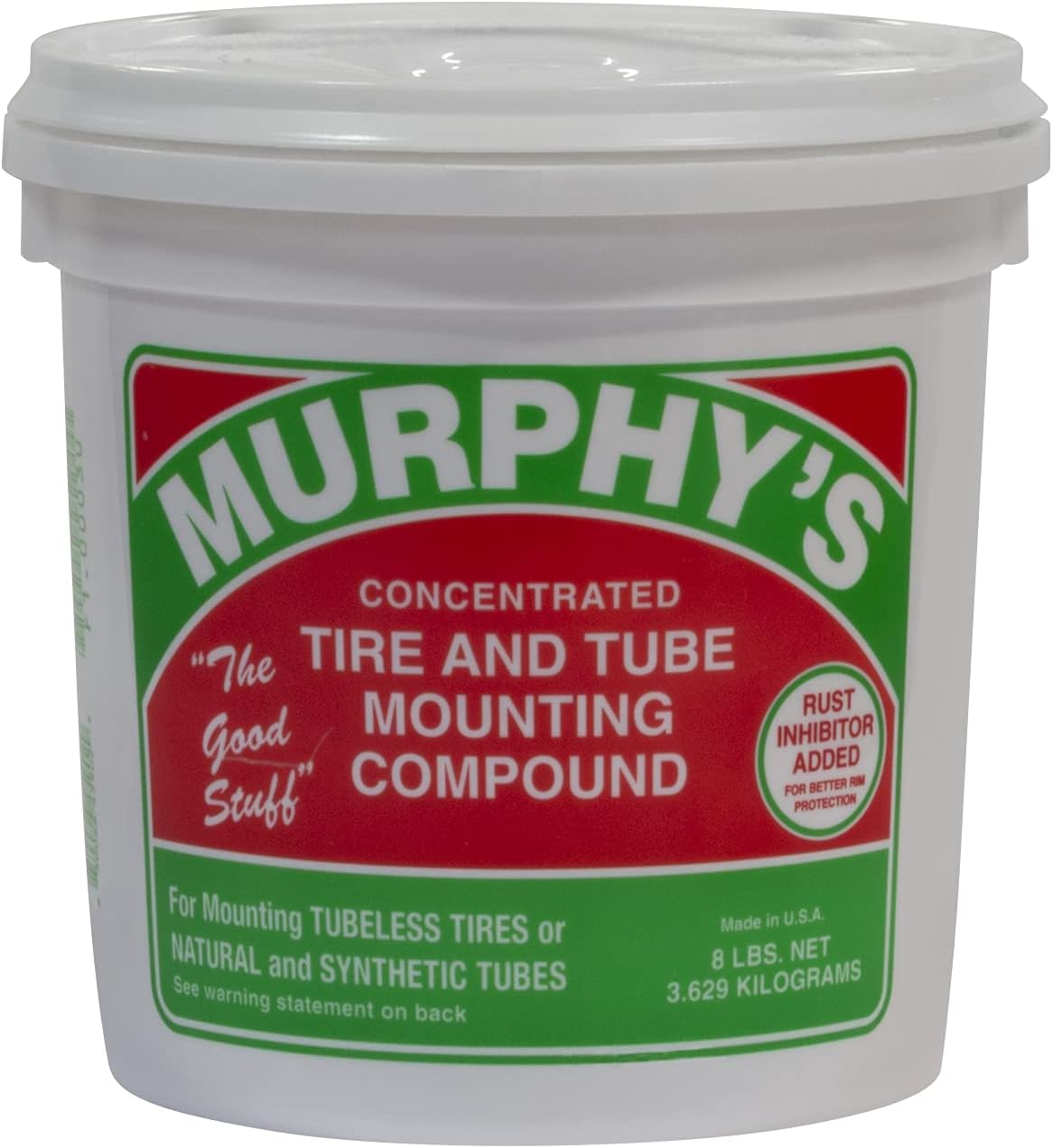
A concentrated tire and tube mounting compound designed to help simplify mounting rubber tires and tubes on passenger, semi truck, construction, and OTR applications. Its ultra-thick formula packs beads effectively and includes rust inhibitors to help protect against corrosion during use.
Upfront Investment Impact
The upfront price can make foam filling look expensive at first. For high-puncture equipment, the payback often comes from fewer emergency tire changes and more available work hours.
- Compare flat frequency before and after filling.
- Track downtime cost per hour and per machine.
- Estimate service life under your duty cycle.
- Prioritize equipment with the highest puncture exposure.
Maintenance Cost Reduction
Foam-filled tires reduce recurring tasks tied to air pressure and flat repair. You won’t need routine inflation checks, and you can avoid many plug, patch, and tube-related service events.
These savings matter most when downtime costs more than the tire work itself. A busy warehouse, mine, or jobsite may lose far more from stopped equipment than from the tire repair bill.
Total Cost of Ownership
Total cost of ownership gives you the clearest view. Compare purchase price, filling cost, labor, downtime, replacement rate, and lost production over the tire’s full life.
- Reduced downtime lowers indirect labor and opportunity costs.
- Fewer repairs reduce parts, service, and callout expenses.
- Longer usable life may delay replacement purchases.
- Better fleet availability can improve schedule control.
Pro tip: Start with your highest-puncture machines before converting a full fleet.
Maintenance and Repair Challenges With Foam-Filled Tires
Foam-filled tires need different service steps than pneumatic tires. The cured foam can bond inside the tire and leave material on the rim during removal.
You should schedule inspections for tread wear, sidewall cuts, casing damage, and signs of separation. Foam filling prevents flats, but it doesn’t remove the need for tire checks.
Traditional plugs and patches may not solve damage in a filled tire. Many repairs require a specialist, compatible polyurethane fill, or full tire replacement.
- Plan extra time for tire removal and rim cleanup.
- Use trained technicians for filling and replacement.
- Keep spare tires ready for critical equipment.
- Confirm fill compatibility before mixing suppliers or tire types.
[Products Worth Considering]

Replace worn tires quickly with this universal 4.80/4.00-8 tire and inner tube set designed for wheelbarrows and outdoor utility carts. The ribbed tread helps reduce turf damage while the natural rubber construction supports longer service life. Compatible with 15.5-inch outer diameter, 4-inch width, and 8-inch rim diameter wheels, it uses a straight TR-13 valve stem for easy installation. For best results, inflate with a manual pump and do not exceed 25 PSI.

The Big Rig Defense Tire Thumper is a truck tire pressure checker that lets you quickly check multiple tires by giving them a firm whack. Listen for a reassuring thump and feel the stick bounce when a tire is fully inflated, helping you get back on the road safely. It features a comfortable, glove-friendly handle and a secure wrist strap for confident use on busy routes.

Tymate TM7 is a wireless tire pressure monitoring system that delivers real-time pressure and temperature readings for safer driving. It includes four external sensors, a bright color LCD display with adjustable backlight, and six alarm modes for high/low pressure, fast leakage, high temperature, and sensor signal or battery issues. The system covers a wide 0–144 PSI range and plugs into your vehicle’s cigarette lighter socket for quick DIY setup.
Foam-Filled vs. Pneumatic vs. Solid Tires: Quick Comparison
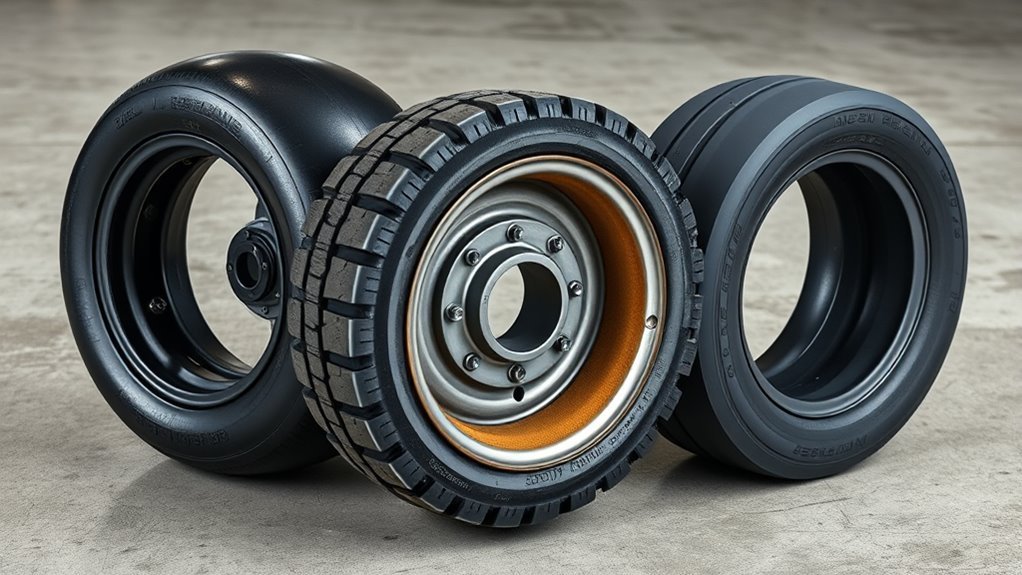
Each tire type fits a different operating need. Your best choice depends on puncture risk, load, ride comfort, speed, service access, and cost.
| Type | Best For | Main Strength | Main Trade-Off |
|---|---|---|---|
| Foam-filled | Low-speed work in puncture-heavy areas | Strong flat protection and load support | Higher weight and firmer ride |
| Pneumatic | Comfort, traction, and lighter-duty routes | Best cushioning and lower weight | Higher puncture risk and pressure checks |
| Solid | Rugged indoor or industrial use | Durability and low routine maintenance | Harsh ride and less cushioning |
Choose foam-filled tires when flat prevention matters most. Choose pneumatic tires when comfort, weight, and traction matter more. Choose solid tires when you need simple, rugged durability and can accept a harsher ride.
[Products Worth Considering]
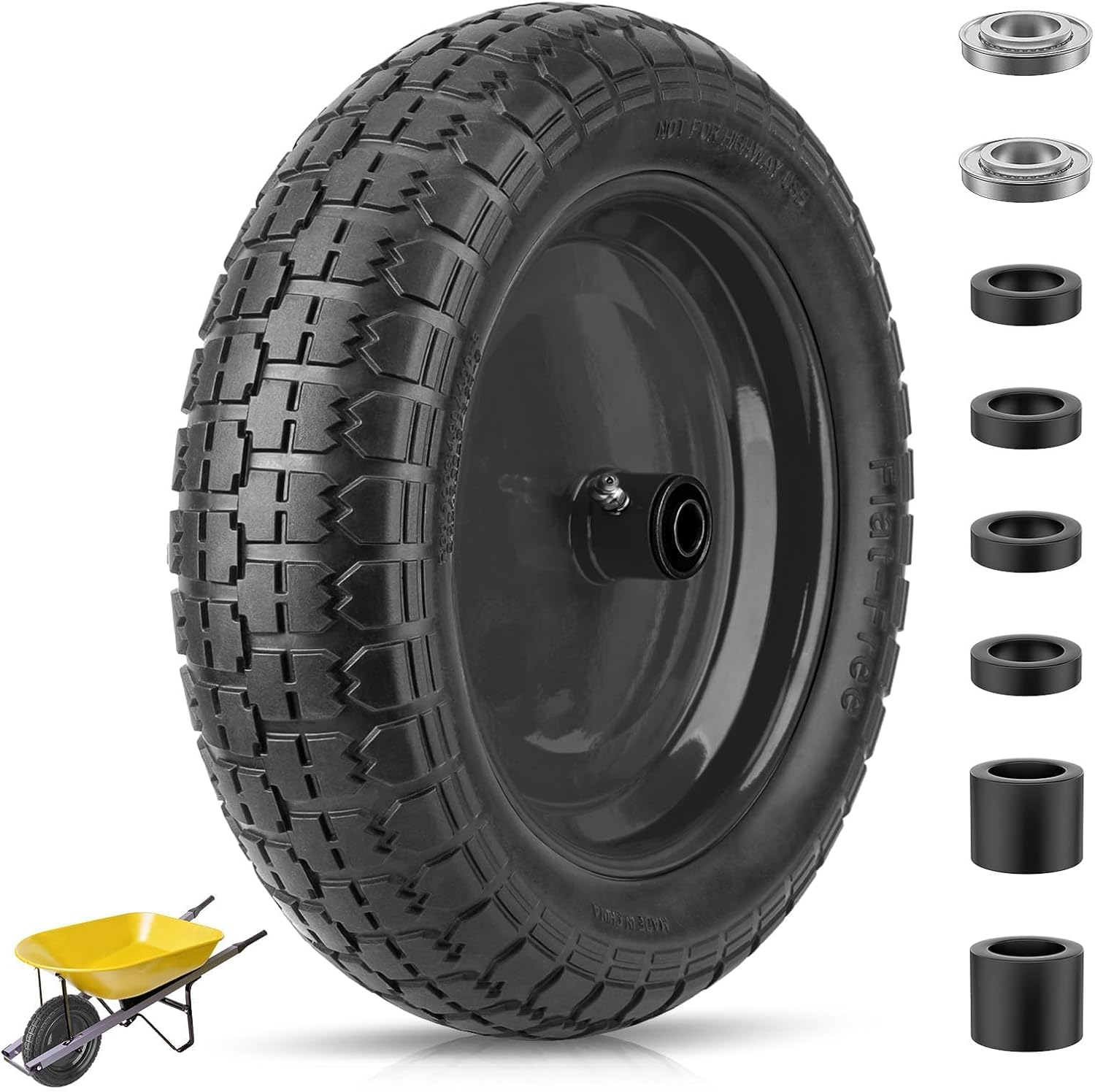
This flat-free TICONN wheelbarrow tire features durable polyurethane foam construction that never needs inflation, helping prevent punctures and reducing maintenance on rough outdoor terrain. With a 300 lb max load capacity and stable steel rim design, it supports safer transport for yard work and hauling tasks. An adapter kit with ball bearings and nylon spacers is included for easier fit and customization across common wheelbarrow and cart axle setups.
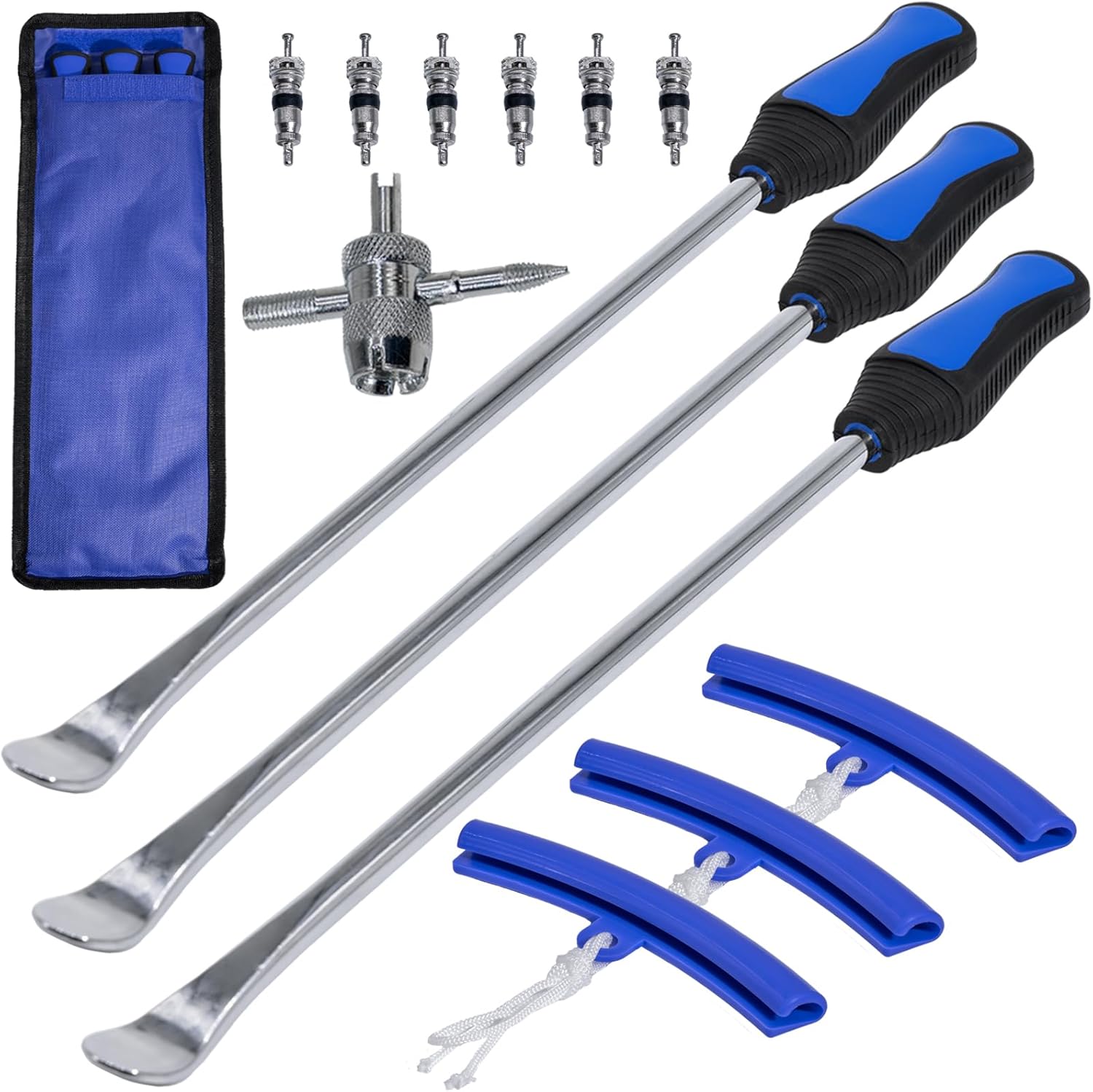
This tire spoon set helps you remove and install motorcycle, dirt bike, lawn tractor, and bicycle tires with extra leverage from a 14.5-inch spoon length. The kit includes tire removal tools, rim protectors, and a valve tool to simplify repairs and help protect rims during changing. Designed for quick, on-the-go service, it’s convenient for garage work, trails, and track-side fixes.

Vigorder rubber cement glue delivers superior adhesion and cures quickly within about 30 seconds for seamless rubber bonding. Once cured, it helps provide a strong, durable, waterproof seal that holds up to vehicle weight, pressure, and heat. Suitable for cars, motorcycles, trucks, bicycles, and off-road tires, it’s designed for emergency patch and maintenance repairs.
Decision Checklist for Fleet Managers
Use a short checklist before you approve foam filling. The right match can reduce downtime, but the wrong match can create ride, heat, or service problems.
- Cost-benefit: Compare filling cost with expected downtime reduction.
- Environment match: Confirm frequent exposure to sharp debris or rough terrain.
- Ride quality: Decide whether operators can accept a firmer ride.
- Load limits: Check tire, rim, axle, and equipment ratings.
- Speed limits: Exclude high-speed and highway applications.
- Heat risk: Review travel distance, load, duty cycle, and ambient temperature.
- Service access: Confirm that a qualified provider can fill, remove, and replace the tires.
When these checks support foam filling, you can reduce preventable stoppages and make fleet planning more predictable.
Frequently Asked Questions
What are the disadvantages of foam-filled tires?
Foam-filled tires add weight, create a firmer ride, and can affect handling, fuel use, and heat buildup. They also cost more upfront and require more complex service when you replace them.
What are the pros and cons of polyurethane foam in tires?
Polyurethane foam gives you strong puncture resistance, stable load support, and less downtime. The trade-offs include more tire weight, less cushioning, higher initial cost, and specialized replacement work.
Why don’t all vehicles use foam-filled tires?
Most vehicles need speed, comfort, low weight, and heat control more than flat protection. Foam-filled tires work best on low-speed work equipment, not passenger cars or highway vehicles.
Can foam-filled tires still be damaged?
Yes. Foam filling prevents air-pressure loss, but cuts, chunking, casing damage, and severe sidewall damage can still make a tire unsafe or unusable.
Are foam-filled tires better than solid tires?
They can be better when you want puncture resistance with more tire flex than many solid options provide. Solid tires may suit simple industrial jobs where maximum durability and low routine service matter most.
Conclusion
Foam-filled tires make sense when uptime matters more than a soft ride. They reduce flat-related downtime, support heavy loads, and help low-speed equipment keep working in harsh sites.
Before you convert, check puncture risk, load needs, speed limits, heat exposure, operator comfort, and service access. Make the decision by total cost, not by tire price alone.
Used in the right setting, foam-filled tires can turn tire problems from daily disruptions into planned maintenance.