Disclosure: As an Amazon Associate, we earn from qualifying purchases. If you click a link on this page and make a purchase, we may receive a small commission at no extra cost to you.
A flat tire is frustrating enough without discovering that your repair kit lacks the right patch or surface-prep tool. The Dexnoca Bike Inner Tire Patch Repair Kit is a compact, budget-focused set built around assorted patches, scuffing pieces, and a storage box. It gives you more patch-size choice than many minimalist ride kits, but the current Amazon listing contains conflicting quantity details, so you should confirm the selected Black-2 package before ordering. This review explains what the kit can realistically repair, how to use it, and when a different solution is safer.
Quick Verdict
Rating: 8/10, recommended with caveats
Best For: Riders who want an inexpensive assortment for standard inner-tube punctures and home-toolbox backup
Bottom Line: The Dexnoca kit offers useful patch-size variety and a compact organizer. Its main drawback is inconsistent listing information about the exact patch count and included repair materials.
At a Glance
|
Buying Factor |
Verdict |
|---|---|
|
Ease of Use |
Simple after you locate the puncture, clean the tube, and lightly roughen the repair area. |
|
Patch Selection |
Multiple round and rectangular sizes help cover pinholes and wider damaged areas. |
|
Portability |
Compact enough for a saddle bag or backpack, but larger than a six-patch emergency kit. |
|
Compatibility |
Best suited to repairable rubber inner tubes. Do not assume compatibility with TPU tubes or tubeless tire casings. |
|
Overall Value |
Strong for riders who want many patches, provided the selected variation includes the pieces shown in the listing. |
Before You Buy: The Amazon page currently calls this a 30-patch kit in its title and feature bullets, while another description block lists different quantities. Check the selected Black-2 variation, package images, and included adhesive or pre-applied patch type before checkout.
Key Specifications
| Specification | Detail |
|---|---|
| Brand | Dexnoca |
| Model name | Bike Tire Repair Kits |
| ASIN | B0CZTGY4RT |
| Product type | Inner-tube puncture patch kit |
| Current variation | Black-2, one size |
| Patch assortment | Current feature bullets list 16 round 1.18-inch patches, 8 round 1.47-inch patches, and 6 rectangular patches |
| Surface preparation | Four scuffing or sandpaper pieces are referenced in the listing |
| Storage | Plastic organizer box |
| Listed item dimensions | 6.5 x 5.3 x 0.73 inches |
| Claimed compatibility | Road, mountain, BMX, motorcycle, ATV, trolley, and wheelchair inner tubes, plus some inflatable rubber products |
| Manufacturer warranty | None listed |
Dexnoca Bike Tire Repair Kit

The Dexnoca kit is a flat, boxed assortment for patching punctured inner tubes. Its main selling point is quantity and size choice rather than a premium case, tire levers, an inflator, or a full roadside tool set. You still need a pump or CO2 inflator, and you may need tire levers to remove a tight tire from the rim.
The current Amazon listing identifies the product as the Black-2 variation and describes round patches in two sizes plus rectangular patches for broader repair areas. It also references pre-applied patches and vulcanizing materials, but the page does not present those details consistently. The safest approach is to follow the instructions included with the exact package you receive rather than assuming every patch uses the same application method.
[Products Worth Considering]

FANSPRO’s 2-pack 26-inch bicycle inner tubes are built for reliable performance on road and mountain bikes. They fit tire widths from 2.125 to 2.40 inches and use a 48mm Schrader valve for convenient inflation. The set includes two durable tire levers to help you remove and install tubes quickly after a flat.

Wykodra tire plugs provide quick vulcanizing repairs for tubeless tires, helping you seal punctures and get back on the road. The industrial-strength rubber creates a long-lasting, leak-resistant bond and is designed for emergency fixes without removing the tire. Choose between two standard plug sizes with color-matched options for small to larger damage across many vehicles and off-road uses.

CKAuto Universal Tire Repair Kit provides a complete emergency solution for fixing flat tire punctures using plug-style repairs without removing the tire from the rim. The kit includes insertion/probe tools, repair plugs, lubricant, valve accessories, and a convenient carry bag for quick roadside use. Designed for tubeless tires across cars, SUVs, trucks, motorcycles, RVs, and more, it’s easy enough for anyone to perform a proper repair.
What People Say
The source article reports generally positive customer sentiment around the assortment, low-cost replacement potential, and included prep materials. However, live Amazon review totals and the original stated price could not be confirmed during this update, so the chart below should be treated as an editorial snapshot rather than current marketplace data.
Overall Sentiment: Positive in the source article, with current totals unverified

Who Should Buy It?
Best For
- Road, commuter, BMX, and mountain-bike riders using repairable rubber inner tubes
- Home mechanics who want several patch sizes in one organizer
- Riders building a backup kit for a saddle bag, backpack, car, or workshop
Skip If
- You need a complete roadside kit with tire levers and inflation equipment
- Your bike uses TPU tubes, latex tubes, or a tubeless setup without confirmed patch compatibility
- You want a compact six-patch kit that fits easily in a jersey pocket
Pros and Cons
Pros
- Assorted round and rectangular patches suit several puncture sizes
- Includes surface-prep pieces and a storage box
- Useful as a workshop supply or multi-ride backup
- Compact shape fits many saddle bags and backpacks
- Can reduce unnecessary tube replacements when a puncture is safely repairable
Cons
- The Amazon listing conflicts on patch count and package contents
- No tire levers or inflation tool are confirmed as included
- No manufacturer warranty is listed
Patch Selection and Repair Coverage
Small round patches are the logical choice for clean pinholes caused by thorns, wire, or small glass fragments. A larger round or rectangular patch gives you more overlap around a wider damaged area, but patch size does not make every tube repairable. The patch should extend beyond the prepared area on all sides without folding over a seam or valve base.
Long splits, damage beside the valve, torn seams, stretched holes, and repeated failures in the same area are strong reasons to replace the tube. You also need to inspect the tire casing. A patched tube will fail again if the nail, glass shard, spoke problem, rim-tape issue, or tire cut that caused the puncture remains in place.
Ease of Use and Surface Preparation
The kit is straightforward, but preparation controls the result. Mark the hole before the tube dries, then clean and fully dry the area. Lightly roughen a section larger than the selected patch. The goal is an even, matte surface, not a deep groove that thins the tube.
Because the listing refers to both pre-applied patches and vulcanizing components, check which patch type you are holding. A pre-glued patch is pressed onto a clean, roughened surface. A traditional vulcanizing patch normally requires a thin layer of fluid that must become tacky or dry as directed before the patch is pressed firmly into place.
Pro Tip: After finding the leak, draw a wide circle around it with a pen or chalk. The mark keeps the puncture centered while you clean, scuff, and position the patch.
How to Use It Correctly
- Remove the tube: Deflate it fully, remove one side of the tire from the rim, and pull out the tube without damaging the valve.
- Find the puncture: Inflate the tube slightly and listen or feel for escaping air. Water can help reveal bubbles, but dry the tube completely before patching.
- Inspect the cause: Carefully check the inside of the tire and the rim area for sharp debris, damaged rim tape, or an exposed spoke hole.
- Prepare the surface: Mark the hole, clean the area, and lightly roughen a section wider than the patch.
- Apply the correct patch type: Follow the package directions for pre-glued or vulcanizing patches. Center the patch and press firmly, especially around the edges.
- Test before riding: Inflate the tube slightly, confirm the patch stays flat, and check for leakage before reinstalling it.
- Reinstall carefully: Avoid trapping the tube under the tire bead. Inflate gradually and make sure the bead is seated evenly.
Compatibility and Safety
This kit is most appropriate for conventional repairable rubber inner tubes. The listing claims broad use across bicycles and several small-vehicle tubes, but tube material and operating demands matter. Some TPU and latex tubes require material-specific patches, and stick-on tube patches are not a general repair for a tubeless tire casing.
For a tubeless bicycle tire, use a repair method approved by the tire manufacturer, such as sealant, a purpose-built plug, or an internal repair performed according to the casing maker’s guidance. Do not use this kit on damaged beads or serious sidewall cuts. For road-going motorcycles and other high-speed vehicles, have a qualified tire professional assess the tire and tube before returning to normal service.
How It Performs in Real Use
Daily Commuting
For a simple inner-tube pinhole, the assortment lets you choose a patch with enough overlap instead of using an oversized piece. Keep the kit with tire levers and a compact pump, because patches alone will not get the wheel back on the road.
Trail and Mountain-Bike Rides
The larger patches may help when rough terrain creates a wider abrasion or pinch-related hole that is still safely repairable. Trail riders should also carry a spare tube because dirt, moisture, and limited working space can make a clean patch difficult.
Home Workshop Repairs
This is where the larger assortment makes the most sense. You can clean the tube properly, inspect the tire under good light, and give the repair enough time before testing it. The organizer also keeps different patch sizes together between repairs.
Travel and Emergency Backup
The flat case is easy to store in a backpack, vehicle emergency bin, or larger saddle bag. Check the contents before a trip, keep the repair surfaces clean and dry, and replace any opened or dried-out vulcanizing fluid.
Storage and Maintenance
Keep the case closed and store it away from heat, direct sunlight, and moisture. Dirt on the bonding surface can weaken a repair, while heat may age adhesive components. Review the contents before long rides so you know which patches remain and whether any fluid container is still usable.
The basic plastic box is practical rather than rugged. Put it inside a small zip bag if it will share space with wet clothing, chain tools, or loose metal parts. That extra barrier also helps prevent the patch surfaces from becoming contaminated.
Is It Worth the Price?
The Dexnoca kit belongs in the budget category, but the live price was not consistently displayed during this review. Its value comes from having several patch sizes and repeat-use supplies in one box, not from premium tools or a verified warranty.
It is worth considering if you regularly repair standard inner tubes at home or want a larger backup supply. It is not the best fit if you need a fully self-contained roadside kit, a material-specific TPU solution, or a confirmed tubeless repair system.
[Products Worth Considering]

This self-service tire repair nail kit includes 60 pieces (30 small + 30 large) to help seal punctures quickly without needing an auto shop visit. The nails are designed to fit different hole sizes and provide a tight connection with sealing glue to help prevent air and water intrusion. Suitable for cars, motorcycles, trucks, and other vehicles, it’s an easy, efficient way to patch roadside tire damage.

This AUTOWN flat tire repair kit is designed for quick, reliable puncture repairs using a plug kit and spiral probe tool to simplify installation. Built for durability and safe handling, it offers strong adhesion and flexibility to help maintain tire air tightness. With a portable storage case and a multi-vehicle approach, it’s suitable for cars, motorcycles, ATVs, tractors, lawn mowers, RVs, jeeps, and trucks.

This chemical vulcanizing cement cures rubber at room temperature, creating a strong bond for reliable tire patch and plug repairs. The fast-drying formula helps reduce vulcanization time, while the built-in brush makes application quick and even. Suitable for car, motorcycle, and bicycle tires, it supports repairs for tubeless tires, outer tires, and inner tubes.
How It Compares to Alternatives
The Park Tool VP-1 is a smaller traditional vulcanizing kit with fluid and six butyl patches, making it a clearer choice when you want documented compatibility and a compact package. The Park Tool GP-2 is even smaller and uses six pre-glued patches, but Park Tool describes those patches as a temporary repair and limits compatibility by tube material.
Slime also sells tube-patch kits with rubber cement and fewer patches. The Dexnoca set makes the most sense when patch quantity and size variety matter more to you than brand documentation, a tiny case, or an all-in-one kit with levers and inflation gear.
[Products Worth Considering]
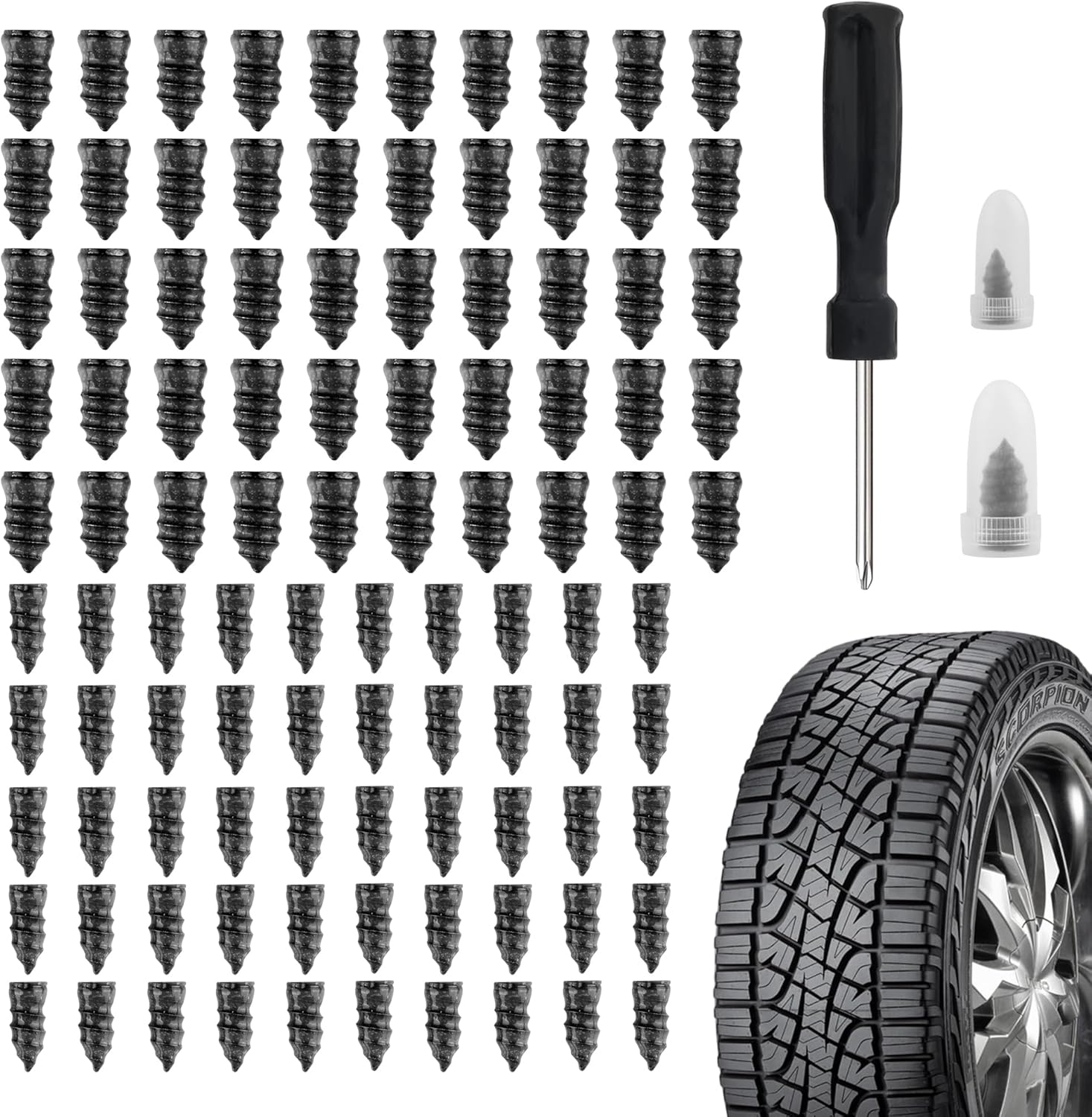
Salior’s tire plug kit provides a fast, reliable self-service fix for punctured or leaking tires without the need for flaring tools. Choose the correct plug size, then screw the nail into the puncture using the included screwdriver for an enhanced seal. The set is durable and convenient for on-the-go maintenance across multiple vehicle types.

Vigorder rubber cement glue delivers superior adhesion and cures quickly within about 30 seconds for seamless rubber bonding. Once cured, it helps provide a strong, durable, waterproof seal that holds up to vehicle weight, pressure, and heat. Suitable for cars, motorcycles, trucks, bicycles, and off-road tires, it’s designed for emergency patch and maintenance repairs.

This 60-piece tire repair nail kit provides a fast, do-it-yourself way to seal punctures on tubeless car, motorcycle, and SUV tires without removing the tire. Simply align, twist clockwise, and finish in seconds for a reliable sealing effect that helps prevent water intrusion. The kit includes tire glue and durable rubber-and-steel repair nails for strong adhesion and long-lasting repairs.
Frequently Asked Questions
How many patches are in the Dexnoca kit?
The current Amazon title and feature bullets describe a 30-patch assortment, but another product-description block lists different quantities. Confirm the selected Black-2 variation and package images before ordering.
Are the patches glueless?
The listing uses “glueless” and “pre-applied” language, but it also references vulcanizing materials. Follow the instructions included with your exact package and do not apply every patch as though it uses the same bonding method.
Can it repair a tubeless bicycle tire?
Do not treat an inner-tube patch as a universal tubeless casing repair. Use the tire manufacturer’s approved sealant, plug, or internal repair method and replace a casing with serious sidewall or bead damage.
Does the kit include everything needed for a roadside repair?
No tire levers or inflation device are clearly confirmed as part of this package. Carry compatible tire levers and a pump or CO2 inflator if you plan to use the kit away from home.
What punctures should not be patched?
Replace the tube when damage is beside the valve, along a seam, badly stretched, repeatedly leaking, or too large for a flat patch with full overlap. Also replace or professionally inspect any tire with bead damage, a major sidewall cut, or exposed casing cords.
Can you use it on motorcycle or ATV tubes?
The seller claims compatibility with motorcycle and ATV inner tubes. Because those vehicles carry higher loads and may travel at higher speeds, follow the tire and tube maker’s guidance and use a professional assessment before normal road use.
How should the kit be stored?
Keep it closed, dry, and away from high heat and direct sunlight. Check that patch surfaces are clean and replace any opened vulcanizing fluid that has dried out.
Why Riders Choose It
Riders may choose the Dexnoca kit because it combines several patch sizes with surface-prep pieces in a low-profile box. It is most appealing as a workshop supply or backup set, while riders who prioritize a tiny carry kit or published material compatibility may prefer a more specialized alternative.

The Bottom Line
The Dexnoca Bike Inner Tire Patch Repair Kit is a practical choice for riders who want assorted patches for standard inner-tube repairs and do not need a full tool-and-inflation kit. Skip it if you need verified TPU or tubeless compatibility, a manufacturer warranty, or perfectly consistent package specifications.
Its main strength is patch-size variety in a simple organizer. Its main limitation is the conflicting quantity and contents information on the current listing, which makes a pre-purchase package check essential.
Ready to Buy?
Check the latest price, selected variation, and package details before you decide.