By: [VERIFY: add real author/byline] · Last updated: August 18, 2026
To patch a conventional butyl bike tube with a vulcanizing kit, fully deflate and remove the tube, find the puncture, lightly scuff the rubber, apply a thin coat of vulcanizing cement, wait until it reaches the condition specified by the patch kit, then press the patch firmly over the hole. Test the repair before reinstalling the tube. Replace the tube instead if the valve is damaged, the hole is a long split, or the damage is too extensive for a patch.
Quick answer: For a conventional butyl tube, do not put the patch onto wet, glossy vulcanizing cement. Apply a thin layer, let it dry or become tacky as directed by your kit, then press the patch firmly from the center toward the edges. Clean preparation and full patch contact matter more than using extra cement.
Before you start: This guide is for conventional butyl bicycle inner tubes. Latex and TPU tubes can require different preparation, adhesives, or patches. For example, Schwalbe’s Aerothan guidance says its TPU tubes should not be sanded or repaired with classic vulcanizing fluid. If you are unsure what tube you have, see our guide to butyl, latex, and TPU inner tubes before patching.
How to Patch a Bike Tube With a Vulcanizing Kit: Step by Step
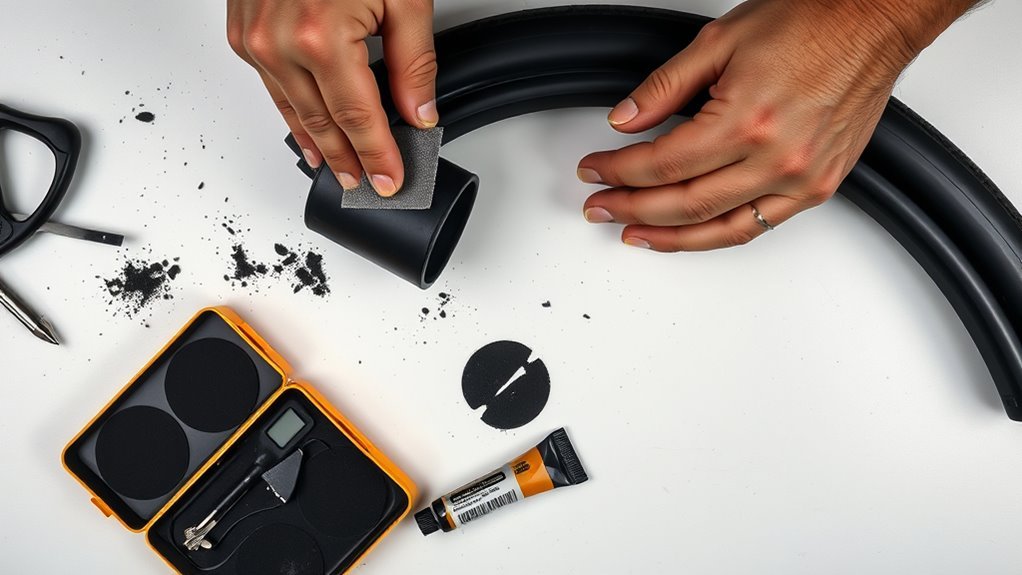
Start by fully deflating the tube. Remove it from the tire and, for a conventional butyl tube, add only enough air to help locate the leak. Find the puncture by listening for escaping air, feeling for airflow, or submerging the tube in water and watching for bubbles. Mark the hole clearly.
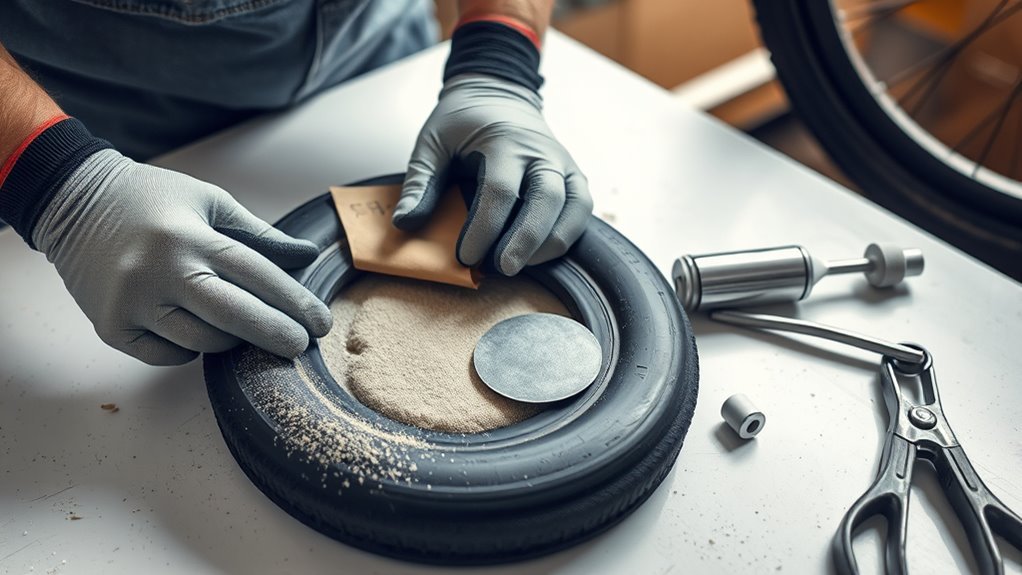
- Lightly scuff an area larger than the patch with sandpaper or the metal scuffer from your kit.
- Wipe away dust so the rubber is clean and dry.
- Spread a thin, even coat of vulcanizing cement or rubber solution over an area slightly larger than the patch.
- Wait until the cement reaches the condition specified by your kit. Traditional vulcanizing kits commonly require it to stop looking wet or glossy before the patch is applied.
- Center the patch over the hole, press firmly, and work pressure from the center toward the edges.
- Give the patch the set time specified by the kit, then inspect the full edge for lifting, wrinkles, or trapped air.
- For a conventional butyl tube, partially inflate it and check for bubbles, hissing, or lifted edges before reinstalling it. Follow the tube manufacturer’s inflation limits for specialty tubes.
Technique check: Park Tool’s inner-tube repair guidance also calls for allowing the vulcanizing fluid to dry and applying pressure to the patch, especially around its edges. REI’s bike-tube patch guide similarly recommends a clean, roughened surface, a thin adhesive layer, firm pressure, and a leak test before the tube goes back into the tire.
You can reinstall the tube after the patch is flat, firmly bonded, and leak-free. Avoid common mistakes like using too much cement, skipping the scuffing step on a compatible butyl tube, touching the prepared rubber with dirty or greasy fingers, or applying the patch while the cement is still wet when the kit requires it to dry first.
Prep & Safety: Tools, Wheel Removal, and Locating the Puncture
Get your workspace and bike ready before you open the patch kit. Gather a patch kit, tire levers, a pump, a rag, and a marker. Deflate the tube completely before removing it. Start tire levers opposite the valve and avoid forcing the lever near the valve stem.
| Tool | Purpose | Tip |
|---|---|---|
| Tire levers | Remove tire | Start opposite valve |
| Marker | Mark puncture | Draw a circle or X around the leak |
| Pump | Inflate tube | Use slight inflation for testing |
| Rag | Clean tube and tire | Remove grit before patching |
After you find the leak, inspect the matching area of the tire before reinstalling the tube. Remove glass, thorns, wire, or other sharp debris. Also inspect the rim strip or rim tape for tears, movement, exposed spoke holes, or protruding spoke ends. A puncture on the rim-facing side of the tube can point to a rim-side problem rather than something in the tire tread. REI and Park Tool both recommend checking these areas when diagnosing a flat.
[Products Worth Considering]

Two-pack 26" bicycle inner tubes for tires sized 1.75 to 2.125, built with a 35mm AV Schrader valve for easy compatibility. The thicker inner wall and premium butyl rubber help absorb bumps and vibrations while improving durability and air retention. Includes two upgraded tire levers for simpler installation and reduced risk of breakage.

This chemical vulcanizing cement promotes rubber vulcanization at room temperature, helping create durable tire repairs without heat. The included brush makes application easy, and the quick-drying formula with accelerators helps the repair cure faster for reliable patch or plug sealing. It’s suitable for cars, motorcycles, and bikes, supporting repairs for both inner tubes and outer tires.

Wykodra tire plugs provide quick vulcanizing repairs for tubeless tires, helping you seal punctures and get back on the road. The industrial-strength rubber creates a long-lasting, leak-resistant bond and is designed for emergency fixes without removing the tire. Choose between two standard plug sizes with color-matched options for small to larger damage across many vehicles and off-road uses.
How Do You Find a Hidden Tube Puncture?
Some punctures are too small to hear. Inflate a conventional butyl tube only enough to help locate the leak, then move it slowly past your cheek or damp fingers and feel for a cool stream of escaping air. If that does not work, submerge one section at a time in water and watch for a steady trail of bubbles. Dry the tube and mark the spot as soon as you find it.
If bubbles appear from the valve base, a split seam, or a long tear instead of a small round puncture, replacement is usually the better option. REI specifically recommends replacing a tube when the valve or valve base is damaged.
What Does the Puncture Pattern Tell You?
The location and shape of the hole can help you find the cause before the repaired tube goes back into the wheel.
| Puncture pattern | Likely area to inspect | What to do |
|---|---|---|
| Single small hole on the tire-facing side | Tire tread and casing | Look carefully for glass, thorns, wire, or another embedded object before reinstalling the tube. |
| Hole on the rim-facing side | Rim strip, spoke holes, and spoke ends | Correct the rim-side problem before installing the repaired or replacement tube. |
| Two nearby parallel cuts | Pinch-flat or “snakebite” damage | Inspect the tire and rim for impact damage and make sure the tube is not pinched during reinstallation. See our guide to snakebite flats. |
| Leak at valve base or a long seam split | Tube structure | Replace the tube rather than relying on a normal puncture patch. |
This cause-first check matters because a good patch cannot prevent another flat if the original sharp object, rim-strip problem, or tube-installation issue is still present.
How Should You Scuff, Apply Vulcanizing Cement, and Wait?
For a conventional butyl tube, lightly scuff the area around the puncture with fine sandpaper or the scuffer supplied with the patch kit. Roughen an area slightly larger than the patch. Do not dig grooves or remove chunks of rubber. Use gentle, even strokes, then wipe away the dust.
Apply a thin, even coat of vulcanizing cement or rubber solution around the hole. Extend it beyond the patch size so the full patch can contact the prepared area. Avoid a thick, gloppy layer.
Follow the timing printed on your specific patch kit. Traditional vulcanizing kits generally require you to wait until the cement is no longer wet or glossy before placing the patch. Park Tool instructs users to allow its vulcanizing fluid to dry, while REI describes waiting a few minutes until the adhesive becomes tacky. The kit manufacturer’s directions take priority when they give a specific method or wait time.
[Products Worth Considering]

This chemical vulcanizing cement cures rubber at room temperature, creating a strong bond for reliable tire patch and plug repairs. The fast-drying formula helps reduce vulcanization time, while the built-in brush makes application quick and even. Suitable for car, motorcycle, and bicycle tires, it supports repairs for tubeless tires, outer tires, and inner tubes.

Replace worn tubes with this FANSPRO 2-pack of 26-inch butyl inner tubes designed for road and mountain bikes. Sized for tire widths from 1.75 to 2.125 inches, these tubes feature a 48mm Schrader valve for reliable everyday use. The set includes two tire levers to make flat repairs and tube installation faster and easier.

The Park Tool TL-1.2 tire lever set is narrow, strong, smooth, and versatile for easy tire removal and reliable work on bike tires. It includes a spoke hook design to help when multiple levers are needed. With Park Tool’s industry-standard reputation, this set is ideal for fast flat-fix repairs.
Press, Cure, and Test the Patch (Plus Troubleshooting)
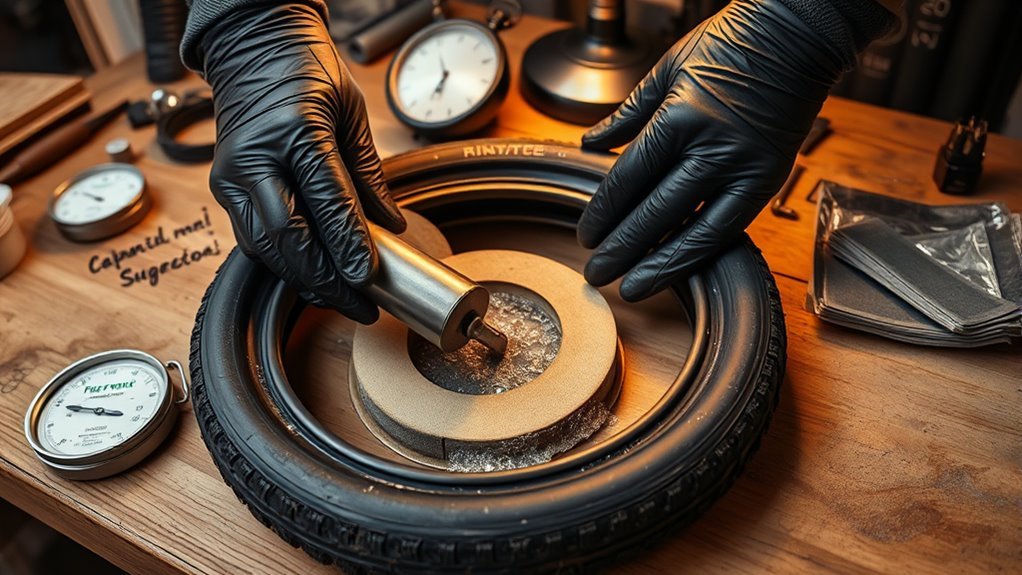
With the cement ready and the patch positioned, press firmly over the repair. Push from the center toward the edges so trapped air can escape, and give extra attention to the patch perimeter. Keep steady pressure rather than tapping or rubbing. Then follow the kit’s set-time instructions before testing the repair.
- Check that the area was properly scuffed and cleaned if the tube material requires scuffing.
- Check the entire patch perimeter for a lifted edge or wrinkle.
- Start over with a fresh patch if bubbles, gaps, or persistent leaks remain.
- For a conventional butyl tube, inflate it only enough to test the repair before reinstalling it.
If problems persist, remove the failed patch if the kit and tube allow it, prepare the repair area again, and use a fresh compatible patch. Do not simply stack a new patch over a loose or leaking patch.
[Products Worth Considering]

Vigorder rubber cement glue delivers superior adhesion and cures quickly within about 30 seconds for seamless rubber bonding. Once cured, it helps provide a strong, durable, waterproof seal that holds up to vehicle weight, pressure, and heat. Suitable for cars, motorcycles, trucks, bicycles, and off-road tires, it’s designed for emergency patch and maintenance repairs.
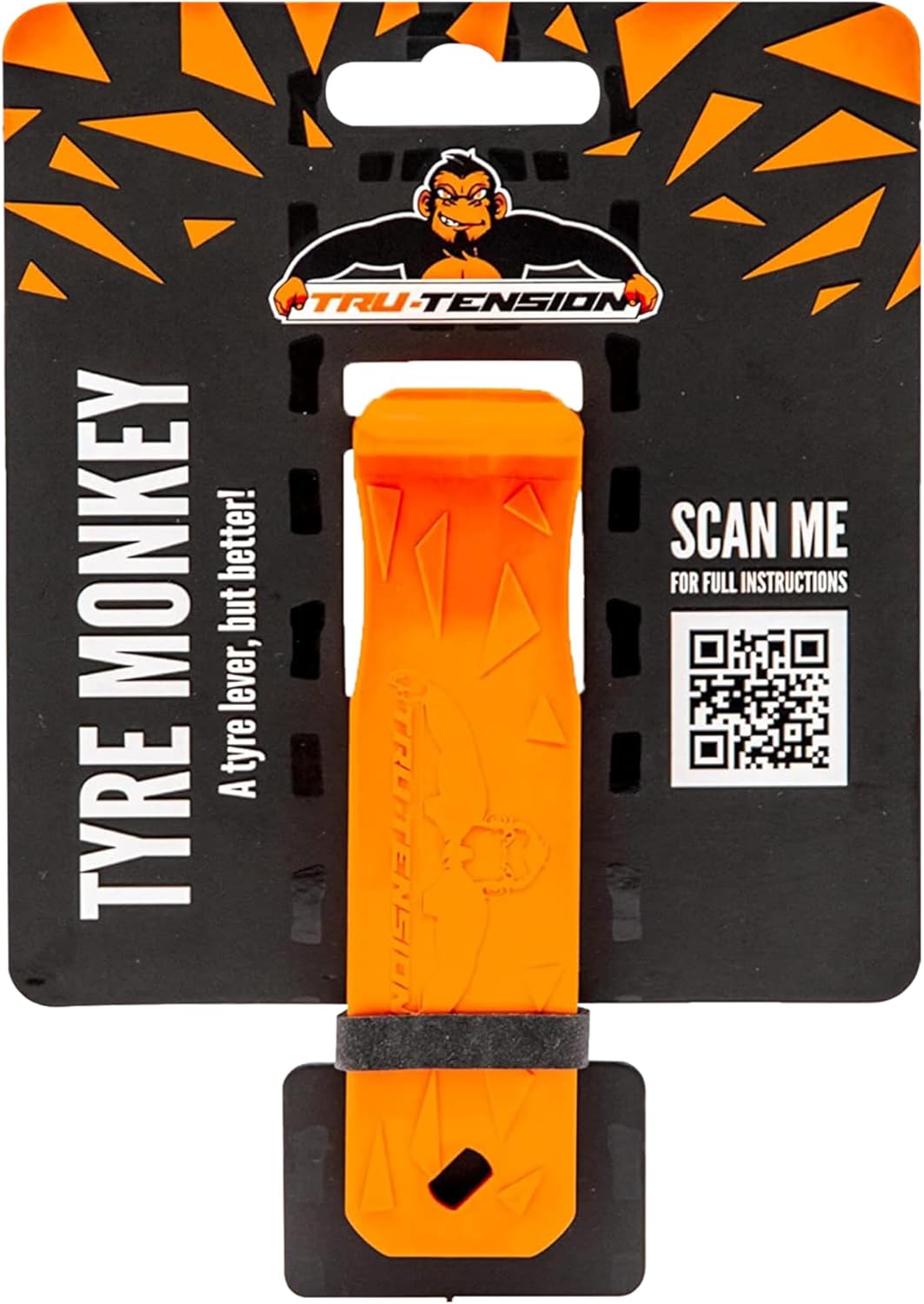
The Tru-Tension Tyre Monkey is a revolutionary bicycle tyre lever that makes removing and fitting tires fast and easy. Its innovative geometry helps keep your hand at a 90-degree angle to the wheel to reduce the risk of hitting spokes, and the design is optimized to use only one tool instead of multiple conventional levers. Compact and durable, it’s built for convenient carry and reliable tire changes on the go.

This Hycline 2-pack mountain bike tire set delivers durable, puncture-resistant performance with a high-grip, aggressive tread designed for traction on hard surfaces and confident handling through mud and soil. Includes matching inner tubes and tire levers for easier everyday maintenance and quicker installation after folding storage. Built for a range of riding conditions with reinforced rubber and nylon cord for wear-resistant reliability.
Reinstall the Tube, Final Inflation, and When to Replace a Tire
For a conventional butyl tube, partially inflate it just enough to give it shape and check that the repair holds before putting it back into the tire. Push the valve stem through the rim hole and tuck the tube evenly inside the tire. Next, reseat the bead by hand where possible. If a tire lever is necessary for a tight final section, use it carefully so it does not pinch the tube between the bead and rim.
Inflate gradually and stay within the pressure limits or range specified for the tire and bike setup. Watch the bead as it seats and listen for leaks. Replace the tire if you see deep cuts, exposed casing, serious sidewall damage, or bead/casing damage. If punctures repeatedly appear in the same location, inspect the tire, rim strip, and spoke-hole area before assuming the tire itself must be replaced.
If the tube itself is beyond repair, follow our complete guide on how to change a bike tube instead of trying to rescue a damaged valve, long split, or badly deteriorated tube.
Repair note: Glued vulcanizing patches can provide a more durable repair than glueless patches when the tube is compatible and the surface preparation is correct. Glueless patches remain useful when compact size and roadside speed matter most. Cycling Weekly’s 2026 puncture-repair testing compared glued and glueless options using adhesion, inflation retention, durability, and ride testing, and favored a well-executed glued repair for durability.
Frequently Asked Questions
How Long Should You Leave Rubber Cement Before Applying a Tube Patch?
Follow the instructions supplied with your patch kit. Traditional vulcanizing kits commonly require the cement to stop looking wet or glossy before you apply the patch. Depending on the product and conditions, this can take a few minutes, so visual condition and the manufacturer’s directions are more reliable than one universal wait time.
Can You Patch a Bike Tube Without Vulcanizing Glue?
Yes, if you use a glueless patch designed for your tube material. Do not substitute ordinary household tape or a random adhesive for a proper tube-repair product. Glueless patches are convenient for roadside use, while a properly applied traditional vulcanizing patch can provide a durable repair on a compatible butyl tube.
Can You Ride Right After Patching a Tube?
Ride only after the patch has been installed according to the kit instructions, the edges are flat, and the tube passes a leak check. If the patch lifts, wrinkles, bubbles, or leaks during testing, redo the repair or replace the tube before riding.
Why Did My Tube Patch Fail?
Common causes include applying the patch before the cement is ready, poor surface preparation, dirt or grease on the tube, excessive cement, trapped air, wrinkled patch edges, or using a repair system that is incompatible with the tube material. A valve-base leak, seam split, or long tear usually means the tube should be replaced.
When Should You Replace the Tube Instead of Patching It?
Replace the tube if the valve stem or valve base is damaged, the tube has a long tear or severe damage, a previous repair will not hold, or the rubber is badly deteriorated. Multiple old repairs can also make replacement the simpler and more dependable option.
Do You Need to Sand a Bike Tube Before Patching It?
Light scuffing is a standard preparation step for many conventional butyl-tube vulcanizing kits because it removes surface contamination and creates a better repair surface. It is not universal, however. Some TPU tubes specifically require no sanding, so identify the tube material and follow its repair instructions before using sandpaper.
Can You Use Vulcanizing Cement on a TPU Inner Tube?
Not automatically. TPU manufacturers can require their own repair systems. For example, Schwalbe says classic vulcanizing fluid is not recommended for its Aerothan TPU tubes and instead recommends compatible glueless patches. Use the repair method specified by the manufacturer of your particular TPU tube.
Conclusion
A reliable butyl-tube patch starts with finding both the puncture and its cause. Inspect the tire and rim, clean and scuff the compatible tube, apply a thin layer of vulcanizing cement, wait until it reaches the condition specified by the kit, press the patch firmly, and test the tube before reinstalling it. Replace the tube when the valve, seam, or overall tube structure is badly damaged, and use manufacturer-specific repair instructions for TPU or other specialty tubes.