
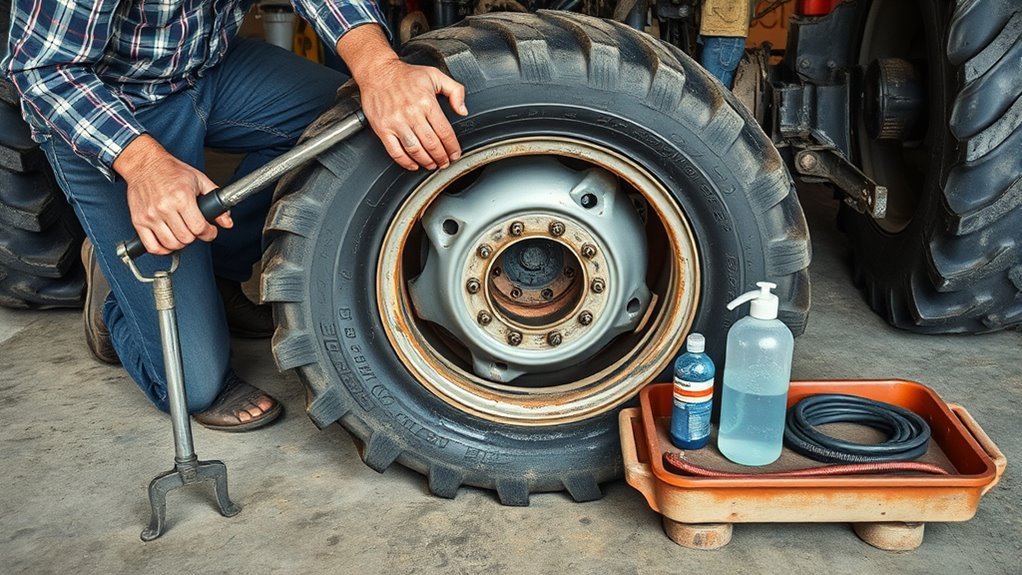
First, decide whether to patch a small, clean puncture or replace a worn or heavily damaged tube. Then gather your tools and safely jack the tractor on level ground with chocks and stands. Remove the wheel, fully deflate the tire, inspect the tube, tire, and rim, and pre-inflate and talc the new tube before seating the valve stem. Seat the bead and inflate slowly, check for leaks, torque the lug nuts, and perform a brief safety test. Keep reading for full step-by-step procedures.
Quick Answer: Repair Vs. Replace the Inner Tube
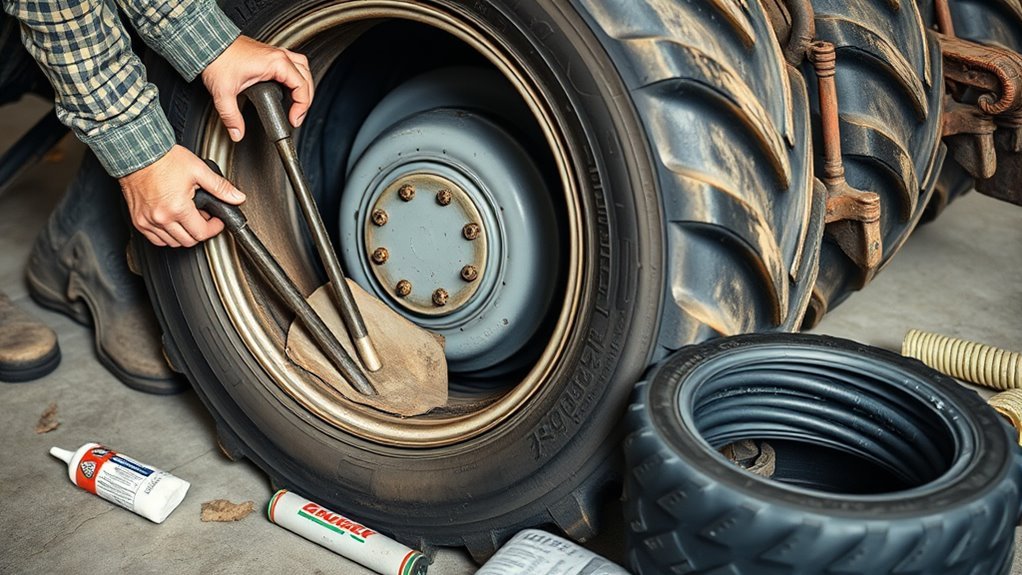
Start by pulling the tube out and looking it over. If you see a single, small, clean hole and the surrounding rubber feels firm, patching will usually save you money and time. If the damage is large, torn, or the rubber looks aged and cracked, replace the tube.
A patch that overlaps the hole by at least ½ inch restores a reliable seal and extends tube life. Repair is cheaper than buying a new tube, since replacement tubes and professional installation can run anywhere from $30 to well over $100 depending on tire size and shop rates.
Prioritize safety. If you find multiple punctures, ragged tears, or dry-cracked rubber, skip the temporary fix and install a fresh tube.
[Products Worth Considering]

Replace worn wheelbarrow, mower, or hand truck inner tubes with the TICONN 4.80/4.00-8 tube designed for 8-inch rims. Built from 100% natural rubber, it helps improve durability, impact absorption, and air retention while supporting self-sealing leak protection. The TR-13 straight valve stem makes it a straightforward fit for common yard equipment wheels.

This chemical vulcanizing cement promotes rubber vulcanization at room temperature, helping create durable tire repairs without heat. The included brush makes application easy, and the quick-drying formula with accelerators helps the repair cure faster for reliable patch or plug sealing. It’s suitable for cars, motorcycles, and bikes, supporting repairs for both inner tubes and outer tires.

Replace worn tires quickly with this universal 4.80/4.00-8 tire and inner tube set designed for wheelbarrows and outdoor utility carts. The ribbed tread helps reduce turf damage while the natural rubber construction supports longer service life. Compatible with 15.5-inch outer diameter, 4-inch width, and 8-inch rim diameter wheels, it uses a straight TR-13 valve stem for easy installation. For best results, inflate with a manual pump and do not exceed 25 PSI.
Gather Tools & Jack the Tractor Safely
Start by collecting the right tools and planning the lift so you can work safely. You will need pliers, a tire iron, rubber mallet, valve core removal tool, and a lug wrench. Confirm your jack is rated for the tractor’s weight. Clean and lubricate moving parts, and inspect each tool for damage before you begin.
Park on level ground, engage the parking brake, and chock the opposite wheels. Find the designated jacking points in your owner’s manual and position the jack there. Use jack stands whenever possible. The Ohio State University Extension jack safety guide recommends never working under equipment supported only by a jack, and always blocking or cribbing the load once it is raised.
Keep bystanders clear. Place removed lug nuts and small parts in a labeled container so nothing gets lost.
[Products Worth Considering]

This spare tire tool kit is designed for the 2004 to 2018 Ford F-150 to help you loosen and tighten wheel lug nuts and manage the spare tire and provided jack functions from underneath the vehicle. It includes the lug nut wrench and extension pieces plus a convenient storage carrying case for organized transport. The jack itself is not included.

Replace worn tubes with this FANSPRO 2-pack of 26-inch butyl inner tubes designed for road and mountain bikes. Sized for tire widths from 1.75 to 2.125 inches, these tubes feature a 48mm Schrader valve for reliable everyday use. The set includes two tire levers to make flat repairs and tube installation faster and easier.

The Park Tool TL-1.2 tire lever set is narrow, strong, smooth, and versatile for easy tire removal and reliable work on bike tires. It includes a spoke hook design to help when multiple levers are needed. With Park Tool’s industry-standard reputation, this set is ideal for fast flat-fix repairs.
Remove the Wheel and Fully Deflate the Tire
Raise the tractor at the designated jacking point, secure it with jack stands, and chock the opposite wheels. Loosen and remove the lug nuts with a lug wrench, keeping them in a labeled container.
Confirm the tractor is stable before completing wheel removal. Finish unscrewing the lug nuts, pull the wheel straight off the hub, and set it on a clean, flat surface.
For tire deflation, remove the valve stem core with a core tool to release all air. Wear eye and hand protection and stand clear of the bead area. Wait until no air escapes and the tire is completely flat before handling it further.
Inspect the Tube, Tire, and Rim for Damage
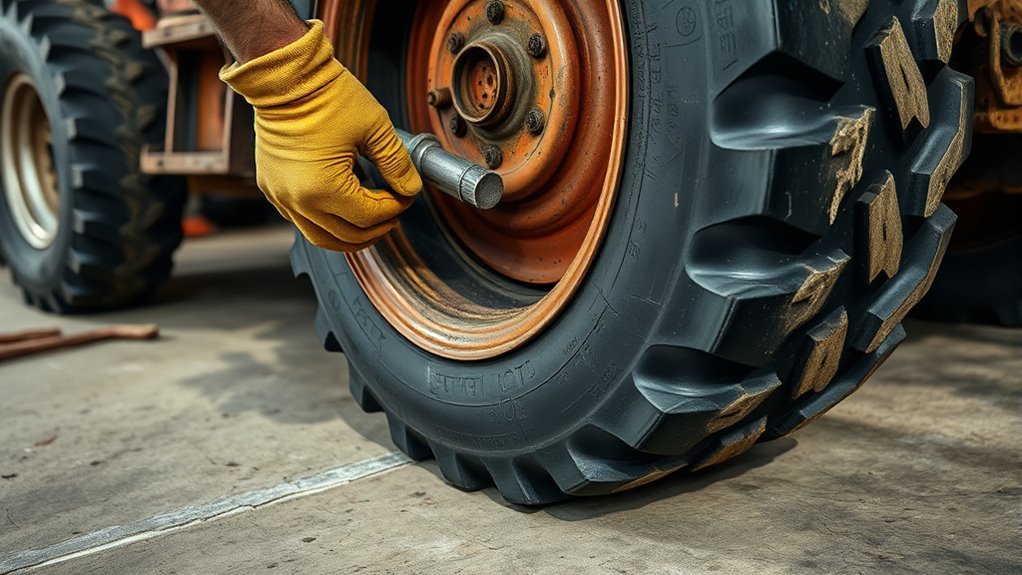
With the tube out, inflate it slightly so you can spot punctures, stress cracks, or other damage. Check the tire carefully for cuts, stretching, and any foreign objects inside that could puncture a new tube. Inspect the rim for dents, sharp edges, or corrosion that might prevent a safe seal.
Inspect Tube Carefully
Inflate the removed tube just enough to give it shape, then run your hands slowly around it and hold it up to the light. You are looking for punctures, stress cracks, stretched areas, thin spots, or splits. If you find a tear, buttonhole each end with a 1/16-inch-diameter cut to stop it from spreading before you patch.
Mark all defects and note their size and location. Deflate the tube before beginning any patching work. While inspecting, remove any embedded debris and verify the valve stem area is undamaged. If the damage looks marginal, replacing the tube is safer than risking a failure in the field.
Check Tire And Rim
Once the tube is out, check the tire interior for embedded debris, sharp edges, or stretching that could cause another flat. Examine the rim closely for bending, nicks, corrosion, or rough bead seats that could compromise seating and safety.
If you find rim damage, replace it. Do not try to patch a questionable rim. A bent rim can ruin a new tube within minutes.
Spotting a tiny shard now prevents a blowout later. A clean rim and sound tire make future maintenance much simpler.
Prep the New Inner Tube: Sizing, Pre-Inflation, Talc
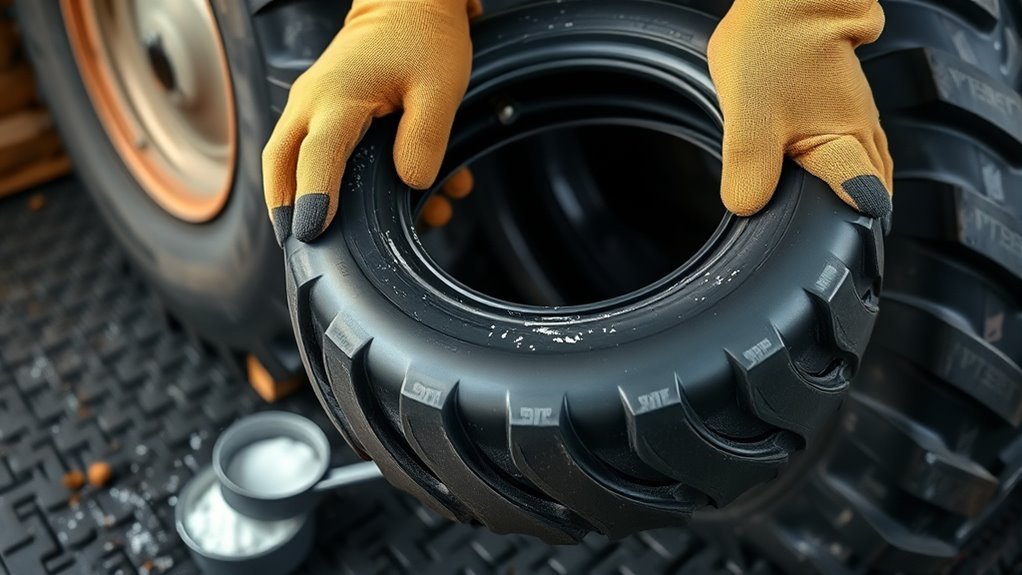
Before fitting the new tube, confirm the tube size against the tire sidewall markings. Inner tubes stretch, and one tube can cover several sizes, but a wrong fit causes pinches or blowouts. Make sure the tube is compatible with both the tire and the rim.
Pre-inflate the tube just enough to give it shape. This makes installation easier and prevents folds or wrinkles that can get pinched. Dust the tube lightly with baby powder or tire talc to cut friction and help it slide into place. After shaping, deflate it partially so it stays flexible but holds its form. Keep the valve oriented correctly as you prep to ensure proper seating and avoid leaks.
Install the Inner Tube and Seat the Valve Stem
Pre-inflate the tube just enough so it holds its shape, dust it with talc, and work it evenly around the wheel so it sits without twists. Line the valve stem up with the rim hole and push it through squarely to prevent leaks. Seat the tire bead over the rim carefully while keeping the valve straight, then inflate slowly while checking the bead on both sides.
Preinflate And Position Tube
Loosely inflate the new tube just enough for it to hold shape. Dust it with baby powder or tire talc, then slip it into the tire so the valve stem lines up with the rim hole. Make sure the tube lies flat without twists or folds before you deflate it fully and begin seating the bead.
Slight pre-inflation prevents wrinkles. Powder reduces friction. Proper alignment prevents leaks. Work slowly and keep the tube centered on the rim.
Before final inflation, double-check for pinches or folds. Inflate gradually while watching the bead seat on both sides to prevent bulges or sudden blowouts.
Seat And Align Valve Stem
Seat the tube so the valve stem sits straight through the rim hole. Pull it gently until it is perpendicular to the rim and aligned with the opening. A crooked stem can cause leaks or damage.
Dust the tube with baby powder to reduce sticking, then pre-inflate slightly to remove wrinkles and help the tube settle. Pull the stem gently as you work the bead on, watching for kinks or folds. Once seated, confirm the stem remains straight and the tube lies smooth before full inflation.
Inflate gradually, rechecking alignment and wrinkles as you go. Stop if you sense resistance or misalignment.
Seat the Tire Bead and Slowly Inflate While Checking
Set the tire on the rim so the bead sits evenly on both sides. Inflate slowly to the manufacturer’s recommended pressure while watching the bead line carefully.
Use low pressure first and watch both beads. Apply soapy water around the bead if it feels stuck. Bubbles reveal leaks and help lubricate the bead into place.
Inflate in short bursts, pause to confirm even seating, and listen for any hissing. If the bead looks uneven, deflate slightly and realign before continuing. Finish by checking both beads and the valve stem at full pressure.
Patch Small Punctures: Step-by-Step Cold Vulcanizing Repair
Inspect the tube by inflating it slightly so you can locate the puncture or stress crack. Mark the area and release the air before you begin repairs. Buttonhole the injury with 1/16-inch holes at both ends, choose a patch that extends at least ½ inch beyond the damage, and assemble your materials and tools.
| Step | Action |
|---|---|
| 1 | Clean with pre-buff cleaner |
| 2 | Buff to a smooth surface |
| 3 | Apply cold vulcanizing fluid |
| 4 | Center patch, press with stitcher |
| 5 | Test with slight inflation |
Avoid contamination from air or cloths. Let the fluid dry until it feels tacky, then press the patch firmly and roll it with a tire stitcher. The Park Tool repair guide offers a detailed walkthrough of vulcanizing patch technique if you want a visual reference.
Inflate slightly to check for leaks. Dust the patched area with tire talc to prevent chafing. These steps prioritize both safety and a long-lasting repair.
Final Checks, Torque Lug Nuts, and Safety Test
With the tube repaired or replaced and seated, inflate the tire to its recommended working pressure. Check bead seating and the patch area for leaks or irregularities.
Let it sit a few minutes, then recheck pressure to confirm it holds. Test the valve stem and patch area with soapy water. Bubbles mean you need to deflate and reseat or repatch.
Torque the lug nuts in a criss-cross pattern to the manufacturer’s spec. For many compact and utility tractors with 1/2-inch studs, this falls in the 90 to 120 ft-lb range, but always check your owner’s manual since larger tractors require significantly more torque.
After a short test at low speed, re-torque all lug nuts and check them again periodically. Listen for air loss and visually confirm bead seating and fastener security before returning to full operation.
Tire Sealant and Tube Liners: Are They Worth It?
If you deal with frequent flats from thorns, stubble, or sharp debris, you may want to consider preventive options beyond patching and replacing tubes.
Tire sealant is a liquid you inject through the valve stem. It coats the inside of the tube and plugs small punctures as they happen. Sealant works well for slow leaks and tiny holes, but it will not fix large tears or sidewall damage. It can also make future repairs messier, since dried sealant needs to be cleaned off before a patch will bond properly.
Tube liners (sometimes called tire liners or thorn-proof strips) sit between the tube and tire. They add a tough layer that resists punctures from the tread side. Liners add some weight and can shift if not installed carefully, but they are effective at reducing flats in rough conditions.
Neither option replaces proper inspection and maintenance. They are best used as an extra layer of protection alongside the repair and replacement skills covered above.
[Products Worth Considering]

This heavy-duty fat bike inner tube is built for secure fit on 20-inch wheels with 3.5 to 4.0 inch wide tires, including e-bikes and mountain bikes. It uses thick butyl rubber for improved durability, air tightness, and a smoother, more comfortable ride. A standard Schrader valve makes inflation easy and helps keep pressure stable for safer rides, with tire levers included for simpler installation.

This heavy-duty bicycle rim liner provides complete tube protection by shielding the inner tube from rim spoke holes and sharp metal burrs that can cause flats. Made from premium, wear-resistant PVC, it lays flat with optimized 18 mm width and 0.50 mm thickness for edge-to-edge coverage. Installation is quick with flexible stretch placement and a secure, non-slip fit.

This Hycline 2-pack mountain bike tire set delivers durable, puncture-resistant performance with a high-grip, aggressive tread designed for traction on hard surfaces and confident handling through mud and soil. Includes matching inner tubes and tire levers for easier everyday maintenance and quicker installation after folding storage. Built for a range of riding conditions with reinforced rubber and nylon cord for wear-resistant reliability.
Frequently Asked Questions
What Does the Blue Line on an Inner Tube Mean?
The blue line on an inner tube marks valve stem alignment and size. Use it to orient the tube during installation. Proper alignment helps prevent pinching, misalignment, and leaks.
How to Remove Tractor Tires From Rim?
Deflate the tire fully, use a bead breaker to separate the bead from the rim, then pry the tire off with tire spoons. Inspect for damage as you go. Wear PPE and work slowly.
Conclusion
You have gone from a stubborn flat to a road-ready tire. Keep repair versus replace decisions practical, your tools organized, and torque specs accurate. Small punctures get patched. Big tears get swapped.
Never rush the jack or skip wheel inspection. Safety beats haste every time. After seating the bead and slowly inflating, re-torque your lugs and test at low speed. Store spare tubes and talc so you are ready for the next flat.
“`

