
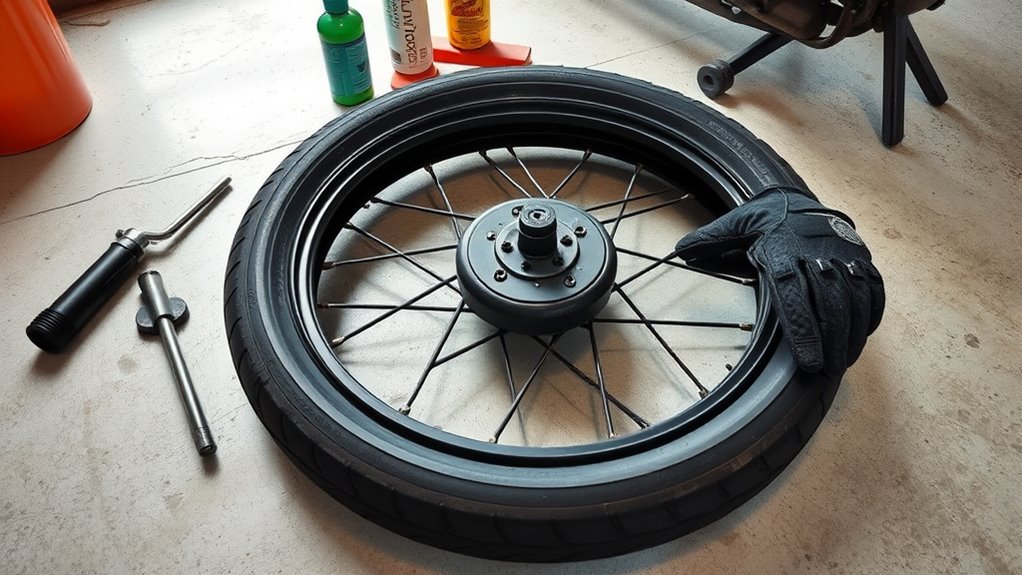
You can change a motorcycle inner tube at home by supporting the bike, removing the wheel, and checking the rim and tire for damage. Fully deflate, break the bead with levers or a breaker, then remove the old tube and clean the rim. Slightly inflate the new tube, guide the valve straight, seat both beads with talc or lube, and inflate to spec while watching for pinches or leaks. The steps below walk you through each stage in detail.
Quick: Change a Motorcycle Inner Tube (Step‑by‑Step)
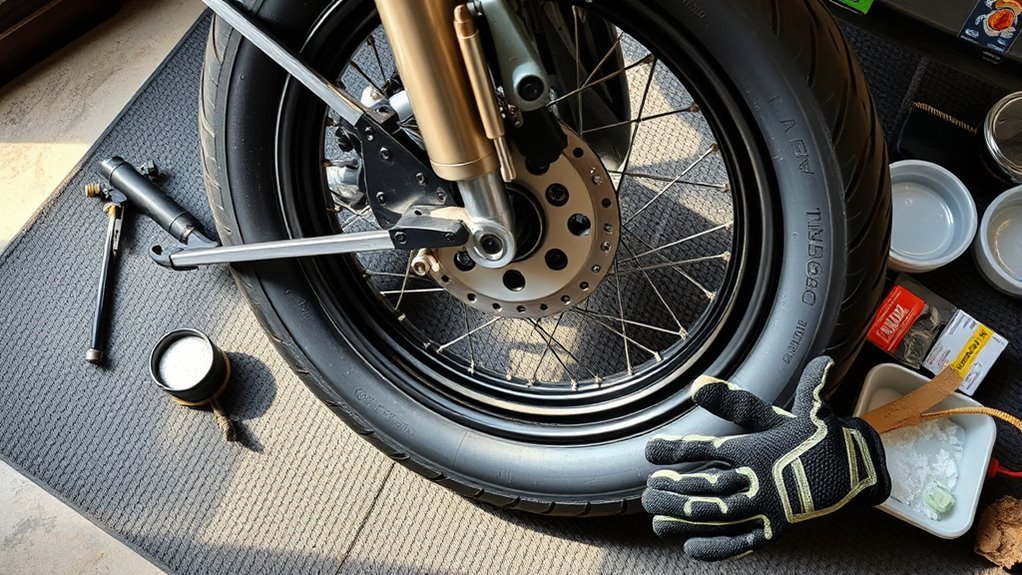
Support the bike and remove the wheel. Lay out your tools before you start. Fully deflate the tire and use tire levers to pry one bead over the rim. Keep the opposite bead seated. Reach in and pull out the damaged inner tube, taking care not to scratch the rim or snag any spokes. Slightly inflate the replacement tube to remove folds. Seat one tire bead onto the rim and insert the valve stem through the rim hole. Tuck the tube clear of the bead and work the second bead onto the rim. Use careful lever technique to avoid pinches. Inflate to the manufacturer’s pressure and check with a gauge. Check around the bead for pinches or leaks. Reinstall the wheel and torque fasteners to spec.
Tools and Spares to Have on Hand
Keep a small kit so you’re always ready. At minimum, carry matched spare inner tubes, quality tire levers, a valve core tool, a valve threader, talc or mounting lube, a compact pump or CO2 inflator with a pressure gauge, and a basic patch kit. Replace the glue in your patch kit annually so it stays reliable.
Pack spare tubes sized to your rims and riding conditions. That way you’re not guessing on tube size during a roadside repair. Use tire lube or talc to ease mounting and reduce pinch risk. Carry a few heavy-duty zip ties to secure components during assembly.
The valve threader saves time and prevents cross-threaded stems. The valve core tool lets you deflate or seat cores quickly. Check your patch kit before every trip and replace anything that’s dried out or missing.
[Products Worth Considering]

Ultraverse 700c inner tubes are built for 700x28C to 32C tires and feature a 48mm Presta valve for accurate, secure inflation. The high-elasticity butyl rubber construction helps seal air tightly, resist pressure loss, and absorb road vibrations for a smoother ride. A reinforced valve base and thick walls add durability and puncture resistance for reliable everyday performance on road, gravel, and city routes.
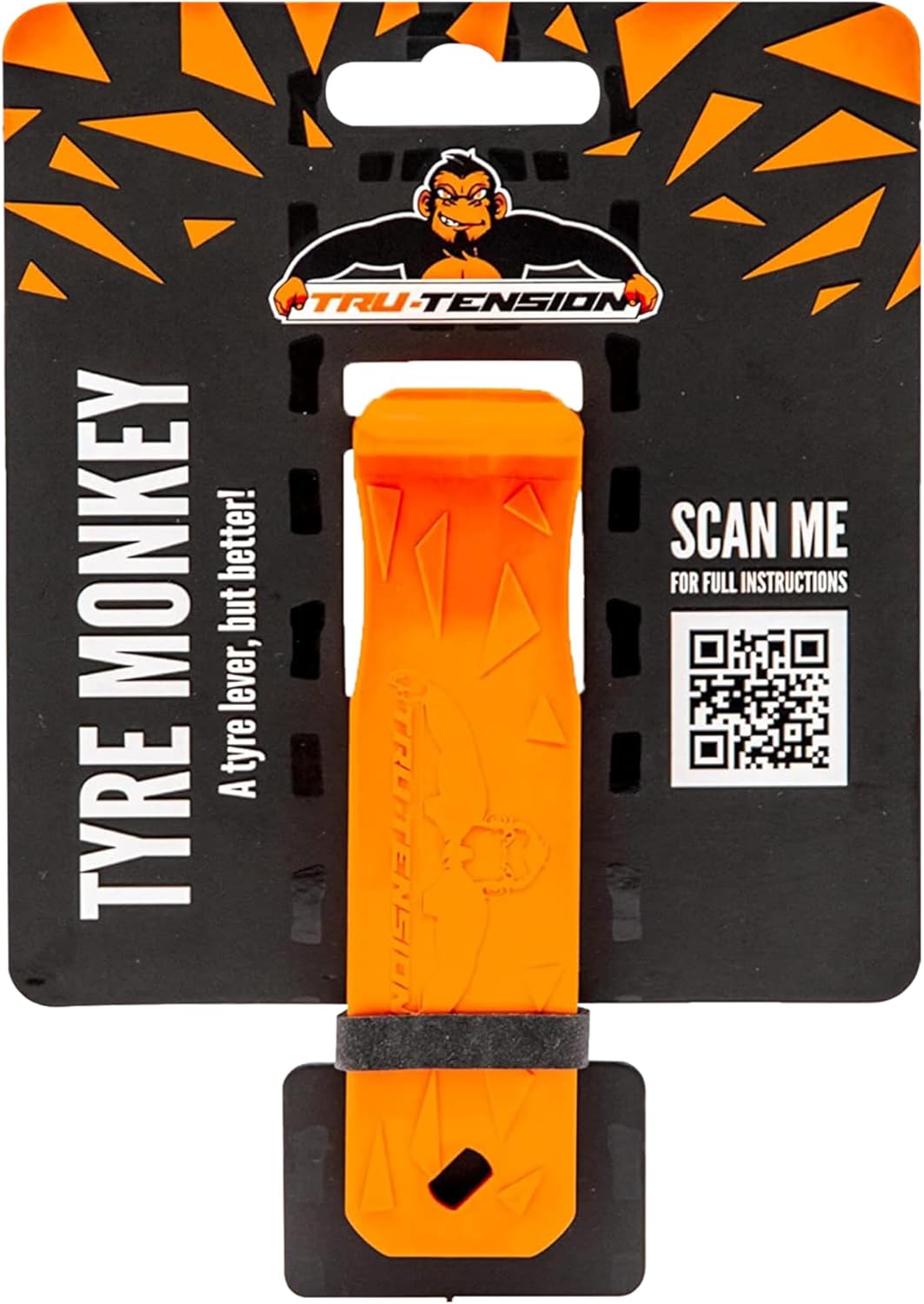
The Tru-Tension Tyre Monkey is a revolutionary bicycle tyre lever that makes removing and fitting tires fast and easy. Its innovative geometry helps keep your hand at a 90-degree angle to the wheel to reduce the risk of hitting spokes, and the design is optimized to use only one tool instead of multiple conventional levers. Compact and durable, it’s built for convenient carry and reliable tire changes on the go.

This 2-pack bicycle inner tube set is designed for kids, road, and MTB bikes with 20-inch tires in the 1.75 to 2.125 width range, using a 32mm AV Schrader valve. Each tube includes two tire levers for easier installation and safer handling while swapping tubes. Butyl rubber delivers reliable air retention, elasticity, and comfort for everyday rides.
Remove the Wheel and Inspect Rim and Tire
With your roadside kit ready and the bike stabilized on a firm stand, loosen the axle nut with a socket wrench. Support the wheel as you slide the axle free. Don’t let the wheel drop or the bike tip. Keep the wheel stable throughout removal and back each step up with a secondary support or a helper if needed. Once the wheel is off, do a thorough rim inspection and tire check before you touch the tube.
- Verify wheel stability on the ground and recheck stand placement.
- Inspect the rim for dents, cracks, corrosion, or sharp edges.
- Clean the rim thoroughly to remove dirt, rust, or residue.
- Scan the tire for embedded debris, punctures, or abnormal wear patterns.
- Note valve stem condition and rim tape integrity for replacement if needed.
Note any damage. Repairs may be needed before you fit a new tube.
Break the Bead and Remove the Old Tube Safely
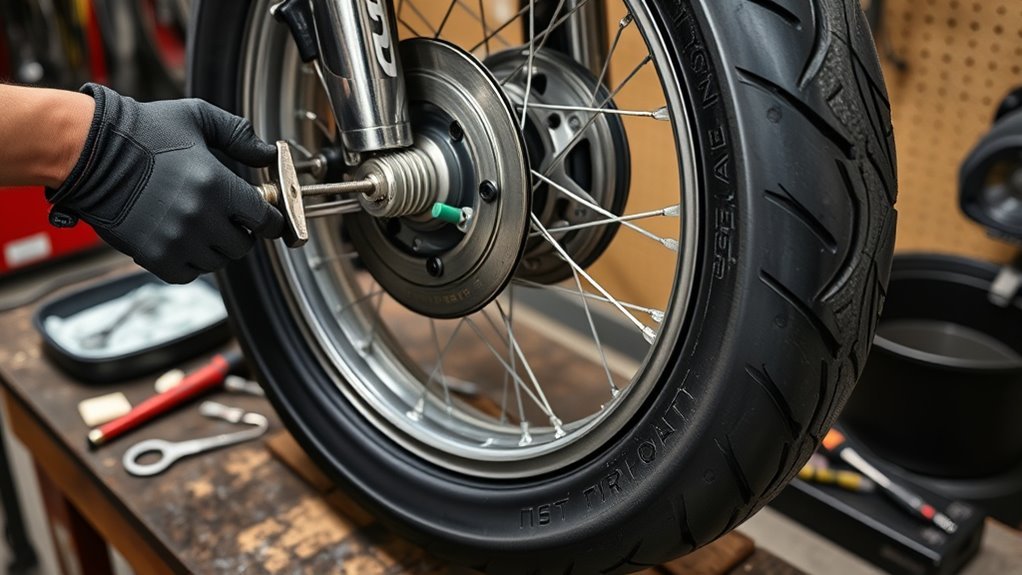
Make sure the tire is fully deflated, then use a bead breaker or tire lever to apply steady pressure around the circumference until the bead separates from the rim. If the bead is stubborn, warm the tire slightly with gentle heat or sunlight to soften the rubber before trying again. Once the bead is broken, work a tire lever under it and slide it around the rim to free and remove the old tube. Then inspect the rim and tire for debris or damage.
Break The Bead
Start by seating the wheel securely. Use a bead breaker or a C-clamp to apply steady pressure along the tire edge, beginning at the valve stem and working around to release the bead evenly. If the bead is stubborn, slightly deflate and warm the tire with low heat or sunlight to loosen the rubber.
- Apply consistent pressure; don’t pop the rim lip.
- Progress in small increments around the circumference.
- Use tire levers only after the bead is partially freed.
- Protect the valve stem when working nearby.
- Inspect rim strip, spoke holes, and tire interior for debris.
Once the bead is freed, you’re ready to remove the tube safely.
Remove The Tube
Use a tire bead breaker to fully separate the beads from the rim while the tire is completely deflated. Work tire levers carefully around the rim to pry one bead over the edge without pinching the tube or scratching the rim. Once the bead is loose, continue with levers to roll the tire bead down and expose the tube. Extract the valve stem straight out of the rim. Don’t twist or pinch it. Pull the tube free, feeding it past the opposite bead.
Inspect the tire interior and rim bed for glass, nails, or sharp edges. Dispose of the old tube properly. Before fitting a new tube, clean the rim, check the rim tape, and re-check the tire for embedded debris or wear.
Fit a New Tube Without Pinching the Valve
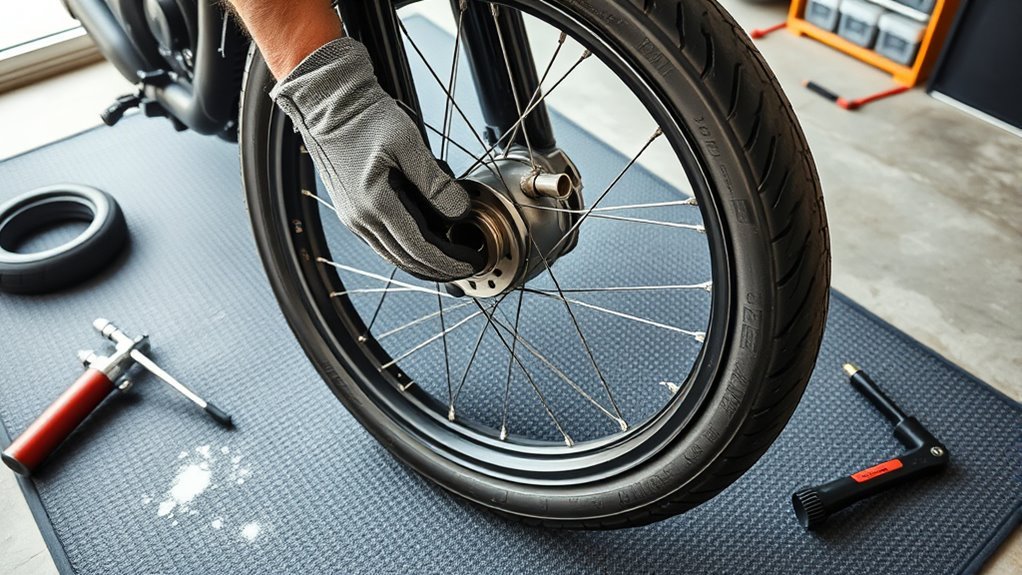
Slightly inflate the new tube before you fit it so it holds shape and won’t snag when you work the beads. Use a bead buddy to lift the bead while you guide the valve stem through the rim hole, so the stem sits square and straight. Keep the tube aligned and talced as you seat the second bead, then rotate the wheel to confirm the tube isn’t pinched.
Slightly Inflate The Tube
Inflate the new tube just enough to give it shape (about 10–15% of full pressure), so the valve stays straight and the tube won’t fold or get pinched as you work. This keeps the valve in position and makes it easier to seat the tube in the tire. Light inflation also prevents the tube from getting trapped between the bead and rim while you feed the valve through the hole.
- Check valve alignment from both sides before tucking the bead.
- Use a valve threader to guide the stem through the rim hole.
- Keep pressure low. Don’t fully inflate until the bead is seated.
- Tuck the tube evenly to avoid folds near the valve.
- After seating, inflate to recommended pressure and inspect for bulges.
Confirm final alignment and pressure before riding.
Use A Bead Buddy
One simple tool that saves time and prevents pinched valves is a bead buddy. Clamp it opposite the valve stem to hold the tire bead down while you guide the stem through the rim hole. Use it to stabilize the bead so you don’t have to over-inflate the tube during installation. Position it opposite the stem, seat the bead, then insert the valve through the rim with steady pressure. To install correctly: keep the bead seated under the clamp, check alignment before releasing the tool, and work the remaining bead onto the rim evenly to avoid trapping the tube. Once the tube is fitted, remove the bead buddy, confirm the stem is straight and secure, then inflate to recommended pressure.
Position Valve Carefully
Start by keeping the valve stem at the 12 o’clock position and slightly pressurizing the tube so it holds shape. This makes it much easier to guide the stem through the rim without pinching. It also keeps valve alignment consistent and reduces the chance of a pinch. Use a bead buddy to lift the bead while you feed the stem, then work the tube into the cavity evenly.
- Slightly inflate tube to maintain shape before insertion.
- Align stem at 12 o’clock and push gently through the rim hole.
- Use bead buddy to prevent bead trapping the valve.
- Rotate and center the tube so it isn’t twisted around the stem.
- Verify stem is straight and free of stress after seating.
Confirm final valve alignment and do a brief pressure check.
Reseat Beads, Inflate, and Confirm Proper Seating
Before you pump the tire up, press down around the rim so both beads sit evenly. Then slowly add air so the beads can pop into place while you watch for gaps or uneven seating. Use a bead buddy or your thumbs to hold the bead while you insert the valve stem. This simplifies bead seating and aligns the stem. Inflate gradually, monitoring bead seating and tire inflation pressure against the spec. Visually inspect and run your hand around the tire to detect bulges or misalignment. Once at recommended pressure, confirm there are no leaks and the valve stem is straight and secure. If everything looks even, you’re ready to remount and test ride with confidence.
| Checkpoint | Action |
|---|---|
| Bead seating | Press and align |
| Valve stem | Straighten and secure |
| Inflation | Gradual to spec |
| Final inspect | Leak and alignment check |
Patch or Replace? How to Decide
Not every flat needs a new tube. Small, clean punctures from nails or glass are good candidates for a patch. A vulcanizing rubber cement patch, applied correctly, can last as long as the tube itself.
Replace the tube instead of patching it if:
- The puncture is large (over 6mm) or has ragged edges.
- The tube has been punctured in multiple spots.
- The valve stem is damaged or leaking at its base.
- The tube has any blowout damage or sidewall tears.
For a roadside emergency, a quick patch gets you moving again. But if you find yourself re-patching the same tube, replacement is the smarter call. Always carry a spare tube so you have the option either way.
[Products Worth Considering]

This tire inflator with pressure gauge delivers long-lasting performance with a durable rubber-protected gauge and sturdy build. The longer hose and 360 swivel air chuck help you seal the valve securely and keep your hands free while measuring, inflating, or deflating. It’s battery-free for reliable use and provides ±2 PSI accuracy in the mid-range for most typical tires, with universal compatibility for 1/4 NPT compressor outputs.

This chemical vulcanizing cement promotes rubber vulcanization at room temperature, helping create durable tire repairs without heat. The included brush makes application easy, and the quick-drying formula with accelerators helps the repair cure faster for reliable patch or plug sealing. It’s suitable for cars, motorcycles, and bikes, supporting repairs for both inner tubes and outer tires.

FANSPRO’s 2-pack 26-inch bicycle inner tubes are built for reliable performance on road and mountain bikes. They fit tire widths from 2.125 to 2.40 inches and use a 48mm Schrader valve for convenient inflation. The set includes two durable tire levers to help you remove and install tubes quickly after a flat.
Troubleshooting: Pinches, Air Loss, and Storage Tips
With the beads seated and pressure confirmed, check for common problems that can cause pinches or slow air loss. Inflate the tube slightly before mounting and keep it partially pressurized during fitment. This is key for pinch prevention. After mounting, inspect the tire interior for debris that can cause punctures and compromise air retention. Use talc or a light lubricant to reduce friction and ease tube positioning.
With beads seated and pressure checked, slightly inflate the tube, inspect for debris, and use talc for smooth seating
- Inflate tube slightly before installation to reduce pinch risk
- Inspect tire carcass and rim strip for embedded objects
- Apply talc or lube to the tube and bead seats for smoother seating
- Monitor pressure frequently after mounting to verify air retention
- Store patch kit/tools accessibly; replace glue annually for reliable repairs
[Products Worth Considering]

This Hycline 2-pack mountain bike tire set delivers durable, puncture-resistant performance with a high-grip, aggressive tread designed for traction on hard surfaces and confident handling through mud and soil. Includes matching inner tubes and tire levers for easier everyday maintenance and quicker installation after folding storage. Built for a range of riding conditions with reinforced rubber and nylon cord for wear-resistant reliability.

This heavy-duty fat bike inner tube is built for secure fit on 20-inch wheels with 3.5 to 4.0 inch wide tires, including e-bikes and mountain bikes. It uses thick butyl rubber for improved durability, air tightness, and a smoother, more comfortable ride. A standard Schrader valve makes inflation easy and helps keep pressure stable for safer rides, with tire levers included for simpler installation.

Malco tire mounting and demounting lubricant is a ready-to-use tire lube formulated to reduce friction during tire installation for passenger cars, light trucks, farm tires, and heavy-duty equipment. It provides rust-inhibiting protection to help reduce corrosion on rims and wheels, and helps support proper tire bead seating during inflation to reduce air leakage. The silicone-free, soap-free formula is whitewall safe to help prevent discoloration on whitewall tires and sensitive sidewall markings.
Frequently Asked Questions
Can I Replace a Bike Tube Myself?
Yes. With the right tools (tire levers, a pump, and a replacement tube), you can do this at home. Remove the wheel, mount the slightly inflated tube, seat the beads, check for debris, and test the pressure. No special training needed.
Can I Change a Motorcycle Tire Myself?
Yes. You’ll need tire levers, spare tubes, talc or lube, and the right technique: pre-inflate the tube slightly, seat the beads in the center of the rim, use levers carefully, and follow a step-by-step guide. It takes practice, but it’s a skill worth having.
Can You Change a Bike Inner Tube Without Taking the Wheel Off?
Yes. Deflate the tire, lever one bead off, remove the tube, inspect for debris, insert the new tube, seat the beads, and inflate. Removing the wheel makes the job easier, but it isn’t strictly required.
What Kind of Glue Can I Use to Patch an Inner Tube?
Use vulcanizing rubber cement for patching. It bonds flexibly to rubber and holds up under repeated flexing. Avoid super glue or general-purpose adhesives. Replace the glue in your kit annually, since dried-out cement won’t create a reliable bond.
Conclusion
You’ve turned a fiddly roadside nightmare into a tidy, confident routine. With simple tools and careful technique, you’ll trade panic for precision: quick loosening becomes methodical leverage, frantic prying turns into gentle bead work, and a nervous patch job finishes as a reliable mile-maker. Keep spares, watch the rim and valve, and rehearse the steps at home. When the unexpected happens, your calm, practiced hands will solve it cleanly and efficiently.

