

Tesla brakes use two ways to slow the car: regenerative braking through the electric drive motor and conventional friction brakes with pads, rotors, and hydraulic pressure. In normal driving, lifting off the accelerator can provide much of the deceleration while returning some energy to the battery. The brake pedal remains essential whenever you need more stopping force or regen is not enough.
Quick Answer
Tesla brakes work by using the electric motor for regenerative braking during many routine slowdowns, while conventional friction brakes provide dependable mechanical stopping. Regen can recover energy for the battery, but its strength varies with battery temperature, charge level, traction, and vehicle configuration. The brake pedal is always available when stronger braking is needed.
Key Takeaways
- Releasing the accelerator normally makes the drive motor generate electricity while slowing the vehicle.
- A cold or nearly full battery can reduce the amount of regenerative braking available.
- Tesla still uses conventional brake pads, rotors, calipers, hydraulic assistance, and ABS.
- Friction brakes can supplement regen automatically on some vehicles and are used when you press the brake pedal for additional stopping force.
- Reduced friction-brake use lowers normal pad wear, but it can also allow rust or corrosion to develop if the mechanical brakes rarely operate.
How Tesla Regenerative Braking Works

Tesla regenerative braking uses the drive motor to slow the vehicle and recover part of its kinetic energy. Instead of turning all of that motion into heat at the brake rotors, the motor operates as a generator and sends usable electrical energy back toward the battery.
According to Tesla’s current Model 3 braking documentation, regenerative braking occurs when the vehicle is moving and you reduce or remove pressure from the accelerator. The car slows while surplus power is returned to the battery.
The amount of deceleration is not always identical. Battery temperature, battery state of charge, available traction, speed, and vehicle configuration can affect how much regenerative torque is available.
A cold battery may not be able to accept energy as quickly. Regen can also be restricted when the battery is already fully charged because there is less capacity available for recovered energy.
Regenerative braking slows the vehicle by converting some of its motion back into electrical energy instead of wasting all of that energy as brake heat.
[Products Worth Considering]

Upgrade your 2024-2026 Tesla Model 3 Highland with REEVAA all-weather mud flaps designed for seamless fit along the original body lines. The set of four delivers strong splash protection against mud, gravel, and road debris while using OEM-grade durable materials. Installation is non-destructive with original hole positions and snap-in clips, and the aerodynamic design helps minimize impact on efficiency.

Protect your Tesla during lifting with durable rubber jack pads designed to cushion pressure and help safeguard the battery and chassis. The non-slip, plug-and-play puck set fits Tesla Model 3/Y/X/S for safe, secure jacking. Each pack includes a portable storage case for cleaner trunk organization.

Milton S-921 pencil tire pressure gauge helps you maintain optimal tire pressure for passenger cars with accurate readings in PSI and kPa. It features a built-in deflator valve for convenient pressure adjustments, plus a single chuck head and nylon indicator bar for easy use on the go. Built from durable plated brass and designed for reliable performance, it’s a practical road trip and cold-weather maintenance tool.
Does pressing the brake pedal also use regenerative braking?
It depends on the Tesla model and software configuration. Lift-off regeneration is the basic behavior across Tesla’s current documentation, while some vehicles can also use regeneration when the brake pedal is pressed.
For example, Tesla’s current Model Y documentation states that regenerative braking may occur during brake-pedal use when battery conditions allow. This is why it is better to think of Tesla braking as a coordinated system rather than assume every model follows one fixed regen-versus-friction rule.
What happens when regenerative braking is limited?
You still have conventional brakes. Depending on the model and configuration, the car may also apply the regular brakes automatically to make lift-off deceleration more consistent when regen is restricted.
That feature does not remove the need to use the brake pedal. You should always be ready to press it whenever the vehicle is not slowing quickly enough for traffic, road, or weather conditions.
Why Tesla Regen Feels So Smooth
Tesla regen can feel smooth because accelerator position gives you direct control over how strongly the motor accelerates or decelerates the car. Instead of repeatedly switching between the accelerator and brake pedals for small speed changes, you can often adjust speed by gradually easing off the accelerator.
If you release the accelerator quickly, deceleration is stronger. If you ease off more slowly, you can reduce speed more gently. After some practice, that makes it easier to approach slower traffic, curves, and stop points without abrupt changes in speed.
The vehicle’s power electronics control negative motor torque during regeneration. That motor resistance slows the wheels while electrical energy flows back to the battery.
The power meter provides useful feedback on supported Tesla models. Regenerated energy is shown as power flowing back toward the battery, helping you see when the car is recovering energy rather than simply using the friction brakes.
Do the brake lights come on during regenerative braking?
Yes, they can. Tesla states that the brake lights illuminate when regenerative braking is slowing the vehicle aggressively enough, including situations such as fully releasing the accelerator at higher speeds.
That means drivers behind you can be warned of significant deceleration even though your foot is not pressing the brake pedal.
When Tesla Friction Brakes Kick In
Tesla’s friction brakes are a normal part of the braking system, not merely an emergency backup. Pressing the brake pedal can provide hydraulic braking at the wheels, while regenerative braking may also contribute on models that support that behavior.
Tesla’s current Model Y braking manual, for example, says regen may occur when the brake pedal is pressed depending on battery availability. It also documents automatic use of regular brakes when regen is limited.
| Driving situation | How the Tesla slows |
|---|---|
| Normal accelerator lift-off | Regenerative braking usually provides much of the deceleration. |
| Regen is limited | Regular brakes may automatically supplement lift-off deceleration, depending on the vehicle and settings. |
| Brake pedal pressed | The conventional braking system provides stopping force; some models may also use available regeneration. |
| Emergency braking | Firm brake-pedal pressure activates the braking system while ABS adjusts wheel brake pressure to available grip. |
| Vehicle stopped | Vehicle Hold or the parking brake can keep the vehicle stationary as applicable to the model and situation. |
Warning: Do not rely on regenerative braking to make an emergency stop. Press the brake pedal firmly when rapid stopping is required. If ABS activates, maintain firm pressure rather than pumping the pedal.
During hard braking, the anti-lock braking system monitors wheel speed and adjusts brake pressure according to available traction. You may feel pulsing through the pedal when ABS operates; that is normal system behavior.
The conventional brakes also matter at very low speeds and while the vehicle is stopped. Depending on the model and operating mode, the car can apply its brakes automatically to hold the vehicle after it reaches a standstill.
[Products Worth Considering]

Yieokei Tesla jack pads are molded rubber lifting pucks designed for 2016-2026 Model 3/Y/S/X, including Juniper, to fit securely in the jack hole. They cushion the underframe and help position the jack precisely at the factory jack points to reduce risk of battery, paint, or chassis damage. The set also includes a tire repair tool kit for emergency roadside fixes and comes with a portable storage case to keep everything organized.

Add style while helping protect your tire valve stems with handmade crystal rhinestone caps and a durable plastic insert. These caps resist corrosion and help keep out rain, snow, and muddy water, extending tire life. Textured non-slip design makes them easy to grip for quick install and removal when checking tire pressure.

Secure your parked vehicle quickly with AFA Tooling 4T rubber wheel chocks in a 4-pack for two dual-wheel sets. The ribbed design and textured base grip fast without pounding, so you can chock tires on trailers, RVs, ATVs, and work vehicles with confidence. EZ rustproof handles with rope ties keep the pair together for easy placement and removal, while nylon-reinforced rubber stands up to dirt, ice, salt, and harsh weather.
How Regenerative Braking Affects Range
Regenerative braking can increase driving range because it recovers some kinetic energy that friction brakes would otherwise turn into heat. The recovered electricity is returned to the high-voltage battery for later use.
Regen does not create free energy, and the recovery process is not lossless. The useful gain comes from capturing part of the vehicle’s existing motion instead of throwing all of that energy away through friction.
The benefit is easiest to understand in stop-and-go traffic. Each time you slow down, the car gets another opportunity to recover some energy. A conventional friction brake would instead dissipate that motion mostly as heat at the pads and rotors.
Regeneration can also be useful on downhill sections because the vehicle must repeatedly or continuously reduce speed. However, a cold or highly charged battery may restrict how much recovered energy the battery can accept.
On a steady highway trip, there are usually fewer braking events. As a result, there are fewer opportunities for regenerative braking to recover energy.
Regen improves efficiency by recovering part of the energy already used to move the car; it does not make braking energy-free.
The best strategy is therefore not to brake unnecessarily just to generate electricity. Maintaining a steady speed when appropriate avoids the conversion losses involved in repeatedly accelerating and slowing down.
Tips for Driving With Tesla Brakes
The easiest way to drive smoothly is to plan your deceleration early and use accelerator position to control how quickly the car slows. Keep the brake pedal available whenever traffic or conditions demand more stopping force.
- Lift off early: Reduce accelerator pressure before you reach slower traffic, a curve, or a planned stop. This gives regen more time to slow the car without an abrupt final braking input.
- Feather the accelerator: You do not have to remove your foot instantly. Gradual pedal release can produce smoother deceleration and better passenger comfort.
- Expect reduced regen with a cold battery: Tesla’s cold-weather guidance says regenerative braking may be limited until the battery warms. Preconditioning can reduce this limitation.
- Be ready after charging fully: A fully charged battery can limit regenerative braking because the battery has less room to accept recovered energy.
- Use extra care on snow and ice: Available tire grip sets the real limit on braking. Regen behavior can change on slippery surfaces, so allow more distance and use suitable tires.
- Do not neglect the friction brakes: Because regen reduces routine pad use, moisture and corrosion can remain on brake components longer than they might on a vehicle that uses friction braking more frequently.
Tesla’s vehicle maintenance guidance recommends testing brake fluid for contamination every four years and replacing it as needed. Heavy brake use from towing, mountain descents, or performance driving can require more frequent checks.
If you drive where roads are salted in winter, Tesla recommends cleaning and lubricating the brake calipers every year or 12,500 miles. Regenerative braking reduces pad wear, but it does not eliminate brake inspection or maintenance.
Pro Tip: If your Tesla rarely needs the brake pedal in normal driving, do not assume the friction system is maintenance-free. Watch for rotor corrosion, unusual noise, warning messages, pedal changes, or inconsistent stopping and have the brakes inspected when something feels wrong.
Tire condition also matters. Regenerative braking, ABS, and hydraulic brakes can only produce useful deceleration when the tires can transfer that force to the road.
[Products Worth Considering]

This car emergency kit keeps essential roadside tools organized in a durable, portable bag so you can respond quickly during common driving emergencies. It includes battery jumper cables, a bright LED headlight, first aid supplies, a tire pressure gauge, and safety essentials like gloves and an emergency poncho. Designed for trunk or storage use, it helps you be prepared for dead batteries, minor malfunctions, and unexpected roadside issues.

Reusable kids ice pack set provides soothing hot or cold therapy for swelling, pain, and common injuries. The latex-free gel pad is designed for comfortable hand-held wound treatment and can be used directly on the skin. Easy cold or warm preparation helps support relief for bruises, sprains, strains, headaches, sinus discomfort, and tired eyes.
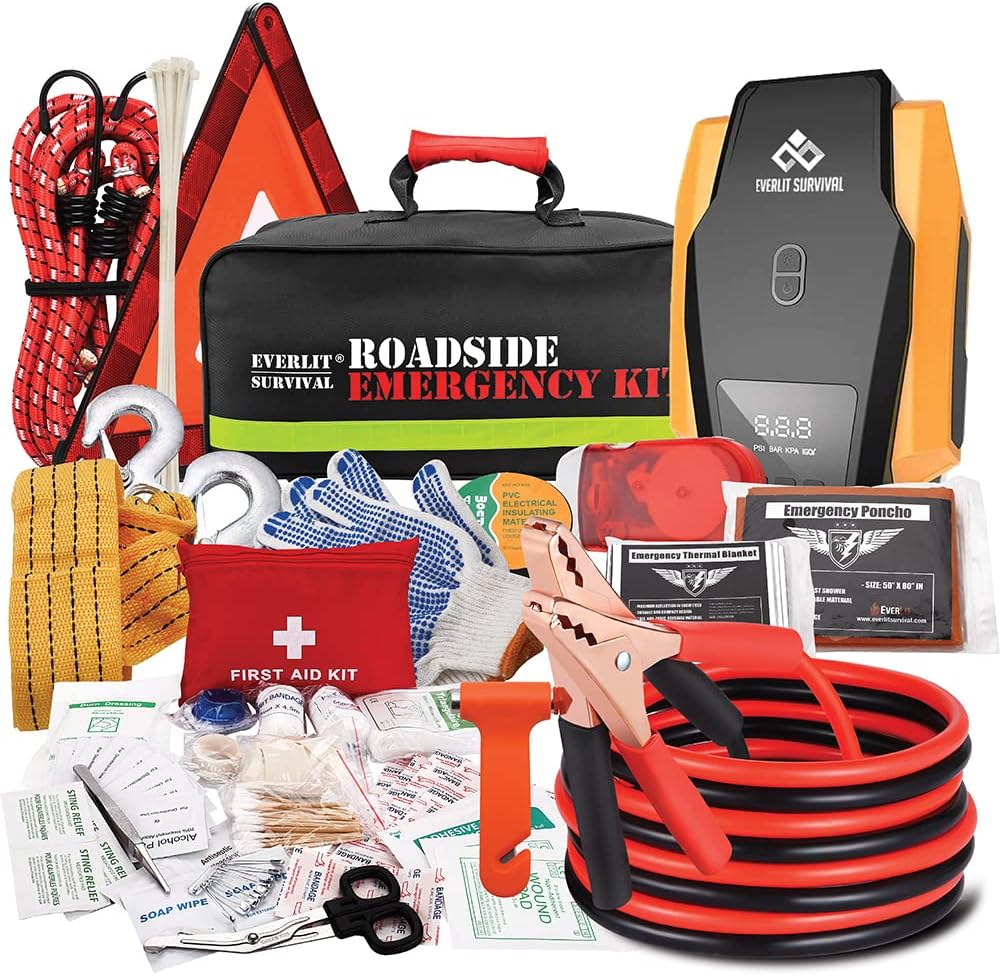
The Everlit Road Guardian emergency kit is designed for roadside breakdowns, combining essential safety gear and roadside tools in one compact bag. It includes a digital 12V auto tire inflator with preset and auto shutoff, plus 12-foot 8-gauge jumper cables to get you moving again. You also get a full 108-piece first aid kit, reflective warning tools, safety gloves, and emergency convenience items for safer travel.
Frequently Asked Questions
Do Tesla Brakes Need Regular Pad Replacement?
Tesla brake pads still require replacement when they wear out, but regenerative braking generally reduces how often the pads are used. Tesla does not give every vehicle a fixed pad-replacement mileage. The brakes should be inspected, and worn pads should be replaced when their condition or wear indicators show that service is required.
Can Tesla Brakes Work When the Battery Is Full?
Yes, Tesla’s conventional brakes still work when the battery is full. Regenerative braking can be reduced because the battery has less capacity to accept recovered energy. Depending on the model and settings, regular brakes may automatically supplement lift-off deceleration, and you can always use the brake pedal when more stopping force is needed.
Are Tesla Brakes Effective in Heavy Rain or Snow?
Yes, Tesla vehicles retain their conventional braking system in rain and snow, but available tire grip can greatly affect stopping distance. Current Tesla manuals also warn that regenerative braking can contribute to traction loss on snow or ice. Slow down, leave more space, and be prepared to use the brake pedal as conditions require.
How Often Should Tesla Brake Fluid Be Changed?
Tesla currently recommends testing brake fluid for contamination every four years and replacing it when needed rather than replacing it automatically at a fixed interval. Heavy braking from towing, mountain descents, or performance use, especially in hot and humid conditions, can make more frequent checks and replacement appropriate.
Do Teslas Have Brake Pads and Rotors?
Yes, Teslas use conventional brake pads, rotors, and calipers in addition to regenerative braking. These mechanical brakes provide stopping force when regen is insufficient and whenever the conventional braking system is required. Regeneration reduces their normal workload, but it does not eliminate wear, corrosion, inspection, or eventual replacement.
Why Is Tesla Regenerative Braking Sometimes Limited?
Tesla regenerative braking can be limited when the battery is cold or already fully charged, and available traction can also affect deceleration. The car may therefore feel different after a cold start or a full charge. Some Tesla configurations automatically add regular braking to make deceleration more consistent when regen is restricted.
Do Tesla Brake Lights Come On During Regenerative Braking?
Yes, Tesla brake lights can illuminate during sufficiently strong regenerative deceleration even when you are not pressing the brake pedal. Tesla specifically notes that the lights turn on during aggressive regen, such as a complete accelerator lift at higher speed. This alerts following drivers that the vehicle is slowing significantly.
Does Pressing the Tesla Brake Pedal Use Regenerative Braking?
It can, but the exact behavior varies by Tesla model and configuration. Tesla’s current Model Y manual says regenerative braking may occur when the brake pedal is pressed if battery conditions allow. The conventional braking system remains available, so you should use the pedal normally whenever you need additional or emergency stopping force.
Conclusion
Tesla brakes combine energy recovery with a conventional friction-brake system. Regen handles many everyday slowdowns and can return energy to the battery, while the brake pedal, hydraulic brakes, and ABS remain essential for stronger or emergency stopping. Learn how your specific Tesla responds, expect regen to vary with battery and road conditions, and keep the mechanical brakes maintained even if you rarely use them.
Sources
- Tesla Model 3 Owner’s Manual — Braking and Stopping: regenerative braking, ABS, brake lights, limited regen, brake wear, and friction braking.
- Tesla Model Y Owner’s Manual — Braking and Stopping: brake-pedal regeneration, automatic regular-brake supplementation, ABS, and brake maintenance.
- Tesla Model 3 Owner’s Manual — Cold Weather Best Practices: cold-battery regen limitations and preconditioning.
- Tesla Vehicle Maintenance: brake-fluid testing and brake-caliper cleaning recommendations.
