
How Wheel Spacers Affect Toyota Tacoma Handling
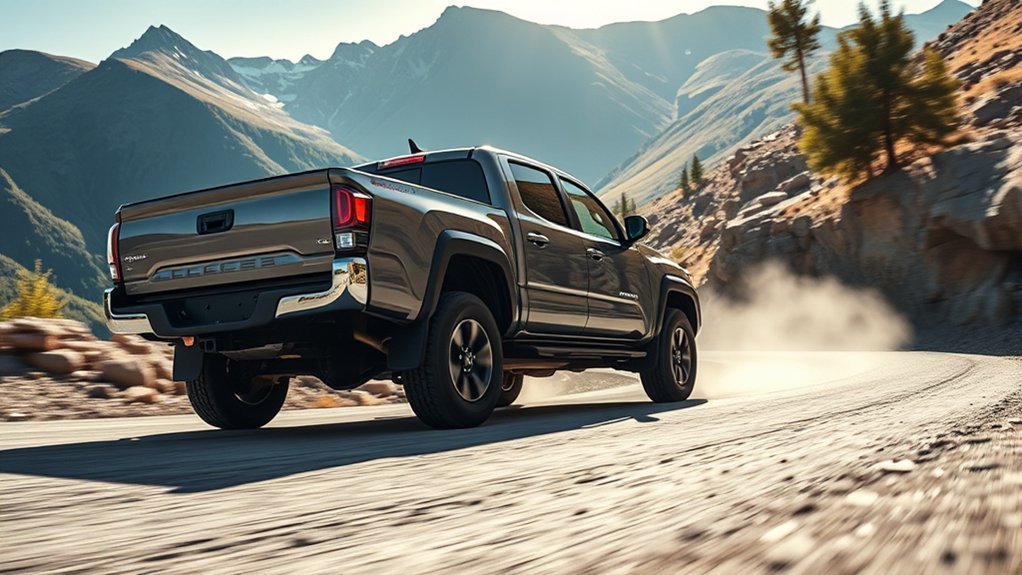
Toyota Tacoma wheel spacers move each wheel outward from the hub to create more inner clearance and a wider stance. They can help with wheel, tire, brake, or suspension fitment, but they also change effective wheel offset and steering geometry. Safe results depend on exact model-year fitment, quality hardware, correct seating, and manufacturer-specified torque.
Quick Answer
Toyota Tacoma wheel spacers can create inner clearance and a wider stance, but they are not a guaranteed handling or safety upgrade. Use only vehicle-specific, hub-centric parts with correct hardware, thickness, and torque. Confirm full-lock and suspension clearance, then inspect and re-torque exactly as the spacer manufacturer directs.
Key Takeaways
- A spacer changes effective wheel offset and adds track width; it does not provide suspension lift or correct wheel alignment.
- Tacoma bolt pattern, hub bore, stud size, wheel type, and torque requirements can vary by year and configuration.
- More inner clearance can create less outer clearance, so check the fender, liner, body mount, brakes, and suspension through full steering and suspension travel.
- The spacer and wheel must sit completely flush, use compatible hardware, and be tightened with a calibrated torque wrench.
- Stop driving and inspect the installation if you notice vibration, clicking, rubbing, steering pull, or loose hardware.
What Are Toyota Tacoma Wheel Spacers and How Do They Work?
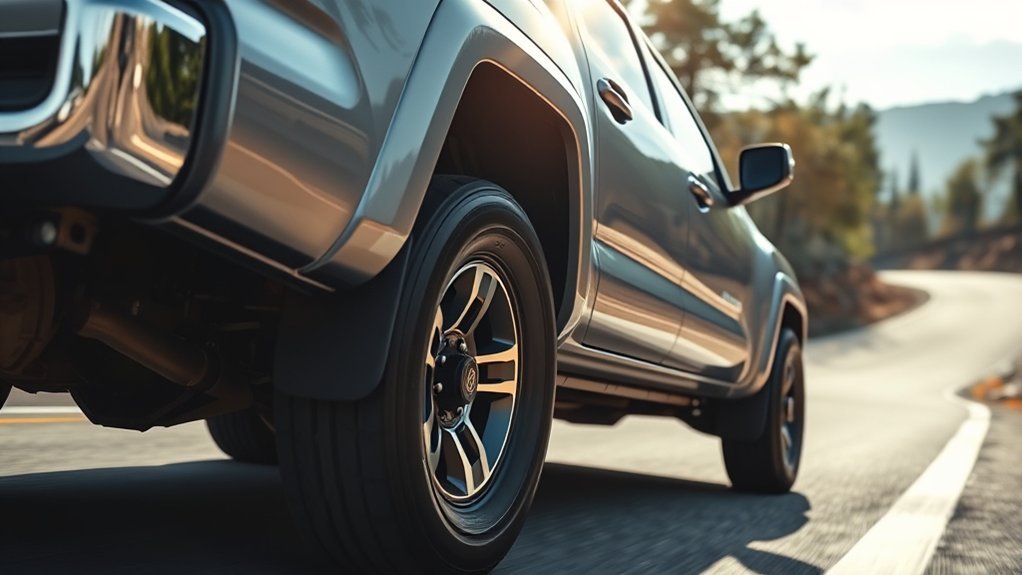
A wheel spacer is a machined component installed between the Tacoma’s hub and wheel. Its thickness pushes the wheel outward by the same amount. For example, a 25 mm spacer makes a +30 mm offset wheel behave approximately like a +5 mm offset wheel. Installing the same thickness on both sides increases total track width by twice the spacer thickness.
Spacers are commonly used to clear suspension parts, move a tire away from the frame, provide room for some brake upgrades, or bring wheels closer to the fender edge. They do not increase suspension travel, raise the chassis, or repair alignment problems.
Hub-centric spacers have a center bore and locating lip matched to the hub and wheel. That design helps center the assembly during installation. Correct clamping force, clean mating surfaces, compatible lug seats, and full seating remain essential even with a hub-centric design.
Potential Benefits of Wheel Spacers for Your Tacoma
A correctly selected spacer may solve a specific fitment problem without requiring a different wheel. Common benefits include:
- More inner clearance: Moving the wheel outward can create space between the tire and upper control arm, frame, brake component, or suspension link.
- Adjusted stance: The wheel can sit closer to the fender edge for a more flush appearance.
- Wheel or brake compatibility: Some setups need a small amount of extra clearance between the wheel barrel or spokes and upgraded components.
- Wider track: The vehicle’s stance becomes wider, which may change steering response and body feel.
These benefits are setup-dependent. A spacer does not automatically improve traction, braking, cornering, or rollover resistance. Tire construction, pressure, alignment, suspension condition, load, road surface, and driving speed usually have a larger effect on real-world behavior.
Note: Moving the tire outward can cure inner rubbing while creating new contact at the fender liner, bumper edge, mud flap, body mount, or outer fender. Check both sides of the clearance equation before ordering.
What Safety and Performance Risks Are Associated With Tacoma Wheel Spacers?
The most serious risks come from incorrect fitment, poor machining, incompatible hardware, contaminated mounting surfaces, insufficient thread engagement, improper torque, or a wheel that does not sit flush. Any of these conditions can cause vibration, damaged studs, loosened fasteners, or wheel separation.
| Risk | Why It Happens | What to Do |
|---|---|---|
| Vibration or runout | Rust, debris, incorrect center bore, damaged parts, uneven tightening, or a wheel that is not fully seated | Stop, remove the wheel, clean and inspect every mating surface, and verify fitment |
| Loose or damaged fasteners | Wrong nut seat, wrong thread, over-torque, under-torque, impact-gun installation, or inadequate engagement | Use supplied or approved hardware and a calibrated torque wrench |
| Tire rubbing | The wheel moves outward and follows a different arc during steering and suspension movement | Check full steering lock, reverse lock, compression, and loaded clearance |
| Changed steering feel | Effective offset and scrub radius change | Use the minimum thickness needed and avoid extreme offset changes |
| Additional component load | Moving the tire contact patch outward can increase leverage on bearings, studs, and steering or suspension parts | Keep the setup conservative and inspect bearings, studs, and suspension regularly |
Warning: Do not stack spacers, mix incompatible lug-seat styles, use damaged studs, or drive when the wheel or spacer does not sit completely flush. Improper installation can allow a wheel to loosen or detach, causing loss of control, serious injury, or death.
Slip-On Spacers, Bolt-On Spacers, and Wheel Adapters
Slip-On Spacers
A slip-on spacer slides over the original studs. Thin versions may require longer wheel studs so the lug nuts retain adequate thread engagement. The wheel must still center correctly and sit flush against the spacer.
Bolt-On Spacers
A bolt-on spacer attaches to the factory studs with one set of nuts and provides a second set of studs for the wheel. The original studs must not protrude into the back of the wheel unless the wheel has deep, correctly positioned pockets.
Wheel Adapters
An adapter changes the bolt pattern or hub dimensions so a different wheel can be installed. Adapters add more fitment variables than same-pattern spacers and should be treated as a separate engineered application, not a universal spacer.
Choosing the Right Wheel Spacers for Your Tacoma
Do not order by “Tacoma” alone. Confirm the exact year, trim, drive configuration, wheel material, bolt pattern, center bore, stud diameter, thread pitch, lug-seat style, and required spacer thickness.
Fitment changed across Tacoma configurations and generations. For example, one vehicle-specific manufacturer lists certain 2001–2023 Tacoma 4WD and PreRunner applications with 6-on-5.5-inch spacing and M12x1.5 hardware, while its 2024-and-newer Tacoma application uses the same bolt-circle size with M14x1.5 hardware. Review the product’s exact application notes and compare them with your truck before installation: 2001–2023 Tacoma 4WD/PreRunner spacer example and 2024-and-newer Tacoma spacer example.
Look for these features:
- Vehicle-specific hub-centric dimensions on both the hub side and wheel side where applicable
- Traceable material and hardware specifications from an established manufacturer
- Correct stud and nut grades with replacement hardware available
- Published installation instructions that state torque, thread-locker rules, and recheck intervals
- Clear application exclusions for locking hubs, steel wheels, aftermarket wheels, or unusual lug seats
- Enough thickness to solve the problem, but no more
6061-T6 and 7075-T6 are commonly advertised aluminum grades, but alloy alone does not prove a spacer is safe. Machining accuracy, heat treatment, stud quality, nut-seat design, corrosion protection, and application testing matter too.
How to Measure the Spacer Thickness You Need
- Park on level ground with the tires at the vehicle’s specified cold pressure.
- Identify the closest inner contact point, such as the upper control arm, frame, brake caliper, or suspension link.
- Measure the current gap with the wheels straight and at full steering lock in both directions.
- Place a straightedge vertically against the outer fender and measure how far the tire sits inside the fender edge.
- Choose a spacer thinner than the smallest safe outer-clearance measurement, allowing room for tire flex and suspension movement.
- Check whether the original studs would extend beyond a bolt-on spacer and contact the back of the wheel.
Eibach’s spacer measuring guide also recommends measuring from the tire or wheel to a straightedge at the fender and choosing slightly less than the available outer space.
Pro Tip: Model the final effective offset before buying. Subtract spacer thickness in millimeters from the wheel’s positive offset. Then compare the result with a known, rub-free Tacoma setup using the same tire size and suspension.
How to Safely Install Wheel Spacers on Your Tacoma
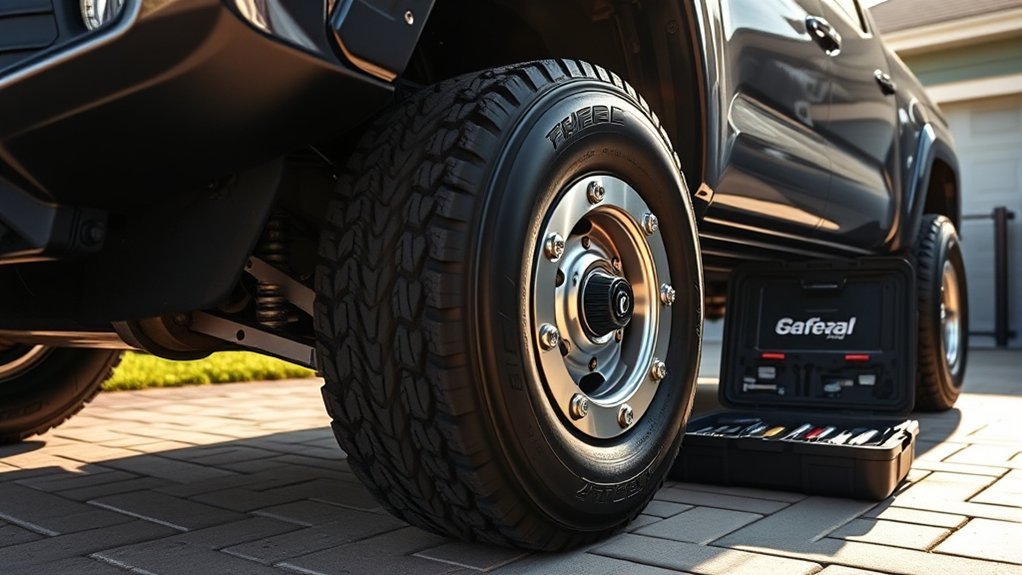
At a Glance
| Time Required | About 45–90 minutes for four wheels; longer if rust, damaged hardware, or stud interference must be corrected |
| Difficulty | Intermediate; professional installation is recommended for safety-critical fitment |
| Tools Needed | Wheel chocks, floor jack, jack stands, breaker bar, correct sockets, wire brush, cleaner, straightedge, and calibrated torque wrench |
| Cost | Varies by spacer design, material, thickness, hardware, and professional labor |
- Confirm the application. Match the spacer to the exact Tacoma year, configuration, hub bore, bolt pattern, stud thread, wheel type, and lug-seat style.
- Read both specifications. The spacer-to-hub hardware may use a different instruction from the wheel-to-spacer hardware. Do not assume one universal torque value.
- Prepare the truck. Park on a level surface, set the parking brake, chock the opposite wheels, and loosen the wheel nuts slightly before lifting.
- Support the vehicle. Lift at an approved point and place the truck securely on rated jack stands. Never work under or around a vehicle supported only by a jack.
- Remove and inspect. Remove the wheel. Inspect the factory studs, lug nuts, hub, wheel mounting pad, and spacer for damage, cross-threading, cracks, or corrosion.
- Clean the mating surfaces. Remove rust, paint flakes, dirt, and debris from the hub face and wheel mounting pad. The spacer must sit flat with no rocking or visible gap.
- Dry-fit the spacer. Confirm the center bore fits correctly, the spacer seats flush, and factory studs do not protrude into the back of the wheel.
- Install the spacer. Hand-thread the approved nuts, then tighten them gradually in a star pattern. Apply thread locker only when the spacer manufacturer specifically requires it.
- Torque the spacer hardware. Use the spacer manufacturer’s exact specification and sequence. Do not use an impact wrench for final torque.
- Install the wheel. Verify the wheel sits flush against the spacer, hand-thread the wheel nuts, and tighten in a star pattern.
- Torque the wheel nuts. Follow the Toyota owner’s manual for the exact model year and wheel type. For reference, the 2024 Tacoma manual lists 97 ft·lbf for its aluminum-wheel applications and 154 ft·lbf for listed steel-wheel applications; other years or wheels may differ.
- Perform clearance checks. Spin each wheel by hand, lower the truck, steer fully left and right, reverse while turning slowly, and inspect clearance at the tire, liner, frame, brake hose, suspension, and body mount.
- Test and recheck. Begin with a short low-speed drive. Follow the spacer maker’s stated re-torque interval, commonly an early check after installation, rather than using an invented universal schedule.
How to Diagnose Vibration, Pulling, or Rubbing After Installation
Do not assume a new vibration is normal. Remove speed from the equation and inspect the truck before continuing.
- Vibration immediately after installation: Check for rust or debris, a non-flush spacer, wrong hub bore, damaged center lip, uneven torque, or a wheel that does not fit the spacer face.
- Clicking or clunking: Stop driving and check fastener security, stud condition, and wheel seating.
- Rubbing at full lock: Inspect both inner and outer contact points. A spacer may move the tire away from one part and into another.
- Steering pull or uneven tire wear: Have tire pressure, wheel balance, suspension condition, and alignment checked. A spacer does not correct alignment.
- New brake-hose or sensor-wire tension: Correct the routing or remove the setup before driving.
The NHTSA TireWise guidance recommends correct tire pressure, balancing, and wheel alignment to protect tire life and vehicle safety. Use the pressure on the Tacoma’s door placard or owner’s manual, not the maximum pressure molded on the tire sidewall.
How Do Quality Wheel Spacers Differ From Cheap Options?
A quality spacer is designed as a complete fitment system rather than a generic aluminum disc. It should have accurate hub and wheel registers, flat parallel faces, correct hardware, documented material, corrosion protection, clear exclusions, and installation instructions.
Low-cost or poorly documented options may have inconsistent machining, unknown heat treatment, weak or untraceable studs, incorrect nut seats, rough threads, or no reliable torque guidance. A premium price does not guarantee safety, but missing specifications are a strong reason to reject a product.
Before buying, verify that the manufacturer provides:
- An exact vehicle application rather than a broad “fits most Tacoma” claim
- Hub bore, bolt pattern, thread size, and thickness
- Hardware grade and replacement availability
- Written installation and recheck instructions
- A contact point for technical fitment support
- A warranty that clearly states covered use and exclusions
What Do Tacoma Owners Say About Their Wheel Spacer Experiences?
Owner reports often mention a more flush stance, added upper-control-arm clearance, and the ability to run a desired wheel or tire combination. Other owners report vibration, outer-fender rubbing, heavier steering feel, or repeated fitment problems when the spacer is too thick or does not match the hub and wheel.
Treat owner feedback as a source of setup ideas, not proof that the same spacer will fit your truck. Compare the exact Tacoma year, trim, wheel width, offset, tire size, suspension height, alignment, and body modifications before copying another build.
How to Maintain and Check Your Tacoma Wheel Spacers
Inspect the spacer system whenever a wheel is removed and before demanding towing, hauling, or off-road use. Follow the spacer manufacturer’s service interval rather than a generic mileage claim.
- Check for loose hardware, damaged threads, cracked or stretched studs, corrosion, fretting marks, and movement between mating surfaces.
- Inspect wheel bearings and suspension parts if you notice humming, play, steering shake, or abnormal tire wear.
- Clean corrosion from the hub and spacer during seasonal wheel changes.
- Use a torque wrench after any wheel service. Do not rely on an impact wrench’s setting.
- Recheck tire clearance after changing tire size, wheel offset, suspension height, alignment, or load.
- Maintain the cold tire pressure listed on the door placard and inspect tread regularly.
Frequently Asked Questions
Do wheel spacers affect tire wear on a Tacoma?
A correctly fitted spacer does not directly change toe or camber, but the changed offset can alter steering feel and component loading. Uneven wear usually points to pressure, alignment, balance, worn suspension parts, rubbing, or aggressive driving. Inspect those causes instead of assuming the spacer corrected or created alignment.
Can I use wheel spacers with stock Tacoma wheels and tires?
Yes, when the spacer is specifically compatible with your Tacoma and factory wheel. Confirm hub bore, stud size, lug-seat style, wheel pockets, wheel material, and clearance. Some factory wheels cannot clear protruding original studs behind a bolt-on spacer.
How do wheel spacers affect off-road performance?
They may create inner tire clearance and widen the stance, but they can also increase outer rubbing, steering kickback, and exposure of the tire beyond the body. Check clearance at full lock and suspension compression, then inspect hardware after demanding trail use according to the manufacturer’s instructions.
Will wheel spacers change my Tacoma’s ride height?
No. Wheel spacers move the wheels sideways and do not raise the frame or suspension. Any apparent height change is visual or comes from a separate tire or suspension change.
Do wheel spacers void the Toyota warranty?
An aftermarket part does not automatically erase the entire vehicle warranty. However, warranty coverage may be denied for damage shown to have been caused by the spacer, installation, or related modification. Keep receipts, installation records, and the product instructions, and ask the dealer about a specific claim.
Do I need an alignment after installing wheel spacers?
A spacer alone does not normally change the alignment angles because it does not alter suspension pickup points. An alignment check is still sensible when the truck pulls, the steering wheel is off-center, tires wear unevenly, or suspension and tire changes were completed at the same time.
Are wheel spacers legal for road use?
Rules vary by state, province, inspection program, and product. Restrictions may involve tire coverage, track width, wheel hardware, or modifications to safety equipment. Check your local vehicle code and inspection rules before using spacers on public roads.
Conclusion
Toyota Tacoma wheel spacers are useful when they solve a measured clearance or fitment problem. They are not a shortcut for suspension lift, alignment repair, or guaranteed handling improvement. Choose the minimum necessary thickness, verify every dimension, use documented hardware, and follow separate torque instructions for the spacer and wheel.
Professional installation is the safest choice when fitment, stud clearance, lug-seat style, or torque is uncertain. After installation, stop immediately if you feel vibration, hear clicking, notice rubbing, or find loose hardware.
Sources
- Toyota 2024 Tacoma Owner’s Manual: Maintenance Data — wheel sizes, tire pressures, and wheel-nut torque by wheel application
- NHTSA TireWise — tire pressure, balance, alignment, rotation, and tire-size safety guidance
- Eibach PRO-SPACER Guide — spacer purpose and measurement method for outer-fender clearance
- Spidertrax Tacoma 2001–2023 4WD/PreRunner Application — example of earlier Tacoma spacer dimensions, hardware, and exclusions
- Spidertrax 2024-and-Newer Tacoma Application — example of current-generation Tacoma spacer dimensions and hardware
- Federal Trade Commission Warranty Guidance — aftermarket parts and limits on blanket warranty denial

Related Articles

Best Toyota Tacoma Tire Set Deals
You rely on your Tacoma for daily driving, work runs, and weekend adventures, so picking the right tire set matters more than you might…
Read More
Best Winter Tire Deals for Toyota Tacoma
Choosing the right winter tires for your Toyota Tacoma matters because it directly affects your safety, traction, and confidence when roads turn icy or…
Read More
Best Highway Tire Deals for Toyota Tacoma
You rely on your Tacoma for long drives, towing, and everyday hauling, so picking the right highway tire matters more than you might think.…
Read More